Game of Thrones Filming Locations in Dubrovnik: The Real King's Landing
Dubrovnik's medieval Old Town served as the primary backdrop for King's Landing throughout Game of Thrones. From Fort Lovrijenac to Minceta Tower, this guide covers every major filming location, how to reach them, what they cost, and how to visit without the worst of the crowds.
Quick Facts
- Location
- Old Town Dubrovnik (Stari Grad), Croatia — UNESCO World Heritage Site
- Getting There
- Bus lines 1 or 3 to Pile Gate stop; 15-min walk from cruise port; taxi or Uber from city centre
- Time Needed
- 2–4 hours for a self-guided walk; 2–2.5 hours for a guided tour
- Cost
- City Walls + Fort Lovrijenac ticket: €35 adults, €25 concessions (2024 prices, verify locally). Pile Gate and street locations: free to view
- Best for
- GoT fans, medieval history enthusiasts, architecture lovers, photographers
- Official website
- www.citywallsdubrovnik.hr
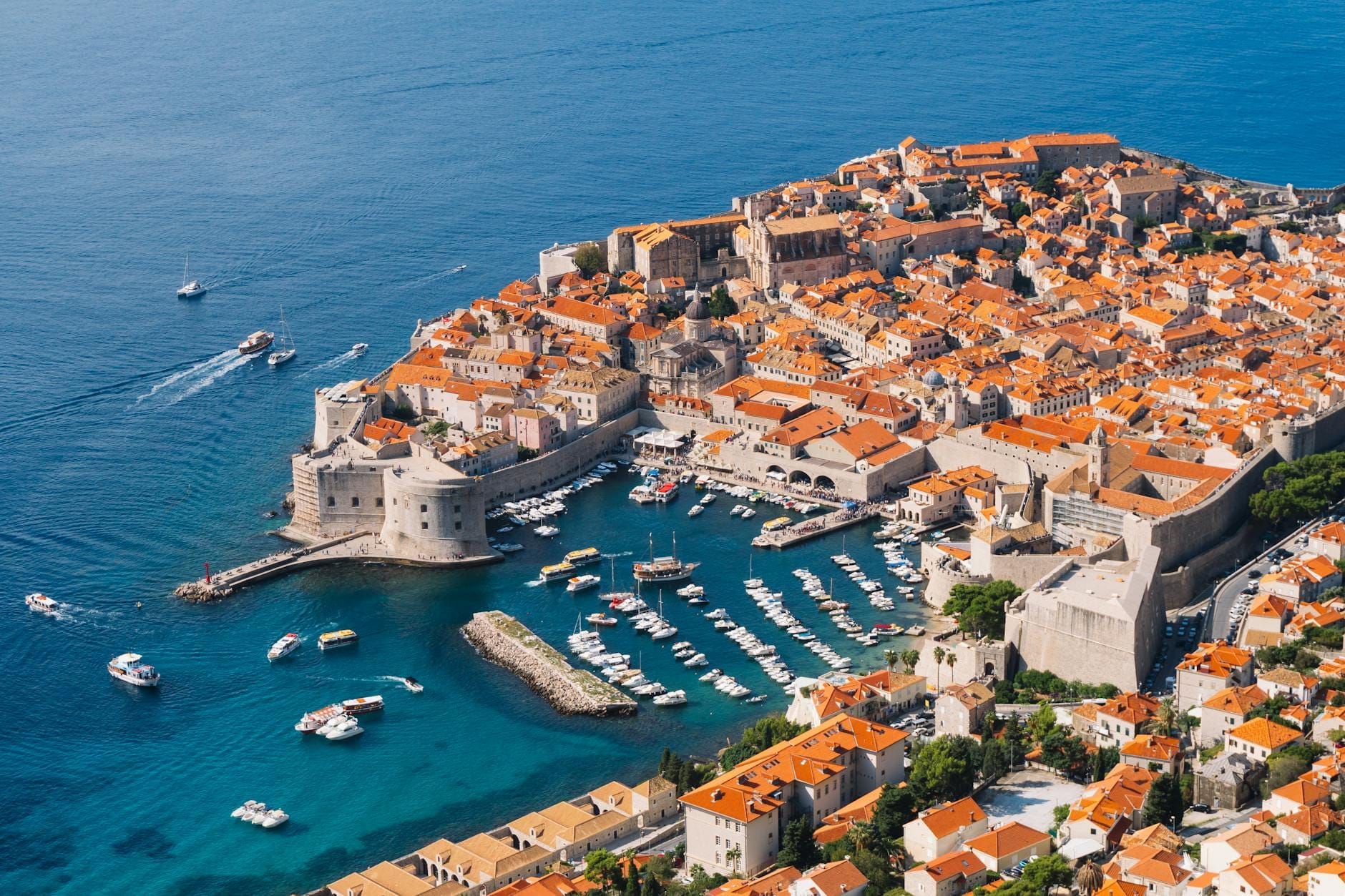
Why Dubrovnik Became King's Landing
When Game of Thrones producers needed a real-world capital for the Seven Kingdoms, they found it in Dubrovnik. The city's intact medieval fortifications, limestone-paved streets, and dramatic coastal setting offered something no studio backlot could replicate: an authentic sense of age and permanence. Filming took place across multiple seasons, using sites spread throughout the Old Town and its immediate surroundings.
What makes the Game of Thrones filming locations in Dubrovnik compelling even for non-fans is that the city earns its visual authority on its own terms. The walls are real 16th-century fortifications. The gates have been standing for centuries. Visiting these sites means engaging with a place that has genuine historical weight, not just a backdrop dressed for television. If you want broader context for the city itself, the Old Town walking tour guide is a useful companion for planning your route.
💡 Local tip
Book a City Walls ticket online before you arrive, especially in July and August. The walls sell out on peak days, and the Fort Lovrijenac entry is bundled into the same ticket — you cannot buy them separately.
Fort Lovrijenac: The Red Keep Above the Sea
Fort Lovrijenac, known formally as Tvrđava Lovrijenac or St. Lawrence Fortress, is the single most cinematic location in Dubrovnik's Game of Thrones inventory. Perched on a 37-metre rock outcrop just west of Pile Gate, it served as the Red Keep, the site of the Tourney of the Hand, and the backdrop for several key political scenes. The fortress was completed in its current form in 1617, though earlier structures occupied the rock for centuries before that.
Standing inside the inner courtyard and looking back toward the city walls across the water, you get an immediate sense of why the location was chosen. The geometry is striking: the fortress appears to grow directly from the limestone cliff, with the Adriatic on two sides and the walls of the Old Town visible in the middle distance. In the early morning, before the first tour groups arrive, the light hits the pale stone at a low angle and the whole structure takes on an amber quality that photographs very differently from midday shots.
Opening hours for Fort Lovrijenac run approximately 8:00 AM to 7:00 PM in the warmer months, with reduced hours in winter. Entry is included in the City Walls ticket at €35 for adults and €25 for concessions. The path up to the fortress entrance is steep and uneven, so those with limited mobility should note that there are no lifts and the steps are narrow in places.
Tickets & tours
Live prices and dates from our booking partner. If you book, we may earn a commission at no extra cost to you.
Dubrovnik Game of Thrones and city walls private tour
From 87 €Instant confirmationFree cancellationGame of Thrones Walking Tour through Dubrovnik
From 73 €Instant confirmationFree cancellationGame of Thrones and history private tour in Dubrovnik
From 97 €Instant confirmationFree cancellationGame of Thrones exploration game in Dubrovnik
From 10 €Instant confirmationFree cancellation
Pile Gate, Ploče Gate, and the Streets of King's Landing
The Pile Gate at the western entrance to the Old Town appeared repeatedly as a gateway into King's Landing, and it remains one of the most photographed entry points in Croatia. The outer gate dates to 1537, with a drawbridge that was still operational until the 19th century. The stone arch and the statue of St. Blaise above the entrance look exactly as they do on screen — though in person, the scale is more intimate than the wide-angle shots suggest.
Ploče Gate, on the eastern side of the Old Town, is less visited but equally atmospheric. Dating to the late 14th century, it served as a secondary filming location for arrival sequences. The surrounding area, including St. Dominic Street running southeast from the gate, was used for crowd scenes and procession shots. The street itself is narrower than you expect from the TV framing, and on a busy summer afternoon it can feel genuinely claustrophobic.
Both gates are free to view externally at any time of day. The best photography window at Pile Gate is early morning, when the light comes from the east and the stone takes on warmer tones. By 10:00 AM in peak season, tour groups stack up at the entrance and a clean shot of the gate without people in frame becomes nearly impossible.
Minceta Tower and the City Walls Circuit
Minceta Tower, the highest point on the Dubrovnik City Walls, served as the exterior of the House of the Undying in Qarth. From the battlements near Minceta, you can look down over the entire Old Town roofscape and out across the Adriatic — a view that communicates, better than any scene in the show, why this city was considered worth defending. The tower itself dates to the 15th century, designed by the Florentine architect Michelozzo and later modified by Juraj Dalmatinac.
Walking the full walls circuit takes approximately 90 minutes at a comfortable pace, longer if you stop for photographs. The walls are open from 8:00 AM to 7:30 PM in the April-to-October period and 10:00 AM to 3:00 PM from November through March, though hours do shift slightly by season and should be confirmed locally. The walk involves continuous stairs and uneven surfaces; flat shoes with grip are strongly advisable. In July and August, the walls become very hot by mid-morning with almost no shade — bring water.
⚠️ What to skip
The City Walls circuit is not accessible for wheelchairs or pushchairs. Most Game of Thrones street locations in the Old Town can be reached at ground level, but the walls walk itself requires full mobility.
Fort Bokar and the Harbour Views
Fort Bokar sits at the southwestern corner of the walls, where the fortifications meet the sea. It is one of the oldest rounded bastions in Europe, completed in the 16th century, and its position above the water makes it visually dramatic from both inside and outside the walls. In Game of Thrones, it appeared in scenes requiring a fortress overlooking the sea, and the exterior view of the fort from the rocks below matches the show's establishing shots almost exactly.
Access to Fort Bokar is via the walls circuit, included in the same ticket as Minceta Tower and Fort Lovrijenac. From the outer rocks below the fort, accessible from the small coastal path west of Pile Gate, you get the full exterior view that the show's cinematographers favoured. This is worth the five-minute detour before entering the walls.
Guided Tours vs. Self-Guided: Which Works Better
Dedicated Game of Thrones walking tours operate throughout the Old Town, typically lasting two to two-and-a-half hours and covering eight to twelve locations with a guide who explains both the show context and the real history of each site. Operators such as Kings Landing Dubrovnik (kingslandingdubrovnik.com) run regular departures. For context on how this fits into a broader Dubrovnik itinerary, the Game of Thrones tour guide for Dubrovnik covers tour options in detail.
The case for going self-guided is timing flexibility. You can reach Fort Lovrijenac at 8:00 AM before the first tour groups, which changes the experience entirely. The case for a guided tour is efficiency: a good guide will take you to angles and viewpoints you would not find on your own, and the show-versus-reality comparison is genuinely interesting when someone is framing it for you. If you are a serious fan, the guided format is worth the cost. If you are casually curious, a free map from your accommodation and two hours of your own time covers the essentials.
Photography across these locations deserves its own preparation. The Dubrovnik photography guide has specific advice on golden hour timing, wall access for elevated shots, and how to approach the most crowded spots without wasted effort.
Crowd Reality and When to Visit
Dubrovnik's Old Town receives around 1.5 million tourists per year, a number that is significant for a city of under 30,000 residents. Game of Thrones added a specific layer of demand that peaks between June and August, when cruise ships arrive daily and walking-tour groups converge on the same spots simultaneously. The best time to visit Dubrovnik in terms of crowd levels is May or September-October, when the filming locations are fully accessible but the foot traffic is significantly lower.
If you are visiting in summer, the practical strategy is to begin at Fort Lovrijenac at opening time, work through the walls circuit before 11:00 AM, and leave the street-level locations like Pile Gate and St. Dominic Street for late afternoon when the cruise passengers have returned to their ships. By 5:00 PM on most summer days, the crowd density drops noticeably and the light is better for photography.
Who will not enjoy this: visitors with no interest in either Game of Thrones or medieval fortifications may find the themed framing more irritating than illuminating. The locations are genuinely beautiful, but the guided-tour format leans heavily on show trivia. The architecture and history stand on their own — if that is your angle, skip the GoT-branded tours and simply walk the walls and visit Fort Lovrijenac independently.
Insider Tips
- Arrive at Fort Lovrijenac at 8:00 AM on the dot. By 9:30 AM in summer, the first tour groups fill the courtyard and clean photographs become difficult. The first hour is dramatically quieter.
- The rocks directly below Fort Bokar, accessible from the coastal path west of Pile Gate, give you the exterior fortress-over-sea angle used in the show's establishing shots — and they are free to access at any time.
- St. Dominic Street is best walked from east to west (Ploče Gate toward Stradun) in the late afternoon, when the sun comes from behind you and the limestone surfaces are warmly lit. The reverse direction at that time puts you shooting directly into the light.
- The City Walls ticket is also valid for Fort Lovrijenac on the same day. Do not visit them on separate days — it is the same ticket price each time.
- If you hold a Dubrovnik City Pass, confirm which wall access points and fort entries it covers before your visit, as inclusion can vary by pass type and season.
Who Is Game of Thrones Filming Locations For?
- Game of Thrones fans wanting to connect filmed scenes to real places
- Medieval history and fortification enthusiasts
- Photographers looking for elevated and coastal vantage points
- Travellers combining a city walls walk with themed context
- Couples or small groups who enjoy themed walking itineraries
Nearby Attractions
Other things to see while in Old Town (Stari Grad):
- Banje Beach
Banje Beach is Dubrovnik's closest and most photographed beach, sitting just east of the Old Town walls with direct views of the medieval fortifications and Lokrum Island. It's a pebbly, organized beach with free public access, paid lounger rentals, and a restaurant-bar that runs well into the night. Convenient, yes. Quiet, no.
- Buža Bar
Buža Bar is a no-frills open-air bar carved into a gap in Dubrovnik's ancient city walls, perched directly above the Adriatic Sea. Reached through a low iron-gated hole in the stonework, it offers cold drinks, cliff-jumping, and some of the most dramatic coastal views in the Mediterranean. There is no admission charge, no kitchen, and no pretense.
- Cathedral of the Assumption of the Virgin Mary
Rising from the rubble of a 1667 earthquake, the Cathedral of the Assumption of the Virgin Mary anchors the heart of Dubrovnik's Old Town with its commanding Baroque dome and a treasury that holds relics spanning a millennium. It's quieter than the city walls and more revealing than most visitors expect.
- Dominican Monastery & Museum
Built from 1225 and shaped through the 15th century, the Dominican Monastery in Dubrovnik's eastern Old Town holds one of Dalmatia's finest collections of medieval and Renaissance art. The Gothic-Renaissance cloister, a Titian altarpiece from 1554, and works by the Dubrovnik School of painters make this one of the most intellectually rewarding stops in the city.
Planning a trip? Discover personalized activities with the Nomado app.