Banje Beach (Plaža Banje): Dubrovnik's Most Scenic Pebble Beach
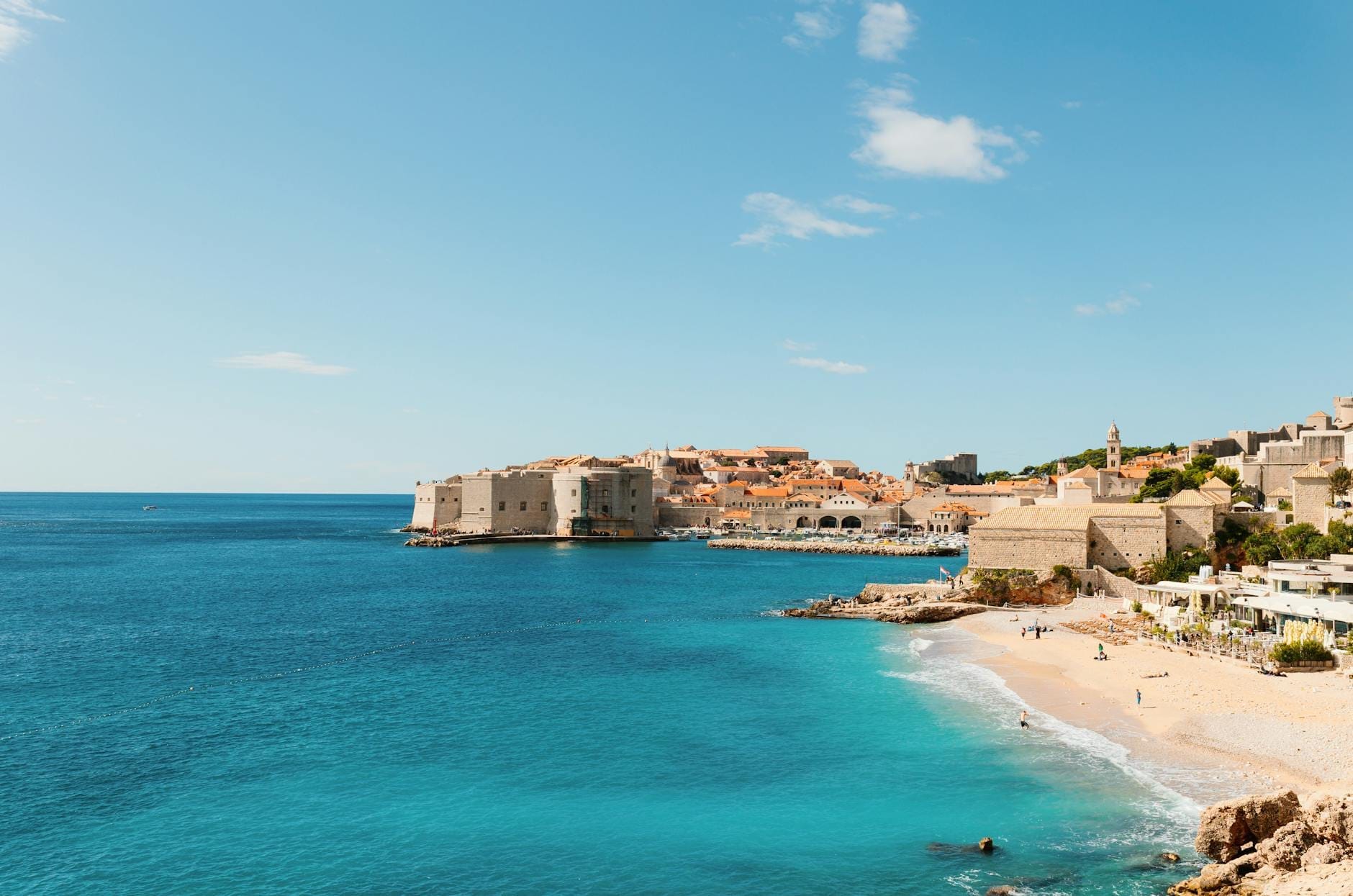
Banje Beach is Dubrovnik's closest and most photographed beach, sitting just east of the Old Town walls with direct views of the medieval fortifications and Lokrum Island. It's a pebbly, organized beach with free public access, paid lounger rentals, and a restaurant-bar that runs well into the night. Convenient, yes. Quiet, no.
Quick Facts
- Location
- Just east of Ploče Gate, Old Town Dubrovnik
- Getting There
- 10-min walk from Old Town; bus lines 4, 5, 6 to Ploče stop
- Time Needed
- 1.5 to 3 hours
- Cost
- Free public access; lounger and umbrella rental fees apply
- Best for
- Couples, first-time visitors, evening bar scene
- Official website
- banjebeach.com
What Banje Beach Actually Is
Plaža Banje is a crescent of grey-white pebbles sitting directly east of Dubrovnik's Old Town, separated from the ancient walls by only a short coastal walk. The beach faces south and slightly west, which means the full limestone face of the old city fills your peripheral vision while you swim. On clear days, Lokrum Island sits roughly 600 meters offshore, its dark cypress silhouette framing the far edge of the bay.
This is not a wild or undiscovered spot. Banje is Dubrovnik's most accessible beach from the historic core, and it shows. The beach is organized: a free public section with bare pebbles, and a paid section managed by the Banje Beach establishment, where you can rent sunbeds and umbrellas by the day. A full-service bar and restaurant occupies the upper terrace, and by mid-afternoon in July or August, the whole stretch is densely packed.
ℹ️ Good to know
Beach access is free year-round. The Banje Beach Restaurant and Nightclub is open daily from 10 a.m. to 2 a.m., with peak operations in summer months. Verify current rental prices on-site, as rates change seasonally.
The View: Why People Come Here
The real draw at Banje isn't the beach itself — it's the angle. From the water or from a lounger on the pebbles, you look directly at the southern face of the Old Town walls, their pale stone turning amber and then deep orange as the sun drops toward the west in the late afternoon. The Fort of St. John anchors the left edge of the view, and the red-tiled rooftops of the medieval city stack up behind it.
This is arguably the best spot in Dubrovnik to photograph the walls from water level. For photographers, the light between 5 and 7 p.m. in summer is exceptional, with warm tones hitting the stone directly. If you're planning a photography-focused trip, the Dubrovnik photography guide has specific timing notes for different vantage points around the city.
At night, the walls are lit from below, and the beach transforms into a different scene entirely. The bar crowd takes over the upper terrace, and the water turns black and glassy. It's atmospheric in a different way, less about the Adriatic and more about the spectacle of a lit medieval city reflected in still water.
Tickets & tours
Live prices and dates from our booking partner. If you book, we may earn a commission at no extra cost to you.
Mostar and Kravice Waterfalls excursion from Dubrovnik
From 120 €Instant confirmationFree cancellationDubrovnik Old Town Tour ith Cable Car Ride
From 56 €Instant confirmationFree cancellationMostar and Kravice Waterfalls full-day tour with pickup from Dubrovnik
From 66 €Instant confirmationFree cancellationSea kayaking experience in Dubrovnik
From 46 €Instant confirmationFree cancellation
The Beach Itself: Surface, Water, and Conditions
Banje is a pebble beach, not sand. The stones range from flat and smooth to irregularly shaped, and the slope into the water is moderately steep. The sea here is exceptionally clear, with visibility extending several meters down, and the water tends to be calm unless a southerly wind is pushing in. Depth increases quickly, which makes the swimming experience comfortable for adults but requires attention with young children near the waterline.
💡 Local tip
Water shoes are strongly recommended. The pebbles at the waterline are irregular and the entry into the sea is rocky underfoot. Most beach vendors in Dubrovnik's Old Town sell lightweight aqua shoes for a few euros.
The water temperature follows a typical Dalmatian pattern: cold in May, reaching a comfortable 22-25°C by July, and staying warm into late September. Early June and September offer the best balance of swimmable water and manageable crowds. By late July and August, the beach is at full capacity by 10 a.m.
How the Experience Changes Through the Day
Early morning at Banje, before 9 a.m., is genuinely different from the midday scene. The pebbles are still cool, the water is flat, and the few people present are mostly locals doing laps or stretching on the stones. The walls of the Old Town catch the morning light at a low angle, throwing long shadows across the limestone. This is the version of Banje that doesn't appear in most travel photos.
By 10 a.m. in peak season, the transformation is rapid. Cruise passengers begin arriving from the port, tour groups pass through, and the lounger section fills steadily. Between noon and 4 p.m. in July and August, the beach is at its most crowded and its loudest. The bar is in full swing, music carries across the pebbles, and finding a free spot in the public section requires either patience or arriving early with a towel already down.
Late afternoon shifts the mood again. As the direct sun moves behind the hill to the west, the temperature drops to something comfortable, the crowd thins slightly, and the wall views take on that golden quality. Many visitors time their beach visit to start around 4 p.m. precisely to catch this window.
⚠️ What to skip
Banje is heavily affected by cruise ship schedules. On days when two or more large ships are in port at Gruž, the beach can reach uncomfortable density by mid-morning. Check the port schedule in advance if crowd levels matter to you.
Getting There and Practical Logistics
Banje Beach is reached on foot in about 10 minutes from Pile Gate by walking east along the outside of the walls, through the Ploče Gate area and down to the coast. The path is well-signed and mostly flat until the final descent via stairs to the beach. Those stairs are the critical accessibility point: the beach is not wheelchair accessible, and anyone with significant mobility difficulties should note this before making the trip.
By bus, lines 4, 5, and 6 stop at Ploče, from which the beach is a short downhill walk. Taxis and ride-hailing services can drop you at the upper parking area. Driving in high season is genuinely difficult: parking fills early and the roads near the Old Town are narrow. If you're based in Lapad or Gruž, the bus is a more reliable option than driving.
For context on getting around the wider city, the getting around Dubrovnik guide covers bus routes, taxi tips, and walking routes in detail.
The Bar Scene and Evening Use
The Banje Beach establishment operates a full bar and restaurant on the upper terrace above the pebbles. In the evenings, particularly on weekends, this space functions as an outdoor nightclub with a DJ and a crowd that skews toward young international visitors. Cocktail prices are higher than you'd pay in a local bar inland, but the backdrop of the lit Old Town walls provides some justification for the markup.
If you want a quieter evening drink with the same view but without the club atmosphere, the Buža Bar on the opposite side of the walls offers a very different version of the same idea: wine and beer on rocky cliffs with an open sea view, minimal infrastructure, and a noticeably calmer atmosphere. Both have their place depending on what kind of evening you're after.
Who Should Think Twice Before Coming Here
Banje is frequently described as Dubrovnik's best beach. That claim needs context. It is the most conveniently located beach from the Old Town, and the views are genuinely exceptional. But if you're looking for seclusion, soft sand, or a calm natural environment, Banje in high season will disappoint.
Travelers who prioritize a quieter beach experience should look further afield. The beaches on Lokrum Island offer more natural surroundings, and the Dubrovnik beaches guide covers alternatives across the wider region, including options accessible by ferry or short drive.
The rocky entry into the water is also a genuine barrier. Families with toddlers, elderly visitors, and anyone with balance difficulties will find the approach to the water uncomfortable and potentially hazardous without water shoes. This isn't a deal-breaker, but it's worth knowing before you pack your bag.
Insider Tips
- Arrive before 9 a.m. to have the beach almost to yourself and catch the best low-angle morning light on the Old Town walls.
- The free public section of the beach is on the right (east) side as you approach from the stairs. The paid lounger section occupies the prime central area. Both have the same view.
- If you want to use the bar's restrooms without purchasing a drink, you'll typically need to pay a small fee. Bring cash or a card.
- The sea directly in front of the beach is a designated swimming zone. Water taxis to Lokrum depart from the Old Town harbor nearby, not from the beach itself.
- In September, after the cruise season begins to wind down, Banje offers the same views with noticeably thinner crowds and water that's still warm from the summer.
Who Is Banje Beach For?
- First-time visitors to Dubrovnik who want the iconic wall view from the water
- Couples looking for a scenic late-afternoon swim followed by evening drinks
- Photography enthusiasts targeting the Old Town walls from water level
- Travelers who want a beach within walking distance of the historic core
- Night-out seekers who want an outdoor bar with a dramatic backdrop
Nearby Attractions
Other things to see while in Old Town (Stari Grad):
- Buža Bar
Buža Bar is a no-frills open-air bar carved into a gap in Dubrovnik's ancient city walls, perched directly above the Adriatic Sea. Reached through a low iron-gated hole in the stonework, it offers cold drinks, cliff-jumping, and some of the most dramatic coastal views in the Mediterranean. There is no admission charge, no kitchen, and no pretense.
- Cathedral of the Assumption of the Virgin Mary
Rising from the rubble of a 1667 earthquake, the Cathedral of the Assumption of the Virgin Mary anchors the heart of Dubrovnik's Old Town with its commanding Baroque dome and a treasury that holds relics spanning a millennium. It's quieter than the city walls and more revealing than most visitors expect.
- Dominican Monastery & Museum
Built from 1225 and shaped through the 15th century, the Dominican Monastery in Dubrovnik's eastern Old Town holds one of Dalmatia's finest collections of medieval and Renaissance art. The Gothic-Renaissance cloister, a Titian altarpiece from 1554, and works by the Dubrovnik School of painters make this one of the most intellectually rewarding stops in the city.
- Dubrovnik Aquarium
The Dubrovnik Aquarium occupies the ground floor of the 16th-century St. John's Fortress, right at the edge of the Old Town harbor. With 31 seawater tanks fed by continuous fresh Adriatic seawater and a resident loggerhead sea turtle, it is one of the more unusual and quietly rewarding stops in Dubrovnik's historic core.
Planning a trip? Discover personalized activities with the Nomado app.