Fort of St. John, Dubrovnik: The Old Harbour's Stone Guardian
Rising from the southeastern edge of Dubrovnik's Old Harbour, the Fort of St. John is one of the city's most recognizable defensive structures. Built over two centuries, it now houses the Maritime Museum and the Dubrovnik Aquarium, making it one of the few fortifications in the old town with substantial interior exhibits to explore.
Quick Facts
- Location
- Southeastern Old Harbour, Old Town Dubrovnik
- Getting There
- Walk east along Stradun to Old Harbour; no bus stop required — the fort is roughly 10 minutes on foot from Pile Gate
- Time Needed
- 1 to 2 hours for both the Maritime Museum and Aquarium
- Cost
- Separate admission for Maritime Museum and Aquarium; verify current prices at the fort entrance or via the official Dubrovnik tourist board
- Best for
- History enthusiasts, families with children, photography, rainy-day alternatives to the city walls
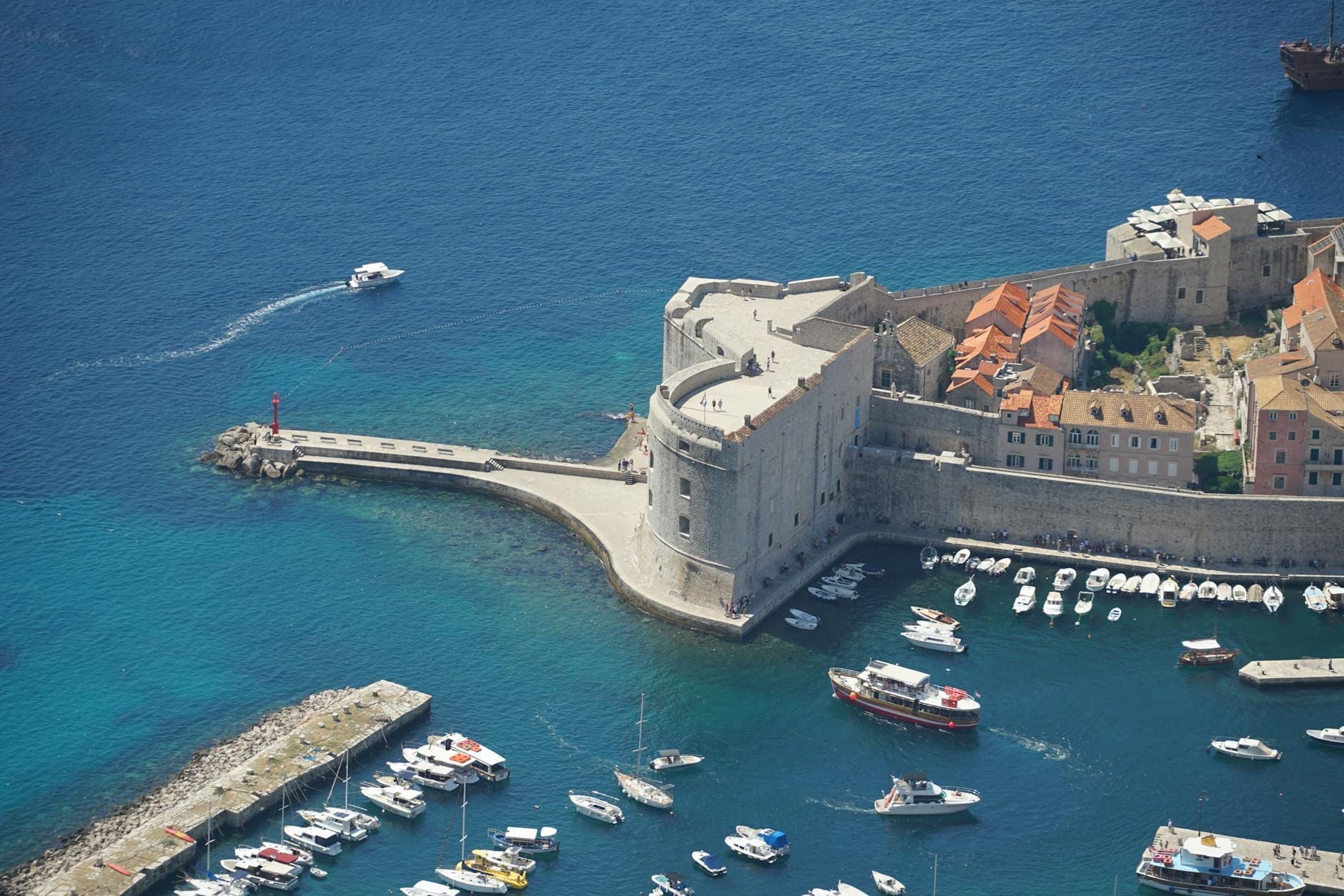
What the Fort of St. John Actually Is
The Fort of St. John (Croatian: Tvrđava Sv. Ivana) stands at the mouth of Dubrovnik's Old Harbour, its curved, sea-facing walls cutting a bold silhouette against the Adriatic. It is one of the defining shapes of the Old Town's southeastern edge, visible from the harbour promenade, from tour boats, and from the upper walkway of the city walls. Most visitors photograph it without realizing they can walk inside.
The fort is not a single structure but the result of nearly two centuries of layered construction. What began as the Dock Fort in 1346 was gradually expanded and eventually merged with the adjacent Fort Gundulić between 1552 and 1557, following designs attributed to the architect Paskoje Miličević. The result is a robust, asymmetric fortification with thick stone walls built specifically to resist cannon fire from the sea.
Today, the fort houses two separate institutions: the Maritime Museum on the upper floors and the Dubrovnik Aquarium at ground level. They share the building but charge separate admission and feel quite different in atmosphere. The Aquarium is cool, dim, and popular with families. The Maritime Museum is quieter, more contemplative, and genuinely rewards those interested in the history of a city that once rivaled Venice as an Adriatic trading power.
💡 Local tip
Admission to the Maritime Museum and the Aquarium is sold separately. If you plan to visit both, clarify whether a combined ticket is available at the entrance window before paying twice.
Approaching the Fort: The Old Harbour on Foot
The walk from Stradun to the fort takes about ten minutes at a relaxed pace. You follow the limestone street east, pass Orlando's Column and the clock tower, then descend toward the Old Harbour. The approach shifts in character as you move from the tourist core: the smell of salt water becomes noticeable, fishing boats and small ferries line the quay, and the crowds thin slightly, replaced by a steadier mix of locals and serious sightseers.
The fort's entrance sits at the base of the structure, facing the harbour. The curved outer wall, which faces the open sea, is the part that most often appears in photographs taken from the water. Up close, the scale becomes clearer: the walls are several metres thick, built from the same pale Dalmatian limestone that covers the entire old city, worn smooth in the lower sections by centuries of salt spray.
Early mornings, before 9 a.m., the harbour is genuinely calm. Fishing boats unload, the café tables along the waterfront are still empty, and the fort sits in soft light. By late morning the area fills with day-trippers, particularly in July and August, when the quay becomes crowded enough that moving slowly is the only option. If your goal is photography or a quiet exterior walk, early arrival makes a significant difference.
Tickets & tours
Live prices and dates from our booking partner. If you book, we may earn a commission at no extra cost to you.
Konavle and Falcon Fortress half-day tour with lunch
From 224 €Instant confirmationFree cancellationMostar and Kravice Waterfalls excursion from Dubrovnik
From 120 €Instant confirmationFree cancellationDubrovnik Old Town Tour ith Cable Car Ride
From 56 €Instant confirmationFree cancellationMostar and Kravice Waterfalls full-day tour with pickup from Dubrovnik
From 66 €Instant confirmationFree cancellation
The Maritime Museum: Dubrovnik as a Sea Power
The Maritime Museum occupies the upper floors of the fort and is easily one of the more underrated museums in the city. Dubrovnik, known historically as the Republic of Ragusa, built its wealth and independence almost entirely on maritime trade. At its height in the 15th and 16th centuries, the Ragusan merchant fleet was among the largest in Europe, operating on routes from the Black Sea to the Atlantic. The museum puts that era into material form.
Exhibits include ship models, navigational instruments, cannons, old maps, and documents from the republic's trading era. The collection is not enormous, but the quality and context are solid. Labels are in Croatian and English. The rooms themselves, with their stone walls and narrow windows looking out over the harbour, provide a setting that most city museums cannot replicate. You are standing inside the very type of fortification that protected the ships described in the exhibits.
The museum is rarely crowded, even in high season. Most visitors to the fort head straight for the Aquarium, which means the upper floors often offer genuine quiet. Allow around 45 minutes if you read the labels; 20 minutes if you prefer a visual walk-through.
The Dubrovnik Aquarium: Best for Families and Children
The ground floor of the fort is given over to the Dubrovnik Aquarium, which focuses on Adriatic marine life. The tanks are set into the stone walls of the fort's lower vaulted chambers, creating an atmospheric setting that feels quite different from a purpose-built aquarium. The light is low, the air is cool even in summer, and the sound of water filters through the space.
The collection concentrates on local species: Mediterranean moray eels, octopuses, sea turtles, sea horses, and various reef fish found in Croatian waters. It is not a large aquarium by international standards and should not be the sole reason for a visit, but as one component of a morning at the fort, it works well. Children respond strongly to the interactive tone of the space, and the cool interior makes it a practical stop during the peak heat of a July or August afternoon.
ℹ️ Good to know
The Aquarium is one of the more sensible options on a hot summer afternoon when outdoor sightseeing becomes uncomfortable. The stone walls of the fort keep the interior noticeably cooler than street level.
Photography and the Exterior Walls
The fort's exterior is worth taking time with, not just as backdrop. The semicircular sea-facing wall, the cannon ports, and the way the structure integrates with the broader city walls on its northern side all reward close inspection. The city wall walkway passes above the fort, offering elevated views down onto its roof and outward across the harbour.
From the quayside directly in front of the fort, the composition looking west captures the fort's curved wall, the harbour mouth, and the island of Lokrum in the background. Golden hour in the late afternoon casts warm light directly onto the sea-facing facade. Morning light hits from a different angle and tends to be cleaner and cooler in colour, which suits architectural photography better than the hazy midday sun of summer.
If you are walking the city walls, note that the section passing over and around the fort provides some of the best downward angles on the Old Harbour and the boats moored below. A wide-angle lens or a phone camera's standard mode handles this well; no special equipment is needed.
Practical Notes: Timing, Access, and Honest Expectations
Dubrovnik's peak tourist season runs from late June through August, when the old town absorbs very large numbers of visitors, many arriving from cruise ships docking at Port Gruž. The Old Harbour area becomes notably crowded between 10 a.m. and 4 p.m. during this window. Visiting the fort early in the morning or after 5 p.m. gives you a calmer exterior experience, though museum hours may not extend that late — check current hours before planning an evening visit.
The fort does not have an elevator or ramp access to the upper floors as far as current information confirms. The interior involves stone stairs that are uneven in places, typical of structures of this age. Visitors with mobility limitations may find the Aquarium on the ground floor accessible but should check current accessibility arrangements directly with the museum before visiting.
Opening hours and admission prices change seasonally and are not reproduced here to avoid misleading you with outdated figures. Verify current details through the official Dubrovnik tourist board at tzdubrovnik.hr. If you are planning a day structured around multiple sites, the Dubrovnik City Pass may cover admission to one or both institutions; confirm this when purchasing.
⚠️ What to skip
Ticket prices, opening hours, and City Pass inclusions are verified seasonally and can change. Always check the official Dubrovnik Tourist Board website or confirm at the entrance before purchasing.
Who Should Skip or Adjust Their Expectations
If your interest in Dubrovnik is primarily in sweeping views, outdoor walking, and the sensation of the medieval cityscape, the fort's interior may feel like a diversion rather than a highlight. The Maritime Museum is specialized enough that visitors with no particular interest in naval history or the Republic of Ragusa sometimes find it slow. There is no shame in enjoying the fort as an exterior subject only and spending your time elsewhere.
Similarly, if you are travelling with young children who have already spent an hour at the Aquarium, pushing on to the Maritime Museum upstairs may test patience. In that case, a walk along the harbour followed by the short boat crossing to Lokrum Island is a reasonable next step: the ferry departs from the Old Harbour just metres from the fort entrance.
Insider Tips
- The ferry to Lokrum Island departs from the Old Harbour directly in front of the fort. If you finish your visit with time to spare before lunch, it is worth checking the departure board on the quay for the next crossing.
- The city wall walkway passes over the roof area of the fort. If you are planning to walk the walls, do so before or after visiting the fort's interior rather than trying to split the day awkwardly between the two.
- The view of the fort from a harbour boat or kayak is substantially more impressive than the view from the quayside. If you are considering a kayaking tour, the route past the fort's seaward wall is one of the most photogenic stretches of the old town.
- The Maritime Museum's upper rooms have windows that face the harbour. On a clear day, the light coming through those narrow openings makes for atmospheric photographs inside the building, even without professional equipment.
- In July and August, the interior of the fort is noticeably cooler than the exposed waterfront. If you are visiting during peak summer heat, arriving at the fort around 1 or 2 p.m. and spending an hour inside is a practical way to avoid the worst of the afternoon sun.
Who Is Fort of St. John For?
- Travellers with a genuine interest in Adriatic maritime history and the Republic of Ragusa
- Families with children who will respond well to the Aquarium's Adriatic marine life exhibits
- Photographers looking for the best exterior angles of the Old Harbour and fort walls
- Visitors seeking a cool interior space during the peak heat of summer afternoons
- City wall walkers who want to combine the wall circuit with a ground-level look at the fort it incorporates
Nearby Attractions
Other things to see while in Old Town (Stari Grad):
- Banje Beach
Banje Beach is Dubrovnik's closest and most photographed beach, sitting just east of the Old Town walls with direct views of the medieval fortifications and Lokrum Island. It's a pebbly, organized beach with free public access, paid lounger rentals, and a restaurant-bar that runs well into the night. Convenient, yes. Quiet, no.
- Buža Bar
Buža Bar is a no-frills open-air bar carved into a gap in Dubrovnik's ancient city walls, perched directly above the Adriatic Sea. Reached through a low iron-gated hole in the stonework, it offers cold drinks, cliff-jumping, and some of the most dramatic coastal views in the Mediterranean. There is no admission charge, no kitchen, and no pretense.
- Cathedral of the Assumption of the Virgin Mary
Rising from the rubble of a 1667 earthquake, the Cathedral of the Assumption of the Virgin Mary anchors the heart of Dubrovnik's Old Town with its commanding Baroque dome and a treasury that holds relics spanning a millennium. It's quieter than the city walls and more revealing than most visitors expect.
- Dominican Monastery & Museum
Built from 1225 and shaped through the 15th century, the Dominican Monastery in Dubrovnik's eastern Old Town holds one of Dalmatia's finest collections of medieval and Renaissance art. The Gothic-Renaissance cloister, a Titian altarpiece from 1554, and works by the Dubrovnik School of painters make this one of the most intellectually rewarding stops in the city.
Planning a trip? Discover personalized activities with the Nomado app.