Orlando's Column: Dubrovnik's Stone Symbol of Freedom
Standing at the heart of Luža Square since 1418, Orlando's Column is a compact but historically loaded monument in Dubrovnik's Old Town. Carved from a single block of limestone, it once served as the city's official unit of measurement and still anchors the square's ceremonial life today.
Quick Facts
- Location
- Luža Square, Old Town Dubrovnik
- Getting There
- Walk from Pile Gate along Stradun — the square is at the eastern end, about 5 minutes on foot
- Time Needed
- 10–20 minutes to observe and photograph; combine with surrounding square attractions
- Cost
- Free — public monument, accessible 24/7
- Best for
- History enthusiasts, architecture admirers, Old Town walkers
What Is Orlando's Column?
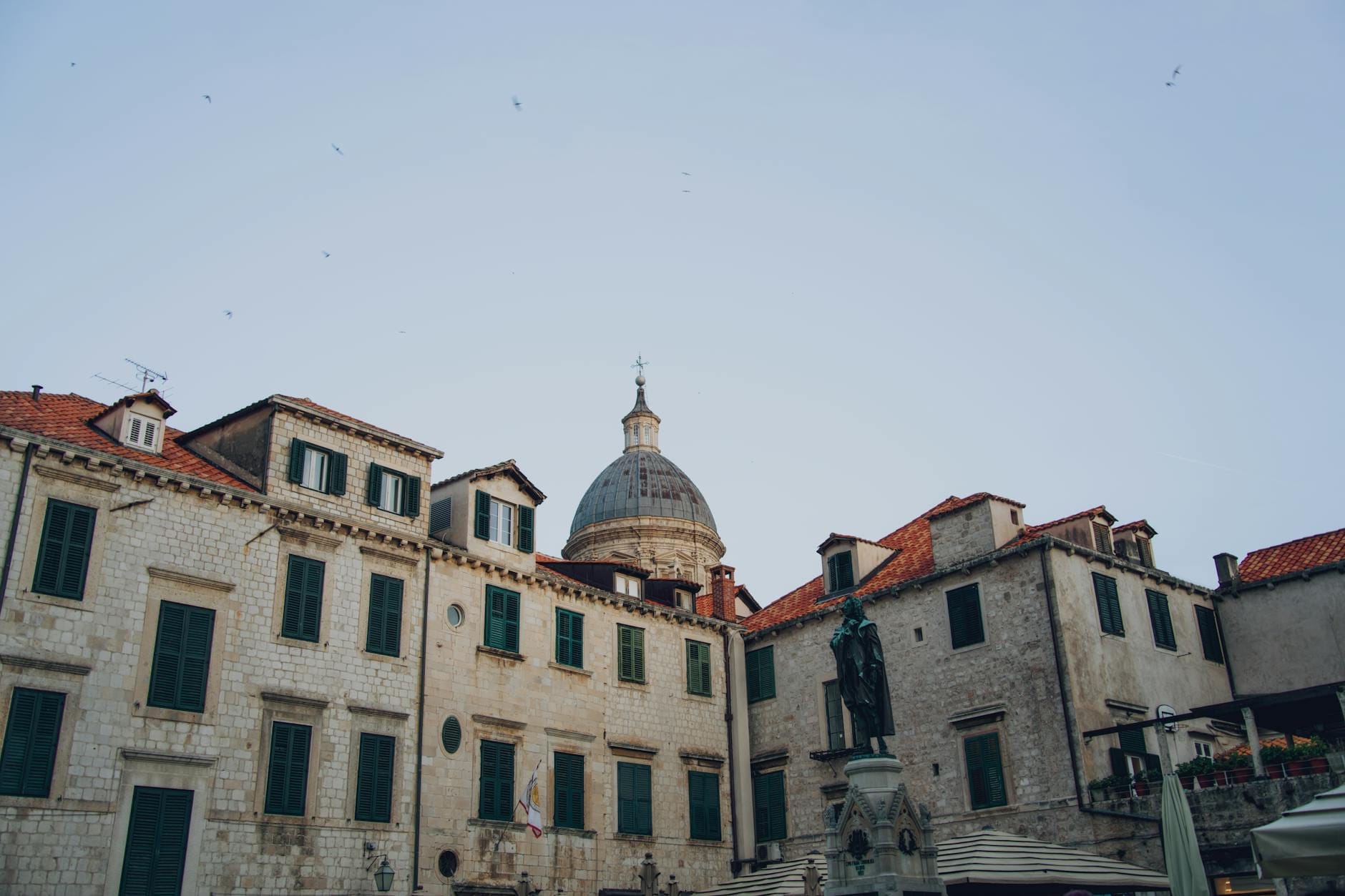
Orlando's Column, known locally as Orlandov stup, is a roughly 4-metre limestone statue of a medieval knight standing at the eastern end of Luža Square, directly in front of the Church of St. Blaise. Erected in 1418, the column was carved by Italian master Bonino di Milano alongside local sculptor Antun Raguseo, and was sculpted from a single block of local limestone. It is one of the oldest public monuments still standing in Dubrovnik's Old Town and one of the clearest physical symbols of the city's long-held identity as a free republic.
The column stands at the geographic and symbolic center of Ragusan civic life. To its left is the Sponza Palace, a Renaissance-Gothic customs house. To its right is the Church of St. Blaise, the city's patron saint. Behind you as you face it is the main entrance to the Rector's Palace. Every direction points to a different layer of the republic's past.
⚠️ What to skip
Restoration notice: The column was covered by scaffolding for restoration as of June 2023. The square itself remains fully accessible, but the statue is not currently visible. Check local sources for updates before planning your visit around photographing it.
The History Behind the Knight
The figure carved on the column is Roland, the legendary Frankish paladin from the 8th century whose story spread across medieval Europe through the chanson de geste tradition. In Dubrovnik's version of the legend, Orlando (the Italian rendering of Roland) came to the Adriatic coast and defended the city of Ragusa from Saracen raiders, an act that earned him permanent commemoration in stone. Whether the legend has any historical basis is doubtful, but the Ragusans used it deliberately: adopting the figure of a free knight as their civic emblem sent a clear message about the republic's status.
Similar Orlando columns appear in several cities, typically in market squares, and were used to signal city rights and freedoms under medieval law. Dubrovnik's version was erected during a period when the Republic of Ragusa was consolidating its autonomy under the protection of the Hungarian-Croatian crown. Placing such a column at the center of public life was a political act as much as an artistic one. It told merchants, visitors, and rivals alike that this was a city governed by its own laws.
The column also had a practical civic function. The forearm of the carved knight, known as the Ragusan cubit or lakat, was used as the standard unit of measurement for the republic, the standard Ragusan cubit. Merchants and traders would have referenced this measurement when conducting business in the square below. The arm is still visible on the figure, though its exact proportions are now difficult to assess given the ongoing restoration work.
Tickets & tours
Live prices and dates from our booking partner. If you book, we may earn a commission at no extra cost to you.
Mostar and Kravice Waterfalls excursion from Dubrovnik
From 120 €Instant confirmationFree cancellationDubrovnik Old Town Tour ith Cable Car Ride
From 56 €Instant confirmationFree cancellationMostar and Kravice Waterfalls full-day tour with pickup from Dubrovnik
From 66 €Instant confirmationFree cancellationSea kayaking experience in Dubrovnik
From 46 €Instant confirmationFree cancellation
Luža Square: Reading the Space Around the Column
Arriving at Luža Square after walking the full length of the Stradun, visitors often stop instinctively. The square opens up after the relative narrowness of the main street, and the Column is the first vertical landmark to draw the eye. The Bell Tower (Gradski zvonik) to the north, the Sponza Palace arcade to the east, and the Baroque facade of St. Blaise behind the column create a natural enclosure. The effect is theatrical, and that is probably intentional: this was the place where announcements were made, sentences were read, and public ceremonies were held for centuries.
Early morning, around 7 to 8 a.m., the square is almost quiet. Stone reflects cool light, pigeons pick at the flagstones, and the proportions of the space are easy to appreciate. By 10 a.m., the first cruise groups arrive via the Pile Gate and the square begins to fill. By midday in summer, it is dense with people. If you want to spend time here thoughtfully, morning is the window.
The square's paving is uneven in places, a mix of worn limestone flags that become slippery when wet. In summer, the stone radiates heat intensely from about 11 a.m. onward. Wear comfortable shoes and consider sun protection if you plan to linger. In winter, the square has an entirely different atmosphere: locals sit at the café tables outside Sponza, pigeons outnumber tourists, and you can stand in front of the column scaffolding without anyone jostling past you.
The Libertas Flag and the Summer Festival
Orlando's Column retains active ceremonial significance. Each year, the raising of the Libertas flag on the column marks the official opening of the Dubrovnik Summer Festival, the city's premier annual arts event, which has run every July and August since 1950. The Libertas flag, bearing the word 'LIBERTAS' (freedom in Latin) on a red ground, is hoisted with formal ceremony, and the column becomes the focal point of the opening night's events.
This ritual links the modern city directly to the republic. The word Libertas appeared on the banners of the old Ragusan state, and flying it from Orlando's Column each summer is a conscious act of civic memory. For visitors who happen to be in Dubrovnik at the start of the festival season, the ceremony is worth seeking out. The square fills with locals, the atmosphere is genuinely ceremonial rather than touristic, and the column briefly becomes the center of something living rather than simply historical.
Photography and Practical Considerations
Under current restoration conditions, the column itself is scaffolded and partially wrapped, which makes conventional photography of the monument difficult. The square, however, remains one of the most photographically rich spaces in the Old Town. The Bell Tower, the Sponza Palace arcade, and the facade of St. Blaise all reward careful framing. For wider context shots of the Old Town's eastern end, consider combining this stop with a walk along the Dubrovnik City Walls, which provide elevated angles looking down into the square.
Once the restoration is complete and the column is visible again, the best light for photographing the figure falls in the morning, when the sun is lower and illuminates the carved details of the knight's armor and face without harsh shadows. The column faces toward Stradun, so afternoon sun hits the back of the figure.
💡 Local tip
Photography tip: The Bell Tower clock face and the Sponza Palace loggia make excellent compositional anchors for wide shots of the square. Shoot from the entrance of the Rector's Palace looking northwest for the best full-square framing.
Who Should Visit — and Who Might Not
If you are walking the Old Town regardless, you will pass through Luža Square anyway. Orlando's Column is directly on the natural route from Pile Gate to the old port, and stopping here costs nothing except a few minutes. For travelers interested in medieval civic history, republican political symbolism, or the archaeology of public space, the column and its surroundings reward careful attention even in its current scaffolded state.
Travelers looking for a dramatic visual experience or a clean photographic subject will be disappointed until the restoration is completed. The monument is also modest in scale: at 4 metres, it does not command the square the way a cathedral or palace might. Those expecting a monumental landmark may find it underwhelming. The column's value is conceptual and historical, not spectacular.
Visitors who are short on time and prioritizing Dubrovnik's most visually compelling experiences might focus instead on the Dubrovnik cable car or the city walls, both of which offer panoramic scale. But if you are spending any meaningful time in the Old Town, the square is impossible to avoid, and knowing what the column represents makes the whole eastern quarter of the old city easier to read.
Insider Tips
- The square is at its quietest before 9 a.m. in summer. If you are staying within the Old Town walls, this is the hour to walk it before the day-trippers arrive.
- Check Atlas Obscura or local tourism portals for restoration updates before your trip. The scaffolding has been in place since mid-2023 with no confirmed end date.
- The Libertas flag ceremony at the column marks the opening of the Dubrovnik Summer Festival each July. If your trip overlaps with the festival start, the square transforms for the evening in a way that has nothing to do with tourism.
- Look at the base of the column carefully: the stone shows centuries of weathering and, in some angles, graffiti from earlier eras that was never fully removed. It is a reminder that the 'pristine' medieval city is also a working place with a messy real history.
- The cubit measurement in the forearm is one of the more tactile historical details in the Old Town. It is rarely mentioned in walking tours but gives the column a concrete, practical dimension that pure legend does not.
Who Is Orlando's Column For?
- History and medieval politics enthusiasts who want to understand how Ragusa signaled its sovereignty
- Architecture walkers doing a systematic tour of Luža Square's ensemble of buildings
- Travelers attending the Dubrovnik Summer Festival who want context for the Libertas flag ceremony
- Photographers working on wider square compositions rather than isolated monument shots
- Anyone spending a full day or more in the Old Town who wants to read the space rather than just pass through it
Nearby Attractions
Other things to see while in Old Town (Stari Grad):
- Banje Beach
Banje Beach is Dubrovnik's closest and most photographed beach, sitting just east of the Old Town walls with direct views of the medieval fortifications and Lokrum Island. It's a pebbly, organized beach with free public access, paid lounger rentals, and a restaurant-bar that runs well into the night. Convenient, yes. Quiet, no.
- Buža Bar
Buža Bar is a no-frills open-air bar carved into a gap in Dubrovnik's ancient city walls, perched directly above the Adriatic Sea. Reached through a low iron-gated hole in the stonework, it offers cold drinks, cliff-jumping, and some of the most dramatic coastal views in the Mediterranean. There is no admission charge, no kitchen, and no pretense.
- Cathedral of the Assumption of the Virgin Mary
Rising from the rubble of a 1667 earthquake, the Cathedral of the Assumption of the Virgin Mary anchors the heart of Dubrovnik's Old Town with its commanding Baroque dome and a treasury that holds relics spanning a millennium. It's quieter than the city walls and more revealing than most visitors expect.
- Dominican Monastery & Museum
Built from 1225 and shaped through the 15th century, the Dominican Monastery in Dubrovnik's eastern Old Town holds one of Dalmatia's finest collections of medieval and Renaissance art. The Gothic-Renaissance cloister, a Titian altarpiece from 1554, and works by the Dubrovnik School of painters make this one of the most intellectually rewarding stops in the city.
Planning a trip? Discover personalized activities with the Nomado app.