St. Blaise's Church, Dubrovnik: The Patron Saint's Baroque Masterpiece
Standing at the eastern end of Stradun on Luža Square, St. Blaise's Church (Crkva Sv. Vlaha) is the spiritual and symbolic centre of Dubrovnik's Old Town. Built between 1706 and 1715 in flamboyant Venetian Baroque, it houses a precious 15th-century gold-plated statue of the city's patron saint and is free to enter year-round.
Quick Facts
- Location
- Luža Square, Old Town Dubrovnik (Luža ul. 2, 20000 Dubrovnik)
- Getting There
- 10-minute walk from Pile Gate along Stradun; also reachable from Ploče Gate
- Time Needed
- 20–40 minutes inside; longer if you linger on Luža Square
- Cost
- Free entry
- Best for
- History, architecture, photography, cultural context
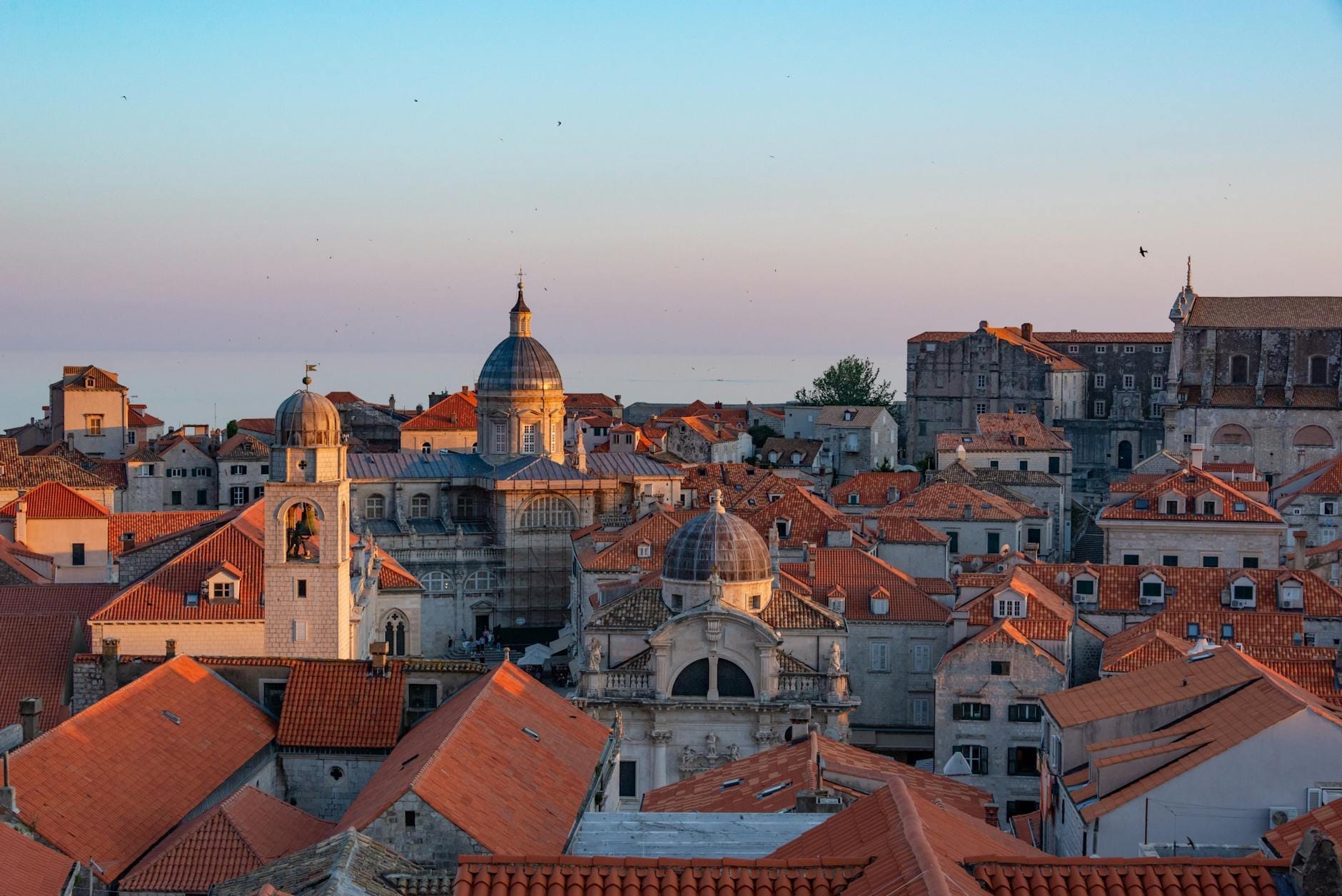
What Is St. Blaise's Church?
St. Blaise's Church (Croatian: Crkva Sv. Vlaha) is the most symbolically charged building in Dubrovnik's Old Town. Positioned at the eastern end of Stradun on Luža Square, it faces Orlando's Column and the Sponza Palace across a broad open piazza that has functioned as the civic heart of the city for centuries. The church is not the largest or tallest structure in the Old Town, but its placement, its elaborate Baroque facade, and its role as the home of Dubrovnik's patron saint give it a significance that outweighs its modest footprint.
The building you see today was constructed between 1706 and 1715, commissioned by the Republic of Ragusa (the independent city-state that preceded modern Dubrovnik) and designed by Venetian architect Marino Gropelli. It replaced an older Romanesque church from the 14th century that was destroyed in the catastrophic earthquake of 1667. Gropelli modelled the design on the Church of San Maurizio in Venice, which explains the ornate stonework, the layered pilasters, and the confident theatrical quality of the facade. For a deeper introduction to how this church fits into the broader Old Town landscape, the Dubrovnik Old Town walking tour guide provides useful context on Luža Square and its surrounding monuments.
💡 Local tip
Entry is free and no ticket is required. The church is generally open from around 7:00 AM to 6:00 PM daily, though hours may shorten in the off-season. Check the notice board at the entrance if visiting outside summer.
The Architecture: Venetian Baroque in a Croatian Context
The facade of St. Blaise's Church is one of the most photographed surfaces in Dubrovnik, and for good reason. Four large Corinthian columns frame the central portal, above which a relief panel depicts St. Blaise himself holding a scale model of the city. Statues of saints occupy niches at the corners, and the whole composition is crowned by a dome that sits more quietly than the facade below it. The stonework is in Dubrovnik's characteristic warm cream-white limestone, which catches morning light with particular clarity.
Inside, the church is compact but carefully proportioned. The nave leads directly to the high altar, where the main treasure of the church is kept: a 15th-century silver-gilt statue of St. Blaise. This small Gothic statue, roughly 60 cm tall, survived the 1667 earthquake that destroyed the earlier church, and it shows the saint in bishop's vestments holding a miniature model of the pre-earthquake city of Ragusa. It is one of the most valuable and historically significant objects in all of Dalmatia, and the level of detail in the city model it holds has been used by historians and architects to understand what medieval Dubrovnik actually looked like.
The interior walls are lined with Baroque altars, and stained glass windows (added in the 20th century and designed by Croatian artist Ivo Dulčić) fill the space with warm coloured light on sunny afternoons. The combination of the older structural elements and the modern glass creates an interior that feels genuinely layered rather than uniformly preserved.
Tickets & tours
Live prices and dates from our booking partner. If you book, we may earn a commission at no extra cost to you.
Mostar and Kravice Waterfalls excursion from Dubrovnik
From 120 €Instant confirmationFree cancellationDubrovnik Old Town Tour ith Cable Car Ride
From 56 €Instant confirmationFree cancellationMostar and Kravice Waterfalls full-day tour with pickup from Dubrovnik
From 66 €Instant confirmationFree cancellationSea kayaking experience in Dubrovnik
From 46 €Instant confirmationFree cancellation
St. Blaise: Why the City's Patron Matters Here
St. Blaise (Sveti Vlaho in Croatian) is not just the patron of this church but the patron of Dubrovnik itself, and his image appears throughout the city on gates, fountains, official seals, and even manhole covers. According to local tradition, a vision of St. Blaise appeared to a priest in 971 AD, warning him of a planned Venetian attack on the city. The timely warning allowed Ragusa to prepare its defences, and the saint was adopted as the protector of the Republic of Ragusa from that point forward.
That relationship between the saint and the city's civic identity is why this church is more than a place of worship. Its position at the centre of Luža Square, the square that also contains Orlando's Column and faces the Sponza Palace, was deliberate. The church was meant to stand at the intersection of the sacred and the civic, a permanent visual declaration that the city's governance and its spiritual life were inseparable.
The Feast of St. Blaise (February 3rd) remains one of the most important events in the Dubrovnik calendar, drawing large crowds to Luža Square for a procession, mass, and civic ceremonies that have continued with only brief interruptions for over a thousand years. If your visit coincides with this date, the square takes on a quality entirely different from the tourist-heavy summer months.
Visiting: What to Expect at Different Times of Day
The morning hours, roughly between 7:30 and 9:00 AM, are when the church is at its quietest. The light falls directly onto the facade from the east, making the stone reliefs sharp and photogenic. A small number of local worshippers attend early mass, and the atmosphere is calm in a way that the same space rarely is by mid-morning. The smell of incense carries faintly through the open doors.
From around 10:00 AM onward, Luža Square fills rapidly. Tour groups assemble near Orlando's Column, cruise passengers stream along Stradun, and the church entrance sees a steady flow of visitors. The interior can feel crowded around noon, particularly in July and August when Dubrovnik receives the highest visitor numbers. If you are trying to spend time with the silver statue of St. Blaise at the altar, a brief visit during these hours is still possible, but lingering is harder.
Late afternoon, from around 4:00 PM onward, brings a secondary calm as many day-trippers and cruise passengers begin to leave. The stained glass windows pick up warm western light at this hour, casting amber and gold tones across the nave floor. If photography inside the church is your priority, late afternoon is the better window. For guidance on the broader photographic opportunities around the Old Town, the Dubrovnik photography guide covers angles and timing across the city's key sites.
⚠️ What to skip
The church may be closed or have restricted access during mass services and on major feast days when ceremonies occupy the nave. Check times locally if you plan to visit specifically for the interior.
Practical Walkthrough: Getting There and What to Bring
St. Blaise's Church requires no planning beyond simply walking to it. Entering through the Pile Gate and following Stradun east for roughly ten minutes brings you directly to Luža Square. The church facade is visible as you approach. From Ploče Gate on the eastern side, Luža Square is just a few minutes' walk west. There is no entrance fee and no queue to manage.
The entrance involves a short flight of wide stone steps. There are no specific accessibility ramps noted at the main entrance, so visitors with mobility limitations should be aware of the stepped approach. Inside, the floor is level. The church is cool relative to the summer heat outside, which makes it a natural stopping point on a warm afternoon.
Modest dress is expected, as with any active place of worship. Bare shoulders and very short shorts may attract polite requests to cover up, though enforcement is less strict here than in some other Croatian churches. A scarf or light layer in your bag handles this without any inconvenience.
Honest Assessment: Is It Worth Your Time?
St. Blaise's Church is not a sprawling cathedral with hours of content. The interior is small, and a thorough look at every altar and the silver statue takes around 20 minutes. What makes the visit worthwhile is the density of meaning in a compact space: the architecture is genuinely excellent, the silver statue is historically unique, and understanding who St. Blaise is and why Dubrovnik cares so deeply about him reframes everything else you see in the Old Town, from the gate carvings to the city's official symbols.
Visitors who have already committed to a full Old Town itinerary, including the city walls or Rector's Palace, will find this a natural and low-effort addition. Those on a very tight schedule who have to choose between sites should know that the church is free, takes less than half an hour, and sits directly on the route between the Stradun and the harbour-side attractions. There is genuinely no reason not to step in.
The one group that may feel underwhelmed: visitors expecting a grand, cathedral-scale interior with elaborate ceiling frescoes and long naves. The church is Baroque but not palatial. If architectural grandeur is the primary interest, the nearby Rector's Palace or Dominican Monastery offer more square footage of historic detail. St. Blaise's Church rewards those who come with curiosity about history and civic identity rather than those chasing spectacle.
ℹ️ Good to know
The gold-plated Gothic statue of St. Blaise on the high altar is one of the most historically significant objects in Dalmatia. Look closely at the city model he holds in his left hand — it shows Dubrovnik's skyline as it appeared before the 1667 earthquake, making it an irreplaceable architectural record.
Insider Tips
- Arrive before 9:00 AM to see the facade in direct eastern light and experience the church without tour groups. The square is dramatically quieter in the first hour after opening.
- The model of pre-earthquake Ragusa in St. Blaise's silver hand is easier to see if you approach the altar from the right side aisle and use the zoom on a phone camera rather than trying to lean over barriers.
- If you visit on February 3rd (Feast of St. Blaise), Luža Square fills with a civic procession that has continued for centuries. The ceremony is free to watch and gives the square a completely different character from any other day of the year.
- The stained glass inside was designed by Croatian artist Ivo Dulčić. It is often overlooked by visitors focused on the Baroque structure, but the quality of the work is high and the afternoon light through it is notable.
- Combine this visit with a look at Orlando's Column directly across the square and the Sponza Palace to the north. All three are free and together they tell the complete story of Ragusa's civic and commercial identity in under an hour.
Who Is St. Blaise's Church For?
- History and culture travellers who want to understand the civic identity of the Republic of Ragusa
- Architecture enthusiasts interested in Venetian Baroque outside of Venice
- Photographers working the Old Town in early morning or late afternoon light
- Travellers on a budget who want meaningful cultural experiences without admission costs
- Anyone visiting during February who wants to experience an authentic local festival
Nearby Attractions
Other things to see while in Old Town (Stari Grad):
- Banje Beach
Banje Beach is Dubrovnik's closest and most photographed beach, sitting just east of the Old Town walls with direct views of the medieval fortifications and Lokrum Island. It's a pebbly, organized beach with free public access, paid lounger rentals, and a restaurant-bar that runs well into the night. Convenient, yes. Quiet, no.
- Buža Bar
Buža Bar is a no-frills open-air bar carved into a gap in Dubrovnik's ancient city walls, perched directly above the Adriatic Sea. Reached through a low iron-gated hole in the stonework, it offers cold drinks, cliff-jumping, and some of the most dramatic coastal views in the Mediterranean. There is no admission charge, no kitchen, and no pretense.
- Cathedral of the Assumption of the Virgin Mary
Rising from the rubble of a 1667 earthquake, the Cathedral of the Assumption of the Virgin Mary anchors the heart of Dubrovnik's Old Town with its commanding Baroque dome and a treasury that holds relics spanning a millennium. It's quieter than the city walls and more revealing than most visitors expect.
- Dominican Monastery & Museum
Built from 1225 and shaped through the 15th century, the Dominican Monastery in Dubrovnik's eastern Old Town holds one of Dalmatia's finest collections of medieval and Renaissance art. The Gothic-Renaissance cloister, a Titian altarpiece from 1554, and works by the Dubrovnik School of painters make this one of the most intellectually rewarding stops in the city.
Planning a trip? Discover personalized activities with the Nomado app.