South Milan's Fondazione Prada district centers on one of Italy's most ambitious cultural institutions, a 19,000-square-meter complex built from a 1910s distillery in what is now Municipio 4. The surrounding area offers a quieter, residential counterpoint to the tourist-heavy center, with good metro access and a genuinely local character.
South Milan is where the city stops performing and starts living. The Fondazione Prada complex, anchored at Largo Isarco 2, transformed a century-old distillery into one of Europe's most serious contemporary art institutions, and in doing so quietly elevated an otherwise overlooked part of the city into a destination with real substance in today's Municipio 4.
Orientation
Fondazione Prada sits in what is now Milan's Municipio 4, the southeastern quadrant of the city that most visitors never reach. Largo Isarco 2 is the address, a street that doesn't appear in most tourist itineraries, roughly 3 kilometers south of the Duomo. The surrounding neighborhood is broadly referred to as the Porta Romana and Lodi area, named after two of the historic southern gates of the city.
To build a mental map: if you stand at the Duomo and walk south along Corso di Porta Romana, you pass through the Ticinese and Sant'Ambrogio zone, continue through the increasingly residential Porta Romana district, and eventually reach the quieter streets around Viale Isonzo and Largo Isarco. The neighborhood transitions gradually from the dense historic fabric of inner Milan to a more open, industrial-residential grid typical of early 20th-century Milanese urban expansion.
The closest metro station is Lodi T.I.B.B. on the M3 (yellow line), about a 7-minute walk from the Fondazione entrance. Porta Romana station on the same line puts you about 10 minutes away on foot. This makes the area easily accessible from the rest of the city. For context on how this fits into Milan's wider transit network, see the guide to getting around Milan.
Character & Atmosphere
The streets around Fondazione Prada have none of the self-consciousness of Brera or the curated cool of Navigli. This is a working residential neighborhood where apartment blocks from the 1950s and 1960s line streets named after rivers and Italian geography. Dry cleaners, small alimentari, and corner bars serve the people who actually live here. The Fondazione arrives in this context like a confident interruption, its architectural language entirely its own, surrounded by the ordinary city.
In the morning, the area moves at a local pace. Bar counters fill with workers having a quick espresso before the commute. The streets around Largo Isarco are quiet enough that you can hear the trams on Viale Isonzo from a block away. The Fondazione complex itself opens later in the morning, and the first visitors tend to be art-focused travelers who have done their research, not cruise-ship crowds.
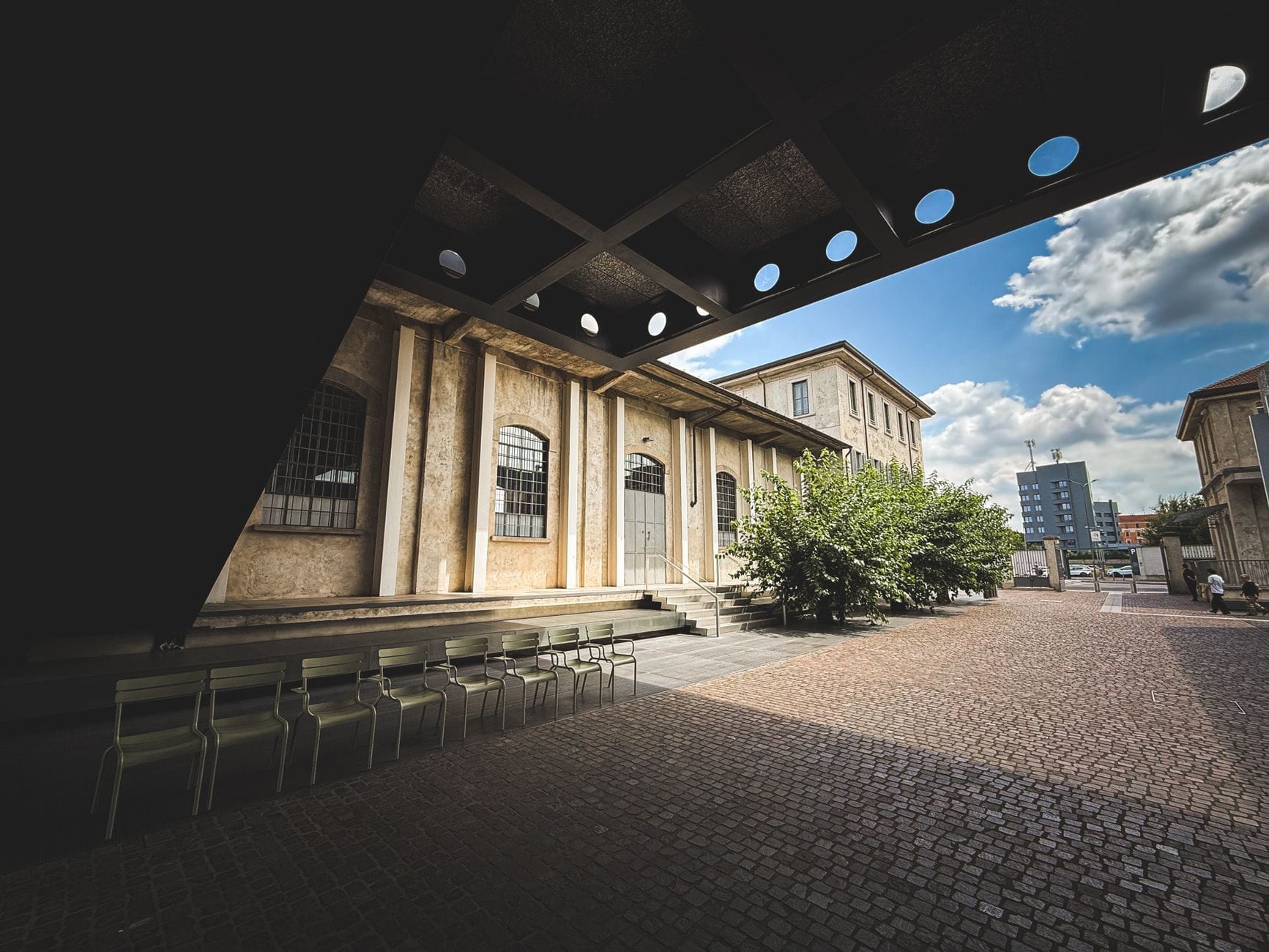
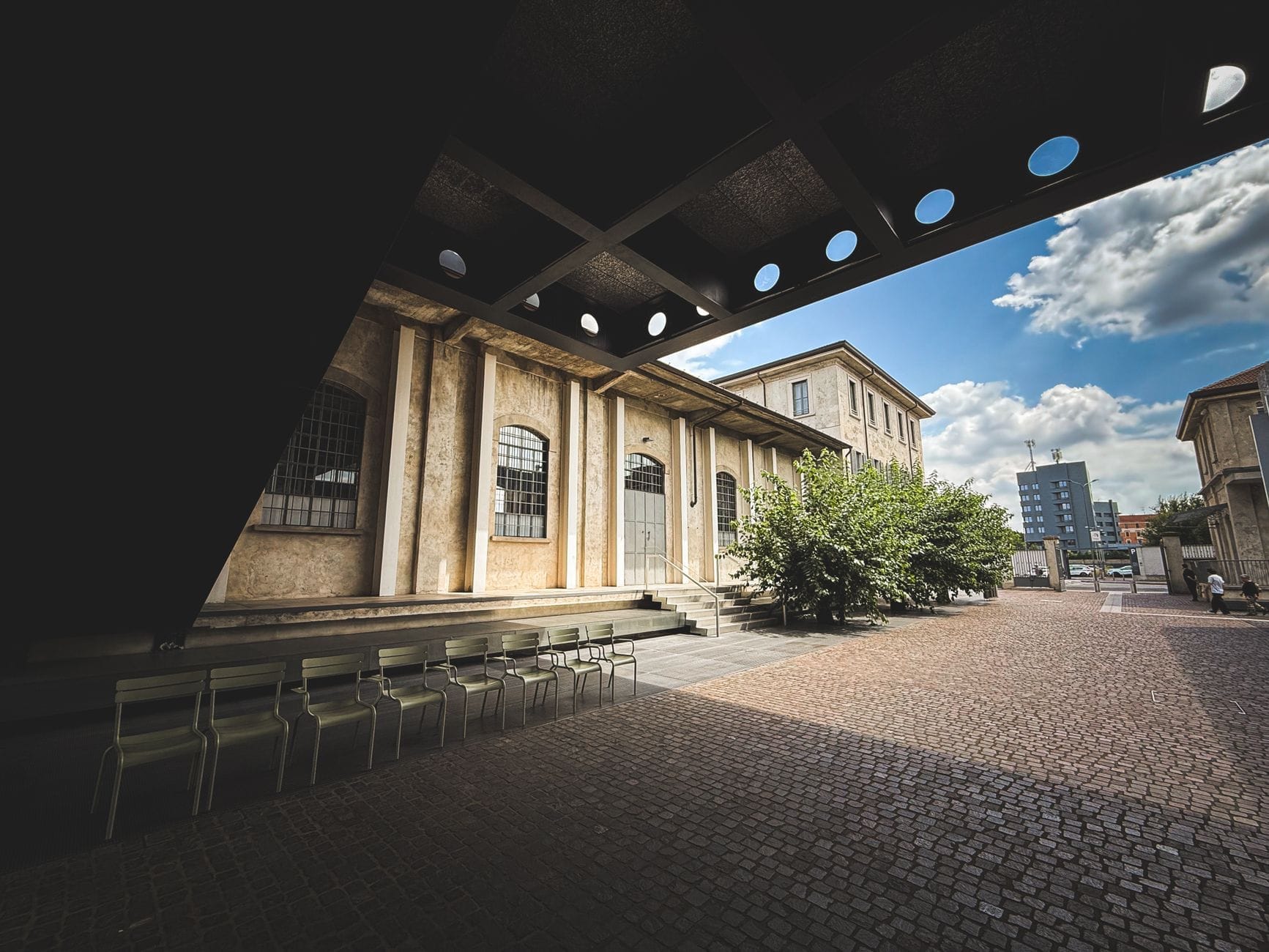
By afternoon, especially on weekends, the cultural center draws a more diverse crowd: architecture students, design professionals, families using the free outdoor areas. The light in the courtyard between the Fondazione's industrial structures is worth noting; the mix of preserved brick, gold-leafed building surfaces, and concrete creates shifting patterns across the day that photographers respond to instinctively. After dark, the neighborhood returns to residential quiet, with the Fondazione's restaurant and bar providing the main after-hours draw.
ℹ️ Good to know
The outdoor courtyard areas, bookshop, Bar Luce, and Ristorante Torre at Fondazione Prada are accessible without a paid ticket. This makes the complex worth visiting even on a tight budget or tight schedule.
What to See & Do
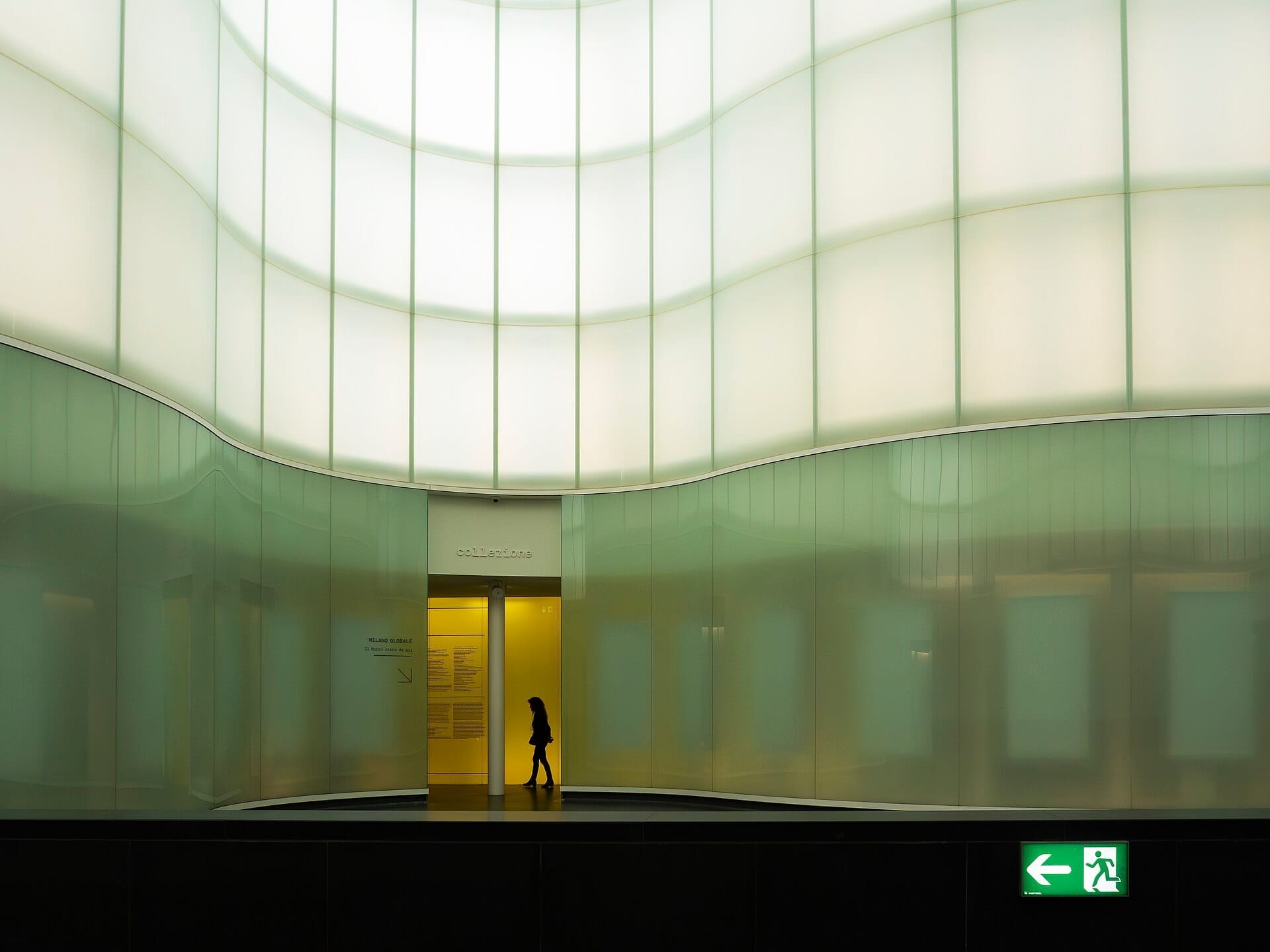
The anchor of this part of Milan is, without question, Fondazione Prada, the cultural institution established by the Prada Group that occupies a former distillery complex dating to the 1910s. The campus covers approximately 19,000 square meters and was redesigned by the architectural firm OMA, led by Rem Koolhaas. The result is a campus where century-old industrial buildings exist alongside contemporary structures, including the Podium exhibition hall, the Cinema, and the Torre, a nine-story tower that houses part of the permanent collection.
The Torre is the architectural centerpiece and provides some of the best views of this part of Milan, looking north toward the city center and south toward the metropolitan periphery. The permanent collection spans post-war and contemporary art, with works by artists including Walter De Maria, Louise Bourgeois, and Carsten Höller, whose dizzying mirrored rooms occupy dedicated spaces within the campus. Temporary exhibitions rotate regularly and draw serious attention from the international art world.
Bar Luce, designed by filmmaker Wes Anderson, is well worth a stop even for visitors with limited interest in contemporary art. The interior recreates the aesthetic of a 1950s Milanese bar with pastel colors, curved counters, and a functioning pinball machine. It functions as a cafe during the day and is one of the more distinctive spaces in Milan.
The wider Zone 5 area has fewer conventional tourist attractions, but travelers interested in architecture will find the residential streets around Porta Romana worth exploring. For a broader understanding of Milan's architectural character, the Milan architecture guide provides useful context. Those wanting to compare Milan's other major contemporary art venue should know that Pirelli HangarBicocca in the north of the city operates on a similarly ambitious scale in another converted industrial space.
Fondazione Prada: permanent collection, temporary exhibitions, cinema program
Bar Luce: Wes Anderson-designed cafe, open without exhibition ticket
Ristorante Torre: dining on upper floors of the Torre building
Bookshop: art and architecture publications, accessible without ticket
Outdoor campus: free access to courtyard and exterior architectural elements
💡 Local tip
Book tickets for Fondazione Prada exhibitions in advance, particularly for major temporary shows and during Milan Design Week or Fashion Week, when the city fills with international visitors and queues form at the entrance.
Eating & Drinking
The Fondazione Prada campus itself handles food and drink with more ambition than most cultural institutions. Bar Luce is the most talked-about option, and it earns its reputation: the coffee is good, the aperitivo hour works well, and the interior provides a setting unlike anywhere else in Milan. Ristorante Torre occupies the upper floors of the Torre building and offers a more formal dining experience with views over the surrounding neighborhood.
Outside the campus, the streets around Largo Isarco and the Porta Romana neighborhood offer the kind of eating that Milan does well but rarely promotes to tourists: neighborhood trattorie with handwritten menus, aperitivo bars where the locals actually drink, and bakeries that operate on local rhythms. The Viale Isonzo and Corso Lodi corridors have a range of options spanning casual pizza and pasta through to more considered modern Italian cooking.
For visitors combining a Fondazione Prada visit with an exploration of the Navigli canals to the west, the canal-side dining and drinking scene is about 20 minutes on foot or one metro stop away. The Milan food guide covers the city's eating culture across all neighborhoods, with useful context on what to expect at different price points.
Aperitivo culture is alive in this part of the city, but it operates on local terms. The bars around Porta Romana and Lodi stations serve drinks with complimentary snacks in the early evening, typically between 6 and 9pm, without the tourist markup that applies closer to the center. Dress is casual, Italian is helpful but not essential, and the atmosphere is unhurried.
Getting There & Around
The M3 metro line, the yellow line, is the most direct public transport connection to this part of Milan. Lodi T.I.B.B. is the closest stop, placing you a 7-minute walk from the Fondazione Prada entrance on Largo Isarco. Porta Romana station is one stop further north on the same line and adds about 3 minutes to the walk. From the Duomo, the M3 journey to Lodi T.I.B.B. takes under 10 minutes, and including the walk you should allow around 15 minutes door to door.
Tram lines also serve the area via Viale Isonzo and Corso Lodi, connecting this part of Zone 5 to the inner city without requiring a metro interchange. The tram network in this zone tends to run at street level with good frequency during daytime hours. Walking from Porta Romana metro station toward the Fondazione takes you through streets that give a realistic picture of everyday Milanese residential life.
For visitors coming from further afield, Milano Linate Airport is approximately 7 kilometers to the east, making this part of the city relatively straightforward to reach from the airport compared to more central neighborhoods. Malpensa Express trains terminate at Milano Centrale, from which the M3 line provides a direct connection south toward Lodi T.I.B.B.
💡 Local tip
A standard ATM (Azienda Trasporti Milanesi) single-ride ticket covers metro, tram, and bus travel within the urban network and is valid for 90 minutes from validation. Day passes offer better value if you plan multiple trips across the city.
Where to Stay
Accommodation in this part of Milan skews toward business travelers and visitors who specifically want to avoid the tourist center. Hotels in the Porta Romana and Lodi zones tend to offer better value for money than equivalent properties near the Duomo or Brera, with the tradeoff being that you're further from the major historic sights.
Staying in this area makes practical sense for travelers whose itinerary centers on Fondazione Prada and extends to the Navigli canals to the west or the Porta Venezia and design district to the northeast. The M3 line provides fast access to Centrale, Cadorna, and the Duomo area, so sightseeing across the city remains straightforward.
For travelers weighing accommodation options across the full city, the guide to where to stay in Milan maps out each zone with practical assessments of who each area suits. The Zone 5 area suits independent travelers, design and art enthusiasts, and those seeking a quieter base with metro access rather than a central location with premium pricing.
Is This Neighborhood for You?
The area around Fondazione Prada is not a conventional tourist neighborhood, and that is precisely its appeal for a certain type of traveler. There are no major medieval churches, no fashion boutiques, no piazzas designed for lingering. What there is: one of Europe's most serious contemporary art institutions in a setting that rewards genuine attention, a residential neighborhood with authentic daily rhythms, and easy metro access to the rest of Milan.
Visitors expecting the atmosphere of central Milan or the curated design-world appeal of Isola or Porta Nuova will find Zone 5 underwhelming. The streets around Largo Isarco are functional and lived-in, not photogenic. After dark, the neighborhood quiets considerably, limiting evening options to the Fondazione's own restaurant and nearby local bars.
For travelers building a broader Milan itinerary, this area works best as a half-day or full-day detour rather than a base. Combine it with the Navigli district to the west for an afternoon that moves from serious contemporary art to canal-side evening drinks. Those with an interest in how Milan's cultural landscape has evolved should also consider the best museums in Milan guide for context on where Fondazione Prada fits in the city's wider cultural offer.
TL;DR
Best for: art and architecture enthusiasts, design professionals, travelers wanting genuine neighborhood atmosphere away from tourist circuits
Anchor attraction: Fondazione Prada at Largo Isarco 2, a 19,000 sqm campus in a converted 1910s distillery with contemporary art, cinema, and Bar Luce
Transit: M3 (yellow line) to Lodi T.I.B.B. (7-minute walk) or Porta Romana (10-minute walk)
Important caveat: the surrounding streets are residential and quiet after dark; this is not a neighborhood for nightlife or casual sightseeing
Best combined with: a Navigli canal visit to the west, or as a standalone cultural half-day from any central Milan base
Milan has over 70 museums, from Renaissance masterpiece galleries to free contemporary art spaces. This guide cuts through the options and tells you exactly which ones are worth your time, what to expect inside, and how to plan your visit.
Milan rewards visitors who time their trip well. This guide covers every season in detail — temperatures, crowd levels, key events, and what to skip — so you can make the most informed decision about when to go.
Milan rewards those who look up and climb higher. This guide covers the city's best viewpoints, from the Duomo's Gothic spires and Palazzo Lombardia's 39th-floor panorama to canal-side sunset bridges and design-forward skyscrapers.
Milan sits at the center of one of Europe's most rewarding day-trip networks. Within two hours by train you can reach Alpine lakes, medieval hilltop towns, Roman amphitheaters, and UNESCO World Heritage canals. This guide covers the best destinations, how to get there, and what to prioritize once you arrive.
Milan has one of Italy's best urban transport networks, but knowing which ticket to buy, which metro line to take, and how to reach the city from three different airports saves real time and money. This guide covers everything from ATM fares and the RicaricaMi card to bike sharing and walking distances between key neighborhoods.
Milan is Italy's most demanding city for high-end travel, where fashion weeks and design fairs can triple hotel rates overnight. This guide covers where to stay, what to spend, when to go, and how to move around Milan like someone who has done it before.
Three days in Milan is enough time to cover the cathedral district, the great art museums, the canal neighbourhood, and still fit in a day trip to Lake Como. This itinerary is built around how the city actually works: metro-first logistics, realistic opening hours, and clear advice on what to skip.
Milan is served by three airports: Malpensa (MXP), Linate (LIN), and Bergamo Orio al Serio (BGY). Together the three airports form Italy's largest airport system by passenger volume, handling over 56 million passengers per year. This guide breaks down the key differences, transport links, costs, and which airport makes sense for your trip.
Milan's built environment is a genuine timeline in stone, steel, and glass. This guide walks you through every major architectural era, from the Gothic Duomo to Porta Nuova's skyscrapers, with practical routes, seasonal advice, and candid assessments of what's worth your time.
Milan's churches span seventeen centuries of history, from 4th-century basilicas built by the city's patron saint to Renaissance chapels covered floor-to-ceiling in frescoes. This guide covers the essential sacred sites, practical visiting tips, and the lesser-known churches that reward the curious traveler.
Milan Design Week is the world's largest design festival, combining the professional Salone del Mobile furniture fair at Rho Fiera with hundreds of free Fuorisalone events across the city's design districts. This guide covers dates, tickets, neighborhoods, transport, and practical planning advice.
Milan is one of the world's four fashion capitals, home to storied design houses, serious shopping districts, and four Fashion Weeks a year. This guide covers everything from navigating the Quadrilatero della Moda to understanding what tourists can actually access during Milan Fashion Week 2026.
Milanese food is not what most visitors expect. Rice trumps pasta, butter beats olive oil, and the city's signature dishes carry centuries of culinary history. This guide covers every essential dish, realistic price expectations, seasonal eating patterns, and practical advice for dining well in Milan.
Milan surprises most couples. Behind the fashion showrooms and financial towers lies a city with candlelit canals, world-class opera, cobblestone art districts, and Gothic cathedral rooftops built for golden-hour views. This guide covers the best romantic experiences in Milan, with practical details on pricing, timing, and what to skip.
Milan rewards those who look beyond the Duomo and The Last Supper. From a chapel lined with human skulls to a free panoramic skyscraper and a botanical garden tucked behind one of Italy's great art museums, these are the experiences that reveal the city locals actually love.
Spring transforms Milan from a grey winter city into one of Europe's most enjoyable urban destinations. This guide covers the real weather, the best events, crowd expectations, and everything you need to plan a smart April or May trip.
Milan transforms in winter into one of Italy's most atmospheric cold-weather destinations, with Christmas markets around the Duomo, centuries-old fairs near Castello Sforzesco, and a city that keeps its cultural calendar packed well past the holidays. This guide covers what to see, when to go, and how to get the most out of the season.
Leonardo da Vinci spent more than two decades in Milan, leaving behind some of the most extraordinary works in Western art and science. This guide covers every significant site, explains what you'll actually find there, and tells you exactly how to book before you arrive.
Milan's nightlife runs on a distinct rhythm: aperitivo first, dinner second, clubs last. This guide breaks down every major area, the best bars and clubs, what things cost, and how to get home at 3am.
Milan has a reputation for luxury fashion and fine dining, but the city is far more accessible than most travelers assume. This guide breaks down realistic daily costs, the smartest ways to use public transport, which world-class attractions are free, and how timing your visit can cut hotel prices by 25–40%.
Milan shopping covers far more than luxury fashion. This guide breaks down the city's best shopping districts, from the Quadrilatero d'Oro's flagship stores to Navigli's vintage markets, with practical advice on what to skip, what to budget, and when to go.
Lake Como sits less than an hour from Milan by direct train, making it one of the most rewarding day trips in northern Italy. This guide covers every transport option, the best villages to visit, ferry logistics, and how to avoid the most common mistakes first-time visitors make.
The journey from Milan to Rome covers roughly 565-570 km and can take anywhere from 3 hours to 6+ depending on how you go. This guide breaks down every realistic option, with clear price comparisons, booking strategies, and the city-center-to-city-center math that makes the train far more competitive than most people expect.
The Milan to Venice route is one of Italy's most popular corridors, served by frequent high-speed trains that cover the distance in around 2 hours 15 to 30 minutes. This guide breaks down every option, from Frecciarossa tickets to bus alternatives, with practical advice on what's worth it and what to skip.
Milan rewards families more than most people expect. From the interactive Leonardo da Vinci Science Museum to the free courtyards of Castello Sforzesco and the rooftop terraces of the Duomo, the city packs a serious amount of child-friendly content into a compact, walkable center. This guide cuts through the noise with specific venues, practical assessments, and logistics that actually help.
Milan rewards visitors who look beyond the fashion weeks and luxury boutiques. This guide covers the essential things to do in Milan Italy, from cathedral rooftops and Renaissance masterpieces to canal-side aperitivo and contemporary architecture, with practical advice on what to book in advance and what to skip.
Milan rewards travelers who choose their base carefully. This guide breaks down every major neighborhood, explains the price realities, and tells you exactly when to book to avoid paying peak-event rates.