MUDEC – Museo delle Culture: Milan's Museum of World Cultures
Housed in a converted industrial complex in the Tortona district, MUDEC – Museo delle Culture brings together over 7,000 objects spanning multiple continents and three millennia of human history. The permanent collection is free to enter, while rotating blockbuster exhibitions pull from some of the world's great cultural traditions.
Quick Facts
- Location
- Via Tortona 56, 20144 Milano – Tortona district
- Getting There
- Porta Genova (Metro M2 / train) – approx. 8-minute walk
- Time Needed
- 1.5–3 hours (permanent collection + one temporary exhibition)
- Cost
- Permanent collection: free. Temporary exhibitions: paid, prices vary by show
- Best for
- Culture lovers, design enthusiasts, families, architecture admirers
- Official website
- www.mudec.it/en
What Is MUDEC and Why Does It Exist?
MUDEC – Museo delle Culture opened in 2015, timed deliberately to coincide with Expo Milano 2015, the world exposition that drew tens of millions of visitors to the city. Its roots go back further: around 1999, the City of Milan launched the 'City of Cultures' project on the former Ansaldo factory site in Tortona, a sprawling industrial area that had been quietly transforming for years. The MUDEC project itself was commissioned in the early 2000s, with British architect David Chipperfield leading the design.
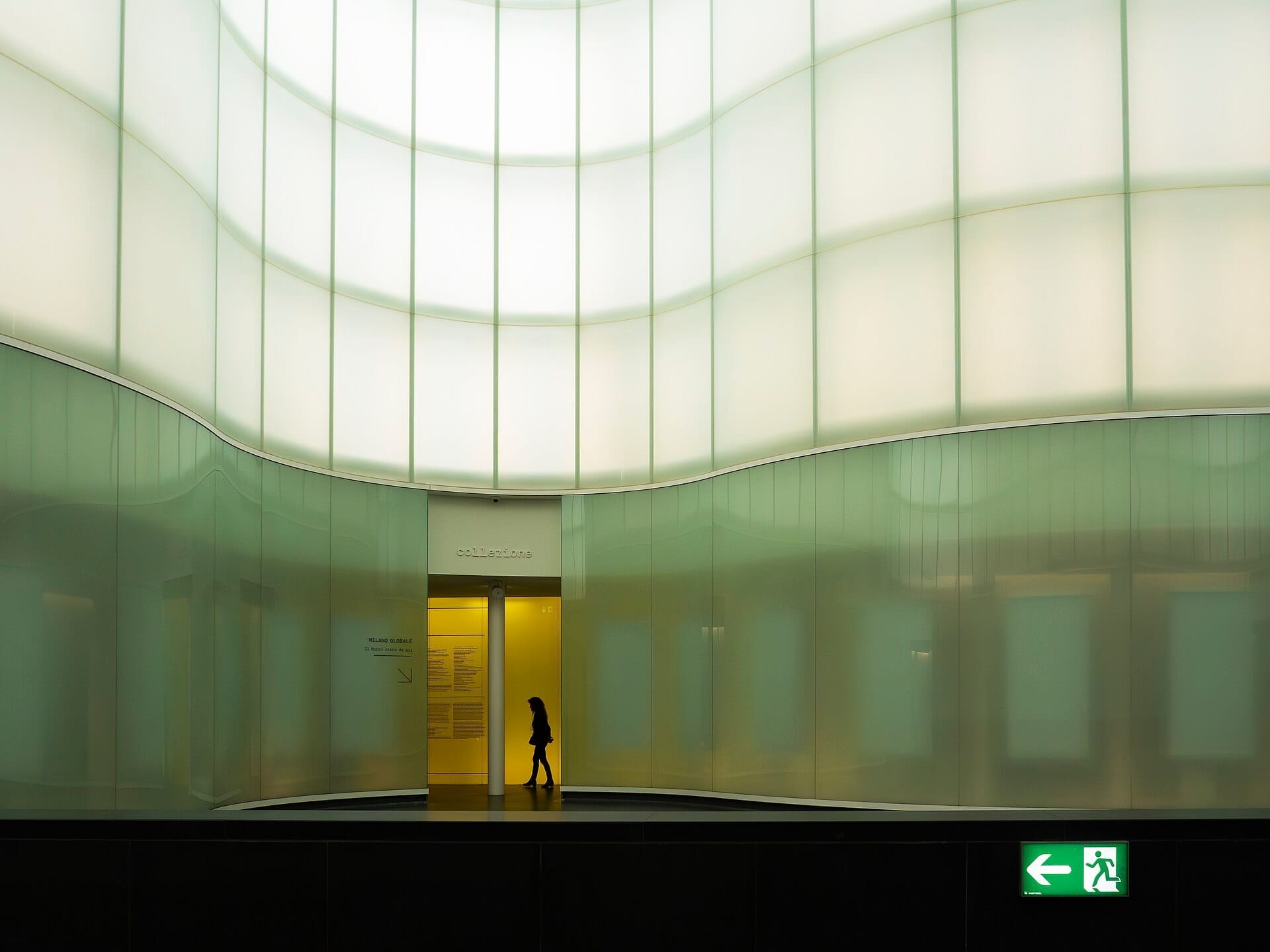
The result is a 23,000 square metre building that is neither a classical art palace nor a bland contemporary box. Chipperfield inserted a luminous central hall beneath a faceted glass roof, anchoring the entire structure around a soaring atrium that filters natural light down to multiple gallery levels. The industrial shell of the old Ansaldo works is preserved and visible in parts, giving the building a dual personality: utilitarian heritage outside, precise architectural theatre inside.
The museum's permanent collection holds over 7,000 objects, ranging in date from around 1500 BC to the 20th century, sourced from Africa, Asia, the Americas, and Oceania. For a deeper look at how MUDEC fits into Milan's broader cultural offer, the best museums in Milan guide covers the full landscape.
The Building: Architecture Worth Noticing
From Via Tortona, MUDEC's façade reads as a composed, almost restrained intervention within the surviving Ansaldo factory envelope. The exterior does not announce itself with grand gestures. Step inside, however, and the spatial logic becomes clear immediately: the central atrium is the emotional core of the visit. The glass ceiling above it shifts the quality of light depending on cloud cover and time of day. On overcast Milanese mornings, the atrium takes on a cool, even silver tone. On sunny afternoons, it fills with warm, diffuse light that reaches the lower levels without the harshness of direct sun.
Chipperfield's approach here was to create a neutral container that does not compete with the objects on display, while still delivering a genuinely memorable spatial experience. The ramps, bridges, and overlooks within the atrium allow visitors to see each other moving through different levels, turning the museum's circulation into part of the spectacle. It is a building that rewards slow walking.
💡 Local tip
Arrive at opening time (09:30 Tuesday through Sunday; closed Monday) to experience the atrium at its quietest. The light quality is best in the late morning on clear days, and the space feels entirely different from how it reads in photographs.
Tickets & tours
Hand-picked options from our booking partner. Prices are indicative; availability and final rates are confirmed when you complete your booking.
Milan Museo Del Novecento entry ticket with audio guide
From 14 €Instant confirmationFree cancellationAudio guide for the Last Supper in Santa Maria delle Grazie
From 4 €Instant confirmationGuided gastronomic and cultural tour through Milan
From 65 €Instant confirmationFree cancellationMuseum of the 900 self-guided audio tour in Milan
From 4 €Instant confirmation
The Permanent Collection: Three Millennia Across Five Continents
The permanent galleries are arranged thematically rather than strictly by geography, which means visitors move between continents within a single room, encountering African ceremonial masks alongside Asian ritual objects and pre-Columbian textiles. This approach can feel disorienting at first, but it rewards visitors who engage with the interpretive materials rather than simply scanning objects.
The collection includes sculptures, textiles, musical instruments, everyday objects, and ceremonial items. The chronological span is extraordinary: the oldest objects date to around 1500 BC, while 20th-century pieces sit in adjacent cases. Particularly strong areas include the African holdings, which feature carved wooden figures, ceremonial staffs, and woven fabrics of considerable age and quality. The Oceanic section, smaller but carefully curated, contains objects that rarely appear in European museums.
Entry to the permanent collection is free of charge, which is notably unusual for a museum of this scale in a major European city. There are no timed entry slots required for the permanent galleries; you can arrive, collect a floor plan, and navigate at your own pace. Allow at least 90 minutes to move through the collection without rushing.
ℹ️ Good to know
The permanent collection is free. Temporary exhibitions require a paid ticket, with prices varying by show. Discounted rates apply for people with disabilities; one companion enters free with appropriate documentation. Check the MUDEC ticketing page for current exhibition prices before your visit.
Temporary Exhibitions: The Real Draw for Many Visitors
MUDEC has built a strong reputation for large-scale temporary exhibitions focused on non-European cultures and cross-cultural exchange. Past exhibitions have explored ancient Egyptian civilisation, Aztec art, Japanese aesthetics, and the visual culture of African kingdoms. These shows typically run for several months and bring in major international loans. The production quality is consistently high, with substantial interpretive panels, multimedia installations, and spatial staging that takes full advantage of the building's gallery proportions.
For temporary exhibitions, booking tickets in advance online is strongly recommended. Popular shows, particularly those with Egyptian or pre-Columbian themes, sell out weekend slots weeks ahead, especially during Italian public holidays and the busy April-to-June spring season. Weekday mornings, particularly Tuesdays and Wednesdays, are substantially quieter than weekend afternoons.
Thursday evenings are the most underused time slot in the building. MUDEC stays open until 22:30 on Thursdays, and by 19:30 most of the day's visitors have left. The galleries feel calmer, the lighting shifts to a warmer artificial register, and the temporary exhibition spaces take on a different, more contemplative atmosphere. If you are planning a three-day Milan itinerary, a Thursday evening at MUDEC is an efficient way to slot in the museum without losing daytime hours elsewhere.
The Tortona District: Context and What's Around
MUDEC sits within the Tortona design district, a zone that transformed from heavy industry to creative economy over the course of the 2000s. The streets around Via Tortona are home to architecture studios, fashion showrooms, photo agencies, and co-working spaces. During Milan Design Week in April, the area becomes one of the busiest satellite exhibition zones in the city, with temporary installations occupying every available warehouse and courtyard.
Outside Design Week, the neighbourhood moves at a much calmer pace. There are independent cafés, a handful of design-focused shops, and clear views of the area's industrial past in the brick buildings that line the back streets. Porta Genova station, the nearest transit stop, is also the gateway to the Navigli canal district, which begins just north of the station and offers a completely different Milan: canal-side aperitivo bars, antique markets on the last Sunday of the month, and a denser, more populated street life.
The walk from Naviglio Grande to MUDEC takes around 12 minutes on foot, making it easy to combine both in a half-day. Head to MUDEC first when the galleries are fresh, then walk back along the canal in the late afternoon when the light on the water is at its best.
Practical Visit Information
MUDEC is open Tuesday through Sunday from 09:30 to 19:30, with last entry one hour before closing. On Thursdays the museum remains open until 22:30. The permanent collection is closed on Mondays, while temporary exhibitions may have limited Monday opening for special events; it is worth confirming on the official site, as specific exhibitions and events can affect access.
The museum is fully accessible to visitors with physical disabilities. Dedicated educational programs for visitors with visual, hearing, or cognitive-relational disabilities are available by reservation through MUDEC's educational services. The building's ramp and lift system provides access to all levels without stairs.
There is an on-site café and a bookshop near the main entrance, the latter stocking art books, design publications, and exhibition catalogues. The café is a reasonable option for a mid-visit break but fills up quickly during busy exhibition periods. Photography is generally permitted in the permanent galleries without flash; check individual exhibition rules, as some temporary shows restrict photography for copyright reasons.
⚠️ What to skip
MUDEC’s permanent collection is closed every Monday. Arriving on a Monday hoping to visit the main galleries is the single most common planning mistake visitors make. The neighbourhood around Via Tortona is also quieter on Mondays, with several nearby cafés closed. Plan accordingly.
Who Might Want to Skip This
If your interest is specifically in Italian art, Renaissance painting, or Milanese history, MUDEC will likely disappoint. The collection is entirely focused on non-European cultures; there is no Italian art here, no Leonardo, no Baroque. Visitors with a tight itinerary focused on the Duomo, the Brera galleries, or the Last Supper will find MUDEC requires a separate trip to a different part of the city and represents a significant shift in focus.
Visitors who find comparative, thematically organised displays less satisfying than strict chronological or geographic curation may also find the permanent collection harder to navigate. The museum's interpretive approach prioritises cultural exchange and dialogue over linear historical narrative, which suits some visitors more than others.
Insider Tips
- Thursday late opening (until 22:30) is the least crowded time to visit. By 20:00, even popular temporary exhibitions have space to breathe, and the atrium light shifts to a warm, more dramatic register.
- The permanent collection is free and requires no advance booking. If you are visiting Milan on a tight budget, this is one of the few large-scale museum experiences you can walk into at any point during opening hours without paying or pre-planning.
- During Milan Design Week (Salone del Mobile, typically held in April), the Tortona district becomes intensely busy with industry crowds. MUDEC itself is worth visiting then for its programming, but allow extra time to navigate the area and book exhibition tickets well in advance.
- The museum bookshop stocks catalogue editions from past MUDEC exhibitions, some of which are difficult to find elsewhere. If you visited a previous show and missed the catalogue, it is worth checking the bookshop shelves.
- Combine MUDEC with a walk along the Naviglio Grande by heading north from Porta Genova after your visit. The two-kilometre canal walk takes about 30 minutes and ends near the Darsena basin, one of Milan's few open-water spaces.
Who Is MUDEC – Museo delle Culture For?
- Travellers interested in world cultures, ethnographic collections, and non-European art
- Architecture enthusiasts who want to experience a David Chipperfield building in context
- Budget-conscious visitors: the permanent collection is free to enter
- Design-week visitors exploring the Tortona district's creative cluster
- Evening visitors on Thursdays looking for a cultural experience outside standard museum hours
Nearby Attractions
Other things to see while in Fondazione Prada & South Milan:
- Fondazione Prada
Fondazione Prada occupies a transformed 1910s distillery in Milan's Porta Romana area, redesigned by architecture firm OMA into one of Europe's most ambitious contemporary art spaces. Across 19,000 m² of galleries, towers, and courtyard pavilions, the foundation presents rotating exhibitions alongside a permanent collection that rewards serious looking. Bar Luce, designed by Wes Anderson, is reason enough to linger.