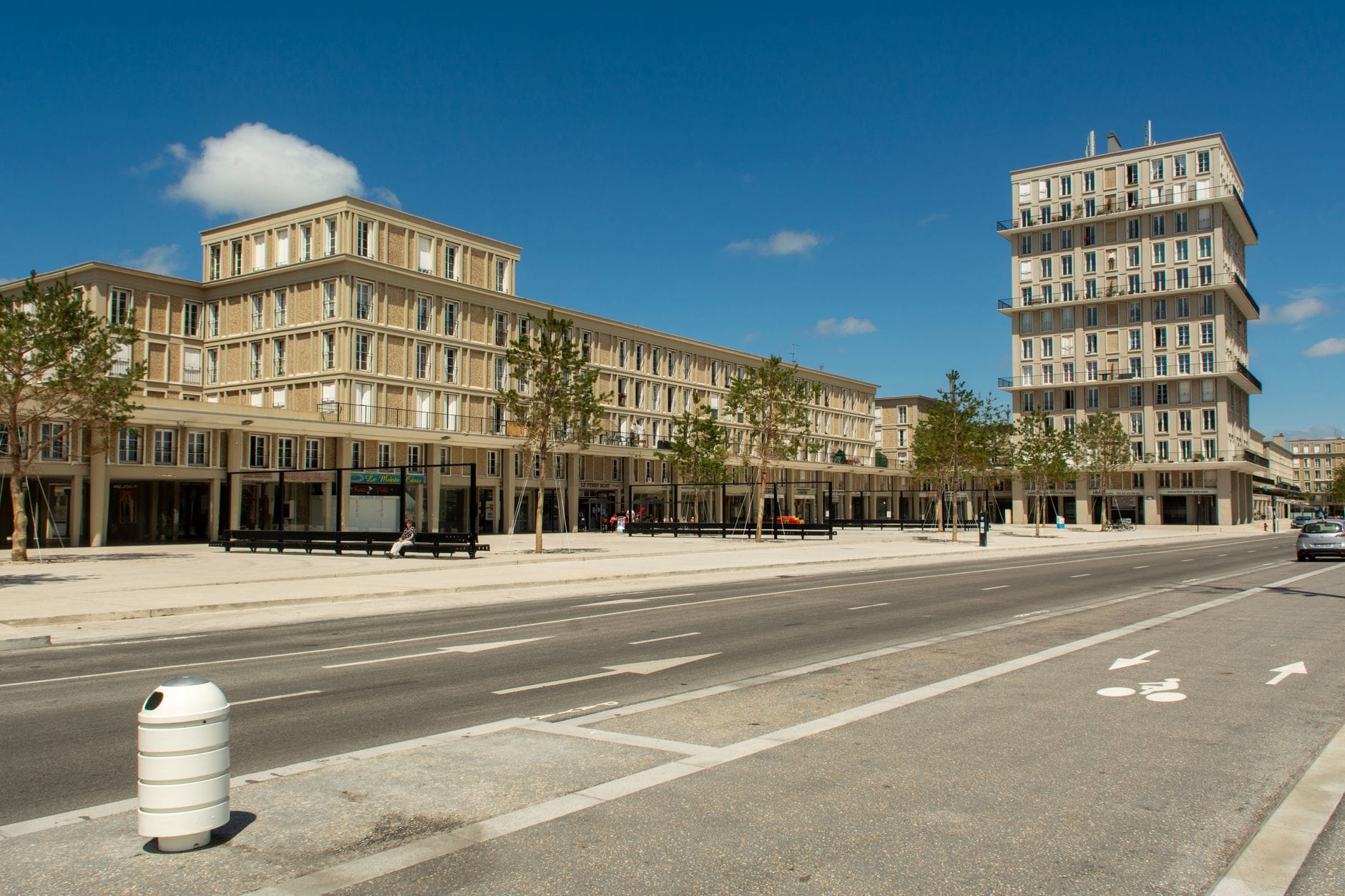
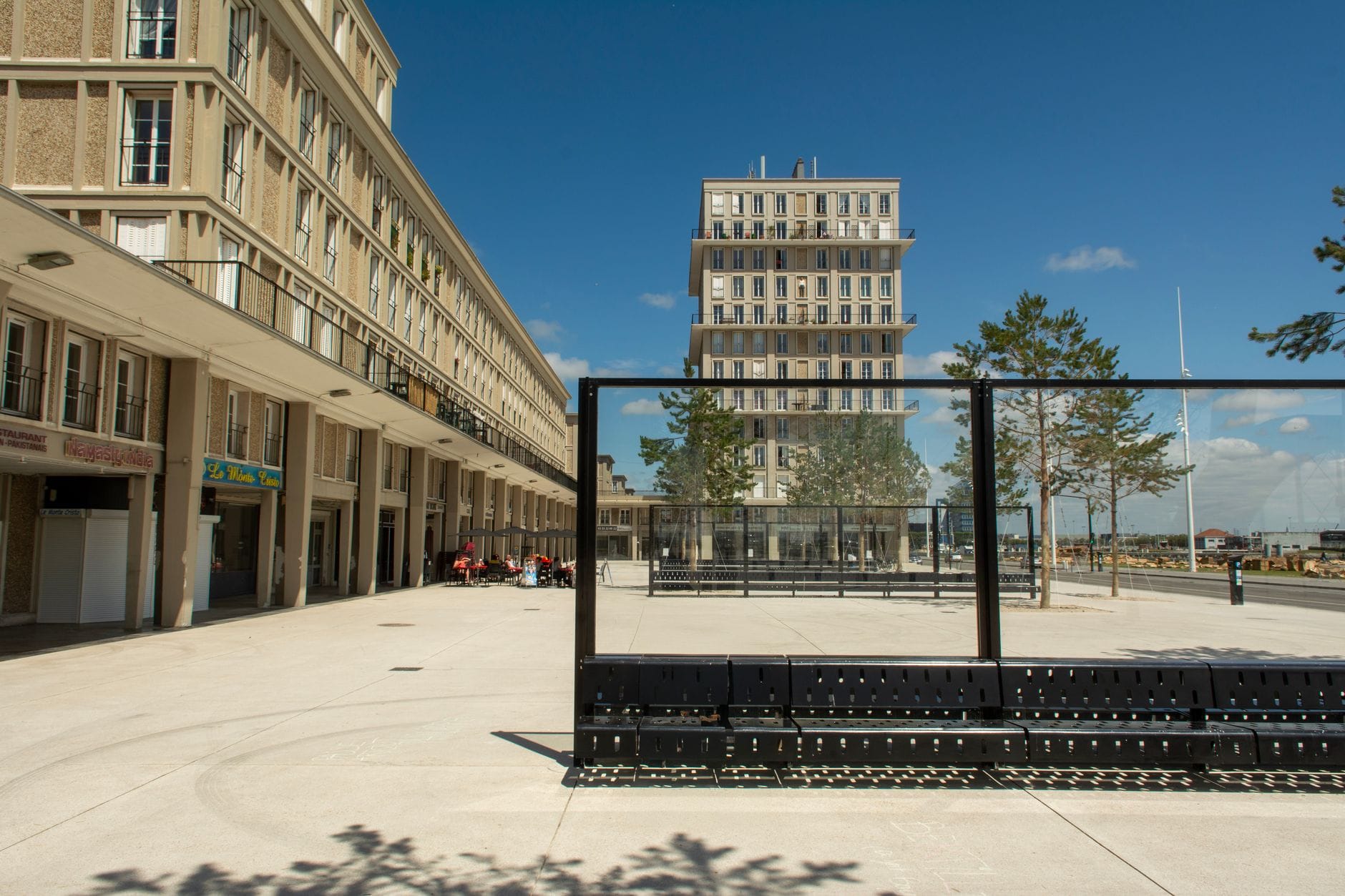
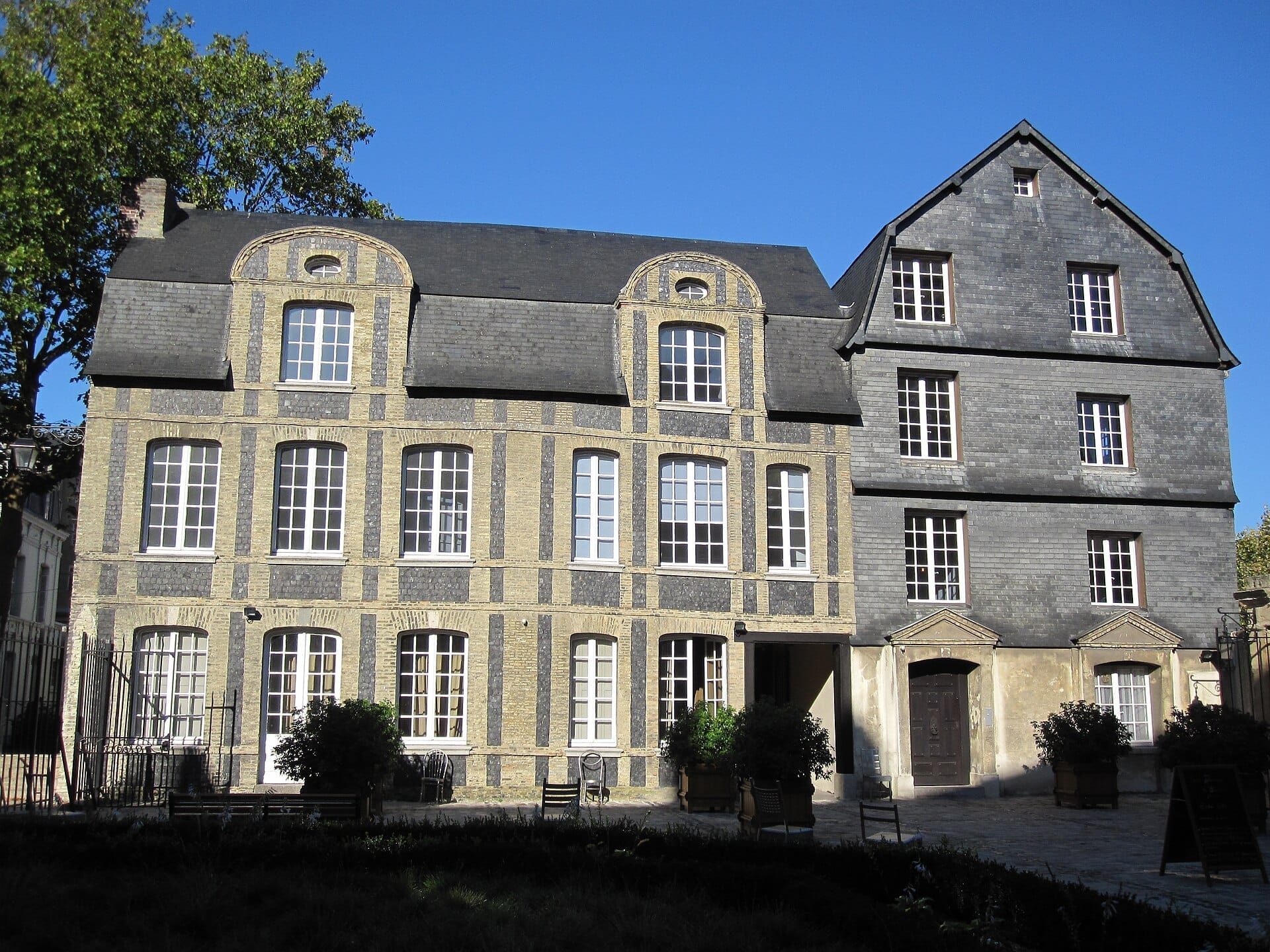
Centre Ville Perret is the UNESCO-listed heart of Le Havre, a 133-hectare grid of post-war concrete modernism designed by Auguste Perret after Allied bombing levelled the city in 1944. It serves as the administrative, commercial, and cultural centre of Le Havre, and stands as one of the most coherent examples of mid-20th century urban planning anywhere in the world.
Centre Ville Perret is Le Havre's rebuilt city centre, inscribed on the UNESCO World Heritage List in 2005 as an outstanding example of post-war modernist urban planning. Designed by Auguste Perret after catastrophic wartime destruction, its rational concrete grid feels unlike any other French city centre: monumental yet human-scaled, severe yet suffused with light, and still very much alive as a working civic space rather than a museum piece.
Orientation
Centre Ville Perret occupies roughly 133 hectares at the core of Le Havre, bounded to the south by the seafront along Boulevard Albert 1er, to the west by the beach and the beginning of the coastal promenade, to the north by the hillside neighbourhoods that escaped WWII destruction, and to the east by the working port and the Bassin du Commerce. This is not a neighbourhood tucked away at the edge of the city: it is the city's functional centre, where the town hall, main shopping streets, cultural institutions, and transit hubs all converge.
The layout is deliberately legible. Perret imposed a strict grid of wide, tree-lined axes radiating from key civic nodes. The primary north-south spine is Rue de Paris, which runs from the train station area straight to the waterfront. Avenue Foch and Boulevard de Strasbourg form the main east-west civic axis toward the sea, intersecting Rue de Paris near the Hôtel de Ville and its surrounding gardens. Walking from one end of the district to the other takes around 20 minutes on foot, though the scale of the individual blocks and the width of the avenues can make distances feel longer than they are.
The district connects seamlessly to Le Havre's other visitor areas. Walk south down any of the main axes and you reach the seafront and beach. Head east and the Bassin du Commerce brings you to the inner port basin. Climb north and the streets begin to narrow as you enter the pre-war districts on the plateau above. The suburb of Sainte-Adresse lies along the clifftop to the northwest, reachable by tram or a longer uphill walk.
Character & Atmosphere
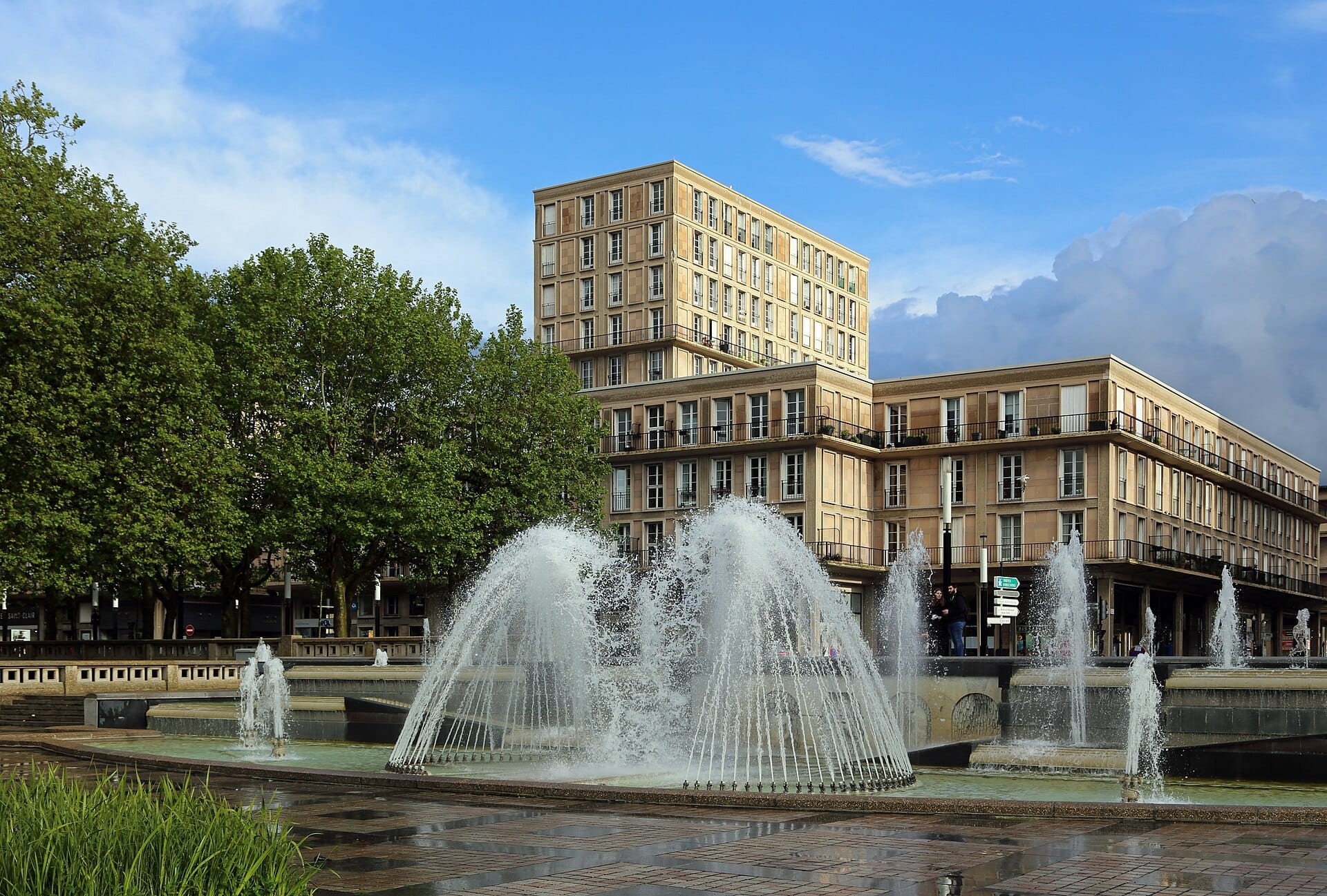
The first impression most visitors have of Centre Ville Perret is surprise. They expect a drab, grey post-war city and find instead something with genuine grandeur. Perret's genius was to work with concrete as an expressive material rather than a merely functional one. The facades along the main avenues are modular but textured, the proportions carefully considered, and the repetition creates a visual rhythm that feels more like music than monotony. The light in Le Havre is a factor here: the flat coastal light of the Normandy coast, particularly in the morning and at golden hour, softens the concrete and picks out the relief patterns on building facades in ways that photographs rarely capture.
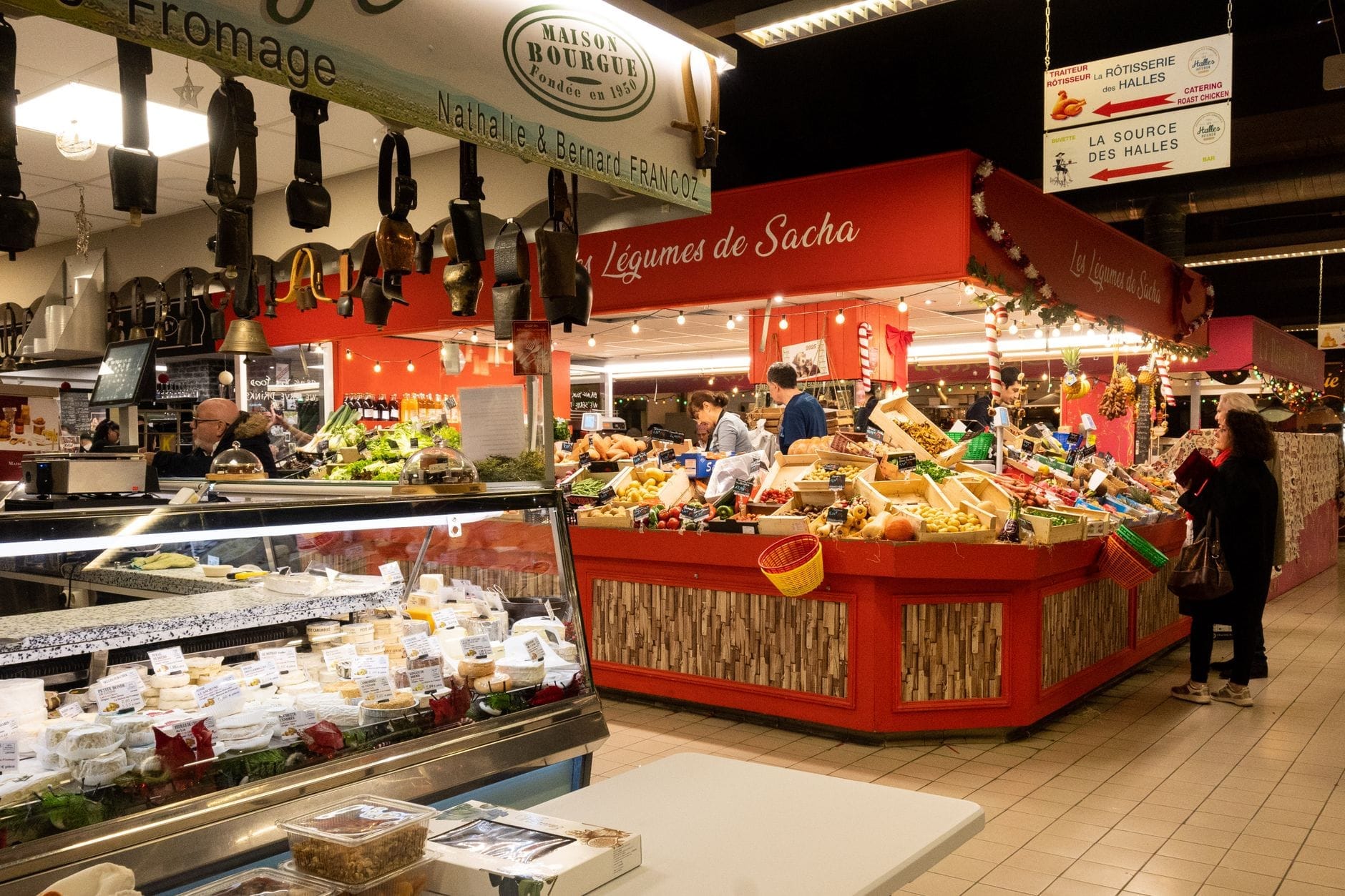
Early mornings, the district belongs to local residents. Bakeries open on side streets around 7am, and the wide pavements of Boulevard de Strasbourg fill gradually with commuters heading to the Hôtel de Ville and offices nearby. By mid-morning, the central squares and Place de l'Hôtel de Ville see a mix of shoppers, schoolchildren on class trips, and visitors with architectural guidebooks. The covered market at Halles Centrales draws a steady stream through the morning.
Afternoons shift the atmosphere. The wide grid streets channel sea breezes off the Channel, which can be biting in autumn and winter but pleasantly cooling in summer. Café terraces open up along the main axes, and the cultural institutions that define the district, including the theatre complex and the museum of modern art on the waterfront edge, draw their afternoon audiences. After dark, the UNESCO district is neither particularly lively nor particularly threatening. It is a working city centre that quietens in the evenings outside of specific cultural events, with restaurants and bars concentrated near the waterfront and around a few key squares rather than spread evenly across the grid.
ℹ️ Good to know
Le Havre hosts 'Un Été au Havre' each summer, a large-scale contemporary art festival that installs monumental sculptures and installations across the Perret district and beyond. Visiting during this period adds a remarkable layer to the architectural experience. Check current dates with the official Le Havre tourism office before planning.
What to See & Do
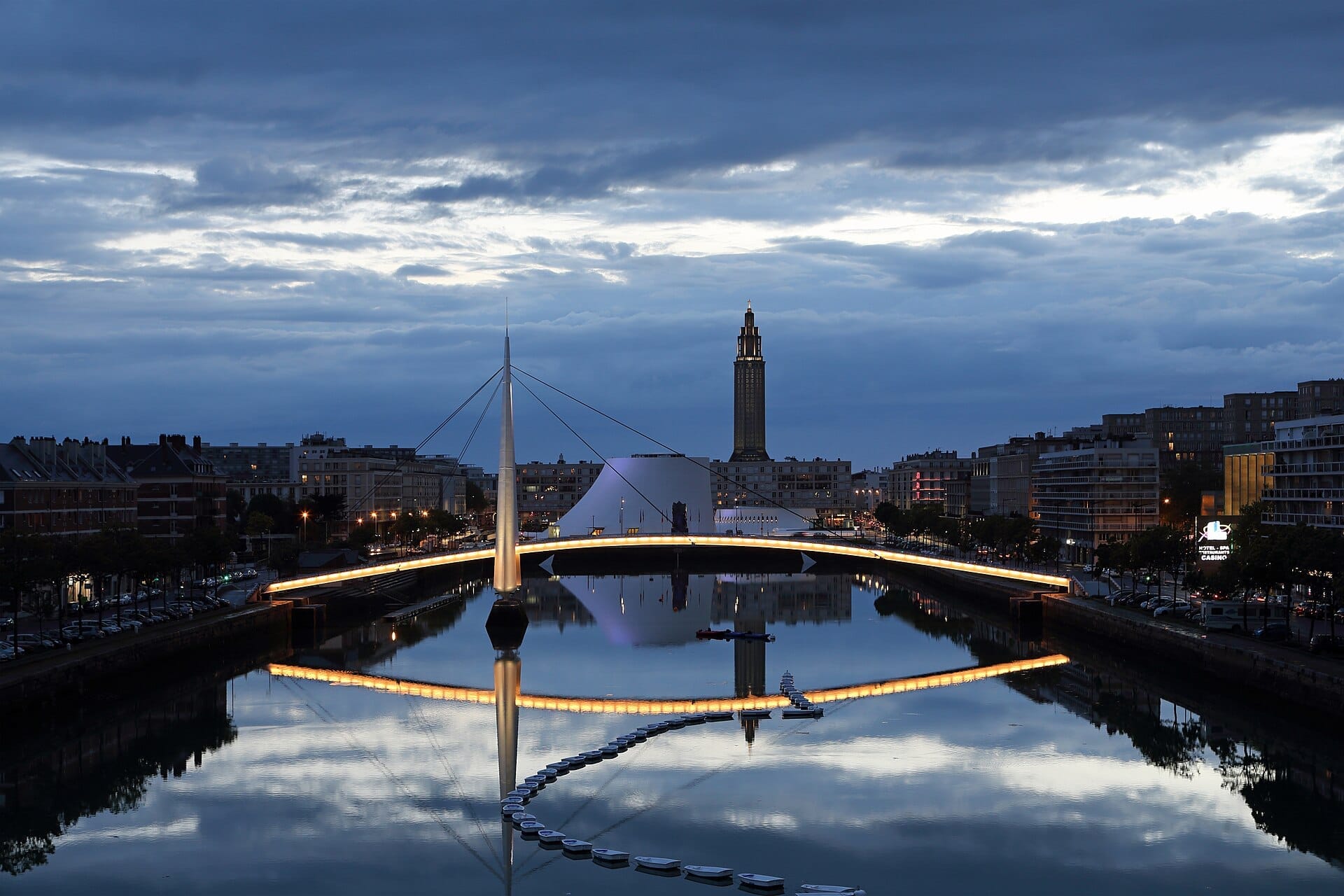
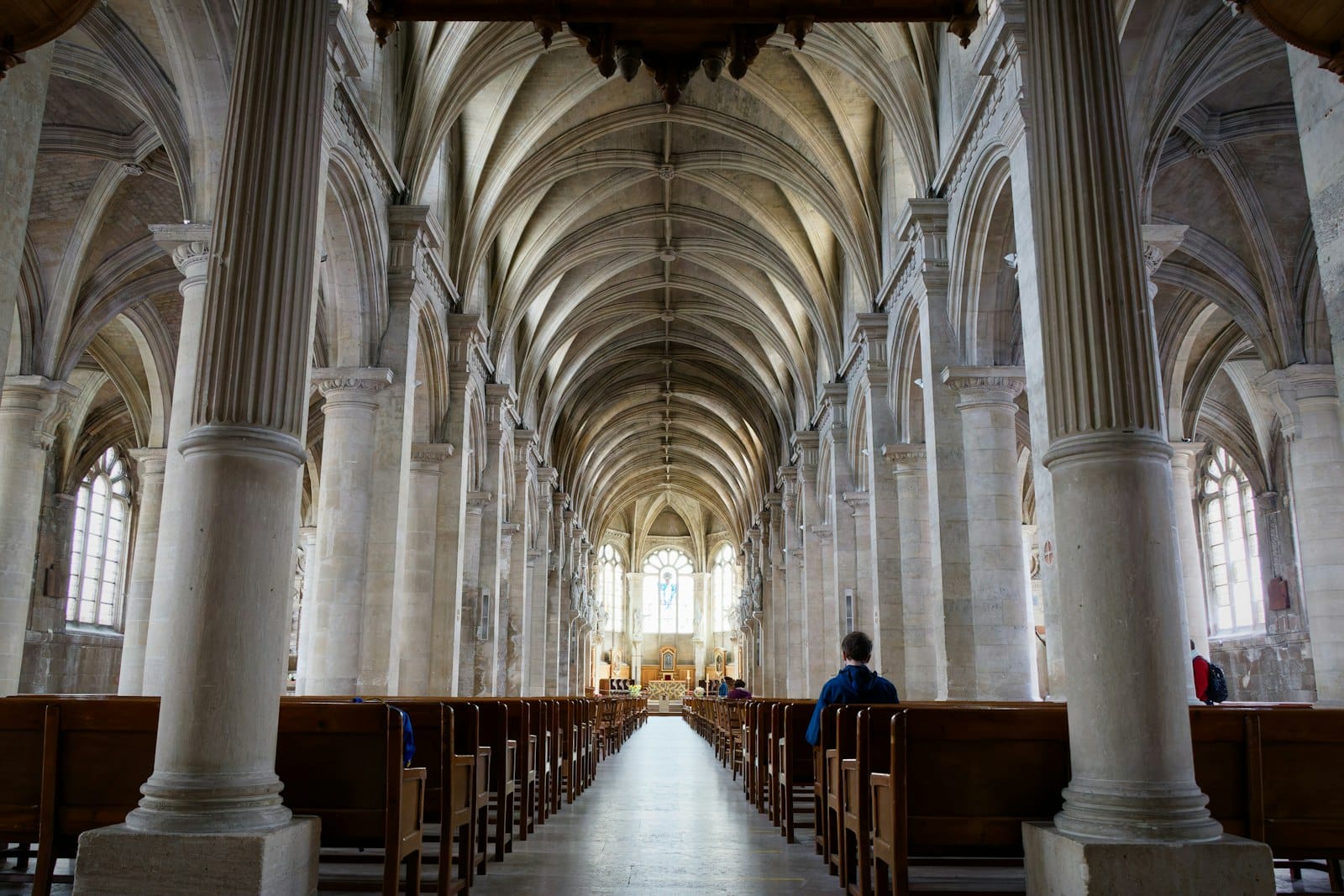
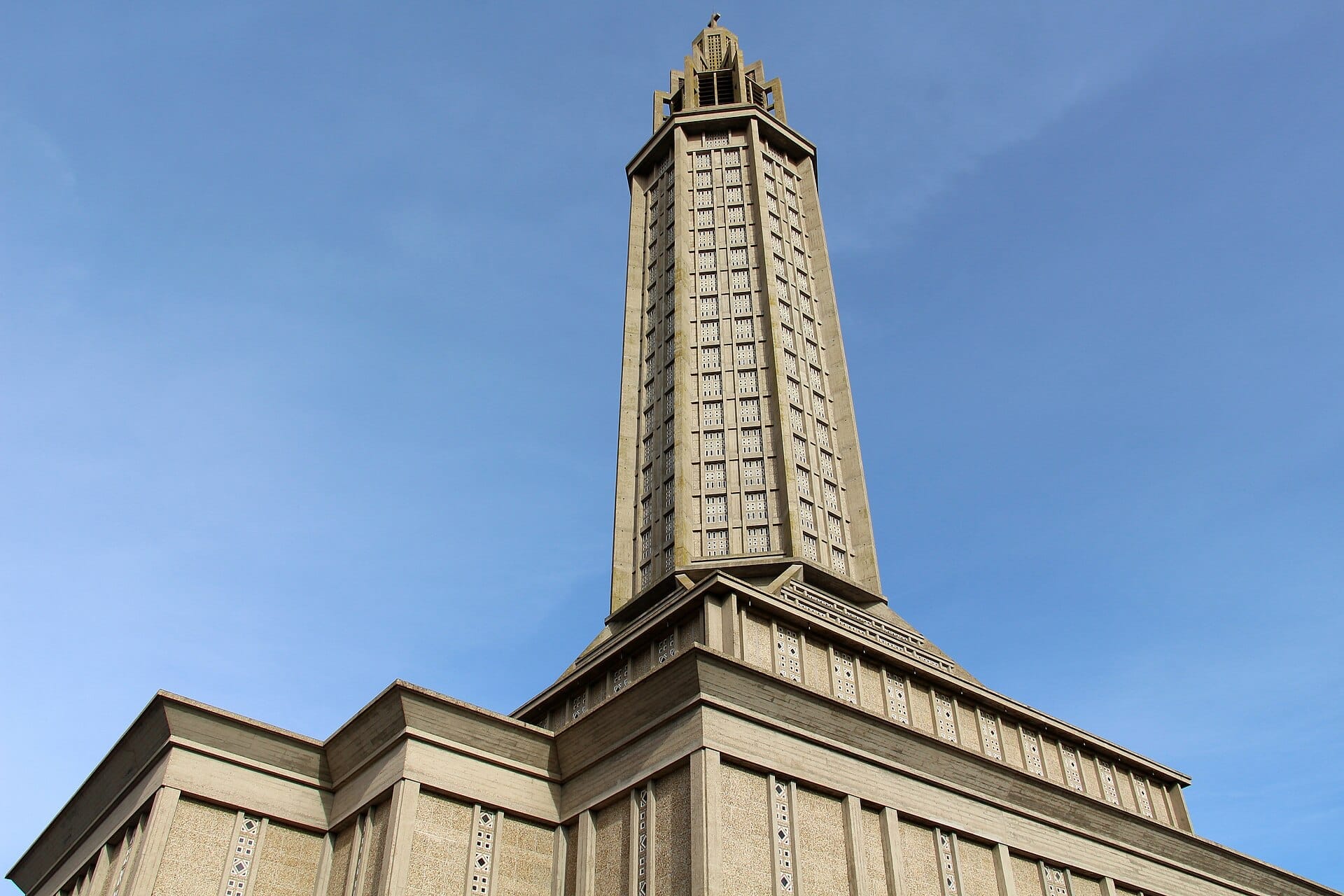
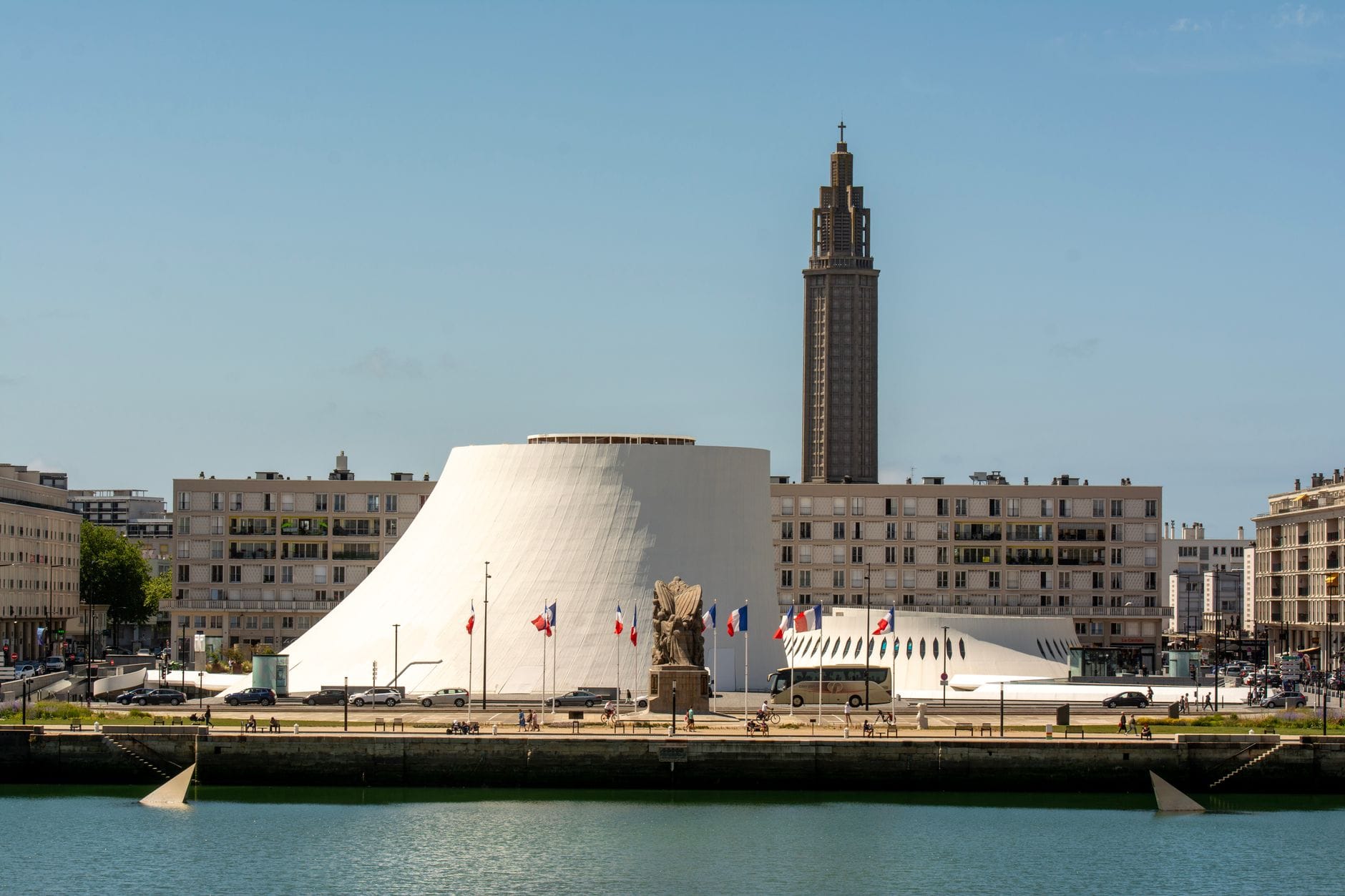
The UNESCO district is the attraction, in the sense that the urban fabric itself is what earned the World Heritage inscription. But within that fabric, several specific landmarks deserve close attention. The Église Saint-Joseph is the most visually arresting of them: Perret's concrete lantern tower rises 107 metres above the city and is visible from the seafront and from across the port. The interior is extraordinary, with coloured glass panels filtering light through the tower structure in a way that transforms the concrete into something almost ethereal. It is the most visited single building in Le Havre and the most photographed.
At the civic heart of the district, the Hôtel de Ville and its surrounding gardens form a significant ensemble. The town hall itself, designed by Perret's team, sits within a formal public space that gives the district its main civic breathing room. The adjacent Le Volcan, Oscar Niemeyer's distinctive cultural complex with its two white cone-shaped structures, provides a striking counterpoint to the Perret grid. It houses a theatre and performance venue and its unusual form makes it one of the most discussed architectural objects in the city.
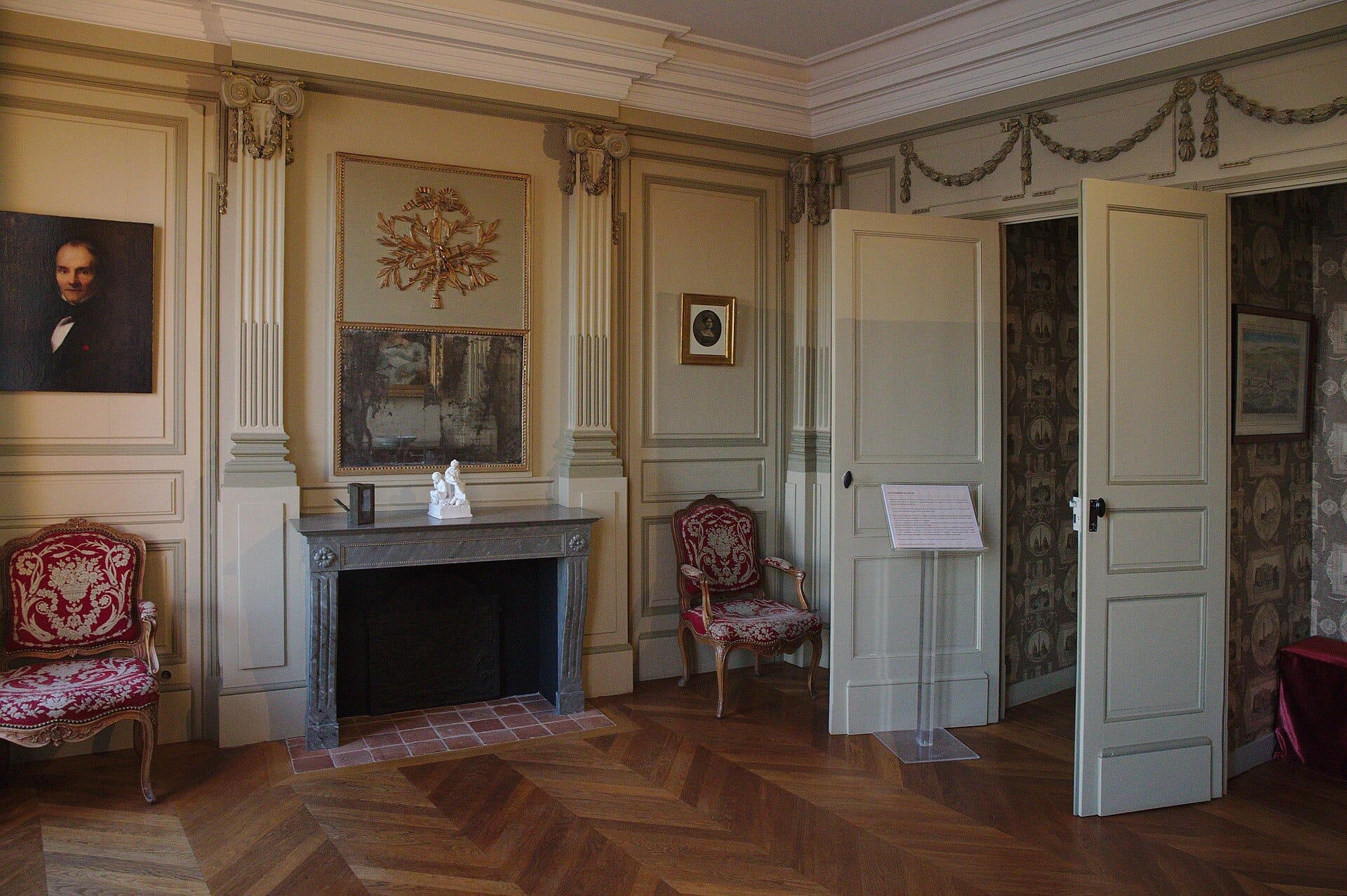
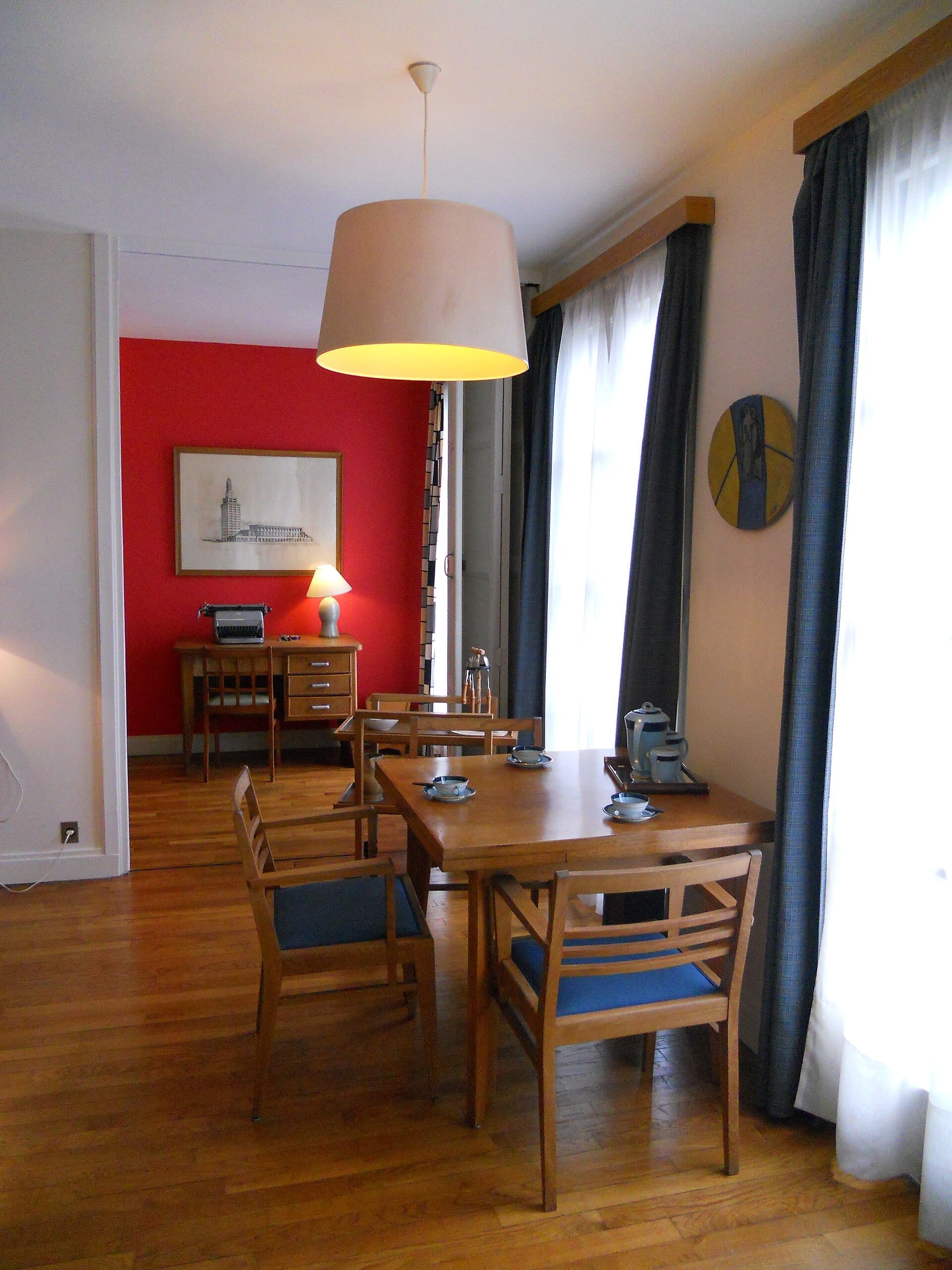
Architecture enthusiasts should seek out the Perret Show Flat (Appartement Témoin), a carefully preserved example of the standardised modernist interiors Perret designed for reconstruction-era residents. It gives the abstract idea of 'post-war modernist housing' a concrete, human dimension. Nearby, the Maison du Patrimoine, Atelier Perret serves as the main heritage interpretation centre for the UNESCO site, with exhibitions explaining the reconstruction history, Perret's methodology, and the criteria behind the 2005 inscription.
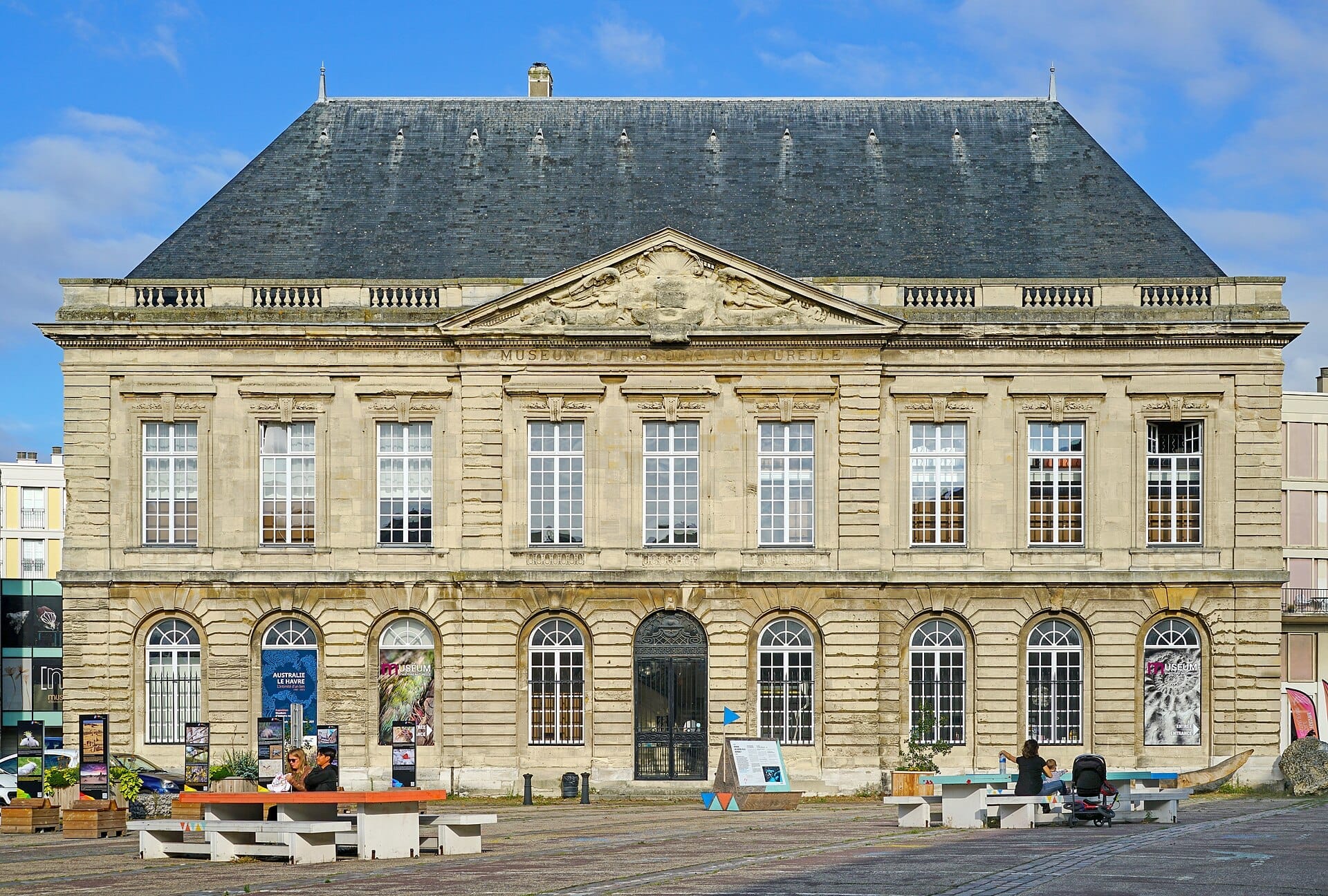
On the eastern edge of the district, the Bassin du Commerce is a rectangular inner harbour flanked by modernist commercial buildings and crossed by a distinctive arched footbridge. It is one of the most photogenic spots in the city, particularly in the late afternoon when the water reflects the facades on the southern bank. The Musée d'Art Moderne André Malraux, known locally as MuMa, sits just beyond the district boundary on the seafront but is effectively the anchor cultural institution of the whole area and should not be missed.
Église Saint-Joseph: Perret's masterpiece and the skyline anchor of the district
Hôtel de Ville gardens: the civic centrepiece of the Perret grid
Le Volcan: Niemeyer's performance complex, architecturally unmissable
Perret Show Flat: humanises the abstract history of reconstruction
Maison du Patrimoine, Atelier Perret: essential context for understanding the UNESCO designation
Bassin du Commerce: the best spot for photographing the waterfront modernism
MuMa (Musée André Malraux): world-class Impressionist and modern art collection on the seafront
If you want to understand how the district fits into Le Havre's wider architectural story, the guide to Perret's architecture in Le Havre provides a thorough overview, and the Le Havre walking tour maps a route that connects the major landmarks within the district.
Eating & Drinking
The food scene within Centre Ville Perret is more functional than destination-worthy for most of its area, with the strongest concentration of good eating and drinking near the seafront edge and around the Halles Centrales market. The covered market on Rue Voltaire is the best single stop for understanding what Le Havre actually eats: fresh Norman cheese, Normandy butter, locally caught fish and shellfish, and the kinds of charcuterie that rarely survive translation to restaurant menus.
The Halles Centrales and the streets immediately around it concentrate the most authentic daytime eating options: small lunch spots, bakeries, and a few wine bars that double as épiceries. This is where local workers eat at midday, which is always the most reliable indicator of quality and value in a French city.
Moving toward the seafront and the Bassin du Commerce, the restaurant density increases and the offer broadens. Seafood is the obvious local speciality: sole normande, moules marinières, and platters of oysters from nearby beds in the Seine estuary and the Calvados coast are common across the brasseries and bistros in this zone. Prices are broadly mid-range by French standards, with a two-course lunch menu typically available at most brasseries for under 20 euros.
Bars and cafés follow the rhythm of the district: active through the morning and lunch period, quieter mid-afternoon, and picking up again in the early evening around the cultural venues near Le Volcan and the seafront. There are options for every budget, from quick paninis and crêpes near the train station to more considered dinners near the museum waterfront. The city is not known for late-night dining culture in the way that Paris or Lyon are, so if you are planning an evening meal, aim to sit down by 8pm rather than expecting a choice at 10pm.
💡 Local tip
The Saturday morning market around the Halles Centrales is the best time to experience the neighbourhood at its most local. Arrive before 10am for the best choice of produce and to avoid the lunchtime squeeze.
Getting There & Around
Le Havre's main railway station sits at the northern edge of the Perret district, making it one of the most convenient city centres in Normandy to arrive in directly by train. Services from Paris Saint-Lazare take approximately 2 hours and 15 to 2 hours and 30 minutes depending on the service. Rouen is around 45 minutes away. The station forecourt opens directly onto the Perret grid, and the main axes of the UNESCO district are immediately walkable from arrival.
Within the district, walking is the primary and most rewarding way to move. The grid is logical and the distances are manageable: from the station to the seafront is roughly a 20-minute walk on foot along Rue de Paris or Boulevard de Strasbourg. From the Hôtel de Ville area to the Bassin du Commerce takes about 10 minutes. Cycling is a practical option, and Le Havre has a network of cycle paths; the city is also part of the Vélomaritime and Seine à Vélo long-distance cycling routes.
The LiA public transport network operates trams and buses across the city. Several bus routes cross the Perret district connecting it to outlying neighbourhoods, and the tramway serves the broader agglomeration. For reaching areas outside the centre, such as the Forêt de Montgeon to the north or Sainte-Adresse on the cliff to the northwest, buses are the practical option. Tickets and route maps are available at the main station and at LiA stops throughout the district.
For visitors arriving by sea via the Portsmouth ferry, the port terminal is east of the city centre. Taxis and local buses connect the ferry terminal to the centre, though the distance is not insignificant. If you are arriving as a cruise passenger, the cruise terminal operates separately from the main port.
Le Havre's Channel coast climate means wind is a constant presence in the Perret district. The wide avenues that Perret designed to flood the neighbourhood with light also funnel sea breezes with considerable force. In autumn and winter especially, a windproof layer is genuinely useful even on days that look mild.
Where to Stay
Centre Ville Perret is the most practical base for visitors to Le Havre. Staying within the UNESCO district puts you within walking distance of the major cultural sites, the seafront, the market, and the train station. The accommodation offer ranges from a handful of independently run hotels in the modernist blocks to international chain properties near the station. Mid-range hotels along the main avenues are the most common option, offering reasonable value by French standards.
The quietest parts of the district for accommodation are away from Rue de Paris and the immediate train station area, which carry daytime commercial traffic. Streets running parallel to the main axes, one or two blocks in from the primary commercial spine, tend to be noticeably calmer at night. The waterfront edge of the district, near the Bassin du Commerce and Boulevard Albert 1er, offers the best combination of proximity to attractions and evening quiet.
For a broader comparison of accommodation options across Le Havre, including whether to base yourself in the Perret district versus the seafront zone, the where to stay in Le Havre guide covers the trade-offs clearly.
Honest Assessment: Who This Neighbourhood Is For
Centre Ville Perret rewards visitors who engage with it on its own terms. It is not a neighbourhood of cobblestone alleys, medieval churches, or the kind of picturesque streetscape that draws visitors to Honfleur or Rouen. Its beauty is more demanding: it requires attention to proportion, to light, to the logic of the grid, and to the historical context that made this kind of total reconstruction necessary. Visitors who come expecting a conventional French city centre will find the Perret district baffling at first. Visitors who approach it as an architectural and historical text will find it endlessly fascinating.
It is also, importantly, a real city centre with real city-centre drawbacks. Some sections of the grid, particularly around the commercial streets near the station, have the slightly worn quality of any working-class French city centre. Shop fronts change, vacancy rates in commercial units fluctuate, and the pedestrian experience in the less-celebrated corners of the grid is unremarkable. The district does not exist to perform for visitors; it exists to house, serve, and employ the people of Le Havre, which is simultaneously its limitation as a tourist destination and its greatest strength as an authentic urban environment.
If you are weighing whether the city as a whole warrants a visit, the guide to whether Le Havre is worth visiting addresses this directly. For first-time visitors structuring a short trip, the 2 days in Le Havre itinerary uses the Perret district as its base and organises the key sites into a logical sequence.
TL;DR
Centre Ville Perret is the UNESCO-listed heart of Le Havre: a 133-hectare post-war modernist grid designed by Auguste Perret and inscribed by UNESCO in 2005 as an outstanding example of urban planning.
Key landmarks include Église Saint-Joseph, the Hôtel de Ville, Le Volcan, the Perret Show Flat, the Maison du Patrimoine, and the Bassin du Commerce, all within comfortable walking distance of each other.
The neighbourhood is best for architecture enthusiasts, urban history travellers, and anyone who wants to understand why Le Havre is genuinely unlike any other French city.
Eating is best near the Halles Centrales market and the waterfront; the wider district is functional rather than gastronomically exceptional.
The train station sits at the northern edge of the district, making it one of the most accessible city centres in Normandy; walking is the best way to explore once you arrive.
Top Attractions in Centre Ville Perret (UNESCO District)
Le Havre rewards the traveler who looks past the port cranes. This two-day itinerary moves through the UNESCO-listed Perret city centre, France's second-largest Impressionist collection, a shingle beach 500 metres from downtown, and one of Normandy's most dramatic coastlines — all without wasting a morning on the wrong museum on its closing day.
Le Havre has an oceanic climate that keeps things cool and changeable year-round. This guide cuts through the vague advice to tell you exactly when to go, what to expect each season, and who should consider visiting in winter instead of summer.
Le Havre sits at the heart of one of France's richest travel regions. Whether you're docked on a cruise or basing yourself in the city, these are the most rewarding day trips within reach, with honest breakdowns of transport, costs, and what to expect on the ground.
Le Havre divides opinion. Some dismiss it as an industrial port stop; others leave genuinely impressed by its UNESCO-listed architecture, world-class Impressionist museum, and dramatic seafront. This guide gives you the full picture so you can decide for yourself.
Le Havre is one of northern France's most significant cruise ports, serving as the gateway to Normandy, Paris, and a UNESCO-listed city centre that most passengers overlook entirely. This guide covers terminal logistics, honest excursion options, transport costs, and how to make the most of your time ashore.
Le Havre is where Impressionism got its name. In 1872, Claude Monet painted 'Impression, Sunrise' from the harbor quays here, launching one of art history's most consequential movements. This guide covers every key painting location, the MuMa art museum, coastal trail logistics, and what most visitors get wrong about the city's artistic legacy.
Le Havre transforms in summer, with a city-wide contemporary art season, an urban pebble beach on the English Channel, action sports events, and free outdoor installations across its UNESCO-listed centre. This guide covers everything from the Un Été au Havre festival to getting there from Paris or the UK.
Le Havre rewards walkers like few other French cities. Its UNESCO-listed city centre is a coherent open-air museum of post-war modernist architecture, compact enough to cover in a half-day on foot. This guide gives you everything you need to plan your own route, from key stops and timing to costs and seasonal tips.
Le Havre is a strong family destination. From a long pebble beach accessible by tram to a UNESCO-listed city centre full of surprising museums, this Normandy port city offers genuinely varied days out for children of all ages. This guide covers the best activities, honest seasonal advice, and practical logistics so you can plan without guesswork.
In September 1944, Allied bombing reduced Le Havre's city centre to rubble. What followed was one of the most ambitious urban reconstruction projects in postwar Europe, led by architect Auguste Perret and completed by 1964. This guide covers the history, the key sites, and how to explore it all on the ground.
Le Havre's rebuilt city centre is one of Europe's most coherent examples of postwar modernist urbanism. This guide walks you through the key Auguste Perret sites across 133 hectares of UNESCO-listed streets, with practical advice on access, booking, and what to actually look for.
Le Havre is more than a port of call. This guide covers the city's UNESCO-listed architecture, world-class Impressionist museum, urban beach, summer festivals, and the best day trips from Normandy's most underrated city.
Le Havre has more accommodation variety than most visitors expect, from design-forward hotels in the UNESCO-listed Perret quarter to seafront options steps from the beach. This guide breaks down where to stay in Le Havre by neighborhood, budget, and what you're here to do.