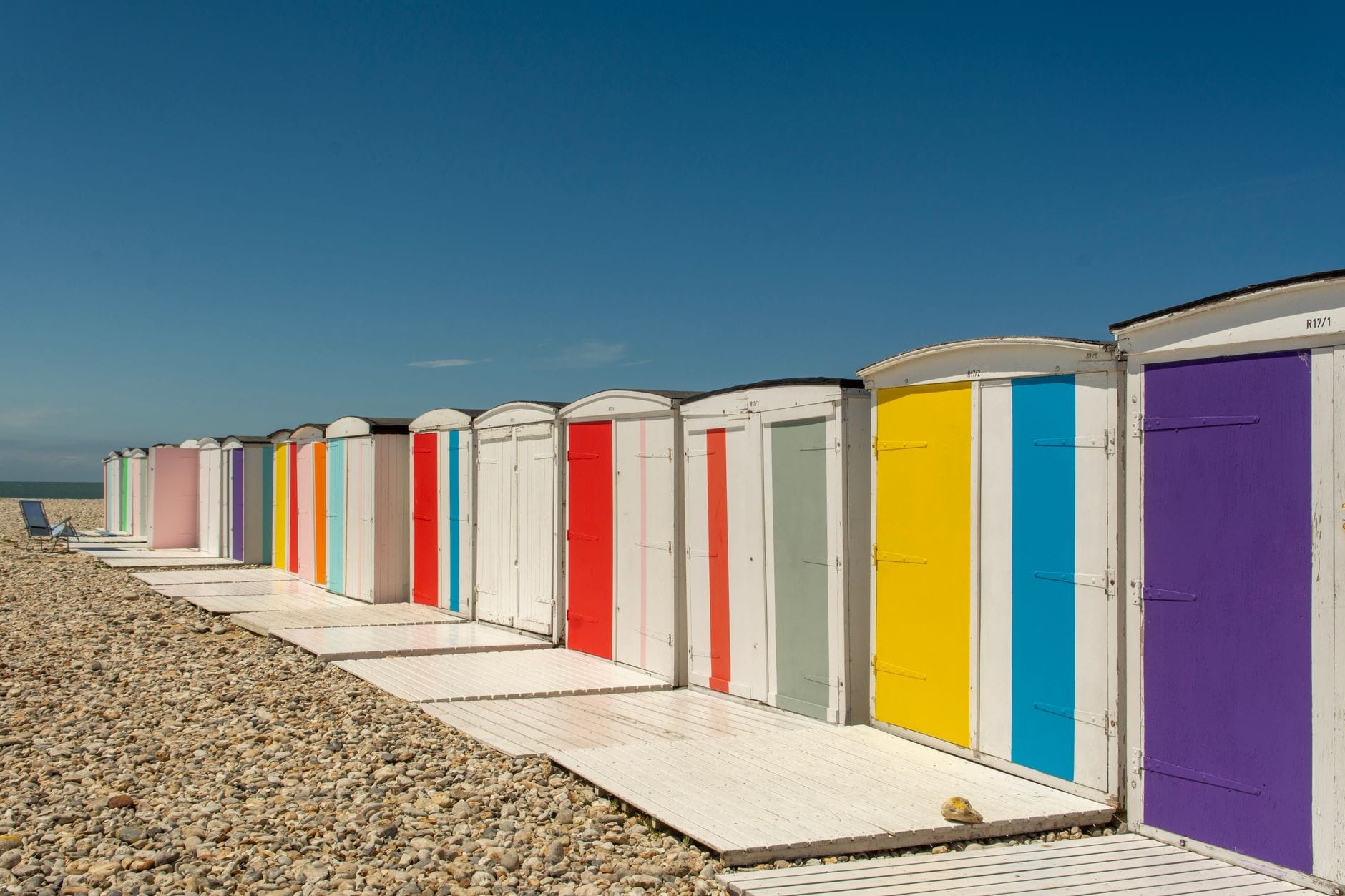
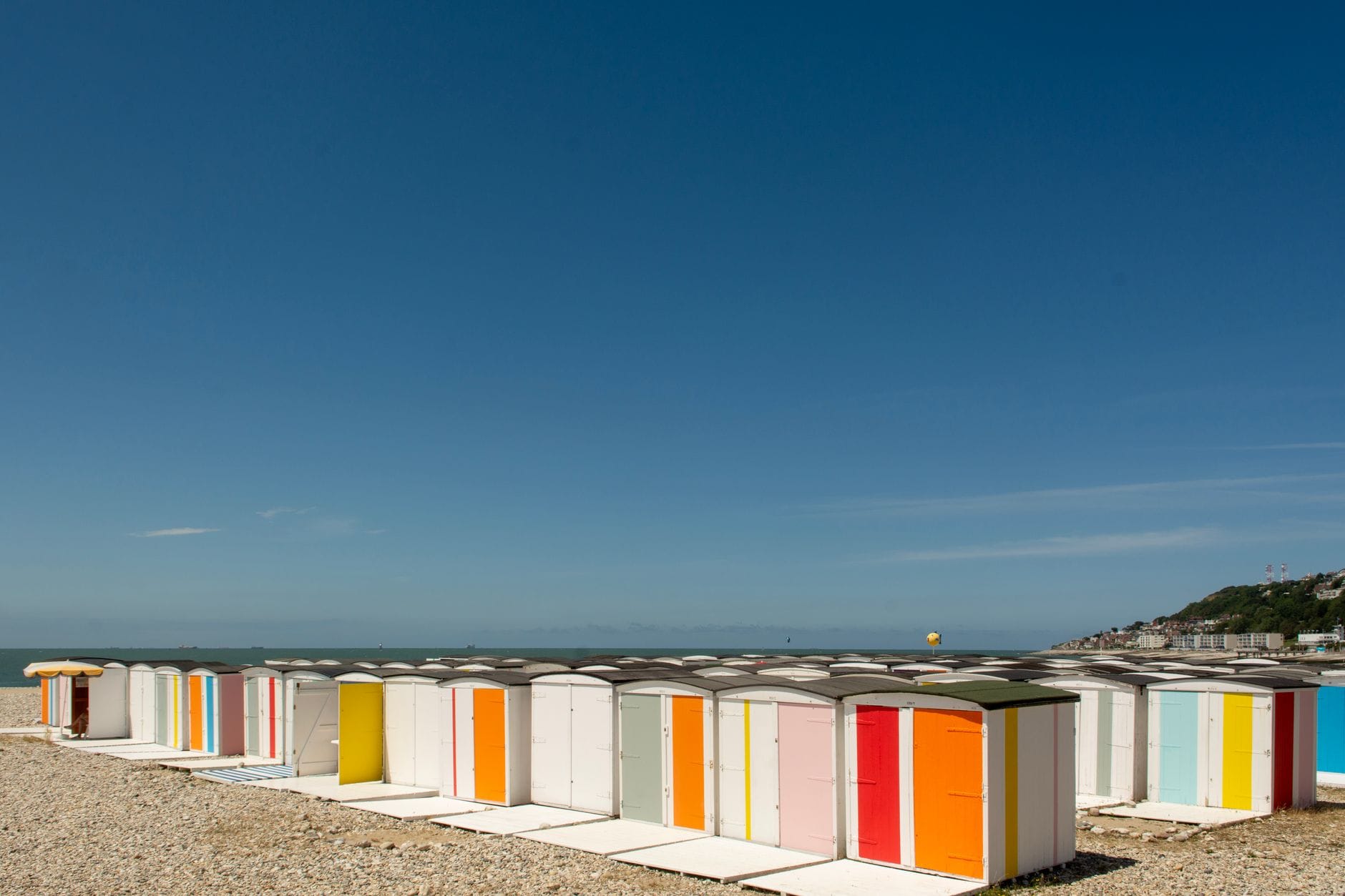
Le Havre's seafront and beach district runs for roughly two kilometres along the English Channel, connecting the city centre to the cliffs at Sainte-Adresse. It combines a Blue Flag beach with a landscaped promenade, France's largest free outdoor skatepark, and a string of seasonal bars and restaurants that open from spring through early autumn.
Le Havre's seafront district is one of France's more surprising urban beaches: a wide stretch of sand and pebble that sits barely 500 metres from the UNESCO-listed city centre, backed by a thoughtfully designed promenade and animated by everything from kitesurfers to weekend families. It is neither a polished resort nor a rough industrial afterthought, but something genuinely in between, with a character shaped by the city's working-port identity and its post-war reinvention.
Orientation
The seafront and beach area occupies the western edge of Le Havre, where the rebuilt city grid meets the English Channel. The beach itself runs along the Promenade des Régates in the 76600 postcode, beginning near the entrance to the harbour on the eastern end and extending northwest toward the foot of the chalk cliffs that mark the transition into Sainte-Adresse. The distance from the heart of the city centre to the sand is roughly 500 metres, making this one of the most accessible urban beaches in northern France.
To the east, the seafront connects seamlessly to the UNESCO-listed Perret city centre, with its grid of concrete boulevards and modernist civic architecture. Boulevard Albert 1er is the main artery linking the two zones, running parallel to the coast and serving as the informal boundary between urban Le Havre and its beachfront. To the northwest, the promenade transitions into the residential hillside suburb of Sainte-Adresse, a quieter community perched on the cliffs above the Channel with its own distinct identity.
The seafront zone is narrow in width but long in extent. Walk it end to end and you cover approximately two kilometres, passing the marina on the eastern flank, the main supervised beach in the centre, the landscaped gardens of the promenade, the skatepark, and finally the pebble stretches that thin out toward the cliff base. The geography is straightforward: sea to the west, city to the east, nothing particularly complicated to navigate.
Character & Atmosphere
What sets this seafront apart from most Channel beaches is its urban immediacy. There is no resort buffer zone, no row of seafront hotels forming a wall between city and sea. Instead, the promenade opens directly off the street grid, and on a Saturday morning in July, you can be sitting in a concrete café in the city centre and on the beach within a ten-minute walk. That proximity gives the seafront a local feel even in summer: the people here are as likely to be Le Havre residents on a lunch break as tourists.
Mornings on the promenade are calm and purposeful. Joggers use the flat seafront path from early light, cyclists follow the Vélomaritime route along the coast, and a few hardy swimmers brave the Channel before the beach fills. The light in the morning is particular to this stretch of coastline: flat, silver, and wide, with the sea often carrying a metallic glare before the sun gets high enough to warm it. The smell of salt and seaweed is strong close to the waterline, especially at low tide when the foreshore exposes a broad band of wet sand and stone.
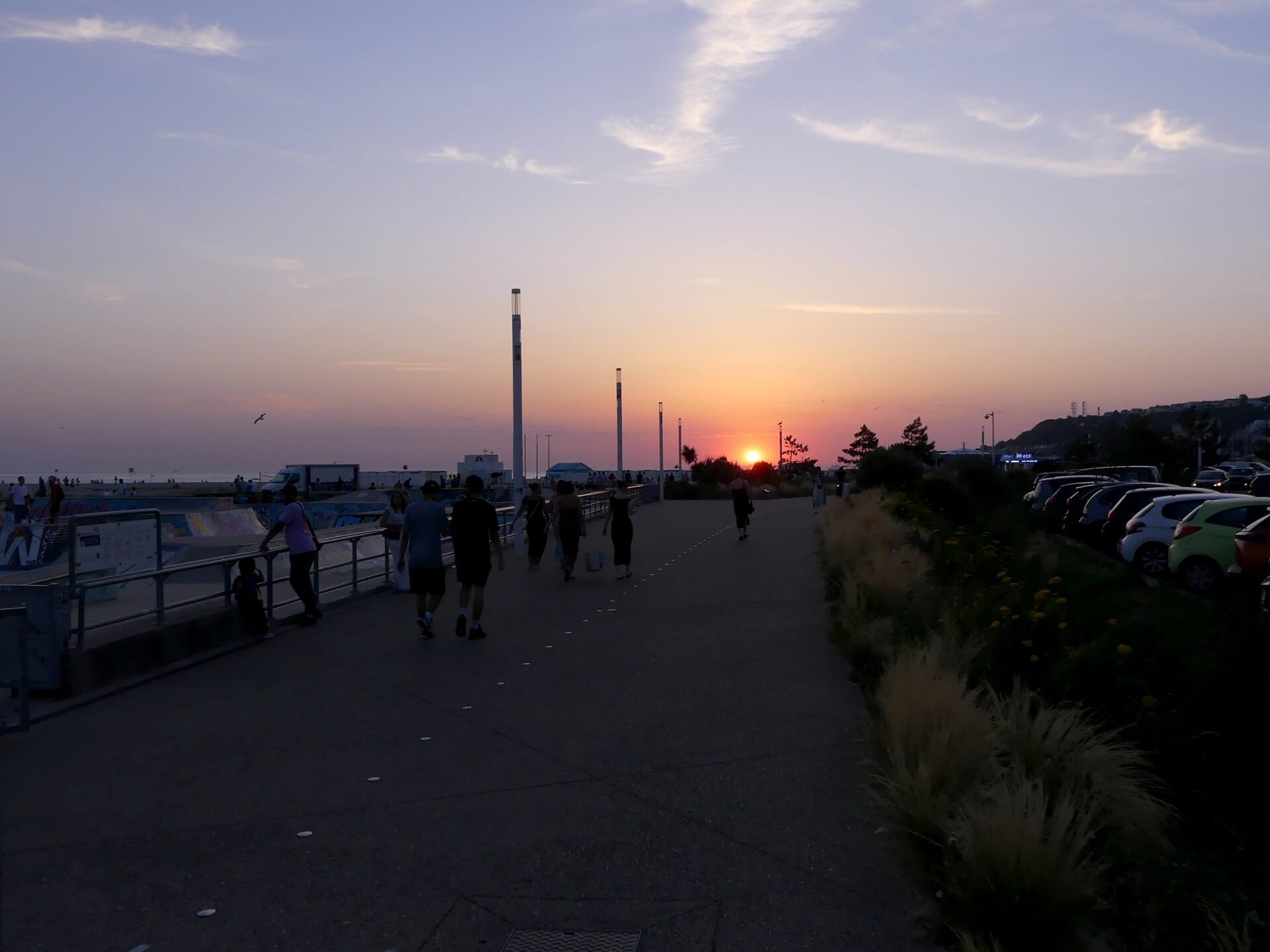
By early afternoon in summer, the beach fills noticeably. Families cluster around the supervised bathing zone, where the slope toward the water is gentler and the flags are up. The skatepark on the western end of the promenade draws a younger crowd through the day and well into the evening. Towards sunset, the atmosphere shifts again: the day-trippers thin out, the beach bars get busier, and the promenade becomes a place for slower evening strolls. The views west at dusk, with the chalk cliffs of Sainte-Adresse catching the last light, are among the better things Le Havre offers without requiring any effort.
Outside summer, the seafront is considerably quieter but not deserted. The oceanic climate means mild winters and persistent winds, and the promenade is popular with walkers year-round. The beach bars and the Bains Maritimes seasonal facility close from October onward, which strips back the amenities considerably, but the raw scenery of the Channel coast is arguably more compelling in the grey months than under a tourist-season sun.
ℹ️ Good to know
Le Havre's beach faces roughly west-northwest, which means afternoon and evening light is best for sea views and photography. The beach has held the Blue Flag since 2003, indicating consistently good bathing water quality.
What to See & Do
The central attraction is the beach itself, La Plage du Havre, a mixed sand-and-large-pebble shore running the full two-kilometre extent of the seafront. The Plage du Havre is classified as a Handiplage, meaning it has facilities specifically designed for visitors with reduced mobility, including free beach wheelchairs (tiralos) available from the Bains Maritimes. The supervised bathing zone is centrally located and clearly marked with colour-coded flags indicating conditions.
The promenade itself, a landscaped waterfront walkway designed by landscape architect Alexandre Chemetoff and completed in 1994, is worth examining as a piece of civic design. It integrates planted gardens, seating areas, and open spaces in a way that feels considered rather than merely functional. Walking the full length is also the best way to appreciate the seafront promenade as a connector between the urban fabric and the coast.
The skatepark on the western section of the promenade is claimed to be the largest free outdoor skatepark in France, covering approximately 1,800 square metres in total (around 600 m² street and 1,200 m² bowl). Whether you skate or not, it is a lively spot with a consistent presence of riders throughout the warmer months and provides an interesting contrast to the more conventional promenade activity around it.
Water sports are a real draw here, particularly kitesurfing and windsurfing. The regular Channel winds that make this coast feel raw in winter make it genuinely interesting for wind-dependent sports in spring and autumn. The beach's western exposure and relatively uncrowded conditions compared to dedicated resort towns make it practical for riders of moderate skill. Equipment rental and lessons are available seasonally.
Swimming in the supervised bathing zone (seasonal, summer months)
Kitesurfing and windsurfing from the beach
Cycling the Vélomaritime coastal route northward toward Sainte-Adresse
Skateboarding at the ~1,800 m² free outdoor skatepark
Evening walks along the promenade toward the cliff base
Beach volleyball and other seasonal sports facilities
If the beach is your base, the wider Le Havre seafront and cliff coast rewards further exploration. The walk or short bus ride to Plage de Sainte-Adresse at the foot of the cliffs opens up views back over the city and port that are genuinely dramatic, particularly in clear weather. The Impressionist viewpoints at Sainte-Adresse are connected to this stretch of coast and explain why this particular angle of sea and sky attracted painters in the nineteenth century.
Eating & Drinking
The seafront food and drink scene is seasonal by nature. From roughly mid-March to late September, a line of beach bars, restaurants, and takeaway stalls operates along the promenade, offering everything from quick crêpes and moules-frites to more structured seafood meals. Outside this window, options thin considerably, and you will need to move inland to the city centre for a wider choice.
The cuisine along the seafront leans heavily on the sea: fresh fish, mussels, oysters, and the Norman staples of cream-based sauces and local cider and calvados. Price ranges are mid-level for sit-down restaurants, with beach bar snacks available at lower cost. The quality is generally honest rather than ambitious; this is not a destination for haute cuisine, but a good plate of sole meunière or a bowl of mussels with frites eaten with a view of the Channel is a reasonable way to spend a lunch.
Coffee culture on the promenade is limited to casual café-bar setups rather than specialist establishments. If coffee quality matters to you, the city centre a short walk inland has a wider selection. The Bains Maritimes facility also has a café component during the summer season, useful for a quick drink without leaving the beach.
💡 Local tip
Seafront restaurants and bars operate seasonally, typically from mid-March to late September. If you are visiting outside these months, head inland to the city centre or the area around the Halles Centrales covered market for food and drink options.
Getting There & Around
The seafront is easy to reach from anywhere in central Le Havre. On foot from the railway station, the walk to the beach takes around 20 to 25 minutes, heading westward through the Perret grid via Boulevard de Strasbourg and then crossing toward the promenade. The route is flat and straightforward, passing through the commercial heart of the city.
By public transport, the LiA tram network serves the seafront area with a journey time of approximately 15 minutes from the railway station. The LiA network also operates buses across the city. Le Havre railway station connects to Paris Saint-Lazare in approximately two and a half hours, and to Rouen in around 45 minutes, making the seafront accessible as a day excursion from either city. Verify current timetables with SNCF before travel, as schedules change.
Cycling is a practical option. The promenade itself is cycle-friendly, and Le Havre is crossed by the Vélomaritime long-distance cycling route (Roscoff to Dunkirk) and the Seine à Vélo route connecting Paris to the coast. Rental bikes are available in the city, and the flat terrain of the seafront makes cycling comfortable.
For visitors arriving by ferry from Portsmouth, the ferry terminal feeds into the port area to the east of the beach. The seafront is reachable by taxi or bus from the terminal; the walk is possible but takes around 25 to 30 minutes depending on the exact disembarkation point. A taxi is the most practical option with luggage.
⚠️ What to skip
The seafront area has limited parking on summer weekends and public holidays. If arriving by car, expect to park some distance from the promenade and walk. Public transport or cycling are more reliable options in peak season.
Where to Stay
Accommodation options directly on or immediately adjacent to the seafront are limited compared to what the city centre offers. Most of Le Havre's hotels and apartments are concentrated in the Perret city centre grid, which places them roughly 500 metres from the beach: close enough to walk easily, but not with sea views from the window. For a full overview of accommodation options and which zones suit different travel styles, the where to stay in Le Havre guide covers the tradeoffs in detail.
Travelers who prioritise beach proximity over city-centre convenience will find a small number of hotels and rental apartments in the streets immediately behind the promenade. These suit visitors who want to be on the sand early in the morning or who plan to spend most of their time outdoors. The tradeoff is fewer restaurant and cultural options within walking distance, particularly outside the summer season when the beachfront facilities close.
Families with children tend to find the seafront zone convenient given the supervised beach, the accessibility facilities, and the open space for movement. Couples and solo travelers interested in architecture and culture may prefer to be based in the city centre, treating the beach as a short walk rather than a doorstep.
Practical Notes & Honest Assessment
Le Havre's beach is not a Mediterranean resort and should not be approached as one. The Channel is cold even in summer, the skies are frequently grey, and the pebble-and-sand mix underfoot is not the fine white sand of a holiday brochure. Winds are persistent and can make the promenade feel raw even in July. These are not flaws so much as character: this is a northern French coastal city with a working-port backdrop, and its seafront reflects that.
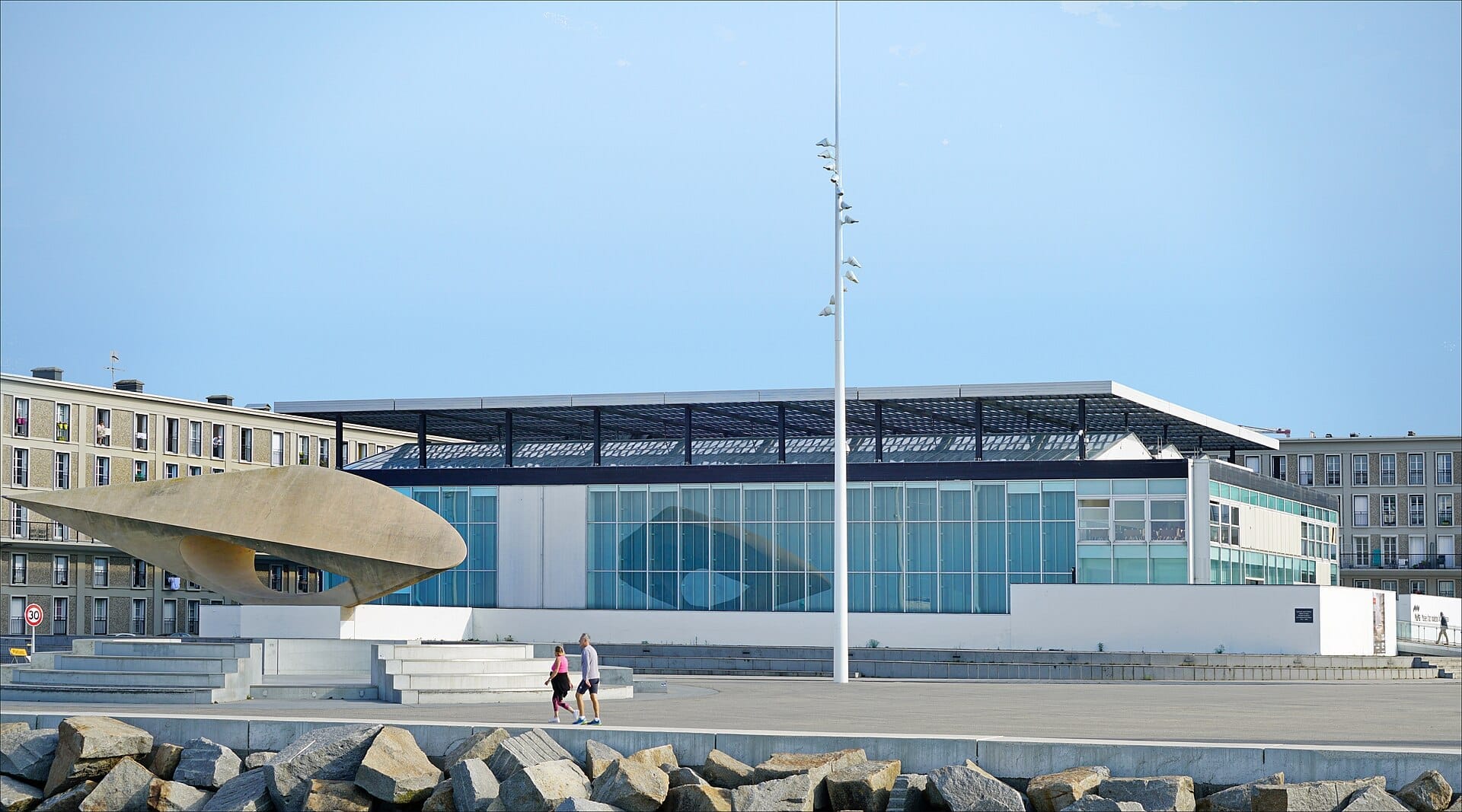
What makes the seafront genuinely worthwhile is the combination of urban accessibility, good civic design, and the sheer scale of the coastal view. Standing on the promenade looking northwest along the chalk cliffs toward Cap de la Hève on a clear day, with the port working behind you and the Channel stretching to the horizon, is an experience specific to this place. Add the easy connection to the city's Musée d'Art Moderne André Malraux just inland, and a day that combines beach time with serious culture becomes straightforward to plan.
Dogs are welcome on the beach on leads from 1 October to 31 March, but are excluded from the beach gardens, pebbles, and foreshore from 1 April to 30 September, except on designated walking routes. Plan accordingly if travelling with a dog in summer. For broader planning, the best time to visit Le Havre guide explains how season affects the seafront experience specifically.
ℹ️ Good to know
The beach currently holds the Blue Flag label. Tidal variation significantly affects the beach's appearance and the depth profile of the bathing zone. Always check the flag conditions at the supervised area before swimming, as depth and slope change substantially between high and low tide.
TL;DR
A 2km Blue Flag beach with a landscaped promenade, 500 metres from the city centre: genuinely accessible as an urban beach without being over-developed.
Best in summer (June to September) when the Bains Maritimes, beach bars, and supervised swimming zone are all operational; quieter but still walkable the rest of the year.
Strong draw for water sports, particularly kitesurfing and windsurfing, due to consistent Channel winds.
Honest drawbacks: cold water, regular cloud cover, limited restaurants outside summer, and a working-port backdrop that is industrial rather than picturesque on the eastern end.
Best suited to travelers combining beach time with Le Havre's cultural offer: the seafront is five minutes from the Musée d'Art Moderne André Malraux and a short tram ride from the Perret architecture in the city centre.
Le Havre rewards the traveler who looks past the port cranes. This two-day itinerary moves through the UNESCO-listed Perret city centre, France's second-largest Impressionist collection, a shingle beach 500 metres from downtown, and one of Normandy's most dramatic coastlines — all without wasting a morning on the wrong museum on its closing day.
Le Havre has an oceanic climate that keeps things cool and changeable year-round. This guide cuts through the vague advice to tell you exactly when to go, what to expect each season, and who should consider visiting in winter instead of summer.
Le Havre sits at the heart of one of France's richest travel regions. Whether you're docked on a cruise or basing yourself in the city, these are the most rewarding day trips within reach, with honest breakdowns of transport, costs, and what to expect on the ground.
Le Havre divides opinion. Some dismiss it as an industrial port stop; others leave genuinely impressed by its UNESCO-listed architecture, world-class Impressionist museum, and dramatic seafront. This guide gives you the full picture so you can decide for yourself.
Le Havre is one of northern France's most significant cruise ports, serving as the gateway to Normandy, Paris, and a UNESCO-listed city centre that most passengers overlook entirely. This guide covers terminal logistics, honest excursion options, transport costs, and how to make the most of your time ashore.
Le Havre is where Impressionism got its name. In 1872, Claude Monet painted 'Impression, Sunrise' from the harbor quays here, launching one of art history's most consequential movements. This guide covers every key painting location, the MuMa art museum, coastal trail logistics, and what most visitors get wrong about the city's artistic legacy.
Le Havre transforms in summer, with a city-wide contemporary art season, an urban pebble beach on the English Channel, action sports events, and free outdoor installations across its UNESCO-listed centre. This guide covers everything from the Un Été au Havre festival to getting there from Paris or the UK.
Le Havre rewards walkers like few other French cities. Its UNESCO-listed city centre is a coherent open-air museum of post-war modernist architecture, compact enough to cover in a half-day on foot. This guide gives you everything you need to plan your own route, from key stops and timing to costs and seasonal tips.
Le Havre is a strong family destination. From a long pebble beach accessible by tram to a UNESCO-listed city centre full of surprising museums, this Normandy port city offers genuinely varied days out for children of all ages. This guide covers the best activities, honest seasonal advice, and practical logistics so you can plan without guesswork.
In September 1944, Allied bombing reduced Le Havre's city centre to rubble. What followed was one of the most ambitious urban reconstruction projects in postwar Europe, led by architect Auguste Perret and completed by 1964. This guide covers the history, the key sites, and how to explore it all on the ground.
Le Havre's rebuilt city centre is one of Europe's most coherent examples of postwar modernist urbanism. This guide walks you through the key Auguste Perret sites across 133 hectares of UNESCO-listed streets, with practical advice on access, booking, and what to actually look for.
Le Havre is more than a port of call. This guide covers the city's UNESCO-listed architecture, world-class Impressionist museum, urban beach, summer festivals, and the best day trips from Normandy's most underrated city.
Le Havre has more accommodation variety than most visitors expect, from design-forward hotels in the UNESCO-listed Perret quarter to seafront options steps from the beach. This guide breaks down where to stay in Le Havre by neighborhood, budget, and what you're here to do.