Le Havre & World War II: How Destruction Shaped a UNESCO City
In September 1944, Allied bombing reduced Le Havre's city centre to rubble. What followed was one of the most ambitious urban reconstruction projects in postwar Europe, led by architect Auguste Perret and completed by 1964. This guide covers the history, the key sites, and how to explore it all on the ground.
Plan and book this trip
Tools from our partner Travelpayouts help you compare flights and hotels. If you book through them, we may earn a commission at no extra cost to you.
Flights
Hotels map
TL;DR
- Le Havre was liberated on 12 September 1944 during Operation Astonia, after Allied bombing devastated the city centre and port.
- Estimates of civilian casualties range from roughly 1,500 to 3,000 dead, and the urban core was largely destroyed.
- Architect Auguste Perret led a complete reconstruction from 1945 to 1964, producing a planned modernist city now listed as a UNESCO World Heritage Site.
- The rebuilt centre is not a restoration of the old city but an entirely new urban project, with reinforced concrete, a strict grid, and monumental civic architecture.
- Key sites include Église Saint-Joseph, the Hôtel de Ville, and the Atelier Perret show flat, all open to visitors.
Le Havre Before the Bombs: A Strategic Port City
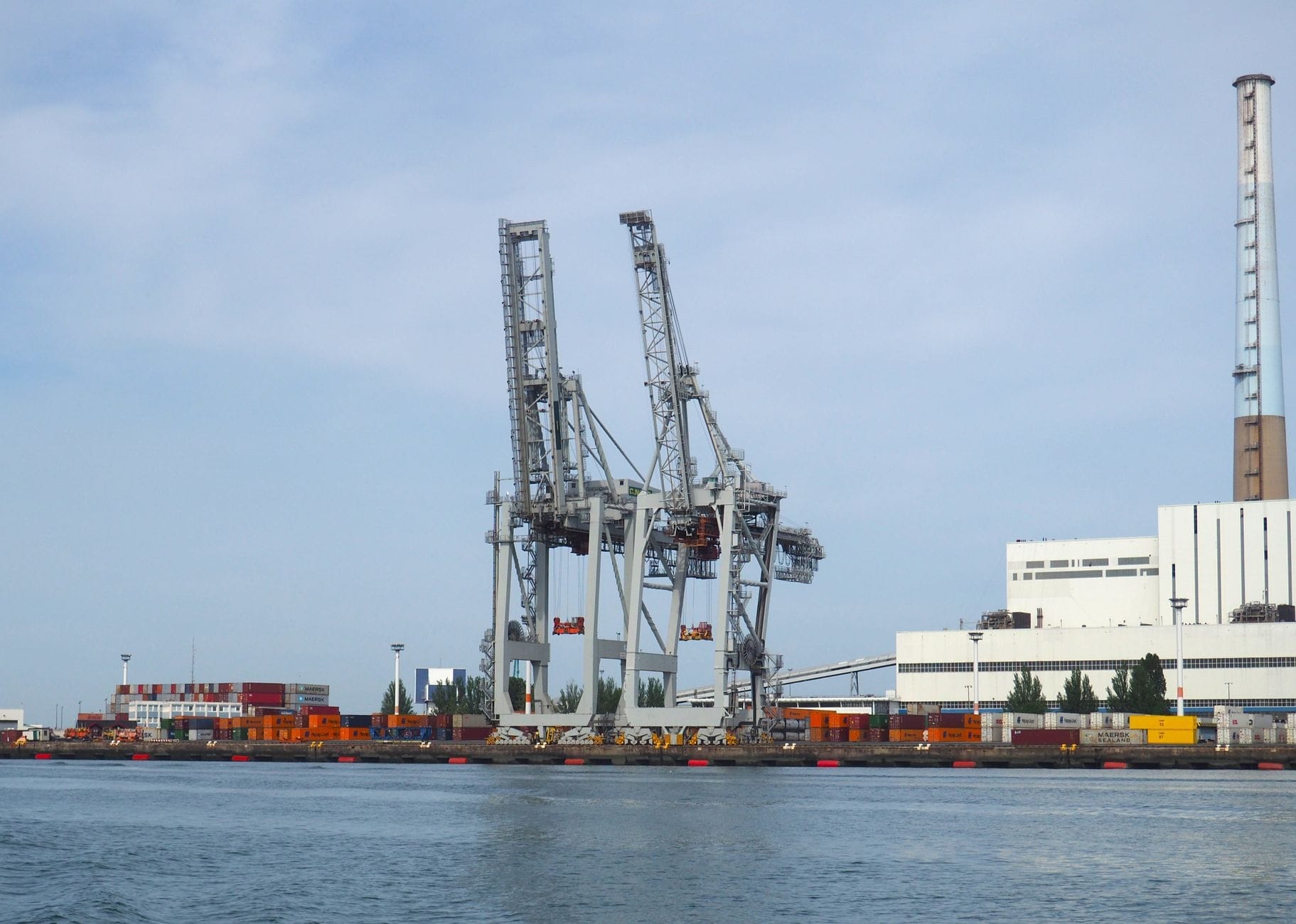
Le Havre was founded in 1517 on the orders of François I as a replacement harbour for the silting ports of Harfleur and Honfleur. Over four centuries it grew into France's most important Atlantic and Channel port, handling transatlantic passenger liners and enormous volumes of cargo. By the early 20th century, the city's architecture reflected successive eras of growth: Renaissance foundations, 18th-century merchant districts, and later industrial-era expansion along the waterfront.
When Germany occupied France in June 1940, Le Havre's strategic value was immediately apparent. The port offered direct access to the English Channel and became a significant base for German naval and logistics operations. This made it an inevitable Allied target once the liberation of Western Europe was underway. The city's civilian population had little say in the matter: they were caught between a German garrison determined to hold the port and Allied commanders equally determined to take it.
Operation Astonia: The Battle That Erased the City Centre
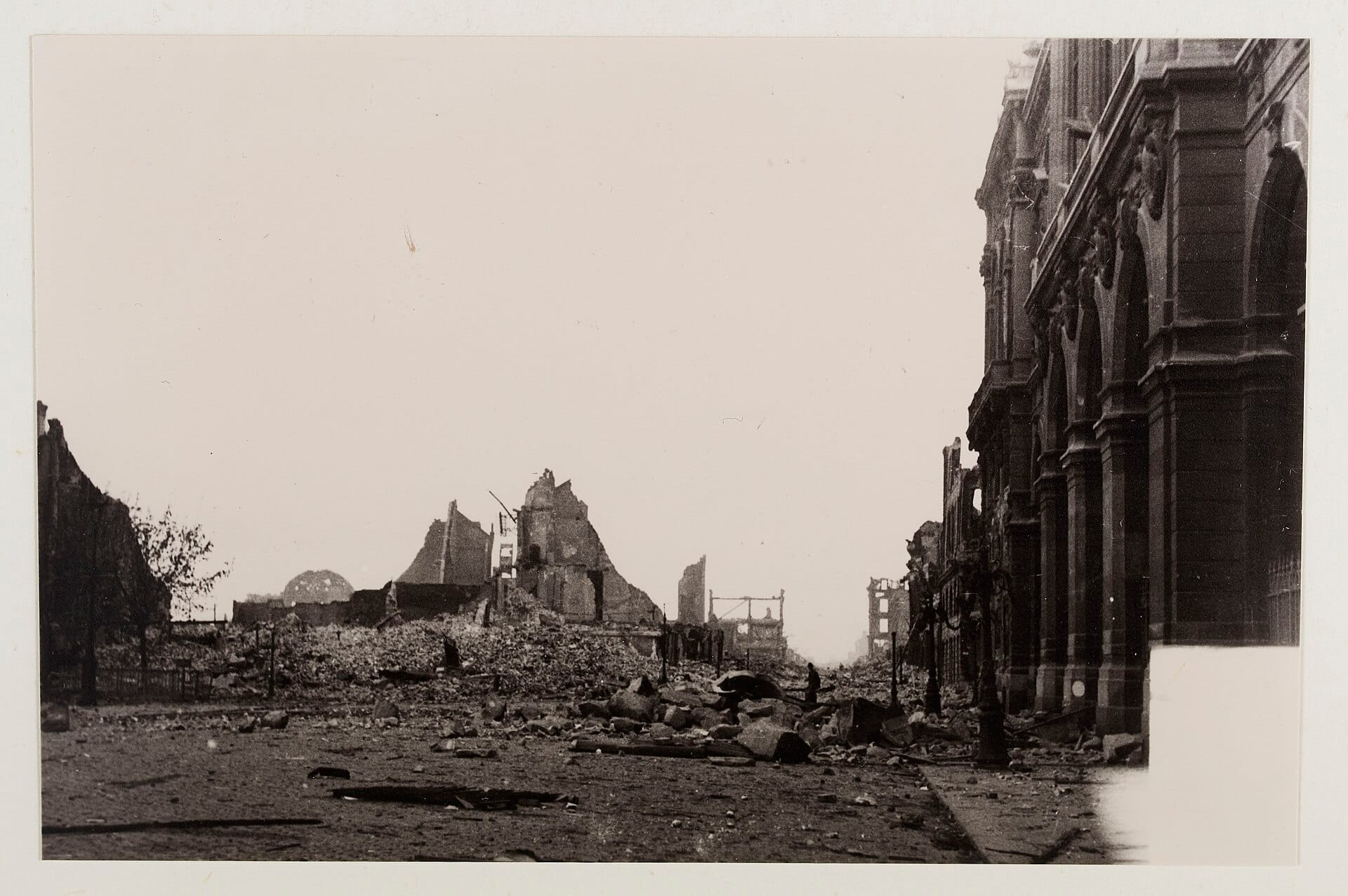
Operation Astonia was the British military operation to capture Le Havre, launched in September 1944. Before the ground assault, the Royal Air Force carried out a series of heavy bombing raids on the city between 5 and 11 September 1944. The objectives were to knock out the German garrison's defences and deny the enemy use of the port. The result, for the civilian city, was catastrophic.
The bombing concentrated on the city centre and port area, which were already heavily militarised. Casualty estimates vary across sources, with published figures ranging from around 1,500 to 5,000 civilian dead. The urban core was largely reduced to rubble. Le Havre was officially liberated on 12 September 1944, but what the Allied forces entered was not really a functioning city: it was a landscape of broken concrete and exposed foundations.
ℹ️ Good to know
Liberation Route Europe has developed a themed itinerary specifically tracing the impact of the war on Le Havre, covering the bombing, the liberation, and the reconstruction. It is a useful framework if you want a historically structured visit rather than an architectural one.
The scale of destruction is important to grasp before visiting today. Unlike cities where wartime damage was patchy and postwar repairs filled gaps in an existing urban fabric, Le Havre's centre was comprehensively obliterated. This is what made the subsequent reconstruction both necessary and, ultimately, architecturally coherent. If you want the full context before your trip, the case for visiting Le Havre is inseparable from understanding why the city looks the way it does.
Auguste Perret and the Reconstruction: 1945–1964
The French government's choice of Auguste Perret to lead the reconstruction was not arbitrary. Perret was already one of France's most respected architects and a pioneer in the architectural use of reinforced concrete, having worked on landmark projects in Paris and elsewhere. He was 71 years old when he took on Le Havre and would not live to see the project completed, dying in 1954. His team continued the work until 1964.
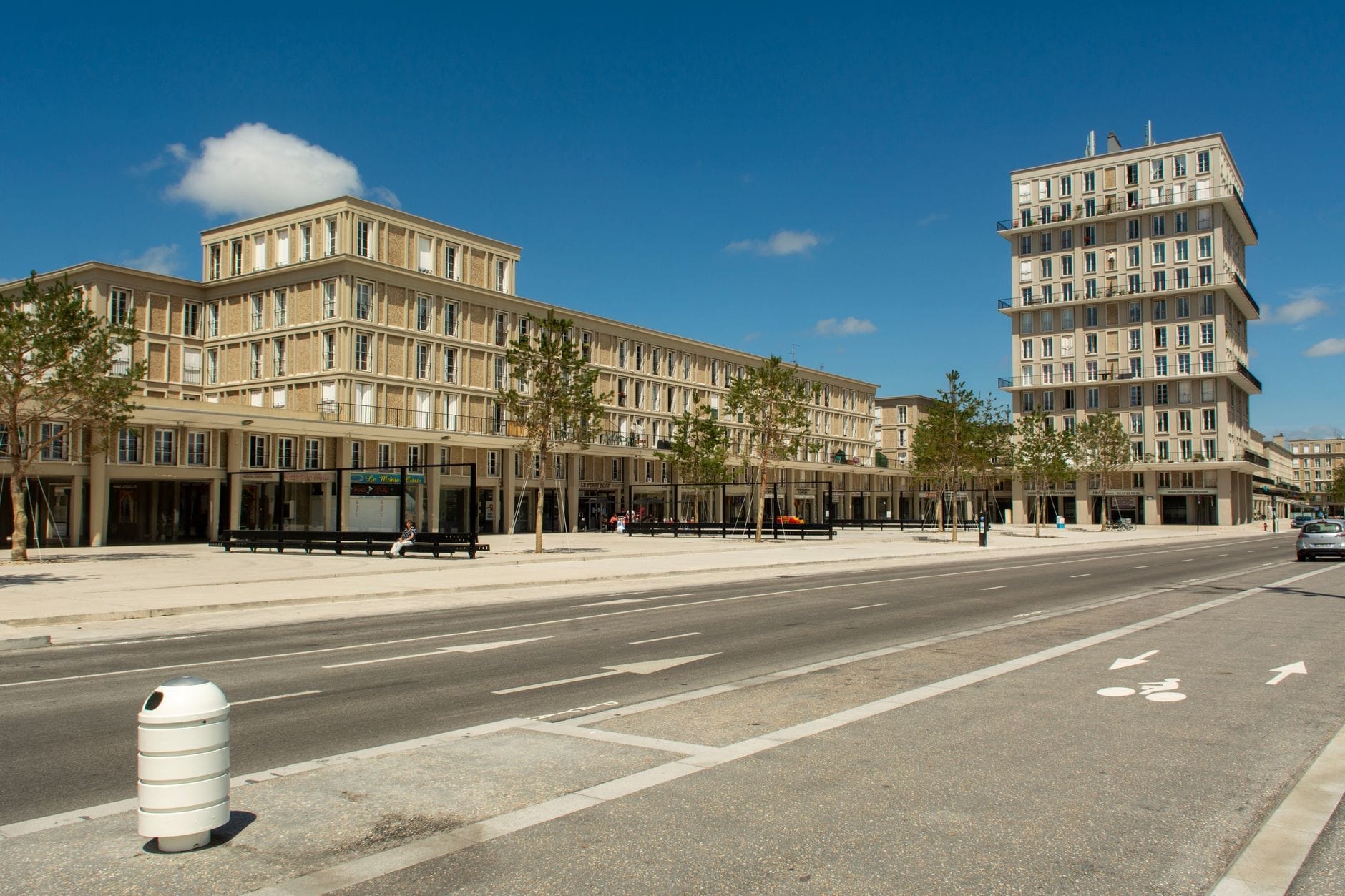
Perret did not attempt to recreate what had been destroyed. Instead, he designed an entirely new city on a strict orthogonal grid, with wide avenues, uniform building heights, and a module-based system of reinforced concrete construction that allowed flexibility within a coherent visual framework. The palette is austere: exposed concrete, large windows, and a restrained use of ornament. The scale is ambitious, with broad public spaces and monumental civic buildings anchoring each quarter.
- Grid discipline The wartime destruction covered roughly 150 hectares; the UNESCO-listed Perret centre covers 133 hectares on a strict grid. Street widths and building heights were standardised to create visual unity across the entire reconstruction zone.
- Reinforced concrete as architectural expression Perret treated concrete not as a utilitarian material to be hidden but as a finished surface. The texture, formwork patterns, and jointing are visible and intentional throughout the city centre.
- UNESCO recognition in 2005 The rebuilt city centre was inscribed as a UNESCO World Heritage Site in 2005, recognised for its unity, integrity, and its significance as a coherent example of postwar modernist urban planning.
- Civic anchor points The Hôtel de Ville, Église Saint-Joseph, and the Bassin du Commerce function as the key public monuments within Perret's plan, each occupying a deliberate position in the urban grid.
✨ Pro tip
The Maison du Patrimoine, also called the Atelier Perret, is the best place to start any architectural visit. It contains the original drawing offices used during the reconstruction and houses a permanent exhibition on Perret's methods. The nearby Perret show flat recreates the interior of a standard apartment from the 1950s reconstruction, giving a rare domestic perspective on the project.
Key Sites That Tell the WWII and Reconstruction Story
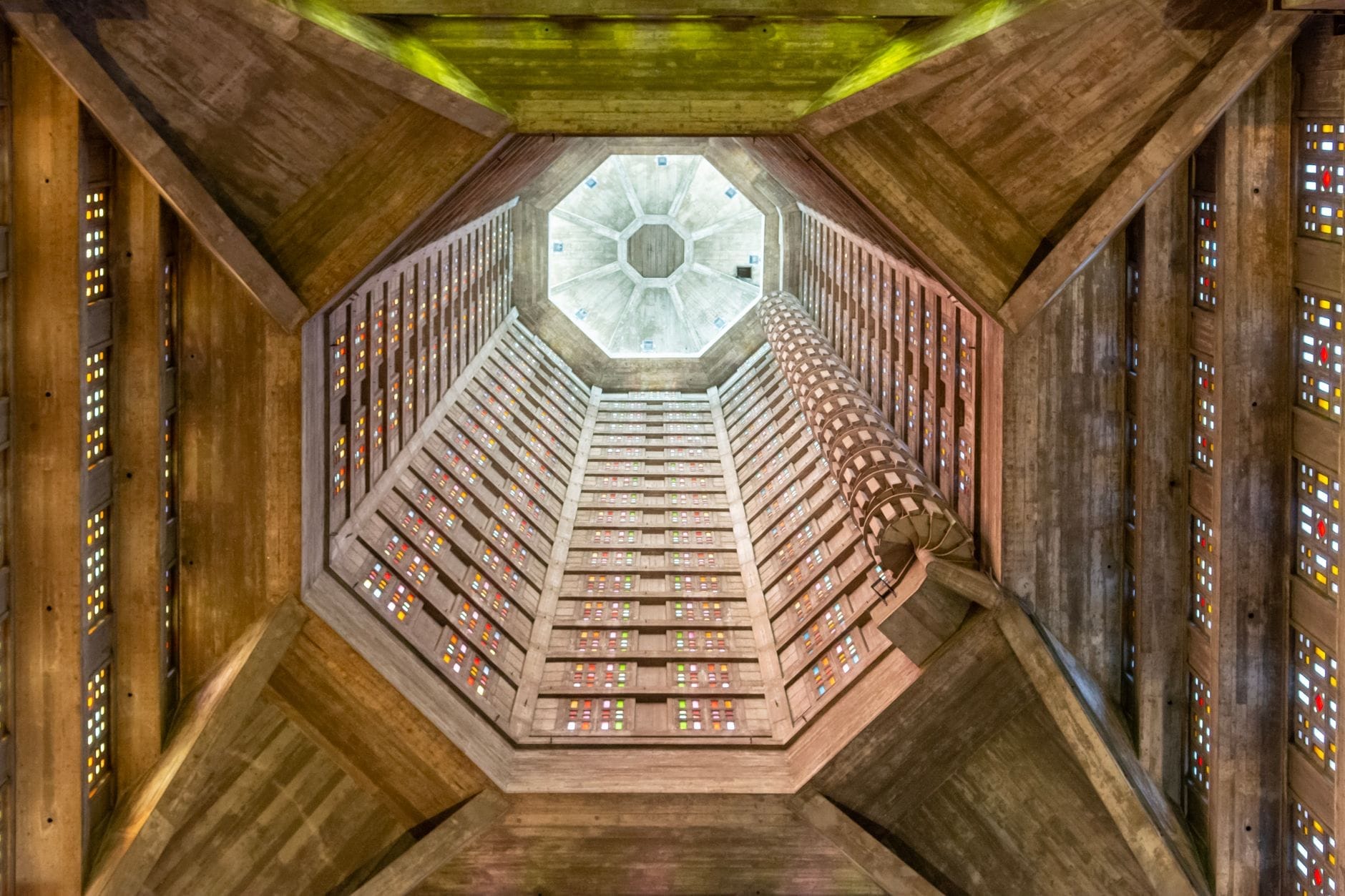
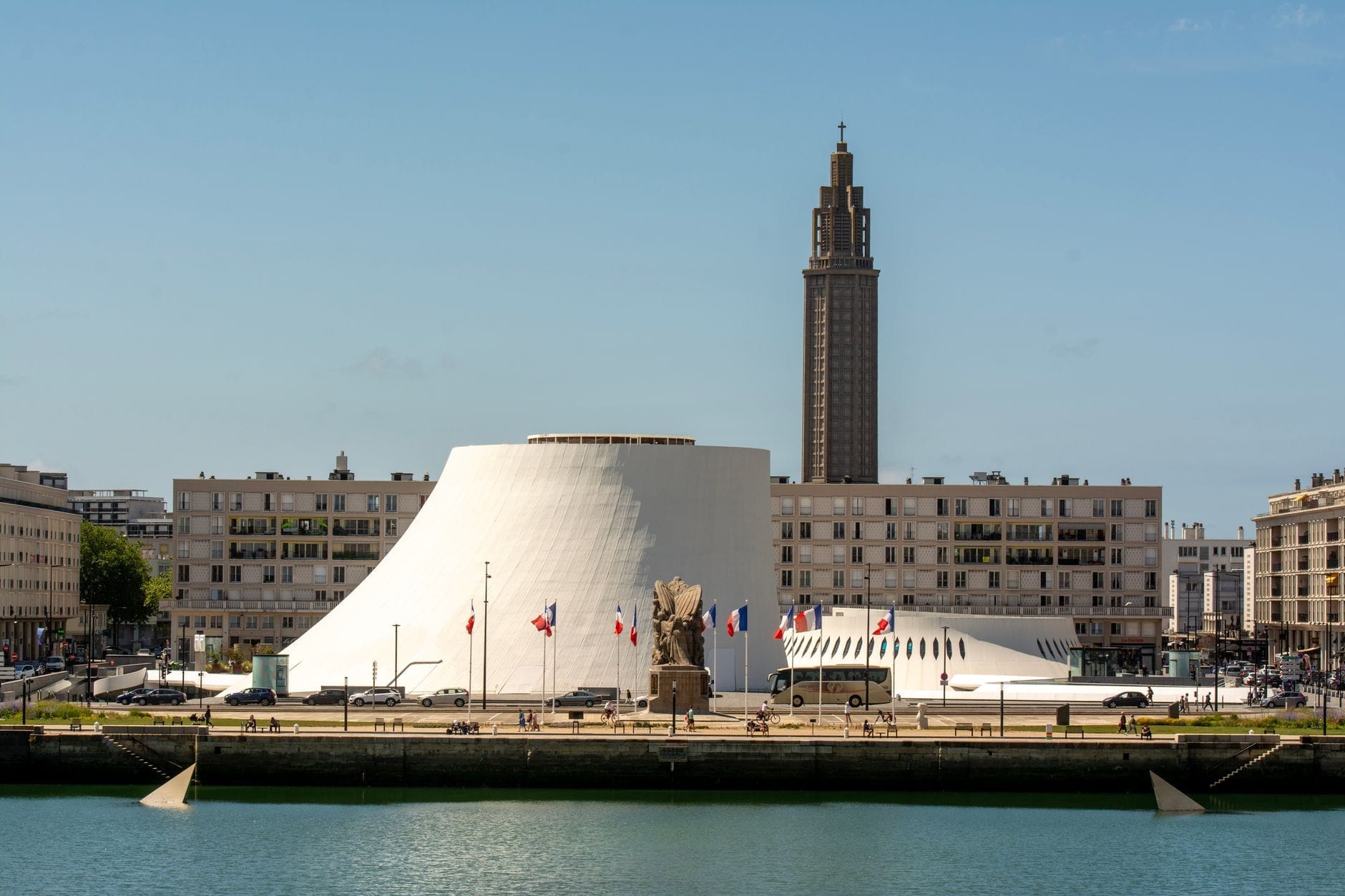
The most powerful single building in the reconstruction is Église Saint-Joseph, completed in 1957. Its octagonal tower rises 107 metres and is visible from much of the city. The interior is extraordinary: thousands of small coloured glass panels filter light in a way that is simultaneously abstract and intensely atmospheric. It was built as a memorial to the civilian victims of the 1944 bombing, and that intention is palpable inside. Do not skip the interior to save time.
The Hôtel de Ville is Perret's civic centrepiece, completed after his death by his team and opened in 1958. Its 18-storey administrative tower sits at the head of a formal plaza and is flanked by lower wings. The surrounding gardens and the approach avenue were designed to frame the building's presence in the cityscape. It is a short walk from the central train station and makes an obvious starting point for a self-guided architectural circuit.
For the reconstruction's residential and everyday dimension, the Maison du Patrimoine and Atelier Perret and the Perret show flat are essential. The show flat in particular is often overlooked by visitors focused on the monumental architecture, but it is where the social ambition of the reconstruction becomes tangible: decent, light-filled housing for ordinary residents, not just grand civic gestures.
- Église Saint-Joseph: memorial to bombing victims, exceptional stained glass interior, 107-metre tower
- Hôtel de Ville: civic centrepiece of the grid, formal plaza, 18-storey tower completed 1958
- Maison du Patrimoine / Atelier Perret: original drawing offices, permanent exhibition on the reconstruction
- Perret Show Flat: recreated 1950s apartment interior, the domestic face of the rebuilding project
- Musée d'Art Moderne André Malraux (MuMa): housed in a later modernist building on the waterfront, with strong connections to the postwar artistic context of Le Havre
- Bassin du Commerce: the commercial basin at the heart of the port district, flanked by Perret-era buildings
The Musée d'Art Moderne André Malraux is worth a specific mention for visitors interested in the cultural recovery of the city after the war. Its Impressionist and post-Impressionist collection includes major works by Boudin, Monet, Dufy, and Pissarro, artists with strong ties to the Normandy coast. The building itself, opened in 1961, is a notable example of postwar French modernism and sits directly on the seafront.
How to Explore the History on Foot
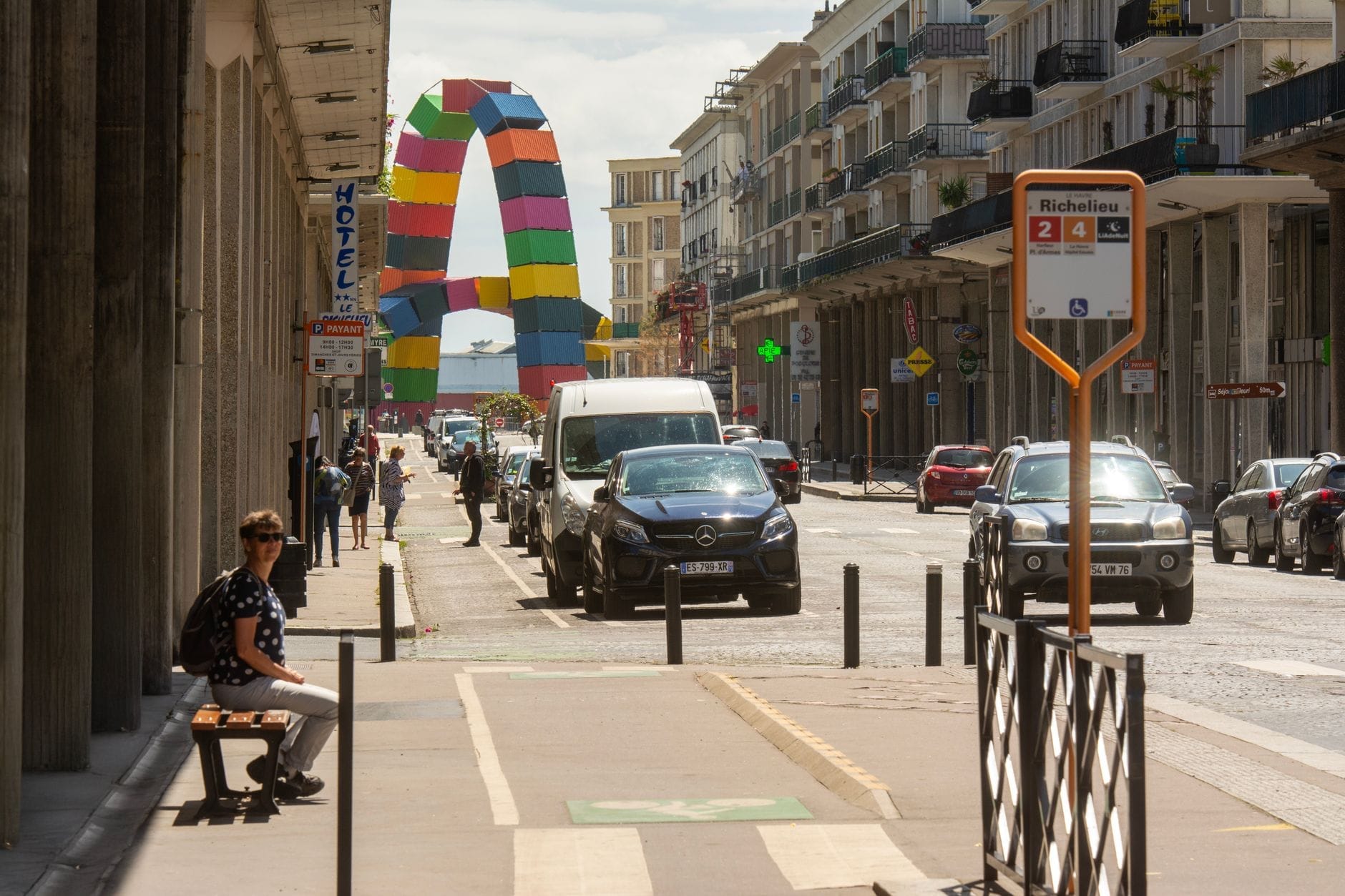
The UNESCO-listed centre is compact enough to cover on foot in a focused half-day, though a full day allows proper time in the key buildings. The Le Havre walking tour route provides a structured circuit through the Perret grid, passing the main architectural landmarks in a logical sequence from the station outward to the seafront.
Start at the Hôtel de Ville plaza, walk west along Avenue Foch to the seafront, then continue south along the promenade to reach MuMa before looping back through the grid via Rue de Paris to Église Saint-Joseph. The Atelier Perret and the show flat are a short detour north of this loop. The whole circuit is roughly 4 to 5 kilometres on flat terrain. The concrete architecture reads best in morning light, when the low angle reveals the texture of the formwork and the depth of the window reveals.
⚠️ What to skip
Le Havre's postwar architecture divides opinion sharply. If you arrive expecting a charming historic French city, you will be disappointed. The Perret reconstruction is austere, grey in overcast weather, and deliberately monumental in scale. Its quality is intellectual as much as sensory. Go with an understanding of what you are looking at, and the city rewards serious attention. Go expecting Honfleur, and you will leave underwhelmed.
For visitors combining the WWII history with the broader Normandy D-Day context, Le Havre is a logical base. The city is roughly 100 kilometres from the D-Day beaches of Calvados, accessible by car or regional bus. The day trips from Le Havre guide covers the logistics for reaching Caen, Bayeux, and the landing beaches from the city.
Practical Tips for History-Focused Visitors
Le Havre is reachable from Paris Saint-Lazare by direct train in around 2 hours 15 minutes, making it a viable day trip for those based in the capital. For a proper WWII and architecture visit, however, an overnight stay is worth it. The accommodation options in Le Havre range from budget to mid-range, with most options concentrated in the Perret grid close to the main sites.
Autumn and spring are generally better than high summer for an architectural visit: lighter crowds at the key sites, cooler conditions for walking, and the grey concrete actually looks more dramatic under overcast skies than in flat summer sunlight. For a broader view of what the city offers across seasons, the best time to visit Le Havre guide breaks down the trade-offs by month.
- Combine the Atelier Perret exhibition with the show flat visit: they are close together and together take about 90 minutes
- Église Saint-Joseph is free to enter; check locally for current opening hours before visiting
- The UNESCO listing covers a specific 150-hectare zone: pick up a map from the tourist office at the Hôtel de Ville to stay within the protected boundary
- Photography inside the main buildings is generally permitted for personal use; verify on-site for current rules
- The LiA tram and bus network connects the station to the seafront and main sites cheaply if you prefer not to walk the full circuit
FAQ
Why was Le Havre bombed in World War II?
Le Havre was a major Channel port and a strategically important German military position in 1944. As Allied forces advanced through Normandy after the D-Day landings in June 1944, capturing functioning ports was critical for supply lines. The Royal Air Force carried out heavy bombing raids in early September 1944 as part of Operation Astonia, targeting the German garrison and port defences. The civilian city centre bore much of the destruction. Le Havre was liberated on 12 September 1944.
Who rebuilt Le Havre after the war?
The reconstruction was led by French architect Auguste Perret, who was commissioned by the French government in 1945. Perret designed an entirely new city on a strict orthogonal grid using reinforced concrete, departing completely from the pre-war urban fabric. He died in 1954 before the project was complete, and his team continued the work until 1964. The rebuilt centre was inscribed as a UNESCO World Heritage Site in 2005.
Is the rebuilt Le Havre city centre a UNESCO World Heritage Site?
Yes. The approximately 150-hectare reconstructed city centre was listed by UNESCO in 2005. The inscription recognised the area's exceptional unity and integrity as a coherent postwar urban planning project, and its significance as an example of Auguste Perret's architectural approach to reinforced concrete construction.
What are the best sites in Le Havre related to WWII and the reconstruction?
The key sites are Église Saint-Joseph (built as a memorial to bombing victims, with extraordinary stained glass), the Hôtel de Ville and its formal plaza, the Maison du Patrimoine / Atelier Perret (exhibition on the reconstruction, in the original drawing offices), and the Perret show flat (a recreated 1950s apartment). The Musée d'Art Moderne André Malraux on the seafront also documents the city's postwar cultural recovery. All are within walking distance of each other in the UNESCO-listed zone.
How long do you need to explore Le Havre's WWII and reconstruction history?
A focused half-day covers the main buildings on foot. A full day allows proper time inside the key sites: the Atelier Perret exhibition, the show flat, Église Saint-Joseph, and MuMa together take around 4 to 5 hours including walking time. If you want to combine this with a structured historical itinerary using the Liberation Route Europe framework, plan for a full day or consider an overnight stay.