Auguste Perret Architecture in Le Havre: A Self-Guided Tour
Le Havre's rebuilt city centre is one of Europe's most coherent examples of postwar modernist urbanism. This guide walks you through the key Auguste Perret sites across 133 hectares of UNESCO-listed streets, with practical advice on access, booking, and what to actually look for.
Tickets & tours
Live prices and dates from our booking partner. If you book, we may earn a commission at no extra cost to you.
TL;DR
- Auguste Perret led the reconstruction of Le Havre's bombed city centre from 1945, covering around 133 hectares now listed as a UNESCO World Heritage Site (since 2005).
- The UNESCO listing covers the entire reconstructed district, not a single building — this is the most common misconception among first-time visitors.
- The three essential stops are Hôtel de Ville, Église Saint-Joseph, and the Maison du Patrimoine – Atelier Perret.
- Saint-Joseph Church is free and open daily (roughly 10am–6pm, except during ceremonies). The Perret model apartment requires advance booking.
- You can complete a focused Perret walk in half a day; combine it with the Le Havre walking tour for a full day out.
Who Was Auguste Perret and Why Does Le Havre Matter?
Auguste Perret (1874–1954) was a French architect and contractor whose career spanned the early adoption of reinforced concrete as an expressive architectural material. He is often described as 'the master of reinforced concrete,' and his work at Le Havre represents the culmination of decades of experimentation. Where other modernists of his era treated concrete as something to be hidden behind cladding or paint, Perret left it exposed and refined it to the point where it reads as monumental rather than industrial.
Le Havre was devastated by Allied bombing in September 1944. The destruction was severe enough that the city centre had to be rebuilt almost entirely from scratch, which gave Perret and his team an extraordinary opportunity: to design a complete urban grid at scale, with consistent street widths, building heights, and construction methods. He was appointed chief architect for the reconstruction in spring 1945 and led a team that developed what became known as the 'Perret system': a modular concrete frame adaptable to different building types, from civic monuments to standard apartment blocks.
ℹ️ Good to know
The UNESCO World Heritage inscription covers the reconstructed city centre of Le Havre as an ensemble, not any single building. Roughly 133 hectares of streets, blocks, and public spaces form the protected area. Visitors expecting one iconic structure will need to recalibrate: the point is the coherence of the whole.
The Self-Guided Route: Where to Go and in What Order
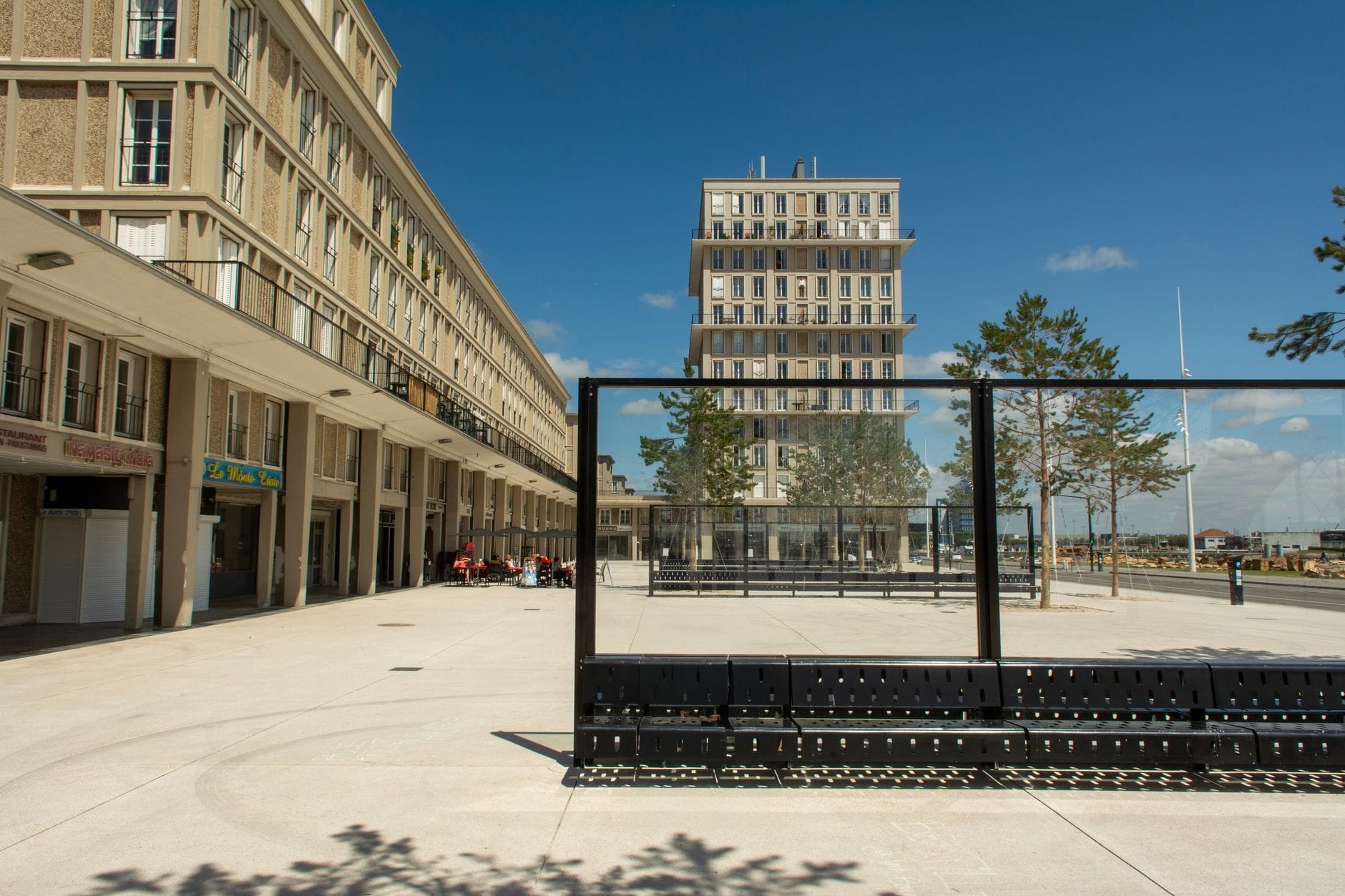
The most logical approach is to start at the Hôtel de Ville, which anchors the civic centre of the grid, then walk south to Saint-Joseph Church, and finish at the Maison du Patrimoine – Atelier Perret for context and, if booked, the model apartment visit. The entire route covers around 1.5 km and can be walked comfortably in two to three hours, longer if you stop to read the interpretive panels placed throughout the district.
- Stop 1: Hôtel de Ville (Town Hall) The civic centrepiece of the reconstruction. Its colonnade and 72-metre bell tower are immediately recognisable. The forecourt and surrounding square give you the best sense of Perret's urban planning intentions: wide axes, controlled proportions, concrete used as a dignified civic material.
- Stop 2: Église Saint-Joseph The most emotionally powerful building on the tour. The 107-metre concrete lantern tower is filled with around 12,700 pieces of coloured glass — the interior light effect is worth experiencing on a bright morning. Free entry, open daily approximately 10am–6pm except during services.
- Stop 3: Maison du Patrimoine – Atelier Perret Located on Place Auguste Perret. The Atelier Perret exhibition space provides architectural drawings, models, and historical documentation of the reconstruction. The Appartement témoin (Perret show flat) is accessible only by pre-booked guided visit — confirm availability before arrival.
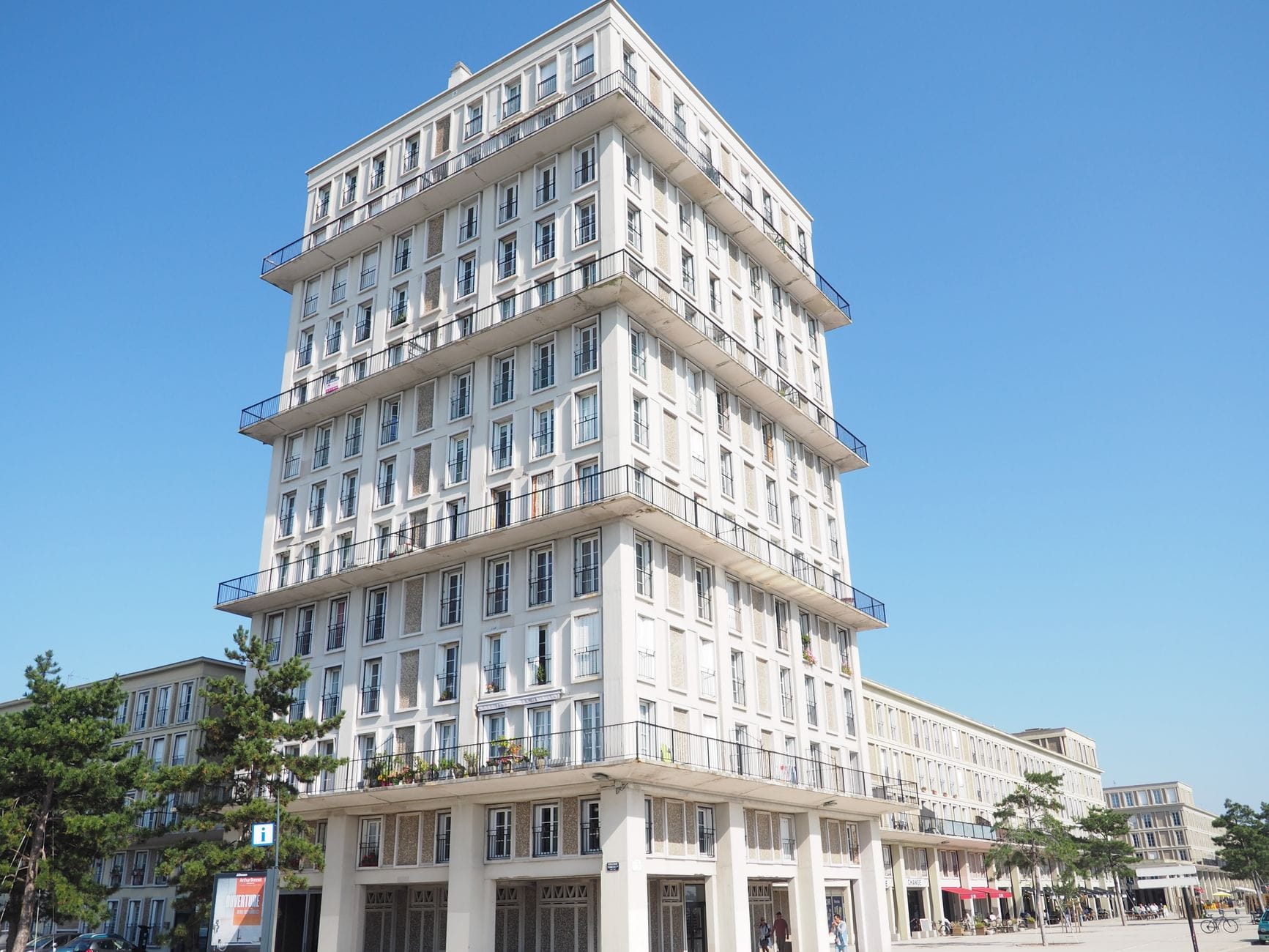
- Street-level exploration: the residential grid Walk any of the standard apartment streets between the main civic monuments. Rue de Paris and Boulevard François 1er are good examples. Notice the repeated bay widths, the concrete columns at ground level that create covered walkways, and the way natural light is handled through the building orientation.
For visitors who want structured context before exploring independently, the Perret show flat is the single most useful interpretive resource in the city. It recreates a furnished apartment from the reconstruction period, which makes the otherwise abstract architectural principles concrete and legible. Book ahead through the Maison du Patrimoine — walk-in access is not guaranteed and groups are prioritised in peak months.
💡 Local tip
Visit Saint-Joseph Church on a sunny morning rather than an overcast afternoon. The coloured glass panels respond dramatically to direct light, and the interior experience is significantly different on a grey day. If you arrive and it looks dull outside, consider returning later — the church is free, so there is no cost to coming back.
What to Actually Look For: Reading the Architecture
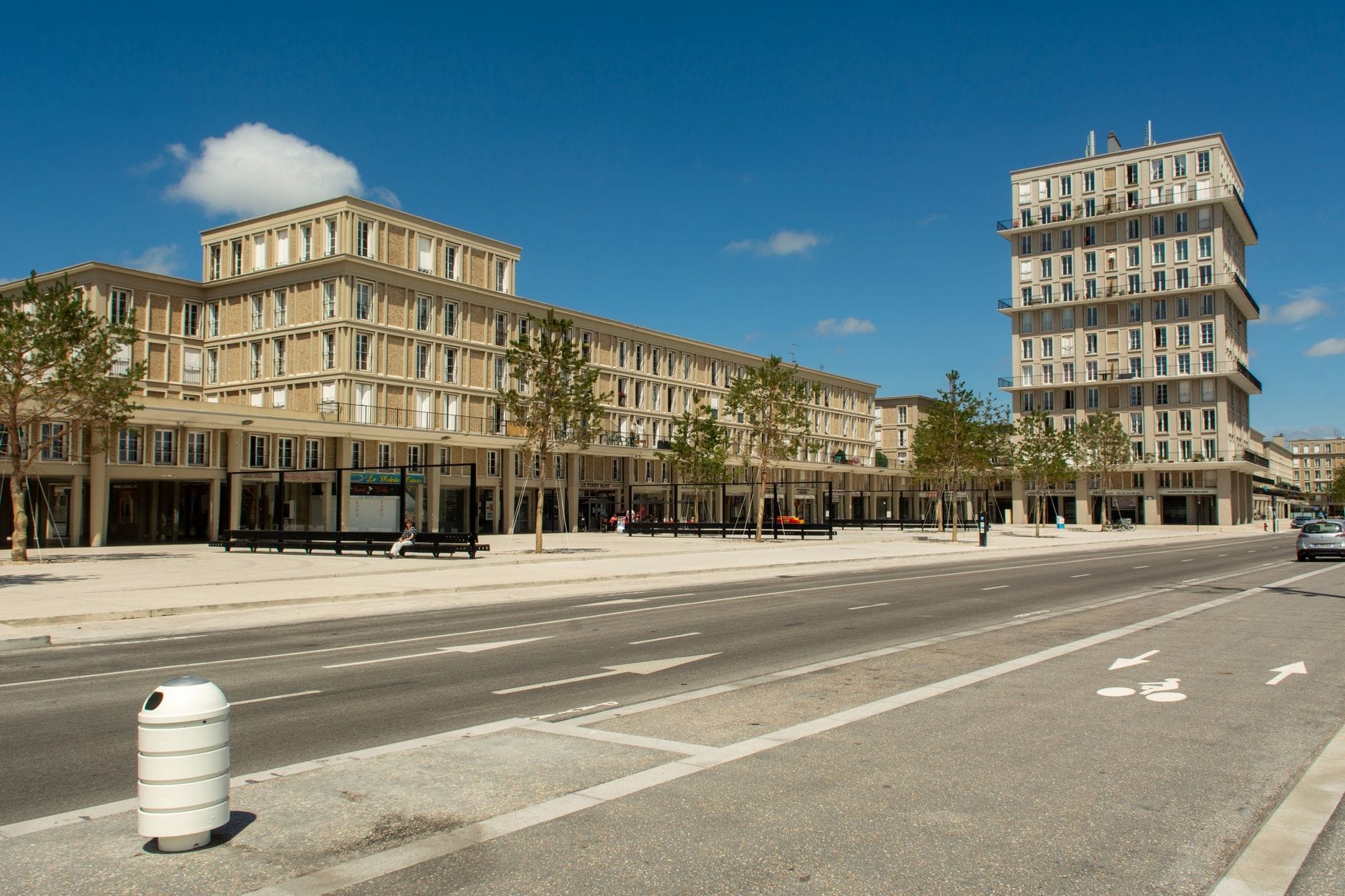
Many visitors walk through the Perret district without knowing what distinguishes it from generic postwar housing. A few things to look for: the modular grid that governs almost every building facade; the exposed aggregate concrete finish on many surfaces; the ground-floor colonnades that create covered pedestrian routes; and the consistent cornice heights that give the streets their sense of order without feeling oppressive.
Perret's approach was not about minimalism in the Modernist sense. He was deeply influenced by classical French architecture and believed concrete could fulfil the same structural and expressive roles as stone had in earlier centuries. Look at the pilasters, entablatures, and proportional systems embedded in even the most utilitarian apartment blocks. The ornament is sparse but deliberate. This is also why some critics found the reconstruction cold: it is rational and controlled in a way that can feel institutional until you understand the underlying logic.
If you want to deepen your understanding of the reconstruction's historical context, the Le Havre World War II history guide covers the bombing campaigns and the political decisions that shaped the rebuilding programme. It helps explain why Perret's commission was so unusual and why the result looks nothing like conventional postwar French reconstruction elsewhere in Normandy.
Practical Logistics: Booking, Timing, and Getting There
The Perret district sits in the centre of Le Havre and is easily reached on foot from the main railway station, which is itself a notable piece of postwar architecture. The LiA tram and bus network also connects to the city centre if you are arriving from a hotel further out. Parking is available on the streets around the Hôtel de Ville, though the grid design means the city centre is genuinely pleasant to walk.
- Saint-Joseph Church: free entry, open daily approximately 10am–6pm. Check for ceremony closures before visiting, especially on Sundays and public holidays.
- Maison du Patrimoine – Atelier Perret: located at Place Auguste Perret, 76600 Le Havre. The Atelier exhibition is generally open to visitors during office hours; the Appartement témoin requires a booked guided visit. Confirm current opening times with the local tourism office or lehavre-etretat-tourisme.com before your visit.
- Hôtel de Ville exterior and forecourt: accessible at all times. Interior visits may be possible but are not guaranteed without prior arrangement.
- Audio guides and walking maps for the Perret district are available from the Le Havre Étretat Normandie Tourisme office — pick one up on arrival if you prefer a structured route with commentary.
⚠️ What to skip
The Appartement témoin Perret is not a drop-in visit. Guided tours run on a limited schedule and spaces fill up during summer and school holiday periods. If this is a priority for your trip, book as far in advance as possible through the Maison du Patrimoine or the local tourism office. Arriving without a booking, especially between June and August, frequently results in disappointment.
If you are arriving by cruise ship, the Perret district is reachable from the terminal but requires a taxi or bus rather than a direct walk — check the Le Havre cruise port guide for transfer options and timing. Most port days give you four to six hours ashore, which is enough for the main Perret circuit if you move efficiently.
Seasonal Considerations and Crowd Patterns
Le Havre's architecture can be visited year-round, and in some ways the Perret district is more interesting in winter when the streets are quieter and the concrete surfaces show their texture more clearly without summer haze and crowds. That said, the Appartement témoin operates on reduced hours outside peak season, and some interpretive resources may not be available in English outside July and August.
Summer brings the annual Un Été au Havre contemporary art festival, which installs monumental works across the city, sometimes in and around the Perret district itself. This adds a layer of interest but can also draw large crowds to specific areas. See the Le Havre in summer guide for what to expect in June through August. Spring and early autumn offer a reasonable balance: mild weather, manageable crowds, and the full range of sites open.
For those who want to combine the Perret tour with other architectural and cultural experiences, the Le Havre Impressionist art trail can be done on the same day — the Musée d'Art Moderne André Malraux (MuMa) sits near the seafront and is within easy walking distance of the Perret circuit. It makes for a coherent full-day itinerary covering both the reconstruction era and the city's earlier artistic significance.
Honest Assessment: Is the Perret District Worth Your Time?
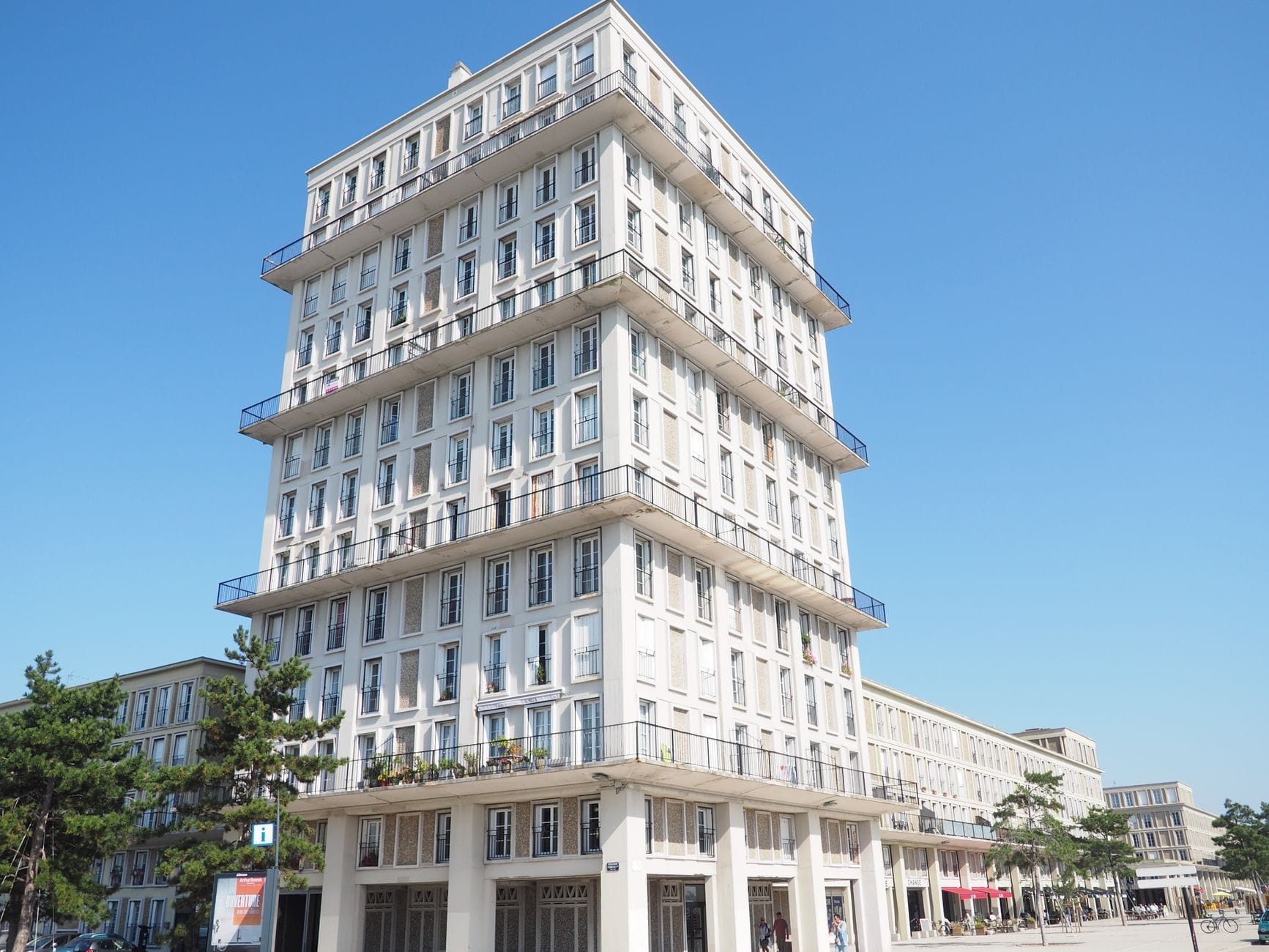
The straightforward answer is yes, but with an important caveat: you will get considerably more out of it if you prepare. Visitors who arrive cold and walk through without context often find the district grey, uniform, and harder to appreciate than more immediately picturesque European heritage sites. The beauty here is intellectual and proportional rather than decorative.
That is not a criticism — it is a description of what Perret was doing. But it means this is not a destination that works well for everyone. If you are primarily interested in medieval architecture, colourful street scenes, or conventional tourist spectacle, Le Havre's city centre will likely disappoint. If you are curious about urbanism, the history of concrete construction, or how cities rebuild after catastrophic destruction, it is one of the most instructive places in Europe.
For a broader perspective on whether Le Havre as a destination suits your interests before committing to a trip, the is Le Havre worth visiting guide gives an honest breakdown. And if you are planning a short stay, 2 days in Le Havre shows how to fit the Perret circuit into a broader itinerary that also covers the seafront, Sainte-Adresse, and the city's museums.
FAQ
Is Auguste Perret's reconstructed city centre really a UNESCO World Heritage Site?
Yes. The reconstructed city centre of Le Havre was inscribed on the UNESCO World Heritage List in 2005. The inscription covers the urban ensemble as a whole, approximately 133 hectares of streets, buildings, and public spaces, not any individual structure. It is recognised for its outstanding example of post-World War II architecture and urban planning using industrialised building techniques.
Do I need to book in advance to visit the Perret architecture sites?
For most of the route, no. Saint-Joseph Church and the street-level urban fabric are freely accessible at all times. The Hôtel de Ville exterior is always open. However, the Appartement témoin Perret (the reconstructed show flat inside the Maison du Patrimoine – Atelier Perret) requires a pre-booked guided visit. This is especially important in summer when spaces fill quickly. Contact the local tourism office or visit lehavre-etretat-tourisme.com to book.
How long does it take to walk the Perret self-guided tour?
A focused walk covering the Hôtel de Ville, Saint-Joseph Church, and the Maison du Patrimoine takes around two to three hours at a relaxed pace. Add another hour or so if you include a booked Appartement témoin visit, and longer if you explore the residential grid in depth. The route covers roughly 1 km between the main stops.
What is the best time of year to visit Le Havre for architecture?
The Perret district can be visited year-round. Spring (April–May) and early autumn (September–October) offer mild weather and smaller crowds. Summer brings the Un Été au Havre art festival, which adds contemporary installations to the city but also increases visitor numbers significantly. Winter visits are quieter and the concrete architecture reads well in the low northern light, though some interpretive resources may operate on reduced schedules.
Is there an entrance fee for the Perret architecture sites?
Saint-Joseph Church is free to enter. The street-level Perret district requires no ticket. The Maison du Patrimoine – Atelier Perret exhibition space may charge a small admission fee, and the Appartement témoin guided visit typically has a charge associated with it. Verify current pricing with the local tourism office before your visit, as fees can change seasonally.
Tickets & tours
Live prices and dates from our booking partner. If you book, we may earn a commission at no extra cost to you.
Planning a trip? Discover personalized activities with the Nomado app.