2 Days in Le Havre: The Perfect Weekend Itinerary
Le Havre rewards the traveler who looks past the port cranes. This two-day itinerary moves through the UNESCO-listed Perret city centre, France's second-largest Impressionist collection, a shingle beach 500 metres from downtown, and one of Normandy's most dramatic coastlines — all without wasting a morning on the wrong museum on its closing day.
Plan and book this trip
Tools from our partner Travelpayouts help you compare flights and hotels. If you book through them, we may earn a commission at no extra cost to you.
Flights
Hotels map
TL;DR
- Le Havre's UNESCO-listed city centre, designed by Auguste Perret after WWII, is the architectural core of any weekend visit.
- MuMa holds France's second-largest Impressionist collection — see our Le Havre Impressionist art trail for the full picture.
- Most major museums cost around €7–10, offer free entry for under-26s, and close one weekday — check before you go.
- The Le Havre–Étretat City Pass (24/48/72 hours, April–October) covers key attractions and public transport in one QR code.
- Étretat's chalk cliffs are less than 30 km away by Nomad coach — a natural add-on covered in our day trips from Le Havre guide.
Before You Arrive: Orientation and Practical Logistics
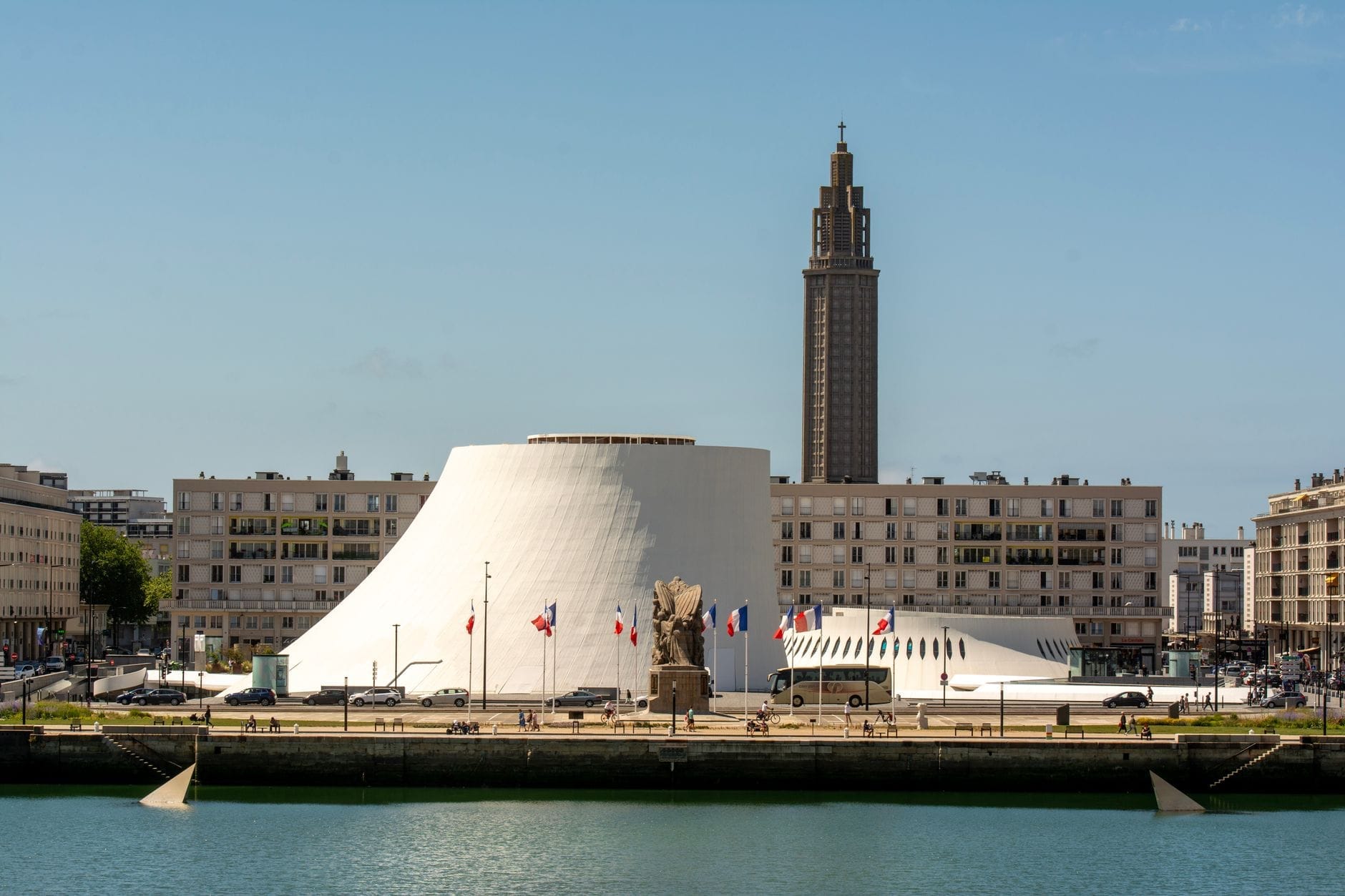
Le Havre sits on the right bank of the Seine estuary where it meets the English Channel, about 200 km northwest of Paris. Most visitors arrive by train from Paris Saint-Lazare — the journey takes around 2 hours, and trains run frequently throughout the day. If you're coming from the UK, Brittany Ferries operates a Portsmouth–Le Havre crossing, dropping you directly at the port. Le Havre–Octeville Airport (IATA: LEH) handles limited general aviation traffic and is not a practical option for most international travelers.
Once in the city, the LiA tram and bus network covers the centre efficiently. The Le Havre cruise port is also one of France's busiest, and many visitors combine a port call with a one or two night stay — which makes the itinerary below especially useful. The city is compact enough to explore largely on foot, but the tram earns its keep for reaching the Jardins Suspendus and the Sainte-Adresse headland.
💡 Local tip
Buy the Le Havre–Étretat City Pass (available April to October) at the tourist office or via the dedicated app. The 48-hour version covers unlimited tram and bus rides plus free or discounted entry to most major attractions. For a two-day visit, it typically pays for itself by the second museum.
A note on days: most of Le Havre's museums close on either Monday or Tuesday. MuMa typically closes on Monday, while the Maison de l'Armateur and some others may close Tuesday. If your weekend runs Saturday to Sunday, you're fine. If you're visiting Monday or Tuesday, reorganise the order below accordingly and check current hours on the official tourism site before you go.
Day One Morning: The Perret City Centre and Its Architecture
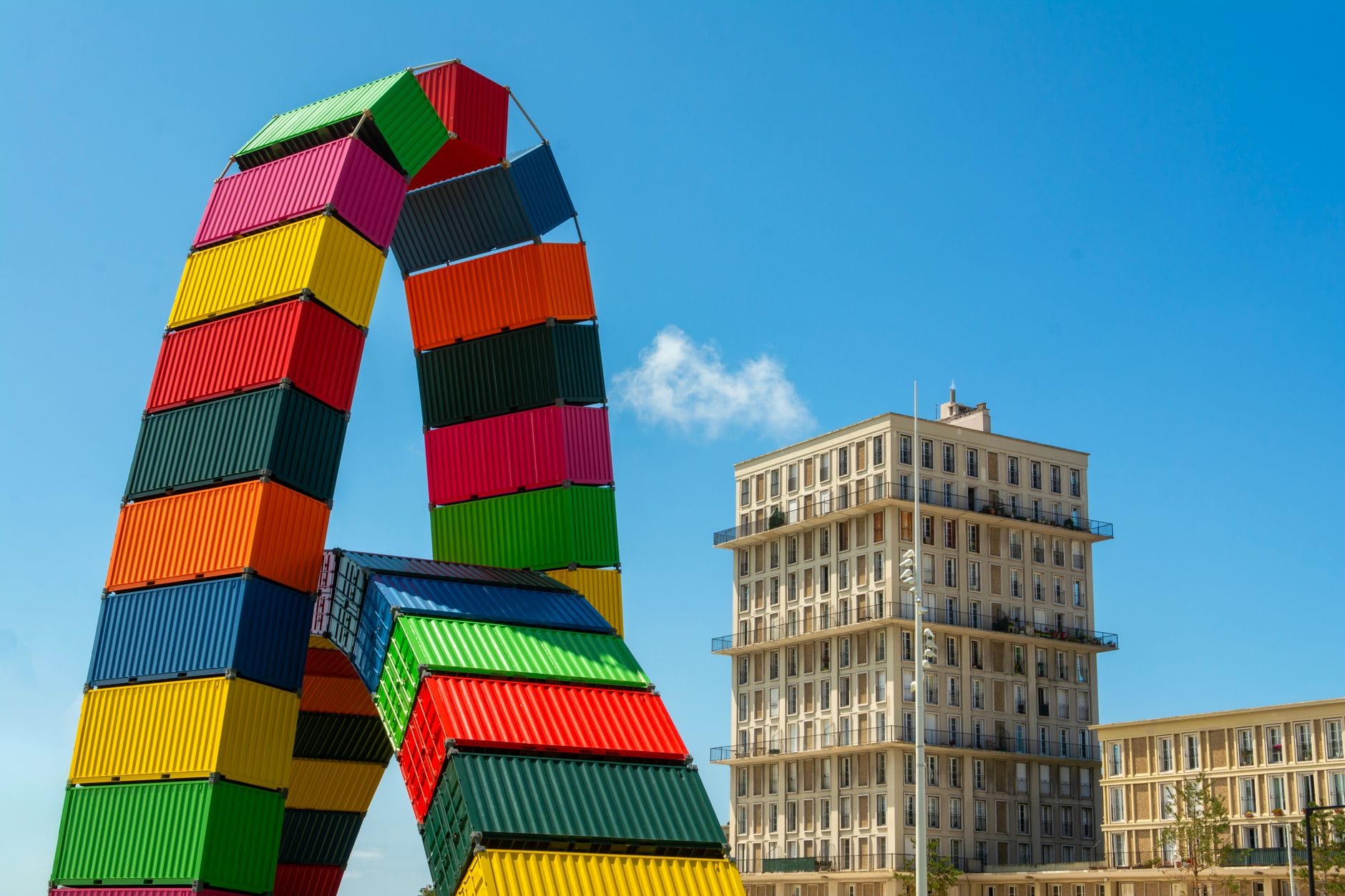
Start where the story starts: the Perret city centre. After Allied bombing destroyed much of Le Havre during World War II, architect Auguste Perret rebuilt the city on a modernist grid between 1945 and 1964. The result earned UNESCO World Heritage status in 2005 — one of only a handful of post-war urban reconstructions globally to receive the designation. Walking the grid in the morning, before the streets fill, is the best way to read its logic: wide axial boulevards, a consistent cornice height, and an obsessive use of reinforced concrete that somehow manages warmth at street level.
The non-negotiable first stop is the Église Saint-Joseph, the church Perret designed as a war memorial and neighbourhood landmark. Its 107-metre concrete tower is visible from across the city, but the interior is the revelation: 12,768 pieces of coloured glass filter light through the octagonal lantern tower in a way that shifts dramatically by time of day. Morning light is best. Entry is free, and the church is usually open from around 09:00.
A short walk away, the Perret Show Flat (Appartement Témoin Perret) offers the most intimate look at what postwar reconstruction actually meant for residents. The recreated 1950s apartment is preserved with its original furniture, fittings, and spatial logic. Guided visits typically run Monday to Friday at 15:30 and 16:30, with additional times in July and August. Entry is around €7, free for under-26s and on the first Saturday of each month. Check with the Maison du Patrimoine for current scheduling, as it can vary seasonally.
ℹ️ Good to know
The Maison du Patrimoine (Heritage House) near the Perret Show Flat serves as the city's architectural interpretation centre. Even if you skip the guided flat tour, the permanent exhibition provides useful context for reading the city you're walking through.
Day One Afternoon: MuMa, the Waterfront, and Le Volcan
After lunch — the Halles Centrales covered market is worth a detour if you're visiting on a Sunday morning, when the broader market spreads outside — head to the Musée d'Art Moderne André Malraux (MuMa) on the seafront. This is the substantive cultural highlight of any Le Havre visit. The collection holds works by Boudin, Monet, Pissarro, Renoir, and Dufy, making it France's second-largest Impressionist holding after the Musée d'Orsay. The building itself, a glass-and-steel structure opened in 1961, frames views of the Seine estuary that make the connection between these paintings and their Norman coastal origins visceral.
MuMa is typically open daily except Monday, 11:00 to 18:00 on weekdays with slightly longer hours on weekends. Entry is around €7–10, free for under-26s and on the first Saturday of the month. Budget two hours minimum. The permanent collection alone justifies the entry price, but temporary exhibitions here are consistently strong and often worth checking before your visit.
From MuMa, the seafront promenade stretches along Boulevard Albert 1er. Le Havre's beach is a two-kilometre shingle strip sitting roughly 500 metres from the city centre — an unusual urban geography that surprises many first-time visitors who expect the sea to be far from the commercial core. It's not a sand beach, so adjust expectations accordingly. The water is the English Channel: swimmable in summer, bracing in spring and autumn, and not much of a beach destination in winter. The promenade itself, with its cycle lane, is pleasant in any weather.
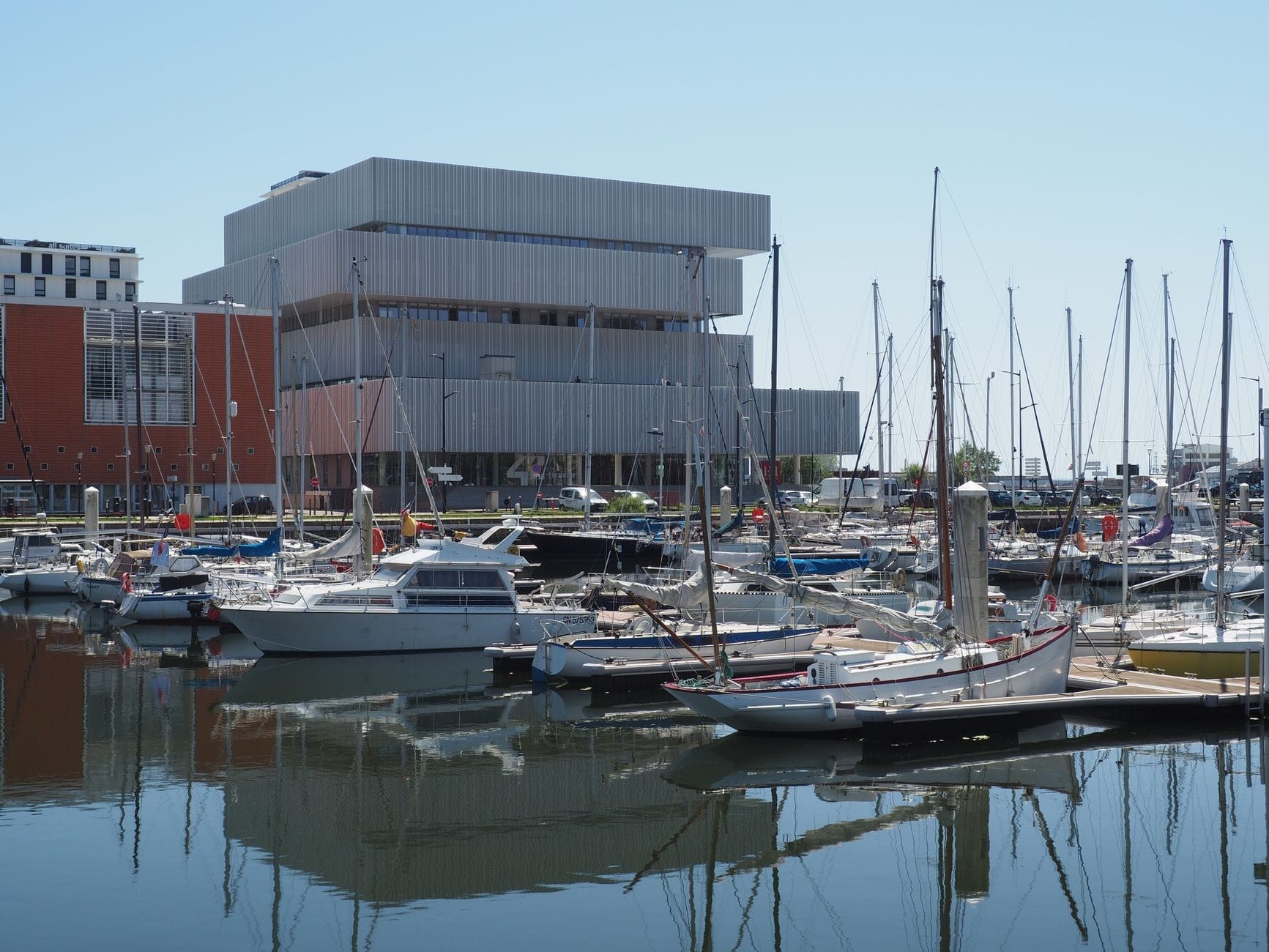
End the afternoon at Le Volcan, the Oscar Niemeyer-designed cultural centre near the city hall. The white truncated cone is one of the most photographed structures in Le Havre, and the public library inside is free to enter. The contrast between Perret's concrete grid and Niemeyer's organic form is jarring in the best way — it makes both buildings more interesting.
Day Two Morning: Sainte-Adresse and the Jardins Suspendus
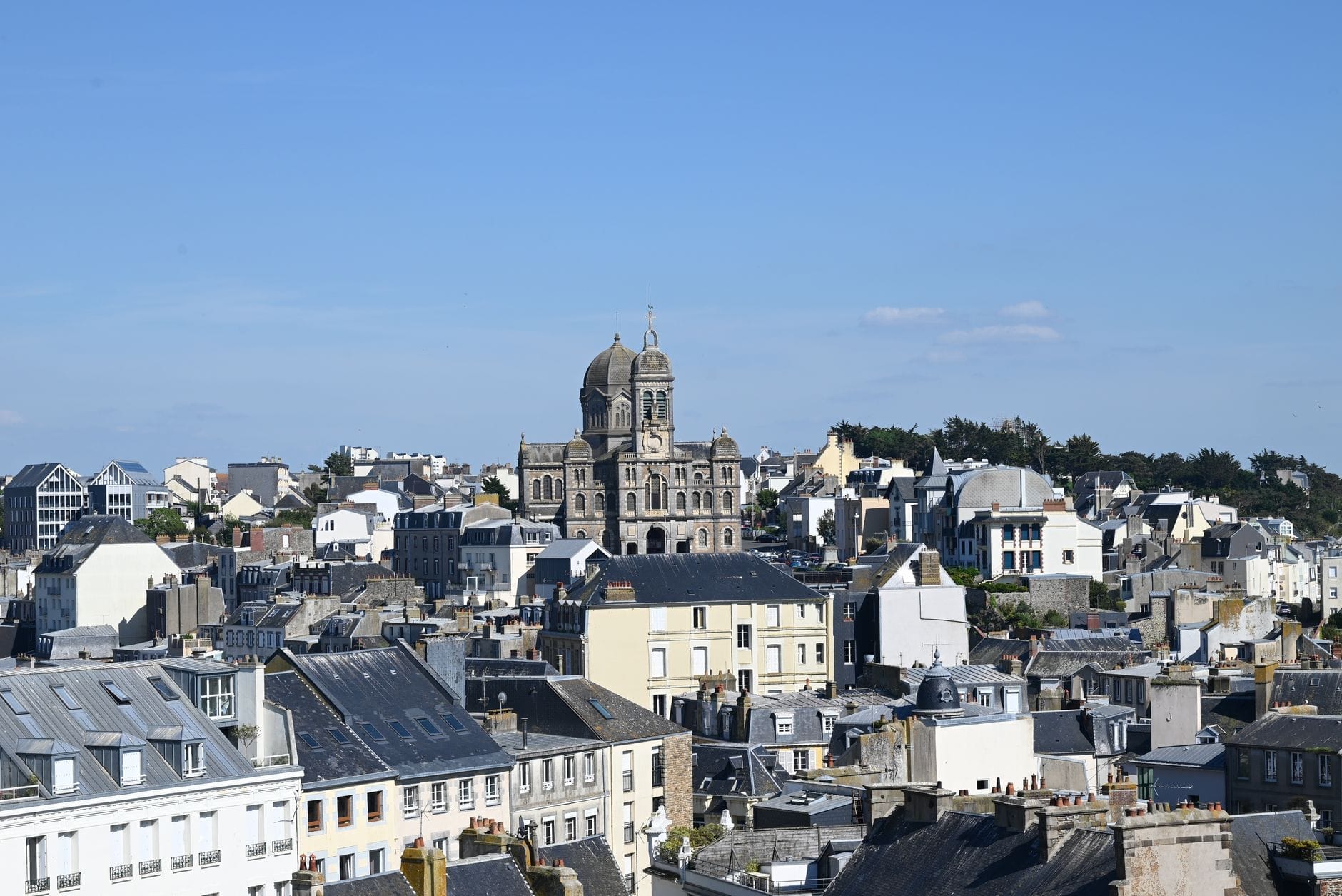
The commune of Sainte-Adresse sits on the Cap de la Hève headland above Le Havre, separated from the city by a steep climb and a different atmosphere entirely. This is where Claude Monet painted his celebrated 1867 series 'The Terrace at Sainte-Adresse', and the viewpoints looking back over the Seine estuary and Le Havre's port still carry the visual logic those paintings recorded. The tram gets you close; from the upper town a short walk reaches the best vantage points.
The Jardins Suspendus (Hanging Gardens) occupy a decommissioned Napoleonic fort at the top of the escarpment. The name is somewhat misleading — these are not hanging structures but a botanical garden laid out across the former fortifications, with greenhouses containing plants from several climate zones. The outdoor gardens are free to access; the greenhouses carry a small entry fee. Hours are 09:00–20:00 from April to October and 09:00–17:00 from November to March. In clear weather, the views from the ramparts across the Seine mouth and towards the Normandy coast are among the best in the area.
✨ Pro tip
Take the tram to the upper terminus and walk down through Sainte-Adresse rather than up. The descent gives you better views over the port and city, and it's significantly easier on the legs. Allow around 90 minutes for the gardens and the walk back down.
Day Two Afternoon: Maison de l'Armateur and the Old Port Quarter
Back in the lower city, the Maison de l'Armateur (Shipowner's House) is an 18th-century building that survived WWII and now stands as one of the few pre-Perret structures still intact in the city centre. The interior is a five-storey circular atrium with original furnishings and decorative arts that reflect Le Havre's prosperous pre-war merchant life. Entry is around €7, free for under-26s and on the first Saturday of the month. It's typically open 10:00–12:30 and 13:45–18:00, closed Tuesdays.
Nearby, the Bassin du Commerce is a central dock basin that anchors the city's commercial waterfront. The footbridge crossing it is a useful shortcut between the cultural venues and the port-side restaurants. The area around here tends to have the highest concentration of cafes and brasseries operating into the evening — a practical detail when planning where to eat on your last night.
If time allows, the Musée de l'Ancien Havre presents the city's pre-war history through maps, paintings, and artefacts, giving useful counterpoint to all the postwar architecture you've spent the weekend absorbing. For visitors interested specifically in how the reconstruction unfolded, pairing this with the Maison du Patrimoine from Day One creates a coherent historical arc. Check opening hours locally, as this smaller museum has more limited schedules than MuMa.
What to Prioritise, What to Skip, and How to Adjust
- Highest priority (don't miss) Saint-Joseph church, MuMa, the Perret city centre on foot, and the Jardins Suspendus viewpoint. These four cover the core reasons Le Havre is worth two days.
- Worth it with time Perret Show Flat (go for the guided visit, not solo), Maison de l'Armateur, and the Sainte-Adresse Impressionist viewpoints if Monet matters to you.
- Skip or manage expectations The beach is shingle, not sand — fine for a walk, not for sunbathing. The port industrial zone is vast and not visitor-friendly on foot. Le Volcan is photogenic but programming depends on the season.
- If you have a car or extra half-day Étretat's chalk cliffs are under 30 km north by the D940 coastal road or Nomad coach. The drive via Sainte-Adresse and Cap de la Hève is itself scenic. See our day trips guide for timing details.
⚠️ What to skip
Le Havre is sometimes dismissed as purely a transit port. That reputation is outdated. However, the city's industrial scale and Perret's grid can feel austere on a grey November day. If you're visiting outside summer, building your itinerary around indoor cultural venues (MuMa, Maison de l'Armateur, Perret Show Flat) and saving outdoor elements for any clear weather makes the trip more resilient to Normandy's characteristically changeable climate.
- Carry euros in cash — smaller cafes and market stalls don't always take cards.
- French is the working language throughout; English is understood in most tourism contexts but don't count on it universally.
- The LiA tram runs frequently and is the most reliable way to reach Sainte-Adresse from the centre.
- Tipping is not obligatory — service charge is included in restaurant bills by law in France. Rounding up or leaving a couple of euros is appreciated but not expected.
- Emergency services: 112 is the pan-European number; in France, 15 is medical, 17 police, 18 fire.
- France uses type C and E plugs at 230V/50Hz — bring an adapter if coming from the UK or outside Europe.
For a broader assessment of when to time your visit, the best time to visit Le Havre breaks down seasonal trade-offs in detail. Summer (June to August) brings the warmest weather and the annual Un Été au Havre art festival, which installs monumental sculptures and outdoor exhibitions across the city — transforming the Perret grid into a gallery. Spring and autumn offer fewer crowds and lower accommodation prices, with the trade-off of more frequent rain. Winter visits are for committed architecture enthusiasts only.
If you're bringing children, the city is more accommodating than its industrial reputation suggests. See our Le Havre with kids guide for specific venue recommendations and practical logistics. For accommodation decisions, where to stay in Le Havre covers the main neighbourhood trade-offs — staying near the Bassin du Commerce puts you within ten minutes' walk of most Day One sites.
FAQ
Is two days enough to see Le Havre?
Two days covers the main sites comfortably without rushing. Day One handles the UNESCO city centre, MuMa, and the seafront. Day Two covers Sainte-Adresse, the Jardins Suspendus, and the historic Maison de l'Armateur. If you add a half-day trip to Étretat, three days works better — but two is a satisfying standalone visit.
What is the best way to get from Paris to Le Havre?
Direct trains run from Paris Saint-Lazare to Le Havre in around 2 hours. This is the most convenient option. Driving takes a similar time depending on traffic on the A13/A29 autoroute. There is no practical direct flight between Paris and Le Havre.
Do Le Havre museums close on weekends?
Most major museums in Le Havre are open on weekends. The typical closing day is Monday for MuMa and Tuesday for Maison de l'Armateur, with some others closing Monday. If your two-day visit falls Saturday to Sunday, you're generally fine. Always verify current hours on the official tourism site or directly with the venue before visiting, as hours shift seasonally.
Is the Le Havre City Pass worth buying?
For a two-day visit covering multiple paid attractions plus public transport, the 48-hour City Pass (valid April to October) typically pays for itself. It covers free or discounted entry to the main museums plus tram and bus use, accessed via a QR code on your phone. Outside the April–October window, it is not available, so you'll need to pay attractions individually.
Can you do Étretat as a day trip from Le Havre?
Yes. Étretat is about 30 km north of Le Havre and reachable by Nomad coach. The cliffs are the main draw and take two to three hours to walk properly. Combining Étretat with a full day in Le Havre is ambitious but doable; treating it as a separate half-day addition to your itinerary is more comfortable. See our day trips from Le Havre guide for route and timing details.