Les Jardins Suspendus: Le Havre's Botanical Gardens in a Hilltop Fort
Les Jardins Suspendus occupies a former 19th-century military fort perched above the Bay of Seine in Le Havre. Spanning 17 hectares with 3,000 m² of collection greenhouses, this free botanical garden combines serious horticulture, panoramic coastal views, and the quiet drama of a repurposed fortification.
Quick Facts
- Location
- 65 rue du Fort, 76600 Le Havre (southern entrance); above the Montgeon quarter on the hillside overlooking the Bay of Seine
- Getting There
- Bus line 1 (LiA network) along Boulevard François-1er near the beach; roughly 30 minutes uphill on foot from the city centre
- Time Needed
- 1.5 to 3 hours depending on whether you tour the greenhouses
- Cost
- Free entry to gardens and on-site artworks; verify greenhouse admission locally
- Best for
- Botanical enthusiasts, families, photographers, and anyone wanting a peaceful escape from the city centre
- Official website
- www.lehavre.fr/annuaire/les-jardins-suspendus
What Les Jardins Suspendus Actually Is
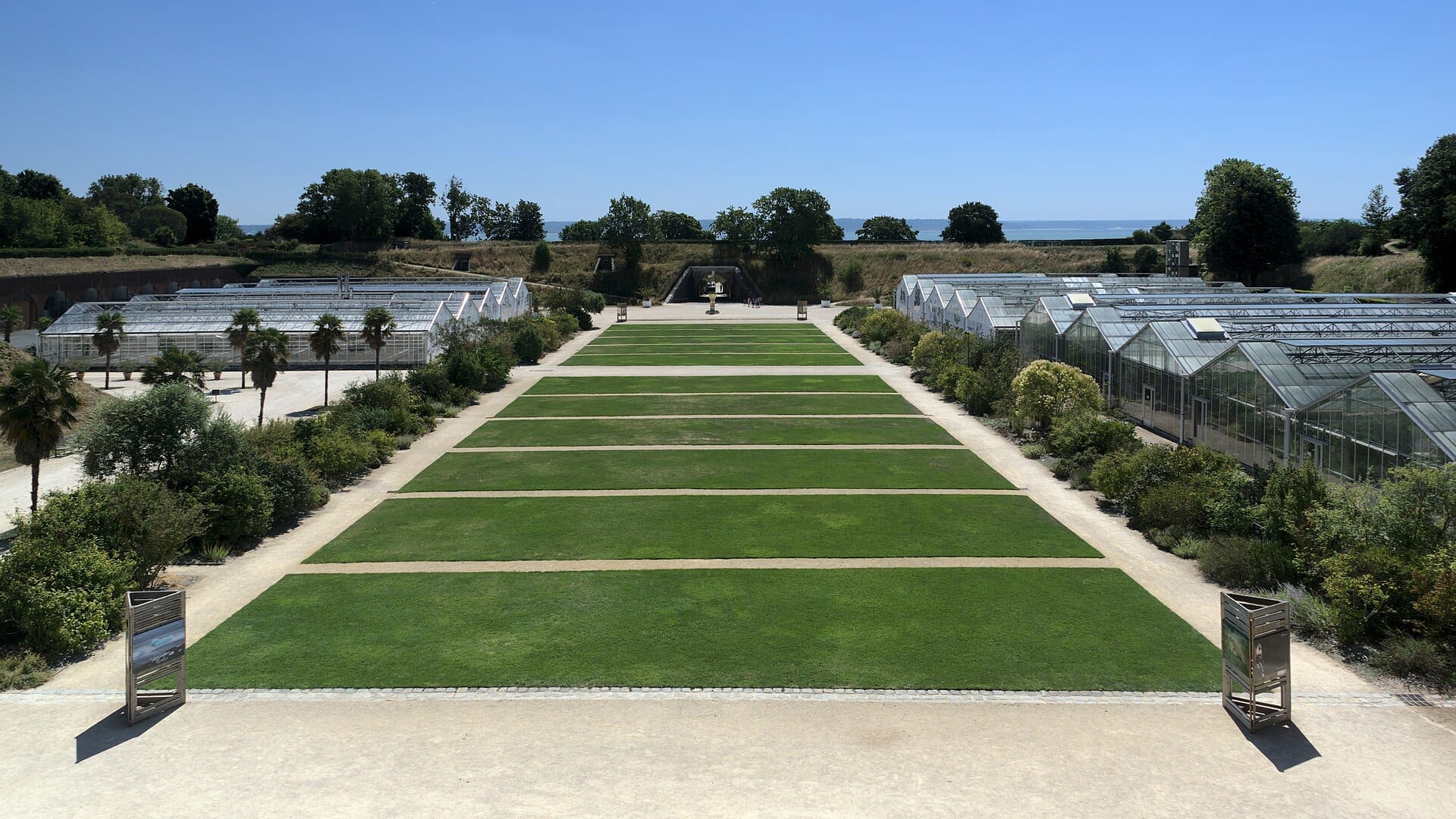
Les Jardins Suspendus is not a manicured city park. It is a serious botanical garden built inside a 19th-century military fort on the cliffs above Le Havre, commissioned by the City of Le Havre in 2005 and inaugurated in 2008. The fort's thick stone bastions, inner courtyards, and angular earthworks have been transformed into 17 hectares of planting that ranges from structured formal beds to wilder naturalistic areas, all of it sitting several dozen metres above the harbour and the Bay of Seine.
The name translates literally as the Hanging Gardens, a reference to the sensation of standing on the upper bastions with cultivated ground falling away on all sides and the sea stretching out below. It is one of Le Havre's most underrated destinations: consistently well-reviewed by visitors who find it, consistently overlooked by those who spend their time only in the UNESCO-listed city centre. Entry is free for the gardens themselves, which makes the decision to come straightforward.
💡 Local tip
The last entry is 45 minutes before closing. If you plan to visit the collection greenhouses, note they open at 10:30 and have seasonal opening hours: they are not accessible first thing in the morning.
The Fort Itself: Historical Context
The fortification dates from the 19th century and was built as part of the coastal defence network guarding the Seine estuary and the approaches to Le Havre's port. Its elevated position was its military logic: from the upper ramparts, the entire bay is visible in both directions, and any vessel entering or leaving the estuary would have been well within observation range. The thick casemate walls and the stepped bastions that define the garden's geometry today are direct survivors of that defensive purpose.
After its military role ended, the fort sat largely unused for decades. The 2005 rehabilitation project recognised that the site's elevation, its existing stone infrastructure, and its shelter from prevailing winds created a microclimate unusually suited to growing plants from warmer regions of the world. The casemates were converted into the Sisyphus Casemate installation, and the enclosed inner courtyard became the anchor for the contemporary artwork Le Temps suspendu. Both are included in the free admission.
Tickets & tours
Hand-picked options from our booking partner. Prices are indicative; availability and final rates are confirmed when you complete your booking.
Customized private D-day Normandy landing excursion from Le Havre
From 1.300 €Instant confirmationFree cancellationFull-day trip to Giverny and Rouen from Le Havre
From 1.200 €Instant confirmationFree cancellation
Navigating the Gardens: A Practical Walkthrough
There are two entrances: the southern entrance at 65 rue du Fort and the northern entrance at 29 rue Albert Copieux. Most visitors arriving by bus or on foot from the city centre use the southern entrance, which brings you into the site near the lower levels. The upper bastions require a short climb, and a lift is available for those who need it, connecting the main levels.
The layout follows the fort's original structure rather than a conventional garden plan. Planting beds occupy the tops of the bastions, the spaces between the defensive walls, and the central open ground. The collection greenhouses, covering roughly 3,000 m², contain plants from Mediterranean, tropical, and arid-climate zones, including species that would not survive a Normandy winter outdoors. These are the botanical heart of the site and worth timing your visit around.
The greenhouses are open daily from April through September (10:30 to 12:30 and 13:45 to 18:00), and on weekends and public holidays only from October through November and February through March. For context on how the gardens fit into a fuller day in the area, the Montgeon quarter sits directly below and includes the Forêt de Montgeon, Le Havre's main urban forest, making a combined half-day itinerary easy to plan.
How the Experience Changes Through the Day
Early morning, before 10:00, the gardens are almost completely quiet. The only sounds are birdsong from the surrounding wooded slopes and, on clear days, the low hum of port machinery drifting up from the harbour. The light at this hour comes in low over the bastions and picks out the texture of the old stonework in a way that midday sun flattens out entirely. If you are visiting primarily for the atmosphere and the views rather than the greenhouses, early morning is the best time to come.
By late morning on weekends in summer, families with children arrive and the inner courtyard becomes more active. The gardens handle this well because the fort's structure naturally disperses visitors across multiple levels and enclosed areas, so crowding is rarely a problem even on busy days. Midday in summer, the south-facing bastions can feel warm given Le Havre's otherwise cool coastal climate: this is the microclimate effect that the horticultural team relies on for growing heat-tolerant species outdoors.
Late afternoon brings softer light and longer shadows across the stone ramparts. The views toward the bay become particularly photogenic as the sun moves westward. If the sky is clear, you can see across the Seine estuary toward the Calvados coast. On overcast days, which are frequent in Normandy's oceanic climate, the gardens take on a more subdued, contemplative quality that many visitors actually prefer.
ℹ️ Good to know
Opening hours are seasonal: April to October 09:00 to 20:00; November to end of March 09:00 to 17:00. The shorter winter hours mean afternoon visits from around 15:00 onward leave limited time. Plan accordingly.
The Views: What You Actually See from the Bastions
Standing on the upper bastions of Les Jardins Suspendus, the panorama takes in the full width of the Bay of Seine. To the south and west, the water stretches toward the Channel horizon. The container terminals and the industrial port infrastructure are visible below and to the east, a reminder that Le Havre is first and foremost a working port city rather than a tourist resort. This industrial scale can be startling at first, but it gives the view an honesty that polished coastal destinations often lack.
On clear days, the limestone cliffs of the Normandy coast are visible in both directions. The Cap de la Hève headland is the prominent feature to the north, where the white cliffs drop sharply to the shore. If you are combining the gardens with a broader exploration of the coastline, the Cap de la Hève viewpoint is accessible from the same hillside area and offers unobstructed cliff-top perspectives that complement what you see from the fort's ramparts.
Photography at Les Jardins Suspendus
The combination of textured 19th-century stonework, carefully maintained planting, and open sea views makes this a rewarding site to photograph. The interplay between the geometric military architecture and the organic shapes of the plants is the defining visual tension of the place. Wide-angle shots from the bastions can capture both the cultivated foreground and the bay beyond; the challenge is managing the exposure difference between bright sky over the water and shaded planting beds.
Inside the greenhouses, the quality of diffused light filtering through glass panels gives a softer, more even exposure for detail shots of unusual plant specimens. Macro photography of the more exotic species in the tropical section is particularly rewarding. Tripods are manageable in the outdoor areas but check with staff before setting one up inside the greenhouses.
💡 Local tip
For bay views with the best light, position yourself on the western-facing bastions in the late afternoon. Morning light works better for the internal courtyard and greenhouse exteriors, which face roughly eastward.
Practical Details: Getting There, What to Bring
The site sits on a hill above the city. From Le Havre's city centre, the walk is approximately 30 minutes and involves a steady uphill gradient. In summer this is manageable; in wet weather the climb feels more demanding. Bus line 1 on the LiA network runs along Boulevard François-1er near the beach and is the most practical public transport option. Confirm the current stop and route with LiA before travelling, as timetables are subject to change.
Wear comfortable shoes with grip: the fort paths and rampart tops can be uneven, and the stone surfaces become slippery when wet. Normandy's climate means rain is possible at any time of year, and the elevated position of the gardens exposes them to wind even on otherwise calm days. Bring a layer regardless of the season. For a broader orientation to Le Havre's outdoor and coastal areas before your visit, the best time to visit Le Havre guide covers seasonal conditions in detail.
Toilets are available in the lower inner courtyard. There is no cafe or refreshment kiosk on site, so carry water, especially for summer visits when the south-facing bastions can retain significant heat. The nearest shops and cafes are at the base of the hill in the surrounding residential streets.
An Honest Assessment: Who This Is and Is Not For
Les Jardins Suspendus rewards visitors with a genuine interest in plants, military history, or coastal landscape. It is also well suited to families looking for open space and something more substantive than a beach visit. The Le Havre with kids guide notes this as one of the city's better options for families, and the free admission removes the usual calculus about whether it's worth the cost.
It is not for visitors who want a polished, heavily curated experience. The gardens are well maintained but they feel like a working botanical garden rather than a showpiece attraction. There are no audio guides, no cafes on site, and the interpretive signage is primarily in French. If you are in Le Havre for only a few hours from a cruise call and want concentrated cultural highlights, the time required to reach the gardens and explore them properly may work against you.
For cruise passengers with limited time, the priority is likely the UNESCO-listed city centre and its key buildings. The Le Havre cruise port guide covers how to allocate a short visit effectively. That said, if you have a full day ashore and have already walked the Perret architecture, Les Jardins Suspendus makes an excellent afternoon addition.
Insider Tips
- The northern entrance at 29 rue Albert Copieux is less used and puts you directly onto the upper garden level, saving the climb from the lower courtyard. If you are arriving from the Cap de la Hève direction or from Sainte-Adresse, this entrance is more convenient.
- The greenhouse midday break (12:30 to 13:45) is strictly observed. Arriving at 12:15 will get you turned away before you have seen everything inside. Plan either a morning or afternoon greenhouse visit, not one that straddles the break.
- The on-site artwork Le Temps suspendu and the Sisyphus Casemate installation are often overlooked by visitors focused on the plants and views. Take the time to find both: the casemate in particular repurposes one of the original fort chambers in a way that makes the military history of the space tangible.
- In late spring and early summer, the planting on the south-facing bastions includes flowering species that are not commonly seen in northern French gardens. The horticultural team uses the microclimate deliberately to extend the range of what can be grown here outdoors.
- Weekday mornings outside of July and August are the quietest times. School groups occasionally visit during term time but tend to leave the bastions clear. Avoid weekend afternoons in July and August if you want the views to yourself.
Who Is Les Jardins Suspendus (Hanging Gardens) For?
- Botanical enthusiasts who want to see species from Mediterranean, tropical, and arid climates grown in a northern French coastal setting
- Families with children who need space to move and something beyond a beach or city-centre walk
- Photographers looking for the combination of historical stonework, cultivated planting, and open sea panoramas
- Visitors who want a quiet, unhurried experience away from Le Havre's more visited cultural sites
- Anyone with an interest in 19th-century military architecture and the adaptive reuse of defence infrastructure
Nearby Attractions
Other things to see while in Montgeon & Northern Parks:
- Forêt de Montgeon
Covering 270 hectares on the northern edge of Le Havre, the Forêt de Montgeon is the city's largest green lung. Free to enter and accessible by tram, it offers forest walks, family picnic areas, and a treetop adventure park — a genuine contrast to the concrete modernism of the UNESCO-listed city centre below.
- Parc de Rouelles
Parc de Rouelles is a vast, free-entry park on the northern edge of Le Havre, covering around 160 hectares of woodland, meadow, and formal gardens anchored by a historic manor and a 17th-century dovecote. It is one of the city's largest green spaces and one of the least-crowded places to spend a half-day outdoors in the Le Havre area.