Parc de Rouelles: Le Havre's Great Escape Into Green Space
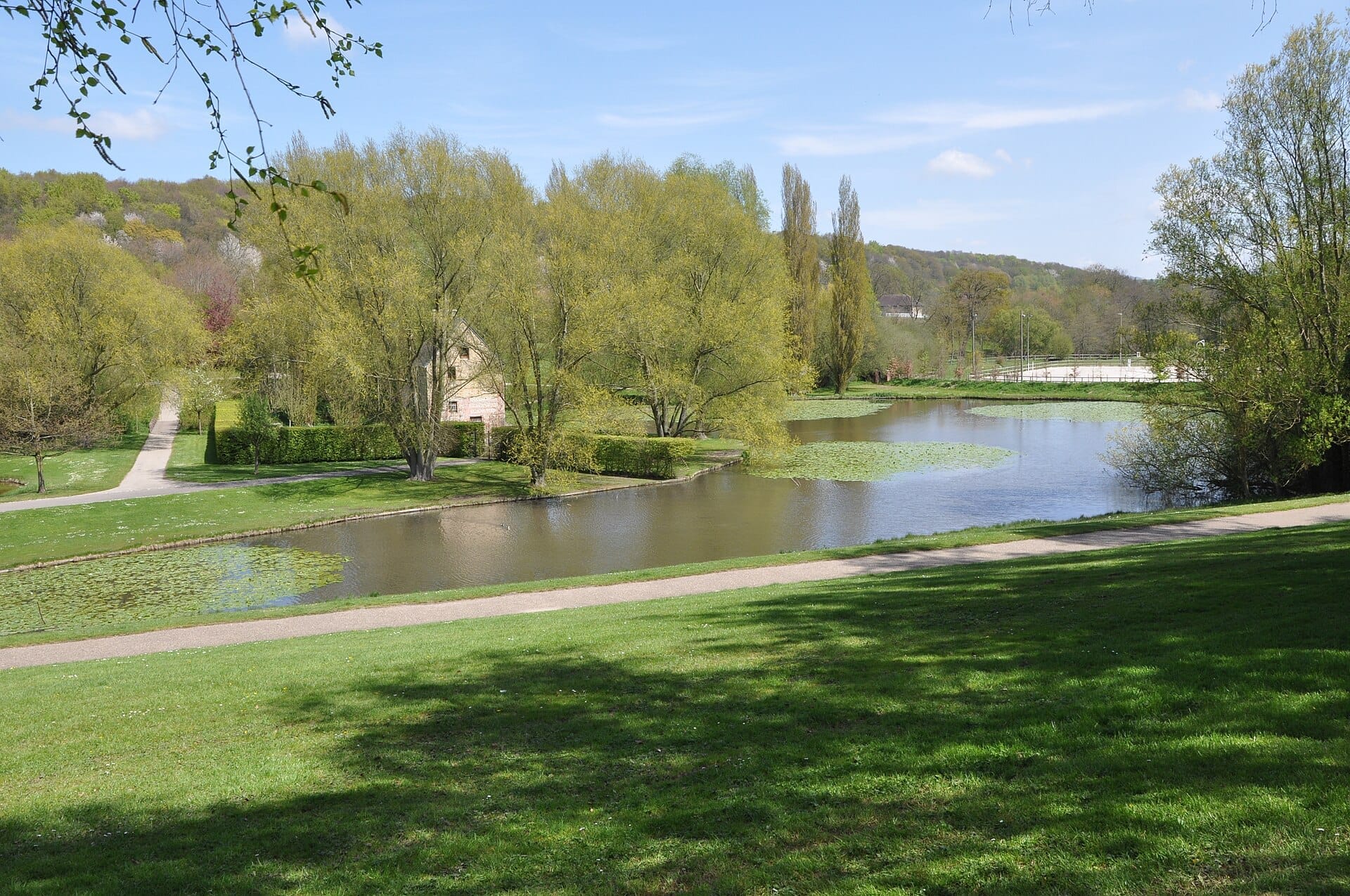
Parc de Rouelles is a vast, free-entry park on the northern edge of Le Havre, covering around 160 hectares of woodland, meadow, and formal gardens anchored by a historic manor and a 17th-century dovecote. It is one of the city's largest green spaces and one of the least-crowded places to spend a half-day outdoors in the Le Havre area.
Quick Facts
- Location
- Rue de la Bouteillerie, 76290 Montivilliers, Normandy, France
- Getting There
- Best reached by car or bike; check LiA routes and current access information before visiting.
- Time Needed
- 2–4 hours for a relaxed exploration; longer if joining a guided visit
- Cost
- Free entry every day
- Best for
- Families, walkers, picnickers, garden enthusiasts, and anyone needing a full breath of fresh air away from the city centre
- Official website
- http://lehavre.fr/annuaire-equipements/le-parc-de-rouelles
What Parc de Rouelles Actually Is
Parc de Rouelles is Le Havre's second-largest public park, a sprawling 160-hectare expanse of woodland, open meadow, and structured garden that sits on the northern edge of the city in the Rouelles district. Most visitors to Le Havre never make it here, which is precisely what makes it worth knowing about. The scale is immediately surprising: this is not a manicured city square but a working green landscape with enough paths to lose yourself in for an afternoon.
The land was formerly agricultural, which explains the buildings that still anchor the site, including the manoir de la Bouteillerie and a 17th-century colombier (dovecote) in remarkably good condition. The transformation into a public park began in 1983, and the result is a layered landscape where formal plantings sit alongside rougher, more naturalistic terrain.
ℹ️ Good to know
Opening hours vary by season: 7:00–20:00 from 1 April to 31 October, and 8:00–18:00 from 1 November to 31 March. The Jardin des plantes vivaces (perennial garden) is open seasonally and is closed to the public in January and February. Entry to the park itself is free every day of the year.
The Landscape: What You Will Actually See
The park divides naturally into several distinct zones. Closer to the entrance, the ground is more open, with mown grass and planted areas that attract families with young children, particularly on weekend mornings. Further in, the terrain becomes more wooded, the paths narrower, and the atmosphere quieter. On weekday mornings outside school holidays, you can walk for twenty minutes without passing another person.
The Jardin des plantes vivaces is the park's most curated feature: a structured display of perennial plants that shows best in late spring and summer, when colour and texture are at their peak. The planting is dense and layered, designed to demonstrate how perennial species perform across the growing season. It rewards a slow walk rather than a quick pass.
The manoir de la Bouteillerie and the 17th-century dovecote give the park a historical anchor that most green spaces of this type lack. The colombier in particular is well preserved, its circular stone form standing against the tree line in a way that rewards photographers who arrive in morning light, when the low angle catches the texture of the stonework cleanly.
If you are building a fuller day in the northern part of Le Havre, the park pairs naturally with a walk through the Forêt de Montgeon, the large urban forest a few kilometres to the south, which has a different character: denser, wilder, with more marked trails for longer walks.
Tickets & tours
Hand-picked options from our booking partner. Prices are indicative; availability and final rates are confirmed when you complete your booking.
Customized private D-day Normandy landing excursion from Le Havre
From 1.300 €Instant confirmationFree cancellationFull-day trip to Giverny and Rouen from Le Havre
From 1.200 €Instant confirmationFree cancellation
How the Park Changes by Time of Day
Early mornings, particularly between 8:00 and 9:30, are consistently the most peaceful window. The light in summer is soft and directional through the tree canopy, and the only sounds are birdsong and the occasional jogger on the perimeter path. If photography is part of your plan, this is when the manoir and dovecote look their best.
By late morning on weekends, especially in summer, families with children arrive in volume. The open meadow areas fill with picnic blankets by early afternoon. This is not an unpleasant atmosphere, but it is a different one: more social, louder, with dogs and footballs in evidence. If you want quiet, aim for a weekday or arrive before 9:30 on weekends.
Late afternoon in summer, as the light drops and the air cools slightly, is another good window. Many families leave around 18:00, and the park quietens before closing. The woodland paths in particular have a different quality at this hour: longer shadows, cooler air, and a stillness that the middle of the day does not offer.
💡 Local tip
In Normandy's oceanic climate, even summer days can turn overcast quickly. Bring a light layer regardless of the morning forecast. The woodland areas provide shelter from light rain, but the meadow and garden zones are fully exposed.
Historical Context: From Farm to Public Park
Understanding that this land functioned as a working farm until 1978 changes how you read the space. The manoir de la Bouteillerie is not a decorative folly placed for picturesque effect; it is an actual agricultural manor that predates the park's public incarnation by several centuries. The 17th-century colombier is similarly functional in origin, built to house the pigeons that provided fertiliser for farmland under the old tenure system.
The decision to convert the site into a public park from 1983 onward placed it in a broader tradition of French municipal green-space investment during that period. Le Havre, a city rebuilt from near-total destruction after World War II, had focused its postwar energy on housing and infrastructure. The parks and green corridors came later, and Rouelles represents one of the larger results of that second phase of city-building.
For context on how Le Havre approached its broader postwar reconstruction, the Maison du Patrimoine – Atelier Perret in the city centre provides a well-documented account of Auguste Perret's urban plan and what the city prioritised in the decades after 1945.
Getting There and Practical Navigation
This is the most important practical point: Parc de Rouelles is easier to reach by car or bicycle than by public transport. The LiA network operates buses across Le Havre, but connections to the Rouelles area are limited. Check transports-lia.fr for current routes before assuming a direct bus exists from the city centre.
By car, the park is straightforward to reach from the city centre. The address is Rue de la Bouteillerie, with the park sitting on the boundary between Le Havre and the commune of Montivilliers. Parking is available on-site. By bicycle, the route from the city centre is manageable for reasonably fit cyclists, though parts of the road network in this area are not fully cycle-segregated. The city's Vélomaritime and Seine à Vélo cycle routes pass through Le Havre more broadly, but the specific connection to Rouelles should be checked locally.
Guided visits are available for groups, bookable by appointment. Self-guided visits are the norm for individual visitors, and no formal trail map appears to be distributed at the entrance, so arriving with a rough sense of the site layout from satellite imagery beforehand is useful.
⚠️ What to skip
If you are relying on public transport, do not assume a bus will get you to the park gate. Verify current LiA routes before your visit. A taxi or rideshare from the city centre is the most reliable fallback.
Photography, Accessibility, and Practical Preparation
The park's best photographic subjects are the colombier, the manoir facade, and the perennial garden in full bloom. Morning light from the east works best for the historic buildings. In the garden, midday light on an overcast day actually produces cleaner colours than bright direct sun, which can wash out the more delicate perennial tones.
The terrain is mixed. The main paths near the entrance and garden areas are firm and relatively flat, suitable for pushchairs and visitors with limited mobility. Further into the woodland sections, paths become rougher and less even. Waterproof shoes or trail footwear are advisable after rain, as the woodland floor retains moisture well. The park does not appear to have a cafe or refreshment facility on-site, so bring water and food if you plan a long visit.
For families planning a broader day out, the park works well as a morning stop before heading toward the Plage du Havre in the afternoon, though the two are on opposite ends of the city and you will need transport between them. If you are travelling with children and want to plan the full day, the Le Havre with kids guide covers the most practical combinations.
Who Will Not Enjoy This Park
Parc de Rouelles is not for visitors on a tight schedule with one afternoon in Le Havre. The travel time from the city centre, combined with the park's distance from other major attractions, makes it inefficient if you are trying to cover the UNESCO-listed architecture, MuMa, and the seafront in a single day. Those attractions are concentrated centrally and are better suited to a compressed itinerary.
Similarly, if your primary interest is in Le Havre's architectural heritage, your time is better spent in the city centre around the Église Saint-Joseph or along the Perret grid than making the journey north to Rouelles. The park adds genuine value for visitors spending at least two full days in the city or those specifically seeking outdoor space rather than urban sightseeing.
Insider Tips
- The 17th-century colombier is easy to miss if you stick to the main paths near the entrance. It sits deeper into the grounds near the manoir — give yourself time to reach it rather than turning back at the garden.
- The Jardin des plantes vivaces is closed in January and February and shows poorly in early spring. Plan a visit between May and September for the best display of perennial planting.
- Weekday mornings outside French school holidays are dramatically quieter than weekends. If solitude matters to you, a Tuesday or Wednesday morning in June is the sweet spot.
- There is no on-site refreshment point, so pack a picnic. The meadow areas near the centre of the park have good flat ground and partial shade from surrounding trees — far more pleasant than eating near the car park.
- If you are arriving by car, entering from Rue de la Bouteillerie gives you the most direct access to the main park areas. Satellite navigation should be set to this street name rather than just 'Parc de Rouelles' to avoid being routed to a secondary entrance.
Who Is Parc de Rouelles For?
- Families with young children who need open space for running, picnicking, and unstructured outdoor time
- Garden enthusiasts interested in perennial planting design, particularly in late spring and summer
- Walkers and joggers wanting a longer outdoor circuit away from urban traffic
- Visitors staying in Le Havre for two or more days who have already covered the main city-centre attractions
- Photographers looking for historic Norman agricultural architecture in a naturalistic setting
Nearby Attractions
Other things to see while in Montgeon & Northern Parks:
- Forêt de Montgeon
Covering 270 hectares on the northern edge of Le Havre, the Forêt de Montgeon is the city's largest green lung. Free to enter and accessible by tram, it offers forest walks, family picnic areas, and a treetop adventure park — a genuine contrast to the concrete modernism of the UNESCO-listed city centre below.
- Les Jardins Suspendus (Hanging Gardens)
Les Jardins Suspendus occupies a former 19th-century military fort perched above the Bay of Seine in Le Havre. Spanning 17 hectares with 3,000 m² of collection greenhouses, this free botanical garden combines serious horticulture, panoramic coastal views, and the quiet drama of a repurposed fortification.