Maison du Patrimoine – Atelier Perret: Le Havre's Architecture Visitor Centre
Housed in Le Havre's UNESCO-listed reconstructed centre, the Maison du Patrimoine – Atelier Perret is the official starting point for understanding Auguste Perret's radical post-war city. Free to enter, it offers exhibitions, guided tours, and the context you need to read the city's concrete grid with fresh eyes.
Quick Facts
- Location
- 181 rue de Paris, 76600 Le Havre (centre reconstruit, near Place Perret)
- Getting There
- LiA tram or bus to city centre; the building sits within easy walking distance of Le Havre railway station
- Time Needed
- 45 minutes for self-guided visit; 2–2.5 hours if joining a guided tour
- Cost
- Free entry to welcome area; guided visits €7 full / €5 reduced; free for children, with other reductions varying by programme—check current details before booking
- Best for
- Architecture enthusiasts, first-time visitors to Le Havre, cruise passengers with limited time
- Official website
- http://www.lehavreseine-patrimoine.fr/la-maison-du-patrimoine
What Is the Maison du Patrimoine – Atelier Perret?
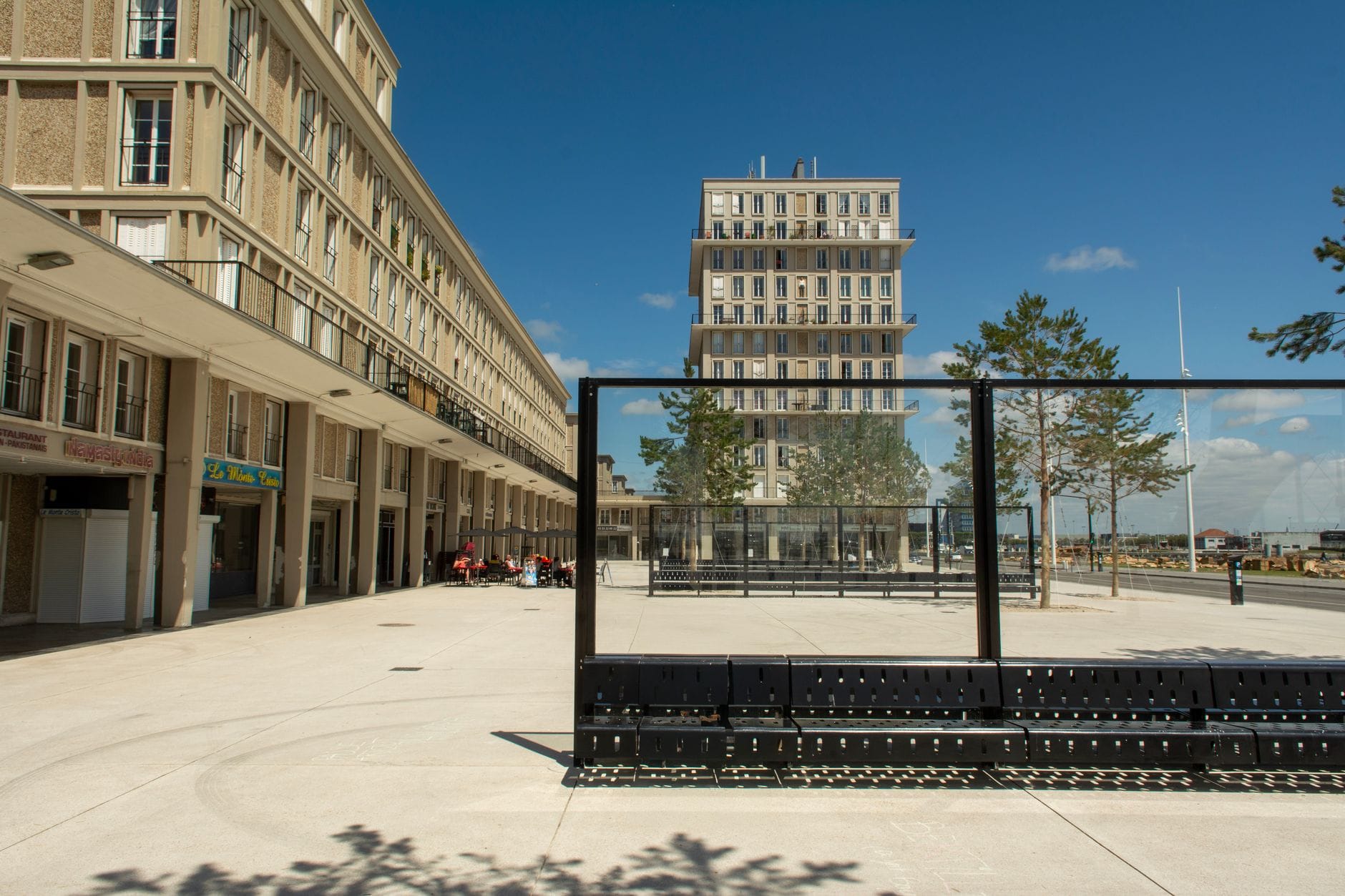
The Maison du Patrimoine – Atelier Perret is Le Havre's official heritage interpretation centre, dedicated to the monumental rebuilding of the city after World War II. It sits at 181 rue de Paris, inside the very urban fabric it explains: the grid of reinforced concrete designed by architect Auguste Perret, inscribed as a UNESCO World Heritage Site in 2005. If you arrive in Le Havre without background on what you are looking at, this is the place to start.
Part of the broader Perret architecture trail that threads through the city centre, the Maison du Patrimoine functions as both a tourist welcome point and a working resource for understanding how Perret's team used precast concrete in new, almost modular ways. It is not a museum in the conventional sense: there are no permanent galleries of paintings or objects. Instead, the space documents a city-scale project through plans, photographs, scale models, and interpretive displays.
ℹ️ Good to know
Opening hours are seasonal: in 2026, the site operates from 4 April to 4 October, daily 10:00–12:30 and 14:00–18:00. Hours outside this period vary; check the official website before visiting, especially in shoulder seasons.
The Historical Context: Why This Building Exists
Le Havre was among the most heavily bombed cities in Western Europe during World War II. Allied aerial raids and German demolitions left the historic centre devastated. What stands today is not restoration but replacement: a deliberate, systematic rebuilding programme entrusted to Auguste Perret, one of the pioneers of reinforced concrete construction and a teacher of Le Corbusier. Perret was already in his seventies when he accepted the commission in 1945.
Perret's approach was methodical and philosophically coherent. He rejected nostalgic pastiche and instead used concrete with the same rationalist discipline that classical architects applied to stone. Columns, lintels, and facades follow a strict 6.24-metre module that runs across the entire rebuilt centre, from apartment blocks on the rue de Paris to the soaring tower of Eglise Saint-Joseph. The result is a city that looks uniform at first glance and reveals increasing sophistication the longer you spend with it.
The Maison du Patrimoine is managed within the Pays d'Art et d'Histoire programme, a national French network that supports heritage interpretation in designated territories. This gives it a level of scholarly rigour that generic tourist offices often lack. For anyone planning to explore the Perret city centre in depth, the interpretive materials here are genuinely useful, not decorative.
Tickets & tours
Hand-picked options from our booking partner. Prices are indicative; availability and final rates are confirmed when you complete your booking.
Customized private D-day Normandy landing excursion from Le Havre
From 1.300 €Instant confirmationFree cancellationFull-day trip to Giverny and Rouen from Le Havre
From 1.200 €Instant confirmationFree cancellation
Arriving and Stepping Inside
The entrance on rue de Paris is quiet rather than grand. There is no queue-management infrastructure, no ticket barriers, no gift shop running the length of a corridor. You walk in, and the space opens around you with a calm that reflects the building's own proportions rather than any effort to impress. The welcome area is free to enter and is used by locals checking event listings as much as by tourists seeking information, which gives it a lived-in, non-performative quality that larger cultural institutions rarely achieve.
Morning visits, especially on weekdays, are the most rewarding. The light falls differently through Perret's concrete brise-soleils and window reveals at different times of day, and arriving when the rooms are less occupied means you can linger over the architectural drawings and scale models without feeling rushed. The early afternoon slot after the midday closure reopening at 14:00 tends to bring in more visitors, particularly during summer.
💡 Local tip
Pick up the city heritage map available at the welcome desk. It marks key Perret buildings across the reconstructed centre and is more detailed than standard tourist leaflets. It costs nothing and will double the usefulness of a self-guided walk.
Guided Tours: What You Actually Get for €7
The guided visits offered through the Maison du Patrimoine are where the experience shifts from informative to genuinely illuminating. Guides lead small groups through the city itself, not just the interior of the building. You walk the streets, enter spaces that are otherwise closed, and hear explanations of construction details that are invisible without specialist knowledge: the way Perret's module governs facade rhythm, how concrete was poured and textured to mimic stone coursing, why the street widths are what they are.
Guided visits cost €7 at full price and €5 reduced, with free access for under-26s, jobseekers, and RSA recipients. The format and frequency of tours varies by season, so it is worth checking the Pays d'Art et d'Histoire schedule in advance. Tours are typically conducted in French; enquire about English-language options when booking. If you are planning a deeper dive into the city's architecture, also consider visiting the Perret show flat, which reveals how the modular concrete system was applied to domestic interiors.
What You See, and What It Means
The displays inside the Maison du Patrimoine focus on the design logic behind the reconstruction rather than its social or political dimensions. You will find original architectural drawings, photographs documenting the construction process decade by decade, and physical models that make the city's geometric discipline immediately legible. Standing over a scale model of the city centre and then walking outside to see the same grid at street level is one of those rare moments where an interpretive centre actually changes how you perceive a place.
The centre also serves as a gateway to several related sites across Le Havre. Eglise Saint-Joseph, Perret's landmark church with its 107-metre lantern tower, is a short walk from rue de Paris and is often featured in the guided tour routes. The Hotel de Ville and the reconstructed apartment buildings along the Boulevard François 1er complete the picture of what Perret's team achieved at civic and residential scale.
Be honest with yourself about what this attraction is: it is an architectural interpretation centre, not a conventional sightseeing landmark. If you are visiting Le Havre primarily for the beach or the Impressionist art at the MuMa, the Maison du Patrimoine may feel niche. But if you are trying to understand why Le Havre was awarded UNESCO status and what sets it apart from other French port cities, this is the clearest entry point available.
Practical Notes: Getting There and Planning Your Visit
The address is 181 rue de Paris, a central artery of the reconstructed city. Le Havre's LiA tram and bus network serves the city centre comprehensively; the railway station is walkable, and from there rue de Paris runs directly through the heart of the Perret grid. On foot from the station, expect around 10 to 15 minutes. There is no dedicated car park at the site; street parking in the surrounding blocks is the practical option for drivers.
The site operates seasonally from April to October. If you are visiting outside these months or arriving on a cruise, verify hours carefully in advance. For cruise passengers with limited port time, the Maison du Patrimoine works well as an anchor point: it is compact, efficient, and located close enough to Eglise Saint-Joseph and the Bassin du Commerce to form a coherent two-hour circuit of the city's architectural highlights.
⚠️ What to skip
The site closes between 12:30 and 14:00 daily. Do not arrive at 12:15 expecting to start a visit. Plan for the morning session (10:00–12:30) or the afternoon session starting at 14:00.
Accessibility details are not comprehensively documented in official sources. If wheelchair access or step-free entry is a requirement, contact the Maison du Patrimoine directly before visiting. The surrounding streetscape of the Perret grid is largely flat and grid-planned, which helps for self-guided exploration of the wider area.
Insider Tips
- Ask at the desk for the Pays d'Art et d'Histoire programme booklet rather than the standard tourist leaflet. It lists scheduled guided tours for the full season and includes dates when special access visits to normally closed Perret buildings are offered.
- The best light for photographing the Perret facades on rue de Paris falls in the late morning, when the sun is high enough to catch the horizontal concrete brise-soleils and cast sharp horizontal shadows. Overcast days, common in Normandy, can actually work in your favour: flat light removes glare and reveals the texture of the aggregate-finish concrete.
- If the guided visit to the show flat is running on the same day, book both together. The Maison du Patrimoine can often arrange this, and the combination of the interpretation centre plus a domestic interior gives you the most complete picture of how Perret's module worked at every scale.
- The midday closure is frustrating if you time it badly, but the surrounding streets are worth walking during the break. The block between rue de Paris and rue Voltaire shows Perret's residential typology at its most consistent. Count the column bays and you will start to see the 6.24-metre module without needing anyone to explain it.
- Under-26s enter guided visits free. If you are travelling with a mixed-age group, check who qualifies before paying; the saving is meaningful across a group, and the staff are straightforward about the eligibility criteria.
Who Is Maison du Patrimoine – Atelier Perret For?
- First-time visitors to Le Havre who want context before exploring the city on foot
- Architecture students and design professionals interested in post-war modernism and reinforced concrete construction
- Cruise passengers with two to three hours ashore who want an efficient, walkable cultural circuit
- Travellers already visiting Eglise Saint-Joseph or the Perret show flat who want the interpretive framework to connect the sites
- Anyone pursuing Le Havre's UNESCO World Heritage designation beyond the surface level
Nearby Attractions
Other things to see while in Centre Ville Perret (UNESCO District):
- Bassin du Commerce
The Bassin du Commerce is a 500-metre historic dock at the centre of Le Havre's UNESCO-listed rebuild, where post-war concrete architecture meets open water. Free to visit during public hours, it serves as the city's most photogenic public space and a genuine crossroads of daily life.
- Cathédrale Notre-Dame du Havre
Standing on rue de Paris in central Le Havre, the Cathédrale Notre-Dame du Havre is a rare pre-war survivor in a city rebuilt almost entirely from concrete after 1944. Its layered Gothic and Renaissance architecture tells a longer story than the modernist grid surrounding it. Entry is free, and the contrast with Auguste Perret's rebuilt city makes it one of the most thought-provoking stops in the centre.
- Église Saint-Joseph
Designed by Auguste Perret and structurally completed in 1957 (with consecration in 1964), Église Saint-Joseph is the defining monument of Le Havre's UNESCO-listed city centre. Its 107-metre lantern tower and 12,768 panels of coloured glass make it one of the most architecturally significant post-war churches in Europe. Entry is free.
- Halles Centrales
Built between 1958 and 1960 as part of Auguste Perret's post-war reconstruction, the Halles Centrales is Le Havre's working food market. Free to enter and open seven days a week, it offers fresh produce, local traders, and a ground-level view of everyday city life inside a landmark modernist concrete shell.