Plage du Havre: Le Havre's Urban Beach on the English Channel
Plage du Havre is a long public beach stretching from the harbour entrance to the cliffs near Sainte-Adresse, right at the edge of one of France's most architecturally significant city centres. Free to access year-round, it offers an unexpectedly raw coastal experience within walking distance of a UNESCO World Heritage cityscape.
Quick Facts
- Location
- Promenade des Régates, 76600 Le Havre, Normandy, France
- Getting There
- Tram from Le Havre railway station (approx. 15 min); the beach is about 500–600 m from the city centre
- Time Needed
- 1–3 hours depending on season and activities
- Cost
- Free access; seasonal activity and rental prices vary by operator
- Best for
- Coastal walks, sunsets over the Channel, summer beach days, cruise port stopovers
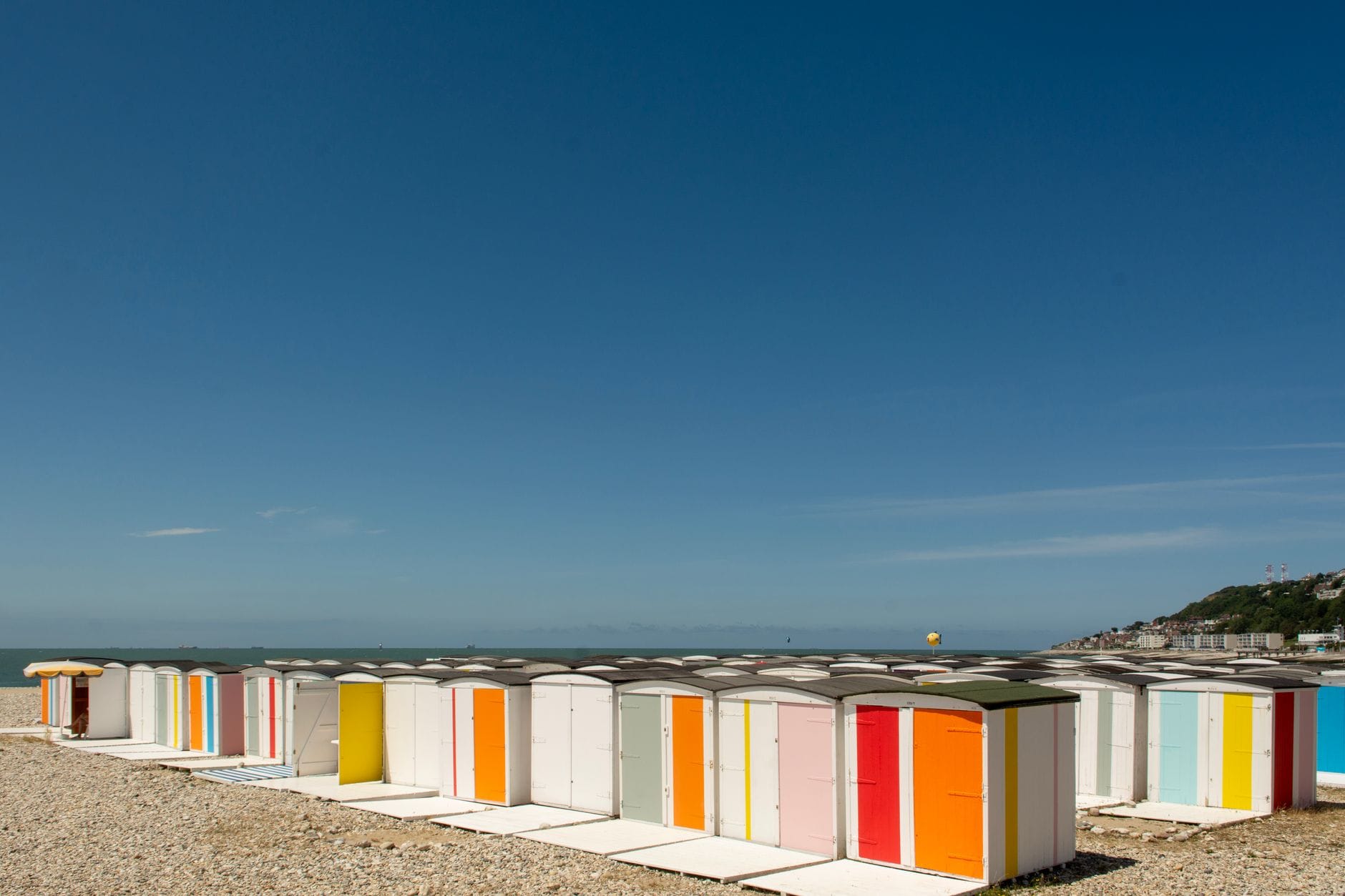
What Is Plage du Havre, Exactly?
Plage du Havre is Le Havre's main urban beach, a long coastal strip running along the English Channel from the city's harbour entrance up to the foot of the white Alabaster Coast cliffs near Sainte-Adresse. It sits at the western edge of a city that was almost entirely rebuilt after World War II, giving it an unusual double identity: industrial port city on one side, open sea on the other.
This is not a manicured resort beach. The shore is predominantly large pebbles, with a strip of flat sand that becomes accessible at low tide. The surrounding landscape is wide, flat, and exposed to Channel winds. The sky here tends to be enormous, and on clear days the light across the water has the quality that drew Impressionist painters to this stretch of Normandy coast in the 19th century.
Access to the beach is free and open year-round. For a broader sense of what the surrounding seafront area offers, the Le Havre seafront and beach neighbourhood page covers the full stretch of coastal amenities, from the promenade to the casino area.
ℹ️ Good to know
The beach surface is mostly large pebbles. Flat sand appears at low tide, but you should bring beach shoes if you find pebbles uncomfortable underfoot. Checking tide times before visiting is worthwhile if you want to walk on sand.
How It Feels at Different Times of Day
Early morning, Plage du Havre belongs almost entirely to joggers and dog walkers. The promenade is quiet, the sea air sharp with salt, and the light comes in low and grey-gold off the Channel. This is when the scale of the place becomes clear: the beach is long enough that you can walk for a good stretch without feeling crowded, and the contrast with the dense Perret-designed city behind you is striking.
By mid-morning in summer, the beach fills steadily. Families claim patches of pebbles with blankets and windbreaks, and the seasonal concession huts open up selling drinks and snacks. The promenade itself, the Promenade des Régates, stays active all day with cyclists, rollerbladers, and strollers moving parallel to the shore. The noise level stays moderate even at peak times — this is not a party beach.
Late afternoon and early evening produce the best light for photography, and local residents return in numbers after work hours in summer. Sunsets here can be genuinely dramatic, with the harbour cranes and the profile of the port visible to the south and the Alabaster cliffs rising to the north. In autumn and winter, the beach at dusk takes on a harder, lonelier character that some visitors find more compelling than the summer version.
Tickets & tours
Hand-picked options from our booking partner. Prices are indicative; availability and final rates are confirmed when you complete your booking.
Customized private D-day Normandy landing excursion from Le Havre
From 1.300 €Instant confirmationFree cancellationFull-day trip to Giverny and Rouen from Le Havre
From 1.200 €Instant confirmationFree cancellation
The Physical Layout: What You're Actually Looking At
The beach stretches roughly from the outer harbour and the area around MuMa on its southern end toward Sainte-Adresse in the north, with the Promenade des Régates running the full length as its inland border. Behind the promenade, the architecture shifts immediately into Auguste Perret's postwar reconstruction grid: reinforced concrete apartment blocks, wide avenues, and civic buildings that earned the city its UNESCO World Heritage listing in 2005.
This juxtaposition is one of the more unusual things about this beach. Very few places in France let you step off a World Heritage urban grid directly onto a Channel shore. If you have any interest in the Perret reconstruction, the Maison du Patrimoine / Atelier Perret is only a short walk inland and provides strong context for what you're seeing in the built environment behind the beach.
The harbour entrance lies to the south, and on clear days you can watch container ships and ferries moving in and out of one of France's largest ports. This is not incidental scenery — the port is central to Le Havre's identity, and seeing it from the beach gives a sense of the city's scale that you don't get from the city streets.
The Normandy Context: Why This Coastline Matters
The stretch of coast that includes Le Havre beach is part of the Alabaster Coast, named for the white chalk cliffs that continue northward from Sainte-Adresse. In the 19th century, this was a productive subject for painters including Claude Monet, who worked extensively at Sainte-Adresse, visible from the northern end of the beach.
The Musée d'Art Moderne André Malraux, located at the southern end of the seafront, holds one of France's largest collections of Impressionist paintings, with particular strength in works connected to this coastline. If the light on the water catches your attention at the beach, the collection at MuMa (Musée d'Art Moderne André Malraux) shows you how the same light looked to those painters and is genuinely worth the short walk.
Le Havre was founded in 1517 by King Francis I as a strategic Atlantic port. The beach and seafront have always been defined by this maritime role rather than by resort development, which explains why the area feels more working and civic than purely touristic even today.
Getting There and Moving Around
From Le Havre railway station, the LiA tram network connects directly to the seafront area in approximately 15 minutes. The station itself is linked to Paris Saint-Lazare by regular train services, with a journey time of about 2 hours. From the tram stop, the beach is immediately accessible on foot.
The Promenade des Régates is fully paved and flat, making the seafront walkable for visitors with pushchairs or limited mobility. The pebble beach surface itself is less forgiving, particularly above the tideline where stones are larger and loose. Reaching the flat sand at low tide requires crossing this pebble zone.
Cyclists will find the seafront well served by the city's cycle path network, which connects to long-distance routes including the Vélomaritime. If you're arriving by sea via the Portsmouth ferry service, the Le Havre cruise and ferry port guide covers the logistics of getting from the port terminal to the seafront.
💡 Local tip
If you are arriving by train from Paris specifically to see the beach, give yourself at least half a day rather than a quick stop. The beach is best combined with a walk along the promenade toward Sainte-Adresse and a visit to MuMa, which adds real depth to the coastal experience.
Seasonal Differences and Weather Realities
Le Havre has an oceanic climate. Summers are the warmest months but this is northern France on the English Channel, not the Mediterranean. Expect temperatures broadly in the teens to low twenties Celsius in June through August, with frequent cloud and sea breezes. Sun does appear, sometimes for sustained periods, but it cannot be guaranteed.
Rainfall is distributed relatively evenly through the year, with autumn and winter tending toward more overcast and wet conditions. In winter, the beach is largely empty and the wind off the Channel can be bitter. That said, the winter light on the water and the near-total absence of other visitors gives the beach a different kind of appeal for those who like exposed coastal landscapes.
Summer is when beach facilities are operational and the promenade is fully animated, with events including the city's summer art festival Un Été au Havre bringing installations and outdoor programming to the seafront area. For planning around Le Havre's seasonal patterns, the best time to visit Le Havre guide covers this in detail.
⚠️ What to skip
Swimming conditions here are determined by Channel tides and currents, which can be strong. Always check local bathing advisories and respect any flags or warnings posted on the beach. The water temperature even in summer is significantly cooler than Mediterranean beaches.
Photography on the Beach
The beach offers three distinct photographic subjects: the sea itself, the port infrastructure to the south, and the Perret architectural grid behind the promenade. The most photogenic moment is typically the late afternoon, when low Channel light picks out the concrete facades behind the beach and the water turns silver-grey. The wide, flat horizon means that overcast skies produce dramatic cloud formations rather than washed-out backgrounds.
For landscape photographers interested in the Impressionist viewpoint tradition, the area around Sainte-Adresse at the northern end of the beach is particularly productive. The dedicated guide to Impressionist viewpoints at Sainte-Adresse covers the specific spots that have historical significance and current photographic value.
Insider Tips
- Check the tide table before visiting if you want to walk on sand rather than pebbles. The flat sand below the high-tide line is significantly more comfortable for children and anyone who finds pebbles difficult, but it disappears at high tide.
- The northern end of the beach, closer to Sainte-Adresse, is quieter even in summer. Walking 15 minutes along the promenade from the main beach area brings noticeably fewer people and better views of the Alabaster cliffs.
- MuMa, the modern art museum at the southern end of the seafront, has windows and terraces oriented toward the sea. It is worth visiting even briefly for the view alone, and the Impressionist collection inside reframes the light you've been looking at on the beach.
- The Promenade des Régates is popular with local runners early in the morning and after 18:00 on weekdays. If you want to photograph the promenade and beach without many people in frame, 07:00 to 08:30 is consistently quiet.
- Beach shoes or sandals with grip are strongly recommended. The pebbles are larger and more rounded than typical pebble beaches in southern England, and walking barefoot to the waterline is uncomfortable for most people.
Who Is Plage du Havre (Le Havre Beach) For?
- Visitors combining a coastal walk with the UNESCO Perret architecture in the city centre
- Day-trippers from Paris looking for an accessible Channel coast experience without a full resort trip
- Photography enthusiasts drawn to Normandy light and Impressionist landscape traditions
- Families with children who want beach time during the summer months
- Cruise and ferry passengers with a few hours to spend close to the port
Nearby Attractions
Other things to see while in Seafront & Beach:
- Musée d'Art Moderne André Malraux (MuMa)
The Musée d'Art Moderne André Malraux, known as MuMa, stands directly on Le Havre's seafront promenade and holds one of the largest collections of Impressionist and Post-Impressionist paintings in France, often cited as the leading collection outside Paris. Its 1961 glass-and-steel building lets daylight wash over canvases by Monet, Boudin, Pissarro, and Dufy in a way few museums anywhere manage to achieve.
- Seafront Promenade (Promenade Maritime)
Le Havre's Promenade Maritime stretches a little over 2 kilometres along a shingle beach facing the English Channel, connecting the city's UNESCO-listed rebuilt centre to open coastal air. Free and accessible around the clock, it reads very differently at dawn, midday, and dusk, and is worth knowing before you arrive.