Musée de l'Ancien Havre: Where the City's Pre-War Identity Survives
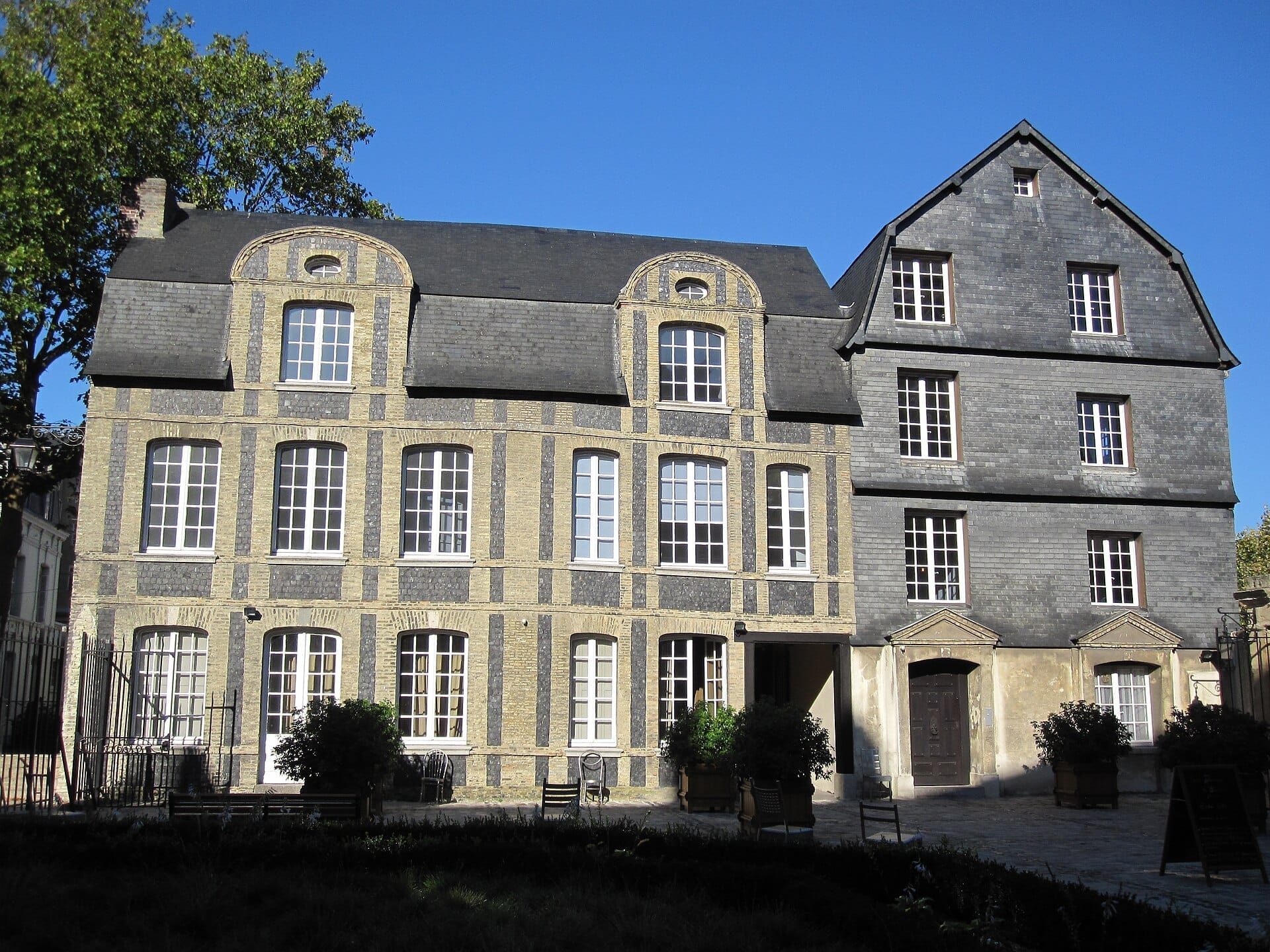
Housed in the 17th-century Hôtel Dubocage de Bléville in Le Havre's oldest quarter, the Musée de l'Ancien Havre holds the city's collective memory before wartime destruction. Its collections span four centuries of port history, art, and urban life. Note: the museum is currently closed for safety compliance works — check current status before visiting.
Quick Facts
- Location
- 1 rue Jérôme Bellarmato, 76600 Le Havre
- Getting There
- City centre location; reachable on foot from the Perret grid or by LiA bus/tram network
- Time Needed
- 1 to 1.5 hours
- Cost
- Managed by Musées d'Art et d'Histoire du Havre; verify current admission at musees-mah-lehavre.fr
- Best for
- History enthusiasts, architecture lovers, those curious about pre-war Le Havre
- Official website
- www.musees-mah-lehavre.fr
⚠️ What to skip
The Musée de l'Ancien Havre is currently closed for safety compliance works (mise aux normes de sécurité). No reopening date has been confirmed publicly. Check musees-mah-lehavre.fr or contact the Musées d'Art et d'Histoire du Havre before planning your visit.
A Museum Inside Le Havre's Last Historic Mansion
Most of Le Havre was obliterated during Allied bombing raids in September 1944. What survived — and what makes the Musée de l'Ancien Havre so quietly remarkable — is that it occupies one of the very few pre-war buildings left standing in the city centre. The Hôtel Dubocage de Bléville is a 17th-century town house in the Saint-François quarter, the original historic district established when King Francis I founded the port in 1517. Walking through its courtyard today, you are standing in a fragment of a city that otherwise no longer exists.
The residence takes its name from Michel Dubocage de Bléville, a navigator and notable figure in Le Havre's maritime society. The building was restored after the war and officially opened as a museum in 1955, making it one of the city's longer-serving cultural institutions. Its collections trace Le Havre's urban and social life from the 16th century to the 20th, drawing on Le Havre's early municipal collections of paintings, drawings, engravings, archaeological objects, and ethnographic materials.
The contrast with the surrounding city is part of the experience. Step outside and you are immediately in Auguste Perret's celebrated post-war grid — the modernist reconstruction that earned Le Havre its UNESCO World Heritage listing in 2005. The Maison du Patrimoine Atelier Perret nearby explains that architectural legacy in detail. But the Hôtel Dubocage tells the story of what came before: the merchant city, the colonial trade routes, the painted interiors and engraved maps of a port that once looked quite different.
What the Collections Actually Show You
The museum's holdings are organised around the history of Le Havre from its founding through to the 20th century. Expect paintings depicting the old port and its ships, topographical engravings showing the city's earlier streetscapes and fortifications, and decorative arts that reflect the wealth generated by trade with the Atlantic world. For a city whose physical past was so thoroughly erased, these images and objects carry unusual weight.
A significant part of the collection relates to the maritime identity that has defined Le Havre for five centuries. The port was the departure point for transatlantic voyages, a hub of the cod trade with Newfoundland, and later a gateway for passenger liners crossing to New York. The museum's archival material, maps, and navigational objects anchor this history in something tangible, rather than leaving it abstract.
The building itself is an exhibit in its own right. Its domestic scale — proportioned for a prosperous 18th-century household rather than a purpose-built institution — gives the rooms a very different atmosphere from Le Havre's larger museums. Ceilings are lower, corridors narrower, and the relationship between architecture and collection feels more intimate than anywhere else in the city.
Tickets & tours
Hand-picked options from our booking partner. Prices are indicative; availability and final rates are confirmed when you complete your booking.
Customized private D-day Normandy landing excursion from Le Havre
From 1.300 €Instant confirmationFree cancellationFull-day trip to Giverny and Rouen from Le Havre
From 1.200 €Instant confirmationFree cancellation
The Saint-François Quarter: Context You Need
The museum sits in Saint-François, the oldest surviving urban fabric in Le Havre. This is not a polished tourist district. It is a working waterfront neighbourhood with a mix of historic buildings, fishing quays, and the kind of low-key cafes that serve the port's daily workforce. Arriving here after the wide, Perret-designed boulevards of the city centre feels like a gear change.
Saint-François is close to the Bassin du Commerce and the port entrance, making it a logical extension of any walk through the city's waterfront areas. The Bassin du Commerce is a short walk away, and the neighbourhood connects easily to the seafront promenade for those continuing along the coast.
The quarter's narrow streets and older building stock look best in morning light, when the stonework catches the low sun and the area is quiet. By mid-afternoon, particularly in summer, the quayside becomes livelier as harbour activity picks up. For photography, the hours just after opening have traditionally worked well — soft directional light and minimal foot traffic on the surrounding streets.
💡 Local tip
Even when the museum itself is closed, Saint-François is worth the short detour from the Perret grid. The exterior of the Hôtel Dubocage de Bléville, its courtyard facade, and the surrounding historic streetscape are all visible and freely accessible from the street.
Practical Information for Your Visit
When open, the museum has historically operated with seasonal hours: for example, 10:30 to 12:30 and 13:45 to 17:30 in low season, with extended hours in the high season (approximately April to November), and closed on certain holidays. These hours are subject to change and cannot be relied upon until the museum formally announces its reopening after the current safety works.
Admission is managed collectively by the Musées d'Art et d'Histoire du Havre network, which also oversees the Musée d'Art Moderne André Malraux and other city collections. Verified ticket prices are not publicly listed in available sources; check the official website for current information when planning. The museum is a compact venue and does not require a full half-day: most visitors find that 60 to 90 minutes is sufficient to move through the permanent collection thoughtfully.
The Hôtel Dubocage de Bléville is a historic building with the architectural characteristics that implies: stairs, uneven floors, and spaces that were not designed with modern accessibility in mind. Anyone requiring step-free access or adapted facilities should contact the museum directly before visiting, as no detailed accessibility information is confirmed in publicly available sources.
Getting here on foot from the centre of Le Havre takes around 10 to 15 minutes from the main Perret grid. The LiA network of buses and trams serves the surrounding streets. If you are combining this visit with a broader walk through the city, the Le Havre walking tour guide maps a logical route that brings you through Saint-François naturally.
How This Fits Into a Wider Visit to Le Havre
Le Havre's identity as a city is so thoroughly shaped by its post-war reconstruction that most of its institutions — the Église Saint-Joseph, the Hôtel de Ville, the cultural venues along the seafront — are products of Auguste Perret's modernist vision. The Musée de l'Ancien Havre occupies a genuinely different position: it is the city's primary repository of what existed before 1944, and the only major public museum housed in a pre-war building. That singularity gives it a purpose beyond its collection size.
For visitors who want to understand how Le Havre became the place it is today, the sequence matters. Start at the Musée de l'Ancien Havre for the pre-war context, then walk into the Perret grid to see the reconstruction, then follow the Le Havre World War II history trail to understand the violence and planning decisions that lie between those two eras. That three-part arc gives the city's architecture a narrative logic that is otherwise easy to miss.
The museum also complements a visit to the Musée d'Art Moderne André Malraux, Le Havre's principal art museum, which holds one of France's largest Impressionist collections. The two institutions between them cover the city's aesthetic and documentary history across five centuries.
Who Should Temper Their Expectations
The Musée de l'Ancien Havre is a specialist collection in a relatively intimate setting. It is not a blockbuster institution with large-scale installations or major touring exhibitions. Visitors primarily interested in contemporary art, interactive displays, or family-oriented programming will find other venues in Le Havre more immediately rewarding. Children under twelve are unlikely to find much to engage with here compared to the natural history museum or the seafront.
The museum's scope is also deliberately local: it focuses specifically on Le Havre's own history rather than offering a broad survey of Norman or French history. If you have limited time in the city and are not especially drawn to urban and maritime history, the Perret architecture and the Malraux collection are likely to offer more per hour of your visit.
Insider Tips
- Even if the museum is closed during your visit, walk to the Hôtel Dubocage de Bléville anyway. The courtyard facade is one of the few places in central Le Havre where you can stand in front of genuinely old stonework and sense the scale of what was lost in 1944.
- The Saint-François quarter works best as a morning walk. The quayside streets are quiet before 9am, the light is directional, and the neighbourhood has a different quality before the day's traffic builds. Combine it with an early coffee at one of the waterfront cafes near the old fishing basin.
- When the museum reopens, visit on a weekday rather than a weekend. This is a locally focused collection that attracts researchers and history-minded residents; weekday mornings tend to be particularly quiet, and you can take your time with the engraving and map collections without crowds.
- Before visiting, look up historical photographs of Le Havre taken before 1944. The contrast between those images and the current city transforms the museum's collection from a set of interesting objects into something more affecting.
- The museum is managed by the Musées d'Art et d'Histoire du Havre network. A single visit or occasional combined offers may cover multiple city museums — check the official network website before buying individual admissions.
Who Is Musée de l'Ancien Havre For?
- History enthusiasts who want to understand Le Havre's pre-war identity and maritime past
- Architecture lovers contrasting the 17th-century Hôtel Dubocage with the surrounding Perret reconstruction
- Serious travellers building a thematic understanding of how World War II shaped a French city
- Researchers and those with an interest in cartography, port history, or Norman heritage
- Slow travellers who prefer intimate, specialist collections over large-scale institutions
Nearby Attractions
Other things to see while in Centre Ville Perret (UNESCO District):
- Bassin du Commerce
The Bassin du Commerce is a 500-metre historic dock at the centre of Le Havre's UNESCO-listed rebuild, where post-war concrete architecture meets open water. Free to visit during public hours, it serves as the city's most photogenic public space and a genuine crossroads of daily life.
- Cathédrale Notre-Dame du Havre
Standing on rue de Paris in central Le Havre, the Cathédrale Notre-Dame du Havre is a rare pre-war survivor in a city rebuilt almost entirely from concrete after 1944. Its layered Gothic and Renaissance architecture tells a longer story than the modernist grid surrounding it. Entry is free, and the contrast with Auguste Perret's rebuilt city makes it one of the most thought-provoking stops in the centre.
- Église Saint-Joseph
Designed by Auguste Perret and structurally completed in 1957 (with consecration in 1964), Église Saint-Joseph is the defining monument of Le Havre's UNESCO-listed city centre. Its 107-metre lantern tower and 12,768 panels of coloured glass make it one of the most architecturally significant post-war churches in Europe. Entry is free.
- Halles Centrales
Built between 1958 and 1960 as part of Auguste Perret's post-war reconstruction, the Halles Centrales is Le Havre's working food market. Free to enter and open seven days a week, it offers fresh produce, local traders, and a ground-level view of everyday city life inside a landmark modernist concrete shell.