Le Havre Self-Guided Walking Tour: Routes, Stops & Practical Advice
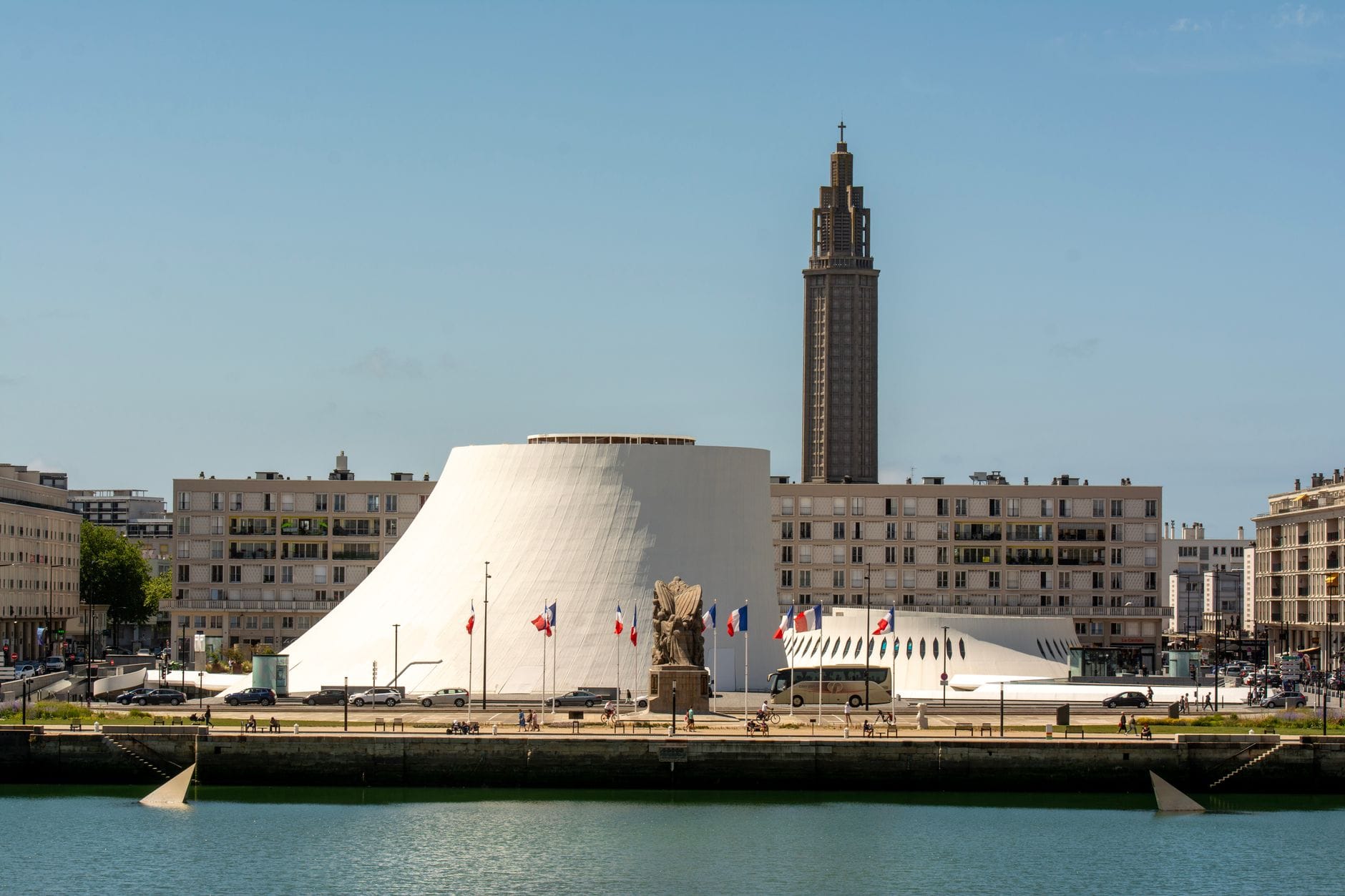
Le Havre rewards walkers like few other French cities. Its UNESCO-listed city centre is a coherent open-air museum of post-war modernist architecture, compact enough to cover in a half-day on foot. This guide gives you everything you need to plan your own route, from key stops and timing to costs and seasonal tips.
Plan and book this trip
Tools from our partner Travelpayouts help you compare flights and hotels. If you book through them, we may earn a commission at no extra cost to you.
Flights
Hotels map
TL;DR
- Le Havre's UNESCO-listed city centre covers roughly 133 hectares and is designed on a walkable grid, making it ideal for a self-guided tour.
- A focused architecture walk takes around 2 hours; add the seafront, Sainte-Adresse, and the MuMa art museum for one very full day or more.
- App-based audio tours start from around $10 per adult; the free Le Havre Greeters programme offers private walks with local volunteers at no cost.
- The city centre is flat and entirely walkable from the cruise port (about 20 minutes on foot).
- Do not expect a medieval old town. Le Havre's appeal is its bold, coherent post-war modernism — understanding that upfront changes how you see every building.
Why Le Havre Rewards a Walking Tour
Le Havre sits on the right bank of the Seine estuary where it meets the English Channel, about 200 km northwest of Paris. After Allied bombing largely destroyed the city centre during World War II, the French architect Auguste Perret led a systematic reconstruction starting in 1945. The result was a unified urban grid of reinforced concrete, wide boulevards, and civic spaces that earned UNESCO World Heritage status in 2005. That coherence is precisely what makes it so satisfying on foot: unlike cities where historic buildings are scattered among later sprawl, Perret's Le Havre reads as a single design at the scale of an entire neighbourhood.
The key thing to calibrate before you start: this is not a city of cobblestoned old quarters or Gothic cathedrals. Le Havre's beauty is architectural and conceptual. Once you start reading the grid — the way light hits the concrete facades at different times of day, the deliberate proportions of the streets, the civic ambition of the Hôtel de Ville and the Église Saint-Joseph — it becomes genuinely compelling. Visitors expecting a picturesque French town sometimes feel flat; visitors who understand what they are looking at often leave fascinated.
ℹ️ Good to know
Le Havre uses the euro (EUR). Most attractions accept card payments, but carry some cash for smaller cafes and market stalls. Tap water is safe to drink throughout metropolitan France.
Getting to the Starting Point
For cruise passengers, the walk from the terminal to the city centre takes about 20 minutes on flat ground. The Le Havre cruise port guide covers the logistics in detail, including what to expect at the gate and which direction to head. For rail travellers, the main train station (Gare du Havre) connects to Paris Saint-Lazare in around 2 hours 15 minutes and to Rouen in about 55–60 minutes. The station sits at the eastern edge of the Perret grid, so you step almost directly into the UNESCO zone.
Within the city, the LiA tram and bus network covers the wider urban area, but for the central walking tour you will not need public transport. The Perret district and the seafront are connected by wide, pedestrian-friendly streets. If you plan to include Sainte-Adresse or the Jardins Suspendus, factor in either a short bus ride or an additional 30-40 minutes of walking each way.
The Core Walking Route: Perret's City Centre
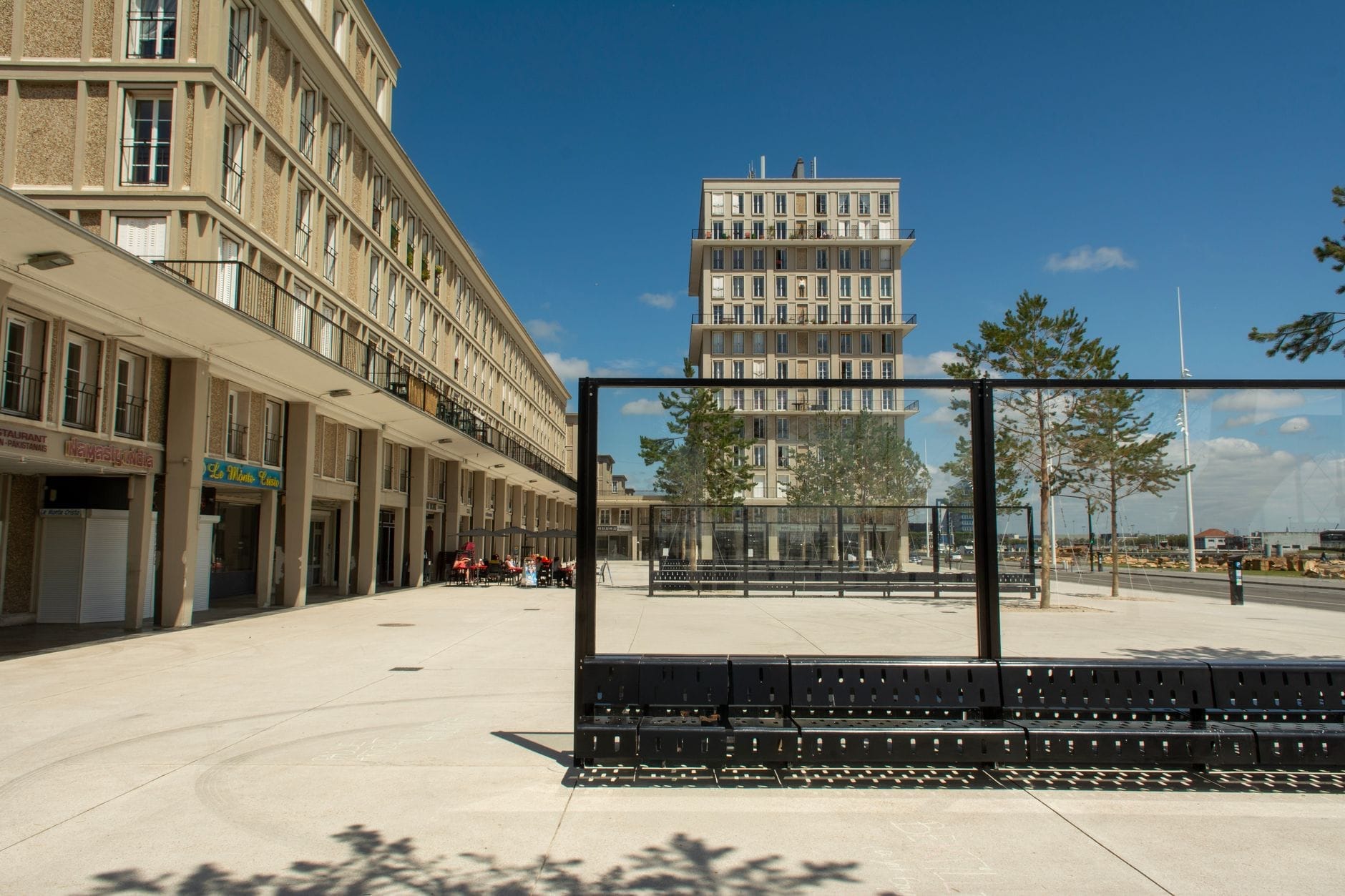
The logical starting point is the Hôtel de Ville and its surrounding plaza. This monumental civic building anchors the Perret grid and gives you a reference point for the whole walk. From here, head south along the central axis — the Rue de Paris — which runs all the way to the waterfront. Along this spine you get the clearest sense of Perret's planning logic: the street widths, the consistent building heights, and the way perspectives are framed toward the sea.
Two stops are non-negotiable on this route. The first is the Église Saint-Joseph, Perret's most extraordinary building: an octagonal lantern tower rising 107 metres, its interior filled with over 12,000 pieces of coloured glass that transform the concrete into something genuinely transcendent in morning light. The second is the Maison du Patrimoine — Atelier Perret, which functions as the official visitor centre for the UNESCO site and gives useful context on how the reconstruction was planned. Admission is typically low-cost and the exhibition is available in multiple languages including English.
For a deeper dive into how one of Perret's standard apartments actually looked and functioned, the Perret show flat on the Rue de Paris reconstructs a 1950s interior in full. It is a small detour but adds tangible human scale to what can otherwise feel like an abstract architectural tour. Combined with the Perret architecture guide, you can cover the key buildings in a structured sequence without backtracking.
💡 Local tip
Visit Église Saint-Joseph in the morning when light enters from the east. The coloured glass produces a completely different effect than afternoon visits. The church is generally free to enter outside of services, though access may occasionally be restricted during special events.
- Hôtel de Ville & Place de l'Hôtel de Ville Start here for orientation. The raised central tower and the scale of the plaza set the tone for Perret's civic ambition. Allow 15-20 minutes.
- Église Saint-Joseph The architectural centrepiece of the walk. Allow 20-30 minutes inside. Free entry outside mass times.
- Maison du Patrimoine — Atelier Perret Official UNESCO visitor centre with bilingual exhibitions on the reconstruction. Allow 30-45 minutes.
- Perret Show Flat Reconstructed 1950s apartment on the ground floor of a Perret building. Small admission fee, 20-30 minutes.
- Bassin du Commerce The commercial dock in the city centre, framed by Perret buildings and crossed by a distinctive footbridge. Scenic stopping point.
- Seafront Promenade The southern end of the walk. Boulevard Albert 1er runs parallel to the beach. Good place to stop for coffee before deciding on next steps.
Extending the Tour: Seafront, Museum, and Sainte-Adresse
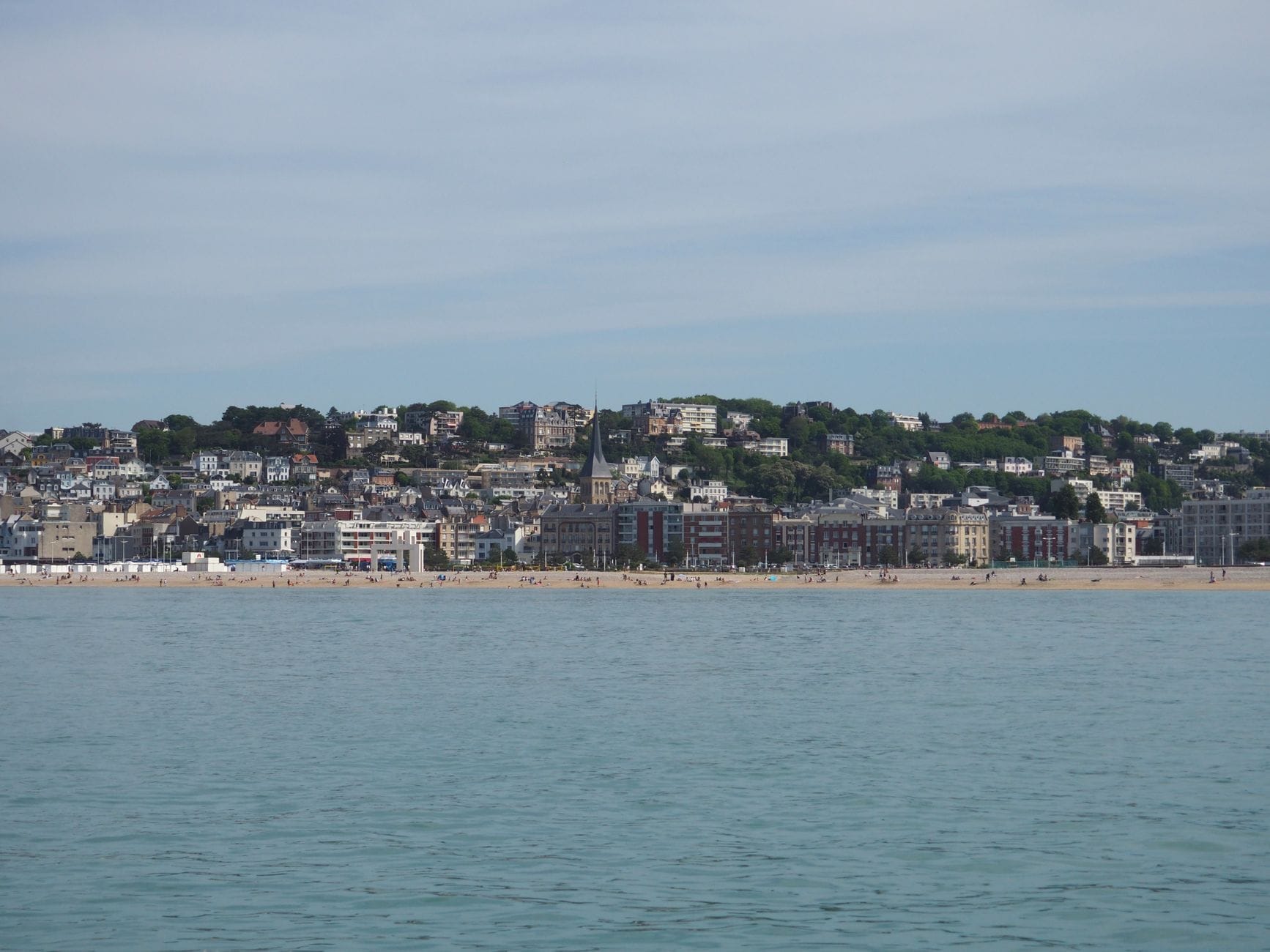
The seafront promenade runs for several kilometres along the English Channel coast. Walking north from the Perret grid brings you to the MuMa (Musée d'Art Moderne André Malraux), which holds one of France's most important Impressionist collections outside Paris — including significant works by Monet, Sisley, Pissarro, and Boudin, who was born in Normandy. The building itself is a modernist glass and steel structure overlooking the water. Entry typically costs around 10 euros for adults, with free admission on the first Saturday of each month.
For those with more time, the cliffside suburb of Sainte-Adresse sits about 3 km north of the city centre. It was a favourite subject of Monet and Raoul Dufy, and the Impressionist viewpoints at Sainte-Adresse allow you to stand at almost exactly the angles the painters used. The views over the estuary are the best in the area. You can walk the coastal path from the promenade in around 40-50 minutes, or take a LiA bus if time is short.
✨ Pro tip
The Le Havre Greeters programme offers free private walks led by local volunteers in groups of up to 6. No tips are expected or accepted. Book via the International Greeter Association website well in advance — these fill up in summer. It is the single best way to understand the city if you can secure a spot.
Tour Formats: App, Audio Guide, or Go It Alone
There is no single official self-guided walking route for Le Havre, but several practical formats work well. The choice depends on how much structure you want and what you are willing to pay.
- App-based audio tours Platforms like TrippyTourGuide list Le Havre architecture tours with around 36 stops, running approximately 2 hours, available in English, French, German, Italian, and Spanish. Prices start from around $10 per adult. These work offline, which matters in areas with poor signal near the port.
- Free self-guided route Providers like VisitSights list a free sightseeing itinerary for Le Havre that you can follow at your own pace with no app required. Quality varies but it gives a solid baseline route for first-time visitors.
- Le Havre Greeters (free) Local volunteers lead free private walks in small groups. No set route — the guide tailors the walk to your interests. Best for context and conversation, not for architectural precision.
- Self-navigated with this guide The Perret district is a grid. It is genuinely hard to get lost. Download the Maison du Patrimoine's free map (available at the visitor centre) and set your own pace.
Practical Timing, Crowds, and Seasonal Notes
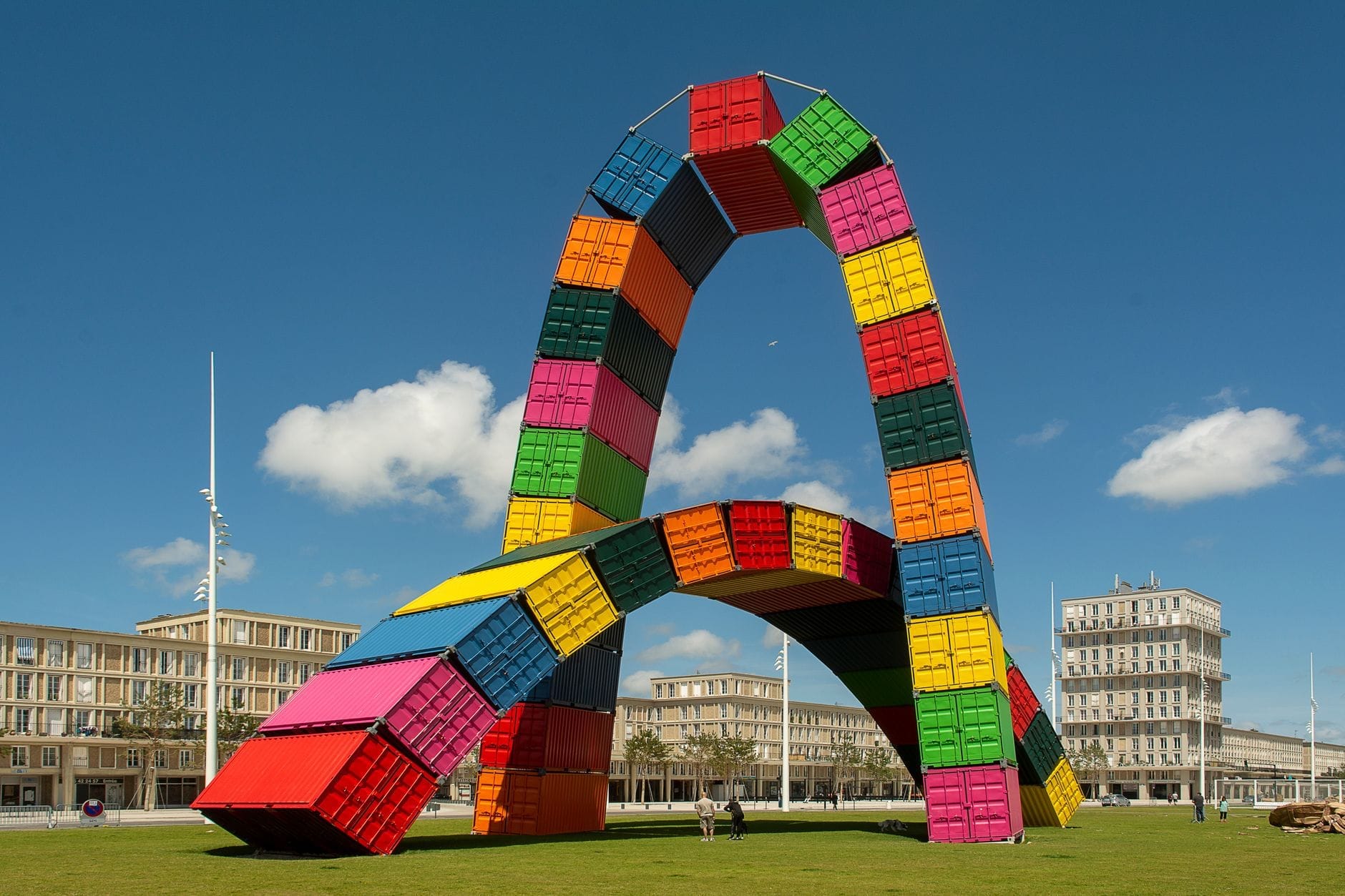
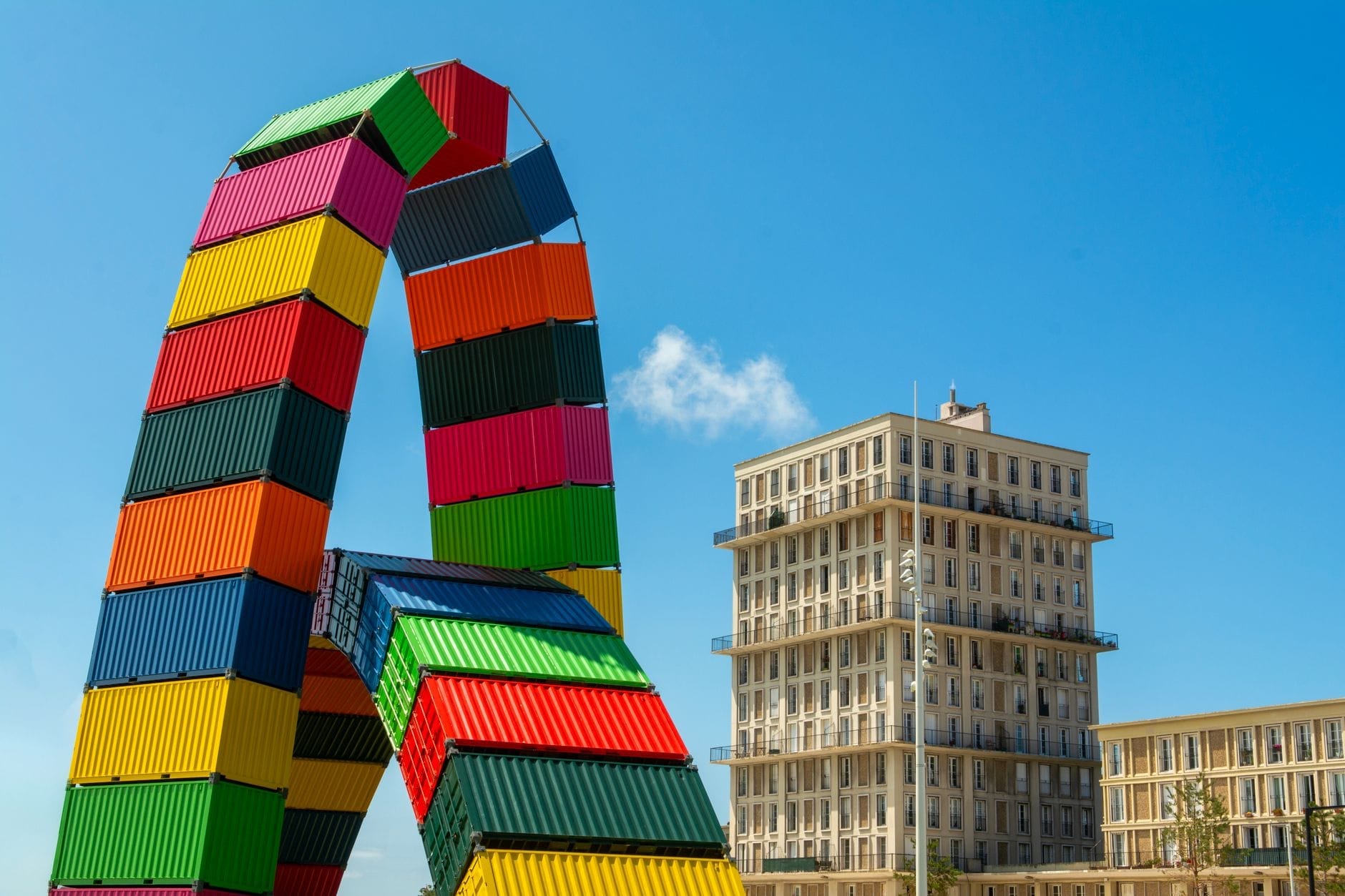
Le Havre has an oceanic climate: mild, frequently overcast, and prone to wind off the Channel. Summer (June to August) is the most popular period, with the warmest temperatures and the annual Un Été au Havre festival installing monumental contemporary art pieces around the city. These temporary works add an extra layer to any walking route, though the city is also busier and some attractions run at peak-season pricing.
Spring and early autumn are arguably better for walking: lighter crowds, softer light on the concrete facades, and prices that hold steady. The Perret buildings photograph particularly well on slightly overcast days, when the diffuse light reveals the texture of the concrete rather than flattening it. Winter is quiet and some smaller sites reduce their hours, but the core route (Saint-Joseph, Hôtel de Ville, seafront) is accessible year-round. Check opening hours for the Maison du Patrimoine and MuMa directly before visiting, as both adjust their schedules seasonally.
Cruise ship visits concentrate heavily on Tuesdays, Wednesdays, and Thursdays from May to October. If your visit coincides with a large ship in port, the area around the waterfront and the UNESCO visitor centre will be more crowded between 10am and 2pm. Starting your walk early (by 9am) or planning the architecture section for late afternoon largely avoids the peak. The full 2-day Le Havre itinerary accounts for cruise schedules if you have more time in the city.
⚠️ What to skip
The port area immediately around the terminal is industrial and not particularly interesting to walk through. Do not spend time exploring the container terminal zone. Head directly north toward the city centre grid, which begins within 10-15 minutes of the main cruise gates.
FAQ
How long does the Le Havre self-guided walking tour take?
The core Perret architecture route takes around 2 hours at a comfortable pace, covering the major stops from the Hôtel de Ville to the seafront. Add 1-2 hours if you include the MuMa and the seafront promenade, or a half-day if you extend to Sainte-Adresse.
Is the walking tour of Le Havre suitable for cruise passengers?
Yes. The city centre is about 20 minutes on flat ground from the cruise terminal. Most cruise stops in Le Havre last 8-10 hours, which is enough time for the full architecture route, the MuMa, and lunch, with time to spare. The ground is flat and the route is accessible.
Do I need to book a guided tour, or can I explore independently?
Independent exploration works well in Le Havre. The Perret district is a clear grid and the Maison du Patrimoine provides free maps. App-based audio tours from around $10 add useful commentary. The free Greeters programme is excellent if you can book in advance, but it is not necessary.
What is the best time of year to do a walking tour in Le Havre?
Late spring (May to June) and early autumn (September) offer the best balance of mild weather, manageable crowds, and good light for photography. Summer is warmer and the Un Été au Havre festival adds contemporary art installations to the route, but the city is busier. Winter is quiet but some sites have reduced hours.
Is Le Havre's city centre easy to walk? Are there hills?
The reconstructed city centre is almost entirely flat, making it accessible for most visitors. Sainte-Adresse, if you extend the walk, involves a moderate climb up the coastal cliff. The seafront promenade is completely flat. The wider city does have elevated areas, but they are not on the standard walking route.