Maison de l'Armateur: Le Havre's Last 18th-Century Interior
Hidden in the Saint-François quarter, the Maison de l'Armateur is one of the few buildings in Le Havre that survived the Allied bombing of 1944. Designed in the 1790s around an extraordinary octagonal light well, this classified historic monument now opens its five levels to visitors as one of the city's three official museums of art and history.
Quick Facts
- Location
- 3 Quai de l'Île, Saint-François quarter, Le Havre 76600
- Getting There
- Tram stop Palais de Justice; Bus 16 stop Grand Quai (130 m); Bus C4 stop Saint-François; Bus C2 stop Grand Quai
- Time Needed
- 1 to 1.5 hours
- Cost
- Full price 7 €, reduced 5 €, free under 26. Museum Pass (Le Havre art and history museums) 20 €
- Best for
- Architecture lovers, history buffs, travellers curious about pre-war Le Havre
- Official website
- http://www.musees-mah-lehavre.fr/musees/maison-armateur
What the Maison de l'Armateur Actually Is
The Maison de l'Armateur — officially the Maison-Musée de l'Armateur — is an 18th-century shipowner's townhouse on the Quai de l'Île in Le Havre's Saint-François district. It is one of the three museums of art and history administered by the City of Le Havre, and one of the very few structures that predates the massive Allied bombardments of September 1944, which erased most of the city's pre-war fabric. That alone makes it remarkable.
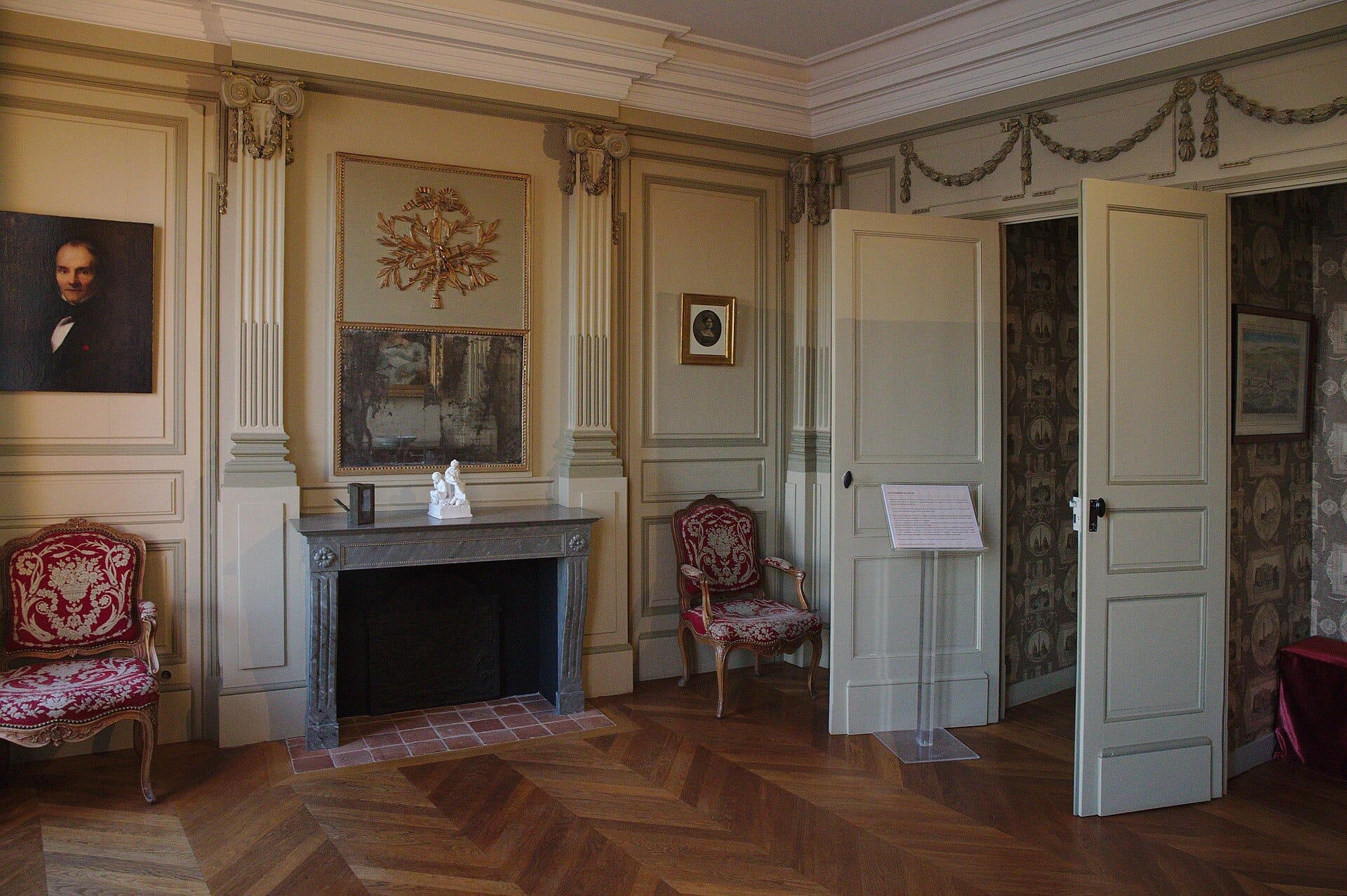
The building was designed around 1790 by Paul-Michel Thibault (1735–1799), the city architect of Le Havre at the time. It was classified as a Monument historique in 1950, acquired by the city in 1954, and opened to the public as a museum in 2006 after careful restoration. The interiors display decorative arts, furniture, and objects that reconstruct daily life among Le Havre's wealthy merchant class during the 18th and early 19th centuries.
ℹ️ Good to know
Visiting requires a reservation, and self-guided visits are only available in the afternoon (13:45–18:00, Wednesday–Sunday in summer). Book via the museum ticketing site before you arrive to avoid being turned away.
The Architecture: Five Levels Around a Light Well
The building's defining feature is its octagonal central light well, known in French as a puits de lumière. Rather than a simple square courtyard, Thibault's design wraps the interior rooms around this eight-sided void, allowing daylight to fall through all five levels of the house. From any landing, you can look up or down through the full height of the building, and the geometry produces a quietly dramatic effect, especially on bright mornings when the light shifts as it descends.
The spiral staircase that winds around this well is the structural and visual spine of the visit. The curved room layouts that follow the well's geometry are unusual for French domestic architecture of the period, and they give each floor a sense of contained intimacy that a rectangular plan would not achieve. The stonework is restrained but precise, typical of late-18th-century Norman classicism.
If you have already visited the Église Saint-Joseph or the Hôtel de Ville, the Maison de l'Armateur will feel like a different architectural conversation entirely. Where Perret's post-war city speaks in concrete and scale, this building speaks in stone, plaster, and intimate proportion.
Tickets & tours
Hand-picked options from our booking partner. Prices are indicative; availability and final rates are confirmed when you complete your booking.
Customized private D-day Normandy landing excursion from Le Havre
From 1.300 €Instant confirmationFree cancellationFull-day trip to Giverny and Rouen from Le Havre
From 1.200 €Instant confirmationFree cancellation
What You See Inside: The Rooms and Collections
Each of the five levels is furnished and decorated to reflect a specific era or theme from Le Havre's merchant and maritime past. The collections include period furniture, ceramics, scientific instruments, navigational objects, and fine decorative arts accumulated by the city over decades. The rooms are not vast, but they are densely detailed, and it is easy to spend more time than expected on any single floor simply absorbing the objects.
The top floors, naturally lit by the well, feel the most atmospheric. The lower levels, closer to the quayside, have a heavier, more grounded quality. The transition between them as you climb the spiral staircase is one of the genuinely pleasurable physical experiences the building offers: the light gradually opens above you as the stone around you becomes warmer in tone.
The collection sits comfortably within its context for visitors who are already engaging with Le Havre's broader story. Arriving having read something about the city's history as a commercial port and its role in Atlantic trade will significantly enrich what you take from each room. For visitors with no prior context, the guided tour option is worth considering.
Historical Context: A Survivor of the Bombing
Le Havre was heavily bombed by Allied forces in 1944 in an attempt to dislodge German occupation, and much of the city's historic urban fabric was destroyed. The reconstruction carried out by architect Auguste Perret from the late 1940s onward produced the UNESCO-listed city centre that most visitors see today. For a deeper look at that story, the Maison du Patrimoine – Atelier Perret is a strong complement to a visit here.
Against that backdrop, the survival of the Maison de l'Armateur takes on a specific weight. Walking its stairs, you are walking through a material continuity with the city that existed before 1944, one that most of Le Havre simply cannot offer. It is not a reconstruction or an approximation. The staircase you touch is the staircase Thibault designed in the 1790s.
The building's location on the Quai de l'Île, overlooking the water, also connects it directly to the commercial port history of the city. Le Havre was founded as a port city in 1517, and by the 18th century its merchant class had grown wealthy through Atlantic trade. The history of Le Havre through World War II gives useful context for understanding why pre-war survivals like this building matter so much.
When to Visit and What to Expect at Different Times
From May through September, free self-guided visits run Wednesday through Sunday between 13:45 and 18:00, with advance reservation required. Guided tours are available on Mondays and Thursday–Sunday mornings during this period, also by reservation. Outside these months, from October through April, guided tours run on Wednesday afternoons and Thursday through Monday, again with reservation, and the building closes on 11 November, 25 December, and 1 January.
Morning visits with a guide tend to be quieter and allow for more focused engagement with the rooms. Afternoon self-guided sessions can see more foot traffic, particularly on summer weekends. The light through the well is best in the late morning, when it falls more directly into the centre of the building. If you have flexibility, a morning guided visit in June or July offers the strongest combination of atmosphere and access.
⚠️ What to skip
The building spans five levels around a staircase and light well with no indication of step-free access between floors. Visitors with limited mobility should contact the museum directly before visiting. Reduced-price tickets are available for people with reduced mobility.
Getting There and Practical Details
The Maison de l'Armateur sits at 3 Quai de l'Île in the Saint-François quarter, close to the water. By public transport, the most straightforward options are the tram to Palais de Justice, Bus 16 to Grand Quai or C.Delavigne (approximately 130 metres from the entrance), Bus C2 also stopping at Grand Quai, or Bus C4 to Saint-François. All are part of the LiA urban transport network.
On foot from the central Perret district, the walk takes roughly 10 to 15 minutes and passes through the Saint-François neighbourhood, which retains some of the older urban grain that survived or was rebuilt in a different idiom from Perret's grid. If you are planning a broader day in the city centre, this pairs naturally with the Musée d'Art Moderne André Malraux on the seafront, or with a walk along the seafront promenade.
Tickets at the door: full price is 7 €, reduced (groups of six or more, large families, people with reduced mobility) is 5 €. Entry is free for visitors under 26, jobseekers, and RSA beneficiaries. A Museum Pass covering the Le Havre art and history museums costs 20 € and represents good value if you plan to visit more than one.
Is It Worth Your Time?
For the right visitor, yes, unambiguously. If you are drawn to architecture, to the texture of historic interiors, or to the pre-war history of a city that was almost entirely erased, the Maison de l'Armateur offers something genuinely irreplaceable. It is not large and it does not have a single famous object. What it has is a building that works as a building, one whose spatial logic you feel in your body as you move through it.
It will disappoint visitors who want a conventional narrative history museum with explanatory panels on every wall, or those primarily interested in the Impressionist story of the region. For that, the Le Havre Impressionist art trail and the André Malraux museum will serve better. The Maison de l'Armateur rewards close looking and a degree of patience.
Children may find the building's scale and staircase engaging, but the collection is not designed for younger audiences and there are no interactive elements. Families with older children curious about history will get more from it than those with toddlers.
Insider Tips
- Book your reservation as soon as your travel dates are confirmed. Capacity is limited and guided morning slots fill up faster than you might expect, particularly in July and August.
- If you are visiting in summer, the afternoon free-visit window (13:45–18:00) tends to be busiest on Saturdays. Wednesday afternoons are typically quieter and the light through the well is still good.
- The Museum Pass at 20 € is worth calculating against your itinerary. If you intend to visit the Musée d'Art Moderne André Malraux and at least one other Le Havre museum or site included in the pass, it pays for itself quickly.
- Look up as well as down when you are standing at the centre of the light well on any floor. The octagonal geometry reads very differently depending on your eye level, and the lantern at the top is easy to miss if you are focused on the rooms.
- The quayside location means the immediate exterior is pleasant for a short walk before or after. The Saint-François quarter around the building has a distinctly different character from the Perret grid, and a 15-minute wander gives useful context for what the city looked like before 1944.
Who Is Maison de l'Armateur (Shipowner's House) For?
- Architecture enthusiasts wanting to understand Le Havre before and after Perret
- History travellers interested in 18th-century Norman merchant society
- Visitors who want to see a pre-war survival in a city largely rebuilt from scratch
- Those combining multiple Le Havre museums and using the city Museum Pass
- Travellers who appreciate interiors where the building itself is as significant as the collection
Nearby Attractions
Other things to see while in Centre Ville Perret (UNESCO District):
- Bassin du Commerce
The Bassin du Commerce is a 500-metre historic dock at the centre of Le Havre's UNESCO-listed rebuild, where post-war concrete architecture meets open water. Free to visit during public hours, it serves as the city's most photogenic public space and a genuine crossroads of daily life.
- Cathédrale Notre-Dame du Havre
Standing on rue de Paris in central Le Havre, the Cathédrale Notre-Dame du Havre is a rare pre-war survivor in a city rebuilt almost entirely from concrete after 1944. Its layered Gothic and Renaissance architecture tells a longer story than the modernist grid surrounding it. Entry is free, and the contrast with Auguste Perret's rebuilt city makes it one of the most thought-provoking stops in the centre.
- Église Saint-Joseph
Designed by Auguste Perret and structurally completed in 1957 (with consecration in 1964), Église Saint-Joseph is the defining monument of Le Havre's UNESCO-listed city centre. Its 107-metre lantern tower and 12,768 panels of coloured glass make it one of the most architecturally significant post-war churches in Europe. Entry is free.
- Halles Centrales
Built between 1958 and 1960 as part of Auguste Perret's post-war reconstruction, the Halles Centrales is Le Havre's working food market. Free to enter and open seven days a week, it offers fresh produce, local traders, and a ground-level view of everyday city life inside a landmark modernist concrete shell.