Plage de Sainte-Adresse: The Beach Monet Painted, Still Worth the Trip
Plage de Sainte-Adresse is a large pebble beach on the northwestern edge of Le Havre, framed by a historic jetty and sweeping views across the Seine estuary. Free, unhurried, and steeped in Impressionist history, it rewards visitors who make the short trip from the city centre.
Quick Facts
- Location
- 76310 Sainte-Adresse — approx. 3.2 km northwest of Le Havre city centre
- Getting There
- Local LiA buses from Le Havre city centre serve Sainte-Adresse; by car, follow D147/D940 to the seafront
- Time Needed
- 1.5 to 3 hours depending on pace; longer if you walk the full promenade
- Cost
- Free — no admission fee. Supervised swimming in summer at no charge
- Best for
- Coastal walks, Impressionist history, quiet sea swimming, photography, families
- Official website
- www.ville-sainte-adresse.fr/mon-quotidien/plage-et-baignade/
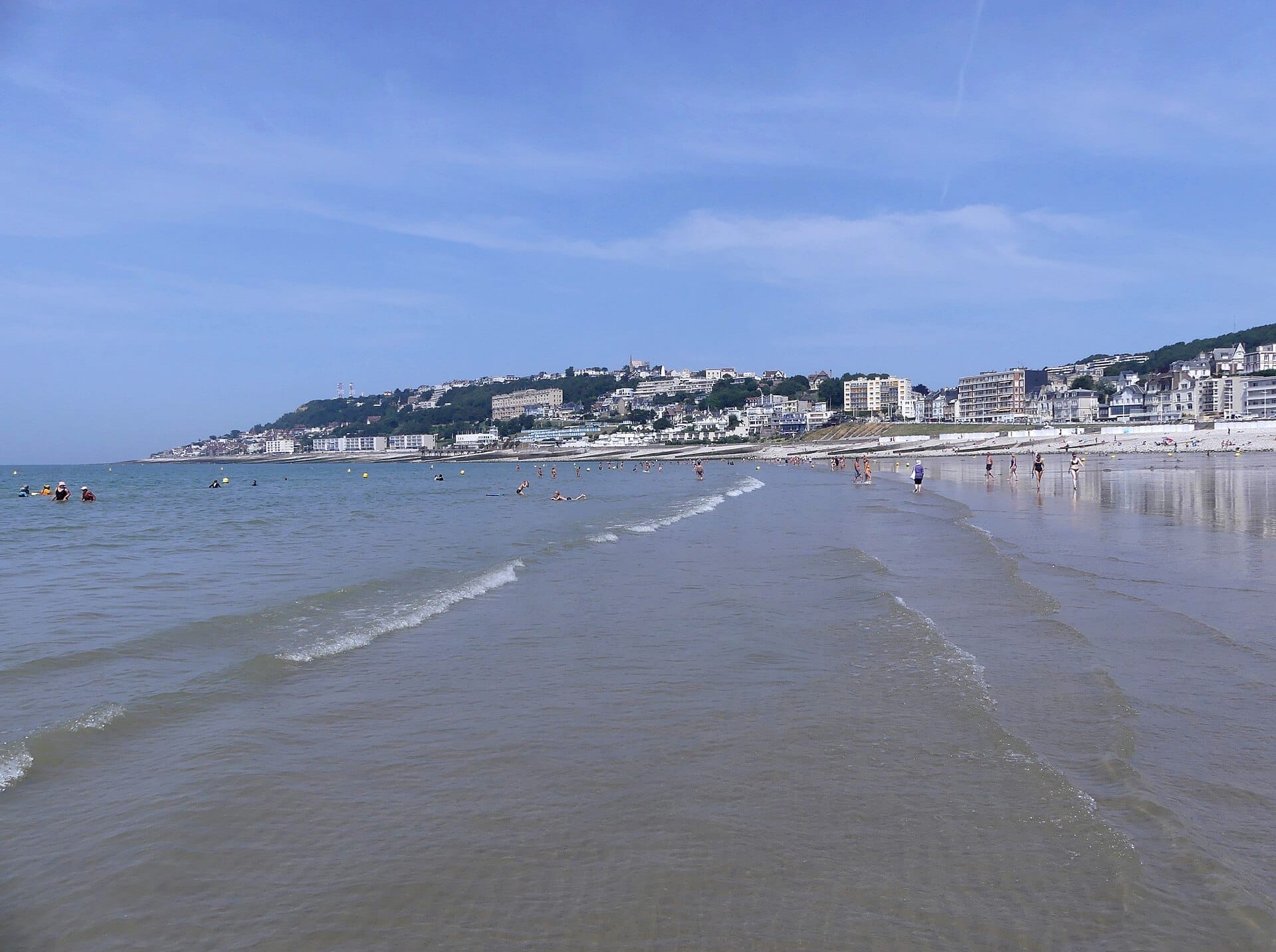
What Plage de Sainte-Adresse Actually Is
Plage de Sainte-Adresse is a long, open pebble beach occupying the seafront of Sainte-Adresse, a coastal commune that sits just northwest of Le Havre proper. The beach runs along the Promenade François Lebel from the point where it meets Le Havre's main beach at the Promenade de la Régate, stretching to the end of Avenue Foch. Its defining feature is the estacade — an old wooden jetty that juts into the Channel — which has appeared in Impressionist paintings and remains the focal point of the seafront today.
The shoreline is entirely composed of pebbles, which means no sand to lie on but also no sand in your shoes, no sandcastles, and no crowding of the type you find at sandy resort beaches. The water is the English Channel: cool to cold except in peak summer, often textured by wind, and occasionally flecked with the foam that builds up when Atlantic weather systems push in. This is not a Mediterranean-style beach holiday. What it offers instead is space, honest coastal scenery, and a genuinely local atmosphere.
💡 Local tip
Beach shoes or water shoes are strongly recommended. The pebbles are large and rounded, which makes walking barefoot uncomfortable — especially near the waterline where they shift underfoot.
Morning, Afternoon, Evening: How the Beach Changes
In the early morning, Plage de Sainte-Adresse belongs to walkers and local joggers. The promenade is quiet enough to hear the pebbles dragging in the wash. The light at this hour, coming low across the Channel from the northeast, produces the kind of flat, diffuse luminosity that Monet understood instinctively — strong enough to define the jetty's silhouette but soft enough to blur the horizon between sea and sky. Photographers who arrive before 8:00 will find this stretch almost empty.
By mid-morning in summer, families start arriving. The beach fills gradually rather than suddenly, and even on busy July weekends there is generally enough space along the promenade to find a quiet stretch of pebbles. The lifeguard post becomes active during the supervised summer season, positioned at the end of Promenade François Lebel near the Boulevard Foch roundabout. The station is also equipped to assist visitors with reduced mobility.
Late afternoon is when the light becomes dramatic. The Channel takes on metallic tones as the sun moves westward, and the estacade casts long shadows across the beach. On clear evenings, the silhouettes of container ships entering the Port of Le Havre appear on the horizon, a reminder of how close industrial and natural landscapes sit to each other here. Sunset from the promenade, when the conditions cooperate, is genuinely impressive.
Tickets & tours
Live prices and dates from our booking partner. If you book, we may earn a commission at no extra cost to you.
Customized private D-day Normandy landing excursion from Le Havre
From 1.300 €Instant confirmationFree cancellationFull-day trip to Giverny and Rouen from Le Havre
From 1.200 €Instant confirmationFree cancellation
Monet Was Here: The Impressionist Connection
In 1867, Claude Monet painted The Beach at Sainte-Adresse — a sun-drenched scene of bathers, boats, and the jetty that many art historians regard as a pivotal transitional work between his early academic style and the looser brushwork that would define Impressionism. The painting now hangs in the Art Institute of Chicago, but its subject is this beach, this estacade, this particular quality of Channel light.
The beach was not obscure in the 1860s. Sainte-Adresse — formerly known as Saint-Denis-Chef-de-Caux before it developed into a seaside destination — had already attracted Parisian bourgeois society seeking sea air. Monet's family had connections in the area, and he returned here repeatedly during that period. The estacade he painted still exists, though in altered form, and remains a listed element of local heritage. The commune actively acknowledges its Impressionist significance. For more context on how Le Havre's coastline shaped the movement, the Le Havre Impressionist Art Trail guide traces these connections across the wider area.
Standing at the water's edge and looking back toward the promenade, you can identify what Monet saw: the sweep of pebble beach, the jetty extending left, the low clifftop of Sainte-Adresse behind. The industrial horizon that now fills the right side of the view did not exist in his time, but the foreground composition has changed remarkably little.
The Estacade: What to Know Before You Walk Out
The estacade is the old wooden jetty that extends from the beach into the Channel. It is one of the most photographed structures on this stretch of coastline and the element that gives the beach its compositional character. Walking out on it in calm weather, with the sea visible through the planking and the full arc of the bay visible behind you, is one of the better free experiences in the Le Havre area.
⚠️ What to skip
Access to the estacade is restricted in bad weather. Diving from it is prohibited, as is cycling, rollerblading, and riding motorised two-wheelers on the structure. The foot of the estacade — where it meets the beach — is also a restricted zone due to slippery ground. These rules are enforced for safety, not for formality.
The views from the jetty on a clear day extend toward Cap de la Hève to the northwest, the white chalk cliffs rising sharply above the beach. To the east, the port infrastructure of Le Havre is visible in the distance. Between the two, the Channel stretches to England, which is not visible but feels close on days when the horizon is sharp. The estacade's wooden surface is weathered and textured in a way that photographs well in raking morning light.
Getting There and Parking
Sainte-Adresse sits approximately 3.2 kilometres northwest of Le Havre city centre, reachable by car via the D147 and D940 coastal roads. The drive takes under ten minutes outside of summer peak hours. By public transport, LiA buses from central Le Havre serve Sainte-Adresse, though specific line numbers and schedules should be confirmed with the LiA network before travel, as services are subject to change.
On foot, it is a pleasant 40-minute coastal walk from Le Havre's main beach, following the seafront promenade north. This route passes through the transition zone between the two beach areas and is particularly appealing in good weather. For visitors spending a full day on the Le Havre coast, combining the main beach at Plage du Havre with a walk to Sainte-Adresse makes a natural half-day itinerary.
Parking directly on the seafront is free but limited and fills quickly on summer weekends. Overflow parking is available on rue Taconet and Avenue Foch. Arriving before 9:30 on a weekend in July or August almost guarantees a space; arriving after 11:00 may require a short walk from a side street.
Practical Considerations: Weather, Swimming, and Accessibility
Le Havre's oceanic climate means that weather at Plage de Sainte-Adresse is genuinely variable even in summer. A clear morning can give way to wind and overcast skies by early afternoon, or vice versa. The Channel is rarely flat calm, and the pebble beach amplifies wave sound considerably when the swell builds. In wet or windy conditions, the promenade still makes for a worthwhile walk — the estacade becomes dramatically atmospheric when spray is in the air — but swimming should be reconsidered.
Supervised summer swimming is available seasonally, with lifeguards positioned at the designated bathing zone. The lifeguard station near the Boulevard Foch roundabout is equipped with facilities for people with reduced mobility. Visitors with mobility considerations should note that the pebble surface is uneven throughout and does not have paved access to the waterline; the promenade itself is accessible. The summer season in Le Havre — roughly June through August — is consistently the best window for beach use; for broader context on planning around weather, the best time to visit Le Havre guide covers seasonal conditions in detail.
Photography note: the beach faces roughly west-northwest, which means it receives afternoon and evening light on the water. For the classic Monet-angle composition with the estacade, position yourself south of the jetty looking northwest in the late afternoon. For architectural and landscape shots of the clifftop above Sainte-Adresse, morning light from the beach works better.
Is It Worth Going Out of Your Way For?
Plage de Sainte-Adresse is not a resort beach with beach clubs, vendors, and facilities at every turn. It is a working-class coastal suburb's beach that happens to have a strong historical pedigree and genuine scenic merit. The combination of the estacade, the Monet connection, the Channel views toward Cap de la Hève, and the calm local atmosphere makes it worth the short trip from Le Havre — especially for visitors who have already covered the main seafront.
Visitors primarily interested in architecture, museums, or the UNESCO-listed city centre may find less reason to come specifically here. Those who enjoy coastal walking, art history with a tangible sense of place, or simply a quieter alternative to more touristy beaches will find it rewarding. If you are traveling with children, the supervised summer swimming and relatively flat promenade make it manageable, though the pebble beach demands more patience from younger kids than a sandy shore would. The Le Havre with kids guide offers additional ideas for family-friendly planning in the area.
Those who should probably skip this particular beach: anyone arriving in Le Havre on a tight schedule who needs to prioritise interior attractions like the Musée d'Art Moderne André Malraux or the city's UNESCO architecture; anyone who finds pebble beaches physically uncomfortable and cannot wear beach shoes; and anyone expecting Mediterranean-style beach amenities. The beach is honest about what it is — and that honesty is part of its appeal.
Insider Tips
- The supervised bathing area is associated with the commune of Sainte-Adresse rather than a precise street address; head directly to Promenade François Lebel and find the water, and the lifeguard station will be visible near the Boulevard Foch end.
- On days when the Channel is rough and swimming is inadvisable, the estacade is at its most photogenic. Spray, movement, and dramatic cloud light make for far more interesting images than flat-calm summer days.
- The clifftop above Sainte-Adresse — accessible via the steep streets behind the seafront — offers elevated views over the entire bay that most visitors never find. It takes about 15 minutes on foot from the promenade and the perspective is completely different from the beach level.
- If you are visiting in summer and parking is full by the seafront, try arriving via the LiA bus network, which avoids the parking entirely and drops you close to the promenade. This also frees you to walk back to Le Havre city centre along the coast rather than retracing your route by car.
- The transition point between Plage de Sainte-Adresse and Le Havre's main beach at the Promenade de la Régate is worth a pause. Looking back south from here gives you the full urban panorama of Le Havre behind the beach — a visual contrast that captures what makes this coast distinctive.
Who Is Plage de Sainte-Adresse For?
- Art history enthusiasts interested in Impressionism and its Norman coastal roots
- Coastal walkers looking for a quieter alternative to Le Havre's main seafront
- Photographers seeking the estacade and Channel light in early morning or late afternoon
- Families wanting supervised summer swimming in a less crowded setting
- Visitors combining a beach visit with the viewpoints and cliffs at Cap de la Hève
Nearby Attractions
Other things to see while in Sainte-Adresse:
- Cap de la Hève
Cap de la Hève is a dramatic chalk cliff headland rising about 100–115 metres above the English Channel at the northern tip of Sainte-Adresse. Free to access year-round, it marks the boundary between the Côte d'Albâtre and the Baie de Seine, offering panoramic coastal views, a hidden tidal beach, and layers of military history stretching back to the 19th century.
- Cimetière Sainte-Marie
Cimetière Sainte-Marie is one of France's officially listed remarkable cemeteries, covering 18 hectares on the hills north of Le Havre with over 20,000 tombs. It holds 2,063 Commonwealth war graves from both World Wars, an 1861 chapel, and layers of local history that reward unhurried exploration.
- Impressionist Viewpoints (Sainte-Adresse & Cap de la Hève)
The clifftops and seafront promenade of Sainte-Adresse and Cap de la Hève are where Claude Monet found some of his most enduring compositions. A marked outdoor trail with interpretive panels connects the exact spots where canvases like 'Terrace at Sainte-Adresse' and 'La Pointe de la Hève' were painted, all freely accessible and open at any hour.
- Chapelle Notre-Dame-des-Flots
Perched on the heights of Sainte-Adresse above the Seine estuary, Chapelle Notre-Dame-des-Flots is a neo-Gothic chapel built in the late 1850s as a sanctuary for sailors and fishermen. Its interior fills with ex-votos, model ships, and votive paintings dedicated to those lost at sea, making it one of the most quietly moving heritage sites in the Le Havre area. Admission is free.
Planning a trip? Discover personalized activities with the Nomado app.