Cimetière Sainte-Marie: Le Havre's Remarkable Cemetery on the Heights
Cimetière Sainte-Marie is one of France's officially listed remarkable cemeteries, covering 18 hectares on the hills north of Le Havre with over 20,000 tombs. It holds 2,063 Commonwealth war graves from both World Wars, an 1861 chapel, and layers of local history that reward unhurried exploration.
Quick Facts
- Location
- 2 Rue Eugène Landoas, 76600 Le Havre
- Getting There
- Nearby bus service is available in the Tourneville area; check current routes on the LiA network before your visit
- Time Needed
- About 2 hours for a guided heritage visit; self-guided visits vary
- Cost
- Free general entry. Guided heritage visits: €5 full / €3 reduced, paid on site by cash or cheque
- Best for
- History enthusiasts, genealogy researchers, WWII heritage visitors, and anyone wanting quiet reflection above the city
- Official website
- http://lehavre.fr/annuaire-equipements/cimetiere-sainte-marie
What Is Cimetière Sainte-Marie?
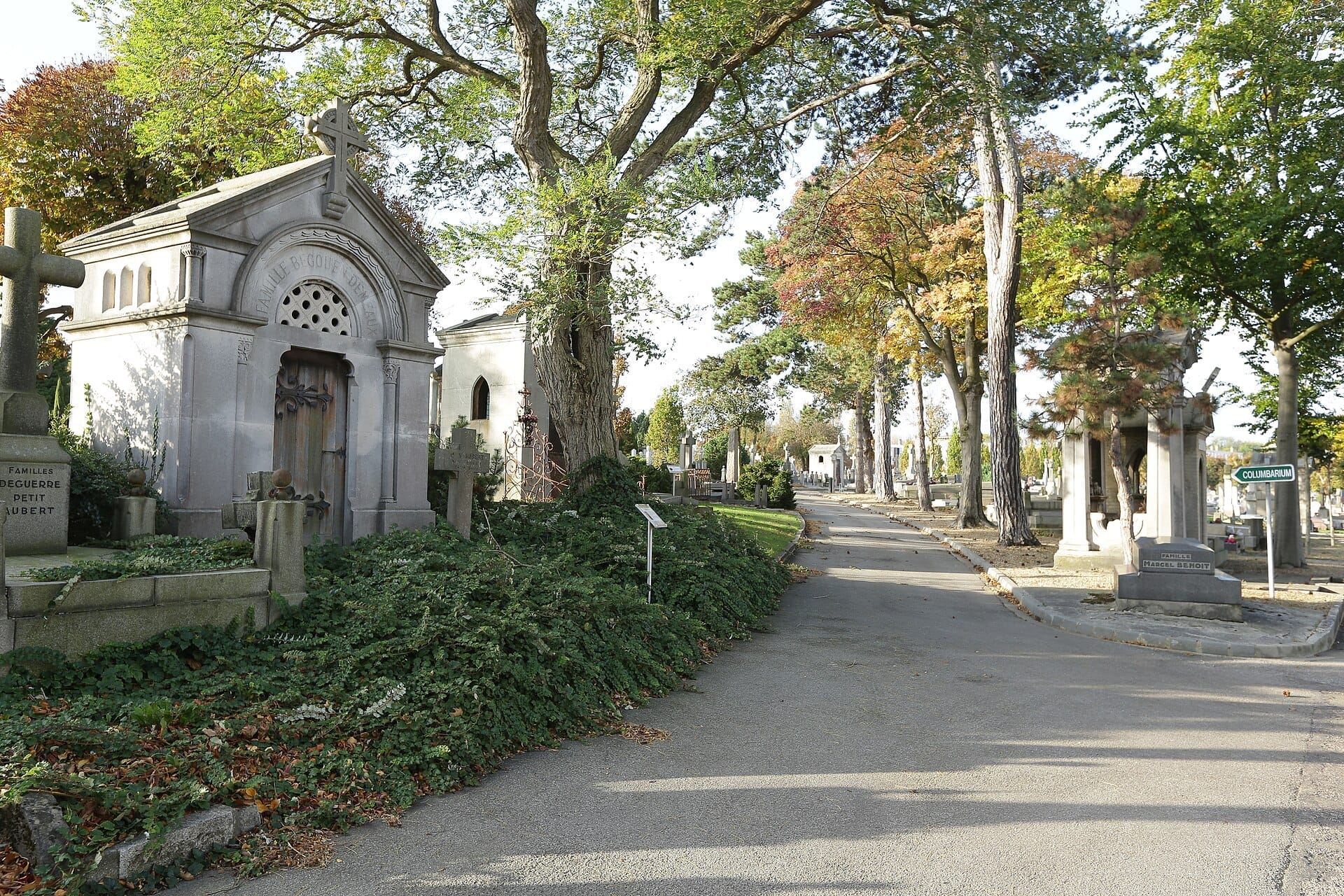
Cimetière Sainte-Marie sits on the elevated plateau north of Le Havre's city centre, on land that was once part of the Tous-Vents farm. Blessed and opened in 1851, it was created to serve a rapidly expanding port city whose older burial grounds were running out of space. Today it covers 18.4 hectares, contains more than 20,000 tombs, and is recognized as an exceptional funerary heritage site. It is one of only seven cemeteries in Le Havre, and by far the most historically and architecturally significant.
For most visitors, the cemetery falls into two overlapping experiences: a heritage walk through monumental family tombs, sculptural details, and the 1861 chapel, and a more focused visit to the Commonwealth War Graves section, which holds 2,063 burials from World War I and World War II. Both are equally valid reasons to come, and both reward slower, deliberate attention.
ℹ️ Good to know
Opening hours vary by season. From 1 March to 1 November the cemetery is open 08:30–17:30 daily. From 2 November to 28 February it closes at 17:00. Entry is free every day of the year.
The Landscape and Atmosphere
Arriving from Rue Eugène Landoas, the main entrance gives little away at first. The gate opens onto an avenue of mature trees whose canopy keeps the light dappled and the temperature noticeably cooler than the streets below, even on warm summer afternoons. The ground rises and falls across the site, which means the experience constantly shifts: turn one corner and you are looking down over a dense grid of stone monuments, turn another and you catch a glimpse of the city rooftops and, on clear days, the Seine estuary in the distance.
The silence here is not absolute. You hear birds, distant traffic, and occasionally the low hum of a lawnmower maintaining the Commonwealth plots. But the noise of Le Havre's port and commercial centre, which dominates much of the lower city, is almost entirely absent. This acoustic separation from the city below is one of the most immediately noticeable qualities of the place.
Morning visits, before 10:00, offer the best combination of soft light for photography and very few other visitors. The stone monuments photograph particularly well when the sun is low and angled, picking out carved lettering, relief portraits, and weathered textures. Late afternoon can be atmospheric too, especially in autumn when the light turns amber through the tree cover, but be mindful of the closing time.
Tickets & tours
Live prices and dates from our booking partner. If you book, we may earn a commission at no extra cost to you.
Customized private D-day Normandy landing excursion from Le Havre
From 1.300 €Instant confirmationFree cancellationFull-day trip to Giverny and Rouen from Le Havre
From 1.200 €Instant confirmationFree cancellation
The Chapel and the Monumental Tombs
The chapel at the heart of the cemetery was completed in 1861 by Émile Platel, the municipal architect responsible for several civic buildings in Le Havre during the mid-nineteenth century. Its stone facade and restrained Gothic detailing give it a solidity appropriate to its role as a permanent landmark within the grounds. The chapel is a useful orientation point: most of the oldest and grandest family tombs radiate outward from the central pathways around it.
The family monuments span the full arc of Le Havre's commercial and industrial history. Wealthy merchant families, shipowners, and harbour industrialists whose names shaped the port's expansion in the late nineteenth and early twentieth centuries are commemorated in elaborate stone structures: obelisks, neo-Gothic chapels, draped urns, and portrait medallions. The craftsmanship is uneven, ranging from mass-produced Victorian stonecutting to genuinely accomplished funerary sculpture, and that unevenness is itself historically informative.
The cemetery expanded in 1875 and again between 1887 and 1915 as the city grew and more farmland was incorporated. These successive extensions are loosely legible as you walk: monument styles shift from high Victorian density toward the more restrained aesthetic of the Belle Époque and early twentieth century. If you have a specific interest in funerary art or local history, Le Havre Seine Patrimoine publishes heritage itineraries that map the most significant tombs in sequence.
The Commonwealth War Graves Section
The Commonwealth War Graves section is located within the wider cemetery, with the main access for these plots via Rue du 329ème Régiment d'Infanterie. The section contains 2,063 burials in total: 1,699 from World War I and 364 from World War II. The graves are maintained to the precise standards of the Commonwealth War Graves Commission, which means closely cut grass, uniform white headstones, and a formality that contrasts noticeably with the more expressive French civilian monuments elsewhere in the grounds.
Le Havre was a critical Allied base and embarkation point during World War I, which explains the scale of British and Commonwealth burials here. Many of the soldiers died in the city's hospitals after being evacuated from the Western Front. The individual headstones carry regimental badges, dates, ages, and in many cases personal inscriptions chosen by families. Reading them carefully, even for a short time, makes the aggregate number of 2,063 feel specific and human rather than statistical.
Visitors with a serious interest in Le Havre's role in both World Wars will find this section a meaningful complement to the city's broader military history. The port's wartime function, the Allied landings in Normandy, and the reconstruction of the city after 1944 all connect here in ways that a single monument or museum cannot quite replicate.
To explore the wider context of Le Havre's WWII experience, the Le Havre World War II history guide provides a useful overview of the city's destruction and reconstruction, including the legacy visible in the UNESCO-listed city centre today.
💡 Local tip
The Commonwealth War Graves Commission website allows you to search for individual burials by name before your visit. If you are tracing family history or a specific regiment, arriving with a plot reference will save considerable time in a cemetery of this size.
Guided Visits and Heritage Routes
The Ville du Havre offers guided heritage visits to Cimetière Sainte-Marie at a cost of €5 full price and €3 reduced price, paid on site by cash or cheque. These walks are typically led by heritage specialists and cover the cemetery's architectural highlights, the most significant family monuments, and the historical context of the site's development from 1851 onward. Check the municipal website or the local tourist office for current scheduled dates, as these walks are offered on the first Sunday of each month and require prior registration.
Self-guided options are equally viable. Le Havre Seine Patrimoine, the local heritage documentation organisation, maintains detailed information about the cemetery's key monuments and their historical significance. Their materials are worth consulting before or after a visit, even if you are exploring independently.
If you are planning a broader heritage walk through Le Havre, the Le Havre walking tour guide outlines how to combine the city's major sites into a coherent half-day or full-day route.
Practical Details: Getting There, Accessibility, and What to Bring
The cemetery is on the heights north of Le Havre's city centre, near Fort de Tourneville. Walking from the centre is possible but involves a significant uphill stretch. The LiA urban bus network serves the Tourneville plateau; check current routes before visiting. Taxis and private transfers are a practical option if you are combining this with other sites on the same day.
Wheelchair access is possible but described as difficult by Commonwealth War Graves visiting information. The terrain within the cemetery is uneven in places, with some sections on slopes and paths that are not fully paved. Flat, closed-toe shoes are a practical choice regardless of your mobility level, particularly if recent rain has softened the grass paths.
Dogs are permitted on a short lead. Visitors are asked to wear respectful clothing, which in practice means avoiding beachwear or overly casual attire. There is no café or water point within the cemetery, so bring water if you plan a longer visit, particularly in summer.
⚠️ What to skip
The cemetery closes at 17:30 in summer and 17:00 in winter, without exception. If you are arriving late in the day, plan your visit time carefully. There is no extended access and the gates are locked promptly.
Honest Assessment: Who Will Get the Most From This Visit
Cimetière Sainte-Marie is not a conventional tourist attraction and should not be approached as one. There are no interactive displays, no café, and no dramatic architectural spectacle in the way that Le Havre's more prominent landmarks deliver. What it offers instead is depth: a place where the social and military history of a major port city accumulates across 170 years of monuments, inscriptions, and maintained graves.
Travelers who find meaning in cemeteries as historical documents will find this one genuinely rewarding. The same applies to anyone tracing Commonwealth military history, WWI and WWII heritage, or the genealogy of Norman port families. Visitors primarily interested in Le Havre's famous post-war architecture, its Impressionist connections, or its beach and seafront may find the cemetery less relevant to their itinerary and should prioritise accordingly.
For visitors interested in Le Havre's Impressionist connections, the neighbourhood of Sainte-Adresse sits close by on the same elevated promontory and offers viewpoints that directly inspired Monet and Boudin. Combining a morning at the cemetery with an afternoon walk through Sainte-Adresse makes for a coherent and unhurried day on the heights above the city.
The Musée d'Art Moderne André Malraux in the city centre holds one of France's finest collections of Impressionist work, including paintings that depict the very coastline visible from the cemetery plateau. It is a natural counterpart to a heritage-focused morning at Cimetière Sainte-Marie.
Insider Tips
- Arrive before 09:30 on a weekday morning for the best combination of low-angle light, minimal other visitors, and quiet that makes photography and reflection genuinely possible.
- If you are visiting the Commonwealth War Graves section, enter from Rue du 329ème Régiment d'Infanterie rather than the main entrance on Rue Eugène Landoas. It puts you directly at the military plots without having to navigate the full cemetery first.
- The heritage itineraries published by Le Havre Seine Patrimoine include a dedicated funerary heritage route for the cemetery. Downloading it before your visit gives you a proper self-guided trail rather than wandering without context.
- All Souls Day (2 November) and Remembrance Day (11 November) both draw significantly larger crowds than usual. If you want quiet, avoid these dates or arrive at opening time.
- The elevated position of the cemetery means the perimeter paths offer filtered views toward the Seine estuary on clear days. These are not signposted as viewpoints but are worth finding if conditions are good.
Who Is Cimetière Sainte-Marie For?
- WWI and WWII heritage visitors researching Commonwealth military burials
- Genealogy researchers tracing Norman and Le Havre family histories
- Architecture and funerary art enthusiasts interested in 19th-century monumental stonework
- Travelers who appreciate quiet, historically layered spaces away from tourist crowds
- Those combining a Sainte-Adresse walk with a deeper dive into Le Havre's social history
Nearby Attractions
Other things to see while in Sainte-Adresse:
- Cap de la Hève
Cap de la Hève is a dramatic chalk cliff headland rising about 100–115 metres above the English Channel at the northern tip of Sainte-Adresse. Free to access year-round, it marks the boundary between the Côte d'Albâtre and the Baie de Seine, offering panoramic coastal views, a hidden tidal beach, and layers of military history stretching back to the 19th century.
- Impressionist Viewpoints (Sainte-Adresse & Cap de la Hève)
The clifftops and seafront promenade of Sainte-Adresse and Cap de la Hève are where Claude Monet found some of his most enduring compositions. A marked outdoor trail with interpretive panels connects the exact spots where canvases like 'Terrace at Sainte-Adresse' and 'La Pointe de la Hève' were painted, all freely accessible and open at any hour.
- Chapelle Notre-Dame-des-Flots
Perched on the heights of Sainte-Adresse above the Seine estuary, Chapelle Notre-Dame-des-Flots is a neo-Gothic chapel built in the late 1850s as a sanctuary for sailors and fishermen. Its interior fills with ex-votos, model ships, and votive paintings dedicated to those lost at sea, making it one of the most quietly moving heritage sites in the Le Havre area. Admission is free.
- Plage de Sainte-Adresse
Plage de Sainte-Adresse is a large pebble beach on the northwestern edge of Le Havre, framed by a historic jetty and sweeping views across the Seine estuary. Free, unhurried, and steeped in Impressionist history, it rewards visitors who make the short trip from the city centre.
Planning a trip? Discover personalized activities with the Nomado app.