Brighton Seafront runs along the English Channel from the Hove boundary in the west to the Marina at Black Rock in the east, forming the city's most recognizable and heavily visited corridor. It anchors the entire city experience, connecting major landmarks, beaches, and entertainment across a single, walkable promenade. Whether you're after fish and chips on the shingle, a fairground ride at the end of the pier, or a quiet sunset walk past Victorian ironwork, this is where Brighton's identity comes into sharpest focus.
Brighton Seafront is the spine of the city: a continuous promenade running along the English Channel where the pebble beach, the iconic Palace Pier, and the ghostly skeleton of the West Pier frame every view. It's the reason most people come to Brighton in the first place, and for good reason. No other part of the city concentrates so much character, history, and sheer visual drama into such a compact, walkable stretch.
Orientation
Brighton Seafront occupies the southern edge of the city, running east to west along the English Channel. The A259, known as Kings Road through the central section and Marine Parade further east, forms the main road spine of the waterfront. Below this road sits the promenade itself, split into an upper level walkway and a lower level closer to the beach, with the shingle stretching down to the water's edge.
The western boundary of the Brighton seafront is the historic city boundary with Hove, where Kings Road transitions into the quieter, wider lawns of the Hove seafront. To the east, the promenade runs past Kemp Town and the arches beneath Marine Parade before reaching Brighton Marina and Black Rock. The central focal point that most visitors orientate from is Brighton Palace Pier, which juts out into the sea roughly midway along the strip.
The seafront connects to the rest of the city via several north-south streets cutting up through the city centre. West Street, East Street, and Black Lion Street are the main pedestrian arteries that carry you from the seafront up toward The Lanes and then onward to North Laine and Brighton railway station. The walk from the station to the seafront takes around 15 minutes at a relaxed pace, gently downhill all the way.
ℹ️ Good to know
Brighton's seafront has two distinct levels: the upper promenade along Kings Road and Marine Parade (where cars travel and buses stop), and the lower promenade right against the beach. Most people naturally drift between the two throughout the day.
Character & Atmosphere
The seafront shifts character dramatically depending on the time of day and the season. On a weekday morning in spring, the lower promenade belongs to dog walkers, joggers, and a few early swimmers wading into the grey-green Channel. The light is flat and northern, the air smells of seaweed and salt, and the Palace Pier looms through the mist with its lights still off. It's genuinely atmospheric in a way the Instagram version of Brighton never quite captures.
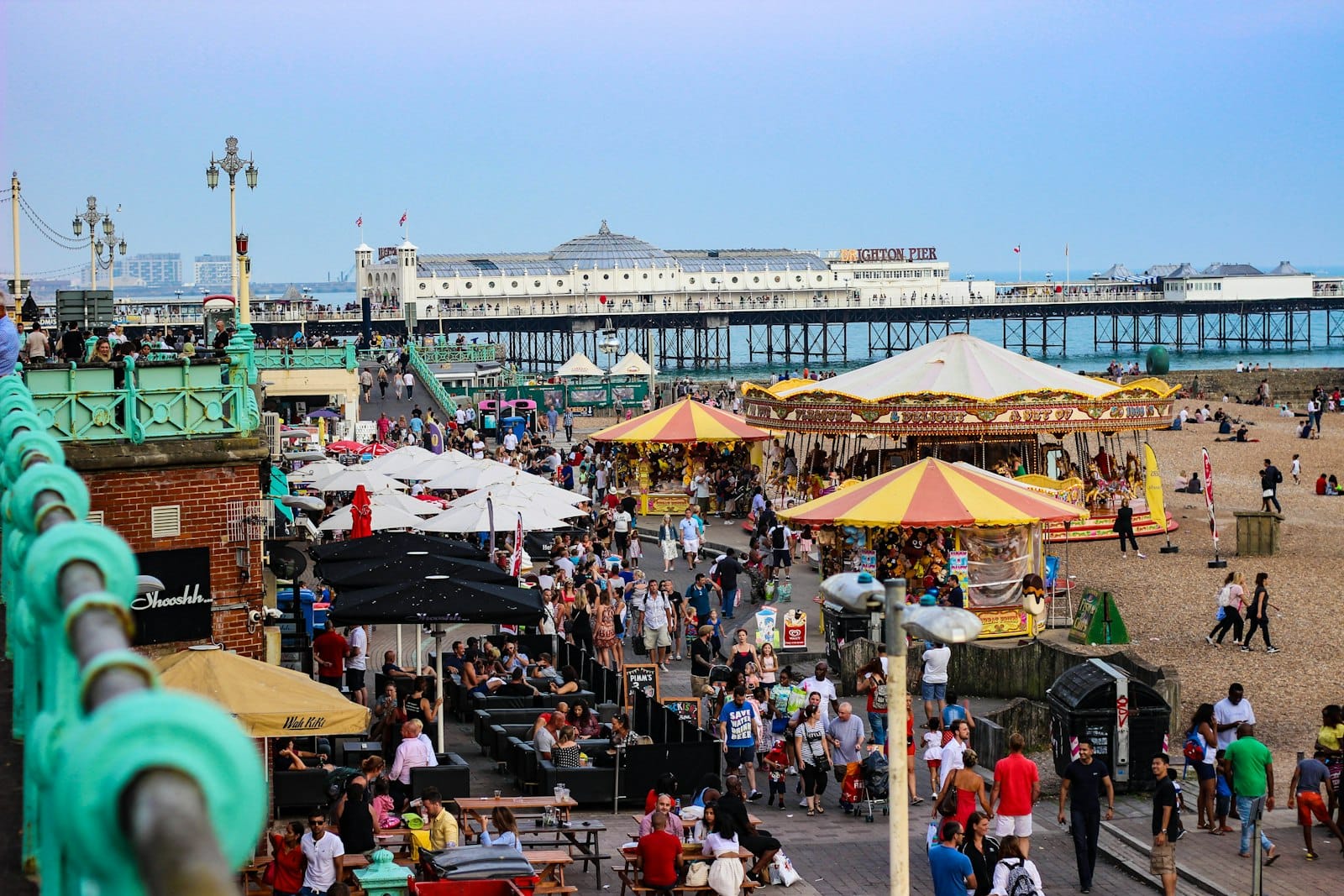
By late morning on a sunny summer weekend, that atmosphere evaporates fast. West Street empties day-trippers directly onto the promenade. Families stake out patches of pebble beach with windbreakers and cool boxes. The pier gates open and the smell of doughnuts drifts all the way to the road. The noise builds: arcade machines, pop music from beach bars, the creak of deckchair frames. From July through August, this is one of the busiest tourist corridors in the south of England, and it feels like it.
The character shifts again as you move east along Marine Parade toward Kemp Town. The crowds thin noticeably past the Palace Pier, the arches beneath the road become quieter, and the shingle stretches out with more space between groups. Further east still, the Undercliff Walk begins at Black Rock, offering a narrow path between the chalk cliffs and the sea, used almost entirely by locals. In the opposite direction, crossing into Hove, the atmosphere becomes noticeably calmer almost immediately, with wider lawns and fewer amusements competing for attention.
After dark, the seafront around the central section of Kings Road takes on a different energy entirely. The pier lights up in full, the beach bars stay busy well into the night during summer, and the pubs and clubs on and around West Street draw a significant nightlife crowd. Parts of the central seafront on weekend nights can be loud and chaotic, particularly around the West Street junction. Travelers seeking a quiet evening should walk east past the pier or west toward Hove, where the atmosphere is considerably calmer.
What to See & Do
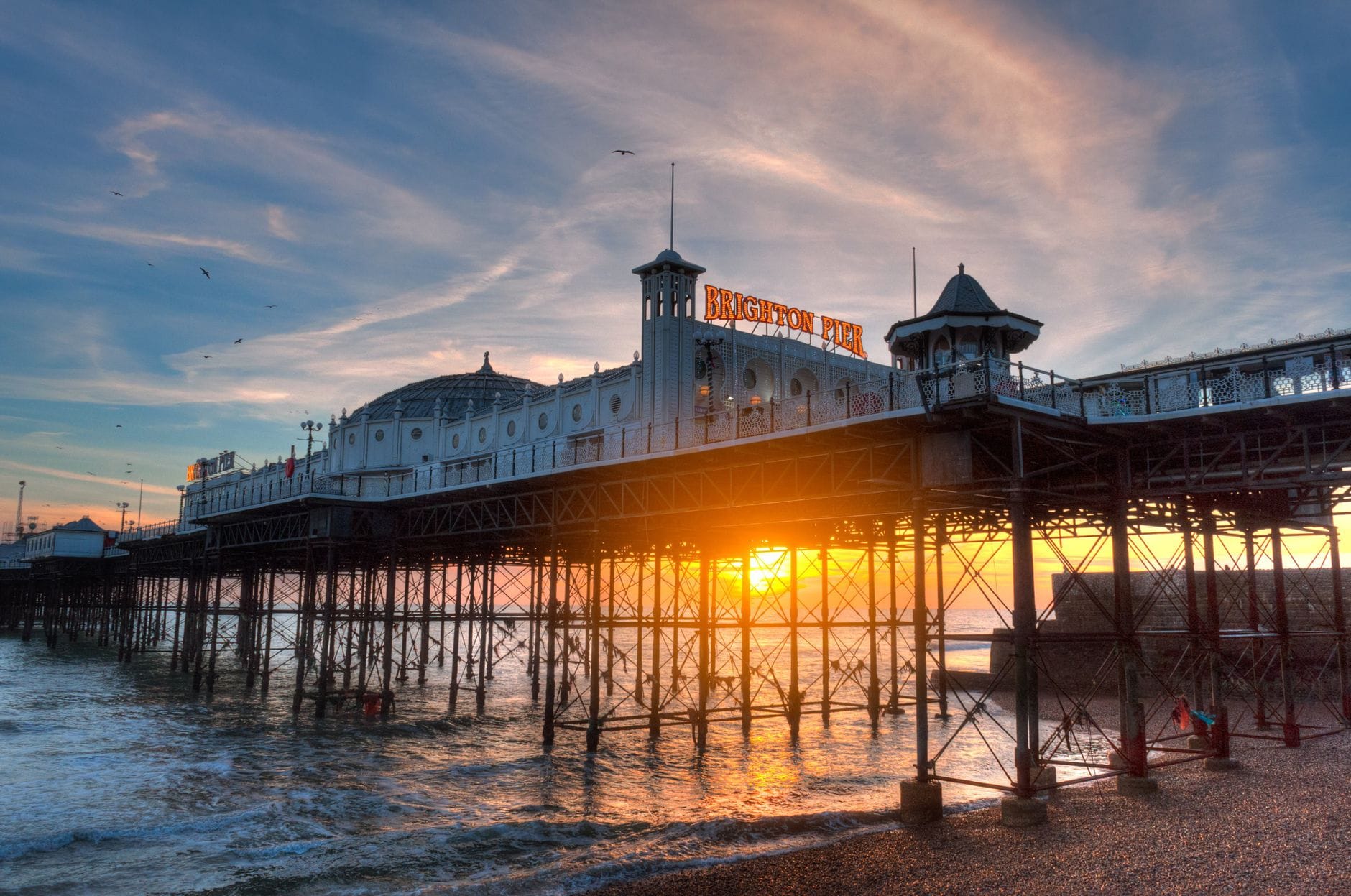
The Brighton Palace Pier is the unavoidable centerpiece of the seafront. Built in 1899, it stretches roughly 530 metres into the sea and carries a full funfair, arcades, and food stalls at its far end. It's unambiguously touristy, but it's also a genuine Victorian engineering achievement and looks extraordinary both from the beach and from the water. The views back toward the city from the pier's seaward end are worth the walk alone.
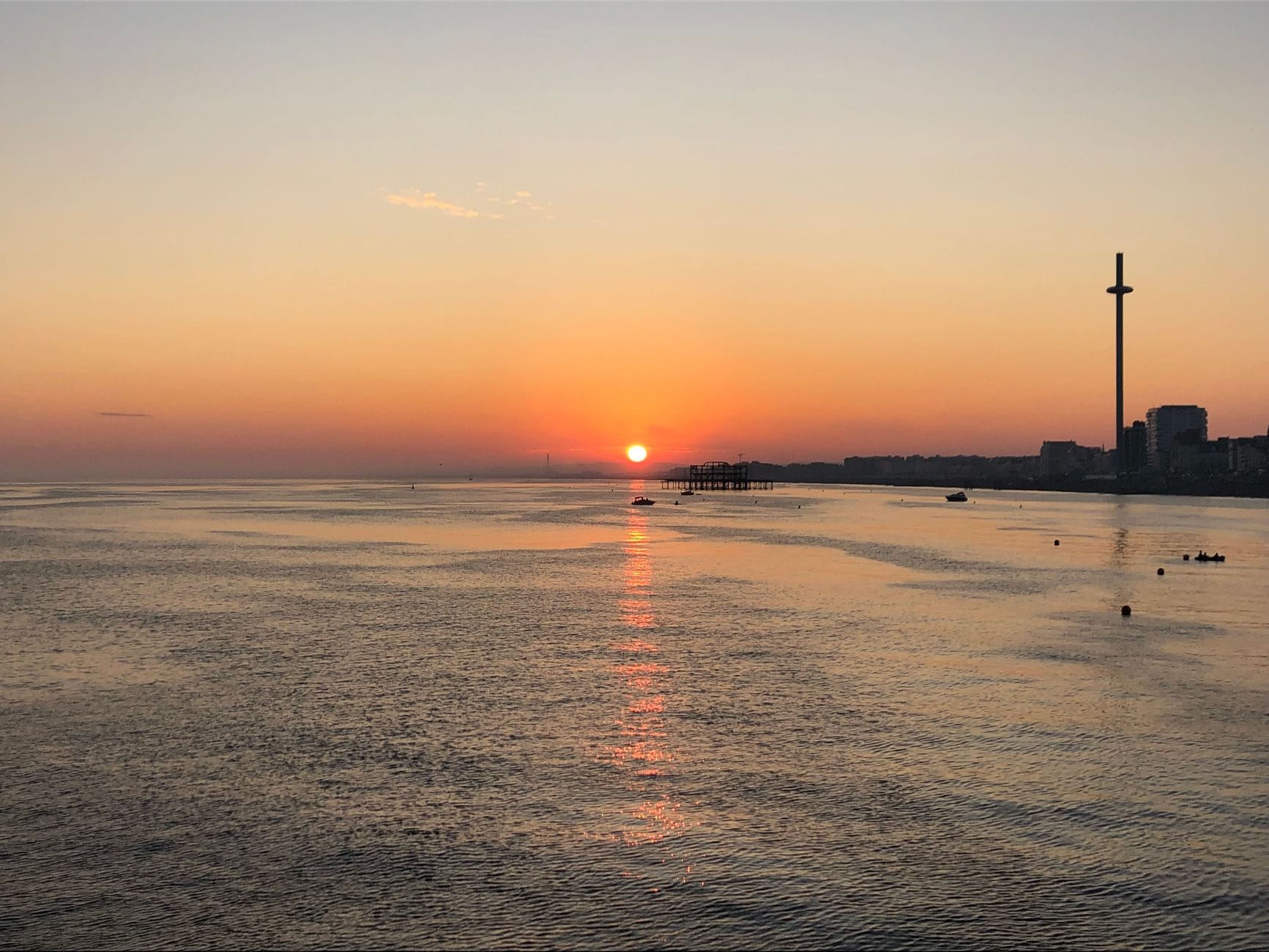
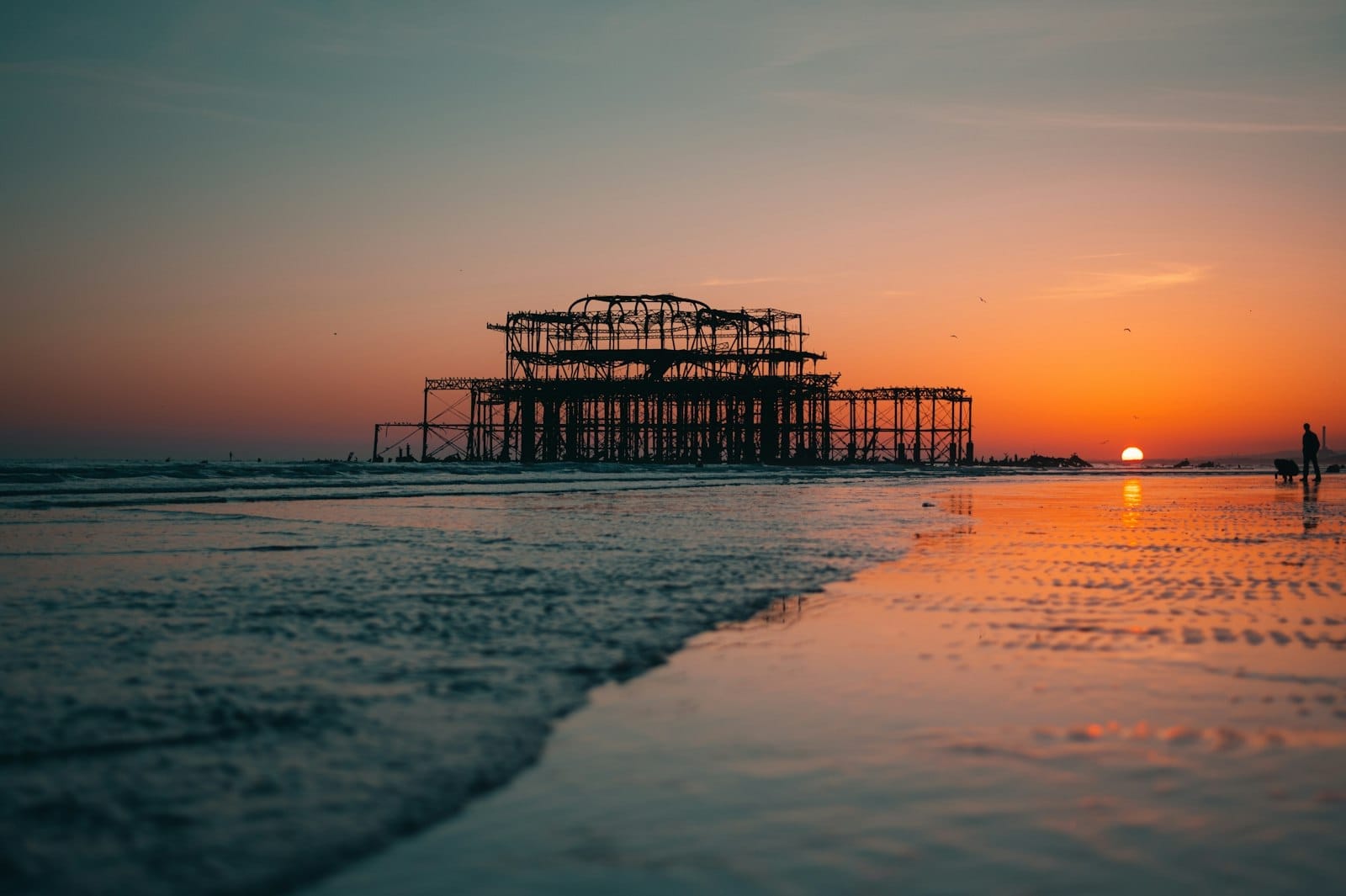
A short walk west of the pier, the West Pier ruins provide an entirely different kind of landmark. The skeletal ironwork frame of the 1866 pier, which closed in 1975 and has since been ravaged by fire and storms, now sits marooned in the sea with no public access. It's an unexpectedly striking piece of accidental architecture, especially in low light or on overcast days when the rusted frame catches the grey sky behind it. Starling murmurations sometimes swarm around it at dusk in autumn and winter.
Standing on the seafront, the Brighton i360 observation tower is hard to miss. The vertical structure, designed by the architects behind the London Eye, sends a glass observation pod 138 metres into the air on a central column, offering panoramic views along the coast and inland toward the South Downs. It sits on the former West Pier landing stage, and the base includes a bar and event space. Verify current opening hours and ticket prices before visiting.
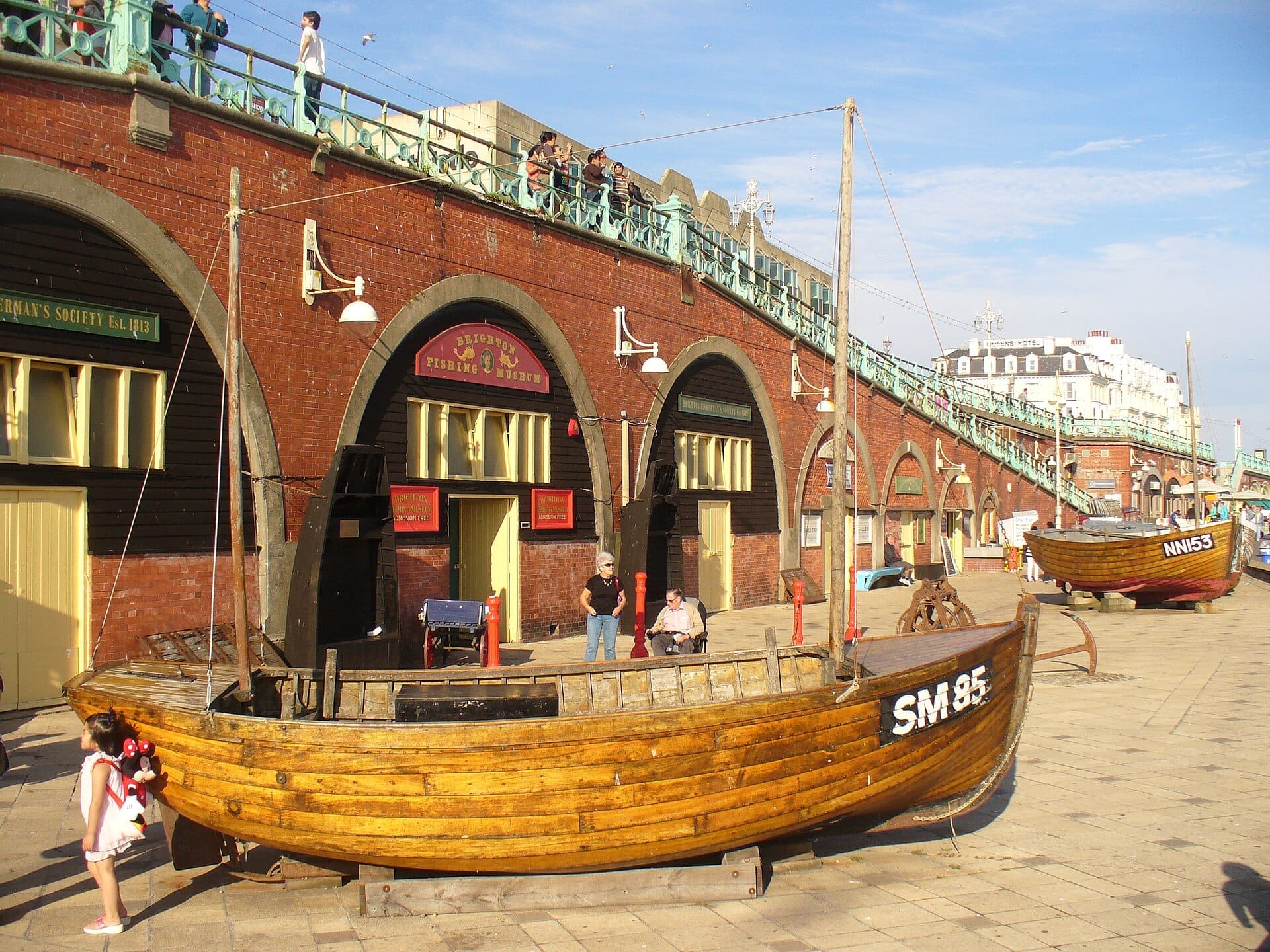
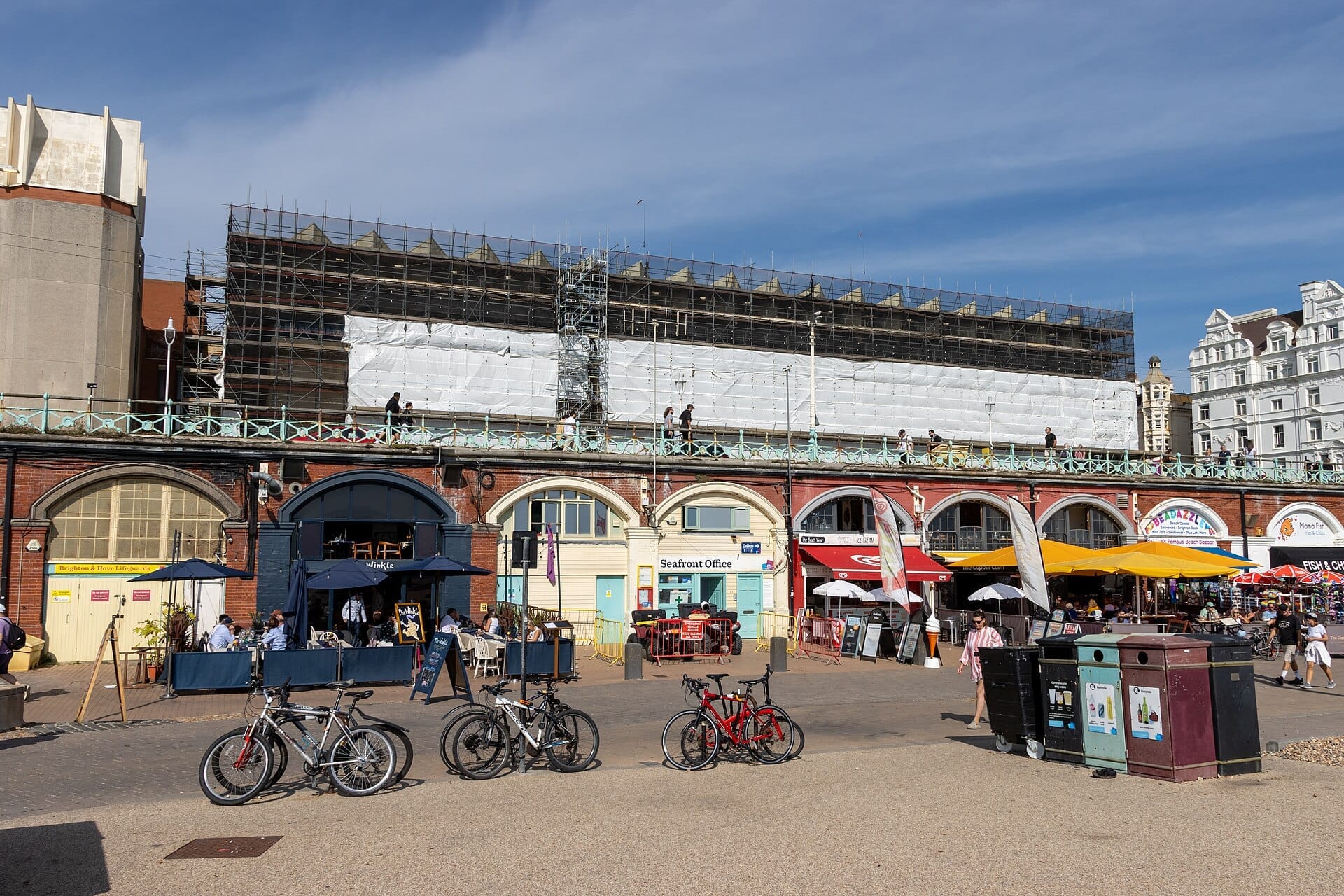
Along the lower promenade, the Kings Road Arches run beneath the road and form one of the more underappreciated features of the seafront. The arches house a mix of workshops, seafood stalls, galleries, and small businesses. Some contain the Brighton Fishing Museum, which documents the city's working fishing heritage with a collection of historic boats and local photographs. It's free to enter and provides genuine historical context for the seafront that the pier's arcades do not.
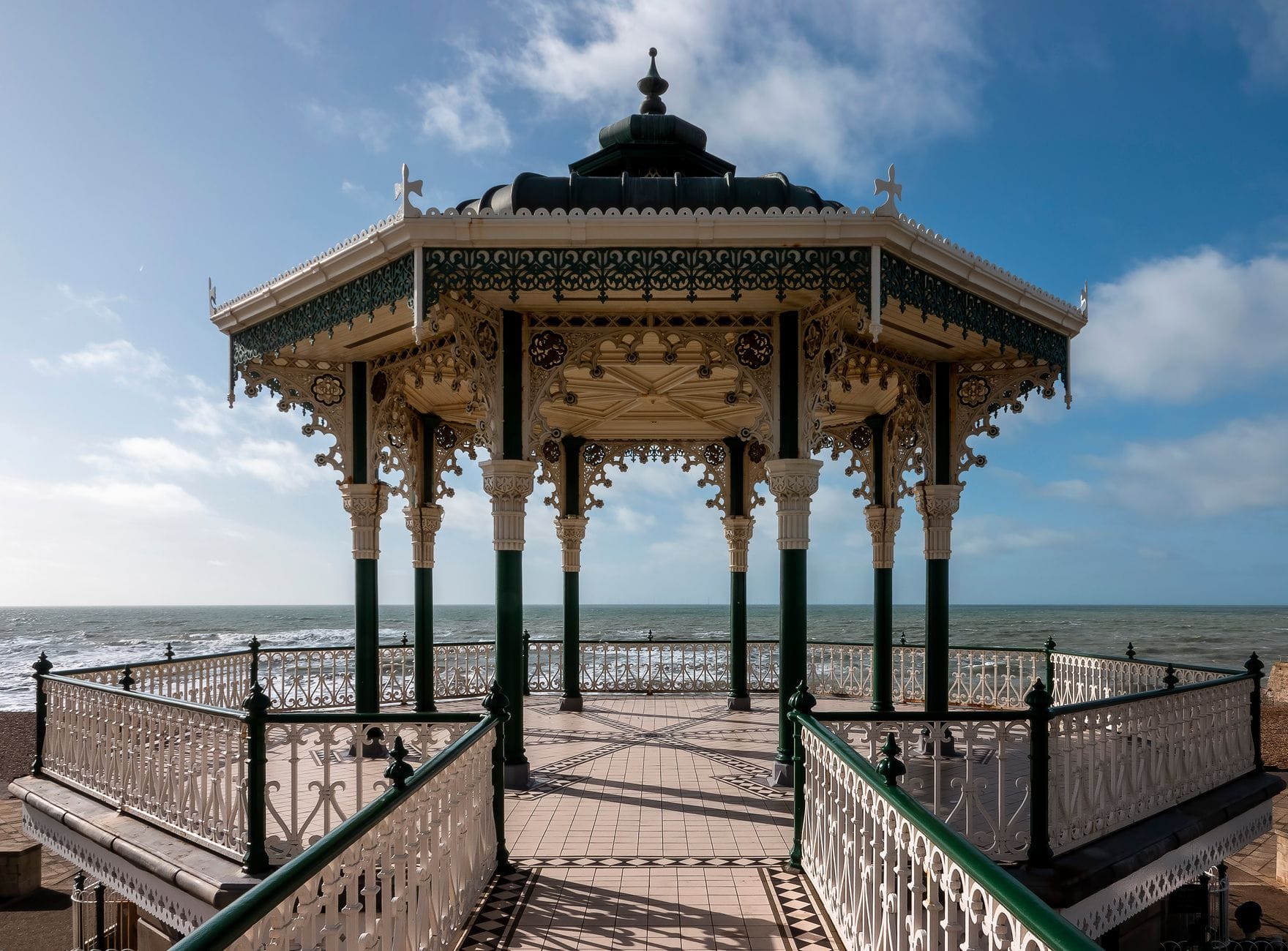
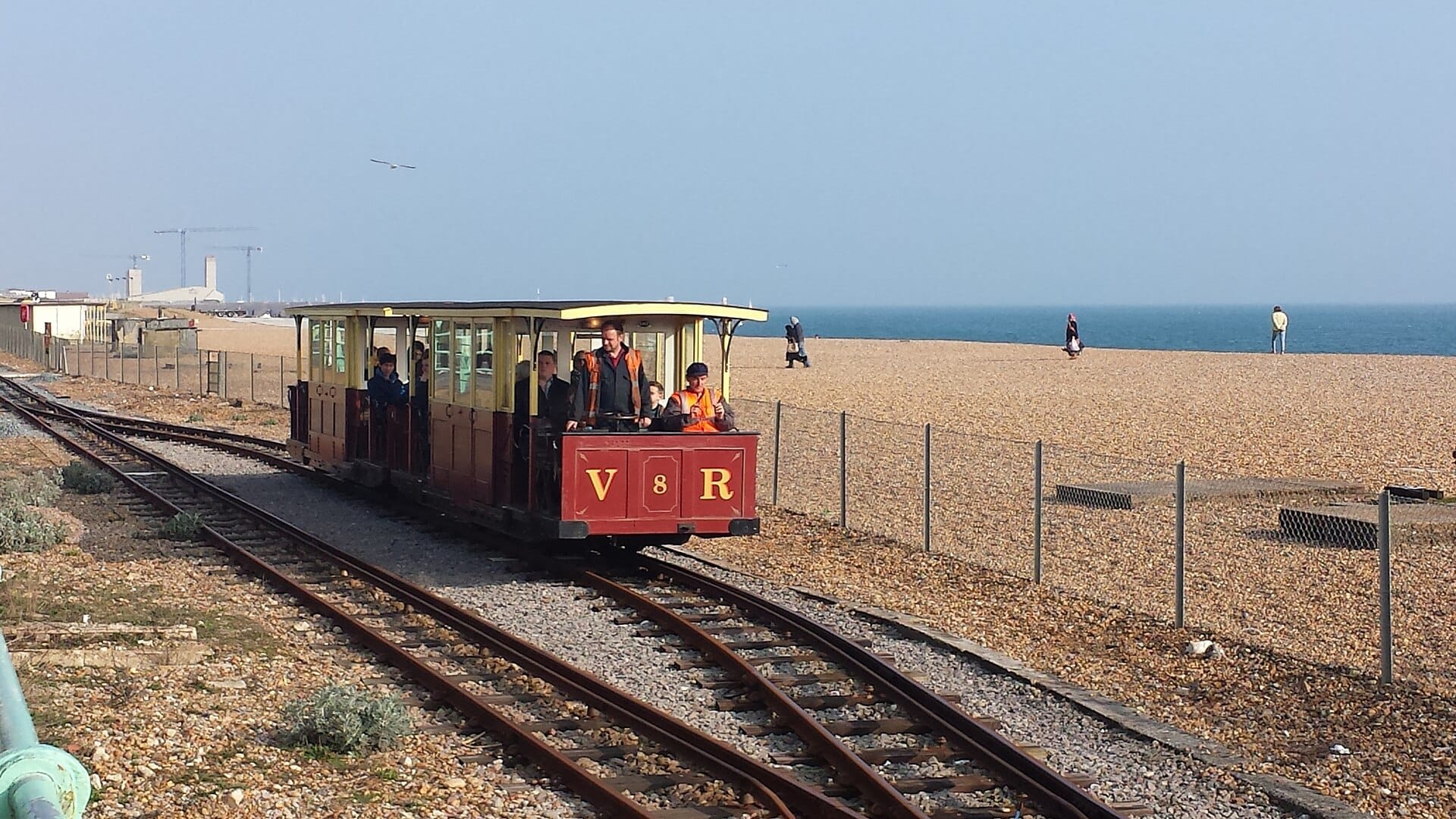
The Brighton Bandstand sits on the lower promenade west of the pier and hosts concerts throughout the summer season, ranging from classical performances to pop covers. Its decorative Victorian ironwork makes it one of the most photographed structures on the seafront outside of the pier itself. East of the pier, the Volks Electric Railway runs along the base of the beach from the pier toward Black Rock, operating as the world's oldest surviving electric railway (opened 1883). It's a short but historically significant ride.
Brighton Palace Pier: Victorian funfair and arcade pier, open daily (verify hours seasonally)
West Pier ruins: no public access, best viewed from the beach or i360
Brighton i360: observation tower with panoramic views, ticket prices vary
Kings Road Arches: workshops, seafood, galleries, and the Fishing Museum
Brighton Bandstand: summer concert programme, check local listings
Volks Electric Railway: world's oldest electric railway, seasonal operation
Sea Life Brighton: aquarium beneath the arches, popular with families
For a wider perspective on Brighton's coastal attractions, the best beaches in Brighton guide covers the full stretch from Hove to the Marina, including advice on which sections suit swimming, sunbathing, or avoiding the crowds.
Eating & Drinking
The food and drink offer on the seafront is wide in range but uneven in quality. The promenade and its immediate hinterland contain everything from mobile fish and chip vans to sit-down seafood restaurants, beach bars, and hotel dining rooms. The challenge for visitors is separating the places that trade on location from the ones that actually cook well.
Seafood is the natural anchor of the seafront food scene. Several fishmongers and seafood stalls operate from the Kings Road Arches, selling freshly caught fish, dressed crab, and prawns. Eating at a kerbside stall on the lower promenade with the sound of the waves behind you is one of the more authentically Brighton things you can do, and the quality of the catch tends to be high given the active local fishing fleet. Prices at these stalls are reasonable and the portions are generous.
The beach bars occupying the lower promenade between the Palace Pier and the West Pier ruins range from casual daytime café operations to evening cocktail bars. Many are seasonal, opening fully in April and winding down by October, though some operate year-round in a reduced capacity. On a warm summer afternoon, these bars capture the seafront at its most appealing: deckchairs facing the water, cold drinks, and the Palace Pier glowing in the distance. The West Street area directly behind the seafront contains a higher concentration of chain pubs and late-night venues, which suits those looking for a big night out but is not Brighton's most characterful eating territory.
For a broader picture of what the city's food scene looks like beyond the waterfront, the what to eat in Brighton guide covers local specialties and recommended areas. Brighton has a significant vegan and vegetarian food culture that is better represented inland in North Laine than on the seafront itself; the vegan and vegetarian Brighton guide is worth reading if that matters to your itinerary.
💡 Local tip
If you want fish and chips with sea views, skip the pier's food stalls and walk to the Kings Road Arches instead. The quality is typically higher, the prices more honest, and the crowds thinner. Eating on the pebbles a few metres from the water is the correct approach.
Getting There & Around
Brighton railway station, on the main Southern and Thameslink lines, is the city's principal transport hub and sits roughly 15 minutes on foot from the seafront. From the station, walk south down Queens Road, which becomes West Street as it approaches the coast. This is the most direct pedestrian route from rail to sea, and it deposits you onto Kings Road almost exactly opposite the Palace Pier. The walk is uncomplicated and well-signposted.
Brighton & Hove Buses operate along and adjacent to the A259, providing service to points east toward Kemp Town and the Marina and west into Hove. The seafront itself is narrow enough that most visitors naturally walk between points rather than relying on buses for short trips. From the Palace Pier to the West Pier ruins is roughly a 10-minute walk west; from the pier to the start of the Undercliff Walk at Black Rock is around 25 minutes east. Both are comfortable on foot.
The Volks Electric Railway provides a useful and enjoyable connection between the central beach and Black Rock, running along the base of the beach in season. For getting around the wider city, the getting around Brighton guide covers bus routes, cycling options, and walking times between the main neighborhoods.
For those arriving by car, parking along Kings Road and Marine Parade is metered and subject to high demand during summer. On busy summer weekends, driving to the seafront and finding reasonable parking within walking distance is often more stressful than leaving the car further north and walking or busing down. Gatwick Airport is the main international gateway, approximately 28 miles north of Brighton, with direct Southern and Thameslink rail services running in approximately 30 minutes (fares vary; verify before travel at nationalrail.co.uk). Uber and Bolt both operate in Brighton for shorter local journeys.
⚠️ What to skip
On summer bank holiday weekends and during major events like Brighton Pride, the seafront area becomes extremely congested. Road access along Kings Road can slow to a standstill and parking is effectively unavailable near the beach. Train and bus are significantly more reliable on these days.
Where to Stay
Staying on or immediately adjacent to the seafront puts you at the centre of Brighton's main visitor draw but comes with trade-offs. Hotels directly on Kings Road and Marine Parade offer front-facing sea views that are genuinely impressive, particularly from upper-floor rooms looking toward the Palace Pier or the West Pier ruins at sunset. The promenade is directly outside, so morning walks and evening strolls require zero effort. These hotels tend to sit in the mid-to-upper price range, with premium pricing for sea-view rooms.
The main practical disadvantage of staying on the seafront is noise. The central section around the Palace Pier and West Street is loud on weekend evenings throughout the summer, with noise from beach bars, street activity, and late-night foot traffic. Rooms facing the sea also catch wind noise on stormy nights. Travelers prioritizing quiet sleep may find that staying one or two streets back from the waterfront, in the area around The Lanes, offers better rest while keeping easy walking access to the beach.
The eastern end of Marine Parade toward Kemp Town is noticeably quieter at night than the central seafront and has a range of guesthouses and smaller hotels within Regency-era townhouses. This area suits visitors who want proximity to the beach without the full noise of the central strip. For a complete breakdown of the city's accommodation options by neighborhood, the where to stay in Brighton guide covers the full range from budget guesthouses to larger hotels.
Practical Notes & Honest Drawbacks
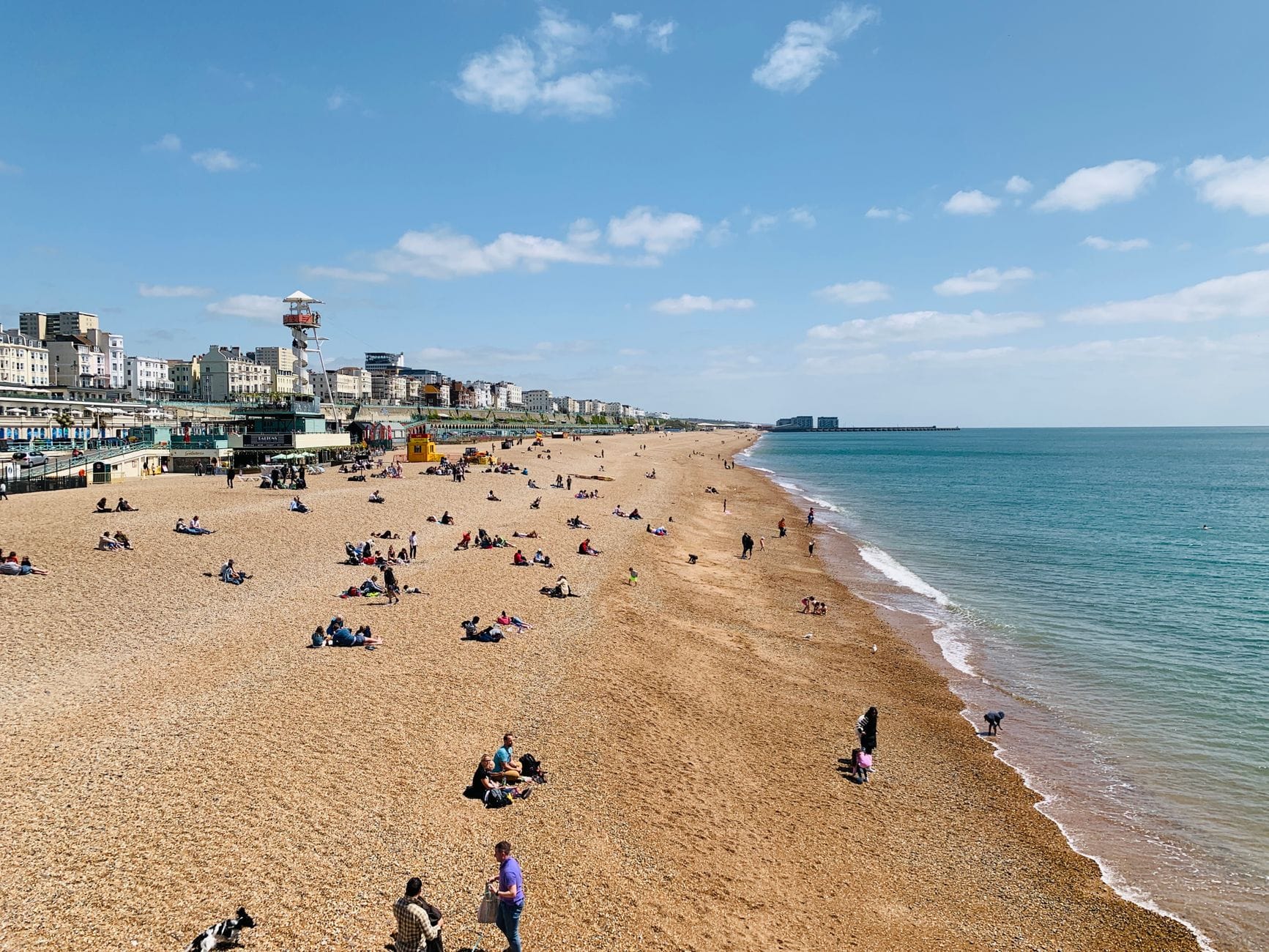
Brighton's beach is shingle, not sand. If you're arriving expecting a classic sandy beach holiday, it's worth knowing this in advance. The pebbles are manageable with beach shoes and the right expectations, but lying on them is less comfortable than sand and walking across them in bare feet takes some getting used to. The beach does extend in both directions with relatively uncrowded sections available even in summer if you're willing to walk a few minutes from the central promenade.
Water quality at Brighton beach is monitored by the Environment Agency under UK bathing water regulations. Before swimming, check the current bathing water quality data on the Environment Agency website, as conditions can be affected by rainfall and other factors. The sea temperature in the Channel is cold by Mediterranean standards: in summer, water temperatures typically reach around 17-18°C, which is bracing rather than warm for most visitors.
The seafront's main tourist strip, particularly the section between West Street and the Palace Pier, is heavily commercialized. Souvenir shops, chain fast food, and amusement outlets dominate the immediate environs of the pier. This is not inherently a problem, but visitors expecting the independent, creative character associated with North Laine or The Lanes will need to look elsewhere. The seafront has a different job: it's a mass leisure destination, and it performs that role efficiently.
ℹ️ Good to know
Brighton Seafront is universally accessible along the promenade, with smooth paved surfaces on both levels of the walkway. Getting across the pebble beach itself to the water, however, is challenging for wheelchair users and those with mobility difficulties. Several beach access ramps exist but the shingle slope to the sea is steep in places.
The seafront's position at the gateway to the South Downs also makes it a natural starting point for day trips inland. The South Downs National Park begins just a few miles north of the city, and viewpoints like Devil's Dyke are accessible by bus from central Brighton. The contrast between the seafront's energy and the open chalk downland above the city is one of Brighton's most underappreciated qualities.
Summary
TL;DR
Brighton Seafront is the city's defining public space: a continuous promenade running along the English Channel, anchored by the Palace Pier and framed by the West Pier ruins to the west and Kemp Town to the east.
Best for: first-time visitors to Brighton, families, anyone who wants easy beach access, Palace Pier and Volks Railway experiences, and seafood at the arches.
Not ideal for: travelers seeking a quiet retreat, those who prefer sand beaches, or anyone wanting to avoid tourist-oriented crowds in peak summer.
The seafront is busiest July to August and on bank holiday weekends; spring and autumn offer far better crowd-to-atmosphere ratios with the city's full character still on display.
Stay on Kings Road for sea views but expect weekend noise; consider Marine Parade east of the pier for a quieter base with equal beach access.
Brighton's coastline is one of England's most famous, but there's far more to it than the main pebble beach by the pier. This guide covers the best beach spots in Brighton and Hove, plus the coastal walks and waterfront attractions that make the most of the seafront.
Brighton has a strong museum culture for a coastal city. From a royal palace to a Victorian toy trove and a natural history collection currently closed for essential works, here are the finest museums the city has to offer, covering art, history, heritage, and the sea.
Brighton rewards visitors differently depending on the season. This guide breaks down the weather, crowds, events, and costs month by month so you can pick the right time for your trip — whether you want sunshine on the beach, festival energy, or a quiet winter escape.
At roughly 47 miles and one hour by train, Brighton is London's most accessible seaside escape. This guide covers every transport option, the best things to do in a single day, and the practical details that make the difference between a good trip and a great one.
Brighton Festival and Brighton Fringe run simultaneously across three weeks each May, turning the city into one of England's most concentrated arts events. This guide covers the key differences between the two, how tickets work, where events happen, and how to plan your visit without the usual confusion.
Brighton rewards those who look beyond the pier and Pavilion. From Victorian curiosities under railway arches to dramatic chalk cliff walks, these lesser-known attractions reveal a city of real depth and character.
Brighton in summer draws hundreds of thousands of visitors to its shingle beach, Regency architecture, and independent neighbourhoods. This guide covers what the weather actually delivers, when crowds peak, what to book ahead, and how to get the most from the city between June and August.
Brighton in winter is quieter, cheaper, and surprisingly rewarding. This guide covers what stays open, what closes, what the weather actually feels like, and how to make the most of a visit between November and February.
Brighton has a reputation for being pricey, but the reality is more nuanced. From free beaches and seasonal pier admission (often free for residents) to paid museums with resident discounts and a walkable city centre, this guide covers every practical angle for stretching your pounds further on the Sussex coast.
Brighton Pride is the UK's largest Pride festival, drawing hundreds of thousands of people over the first weekend of August. This guide covers the 2026 dates and headline acts, how to get tickets before they sell out, travel logistics, road closures, and the honest breakdown of what costs money and what doesn't.
Brighton holds one of the most complete collections of Regency architecture in Britain, from John Nash's exotic Royal Pavilion to Charles Busby's sweeping Brunswick Town terraces. This self-guided tour walks you through the key buildings, explains what makes each significant, and gives you the practical information to plan your visit.
Brighton sits at the centre of one of England's most varied day-trip networks. Within two hours you can reach chalk cliffs, medieval towns, Roman ruins, and island ferries, most of it without a car. This guide covers the best options by transport type, season, and budget.
Brighton is one of the easiest UK cities to navigate without a car. This guide covers every transport option — from the city's excellent bus network to bike share, taxis, and rail connections — with clear guidance on what works, what to skip, and how to keep costs down.
Brighton is a strong shopping city for independents. The Lanes and North Laine together offer hundreds of independent boutiques, vintage dealers, and artisan makers within walking distance of the seafront. This guide covers the best spots to browse, buy, and discover across every corner of the city.
Brighton packs more into 82 square kilometres than almost any seaside city in England. This guide covers the iconic attractions, the best neighbourhoods for exploring, seasonal considerations, and clear guidance on what to skip — everything you need to plan a trip that actually delivers.
Brighton has a very high concentration of vegan and vegetarian restaurants in the UK, with well over 150 plant-based listings. This guide covers the best spots across every neighbourhood, budget, and food style, from fine dining to vegan junk food.
Brighton is one of the UK's best cities for vintage shopping, with dozens of shops, indoor markets, and antique dealers concentrated around North Laine, Kemptown, and Hove. This guide covers where to go, what to expect to pay, and how to plan your visit season by season.
Brighton packs a remarkable amount into a small area: a historic pier, a Regency palace, independent shopping streets, serious restaurants, and one of England's most distinctive seafronts. This two-day itinerary cuts through the noise and tells you exactly how to spend 48 hours in the city, season by season.
Brighton's food scene is unusually strong for a coastal city of its size. This guide covers the essential dishes, best neighbourhoods for eating, market options, plant-based dining, and practical tips for every budget — from a quick seafront chippy to a full evening meal in Kemp Town.
Choosing where to stay in Brighton shapes your entire trip. This guide breaks down every major neighbourhood by character, price range, and who it suits best, so you can book with confidence rather than luck.