Brighton Bandstand: The Victorian Heart of the Seafront Promenade
Standing on Brighton's Kings Road promenade since 1884, the Brighton Bandstand is a Grade II listed cast-iron landmark that hosts Sunday afternoon concerts through the summer months and often across a broader April–September season. Whether you catch a performance or simply stop to admire the ornate ironwork above the English Channel, it earns a place in any seafront walk.
Quick Facts
- Location
- Kings Road Upper Promenade, Brighton Seafront
- Getting There
- 10–15-minute walk from Brighton railway station via West Street to the seafront; multiple seafront bus routes nearby
- Time Needed
- 15–30 minutes to look around; 2 hours if attending a Sunday concert
- Cost
- Free to visit; Sunday concerts are unticketed
- Best for
- Sunday afternoon strollers, architecture enthusiasts, families, wedding parties
What Brighton Bandstand Actually Is
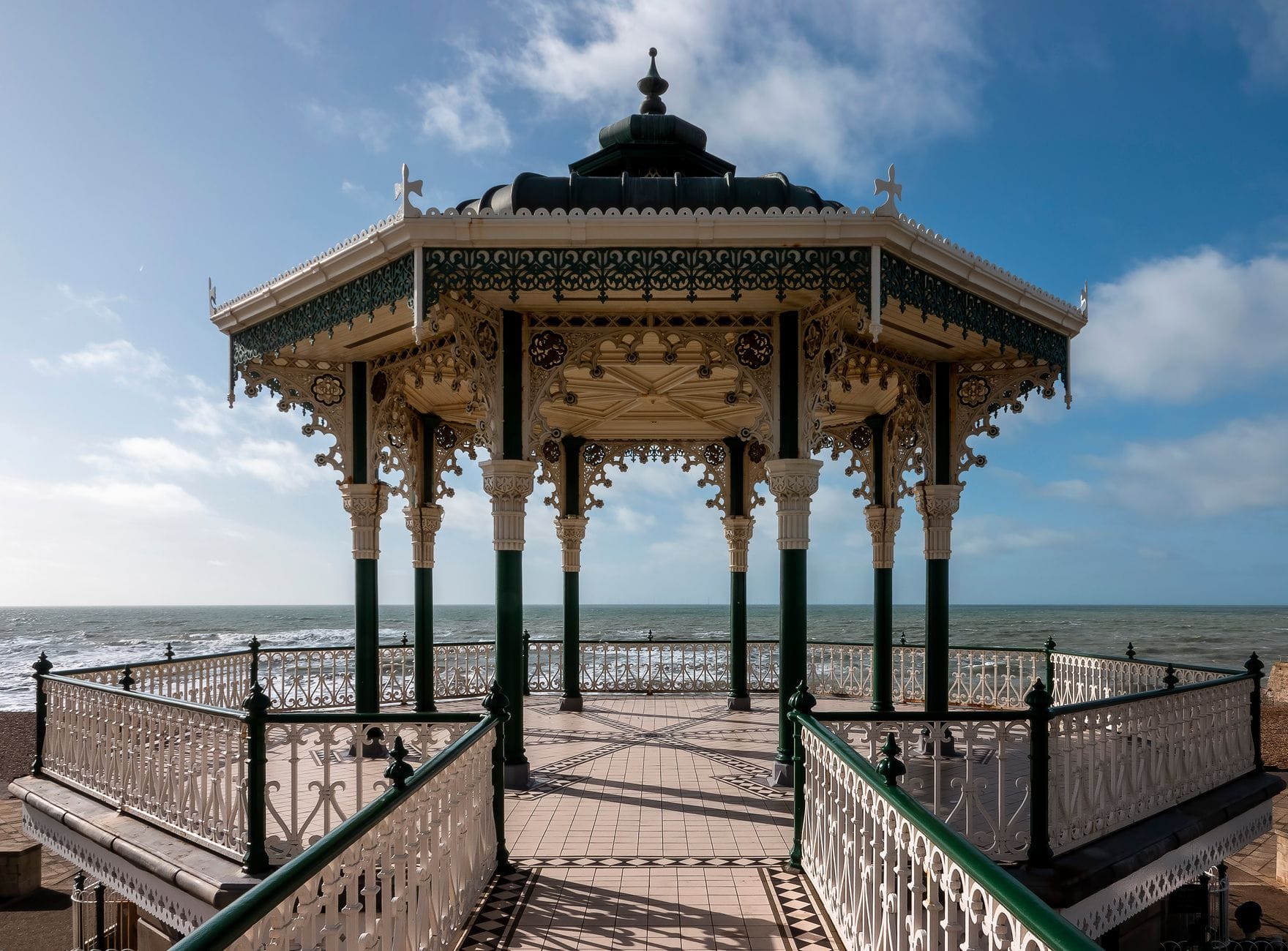
Brighton Bandstand is a Grade II listed Victorian seafront structure sitting on the upper promenade above the shingle beach, roughly midway along the Kings Road seafront. Completed in 1884 to a design by Phillip Lockwood, Brighton's Borough Surveyor, the bandstand was built as a purpose-designed public performance space facing the sea. Its ornate cast-iron elements, associated with Walter Macfarlane and Co. of the Saracen Foundry in Glasgow, are among the finest surviving examples of Victorian decorative ironwork in the south of England. After major restoration work, it reopened in 2009 in close to its original condition.
Today the bandstand functions as both a working events venue and a piece of civic architecture you can simply walk past, pause at, and photograph for free. Brighton and Hove City Council manages it, and while hire for private events including weddings is available, the majority of visitors encounter it as a free stop on a seafront walk or as the backdrop for the unticketed Sunday afternoon concerts that run through the summer.
💡 Local tip
Sunday concerts typically run from 2pm to 4pm in June, July and August, weather permitting. No ticket required — bring a folding chair or blanket and find a spot on the promenade. Check the Brighton & Hove City Council website before you go to confirm the schedule for your visit.
The Architecture Up Close
The structure rewards a slow look. The canopy is supported by slender columns of painted cast iron, decorated with scrollwork, floral motifs and latticework panels that catch the light differently depending on the time of day. At ground level, the ironwork wraps the perimeter in a way that feels almost lace-like — a remarkable achievement for a material more commonly associated with industrial uses. The dome-shaped roof, painted in the bandstand's traditional colour scheme, is visible from some distance along the promenade in both directions.
Originally, a footbridge connected the upper promenade directly to the bandstand over the lower walkway, but this was removed in the late 20th century. The 2009 restoration returned the main structure to Victorian standards, though the bridge was not reinstated. The result is a bandstand that reads as slightly elevated above the promenade, with views from the performance deck that take in the West Pier ruins to the west and the Palace Pier to the east.
For context on Brighton's broader Victorian and Regency built heritage, the Brighton Regency architecture guide covers the city's main historic building stock in more detail.
Tickets & tours
Hand-picked options from our booking partner. Prices are indicative; availability and final rates are confirmed when you complete your booking.
Brighton city lights flight with welcome drink
From 21 €Instant confirmationCycle along the beachfront with Brighton Beach Bikes hire
From 7 €Instant confirmationFree cancellationTour Brighton's highlights with an exploration game mobile app
From 10 €Instant confirmationFree cancellationExplore Brighton self-guided walking tour using an app
From 11 €Instant confirmation
How the Experience Changes Through the Day
In the morning, the bandstand is quiet. Dog walkers pass on the lower promenade, the sea air carries the faint salt smell that defines the Brighton waterfront at any time of year, and the ironwork catches the low easterly light particularly well for photography. There are few crowds, the cafe below is typically open, and you can stand close to the structure without navigating groups of visitors.
By midday, especially in summer, the promenade around the bandstand fills with people moving between the beach and the town centre. The bandstand itself is not enclosed, so it functions as a natural gathering point and occasional impromptu backdrop for photographs. Street performers sometimes work the promenade nearby.
Sunday afternoons in summer are the main event. From around 1:45pm, people begin setting out on the promenade near the bandstand with chairs, bags and picnic items. By 2pm, when the music begins, there is a genuinely cheerful atmosphere — brass bands, traditional ensembles and occasionally more contemporary acts perform two-hour sets. This is the visit to aim for if you want the bandstand to feel alive rather than purely architectural. The sound carries well across the open seafront, and the two-hour format means you can stay for the whole set without planning a long day around it.
⚠️ What to skip
Concerts are weather-dependent. Brighton's seafront is exposed to Channel winds, and performances can be cancelled at short notice if conditions deteriorate. The promenade offers no shelter from rain, so check the forecast and the council's event listings on the day if you're travelling specifically to attend.
Getting There and Around the Seafront
The bandstand sits on the Brighton seafront promenade, accessible on foot from central Brighton in around 15 minutes from the railway station. Walk south down West Street until you reach the seafront, then turn west along Kings Road. The bandstand is clearly visible from the promenade within a few minutes. Several Brighton and Hove Buses routes run along the seafront corridor; check current timetables with the operator before travel as routes and stops are subject to change.
There is no car park directly adjacent to the bandstand; the nearest parking options are the seafront pay-and-display bays along Kings Road or the multi-storey facilities near the centre of town. For most visitors, arriving by train and walking is the simplest approach. The seafront promenade is flat and wide, making the route from the station straightforward on foot.
Accessibility: the bandstand provides a ramp for step-free access when events are taking place. The Bandstand Café, situated beneath the Bandstand at beach level and accessed from the lower promenade, is an alternative stopping point at the same location and does not require access to the bandstand deck itself.
The Seafront Context: What Surrounds It
The bandstand does not stand in isolation. To the east along the promenade, the Brighton Palace Pier is visible from the bandstand deck, roughly a ten-minute walk away. To the west, the skeletal steel frame of the West Pier ruins rises from the water. These two structures define the visual bracket within which the bandstand sits, making the area between them one of the most photographed stretches of the British coastline.
The Kings Road Arches run along the lower promenade beneath the road, housing a mix of independent businesses, workshops and food outlets. If you're spending time at the bandstand, particularly before or after a concert, the arches provide a natural extension to the visit at beach level.
If the bandstand is part of a broader seafront day, the Volks Electric Railway departs from near the Palace Pier and runs east along the seafront — another piece of Victorian engineering that complements the bandstand's era and character.
Photography and Practical Notes
The bandstand photographs best in morning light from the east, when the low sun illuminates the ironwork detail without the harsh bleaching that comes at midday in summer. The West Pier ruins make a useful compositional element in the background when shooting from the eastern side of the bandstand. At dusk, if the structure is lit for an evening event, the ironwork against the fading sky over the Channel produces a different kind of image entirely.
For visitors less interested in architecture or music, the bandstand is easy to walk past without stopping — it is not an attraction that demands an hour of your time on its own terms. The value is highest when a concert is in progress, or when you arrive with time to sit on the promenade, watch the sea, and appreciate the structure as part of a longer seafront walk rather than a standalone destination.
ℹ️ Good to know
The bandstand is available for private hire for weddings and ceremonies between April and September. Hire enquiries go through Brighton and Hove City Council's Events Office; pricing details are provided directly by the council.
Insider Tips
- Arrive around 1:30pm on a Sunday during July or August to secure a good spot on the promenade before the concert begins. Later arrivals still hear the music easily but may find the immediate seating area around the bandstand already claimed.
- The Bandstand Cafe at beach level beneath the structure is a useful stop for coffee and food before or after a concert.
- Shooting the bandstand from the lower promenade looking upward captures the full height of the ironwork columns against the sky — a more dramatic angle than the standard straight-on promenade shot.
- If the bandstand looks familiar from film or television, that is not accidental: its photogenic silhouette means it appears regularly in Brighton-set productions and has become one of the city's shorthand visual identifiers.
- In winter the bandstand is still accessible and worth seeing, particularly on clear days when the low light and empty promenade create a very different atmosphere from the summer crowds. The ironwork detail is arguably easier to appreciate without a crowd around it.
Who Is Brighton Bandstand For?
- Families looking for a free Sunday afternoon activity on the seafront during summer
- Architecture and design enthusiasts interested in Victorian cast-iron craftsmanship
- Visitors combining a seafront walk with a stop at a historic landmark
- Couples considering the venue for a seafront wedding or civil ceremony
- Photographers working the promenade at different times of day
Nearby Attractions
Other things to see while in Brighton Seafront:
- Brighton Beach
Brighton Beach stretches for miles along the English Channel, offering a free, accessible seaside experience unlike any sandy resort. Shingle underfoot, sea air, and the city right behind you — this is coastal England at its most characterful.
- Brighton Fishing Museum
Tucked inside the Kings Road Arches on Brighton seafront, the Brighton Fishing Museum is a small, free attraction that tells the story of the city's working fishing community with surprising depth. At its heart sits a 27-foot clinker-built punt boat, surrounded by old photographs, nets, and tools that bring the Fishing Quarter's heritage to life.
- Brighton i360
Standing 162 metres tall on Brighton's seafront, the i360 observation tower lifts a glass pod of up to 200 visitors to 138 metres above sea level for sweeping views of the English Channel, the South Downs, and the city below. Designed by the architects behind the London Eye, it opened in 2016 and is billed as Europe’s tallest moving observation platform.
- Brighton Palace Pier
Standing 525 metres into the English Channel since 20 May 1899, Brighton Palace Pier is the last of Brighton's three historic piers still operating. Entry is free outside the seasonal admission period, but the experience varies enormously depending on when you visit and what you're looking for.