Brighton Palace Pier: The Full Story Behind Brighton's Most Famous Structure
Standing 525 metres into the English Channel since 20 May 1899, Brighton Palace Pier is the last of Brighton's three historic piers still operating. Entry is free outside the seasonal admission period, but the experience varies enormously depending on when you visit and what you're looking for.
Quick Facts
- Location
- Madeira Drive, Brighton BN2 1TW, Brighton Seafront
- Getting There
- Brighton railway station (15–20 min walk); buses 14 and 27 to Old Steine
- Time Needed
- 1–3 hours depending on rides and appetite
- Cost
- Seasonal admission £1 (typically Mar–Oct peak periods); free for under-2s, Local Resident Card holders, and pre-booked wristbands; free outside charging periods. Rides and attractions paid separately (check brightonpier.co.uk)
- Best for
- Families, first-time visitors, seaside nostalgia, seafront walks
- Official website
- www.brightonpier.co.uk
What Brighton Palace Pier Actually Is
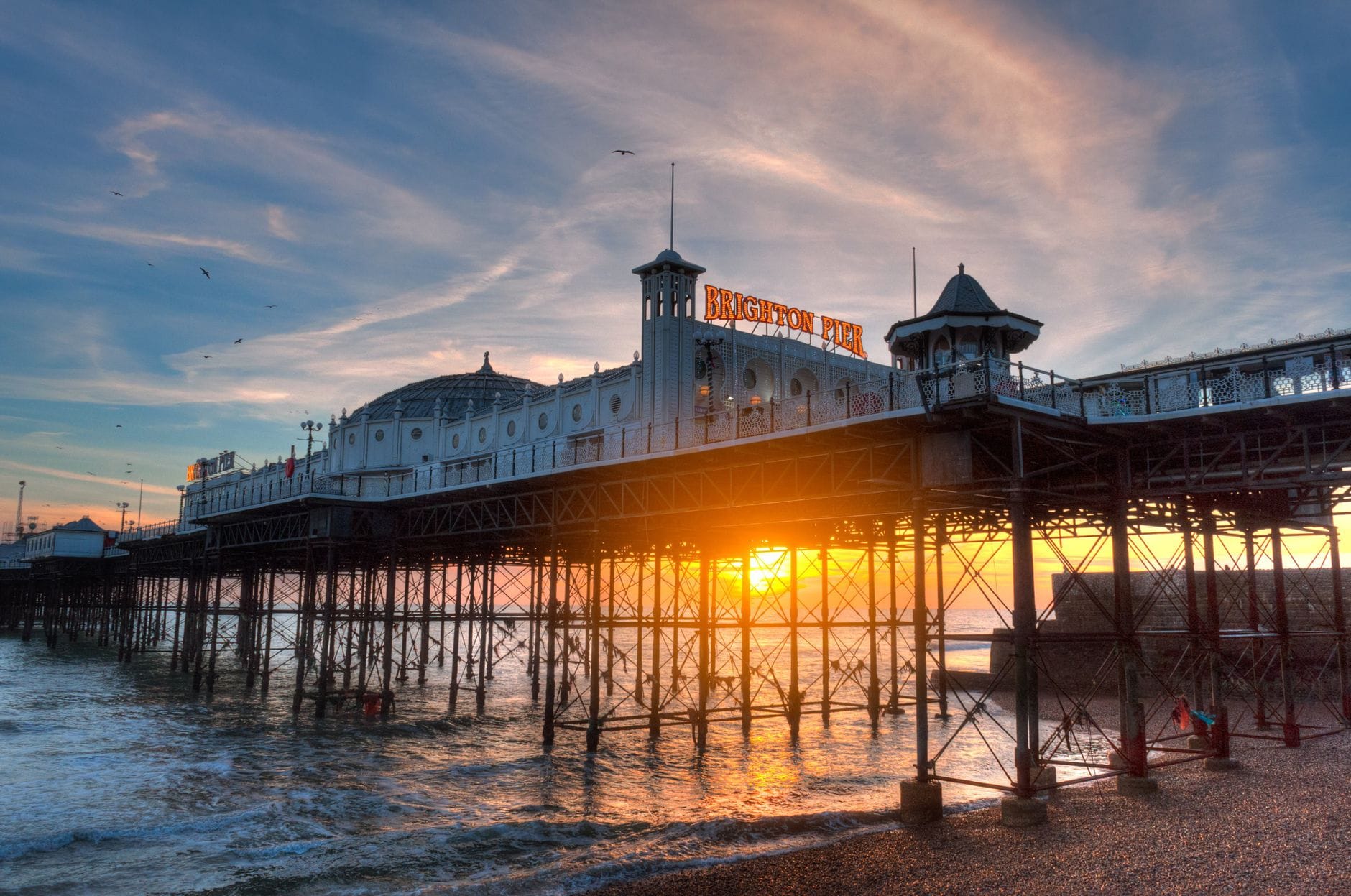
Brighton Palace Pier is a Grade II* listed pleasure pier that has extended into the English Channel from the Brighton seafront since 20 May 1899. Originally named the Brighton Marine Palace and Pier, it stretches approximately 1,722 feet (525 metres) and reportedly contains around 85 miles of planking underfoot. It is the only one of Brighton's three historic piers still operating: the West Pier collapsed progressively from the 1970s onwards, and the Chain Pier was destroyed by a storm in 1896.
The pier's presence on the seafront is impossible to avoid. It sits directly opposite the southern end of Old Steine, where the A23 from London meets the coast road. If you're walking the Brighton seafront, you will pass it regardless of whether you intend to go on.
ℹ️ Good to know
Entry is free outside seasonal charging periods (and for under-2s, Local Resident Card holders, and pre-booked wristband visitors). During peak periods, typically March to October, most other visitors pay a £1 admission. You then pay separately for rides, funfair attractions, or the amusement arcade.
The Structure: A Walk From Shore to Sea
Walking onto the pier from the seafront entrance, you move from the shore-end amusement arcades, with their low ceiling of noise and flickering screens, out towards the open-air funfair at the far end. The transition takes a few minutes on foot and is more atmospheric than the photos suggest. The planks beneath you are slightly springy. The sea is visible through gaps in the deck. When the tide is running and the weather is unsettled, the structure hums.
The pier's midsection holds food and drink kiosks, Brighton rock stalls, and the kind of concession stands you expect at a British seaside. The far end is occupied by the funfair, which includes fairground rides, a roller coaster, a helter-skelter, and drop rides. A large theatre stood here until the 1980s, when it was demolished after years of underuse; the original venue had opened in April 1901 and was once a significant entertainment venue in its own right.
Looking back towards Brighton from the far end gives you one of the better views of the seafront, with the West Pier ruins to the west and the i360 observation tower rising above the pebble beach. The perspective is different from anything you get on land. On a clear day, the low skyline of Brighton stretches eastward towards Kemp Town and the white chalk cliffs beyond.
Tickets & tours
Hand-picked options from our booking partner. Prices are indicative; availability and final rates are confirmed when you complete your booking.
Brighton city lights flight with welcome drink
From 21 €Instant confirmationCycle along the beachfront with Brighton Beach Bikes hire
From 7 €Instant confirmationFree cancellationTour Brighton's highlights with an exploration game mobile app
From 10 €Instant confirmationFree cancellationExplore Brighton self-guided walking tour using an app
From 11 €Instant confirmation
How the Experience Changes By Time of Day
Early morning, before 10am, the pier is at its quietest. The arcade machines are running but largely unoccupied. The light across the water is often good, with low sun hitting the ironwork supports below the deck. This is also when the structure feels most like what it is: a Victorian engineering achievement built on cast-iron columns, designed to bring crowds to the sea. The smell at this time is salt air and, faintly, machine oil.
Midday through the afternoon in summer is a different proposition. School holiday crowds can make the shore-end arcade feel genuinely congested. The funfair queues build up. The food stands have long lines. The background noise becomes a composite of ride sound systems, gulls, and families. This is when the pier most resembles its popular image, and when the experience is simultaneously most energetic and least comfortable if you dislike crowds.
Late afternoon and early evening tend to bring the best combination of activity and space. Younger children are leaving, rides are still operating, and the light on the sea shifts towards gold. In cooler months, the pier can feel almost melancholy after 4pm, with fewer visitors, the deck boards damp from sea spray, and the lights of the arcade creating an odd warmth against a grey sky. This is not a criticism. For some visitors, this is the version of the pier worth seeking out.
💡 Local tip
Visiting on a weekday morning outside school holidays gives you the pier with almost none of the crowds. Late July and August weekends are the most congested periods by a significant margin.
Historical Context: Brighton's Pier-Building Era
Brighton has a longer association with pleasure piers than almost any other British resort. The Chain Pier, opened in 1823, was the first recognisable pleasure pier in Britain and drew visitors for seven decades before a storm demolished it in 1896. The West Pier opened in 1866 and was for much of the late Victorian and Edwardian period considered the more elegant of Brighton's two remaining piers. Palace Pier, by contrast, was built to be more commercially ambitious, and that commercial instinct has proved the key to its survival.
Brighton Palace Pier received its Grade II* listed status, which places it among the most significant historic structures in England. For a broader sense of Brighton's architectural history during this period, the Brighton Regency architecture guide provides useful context for understanding how the seafront developed alongside the inland townscape.
The pier has changed ownership and operational focus several times since 1899. The theatre at the seaward end, which once hosted major performers, was demolished in the 1980s, a decision that remains controversial among those interested in the pier's history. The funfair and arcade model that replaced theatrical entertainment has proven commercially resilient, keeping the pier open and maintained when other British pleasure piers have closed or burned.
Practical Walkthrough: Getting There and Getting Around
The pier's address is Madeira Drive, Brighton BN2 1TW. From Brighton railway station, the walk takes roughly 15 to 20 minutes. Brighton & Hove Buses routes 14 and 27 serve the Old Steine stop, which is a short walk from the pier entrance. The seafront area has paid parking on Madeira Drive and nearby roads, but spaces fill quickly on warm weekends.
The pier's main deck is broadly level and accessible to wheelchairs and pushchairs, though the planking surface can be uneven in places. Some individual rides have height and mobility restrictions; these are detailed at each ride and on the pier's official website. The shore-end sections are sheltered to a degree, but the open funfair at the far end is fully exposed to coastal weather, which matters more in winter than the pier's calendar suggests.
The pier is open every day of the year except Christmas Day, though operating hours and which attractions are running vary by season. Checking the official site at brightonpier.co.uk before visiting is recommended, particularly outside the summer months when some rides may be closed or operating reduced hours.
⚠️ What to skip
On bank holidays and summer weekends, the seafront approach to the pier can be very congested by midday. Arriving before 11am or after 5pm significantly improves the experience.
Photography and What to Look For
The most photographed view of the pier is from the beach below, looking along its length from the west. This works well in morning light when the sun is behind and to the right of the structure. The ironwork supports beneath the deck are worth examining at low tide from the beach; they are painted green and encrusted with barnacles, and the visual contrast with the cheerful commercial activity above is notable.
Looking west from the pier's far end gives a clear view of the West Pier ruins, which are most dramatic in low light or with cloud cover behind them. The two structures together give a compressed sense of Brighton's seaside history, the working commercial pier and the skeleton of the one that didn't survive.
Smartphone cameras handle the daytime light well. In the evening, the pier's lights photograph warmly against a darkening sky, and the reflection on the sea surface adds something that daytime shots can't replicate. Wide-angle shots from the beach below are more interesting than shots taken from the pier deck itself, where the commercial density of the structure limits clean compositions.
Who Will Enjoy This and Who Won't
Brighton Palace Pier is one of the best-preserved Victorian pleasure piers in Britain and an important piece of structural and social history. The fact that it continues to function as a working funfair rather than a heritage attraction means it feels alive in a way that more carefully curated experiences do not. For families with children who want rides, for first-time visitors who want the full Brighton seafront experience, and for anyone who finds pleasure in the particular atmosphere of the British seaside, this is worth an hour or two.
Visitors who have already explored the pier and want something quieter or more historically focused might find Volks Electric Railway or a walk along the Undercliff Walk more satisfying on a return trip.
Those who find amusement arcades and commercial fairgrounds actively unpleasant will not enjoy the interior sections. The noise level inside the shore-end arcade is high, the lighting is designed for stimulation, and the concentration of slot machines and prize redemption games is significant. The walk to the far end and back can still be worthwhile for the views and the physical sensation of being over open water, but the middle sections are not easily avoided.
Insider Tips
- Outside seasonal charging periods the pier deck is free to walk, and the views from the far end are better than most visitors realise. During peak periods a small admission applies for most visitors — check current details before you go.
- Low tide in the morning is the best time to walk the beach below the pier and look up at the Victorian ironwork supports, which are rarely crowded and genuinely impressive close-up.
- The slot machines in the shore-end arcade include traditional coin-pusher machines alongside modern video terminals; if you're visiting with children, the coin pushers tend to be cheaper entertainment per minute than the video games.
- Parking on Madeira Drive directly in front of the pier fills before 10am on summer weekends. The pay-and-display car parks further east along the seafront are less congested and a short walk away.
- The pier's food stands are serviceable rather than notable. For better options, the cafes and fish and chip shops along Kings Road Arches, just west of the pier entrance, are worth the five-minute detour.
Who Is Brighton Palace Pier For?
- Families with children who want fairground rides and a classic British seaside day out
- First-time visitors to Brighton who want to understand the seafront's character
- Architecture and history enthusiasts interested in Victorian pier engineering
- Photographers working the seafront early morning or at dusk
- Visitors on a tight budget who want something to do without committing to paid entry
Nearby Attractions
Other things to see while in Brighton Seafront:
- Brighton Bandstand
Standing on Brighton's Kings Road promenade since 1884, the Brighton Bandstand is a Grade II listed cast-iron landmark that hosts Sunday afternoon concerts through the summer months and often across a broader April–September season. Whether you catch a performance or simply stop to admire the ornate ironwork above the English Channel, it earns a place in any seafront walk.
- Brighton Beach
Brighton Beach stretches for miles along the English Channel, offering a free, accessible seaside experience unlike any sandy resort. Shingle underfoot, sea air, and the city right behind you — this is coastal England at its most characterful.
- Brighton Fishing Museum
Tucked inside the Kings Road Arches on Brighton seafront, the Brighton Fishing Museum is a small, free attraction that tells the story of the city's working fishing community with surprising depth. At its heart sits a 27-foot clinker-built punt boat, surrounded by old photographs, nets, and tools that bring the Fishing Quarter's heritage to life.
- Brighton i360
Standing 162 metres tall on Brighton's seafront, the i360 observation tower lifts a glass pod of up to 200 visitors to 138 metres above sea level for sweeping views of the English Channel, the South Downs, and the city below. Designed by the architects behind the London Eye, it opened in 2016 and is billed as Europe’s tallest moving observation platform.