Brighton Fishing Museum: Brighton's Maritime Past, Told from the Arches
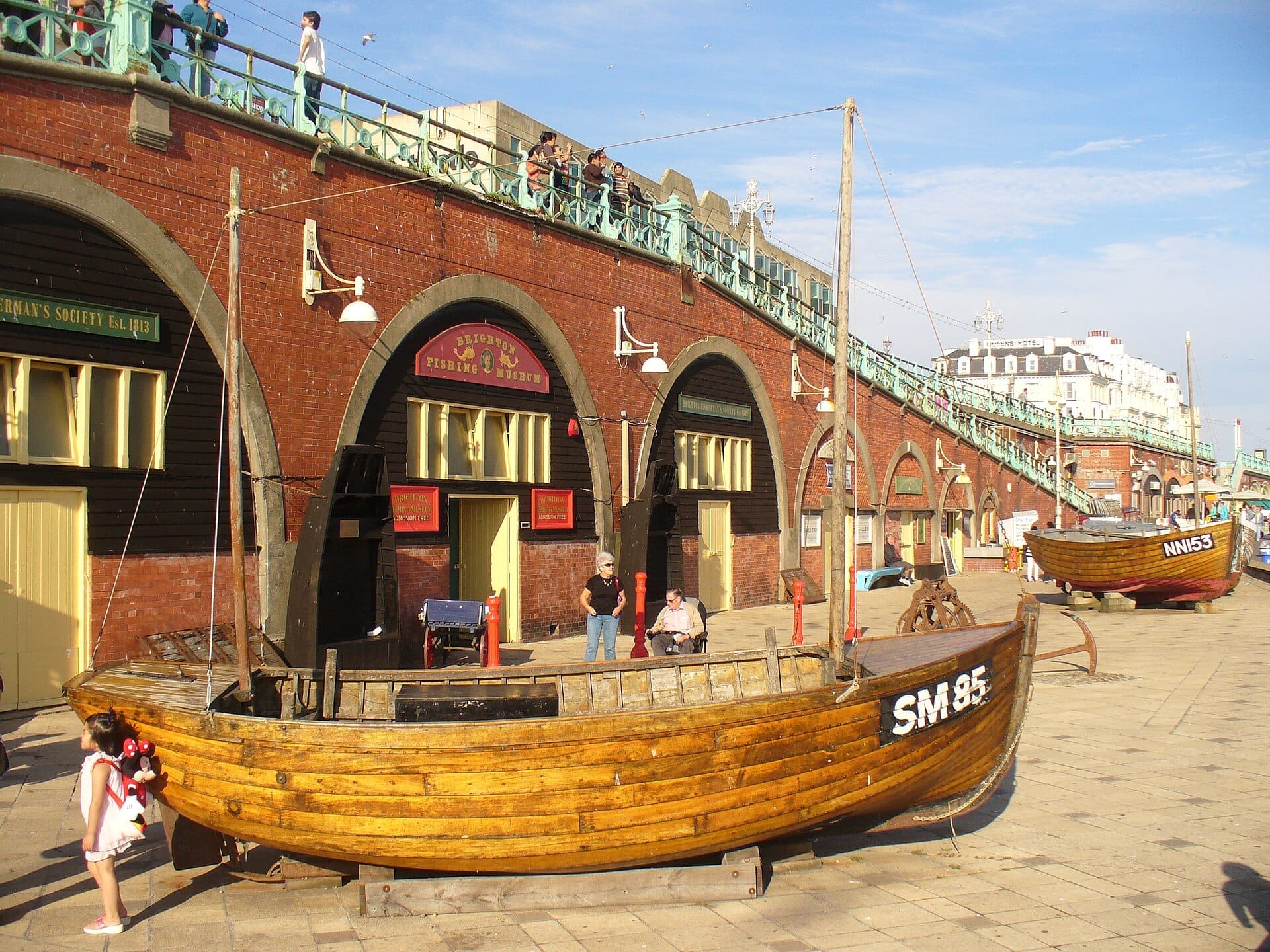
Tucked inside the Kings Road Arches on Brighton seafront, the Brighton Fishing Museum is a small, free attraction that tells the story of the city's working fishing community with surprising depth. At its heart sits a 27-foot clinker-built punt boat, surrounded by old photographs, nets, and tools that bring the Fishing Quarter's heritage to life.
Quick Facts
- Location
- 201 Kings Road Arches, Brighton, BN1 1NB — in the Fishing Quarter, west of Brighton Palace Pier
- Getting There
- On the seafront promenade; closest buses stop on Kings Road. Brighton railway station is about 10–15 minutes on foot, around 10 minutes via West Street or a little longer if you walk via the seafront.
- Time Needed
- 30 to 60 minutes
- Cost
- Free entry; donations welcomed
- Best for
- Local history lovers, families with children, curious visitors seeking shelter from sea wind
- Official website
- www.fishingquarter.co.uk
What the Brighton Fishing Museum Actually Is
The Brighton Fishing Museum is a small independent museum established in 1994, dedicated to the fishing and maritime history of Brighton's seafront community.[1] It sits inside the Kings Road Arches, the distinctive Victorian brick vaults that run beneath the promenade between the two piers.[3] The space itself is modest, occupying two arch units rather than a purpose-built gallery, but that compact scale is part of what gives it character. You are not walking into an institution. You are stepping into a carefully assembled record of a working way of life.
The museum's undisputed centrepiece is a 27-foot clinker-built punt boat, the type historically used by Brighton fishermen to haul catches from the open beach. Brighton has no natural harbour, which made its fishing industry unusually demanding. Boats had to be launched directly from the shingle into the English Channel and hauled back out by hand. That context, explained clearly through the museum's displays, transforms the boat from a static exhibit into something genuinely impressive. For more about how the seafront has shaped Brighton's character, see our guide to Brighton seafront.
ℹ️ Good to know
Opening hours are currently listed by VisitBrighton as daily 10:00–17:00, but these are provisional and subject to change. Check the official website at fishingquarter.co.uk or local tourism listings before visiting, particularly in winter months.
The Space and the Displays
Walking in from the seafront, the first thing you notice is the smell: a faint combination of old timber, salt air, and the particular cool dampness of brick arches that face the sea. The arch structure means the ceiling is curved rather than flat, and natural light enters mainly from the open seafront-facing side, giving the interior an atmospheric quality that a conventional museum room could not replicate.
The displays include historical photographs, fishing nets, ropes, equipment, and personal objects that trace the lives of Brighton's fishing families over more than a century. The photographic archive is particularly strong: black and white images of fishermen on the shingle, boats being dragged up the beach by teams of men, and the old Fishing Quarter in its working prime. These are not generic maritime images sourced from stock archives. They document this specific stretch of beach, these specific people, and that specificity is what separates the museum from a generic seaside exhibit.
The punt boat sits at the centre of the space and is large enough to dominate the room without overwhelming it. Its clinker construction, where overlapping planks are riveted together, is visible at close range. This building technique was well suited to the unpredictable sea conditions of the Sussex coast. Panels beside the boat explain its use, maintenance, and the broader context of beach-launched fishing. Note that wheelchair access is available to all museum areas except the specific gallery used to view the boat, which may present a difficulty.[2] Guide dogs are permitted and tactile tours are available on request.[2]
Tickets & tours
Live prices and dates from our booking partner. If you book, we may earn a commission at no extra cost to you.
Brighton city lights flight with welcome drink
From 21 €Instant confirmationCycle along the beachfront with Brighton Beach Bikes hire
From 7 €Instant confirmationFree cancellationTour Brighton's highlights with an exploration game mobile app
From 10 €Instant confirmationFree cancellationExplore Brighton self-guided walking tour using an app
From 11 €Instant confirmation
Historical Context: Brighton as a Fishing Town
Before Brighton became a fashionable resort in the late 18th century, it was a working fishing village called Brighthelmstone. The fishing community predates the Royal Pavilion, the piers, and the railway. At its peak, Brighton had a substantial fleet operating from the beach, and the families involved formed a tight-knit community with their own customs, slang, and social structures. The Kings Road Arches area, known as the Fishing Quarter, still functions as a working base for Brighton's small remaining fishing community today, which gives the surrounding area a context that most visitors walk past without registering.
The museum makes this history legible without overwhelming a casual visitor. It does not require prior knowledge or deep interest in maritime history to find it engaging. But for visitors already interested in Brighton's layers of history, it rewards attention in ways that more famous nearby attractions do not. The Kings Road Arches surrounding the museum are themselves historically significant structures, and a walk along them before or after the museum adds useful physical context.
How the Experience Changes by Time of Day
Mornings, particularly on weekdays, tend to be quieter. The seafront in front of the museum has a different atmosphere at 10:00 than it does at midday in summer: fewer people, cooler light, and the working side of the area more visible, including the remaining fishing boats and equipment that line the Fishing Quarter nearby. Visiting early lets you move through the displays at your own pace without navigating school groups or queues at the entrance.
On sunny summer afternoons, the Kings Road Arches area becomes one of the busiest stretches of the seafront. Visitors spill along the promenade between the palace pier and the arches, and the museum can feel like a calm counterpoint to the noise and movement outside. The arched interior is naturally cool and sheltered, which on a warm or windy day makes it a genuinely comfortable place to pause. In winter, when the seafront empties and the salt wind picks up, the museum takes on a different tone entirely: quieter, more reflective, and arguably more fitting for exhibits about men who worked this stretch of coast in all weathers.
💡 Local tip
In summer, visit in the morning before 11:00 or after 15:30 to avoid peak seafront crowds. The museum itself is rarely packed, but the approach along the promenade is much more pleasant outside of midday.
Photography and What to Look For
The punt boat photographs well, particularly from the far end of the space where you can get the full length of the hull in frame against the curved brick arch. The natural light from the seafront entrance creates an interesting contrast with the darker interior. A wide-angle lens or a phone camera in standard mode handles this better than zoom. Flash photography tends to flatten the textures of the old timber and nets, so available light shots are preferable if the conditions allow.
The historical photograph displays reward close examination. Many of the images include identifiable landmarks and locations along the seafront that you can compare to the view outside the museum door. That layering of past and present, looking at an 1890s photograph of the beach and then stepping outside to see the same shingle, is one of the more understated pleasures the museum offers.
Honest Assessment: Is It Worth Your Time?
The Brighton Fishing Museum is not a large-scale attraction and should not be treated as one. If your only afternoon in Brighton is allocated between the Royal Pavilion, a walk along the pier, and lunch in the Lanes, fitting in the fishing museum might stretch the schedule without adding proportionate value. It is best experienced as part of a broader seafront walk, rather than as a standalone destination requiring a special trip.
For visitors with an afternoon free, or those making a longer stay, it fits naturally into a route that includes the West Pier ruins to the west and Brighton Palace Pier to the east. The museum is positioned between those two landmarks, and the contrast between the commercial energy of the pier, the melancholy of the West Pier, and the quiet seriousness of the fishing museum creates a genuinely interesting sequence for anyone interested in how Brighton has used and thought about its seafront over time.
Visitors looking for interactive displays or child-friendly technology should calibrate expectations accordingly: this is a traditional exhibit-and-panel format, not a multimedia experience. Children who respond well to a real boat in a real space will find it engaging; those who need digital interactivity may not. For a broader overview of what Brighton offers families and history-focused visitors, see our things to do in Brighton guide.
The fact that it is free, centrally located on the seafront, and takes under an hour to explore properly makes it a low-risk addition to any itinerary. Even visitors who find the subject matter of limited personal interest tend to leave with a clearer picture of Brighton's pre-resort identity, which adds a useful dimension to the rest of the city.
Getting There and Practical Notes
The museum is at 201 Kings Road Arches, directly on the seafront promenade, west of Brighton Palace Pier and east of the West Pier site.[2][3] Access from Kings Road above the arches involves descending steps or using a ramp to reach the lower promenade level. The seafront promenade is flat and accessible once you reach it. Brighton railway station is approximately 10–15 minutes on foot, around 10 minutes if you walk directly south down West Street or a little longer if you head via the Old Steine and the promenade.
Several Brighton and Hove Buses routes run along Kings Road. If you are arriving by car, seafront parking is available but limited and paid; the city is better approached by rail if travelling from London. A direct train from London takes around one hour. For full transport options, see our guide to a Brighton day trip from London.
Insider Tips
- The Fishing Quarter surrounding the museum still has working fishing boats and equipment visible nearby. Walk east along the lower promenade after your visit and you will see remnants of the active fishing operation that the museum documents.
- Tactile tours are available on request for visually impaired visitors. Contact the museum in advance rather than on the day to ensure arrangements can be made.
- If you visit on a clear morning, the light on the clinker boat hull from the open seafront entrance is at its best before midday. Later in the afternoon the interior becomes shadier.
- Donations are genuinely important to a free independent museum of this size. The collection and the space are maintained without public funding in the way larger institutions receive it.
- Combine the visit with a walk along the full length of the Kings Road Arches, which contain a range of independent businesses, food stalls, and studios. The fishing museum sits within a broader community of arch tenants that rewards exploration.
Who Is Brighton Fishing Museum For?
- History-focused visitors interested in Brighton beyond its resort identity
- Families with children who engage with real objects and boats rather than screens
- Travellers wanting a free, sheltered pause during a seafront walk
- Those making a longer Brighton stay who have already covered the main attractions
- Photographers interested in atmospheric light, old timber, and archival imagery
Nearby Attractions
Other things to see while in Brighton Seafront:
- Brighton Bandstand
Standing on Brighton's Kings Road promenade since 1884, the Brighton Bandstand is a Grade II listed cast-iron landmark that hosts Sunday afternoon concerts through the summer months and often across a broader April–September season. Whether you catch a performance or simply stop to admire the ornate ironwork above the English Channel, it earns a place in any seafront walk.
- Brighton Beach
Brighton Beach stretches for miles along the English Channel, offering a free, accessible seaside experience unlike any sandy resort. Shingle underfoot, sea air, and the city right behind you — this is coastal England at its most characterful.
- Brighton i360
Standing 162 metres tall on Brighton's seafront, the i360 observation tower lifts a glass pod of up to 200 visitors to 138 metres above sea level for sweeping views of the English Channel, the South Downs, and the city below. Designed by the architects behind the London Eye, it opened in 2016 and is billed as Europe’s tallest moving observation platform.
- Brighton Palace Pier
Standing 525 metres into the English Channel since 20 May 1899, Brighton Palace Pier is the last of Brighton's three historic piers still operating. Entry is free outside the seasonal admission period, but the experience varies enormously depending on when you visit and what you're looking for.
Planning a trip? Discover personalized activities with the Nomado app.