Things to Do in Brighton: The Complete Guide to England's Favourite Seaside City
Brighton packs more into 82 square kilometres than almost any seaside city in England. This guide covers the iconic attractions, the best neighbourhoods for exploring, seasonal considerations, and clear guidance on what to skip — everything you need to plan a trip that actually delivers.
Plan and book this trip
Tools from our partner Travelpayouts help you compare flights and hotels. If you book through them, we may earn a commission at no extra cost to you.
Flights
Hotels map
TL;DR
- Brighton's top things to do span the seafront, historic architecture, shopping districts, and the South Downs — see the Royal Pavilion and Brighton Palace Pier as your anchor points.
- The beach is pebble, not sand — bring shoes you can walk on shingle in, and set your expectations accordingly.
- The best neighbourhoods for independent browsing are The Lanes and North Laine — both walkable from the station in under 15 minutes.
- Summer (June to August) is peak season: warmer, livelier, and significantly more expensive. May and September offer good weather with smaller crowds.
- Brighton works well as a day trip from London (around 50 minutes by fast train from London Bridge), but a full weekend unlocks far more of the city.
The Seafront: Where Brighton's Identity Lives
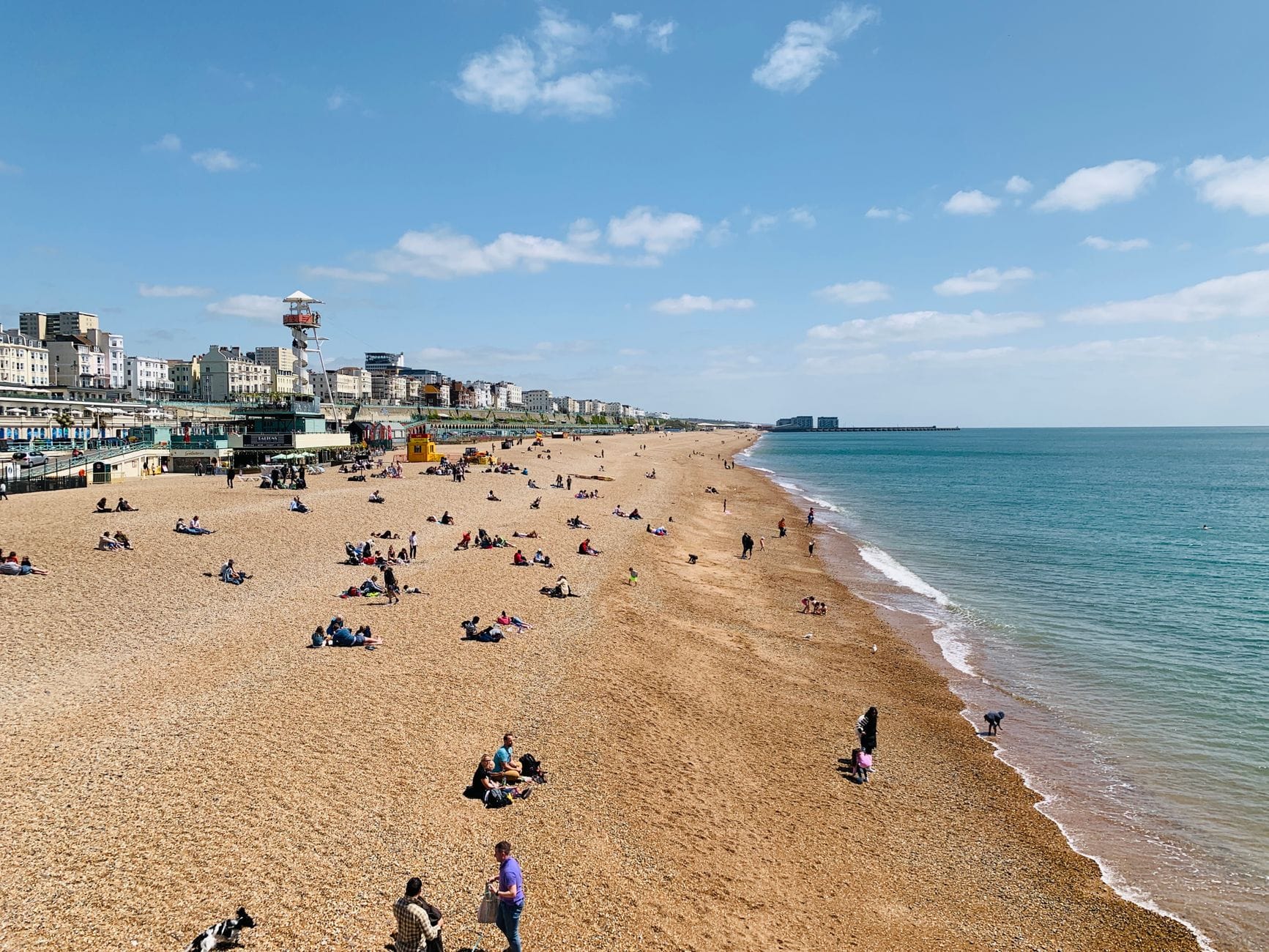
The Brighton seafront is the city's spine. Running roughly 8 kilometres from Hove in the west to Saltdean in the east, it connects nearly every major attraction and tells you more about the city's character than any museum could. The first thing to understand: the beach is pebble. Large, smooth flint pebbles that shift underfoot and make conventional beach towel-laying a minor exercise in logistics. For many visitors, this is a surprise. For locals, it is simply Brighton.
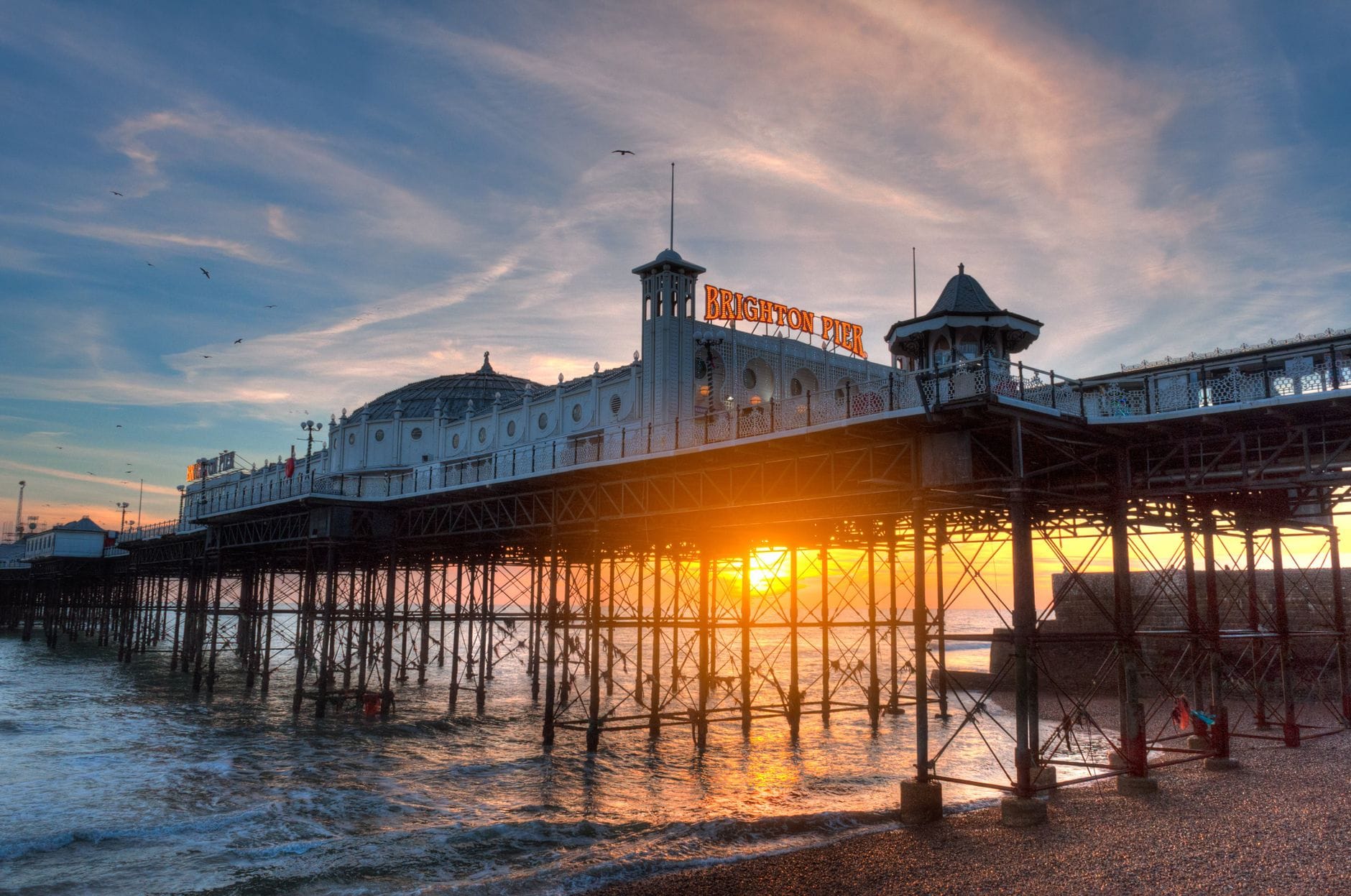
Brighton Palace Pier is the obvious centrepiece. Built in 1899 and still operating under essentially the same amusement-arcade-meets-fairground model, it now charges a small admission fee during peak season — you pay per ride or game once you're on it. The pier is at its most atmospheric at dusk, when the lights come on and the screams from the helter-skelter mix with the smell of fried doughnuts. Arrive mid-morning on a summer weekend and you'll be navigating dense crowds; a weekday afternoon in May or late September is a different experience entirely. Further west, the West Pier ruins offer a striking contrast — a skeletal iron frame standing offshore since its closure in 1975, now a protected structure and a hauntingly photogenic subject, particularly at low tide.
The Brighton i360 sits on the seafront at the old West Pier site. This vertical observation tower lifts a doughnut-shaped glass pod to 162 metres, giving 360-degree views across the coast, South Downs, and on clear days, as far as the Isle of Wight. Timed entry tickets should be booked in advance, especially in summer. It is not cheap — check current pricing on the official site before visiting — but on a clear afternoon the views justify it. In heavy cloud, save your money.
💡 Local tip
The Volks Electric Railway, running between Brighton Palace Pier and the eastern edge of the seafront near Black Rock, is the world's oldest operating electric railway, opened in 1883. A single journey costs a few pounds and takes around 15 minutes — it's a genuinely charming way to cover the eastern seafront stretch without walking, especially with children.
The seafront architecture beneath street level is worth exploring. The Kings Road Arches — the series of brick vaults under the promenade road — house a rotating mix of independent food vendors, surf shops, and creative studios. Quality varies, but the arches between the two piers tend to have the most consistent options. For the full coastal picture, the Undercliff Walk east of the Marina offers a cliff-base path with no traffic, good chalk cliff views, and considerably fewer crowds than the central seafront.
Iconic Attractions: What to Prioritise and What to Consider Skipping
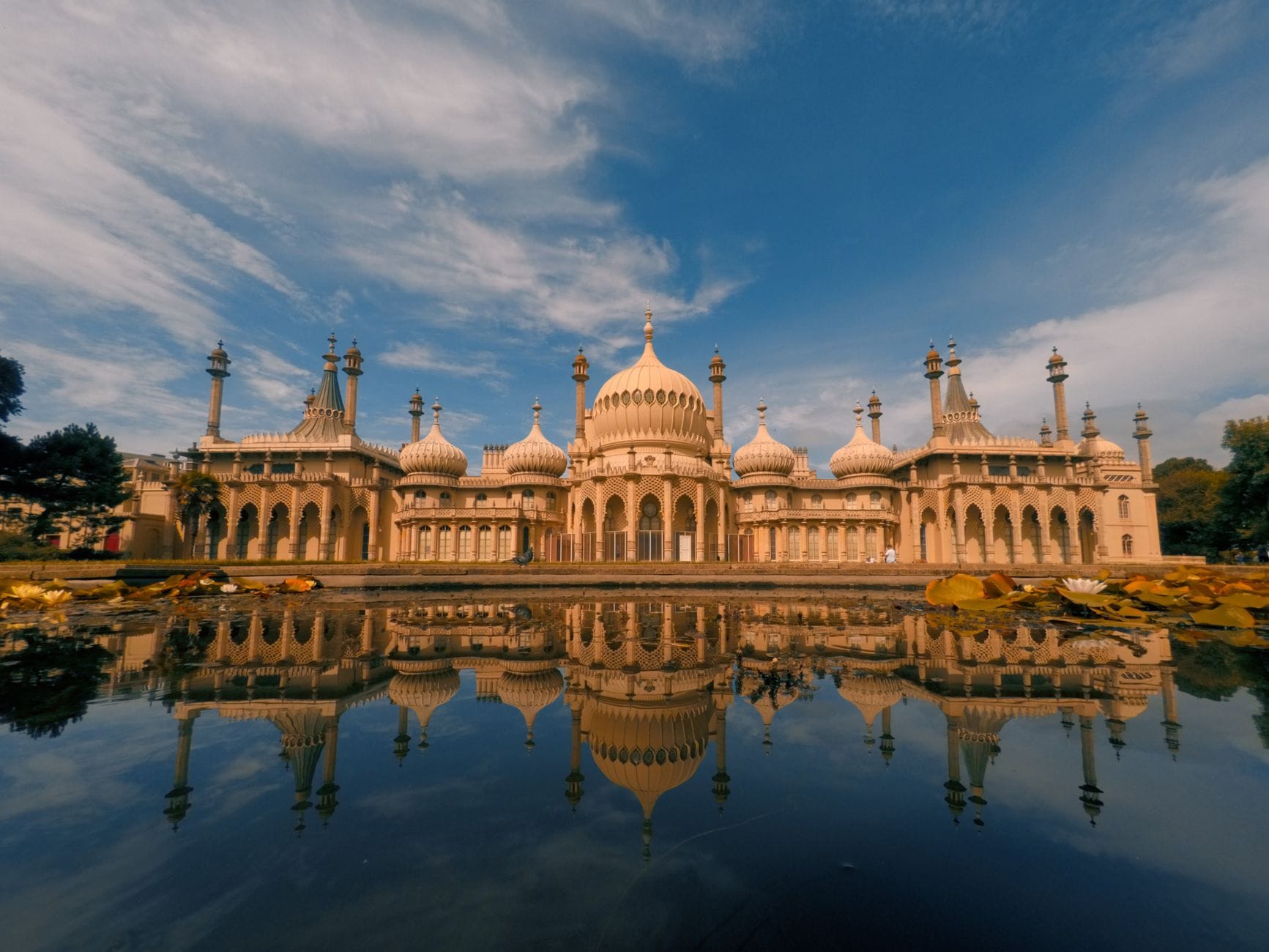
The Royal Pavilion is Brighton's single most distinctive building. Developed as a seaside retreat for the Prince Regent (later George IV) from the late 18th century through 1823, its exterior blends Indian Mughal domes and minarets with Regency proportions in a way that still stops people dead on their first sighting. The interior is even more extreme: Chinese-inspired state rooms with carved dragons, hand-painted wallpapers, and a banqueting hall dominated by a chandelier weighing almost a tonne. Admission is ticketed (book in advance via the Royal Pavilion and Museums Trust website). Plan for at least 90 minutes inside; a rushed visit misses the details that make the building extraordinary.
- Brighton Palace Pier Free entry, pay per ride. Genuinely fun on a grey day; can feel overwhelming in peak summer. Best visited weekday mornings or after 5pm.
- Royal Pavilion Ticketed, advance booking recommended. Allow 90 minutes minimum. The gardens are free to enter year-round — a useful free option if the building is sold out.
- SEA LIFE Brighton The Victorian aquarium is one of the oldest in the world (opened 1872), with some impressive architectural features. Good for families; adults without children often find it brief for the cost. Book online to save versus door price.
- Brighton i360 Worth it on a clear day; not worth it in low cloud. Check the forecast. Advance booking gets better pricing.
- Brighton Museum and Art Gallery Paid admission (£10.50 adult / £5 child; residents/students typically £8). Covers the city's history, art deco and art nouveau collections, and world cultures gallery. Genuinely underrated and rarely crowded. A strong wet-weather option.
- Booth Museum of Natural History Free when open, but closed to the public since 20 April 2025 for essential works (special event days only; reopen targeted later 2026 or early 2027). Victorian natural history collection in north Brighton — check brightonmuseums.org.uk/booth/ before planning a visit.
⚠️ What to skip
Brighton's biggest tourist trap is the cluster of overpriced seafront restaurants directly adjacent to the Palace Pier. The food is mediocre and the prices are not. Walk two streets back from the seafront and quality improves significantly for the same or lower cost. The same principle applies to souvenir shops along the lower promenade.
The Lanes and North Laine: Two Distinct Worlds Worth Understanding
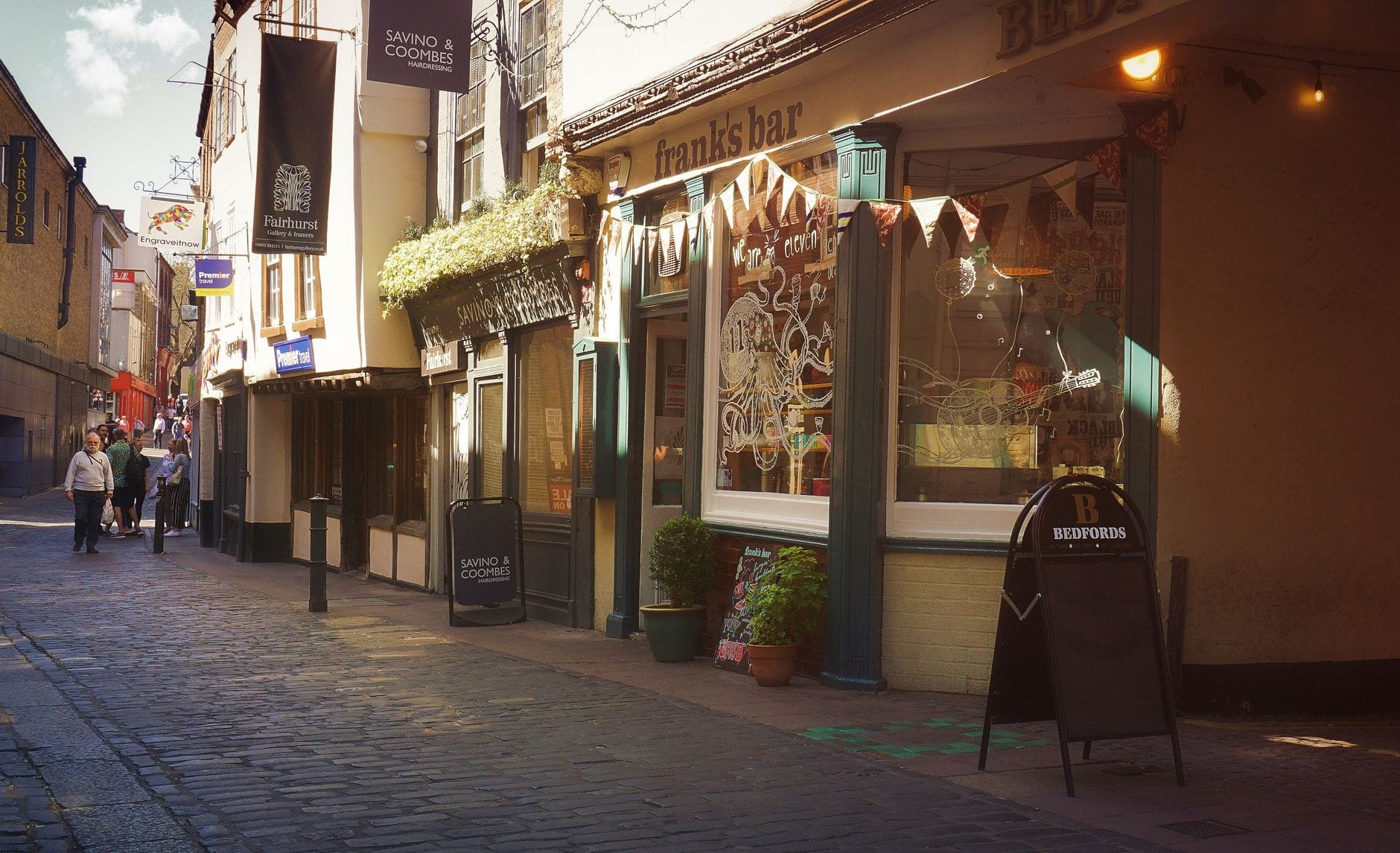
These two districts are often lumped together but have distinctly different personalities, and knowing the difference shapes how you spend your time.
The Lanes occupy the footprint of the original fishing village of Brighthelmstone, a network of narrow historic alleys south of North Street that predates the Georgian expansion. Today they are dense with jewellery shops (Brighton has an unusual concentration of independent jewellers here), antique dealers, specialist food outlets, and tourist-facing cafes. It is compact, picturesque, and best on a weekday morning before the weekend foot traffic makes it feel more like a theme park than a neighbourhood. The Lanes is where to go for browsing antiques and independent jewellers; it rewards slow walking and ducking into side passages rather than staying on the main drag.
North Laine is a different proposition: a Victorian conservation area north of the main shopping streets, characterised by independent record shops, vintage clothing stores, independent bookshops, and a high density of cafes and pubs. Sydney Street, Kensington Gardens, and Gardner Street are the main arteries. This is where Brighton's counterculture identity is most legible in retail form. If The Lanes skews toward jewellery and antiques, North Laine skews toward vinyl, secondhand fashion, and independent food. For a thorough overview of what to look for in both areas, the vintage shopping in Brighton guide covers the best specific shops and market days.
Beyond the Seafront: Parks, Villages, and the South Downs
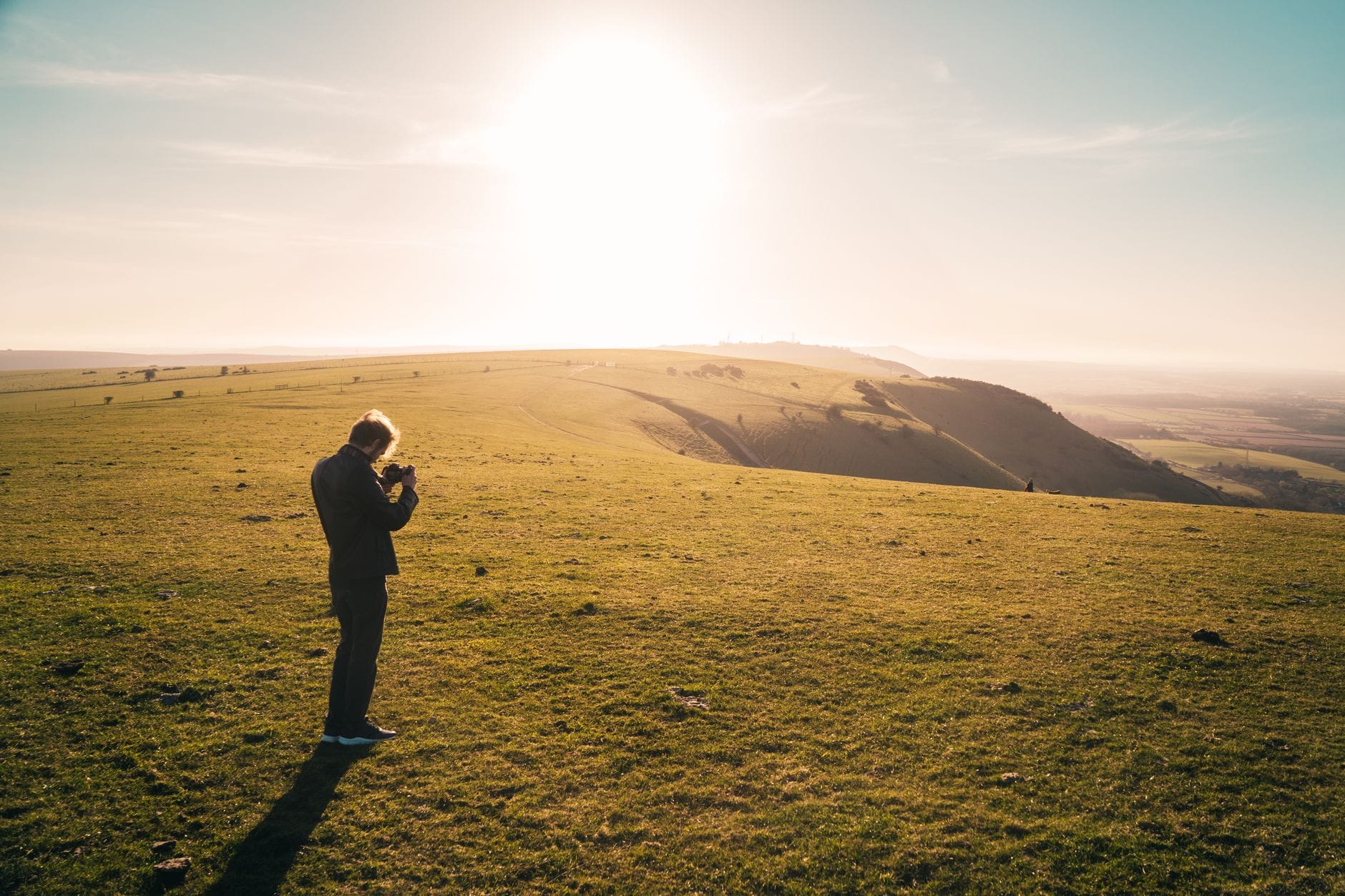
One of the most common misconceptions about Brighton is that it is purely a seafront city. The South Downs National Park begins essentially at the northern edge of the urban area, and the contrast between the beachfront bustle and the chalk downland 20 minutes away is sharp. Devil's Dyke is the most accessible entry point: a dry valley carved into the Downs with panoramic views across the Weald. The no.77 bus from Brighton city centre runs to Devil's Dyke in summer months (verify current timetables via Brighton & Hove Buses before travelling). On clear days the views extend 50 miles or more.
Within the city itself, green space is more varied than most visitors realise. Preston Park in the north of the city is Brighton's largest park, home to a velodrome, walled rose garden, and the oldest elm trees in England. Stanmer Park on the north-east edge of the city sits around a Georgian estate with woodland walks and a rural village character that sits at odds with its city-boundary location. Both are free and largely uncrowded compared to the seafront parks near the Royal Pavilion.
✨ Pro tip
If you want countryside without committing to Devil's Dyke, the South Downs National Park boundary is accessible on foot from the top of Bear Road in Bevendean — no bus or taxi needed. The chalk path north from there offers genuine downland walking within 30 minutes of the city centre on foot.
Events, Festivals, and Seasonal Rhythms
Brighton runs a dense calendar of events that shapes when and how you should visit. The two that have the most impact on the city are Brighton Festival in May and Brighton Pride in August. Brighton Festival is the UK's largest curated arts festival, spanning theatre, music, dance, and visual art across venues including the Brighton Dome and Brighton Theatre Royal. The accompanying Brighton Fringe runs simultaneously and brings a different energy: cheaper, more experimental, and spread across pubs and pop-up venues. If you are visiting in May, check the festival programme before booking accommodation, as popular shows sell out weeks in advance.
Brighton Pride is one of the largest Pride events in the UK, typically held on the first Saturday of August. The city fills significantly beyond its normal summer capacity; accommodation prices spike dramatically and many guesthouses in Kemp Town (the traditional hub of Brighton's LGBTQ+ community) sell out months in advance. If you are specifically visiting for Pride, book as early as possible. If you are visiting for something else the same weekend, be aware of the additional footfall and plan accordingly. The Brighton Pride guide covers everything you need to plan around the event.
- May: Brighton Festival and Fringe The biggest cultural event of the year. Book accommodation and headline shows in advance. The city is lively but not overwhelming in terms of crowd size.
- Late July to August: Peak summer season School holidays push visitor numbers to maximum. Beaches are at their busiest, pier queues lengthen, and prices across the board are at their highest.
- August: Brighton Pride Usually first Saturday of August. Enormous crowds, hotel prices surge. Plan well ahead or build it into your trip deliberately.
- September to October: Shoulder season Often the best balance of decent weather, manageable crowds, and reasonable accommodation prices. Local cultural events continue through autumn.
- Winter: December to February Quieter, cooler (8-9°C average daytime high), but Brighton's food and nightlife scene remains active year-round. Fewer seasonal rides are operating, but the city does not shut down.
Practical Logistics: Getting There, Getting Around, and Keeping Costs Down
Brighton sits approximately 50 miles south of London. The fastest trains from London Bridge or London Victoria reach Brighton in around 50-60 minutes; slower stopping services take up to 90 minutes. Trains run frequently throughout the day. From Gatwick Airport, direct Southern or Thameslink services reach Brighton in roughly 30 minutes. Advance single tickets from Gatwick to Brighton typically range from around £10-20 depending on timing and booking conditions; always check National Rail for current pricing. Taxis from Gatwick cost considerably more, typically in the £60-80 range — the train is significantly better value unless you have a large group or heavy luggage.
Within Brighton, the compact city centre, seafront, and main shopping districts are all walkable. The distance from Brighton railway station to the seafront is about 15-20 minutes on foot. Brighton & Hove Buses operates extensive local coverage if you need to reach outlying areas like Stanmer Park or the northern residential districts. Uber and Bolt both operate in the city. For a practical breakdown of how to navigate between areas, the guide to getting around Brighton covers options in detail. If you are visiting on a tighter budget, the Brighton on a budget guide identifies the free attractions, cheap eats, and lower-cost accommodation zones that make a serious difference.
A few practical notes worth knowing before you arrive: UK plug sockets are Type G (three rectangular pins), voltage is 230V. Tap water across Brighton and Hove is safe to drink — mains supply meets UK drinking water standards. Emergency services are reached on 999. Tipping in restaurants runs around 10-15% where a service charge has not already been added to the bill; check before you tip on top of an existing service charge.
FAQ
What is Brighton most famous for?
Brighton is best known for its pebble beach and seafront, the Royal Pavilion (George IV's extraordinary Indo-Saracenic former palace), Brighton Palace Pier, and its LGBTQ+ scene centred around Kemp Town. It also has a reputation for independent shopping in The Lanes and North Laine, a strong arts and music culture, and easy access to the South Downs National Park.
How long do you need in Brighton?
A day trip from London is feasible and covers the seafront, pier, and a walk through The Lanes. A full weekend gives you time to visit the Royal Pavilion properly, explore North Laine, get out to Devil's Dyke or Stanmer Park, and eat at better restaurants away from the tourist strip. Two nights is generally the sweet spot for a first visit.
Is Brighton beach sandy or pebbly?
Brighton's main beach is pebble — specifically, large smooth flint stones. It is not soft sand. This surprises many first-time visitors. Lying on the beach is possible but less comfortable than a sandy beach, and conventional beach games like volleyball or football are not practical on the shingle. Water shoes are useful for entering the sea.
When is the best time to visit Brighton?
Late May and September are generally the most rewarding months: temperatures are mild (averaging 16-19°C daytime highs), crowds are smaller than July-August, and most seasonal attractions are fully operational. July and August offer the warmest weather but the highest prices and maximum foot traffic. Winter is quiet but the cultural scene remains active year-round.
What free things are there to do in Brighton?
Brighton has a strong range of free options. Hove Museum and Art Gallery is free to enter. The Booth Museum of Natural History is free when open, but has been closed since 20 April 2025 for essential works (special event days only). Brighton Museum and Art Gallery charges admission. The Royal Pavilion Gardens are free year-round. Brighton Beach and the seafront promenade obviously cost nothing. Preston Park and Stanmer Park are free. The West Pier ruins are visible from the seafront at no cost. Many of the best things about exploring The Lanes and North Laine require no entry fee at all.