Theatre Royal Brighton: Inside One of England's Oldest Working Theatres
Theatre Royal Brighton has been staging professional productions continuously since it opened in 1807, making it one of the longest-running working theatres in England. Located on New Road in the heart of The Lanes, its restored Regency auditorium seats around 952 people and hosts everything from West End transfers to touring opera and dance.
Quick Facts
- Location
- New Road, Brighton, BN1 1SD, East Sussex — in the city centre cultural quarter near The Lanes
- Getting There
- Brighton railway station (Southern/Thameslink), approx. 10-minute walk
- Time Needed
- 2–3 hours per performance, plus time to explore the surrounding area
- Cost
- Ticket prices vary by production; booking via ATG Tickets (online fees may apply). Verify current prices before visiting.
- Best for
- Theatre lovers, fans of Regency architecture, couples on an evening out, West End touring productions
- Official website
- www.atgtickets.com/venues/theatre-royal-brighton/whats-on
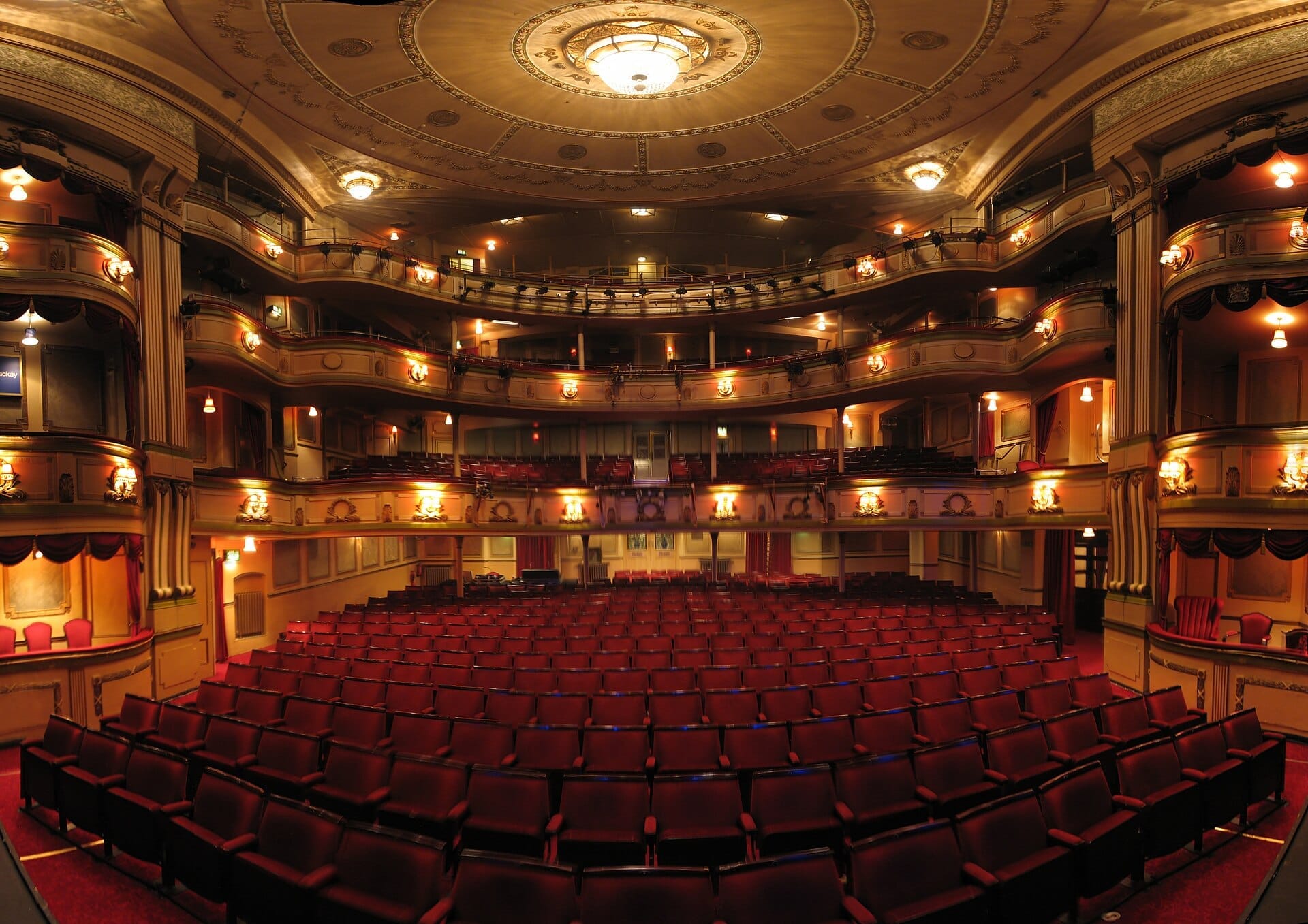
What Theatre Royal Brighton Actually Is
Theatre Royal Brighton is a working producing and receiving theatre that has operated since its opening night on 27 June 1807, when Charles Kemble led the inaugural production of Shakespeare's Hamlet. That makes it one of the oldest theatres in the United Kingdom, a distinction it earns not just on paper but in the physical fabric of the building itself. The Regency auditorium you step into today, shaped by a major rebuild in the 1860s, is the same horseshoe of gilded tiers and ornate plasterwork that audiences have occupied for over 150 years.
The theatre sits on New Road, directly opposite the Royal Pavilion estate, and is listed as a Grade II* historic building. It is operated by ATG Entertainment, one of the UK's largest theatre groups, which means the programming leans toward commercially robust productions: West End transfers, large-scale musicals, touring drama, opera, dance, and the occasional stand-up comedy run. This is not a fringe venue or an experimental space. If you are looking for rough-edged new writing, you will need to look elsewhere in Brighton. But if you want to experience a full-scale professional production in an auditorium that has barely changed in appearance since the Victorian era, this is the only place in the city that delivers it.
ℹ️ Good to know
The box office opens 90 minutes before curtain-up and remains open for up to approximately 15 minutes after the performance begins. Arrive early if you need to collect tickets or have accessibility requirements to discuss.
The Building: Regency Grandeur in the Middle of The Lanes
The original theatre received Royal Assent in 1806 and was constructed in roughly ten months, an extraordinary pace for a building of this complexity. The speed reflected genuine urgency: Brighton in the early nineteenth century was a fashionable resort town swelling with aristocratic visitors drawn by the Prince Regent's presence at what would become the Royal Pavilion. A theatre was not a luxury but a social necessity.
The facade on New Road is relatively restrained by the standards of the interior. Step through the entrance and the contrast is immediate. The auditorium opens into three tiers of curved balconies, decorated with intricate plasterwork, topped by a painted ceiling. The colour palette runs to deep reds, ivory and gold, typical of high Victorian theatre design. The acoustics are notably warm, a byproduct of the horseshoe shape and the density of upholstered seating. Even from the upper circle, the stage feels close.
The theatre's location within The Lanes gives it an unusually atmospheric setting. New Road itself is largely pedestrianised, and the short walk from the seafront or from the Royal Pavilion Gardens involves passing through some of Brighton's most historic streetscape. If you are making an evening of it, the surrounding streets offer dozens of independent restaurants and bars within a five-minute radius.
Tickets & tours
Live prices and dates from our booking partner. If you book, we may earn a commission at no extra cost to you.
Brighton city lights flight with welcome drink
From 21 €Instant confirmationCycle along the beachfront with Brighton Beach Bikes hire
From 7 €Instant confirmationFree cancellationTour Brighton's highlights with an exploration game mobile app
From 10 €Instant confirmationFree cancellationExplore Brighton self-guided walking tour using an app
From 11 €Instant confirmation
The Experience: Before, During, and After the Curtain
Arriving in the hour before a performance, the foyer settles into a particular kind of anticipatory hum. The bar opens to ticket holders, and the low ceiling of the ground floor creates an intimate atmosphere quite different from the grandeur waiting upstairs. Conversations carry easily. Programmes are sold near the entrance; they vary in quality depending on the production but typically include detailed cast biographies and production notes worth reading before the lights go down.
Inside the auditorium, the stalls fill quickly on popular productions. The dress circle is generally considered the optimal position for sightlines and sound, sitting at roughly mid-height and close enough to the stage to read facial expressions without binoculars. The upper circle offers the sharpest angle down to the stage, which suits productions with strong choreography or ensemble staging. The front stalls seats can occasionally feel slightly low relative to the stage, depending on the set design.
After the final curtain, the theatre empties into New Road, and on warm evenings the pavements around the Pavilion grounds fill with departing audience members. There is a natural drift toward the restaurants and bars of The Lanes, which are generally still serving at 10pm or later on weekdays. The area does not feel threatening after dark, though it can be busy on Friday and Saturday nights.
💡 Local tip
For evening performances, book dinner before the show rather than after. Restaurants near the theatre fill up quickly at 6–7pm, and most serve early enough to accommodate a 7:30pm curtain. Post-show, kitchen closing times can be tight.
Programming: What to Expect
The Theatre Royal Brighton programmes shows year-round, with the schedule typically running across several weeks for major productions and shorter runs for single-night or limited-engagement events. The autumn and spring seasons tend to carry the heaviest programming; summer brings a mix of touring shows and productions aimed at family audiences. The pantomime season at Christmas is a long-standing tradition and tends to sell out well in advance.
Because ATG Entertainment manages the venue, a significant proportion of productions are pre-London tryouts or post-West End tours. This means Brighton sometimes gets productions in excellent shape, cast with experienced leads. It also means the programme does not always reflect local or regional work. Those interested in Brighton's broader performing arts scene should also look at the Brighton Dome, which sits almost adjacent on Church Street and programmes a very different mix.
For a fuller picture of arts events across the city, the Brighton Dome hosts major festivals and concerts in a building that shares the same Regency-era estate as the Royal Pavilion. The two venues between them cover most of what Brighton offers in large-scale live performance.
Getting There and Practical Logistics
Brighton railway station connects to London Victoria via Southern and to London Bridge via Thameslink, with frequent services running throughout the evening. From London, a typical journey takes just over an hour, which makes Theatre Royal Brighton genuinely viable as a day-trip or evening outing from the capital. From the station, New Road is approximately a ten-minute walk south through the city centre, passing the clock tower and continuing down North Street. The route is well-lit and straightforward.
Coaches from London arrive at Pool Valley Coach Station, roughly 5-minute walk from the theatre. National Express operates this route. For those arriving by car, note that parking in central Brighton is limited and expensive in the evenings; the NCP car parks near Churchill Square are the most convenient options, though walking from Brighton station is almost always faster than driving into The Lanes area. For broader guidance on navigating the city, see the getting around Brighton guide.
For patrons with accessibility needs, the theatre provides detailed access information on its dedicated access page. A dedicated Access Booking line is available at 0333 009 5399. Step-free routes, assisted hearing systems, and accessible seating options are all available, but it is worth contacting the box office in advance to confirm arrangements for specific productions.
⚠️ What to skip
Late arrivals are typically held in the foyer until the first suitable break in the performance. For productions with no interval and a prompt start, this can mean missing a significant portion of the show. Check curtain-up time when you book and build in travel time accordingly.
Context: Theatre Royal Brighton and the City Around It
The theatre sits within a remarkably dense concentration of historic architecture. The Royal Pavilion is visible from New Road, and the Royal Pavilion Gardens immediately opposite provide a pleasant pre-show setting in warmer months, when the gardens are often lit in the early evening. The visual relationship between the theatre and the Pavilion is not incidental: both were products of the same Regency-era explosion of building that transformed Brighton from a small fishing town into a fashionable resort.
For visitors interested in the architectural history of this period more broadly, the Brighton Regency architecture guide traces the key buildings and set pieces across the city, many of which are within comfortable walking distance of the theatre.
The theatre also plays a central role during Brighton Festival each May, one of the largest arts festivals in England, when New Road and the surrounding area become even more animated than usual. If you are planning a trip around the festival, the Brighton Festival guide covers what to expect and how to navigate the programme.
Is It Worth Your Time?
If you are already in Brighton and the programme includes a production that interests you, attending Theatre Royal Brighton is one of the better ways to spend an evening in the city. The auditorium alone justifies the visit for anyone with an interest in historic theatre architecture. The sightlines are good, the acoustics are warm, and the experience of watching a large-scale professional production in a Victorian horseshoe theatre is qualitatively different from watching the same show in a modern purpose-built venue.
If you are making a special trip to Brighton specifically to see a show here, the calculus depends on the production. Ticket prices vary considerably, and ATG productions can range from genuinely exciting pre-London runs to reliable but unremarkable touring productions. Check the reviews before booking if the title is unfamiliar.
Those who prefer immersive, experimental, or site-specific theatre will not find it here. The theatre is a traditional proscenium house, and the programming reflects that. Brighton has a lively fringe scene, but it operates in different venues entirely. Similarly, visitors hoping to simply walk in and look around the building outside of performance times should note that access is generally limited to box office hours and performance periods; this is an operational theatre, not a public monument.
Insider Tips
- The dress circle row C and D seats offer some of the best value in the house: close enough to see clearly without binoculars, with an angle that suits most stage configurations.
- Pre-show drinks at the theatre bar can be slow when the house is full. Order in advance at the bar during your interval drink order, or arrive 30 minutes before curtain to beat the queue.
- If you are buying tickets for a popular production, check the ATG website directly rather than third-party resellers. Booking fees vary, and seats marketed on secondary sites are often available at face value through the official box office.
- The Royal Pavilion Gardens directly opposite the theatre are illuminated on summer evenings and make a genuinely pleasant spot for a pre-show walk or a post-curtain pause before heading to dinner.
- For Christmas pantomime, book as early as October. The panto season at Theatre Royal Brighton has a strong local following and popular dates sell out well before December.
Who Is Brighton Theatre Royal For?
- Theatre-goers visiting Brighton who want a full professional production rather than fringe or experimental work
- Couples looking for a classic evening out combining dinner in The Lanes with a show
- Visitors with an interest in Victorian and Regency-era architecture who want to see the auditorium in use
- Day-trippers from London who want to make an evening of the journey rather than heading back on an early train
- Families attending the Christmas pantomime season, a Brighton tradition with a long-established reputation
Nearby Attractions
Other things to see while in The Lanes:
- Brighton Dome
Brighton Dome is a Grade I listed arts complex on the Royal Pavilion Estate, comprising the Concert Hall, Corn Exchange, and Studio Theatre. Originally built as William Porden's royal stables and riding house for the Prince Regent, it now hosts everything from classical concerts and comedy to trade fairs and festivals across three distinctive spaces.
- Brighton Museum & Art Gallery
Brighton Museum & Art Gallery sits inside the Royal Pavilion Gardens and holds one of the south coast's most engaging collections, spanning Art Nouveau, Surrealism, Modernism and Brighton's own social history. It's a serious museum that rewards curiosity without demanding a full day.
- Brighton Police Cells Museum
Beneath Brighton Town Hall, the Old Police Cells Museum preserves Brighton Borough's historic main police station and holding cells, in use from the early 19th century through much of the 20th century. Tours run on a handful of days each week and must be booked in advance, making this one of the most distinctive and intimate history experiences in Brighton.
- Royal Pavilion
The Royal Pavilion is a Grade I listed former royal palace in the centre of Brighton, combining Indian exterior domes with Chinese-inspired interiors. Built as a seaside retreat for King George IV, it remains one of the most architecturally distinctive buildings in England.
Planning a trip? Discover personalized activities with the Nomado app.