Royal Pavilion Garden: Brighton's Free Regency Escape in the City Centre
Surrounding one of England's most extraordinary buildings, the Royal Pavilion Garden is a fully restored Regency garden in the UK. Entry is free, the setting is unlike anything else in Brighton, and it rewards visitors who take their time.
Quick Facts
- Location
- Royal Pavilion, Brighton, BN1 1FN, East Sussex, England
- Getting There
- Brighton railway station, approx. 10-minute walk
- Time Needed
- 30–60 minutes for the garden; longer if visiting the Pavilion interior
- Cost
- Free to enter the garden (Pavilion interior requires a paid ticket — verify current prices at brightonmuseums.org.uk)
- Best for
- Architecture lovers, picnickers, photography, families, anyone wanting a free central green space
- Official website
- brightonmuseums.org.uk/visit/royal-pavilion-garden
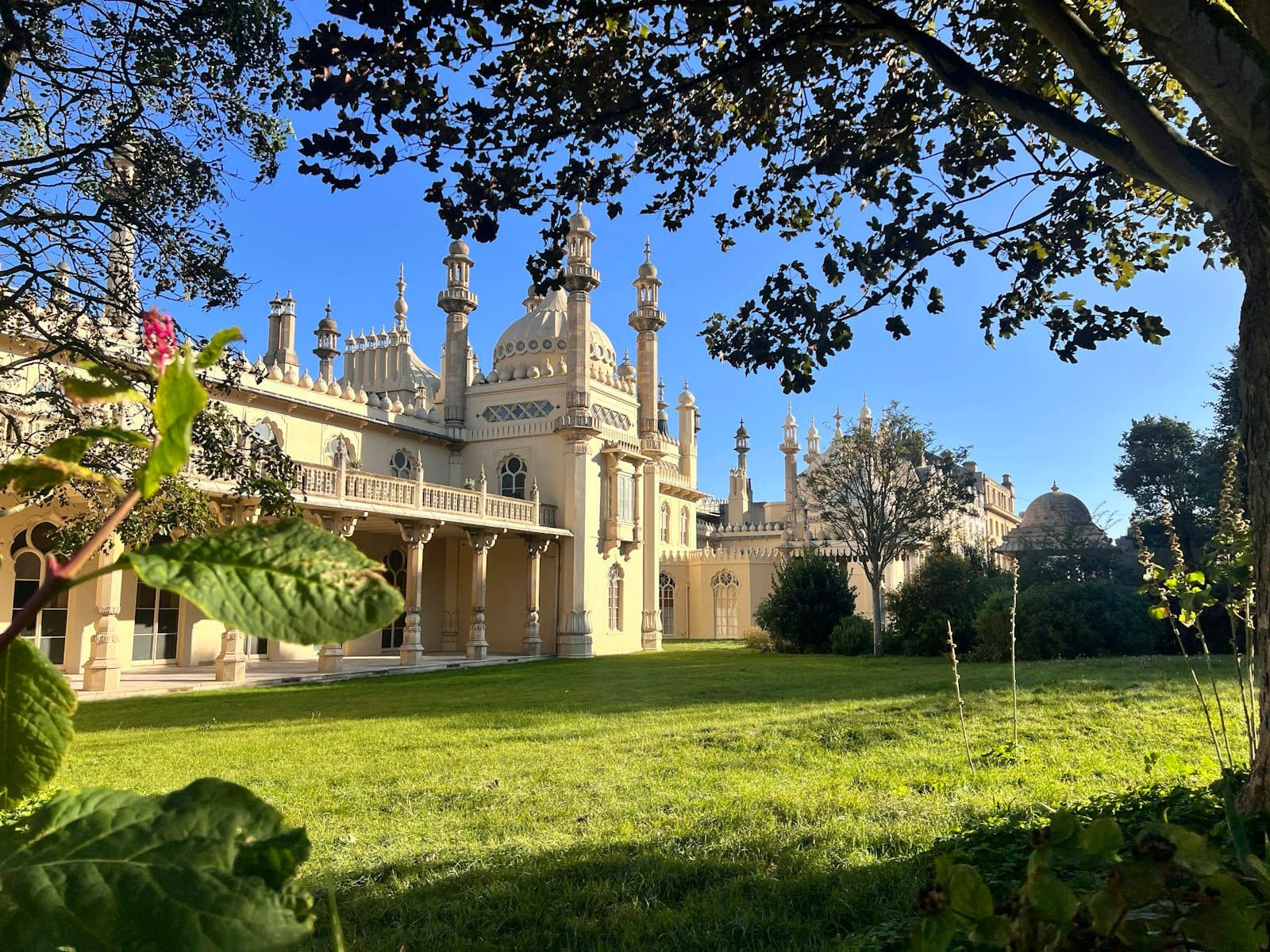
What Is the Royal Pavilion Garden?
The Royal Pavilion Garden is the public green space that wraps around the Royal Pavilion, the extraordinary Indo-Saracenic palace originally developed as a seaside retreat for George, Prince of Wales (later King George IV) from the late 18th century. Architect John Nash transformed it into its current exotic form between about 1815 and 1823, and the garden that surrounds it has since been restored to reflect Nash's original Regency design. It is, according to Brighton & Hove City Council, a fully restored Regency garden in the United Kingdom.
Unlike the Pavilion itself, the garden requires no ticket. You can walk in off the street, sit on the grass, and find yourself facing a building that looks like it belongs somewhere between Rajasthan and a fever dream. It is one of the few central-city green spaces in England where the surrounding architecture is so visually dominant that the garden feels designed to frame it, rather than the other way around.
ℹ️ Good to know
The gardens are free and open as public space (they are not limited to 10am–6pm — that window typically refers to facilities such as toilets). Visiting the Royal Pavilion interior requires a separate paid ticket. Check current prices at brightonmuseums.org.uk before you go, as they are updated regularly.
The Setting and the Architecture
Standing in the garden and looking at the Pavilion for the first time is genuinely disorienting, in the best way. The building's silhouette, a cluster of onion domes, minarets and tent-like rooflines, sits completely at odds with the Georgian and Victorian streets immediately surrounding it. From the garden paths, you get unobstructed views of the south-facing facade and the layered skyline of the building rising against whatever the English sky has decided to provide that day.
The garden's restored Regency design favours sweeping lawns with scattered specimen trees, curved paths and decorative planting that complements rather than competes with the architecture. The planting palette tends toward species appropriate to the early 19th century, giving the whole space a more considered, period-specific feel than the average municipal park.
The garden sits just off the Old Steine and is flanked by the Brighton Museum and Art Gallery, which occupies a building within the same estate. Together, the Pavilion, the museum and the garden form a coherent cultural campus in the middle of the city. The whole area has been a Grade I listed historic landscape, which is the highest designation in England's heritage protection system.
Tickets & tours
Hand-picked options from our booking partner. Prices are indicative; availability and final rates are confirmed when you complete your booking.
Brighton city lights flight with welcome drink
From 21 €Instant confirmationCycle along the beachfront with Brighton Beach Bikes hire
From 7 €Instant confirmationFree cancellationTour Brighton's highlights with an exploration game mobile app
From 10 €Instant confirmationFree cancellationExplore Brighton self-guided walking tour using an app
From 11 €Instant confirmation
How the Garden Changes Through the Day
Early mornings, roughly 7am to 9am on weekdays, are when the garden feels most like a genuine urban sanctuary. Dog walkers, joggers and people cutting through on their commute move around the paths, and the light hits the Pavilion's white stucco at a low angle that makes the domes particularly photogenic. The lawns are often damp with dew at this hour, so sturdy shoes are worth wearing if you plan to sit on the grass.
Midday brings a marked shift. On warm days from late spring through summer, the central lawns fill with office workers eating lunch, tourists spreading out with takeaway coffee, and families using the open space. The garden becomes a social space as much as a horticultural one, and on sunny weekends in July and August it can feel genuinely crowded around the main entrances and the south-facing lawn closest to the Pavilion.
Late afternoon light, particularly between 4pm and 6pm from April through September, is the best time for photography of the Pavilion exterior. The western facades catch a warmer light, and crowds thin noticeably once tour groups have cycled through. If you are coming primarily to look at the building from the garden, this window is worth targeting.
💡 Local tip
For the best combination of good light and fewer people, visit on a weekday morning in May, June or September. The drier spring and early summer months also mean better chances of the lawns being in good condition.
The Historical Context Worth Knowing
The Royal Pavilion's construction history is directly readable in the garden. George IV's decision to transform what had been a modest farmhouse into a full palace, surrounded by landscaped grounds in the middle of a growing seaside town, was a deliberate act of display. Brighton's rapid rise as a fashionable resort in the late 18th and early 19th centuries was partly driven by the royal presence, and the garden was never just about horticulture: it was a statement.
During the First World War, the Royal Pavilion and its grounds served as a military hospital for Indian soldiers from the British Indian Army, a history that adds a layer of meaning to the building's Indian-influenced architecture. A memorial plaque within the estate acknowledges this period. The garden's current restored form came later, as part of a broader effort by Brighton & Hove to return the whole estate to something closer to its Nash-era appearance.
The wider architectural story of Regency Brighton, of which the Pavilion is the most dramatic example, is explored in more depth in the Brighton Regency architecture guide, which covers the town's broader 19th-century building history across the seafront and residential squares.
Practical Walkthrough: Getting There and Getting the Most from It
From Brighton railway station, the garden is about a 10-minute walk heading southeast toward the Old Steine. There are multiple entry points around the perimeter. The main entrance on Pavilion Buildings (facing north, toward the North Gate) is the most formal approach; the eastern entrance off Old Steine Road gives you a more lateral view of the building as you enter. There is no need to decide in advance: the garden is a loop and all the main viewpoints are accessible from any entry.
The garden sits within easy reach of several other city-centre destinations, which makes it a natural stopping point on a broader walking route. The Lanes, Brighton's network of historic narrow streets known for jewellery shops and independent restaurants, begin only a few minutes to the southwest.
If you are planning a full day in the city centre, combining the garden with a visit to the Royal Pavilion interior and the Brighton Museum and Art Gallery next door is straightforward. The museum is free to enter for Brighton residents; national visitors pay a small admission fee (verify current prices before visiting).
Accessibility within the garden is generally good: the main paths are surfaced and largely flat, appropriate for pushchairs and wheelchairs. However, the lawns themselves are grass and may be uneven after rain. Brighton & Hove Museums provide access information for the estate on their official visitor pages, and it is worth checking for the most current details.
Photography in the Garden
The Royal Pavilion Garden is one of the more photographed locations in Brighton, and it is easy to see why: there is almost no bad angle on the building from within the grounds. The south lawn gives you the iconic straight-on view of the main facade. From the northwest corner of the garden, you get a more asymmetrical composition with specimen trees framing the domes. Overcast days, common in Brighton for much of the year, diffuse the light evenly and eliminate the harsh shadows that can make the white stucco look flat in direct midday sun.
One thing to be aware of: the garden is a public space and people will inevitably walk into frame. If clean architectural shots are important to you, arriving at opening time on a weekday morning is the most reliable strategy. Early autumn weekdays in September can be particularly good: the summer crowds have thinned, the trees have started to turn, and the morning light is lower and warmer than in summer.
⚠️ What to skip
During Brighton's major summer events, including Brighton Pride and the Brighton Festival, the garden and surrounding streets become very crowded. If you want a relaxed visit, check the Brighton events calendar before planning your trip.
Who Might Not Find This Worth a Detour
If you are not interested in architecture or the Pavilion's history, the garden on its own is a pleasant but fairly small urban green space. It covers roughly 2 acres and a circuit of the main paths takes under 20 minutes. Visitors looking for expansive parkland or nature walks would be better served by Preston Park, Stanmer Park, or a trip out to the South Downs. The garden is not the right destination for that kind of visit.
For outdoor space with a more natural character within the city, Stanmer Park on Brighton's northern fringe offers significantly more space, woodland paths and a very different atmosphere.
Insider Tips
- The northwestern corner of the garden, near the boundary with the museum building, is consistently the least crowded area on busy days and still gives good Pavilion views across the lawn.
- On warm evenings in summer, the garden occasionally hosts outdoor events linked to the Brighton Dome and Brighton Museum. Check the Brighton & Hove Museums events calendar in advance to see if anything coincides with your visit.
- The Pavilion's north gate facade is often overlooked in favour of the south side, but it is architecturally distinct and far less photographed. Walk the full perimeter of the garden to see all faces of the building.
- If the lawns are wet or crowded, the garden paths offer clean sightlines to the building without needing to step onto the grass at all. The surfaced route around the perimeter gives you multiple compositions.
- Brighton & Hove residents get discounted (and sometimes special) entry rates to the Pavilion interior with proof of address. If you live locally or are visiting with a resident, it is worth checking the current resident ticket terms at brightonmuseums.org.uk.
Who Is Royal Pavilion Gardens For?
- Architecture enthusiasts wanting to see the Royal Pavilion's exterior in detail without paying for interior admission
- Families looking for a free, central green space with enough visual interest to hold children's attention
- Photographers, particularly those interested in historic buildings and Regency design
- Visitors combining a walking route through The Lanes and Brighton city centre who want a natural halfway pause
- Anyone visiting Brighton in the shoulder seasons (May, June, September) looking for a peaceful and genuinely distinctive city-centre experience
Nearby Attractions
Other things to see while in The Lanes:
- Brighton Dome
Brighton Dome is a Grade I listed arts complex on the Royal Pavilion Estate, comprising the Concert Hall, Corn Exchange, and Studio Theatre. Originally built as William Porden's royal stables and riding house for the Prince Regent, it now hosts everything from classical concerts and comedy to trade fairs and festivals across three distinctive spaces.
- Brighton Museum & Art Gallery
Brighton Museum & Art Gallery sits inside the Royal Pavilion Gardens and holds one of the south coast's most engaging collections, spanning Art Nouveau, Surrealism, Modernism and Brighton's own social history. It's a serious museum that rewards curiosity without demanding a full day.
- Brighton Police Cells Museum
Beneath Brighton Town Hall, the Old Police Cells Museum preserves Brighton Borough's historic main police station and holding cells, in use from the early 19th century through much of the 20th century. Tours run on a handful of days each week and must be booked in advance, making this one of the most distinctive and intimate history experiences in Brighton.
- Brighton Theatre Royal
Theatre Royal Brighton has been staging professional productions continuously since it opened in 1807, making it one of the longest-running working theatres in England. Located on New Road in the heart of The Lanes, its restored Regency auditorium seats around 952 people and hosts everything from West End transfers to touring opera and dance.