Stanmer Park: Brighton's Georgian Parkland and Hidden Estate
Stanmer Park is Brighton's most expansive green space, generally cited as covering around 485–495 hectares of 18th-century designed landscape, ancient woodland and working heritage estate. Entry is free, and while the wider parkland is accessible year-round, some car parks and facilities have specific opening hours, so it rewards visitors who go beyond the car park to explore its quieter corners.
Quick Facts
- Location
- Stanmer Park, Brighton, BN1 9QA — just off the A27 between Brighton and Lewes
- Getting There
- Falmer railway station (15-min walk); No. 78 bus from Brighton city centre on weekends and bank holidays; cycle lanes from Lewes Road
- Time Needed
- 1.5 to 4 hours depending on how far you walk
- Cost
- Free entry; pay-and-display car parking (verify current rates with Brighton & Hove City Council)
- Best for
- Walkers, families, dog owners, history enthusiasts, anyone needing open space away from the seafront crowds
What Stanmer Park Actually Is
Stanmer Park is a public park and historic estate on the northern edge of Brighton, formally designated as a Grade II Registered Park and Garden by Historic England. That designation matters because it signals something most city parks cannot claim: this is a designed 18th-century landscape that survives largely intact, complete with a Grade I listed manor house built in 1722, a model estate village, walled gardens, ancient woodland and chalk downland folding into the South Downs beyond the perimeter.
The Pelham family purchased the estate in 1712 and shaped most of what you see today, creating a classic English parkland of open grassland punctuated by specimen trees, formal avenues and enclosed kitchen gardens. The council acquired the estate in the late 1940s and opened it to the public soon after. Since then it has absorbed use as a working farm, a permaculture demonstration site, an events venue and one of the city's main off-road cycling and running circuits, all without losing its essentially quiet, countryside character.
ℹ️ Good to know
Note on car parking: the Upper Lodges car park closes to the public in the early evening (typically 8pm in summer and 5pm in winter). If you plan a late afternoon visit, factor this in or arrive by bus, train or bike to avoid being caught out.
The Landscape: What You Will Actually See
Most visitors arrive through the main entrance near Stanmer House and encounter an open, gently sloping meadow framed by mature trees, with the pale stone manor sitting at the centre of the view. The house itself, built in 1722 in a restrained Palladian style, is not open for general public access but its exterior reads clearly from the lawn: three storeys, stone-dressed windows, a formal symmetry that makes it one of the more intact Georgian country house settings in the South East. There is no fairground clutter here, no branded signage competing for attention. The restraint is the point.
Walk further into the estate and the character shifts. The walled garden area hosts One Garden Brighton, a food-growing and community project connected to the Brighton Permaculture Trust. This section has a completely different texture: raised beds, productive planting, the smell of turned soil and herbs, and usually a few people working quietly in the growing season. It is one of the more concrete examples of urban permaculture in England and worth at least a short detour even if you have no interest in horticulture, because the contrast with the formal parkland outside the walls is striking.
Stanmer village sits within the park boundaries: a small cluster of flint and brick estate cottages, a Norman-origin church (St Peter's) and a tea room that operates seasonally. The village has the slightly surreal quality of a working settlement surrounded entirely by parkland. On a quiet Tuesday morning in spring, with wood pigeons calling from the beeches and no traffic noise, it is about as close to rural England as you can get within a city boundary.
Tickets & tours
Hand-picked options from our booking partner. Prices are indicative; availability and final rates are confirmed when you complete your booking.
Brighton city lights flight with welcome drink
From 21 €Instant confirmationCycle along the beachfront with Brighton Beach Bikes hire
From 7 €Instant confirmationFree cancellationTour Brighton's highlights with an exploration game mobile app
From 10 €Instant confirmationFree cancellationExplore Brighton self-guided walking tour using an app
From 11 €Instant confirmation
How the Experience Changes by Time of Day and Season
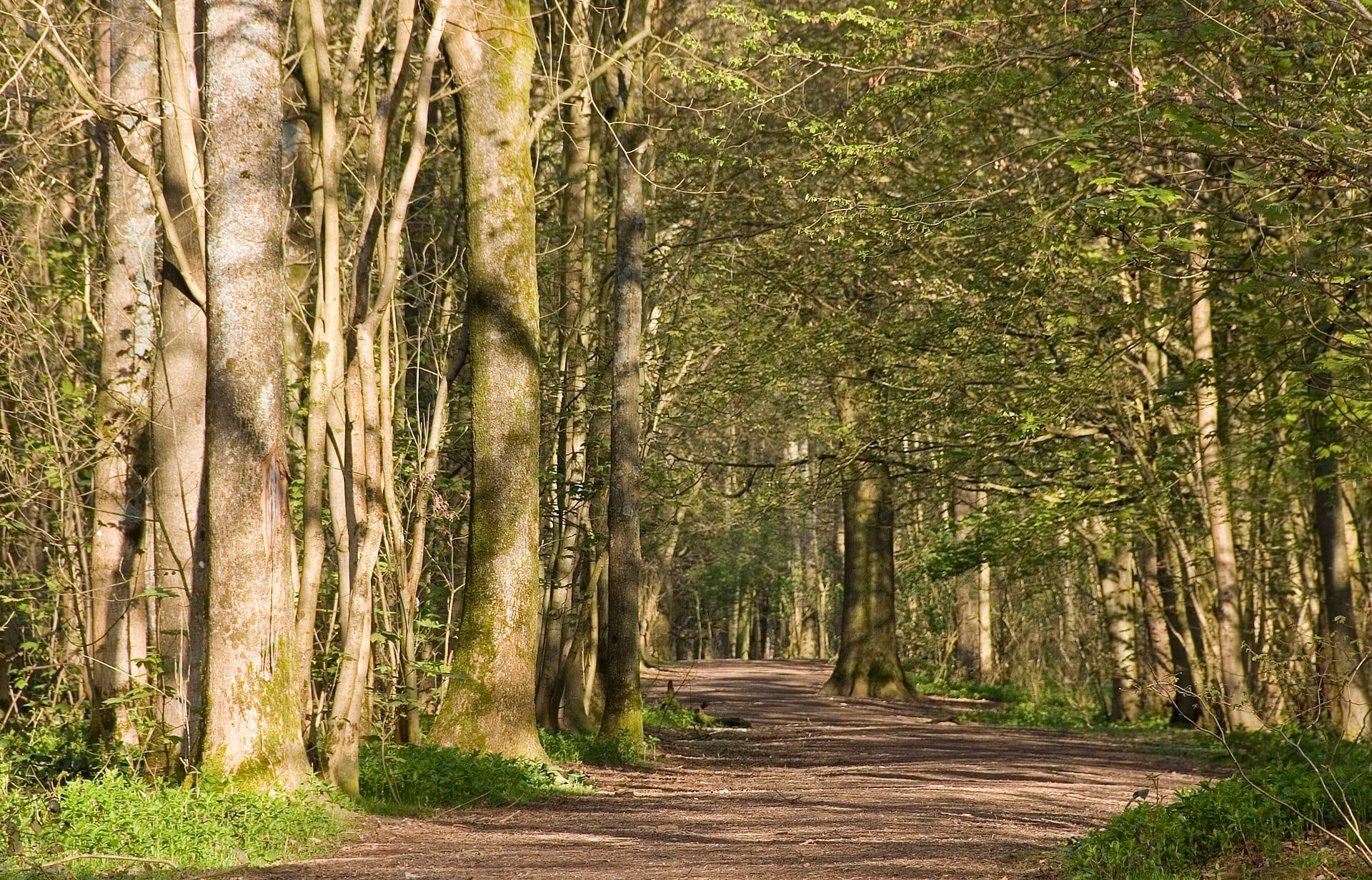
Early mornings, especially on weekdays, are almost entirely given over to dog walkers and joggers. The light comes in low across the meadow, catching the dew on the grass, and the beech woodland holds a particular stillness before the wind picks up. If you want the estate to yourself, aim for before 9am on any day outside school holidays.
Weekend afternoons from late spring through summer are the busiest period. Families spread out on the meadow, the tea room has a queue, and the car park fills early. This is not unpleasant, but it is a different experience: more social, noisier, the scent of cut grass mixing with occasional barbecue smoke from designated spots. The park absorbs numbers well given its scale, and it is straightforward to walk ten minutes into the woodland and find relative quiet even on a Bank Holiday.
Autumn is arguably the best season here. The beech woodland turns copper and amber from October onwards, the morning mist sits in the valley below Stanmer House, and the visitor numbers drop significantly after the school summer holiday ends. The mud on the woodland paths is real from November onwards, so boots are not optional. Winter visits are quiet to the point of solitude on grey weekdays, and the bare tree canopy reveals the formal structure of the 18th-century planting in ways that summer obscures.
💡 Local tip
Spring wildflowers appear on the chalk grassland areas from April. If you visit specifically for this, the southern and upper sections of the park away from the main meadow are where to look. The display varies year to year depending on rainfall.
Historical and Cultural Context
The estate's history stretches well beyond the Pelham period. The Living Coast biosphere reserve documentation notes approximately 6,000 years of cultural and environmental heritage within Stanmer's boundaries, from prehistoric earthworks on the downland ridge to medieval field systems still readable in the landscape. The 18th-century designed parkland overlays rather than erases these older patterns, which is part of what makes the site genuinely layered rather than simply old.
Stanmer House's Grade I listing reflects its importance as one of the better-preserved examples of early Georgian domestic architecture in the region. The building has had a complicated recent history including long periods of underuse, and restoration work has continued into the 2020s. Check locally before visiting if you have a specific interest in the house itself, as public access arrangements have changed over time.
The park also sits directly adjacent to the South Downs National Park, and the northern boundary of Stanmer effectively dissolves into open downland. This means serious walkers can use the park as a launch point for longer routes into the Downs, combining the historic estate with chalk ridge walking in a single outing.
Getting There and Practical Walkthrough
By public transport: Falmer railway station is served by Southern trains on the Brighton to Lewes line, with services continuing toward Eastbourne, making it a quick hop from Brighton city centre. The station is roughly a 10–15-minute walk to the main park entrance. On weekends and bank holidays, the No. 78 bus runs directly from Brighton city centre into the park, which is the most convenient option if you are not driving.
By bike: continuous cycle lanes run from Brighton up Lewes Road toward the park, and there is a BTN Bikeshare docking point at One Garden Brighton by the walled garden. Cycle hire is available on-site through One Garden during their operating season, making this a realistic option even for visitors without their own bikes. The park itself has a mix of surfaced paths and rougher tracks, so a hybrid or mountain bike is more practical than a road bike for exploring beyond the main routes.
By car: Stanmer Park is signed from the A27 between Brighton and Lewes. Multiple pay-and-display car parks serve different areas of the estate. Verify current parking charges on the Brighton and Hove City Council website before visiting, as rates are subject to change. Remember that the Upper Lodges car park closes at 5pm.
Accessibility: the park has public toilets including disabled facilities, plus a Changing Places facility within One Garden Brighton. Hard-surfaced paths around the main meadow and village are pushchair and wheelchair accessible, though the woodland and downland trails are uneven and can be muddy. If you are planning a visit alongside the nearby Brighton Racecourse or heading out from the city centre, the getting around Brighton guide covers public transport options in detail.
Photography and What to Prioritise
The main meadow with Stanmer House as a backdrop photographs well in the golden hour before sunset, when the pale stonework catches warm light and the foreground grass glows. The walled garden has good textural detail for close-up plant photography in the growing season. The beech woodland north of the village is the strongest subject in autumn, when the canopy colour and the filtered light through the trees combine in a way that is difficult to capture badly.
Drone photography is subject to UK Civil Aviation Authority regulations and Brighton and Hove City Council's park rules. Do not assume permission is granted simply because the space is open and public.
If Stanmer Park forms part of a wider Brighton day, it pairs naturally with a visit to Preston Park for a different kind of city green space, or you can extend the visit into the South Downs for a half-day outdoors itinerary. The Brighton hidden gems guide includes Stanmer among places that reward visitors willing to get slightly off the tourist trail.
Who Should Reconsider Visiting
Stanmer Park is not an attraction in the conventional sense. There is no entry price, no curated experience, no guarantee of spectacle. Visitors expecting a manicured public garden with clear signage, organised programming and cafe facilities at every turn may find the estate underwhelming, particularly in the quieter months when the tea room is closed and the paths are muddy. The lack of on-site interpretation also means the historical layers of the landscape are largely invisible without prior research.
If your priority is structured family entertainment with rides and amusements, Brighton Palace Pier or Sea Life Brighton will serve you better. Stanmer rewards patience, decent footwear and a willingness to walk without a fixed itinerary.
Insider Tips
- The No. 78 bus only runs on weekends and bank holidays. If you are visiting on a weekday without a car, Falmer station is your best option — it is a straightforward 10–15-minute walk to the park entrance.
- The tea room in Stanmer village operates seasonally and keeps variable hours. Bring your own food and water if you are planning a longer walk, especially outside summer months.
- The woodland trails north of the village connect directly into the South Downs and are almost completely unknown to casual visitors. Follow the signed footpaths uphill past the village church and the crowds dissolve within minutes.
- The BTN Bikeshare docking point at the walled garden makes it feasible to cycle up from central Brighton and leave the bike there while you explore the estate on foot, then cycle back downhill — an efficient and mostly car-free option.
- St Peter's Church in Stanmer village is of Norman origin and is occasionally open for visits. It is easy to walk past without noticing, but the interior and churchyard are worth a short stop for anyone with an interest in local history.
Who Is Stanmer Park For?
- Dog walkers and joggers looking for off-road routes within the city boundary
- Families wanting open green space for picnics and unstructured outdoor time without spending money
- History and architecture enthusiasts interested in 18th-century designed landscapes and Georgian manor houses
- Cyclists using Stanmer as a starting point for South Downs routes
- Visitors who want to experience a quieter, more rural side of Brighton away from the seafront
Nearby Attractions
Combine your visit with:
- Booth Museum of Natural History
Founded in 1874 by naturalist Edward Thomas Booth, the Booth Museum of Natural History is Brighton's free natural history collection housed in a Grade II listed Victorian building on Dyke Road. With over 525,000 specimens, from British birds to butterfly drawers and dinosaur bones, it is one of the most significant natural history collections in southern England. Note: closed to the public since 20 April 2025 for essential works; special event days only, with reopening targeted for later 2026 or early 2027.
- Brighton Racecourse
Perched on Whitehawk Hill roughly a mile from the coast, Brighton Racecourse is one of England's most unusual flat racing venues. The horseshoe-shaped track, open from April to October, offers panoramic views across the city and out to the English Channel, alongside a race day atmosphere that ranges from relaxed midweek afternoons to packed summer festivals.
- Devil's Dyke
Perched around 215 metres above sea level on the South Downs, Devil's Dyke is a National Trust countryside site just north of Brighton. Claimed to be the longest, deepest and widest dry valley in Britain, it offers panoramic views stretching from the English Channel to the Surrey Hills, free access year-round, and walking routes ranging from a gentle ridge stroll to a steep valley descent.
- Preston Manor
Preston Manor is a Grade II* listed historic country house museum in Brighton, open seasonally beside Preston Park. With rooms preserved as they were in 1905 and a history recorded in the Domesday Book, it offers a rare glimpse into upper-middle-class Edwardian life — a world away from the seafront crowds.