Preston Manor: Inside Brighton's Most Atmospheric House Museum
Preston Manor is a Grade II* listed historic country house museum in Brighton, open seasonally beside Preston Park. With rooms preserved as they were in 1905 and a history recorded in the Domesday Book, it offers a rare glimpse into upper-middle-class Edwardian life — a world away from the seafront crowds.
Quick Facts
- Location
- Preston Drove, Brighton, BN1 6SD — approx. 1.5 miles north of the city centre
- Getting There
- Preston Park railway station (10-min walk); one stop north of Brighton station on Southern and Thameslink
- Time Needed
- 1.5 to 2.5 hours for the house and gardens
- Cost
- Adult £14.00 / Child (5–18) £8.50 / Family (2 adults + up to 4 children) £32.50. Card payment only. Verify current prices before visiting.
- Best for
- History lovers, architecture enthusiasts, families with older children, and anyone wanting a quieter alternative to the seafront
- Official website
- brightonmuseums.org.uk/preston-manor-gardens
What Preston Manor Actually Is
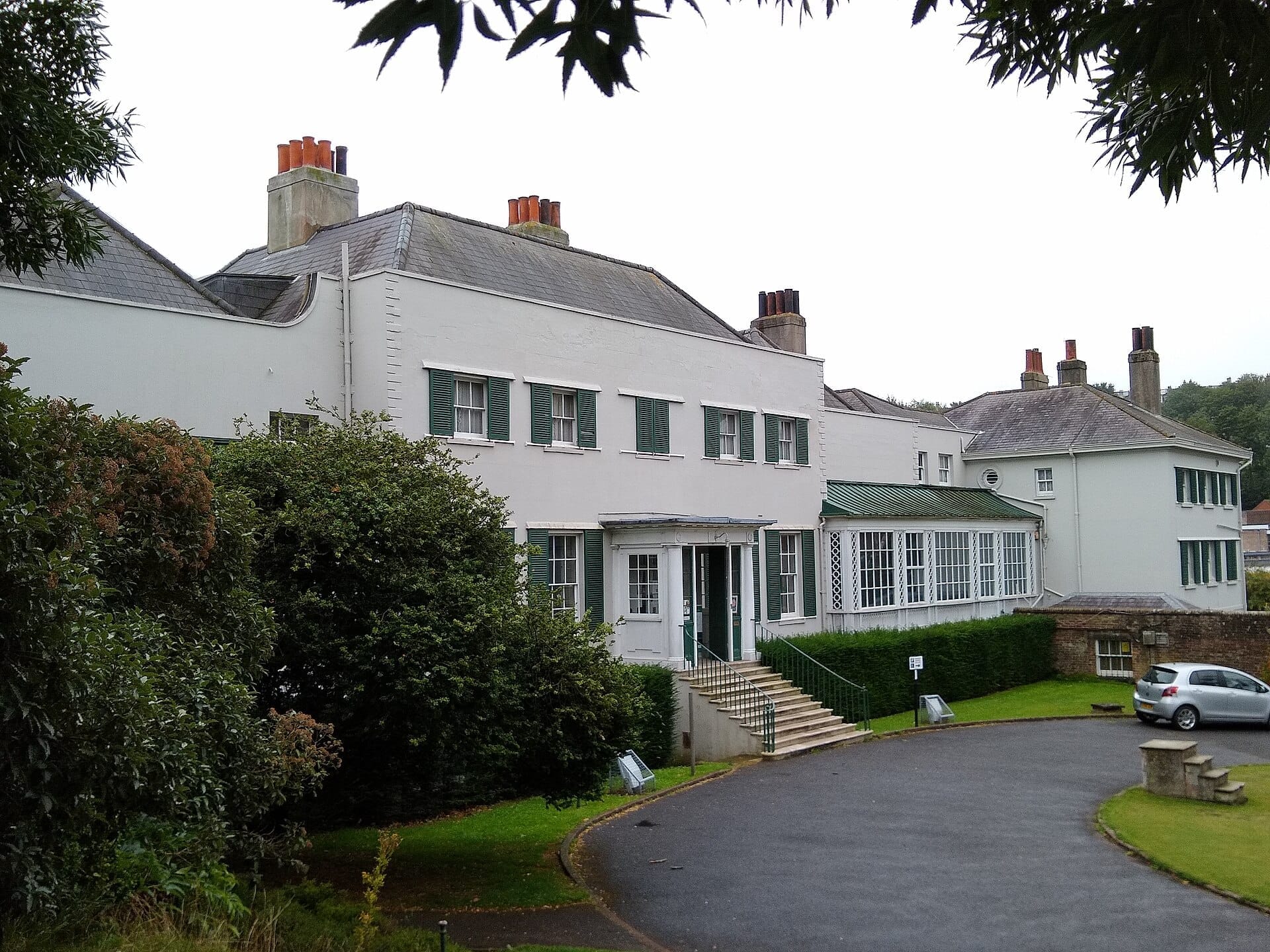
Preston Manor is not the kind of grand aristocratic pile you find in the Cotswolds. It is a compact, unusually intimate historic house museum with a strongly Edwardian character set beside Preston Park in the northern suburbs of Brighton, and that intimacy is precisely what makes it interesting. The rooms were preserved and presented largely as they appeared in 1905, when the Thomas-Stanford family carried out a major renovation and enlargement of an existing 18th-century structure. Walking through it feels less like visiting a stately home and more like stepping, uninvited, into a household that paused mid-morning and never resumed.
The house sits within the Preston Village Conservation Area, a quiet enclave that retains the feel of the village that existed here long before Brighton expanded to absorb it. The manor stands at the heart of this — a Grade II* listed building operated by Brighton & Hove Museums as part of the Royal Pavilion and Museums Trust. The gardens are included in the admission price and add a genuinely pleasant layer to the visit.
ℹ️ Good to know
Preston Manor is open seasonally: Friday to Monday, 10:00–17:00, from 14 March to 30 November (2026 season). Last admission is 16:15. It is closed Tuesday to Thursday. Always check opening dates at brightonmuseums.org.uk before you travel.
A History That Starts in the Domesday Book
The site of Preston Manor was recorded in the Domesday Book of 1086 as a manor belonging to the Bishop of Chichester. That is not a marketing claim — the documentary evidence for continuous habitation on this land stretches back nearly a thousand years, which gives the place a weight that newer attractions simply cannot manufacture. The medieval structure gave way to a rebuilt house in the late 18th century under Thomas Western, and it was this 18th-century core that the Thomas-Stanford family dramatically enlarged and renovated from 1905 under architect Charles Stanley Peach.
The 1905 renovation is the defining event in Preston Manor's visual identity. Peach's work created the Edwardian country house aesthetic you see today: solid, comfortable, confident, and conspicuously tasteful. Sir Charles and Lady Ellen Thomas-Stanford collected furniture, silverware, porcelain, and art across their lifetimes, and when the manor was bequeathed to Brighton Corporation and opened to the public as the Thomas-Stanford Museum in 1933, that collection came with it. It remains largely intact, which is unusual. Most comparable houses were stripped during the 20th century; here, the contents stayed.
If you want to understand the broader architectural character of Brighton's historic buildings, the Brighton Regency architecture guide provides useful context for the city's layered building heritage, from seafront terraces to inland manor houses.
Tickets & tours
Hand-picked options from our booking partner. Prices are indicative; availability and final rates are confirmed when you complete your booking.
Brighton city lights flight with welcome drink
From 21 €Instant confirmationCycle along the beachfront with Brighton Beach Bikes hire
From 7 €Instant confirmationFree cancellationTour Brighton's highlights with an exploration game mobile app
From 10 €Instant confirmationFree cancellationExplore Brighton self-guided walking tour using an app
From 11 €Instant confirmation
Moving Through the House: What You Actually See
The visit is self-guided, and the house is arranged across multiple floors, each with a distinct character. Downstairs, the servants' quarters are preserved with a directness that most historic houses sanitise away. The kitchen, scullery, and below-stairs rooms show the material reality of running an Edwardian household: the range, the dressers loaded with copper, the bells above the door that connected to every room upstairs. It is functional and unglamorous in the most revealing way.
The ground-floor reception rooms are the most photogenic part of the house. The drawing room has the particular quality of rooms that were designed to be used and looked at simultaneously: good proportions, natural light from the garden side, and period furniture arranged as though the family left an hour ago. The dining room is formal without being oppressive. Throughout, the textiles, wall coverings, and small decorative objects give a sense of material culture that a purely architectural visit cannot deliver.
Upper floors bring you into the family's private spaces: bedrooms, dressing rooms, and a bathroom that illustrates just how much plumbing had advanced by 1905. The scale is domestic throughout. Nothing here is built to impress visiting dignitaries. It was a home, and it reads as one.
💡 Local tip
Carry a cardigan or light layer even on summer visits. The house retains a cool, slightly damp quality year-round — which adds to the atmosphere but surprises visitors who arrive straight from a warm afternoon in Preston Park.
The Gardens and Grounds
The walled garden to the rear of the manor is a significant part of the visit and should not be rushed through on the way to the exit. It is a formal kitchen garden design with planting that reflects the period, and in summer the mix of productive and ornamental planting gives it a density and fragrance that the house interior cannot match. On a warm morning, with the walls trapping the heat and the borders in full growth, it is the most immediately pleasant part of the whole site.
The grounds connect practically with Preston Park immediately adjacent, which means that a combined visit to the manor and a walk through the park is an easy half-day itinerary. Preston Park itself is worth time: it is Brighton's largest park, with a large walled rockery and a separate rose garden. Neither requires additional admission.
For a full day in the green spaces of northern Brighton, consider combining Preston Manor with a visit to Stanmer Park, a larger estate a short drive or bus ride further north, which has its own historic house and woodland walks.
Visiting by Time of Day and Season
Morning visits, arriving close to the 10:00 opening, give you the house almost to yourself. The light through the east-facing windows of the ground floor is at its best in the first two hours, and the relative quiet allows the details of each room — the patina on the woodwork, the weight of the curtains, the arrangement of objects on mantelpieces — to register properly. By early afternoon on weekends in summer, the house is noticeably busier, and the rooms feel smaller under larger groups.
Autumn visits have a particular case to be made for them. The gardens move into a different phase in September and October, the visitor numbers drop sharply after the school holidays end, and the cooler light suits the interior of the house better than the bleaching brightness of July. The manor is open until 30 November, and October visits on a dry morning can be among the most atmospheric.
Weather matters more here than at some indoor attractions because the garden is a substantial part of the experience. A wet day makes the walled garden significantly less appealing, though the house itself is entirely sheltered. If you are planning a garden-focused visit, check the forecast for a dry window.
For broader seasonal planning, the best time to visit Brighton guide covers how visitor numbers, weather, and attraction availability shift through the year across the whole city.
Getting There and Practical Details
The most straightforward route from Brighton city centre is by train. Preston Park station is one stop north of Brighton station on Southern and Thameslink services, and the manor is about a 10-minute walk from the station exit. The walk takes you through a residential area before the park comes into view — follow signs for Preston Park and look for Preston Drove running along the eastern edge.
By bus, Brighton and Hove Buses routes along the A23 London Road corridor serve the area; check current route numbers and stops at buses.co.uk before travelling, as service details change. The address is Preston Manor, Preston Drove, Brighton, BN1 6SD, which works accurately in mapping apps.
The manor operates card payment only — no cash is accepted. Brighton and Hove residents (postcodes BN1, BN2, BN3, BN41) qualify for a reduced adult rate of £10.50 including up to four children; bring proof of address. Carers accompanying a ticket holder enter free. For specific accessibility requirements, contact the museum directly on 03000 290900 or at info@rpmt.org.uk before visiting, as the historic building has constraints that vary by floor.
⚠️ What to skip
The manor is closed Tuesday to Thursday throughout the season, and fully closed from December to mid-March. Several visitors arrive unaware of the Thursday closure in particular. Check the exact 2026 season dates at brightonmuseums.org.uk before making the journey.
Photography and What to Bring
The interiors photograph well but require patience. The room lighting is kept low to protect the collections, and the windows create strong contrast on sunny days. A camera or phone that handles mixed and low light will serve you better than one that defaults to flash. Photography for personal use is generally permitted; confirm any restrictions with staff at the entrance.
For the gardens, afternoon light from the south reaches over the walled enclosure in summer and lights the beds from a flattering angle. The texture of the old brick walls, which retain heat and develop a patina over decades, makes for interesting detail work beyond the obvious wide-angle garden shots.
Who Should Consider Skipping It
Preston Manor is not a fast, high-stimulus experience. If your priority is the energy of the seafront, the amusements of the pier, or the independent shops of North Laine, this will feel like a detour that demands more time and effort than the reward justifies. The admission price is relatively high for a house of this scale compared to some free civic museums in Brighton.
Young children under about eight often struggle with the format: it is a house full of fragile and significant objects, with no hands-on displays, no obvious interactive elements, and rooms that require stillness and attention. Families with very young children may find the experience more stressful than enjoyable.
If you are looking for free or lower-cost museum options in Brighton, the best museums in Brighton guide covers the full range of the city's collections, including free-entry options like the Brighton Museum and Art Gallery in the city centre.
Insider Tips
- Arrive at opening time on a Friday — the first hour after 10:00 on a weekday is often the quietest of the entire week, and you can move through the ground-floor rooms without queuing at doorways.
- The servants' quarters are the most overlooked part of the house. Most visitors move quickly towards the formal reception rooms, which means the below-stairs spaces are frequently empty and can be read in detail without interruption.
- If you are combining the visit with Preston Park, enter the park through the gate adjacent to the manor rather than from the main road entrance — it puts you immediately into the quieter, northern section of the park with the walled rockery nearby.
- Brighton and Hove residents (BN1, BN2, BN3, BN41 postcodes) pay £10.50 for an adult ticket including up to four children — roughly £3.50 less than the standard adult rate alone. Bring proof of address and make sure the person booking has the qualifying postcode.
- The walled garden is at its best in June and July when the planting is fullest. Come specifically for the garden in those months and arrive in the morning before the walls trap significant heat.
Who Is Preston Manor For?
- History and social history enthusiasts who want to understand how prosperous Edwardian households actually functioned
- Architecture and interior design visitors interested in intact period interiors with original collections
- Travellers seeking a quieter, slower-paced attraction away from the seasonal crowds of Brighton seafront
- Families with older children (roughly 9 and up) who can engage with a guided or self-guided historic house format
- Photographers looking for interior and garden subjects with historical character and good natural light
Nearby Attractions
Combine your visit with:
- Booth Museum of Natural History
Founded in 1874 by naturalist Edward Thomas Booth, the Booth Museum of Natural History is Brighton's free natural history collection housed in a Grade II listed Victorian building on Dyke Road. With over 525,000 specimens, from British birds to butterfly drawers and dinosaur bones, it is one of the most significant natural history collections in southern England. Note: closed to the public since 20 April 2025 for essential works; special event days only, with reopening targeted for later 2026 or early 2027.
- Brighton Racecourse
Perched on Whitehawk Hill roughly a mile from the coast, Brighton Racecourse is one of England's most unusual flat racing venues. The horseshoe-shaped track, open from April to October, offers panoramic views across the city and out to the English Channel, alongside a race day atmosphere that ranges from relaxed midweek afternoons to packed summer festivals.
- Devil's Dyke
Perched around 215 metres above sea level on the South Downs, Devil's Dyke is a National Trust countryside site just north of Brighton. Claimed to be the longest, deepest and widest dry valley in Britain, it offers panoramic views stretching from the English Channel to the Surrey Hills, free access year-round, and walking routes ranging from a gentle ridge stroll to a steep valley descent.
- Preston Park
Preston Park is Brighton's largest public park, spanning 63 acres north of the city centre and open every day at no charge. Opened officially in 1883, it offers sports facilities, formal gardens, open lawns, and a rare sense of genuine local life away from the tourist trail.