Brighton Racecourse: A Hilltop Course With Sea Views and 240 Years of History
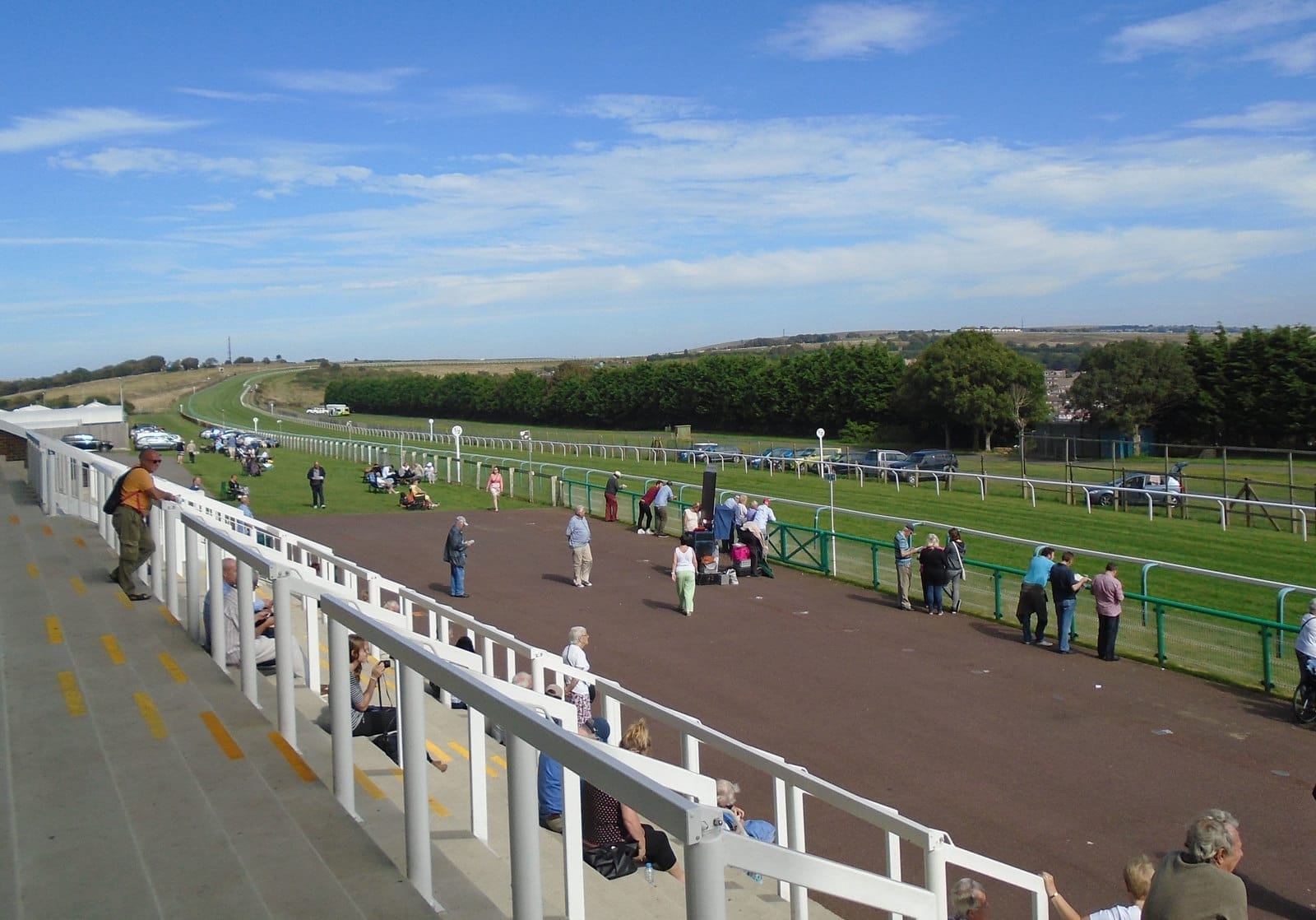
Perched on Whitehawk Hill roughly a mile from the coast, Brighton Racecourse is one of England's most unusual flat racing venues. The horseshoe-shaped track, open from April to October, offers panoramic views across the city and out to the English Channel, alongside a race day atmosphere that ranges from relaxed midweek afternoons to packed summer festivals.
Quick Facts
- Location
- Freshfield Road, Brighton, East Sussex, BN2 9XZ
- Getting There
- Bus No. 2 or No. 22 from Churchill Square towards Woodingdean to stops near Race Hill, then a short uphill walk to the racecourse. Free on-site parking by car.
- Time Needed
- 3–5 hours for a full race day; 1–2 hours for a casual visit
- Cost
- Ticket prices vary by fixture — check the official website. Children under 18 enter free with a ticket-holding adult at most fixtures.
- Best for
- Race day atmosphere, panoramic city and sea views, family days out, summer events
- Official website
- www.brighton-racecourse.co.uk
What Brighton Racecourse Actually Is
Brighton Racecourse is a flat racing venue that has operated on the eastern edge of the city since 1783, making it one of the longest-running racecourses in England. It sits on Whitehawk Hill at roughly 400 feet above sea level, which means the views from the grandstand stretch over Brighton's rooftops and out across the English Channel on a clear day. That elevation is part of what makes the course distinctive: you are not just watching horses, you are watching them run across the top of the South Downs escarpment with the sea as a backdrop.
The track itself is unusual by British standards. It is a left-handed, horseshoe-shaped course of one mile and four furlongs, and unusually for British racing, it does not form a complete circuit. Horses start on the eastern side of the hill and run downhill before climbing again toward the finish, which means the going underfoot and the pace of a race can change considerably within a single furlong. For serious racing followers, this undulation makes Brighton form tricky to interpret. For casual visitors, it makes the racing visually dynamic in a way that flat oval tracks simply are not.
ℹ️ Good to know
Ticket prices are not fixed year-round and vary by fixture. Always check the official Brighton Racecourse website before visiting, as some race days have multiple pricing tiers depending on enclosure and day type. Children under 18 attend free with a ticket-holding adult at most fixtures.
Getting There: Practical Routes and Parking
The racecourse address is Freshfield Road, Brighton, BN2 9XZ. By public bus, routes No. 2 and No. 22 run from Churchill Square Shopping Centre (Stop H) in the city centre toward Woodingdean, stopping near Race Hill, from where it is a short uphill walk to the course. Journey time from the centre is typically under 20 minutes. For larger race day events, a courtesy shuttle bus may run from Brighton Railway Station to the racecourse during the Brighton Festival of Racing; check in advance.
By car from the A27 Brighton bypass, follow signs for Sussex University, take the B2123 toward Woodingdean, turn right at the traffic lights, and the racecourse entrance appears approximately a mile along on the left. Parking on site is free, which is a genuine practical advantage over many UK racecourses where car parking adds a significant cost. From the seafront, the drive east along Marine Parade past Brighton Palace Pier, then inland via Lower Rock Gardens and Edward Street into Freshfield Road, takes roughly 10 to 15 minutes in normal traffic.
💡 Local tip
If you are arriving by train from London, the shuttle bus from Brighton station on Festival of Racing days removes the need to navigate local buses with luggage or large groups. Check the Brighton Racecourse website before travel to confirm whether the shuttle is operating for your specific fixture.
Tickets & tours
Hand-picked options from our booking partner. Prices are indicative; availability and final rates are confirmed when you complete your booking.
Brighton city lights flight with welcome drink
From 21 €Instant confirmationCycle along the beachfront with Brighton Beach Bikes hire
From 7 €Instant confirmationFree cancellationTour Brighton's highlights with an exploration game mobile app
From 10 €Instant confirmationFree cancellationExplore Brighton self-guided walking tour using an app
From 11 €Instant confirmation
The Racing Season: April to October
The racecourse runs flat racing fixtures from April through to October, with no winter jumping programme. This seasonal calendar means the course is genuinely weather-dependent. April and May meetings can be cool and breezy at this exposed hilltop site, with the wind off the Channel cutting through even on dry days. A layer that was unnecessary on Brighton seafront can feel essential up on Race Hill. By July and August, the same exposed position that makes spring feel raw becomes an asset: the hilltop catches any coastal breeze, and on hot summer days the racecourse is noticeably more comfortable than the crowded seafront below.
The Brighton Festival of Racing, typically held in late July or August, is the calendar highlight. It draws larger crowds, more festival-style hospitality, and heightened atmosphere. Midweek fixtures outside this window offer a quieter, more intimate version of the same racecourse: smaller crowds, less formal dress, and the same views without the shoulder-to-shoulder bustle. For visitors who want to watch racing without fighting for a good vantage point, a quieter early-summer fixture may offer a better experience than peak-season days.
If you are planning a summer visit to Brighton more broadly, the Brighton in summer guide covers how the racing sits alongside the city's other seasonal attractions, from beach days to the festival calendar.
What the Experience Looks and Feels Like
Arriving at Brighton Racecourse, the first thing most visitors notice is the scale of the view. Standing by the grandstand rail with racing binoculars in hand, you can see the full sweep of the Sussex coast stretching east toward Saltdean and west past the Palace Pier. On very clear days the distant outline of the coast is visible on the horizon. The smell of cut grass and horse liniment mixes with food concession aromas from the enclosures below, and the low thrum of the crowd before the off carries a particular kind of anticipation that is specific to racecourses and nothing else.
The racing itself is fast. Flat races over shorter distances are over in under two minutes, which means the concentration of action is intense but brief. The undulating track means horses are not always visible for the full race: they dip behind the crest of the hill before reappearing on the run to the finish. This is part of what makes Brighton different from a straightforward flat oval. Watching through binoculars from the grandstand as the field comes over the rise and accelerates toward you is one of those small sensory moments that stays with you after the day is done.
In terms of dress, Brighton Racecourse is relaxed by national standards. There is no strict formal dress code in the general enclosures. Some visitors dress up, particularly for feature race days and the Festival of Racing, but a smart-casual approach is entirely appropriate for most fixtures. Comfortable shoes are worth considering given the slope of the ground.
The Racecourse's Place in Brighton's History
Racing at Brighton dates to 1783, making it roughly contemporary with the early development of Brighton as a fashionable resort under royal patronage. The Prince of Wales, later George IV, was a regular visitor to Brighton from the 1780s and had an active interest in horseracing. The parallel development of racing on Whitehawk Hill and the transformation of the Royal Pavilion into its distinctive Indo-Saracenic form happened across the same decades, both expressions of the Regency-era enthusiasm for Brighton as a place of leisure.
That historical context gives the racecourse a cultural depth beyond its function as a sports venue. It is one of the oldest continuously operating parts of Brighton's entertainment landscape. For the architectural and historical side of that era, the Royal Pavilion less than two miles away tells that same Regency story through its buildings, and a single day can reasonably include both.
Whitehawk Hill itself has a prehistory that long predates the racecourse. The hill is home to one of Britain's oldest Neolithic causewayed enclosures, Whitehawk Camp, dating back around 5,500 years. While the camp is not formally part of the racecourse visitor experience, sections of the earthworks survive in the landscape around the course. This is not information you will find on the raceday programme, but it adds a genuine layer of place to a site that might otherwise feel purely functional.
Photography, Views, and When to Visit
Photographically, the best light at Brighton Racecourse is in the morning before racing begins, when the low sun catches the South Downs to the north and the sea glitters below. During race days the grandstand area can be crowded, which makes individual composition difficult. The finish line area offers clear sightlines for racing shots, but serious equine photography typically requires a press pass or specific event access. For landscape photography, simply arriving early and walking the perimeter fencing before crowds build gives access to views that daytime racegoers rarely see.
The best overall months to visit are June, July, and early September. June offers long daylight hours and typically more settled weather than April and May. July is peak season with larger crowds and a more festive atmosphere. Early September fixtures often retain good weather while crowds thin noticeably compared to August, and the light at that latitude takes on a clarity that summer heat haze removes.
⚠️ What to skip
The hilltop position means weather conditions at the racecourse can differ significantly from the seafront below. Wind is stronger and temperatures feel lower, especially for evening fixtures and early spring meetings. Check the forecast specifically for the Whitehawk Hill area rather than central Brighton before deciding what to wear.
For a broader view of when to time a Brighton trip around weather and events, the best time to visit Brighton guide provides seasonal context that applies beyond the racecourse alone.
Who This Attraction Suits — and Who It Does Not
Brighton Racecourse works well for visitors who want something beyond the seafront and city centre options, families looking for a full-afternoon outdoor event with free children's admission, people with a genuine interest in flat racing and form, and anyone who would appreciate panoramic views over Brighton from a point most tourists never reach. The combination of sport, spectacle, and landscape gives it a breadth that pure sightseeing attractions do not always have.
It is less suited to visitors with very limited time in Brighton on a non-race day, those looking for a year-round option (the season closes in October), or anyone expecting the manicured grandeur of Ascot or Epsom. Brighton is a working racecourse with a local, sometimes rough-edged character. The facilities are functional rather than luxurious outside the premium hospitality areas. That directness is part of its character, but it is worth knowing before you go. Visitors with specific mobility requirements should contact the racecourse directly before attending, as detailed step-free access information is not comprehensively documented in publicly available sources.
If you are weighing the racecourse against other less-central Brighton options, the Brighton hidden gems guide offers useful alternatives for visitors who want to move beyond the main tourist circuit.
Insider Tips
- Buses No. 2 and No. 22 from Churchill Square drop you directly at the Race Hill stop, which saves the uphill walk from any nearby parking if you miss the turning for the racecourse car park.
- Midweek fixtures outside the Festival of Racing period are significantly less crowded than weekend summer meetings. If your priority is watching the racing clearly rather than experiencing a big event, a Tuesday or Wednesday fixture in June gives you better vantage points and shorter queues.
- The Whitehawk Camp Neolithic earthworks survive in the landscape around the racecourse. If you arrive early, walking the outer boundary before the crowds build gives you a sense of how ancient this hilltop location actually is, long predating the racecourse itself.
- Children under 18 attend free with a ticket-holding adult at most fixtures, which makes this one of the more affordable family days out in Brighton during the summer months. Confirm the specific fixture when buying tickets, as conditions occasionally differ for premium race days.
- The hilltop position catches wind year-round. Even on warm summer days when the seafront feels still, the racecourse can be noticeably breezy. A light layer in a bag costs nothing and prevents an otherwise good afternoon from becoming uncomfortable.
Who Is Brighton Racecourse For?
- Families wanting a full afternoon outdoor event with free children's admission at most fixtures
- Flat racing enthusiasts who appreciate the challenge of an undulating horseshoe track
- Visitors looking for panoramic views over Brighton and the Channel away from the seafront crowds
- Anyone wanting a summer event with genuine atmosphere that goes beyond the standard Brighton tourist circuit
- Day-trippers from London who want to combine a race day with Brighton's city centre in a single visit
Nearby Attractions
Combine your visit with:
- Booth Museum of Natural History
Founded in 1874 by naturalist Edward Thomas Booth, the Booth Museum of Natural History is Brighton's free natural history collection housed in a Grade II listed Victorian building on Dyke Road. With over 525,000 specimens, from British birds to butterfly drawers and dinosaur bones, it is one of the most significant natural history collections in southern England. Note: closed to the public since 20 April 2025 for essential works; special event days only, with reopening targeted for later 2026 or early 2027.
- Devil's Dyke
Perched around 215 metres above sea level on the South Downs, Devil's Dyke is a National Trust countryside site just north of Brighton. Claimed to be the longest, deepest and widest dry valley in Britain, it offers panoramic views stretching from the English Channel to the Surrey Hills, free access year-round, and walking routes ranging from a gentle ridge stroll to a steep valley descent.
- Preston Manor
Preston Manor is a Grade II* listed historic country house museum in Brighton, open seasonally beside Preston Park. With rooms preserved as they were in 1905 and a history recorded in the Domesday Book, it offers a rare glimpse into upper-middle-class Edwardian life — a world away from the seafront crowds.
- Preston Park
Preston Park is Brighton's largest public park, spanning 63 acres north of the city centre and open every day at no charge. Opened officially in 1883, it offers sports facilities, formal gardens, open lawns, and a rare sense of genuine local life away from the tourist trail.