Booth Museum of Natural History: Brighton's Victorian Cabinet of Curiosities
Founded in 1874 by naturalist Edward Thomas Booth, the Booth Museum of Natural History is Brighton's free natural history collection housed in a Grade II listed Victorian building on Dyke Road. With over 525,000 specimens, from British birds to butterfly drawers and dinosaur bones, it is one of the most significant natural history collections in southern England. Note: closed to the public since 20 April 2025 for essential works; special event days only, with reopening targeted for later 2026 or early 2027.
Quick Facts
- Location
- 194 Dyke Road, Brighton, BN1 5AA
- Getting There
- Brighton railway station, then bus along Dyke Road
- Time Needed
- 1.5 to 2 hours
- Cost
- Free when open; currently closed for essential works (since 20 Apr 2025)
- Best for
- Natural history enthusiasts, families, Victorian architecture lovers
- Official website
- brightonmuseums.org.uk/booth
Important: The Museum Is Currently Closed
⚠️ What to skip
The Booth Museum of Natural History closed on 20 April 2025 for essential works. It remains closed to the public except for special event days; reopening is targeted for later 2026 or early 2027. Check the official website at brightonmuseums.org.uk/booth/ before visiting.
For travellers planning ahead, the closure is worth noting early. The museum has been closed since 20 April 2025 for essential infrastructure and collection improvements, with special event days only during the works. Reopening is targeted for later 2026 or early 2027 — treat that as provisional and check official updates. This guide covers everything you need to plan a future visit.
What Kind of Place Is This?
There is a category of museum that exists entirely outside the logic of modern attraction design, and the Booth Museum belongs firmly to it. No gift shop theatrics. No touchscreen interactives dominating every wall. Instead, row upon row of glass cases holding thousands of mounted British birds, their plumage still vivid after a century and a half, arranged with the obsessive precision of a Victorian collector who genuinely believed that scientific completeness was a moral duty. The effect, for visitors encountering it for the first time, tends toward the quietly overwhelming.
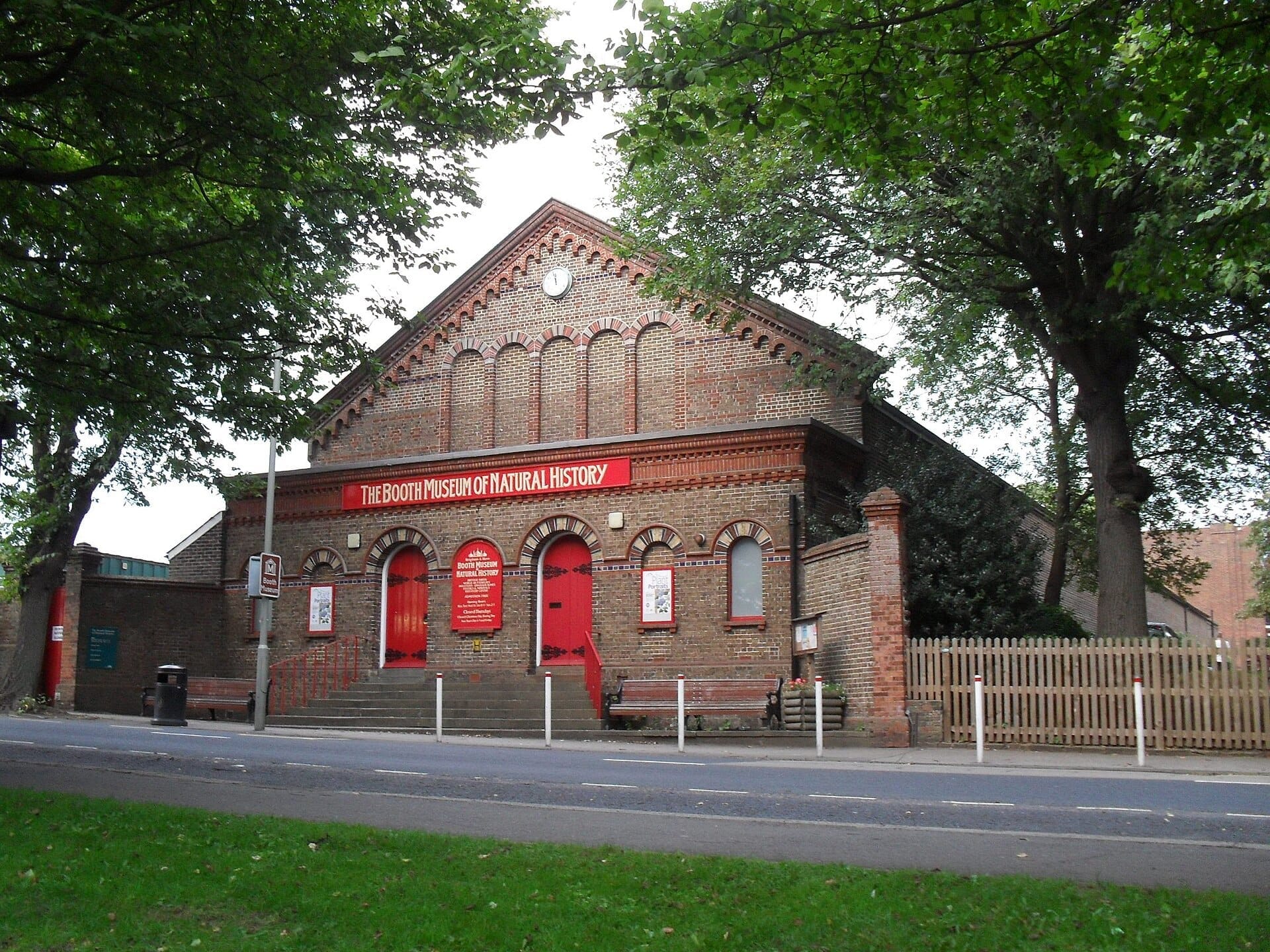
The building itself, a purpose-built Victorian structure on Dyke Road in north Brighton, was constructed in 1874 to house Edward Thomas Booth's private collection. It is Grade II listed, which means its exterior and much of its interior fabric are protected by law. That listing captures something real about the place: the architecture and the collection were conceived together, the long gallery lit from above designed specifically to display taxidermy at eye level in natural light.
For context on how the Booth sits within Brighton's wider cultural landscape, the best museums in Brighton guide covers the full range of the city's collections, from contemporary art to local history.
Tickets & tours
Hand-picked options from our booking partner. Prices are indicative; availability and final rates are confirmed when you complete your booking.
Brighton city lights flight with welcome drink
From 21 €Instant confirmationCycle along the beachfront with Brighton Beach Bikes hire
From 7 €Instant confirmationFree cancellationTour Brighton's highlights with an exploration game mobile app
From 10 €Instant confirmationFree cancellationExplore Brighton self-guided walking tour using an app
From 11 €Instant confirmation
The Man Behind the Collection: Edward Thomas Booth
Edward Thomas Booth was a Victorian naturalist of independent means whose approach to ornithology was comprehensive to the point of obsession. Between the 1860s and his death in 1890, he collected and mounted specimens of virtually every bird species found in Britain, focusing particularly on showing birds in naturalistic habitat dioramas rather than simply mounting them on bare perches. His dioramas, many of which still occupy the museum's long gallery, depict birds against reconstructed landscapes of heather, shoreline, and woodland.
Booth donated the entire collection to Brighton Corporation in 1890, and the museum opened to the public in 1891, the year after his death. The collection has been expanded considerably since then, growing to over half a million specimens across birds, insects, fossils, and other natural history material. But the core of Booth's original dioramas remains the heart of what makes this museum unusual: they represent one of the most complete surviving examples of high-Victorian natural history display in England.
The Collection: What You Will Actually See
The centrepiece is the long gallery of bird dioramas, running the length of the building. Each case contains one or more mounted birds positioned within a small painted and textured habitat scene. Some cases show pairs, some show family groups, others show a single bird mid-action. The craftsmanship varies across the decades of the collection's development, but the overall impression is of extraordinary density. Booth was not collecting for minimalist display.
Beyond the bird dioramas, the museum holds extensive collections of British and world insects, including thousands of butterfly and beetle specimens arranged in shallow wooden drawers that visitors can pull open. There are fossils, including dinosaur material, and a skeleton gallery. The insect collection in particular rewards slow looking: the iridescent geometry of a well-arranged set of beetles has a strange visual logic that is hard to explain but easy to get absorbed in.
The museum is not enormous by the standards of national institutions, which is part of its appeal. Unlike larger venues where collection fatigue sets in after an hour, the Booth's scale invites the kind of careful, room-by-room attention that its collections deserve. Plan for 90 minutes as a comfortable minimum, and longer if your group includes children interested in fossils or people who read every label.
The Experience at Different Times of Day
When open, the Booth Museum tends to be quieter than seafront attractions at almost any hour, which is one of its genuine advantages. Weekday mornings are the calmest, with school visits the main source of groups. The natural light in the main gallery shifts through the day as it comes from above through the roof glazing, and the bird cases look particularly vivid in the softer light of overcast mornings, which are common on the Sussex coast for much of the year.
Weekend afternoons bring families, and the fossil and skeleton areas become significantly busier as children cluster around the dinosaur material. If you want a more contemplative experience of the Victorian diorama gallery, a weekday visit after school groups have departed in the late morning tends to be the quietest window. The museum sits away from the main tourist circuits of the seafront and North Laine, so it rarely becomes crowded in the way that central Brighton attractions do even in summer.
💡 Local tip
The Booth Museum is on Dyke Road, which runs roughly north from the city centre toward Devil's Dyke. A visit pairs naturally with a walk up through Preston Park or, for the energetic, a trip further north into the South Downs. Check bus routes from Brighton station along Dyke Road before you visit, as the museum is not within comfortable walking distance of the seafront.
Architecture and Setting
The building's Victorian Gothic character is evident from the outside, a solid, purposeful structure that announces itself as a place of serious collection rather than casual entertainment. The Grade II listing reflects not just the building's age but its architectural coherence: it was designed for a specific function and retains that functional logic in a way that many adapted Victorian buildings do not. The roof glazing over the main gallery, the proportions of the display cases, and the layout of the rooms all reflect a considered Victorian idea of how natural history should be encountered.
The surrounding stretch of Dyke Road has a quieter residential character than central Brighton, which gives the approach to the museum a different texture from the busier seafront neighbourhoods. There is nothing performative about the location. You are visiting a museum that was built where Edward Thomas Booth decided to build it, in a part of the city that has grown up around it over the past 150 years.
If Victorian architecture interests you beyond the museum itself, the Brighton Regency architecture guide covers the city's wider built heritage in depth, including the Royal Pavilion and the Kemp Town estate.
Practical Information for Your Visit
Admission to the Booth Museum of Natural History is free when open. The museum has been closed to the public since 20 April 2025 for essential works, with special event days only and reopening targeted for later 2026 or early 2027. Check the official Brighton Museums website for confirmed reopening dates before planning a visit.
The museum is at 194 Dyke Road, Brighton, BN1 5AA. Brighton railway station is the main transport hub for the city, with frequent services from London Victoria, London Bridge, and Gatwick Airport. From the station, buses run along Dyke Road and represent the most practical public transport option. Uber and Bolt both operate in Brighton for those preferring a direct transfer.
On accessibility, the museum's documentation notes that assistance dogs are welcome. For detailed accessibility information including step-free access, contact the museum directly through the official website before your visit, as the essential works may result in accessibility improvements.
If you are planning a broader visit to Brighton around a trip to the Booth, the weekend in Brighton guide offers a practical itinerary framework, and the Brighton on a budget guide is worth reading since the Booth's free admission makes it a natural fit for cost-conscious trips.
Photography
The Booth Museum is a photographer's puzzle. The bird dioramas are behind glass, which creates reflections from the overhead natural light, and flash photography is generally discouraged in collections of this age. The best results come from shooting at an angle to reduce glare and using the ambient light from the roof glazing rather than supplementing with artificial light. The insect drawer collections, when pulled open and photographed from directly above, produce striking images of natural geometry. The building's Victorian interior, including its case joinery and the proportions of the gallery space, also rewards architectural photography.
Insider Tips
- The butterfly and insect drawers are not always prominently signposted. Ask staff when you arrive whether the drawer collections are accessible on the day, as some sections are periodically closed for conservation work.
- The museum sits close to the route toward Devil's Dyke. If you are combining a museum visit with a walk into the South Downs, Dyke Road becomes the natural corridor northward, and the journey from central Brighton by bus takes under 15 minutes.
- Weekday visits avoid the school-group clusters that form around the fossil and skeleton displays on weekend mornings. If you have children who will want uninterrupted access to the dinosaur material, a Tuesday or Wednesday afternoon is noticeably calmer than a Saturday.
- The building's natural overhead lighting means that overcast days, far from being a disappointment, actually produce more even and flattering light inside the bird diorama gallery than bright sunny days, which create harsher contrast through the roof glazing.
- Because admission is free, there is no pressure to justify the visit with a fixed amount of time. It is entirely reasonable to spend 40 minutes looking at nothing but Booth's original Victorian dioramas and leave feeling satisfied.
Who Is Booth Museum of Natural History For?
- Natural history enthusiasts who want depth and density rather than interactive spectacle
- Families with children interested in fossils, insects, or birds, particularly those who have exhausted the seafront attractions
- Photographers interested in Victorian taxidermy, natural geometry, and period interior architecture
- Travellers on a tight budget looking for a free, unhurried indoor experience away from the crowded seafront
- Anyone with an interest in Victorian collecting culture and the history of natural history as a discipline
Nearby Attractions
Combine your visit with:
- Brighton Racecourse
Perched on Whitehawk Hill roughly a mile from the coast, Brighton Racecourse is one of England's most unusual flat racing venues. The horseshoe-shaped track, open from April to October, offers panoramic views across the city and out to the English Channel, alongside a race day atmosphere that ranges from relaxed midweek afternoons to packed summer festivals.
- Devil's Dyke
Perched around 215 metres above sea level on the South Downs, Devil's Dyke is a National Trust countryside site just north of Brighton. Claimed to be the longest, deepest and widest dry valley in Britain, it offers panoramic views stretching from the English Channel to the Surrey Hills, free access year-round, and walking routes ranging from a gentle ridge stroll to a steep valley descent.
- Preston Manor
Preston Manor is a Grade II* listed historic country house museum in Brighton, open seasonally beside Preston Park. With rooms preserved as they were in 1905 and a history recorded in the Domesday Book, it offers a rare glimpse into upper-middle-class Edwardian life — a world away from the seafront crowds.
- Preston Park
Preston Park is Brighton's largest public park, spanning 63 acres north of the city centre and open every day at no charge. Opened officially in 1883, it offers sports facilities, formal gardens, open lawns, and a rare sense of genuine local life away from the tourist trail.