North Laine is Brighton's most distinctive urban quarter, a tight grid of Victorian terraces running north from the city centre to the railway station. It's where the city's independent spirit is most concentrated, with streets lined by record shops, vintage boutiques, plant-filled cafés, and arts venues. Whether you're passing through on arrival or spending a full day exploring, North Laine sets the tone for everything Brighton does well.
North Laine is the part of Brighton that visitors tend to mean when they say they love the city. Spread across a compact grid of Victorian streets between the railway station and North Street, it's where independent retail, café culture, street art, and some of Brighton's best cultural institutions collide in a way that feels genuinely local rather than manufactured for tourists.
Orientation
North Laine sits at the geographic and social heart of central Brighton, directly between Brighton railway station to the north and the older street network of The Lanes to the south. Its rough boundaries are Queens Road on the west, Grand Parade and Gloucester Place on the east, North Street along the south, and Trafalgar Street to the north. That makes it a compact area, easily walkable in its entirety in under 20 minutes, though most people spend far longer than that.
The key arterial streets running roughly north to south are Sydney Street, Kensington Gardens, Gardner Street and Bond Street. Trafalgar Street cuts diagonally from the station entrance down into the heart of the area. Cross-streets like Church Street and New Road connect North Laine to the Royal Pavilion estate and the Brighton Dome to the east, which means you can move between North Laine and those major attractions on foot in under five minutes.
To the south, North Laine blends into The Lanes, Brighton's older quarter of narrow passages and jewellery shops. The two areas feel quite different in character: The Lanes are more compressed, more tourist-facing, and architecturally older. North Laine has wider streets, a stronger residential presence, and a personality that skews younger and more eclectic. Understanding where one ends and the other begins helps you plan your day rather than wandering between them without a sense of place.
ℹ️ Good to know
Note the spelling: it's North Laine, not North Lane. The name derives from the Old English 'laine/layne', meaning a field or strip of land in the open-field system, and several of Brighton's historic field strips once ran across this area before Victorian development transformed it.
Character & Atmosphere
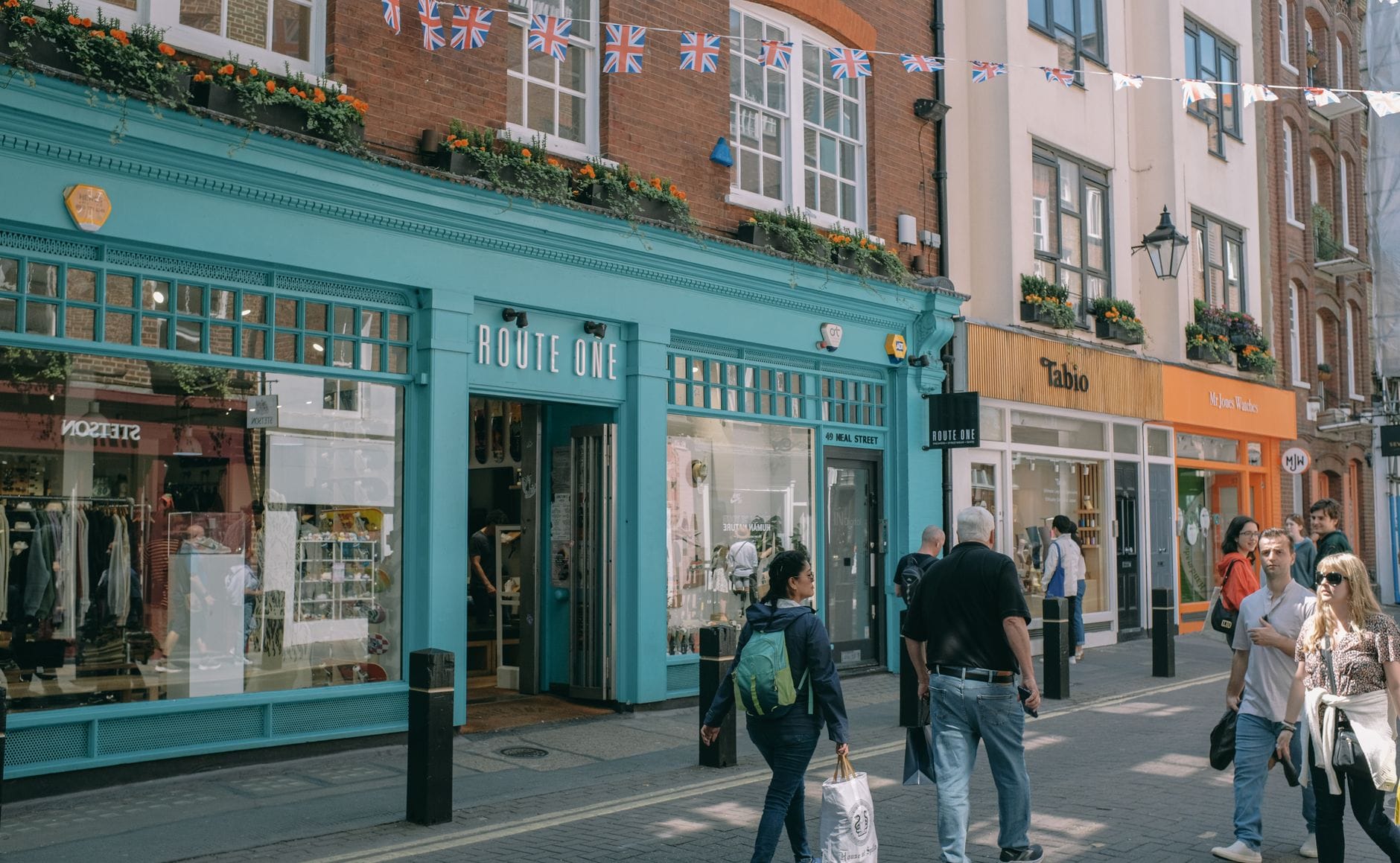
Arrive in North Laine on a weekday morning and the streets have a genuinely residential rhythm. Local residents collect coffee from the independent cafés on Sydney Street and Gardner Street, shop owners roll up awnings and prop handwritten chalkboard signs on the pavement, and the smell of fresh bread and coffee drifts out into streets that are, briefly, unhurried. The Victorian terraces have a particular quality in morning light: the brickwork picks up a warm amber tone and the shopfronts, many of them painted in deep greens, reds and navy, feel crisp and deliberate against it.
By midday on weekends, the character shifts. Kensington Gardens in particular becomes a slow procession of browsers, with outdoor stalls extending onto the pavement and the narrow pavements requiring a certain patience with the pace around you. This is when North Laine is at its most photographed and most crowded. The cafés fill up, queues form outside popular spots, and the area earns its reputation as a major draw. It's genuine and worth experiencing, but if you have any antipathy towards weekend crowds in compact urban streets, it's worth noting.
Afternoons bring a slightly more varied crowd, particularly along New Road and Church Street, where theatre-goers, gallery visitors and people sitting outside pub benches mix with the retail traffic. By early evening, the area transitions again: the shops begin to close but the pubs and restaurants fill, and the streets develop the particular energy of a neighbourhood that functions as both local community and visitor destination simultaneously. Late evenings are livelier around the pub strips but the streets are not the focus of the city's club scene, which is mostly south of North Street.
Street art is part of the visual fabric here. Murals cover the ends of terrace rows, shutters become canvases, and smaller paste-ups appear on the backs of signs and lower walls. The density and quality of the work changes over time, but it consistently adds to the sense that this is a place where self-expression is considered part of the street furniture rather than something to be removed.
What to See & Do
The cultural anchors of North Laine are clustered along its eastern edge, where the neighbourhood meets the Royal Pavilion estate. The Royal Pavilion itself, the extraordinary Indo-Saracenic seaside palace commissioned by the Prince Regent in the early 19th century, stands just beyond the New Road boundary. The Brighton Museum and Art Gallery sits within the Pavilion grounds and houses collections covering fine art, fashion, local history, and world cultures. Both are within a short walk from the heart of North Laine and between them represent a half-day of serious cultural content.
The Brighton Dome complex on Church Street is one of the most significant arts venues in the south of England outside London, hosting music, comedy, theatre and the city's major festivals. The Brighton Theatre Royal on New Road, a Georgian theatre dating to 1807, runs touring productions from the West End and national companies. These two venues give North Laine a cultural weight that goes well beyond its reputation for shopping.
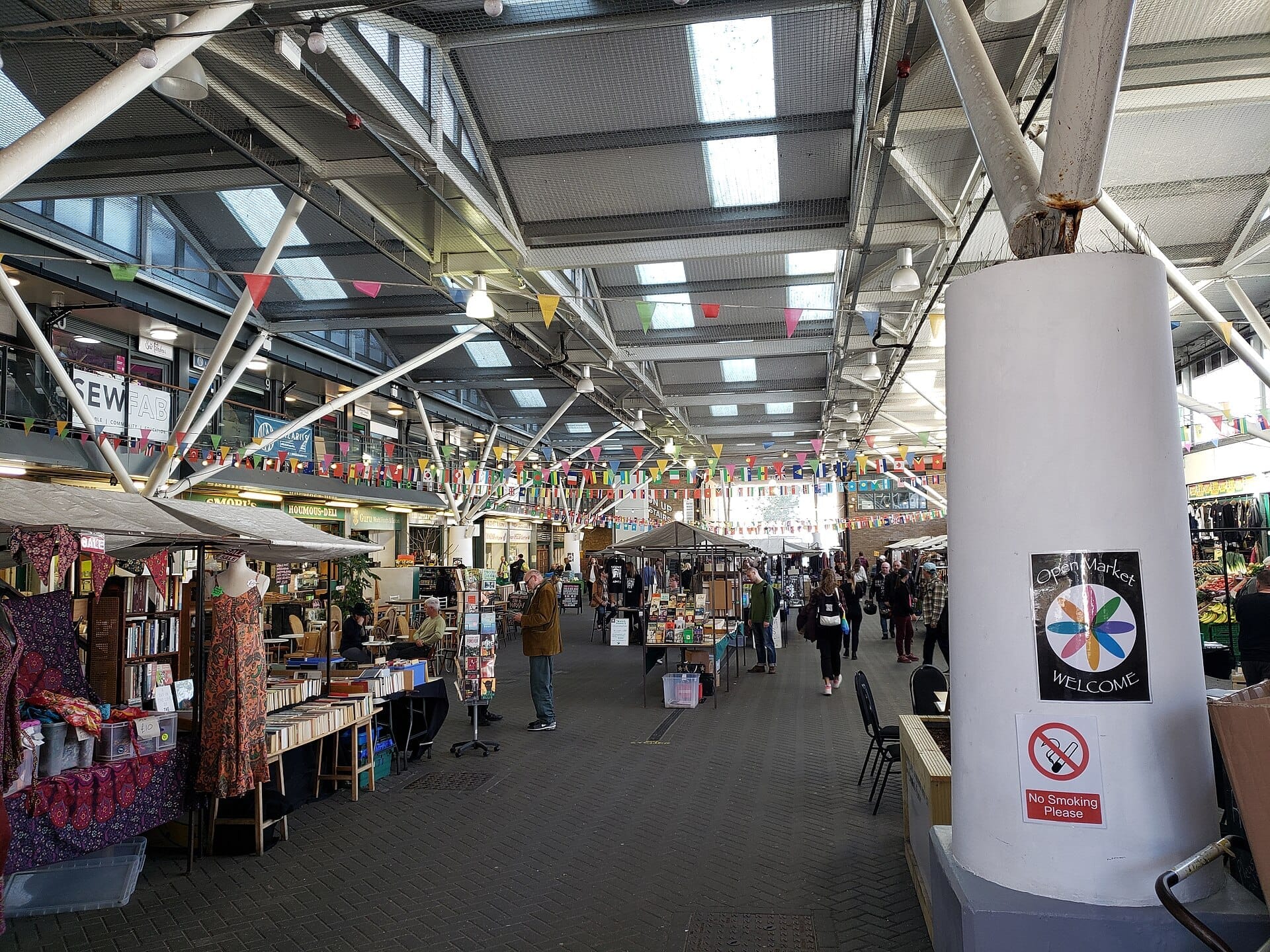
For something more eclectic, the Brighton Toy and Model Museum is tucked beneath Brighton station arches on Trafalgar Street. It's a genuinely idiosyncratic collection, not a visitor-centre experience, and easy to miss if you don't know it's there. Further along, Brighton Open Market on Marshall's Row near London Road provides a covered market with independent food traders, craft stalls, and produce sellers operating several days a week.
Walk the length of Sydney Street for the densest concentration of independent boutiques and record shops
Explore Kensington Gardens for outdoor stalls, vintage clothing and curio dealers
Browse the upper end of Gardner Street for antiques, second-hand books and specialist vinyl
Check what's on at the Brighton Dome or Theatre Royal before you visit as programming varies widely
Look for the murals on Trafalgar Street and the terrace end walls along Gardner Street and Bond Street
💡 Local tip
Snoopers Paradise on Kensington Gardens is worth singling out as a multi-floor antiques and collectables market with dozens of individual dealers under one roof. It's been a North Laine institution for decades and is the kind of place you can easily spend an hour without planning to. Opening hours vary so check ahead.
Eating & Drinking
North Laine has one of the highest concentrations of independent food and drink venues in Brighton. The area strongly favours independent ownership over chains, and the food culture reflects Brighton's general orientation towards plant-based eating, world cuisines and counter-service formats. If you want to explore the city's food scene in depth, the what to eat in Brighton guide gives a broader city-wide picture, but North Laine is a good place to start.
Cafés run along most of the main streets, with the heaviest concentration on Sydney Street and Trafalgar Street. The independent café culture here is well established, meaning you'll find serious espresso, good filter coffee, and pastries that go beyond the average. Many cafés double as working spaces during the day, with laptops and meetings occupying the window seats. Brighton is exceptionally well-served for plant-based options, and North Laine reflects this: a significant proportion of cafés and restaurants offer strong vegan and vegetarian menus. The vegan and vegetarian Brighton guide covers the wider city, but the North Laine area is a natural starting point.
For evening eating, the streets around Gardner Street, Gloucester Road and North Road offer a range of independent restaurants covering Thai, Japanese, Middle Eastern, Italian and various fusion formats. Price points vary considerably: there are counter-service spots with main dishes under £12 and sit-down restaurants where a full dinner with drinks will reach £40-£50 per head. Booking ahead on weekends is advisable at the more established restaurants, particularly during summer.
The pub culture in North Laine is strong and, unlike some parts of central Brighton, the pubs here tend to have genuine neighbourhood character. Several have small outdoor spaces, and the mix of regulars and visitors on a Friday or Saturday evening creates a relaxed atmosphere that doesn't feel purely tourist-facing. Real ales, craft beer and gin feature heavily on most menus. Note that pub closing times in England are typically around midnight, with last orders around 11pm on weekdays and slightly later at weekends.
💡 Local tip
The Saturday morning street market on Upper Gardner Street is one of the better weekly markets in Brighton for food, street food and general produce. It's busiest between 9am and noon and tends to wind down by early afternoon.
Getting There & Around
North Laine is arguably Brighton's most accessible neighbourhood. It begins effectively at the bottom of the station approach ramp: walk out of Brighton railway station's main entrance onto Queen's Road, head south for about 200 metres, then turn left onto Trafalgar Street and you are immediately in the heart of the area. For anyone arriving by train from London or Gatwick, this is the first proper neighbourhood you encounter. The Brighton day trip from London guide covers the train journey in detail, but the key point is that North Laine is a two-minute walk from where you arrive.
Brighton has no metro or tram system. Local buses operated by Brighton & Hove Buses cover the surrounding corridors, with routes running along Queens Road, North Street, Grand Parade and Church Street, all of which bound or cross North Laine. For getting around Brighton more broadly, the guide to getting around Brighton explains the bus network and other options in detail.
Within North Laine itself, everything is on foot. The streets are narrow and largely flat, with a few gentle inclines as you move north towards the station. Cycling is possible but the street widths and pedestrian density on weekends make it slow-going along the main shopping streets. There is no dedicated parking within the core of North Laine; the nearest car parks are on Church Street and Trafalgar Street on the periphery, but driving into this part of Brighton is generally not advisable given the congestion and limited parking availability.
From North Laine, the seafront is roughly a 10 to 15 minute walk south, passing through The Lanes en route. The Royal Pavilion is less than 5 minutes on foot heading east along Church Street. London Road, with its market and additional independent shops, is about 10 minutes north of the station along the London Road corridor.
⚠️ What to skip
Driving into North Laine on a weekend is not recommended. Parking in central Brighton is limited and expensive, many surrounding streets have residents-only restrictions, and the area is significantly easier to navigate on foot. If arriving by car, consider parking further out and walking in or using a bus.
Where to Stay
North Laine itself has a relatively limited number of hotels given its predominantly residential and retail character, but it's an excellent base for exploring the city because of its central position. Staying in or immediately adjacent to North Laine puts you within easy walking distance of the seafront, the cultural venues, The Lanes, and Kemp Town further east. For a full overview of accommodation options across Brighton, the where to stay in Brighton guide covers the options by neighbourhood and budget.
Budget and mid-range accommodation options, including guesthouses and smaller boutique hotels, tend to cluster around the New Road, Gloucester Place and Grand Parade edges of North Laine. These positions give you immediate access to the area's restaurants and cafés while keeping you out of the noisier pub streets. The streets immediately north of North Laine, closer to the station, have a higher concentration of budget options and chain hotels, which suit travellers prioritising convenience over atmosphere.
Be aware that North Laine is not a quiet area, particularly on weekend evenings. If you're a light sleeper, accommodation on the main commercial streets can be noisy until midnight or later. Streets one block back from the main shopping strips tend to be considerably quieter once the shops close. The area is well-suited to independent travellers, couples, and anyone with an interest in arts, music or independent culture. It's less suited to families travelling with young children who need genuinely quiet surroundings, for whom Hove or the residential areas north of the city might be a better fit.
North Laine and the Wider City
North Laine doesn't exist in isolation from the rest of Brighton. It sits at the centre of a city with a serious coastline to the south, a national park to the north, and a series of distinct neighbourhoods in between. The Brighton things to do guide gives the full city picture, but a few connections are worth noting specifically from North Laine as a base. The seafront, including Brighton Palace Pier and the beach, is a 15-minute walk south. The Royal Pavilion Gardens are immediately adjacent and provide one of the better outdoor spaces in the city centre.
For day trips beyond the city, North Laine's proximity to Brighton station makes it well-placed: trains to Lewes, Eastbourne and along the coast are frequent. The day trips from Brighton guide covers the options. And if North Laine itself whets your appetite for independent shopping, the vintage shopping in Brighton guide maps out the city's best spots beyond what you'll find on Kensington Gardens alone.
TL;DR
North Laine is Brighton's most concentrated area of independent shops, cafés and cultural venues, spread across a walkable grid of Victorian streets directly south of Brighton station.
Best for: independent travellers, arts and culture visitors, shoppers looking for vintage, vinyl, antiques and independent boutiques, and anyone who wants to stay somewhere that feels like a real neighbourhood.
Key cultural draws: Royal Pavilion, Brighton Museum and Art Gallery, Brighton Dome, Brighton Theatre Royal, and the Brighton Toy and Model Museum.
Honest note: North Laine can be genuinely crowded on weekends, especially along Kensington Gardens and Sydney Street. Weekend afternoons in summer require patience with the pace. It is not a quiet or secluded area.
Transit: two minutes' walk from Brighton railway station, well-served by buses on surrounding main roads, and entirely navigable on foot. No need for a car.
Brighton's coastline is one of England's most famous, but there's far more to it than the main pebble beach by the pier. This guide covers the best beach spots in Brighton and Hove, plus the coastal walks and waterfront attractions that make the most of the seafront.
Brighton has a strong museum culture for a coastal city. From a royal palace to a Victorian toy trove and a natural history collection currently closed for essential works, here are the finest museums the city has to offer, covering art, history, heritage, and the sea.
Brighton rewards visitors differently depending on the season. This guide breaks down the weather, crowds, events, and costs month by month so you can pick the right time for your trip — whether you want sunshine on the beach, festival energy, or a quiet winter escape.
At roughly 47 miles and one hour by train, Brighton is London's most accessible seaside escape. This guide covers every transport option, the best things to do in a single day, and the practical details that make the difference between a good trip and a great one.
Brighton Festival and Brighton Fringe run simultaneously across three weeks each May, turning the city into one of England's most concentrated arts events. This guide covers the key differences between the two, how tickets work, where events happen, and how to plan your visit without the usual confusion.
Brighton rewards those who look beyond the pier and Pavilion. From Victorian curiosities under railway arches to dramatic chalk cliff walks, these lesser-known attractions reveal a city of real depth and character.
Brighton in summer draws hundreds of thousands of visitors to its shingle beach, Regency architecture, and independent neighbourhoods. This guide covers what the weather actually delivers, when crowds peak, what to book ahead, and how to get the most from the city between June and August.
Brighton in winter is quieter, cheaper, and surprisingly rewarding. This guide covers what stays open, what closes, what the weather actually feels like, and how to make the most of a visit between November and February.
Brighton has a reputation for being pricey, but the reality is more nuanced. From free beaches and seasonal pier admission (often free for residents) to paid museums with resident discounts and a walkable city centre, this guide covers every practical angle for stretching your pounds further on the Sussex coast.
Brighton Pride is the UK's largest Pride festival, drawing hundreds of thousands of people over the first weekend of August. This guide covers the 2026 dates and headline acts, how to get tickets before they sell out, travel logistics, road closures, and the honest breakdown of what costs money and what doesn't.
Brighton holds one of the most complete collections of Regency architecture in Britain, from John Nash's exotic Royal Pavilion to Charles Busby's sweeping Brunswick Town terraces. This self-guided tour walks you through the key buildings, explains what makes each significant, and gives you the practical information to plan your visit.
Brighton sits at the centre of one of England's most varied day-trip networks. Within two hours you can reach chalk cliffs, medieval towns, Roman ruins, and island ferries, most of it without a car. This guide covers the best options by transport type, season, and budget.
Brighton is one of the easiest UK cities to navigate without a car. This guide covers every transport option — from the city's excellent bus network to bike share, taxis, and rail connections — with clear guidance on what works, what to skip, and how to keep costs down.
Brighton is a strong shopping city for independents. The Lanes and North Laine together offer hundreds of independent boutiques, vintage dealers, and artisan makers within walking distance of the seafront. This guide covers the best spots to browse, buy, and discover across every corner of the city.
Brighton packs more into 82 square kilometres than almost any seaside city in England. This guide covers the iconic attractions, the best neighbourhoods for exploring, seasonal considerations, and clear guidance on what to skip — everything you need to plan a trip that actually delivers.
Brighton has a very high concentration of vegan and vegetarian restaurants in the UK, with well over 150 plant-based listings. This guide covers the best spots across every neighbourhood, budget, and food style, from fine dining to vegan junk food.
Brighton is one of the UK's best cities for vintage shopping, with dozens of shops, indoor markets, and antique dealers concentrated around North Laine, Kemptown, and Hove. This guide covers where to go, what to expect to pay, and how to plan your visit season by season.
Brighton packs a remarkable amount into a small area: a historic pier, a Regency palace, independent shopping streets, serious restaurants, and one of England's most distinctive seafronts. This two-day itinerary cuts through the noise and tells you exactly how to spend 48 hours in the city, season by season.
Brighton's food scene is unusually strong for a coastal city of its size. This guide covers the essential dishes, best neighbourhoods for eating, market options, plant-based dining, and practical tips for every budget — from a quick seafront chippy to a full evening meal in Kemp Town.
Choosing where to stay in Brighton shapes your entire trip. This guide breaks down every major neighbourhood by character, price range, and who it suits best, so you can book with confidence rather than luck.