The Level, Brighton: What to Know Before You Visit
The Level is Brighton's most historically loaded patch of open ground. Free to enter, flat underfoot, and sitting at the northern edge of North Laine, it has served as a cricket ground, a fairground, a protest space, and a festival site across three centuries. Here's what the park actually looks and feels like today.
Quick Facts
- Location
- Valley Gardens Conservation Area, central Brighton, north of St Peter's Church
- Getting There
- Multiple Brighton & Hove bus routes along London Road and Lewes Road
- Time Needed
- 30–60 minutes for a casual visit; longer during events
- Cost
- Free (public park). Some events on-site charge separate admission.
- Best for
- Families, local atmosphere, picnics, and event-goers
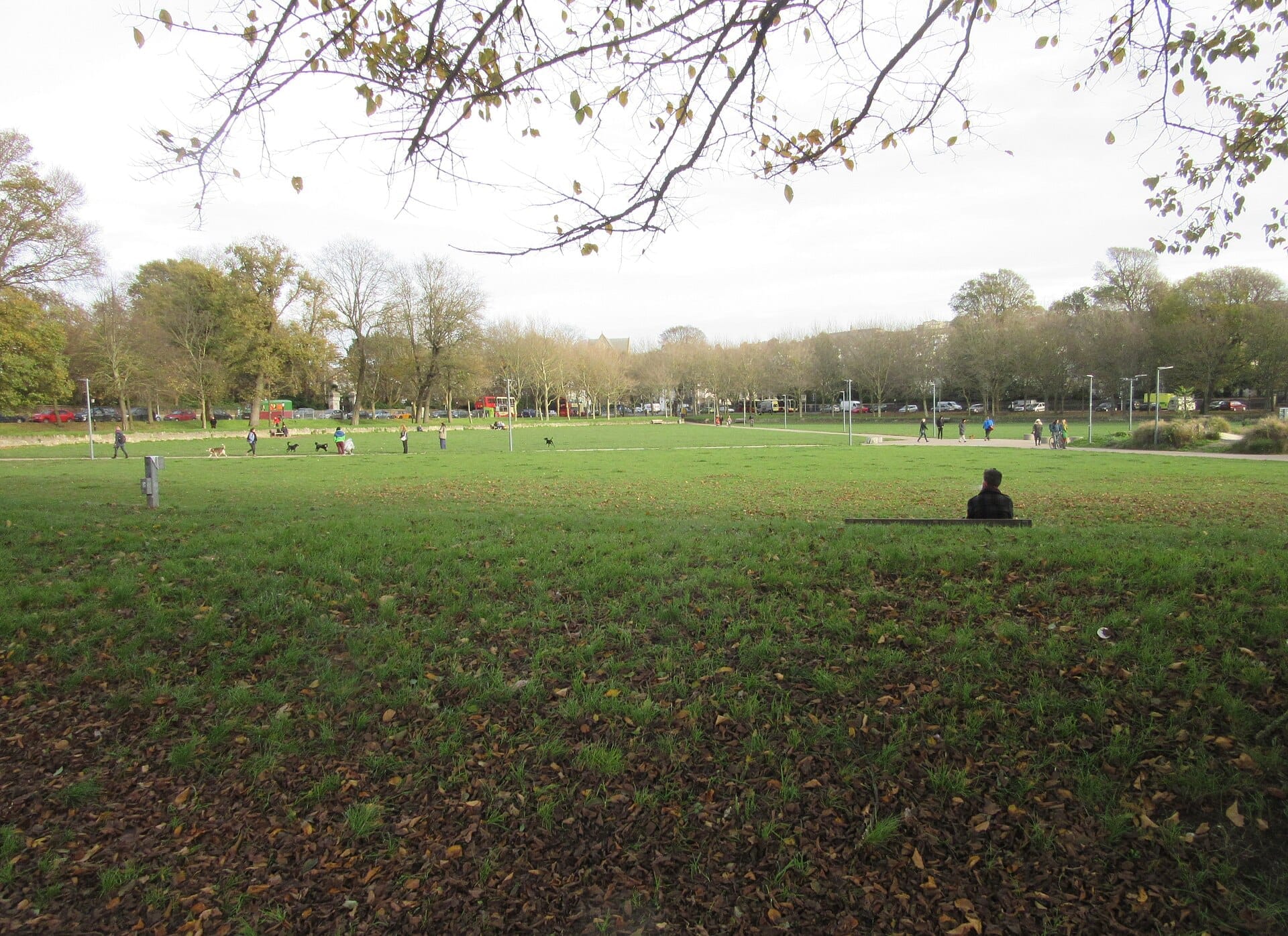
What The Level Actually Is
The Level is a flat, open public park in central Brighton, part of the Valley Gardens Conservation Area. It sits directly north of St Peter's Church, bounded by Union Road, Richmond Terrace, and Ditchling Road, and it functions simultaneously as a neighbourhood green space and one of Brighton's main outdoor event venues. The name describes the geography precisely: this is genuinely level ground in a city that climbs steeply in almost every direction.
The park occupies a position that feels central without being polished. There are no entry fees, no gates, no fences. You walk in off the pavement and you are there. On any given weekday morning, the northern grass is quiet except for dog walkers and the occasional jogger. By midday in summer, students from nearby North Laine, parents with pushchairs, and office workers eating lunch fill the benches and the grass.
ℹ️ Good to know
The Level is open at all times as an unenclosed public park. There are no opening or closing hours, and no admission charge for general access.
The park sits at the threshold between the city's commercial core and the dense residential streets of North Laine. That position gives it an informal quality: it draws a cross-section of people who are passing through or resting rather than specifically sightseeing.
Three Hundred Years of Public Use
The Level's history is considerably longer and more varied than its current appearance suggests. Cricket was played here from the mid-18th century, and a painting by W. H. Mason records a Sussex versus Kent match in 1849. The space was formally laid out as a designed public park in 1822, when architect A. H. Wilds and John Philips gave it its current character as an open recreational ground.
Over more than three centuries the site has hosted fairs, bonfires, circuses, public speeches, peace camps, and music festivals. In the 1920s, Captain Bertie Hubbard MacLaren, Brighton's Superintendent of Parks, redesigned the southern section as a playground and added features that still give that end of the park its slight period character.
That layered history means the park holds a different weight than a modern recreational space. When large gatherings happen here, whether a political rally, a community festival, or a fair, they continue a long tradition of public use. Brighton & Hove City Council recognises this, describing The Level as the principal open space north of St Peter's Church and a key part of the Valley Gardens Conservation Area.
Tickets & tours
Hand-picked options from our booking partner. Prices are indicative; availability and final rates are confirmed when you complete your booking.
Brighton city lights flight with welcome drink
From 21 €Instant confirmationCycle along the beachfront with Brighton Beach Bikes hire
From 7 €Instant confirmationFree cancellationTour Brighton's highlights with an exploration game mobile app
From 10 €Instant confirmationFree cancellationExplore Brighton self-guided walking tour using an app
From 11 €Instant confirmation
How the Park Changes Through the Day
Early mornings at The Level are noticeably calm. The light comes in low from the east across the flat grass, and the sounds are mostly urban: buses on London Road, pigeons, distant traffic. Dog walkers tend to arrive before 9am and the park empties out again by around 10am on weekdays.
Midday brings a shift. The café and the playground in the southern section attract families, and the central grass fills with people eating and sitting. In warm weather, the smell of cut grass mixes with food from nearby traders. The park is most photogenic in the hour before the light drops in late afternoon, when long shadows fall across the open ground and the older architectural features of the southern end, the columns and low walls, look their best.
On event days the atmosphere changes entirely. The northern grass can accommodate large crowds, and when a festival is set up, the park transforms into a loud, dense site with stages, food stalls, and fencing. If you are visiting Brighton during a major event weekend, it is worth checking whether The Level is in use before planning to spend time there.
💡 Local tip
Check the Brighton & Hove City Council events listings before visiting on a summer weekend. The Level hosts festivals and community events that can occupy the entire northern grass area.
The Southern Playground Area
The southern section of The Level is a separate character from the open northern grass. This is the part redesigned in the 1920s, and it still has the remnants of that era in its structure: low ornamental walls, columnar features, and a layout that was designed as a children's space rather than an open field. The playground sits here, and it is well-used by families from the surrounding streets.
The surfaces in this part are mixed: some hardstanding, some grass, and the paths that connect the features. Accessibility varies by zone. The main paths across The Level are generally flat and manageable, reflecting the overall topography of the site, but specific playground equipment and older surface areas may be less straightforward for wheelchair users. If accessibility is a primary consideration, it is worth visiting during quieter hours when paths are less obstructed by crowds.
How to Get There and When to Visit
The Level is reached most easily on foot from Brighton city centre, taking around 10 minutes from the main shopping streets. It sits just north of St Peter's Church in central Brighton, meaning almost any bus heading north from the centre passes within easy walking distance. Brighton & Hove Buses run frequent services nearby.
If you are combining this visit with a wider exploration of the area, the park connects naturally to the streets of North Laine immediately to the south and west. The independent shops and cafés of that neighbourhood are close enough to make a combined visit straightforward without needing transport.
The most practical time to visit for a relaxed experience is a weekday morning outside of school holidays. Late spring and early summer, from May through June, offer good weather and fewer crowds than the July and August peak. Winter visits are perfectly possible as the park is open year-round, but the facilities at the southern end are less appealing in cold, wet weather and the grass can be muddy after prolonged rain.
⚠️ What to skip
The Level is exposed and provides little shade on hot days. In summer, bring water and use the benches near the southern pergola area if you need shelter from direct sun.
Honest Assessment: Is It Worth Your Time?
The Level is not a destination park in the way that a formal garden or a major visitor attraction is. It lacks the curated planting of somewhere like Preston Park and does not have the dramatic setting of the seafront. It is a functional, historically significant open space that serves the people who live and work nearby at least as much as it serves visitors.
For travellers doing a tight one-day itinerary focused on iconic Brighton sights, The Level may not be the best use of limited time. Those visitors are better served by the Royal Pavilion and the seafront. But for anyone spending more than a day in Brighton, particularly those interested in how the city actually functions rather than just its tourist layer, The Level offers something real: a place with 300 years of civic history that continues to be actively used for protest, celebration, sport, and rest in equal measure.
The park also makes a logical pause point on any walk between the Brighton Open Market to the east and the North Laine streets to the west. It requires no planning and costs nothing, which makes it easy to include without treating it as a formal attraction.
Photography Notes
The open northern grass offers wide-angle possibilities that are unusual in a city as densely built as Brighton. Late afternoon in summer, when the light is directional and the park is populated without being crowded, gives the most interesting shots. The southern section's 1920s architectural features, the columns and low pergola walls, photograph well in morning light before crowds build up.
On event days, the park is significantly more photogenic from a documentary point of view: colourful stalls, dense crowds, and the contrast between the open space and the city buildings on its edges. A longer lens is useful here to isolate moments without getting in people's way.
Insider Tips
- The café in the southern section is a local regular's spot rather than a tourist operation. It is cheaper and less crowded than the cafés in The Lanes and is useful if you need a break mid-morning.
- If you want to see The Level at its most historically resonant, check whether any of Brighton's regular community events or political gatherings are scheduled. The space comes into focus when it is being used for its traditional purpose.
- The park's northern edge, where it meets London Road, is the quietest part of the space even during busy periods. It is also where you get the clearest view of the full extent of the flat ground, which is unexpectedly large for a city centre park.
- During the Brighton Festival period in May, The Level sometimes hosts fringe events and outdoor performances. These are often free and rarely advertised prominently outside the local listings.
- The columns and pergola structure at the southern end are original 1920s features. They are underappreciated architecturally and worth a closer look, especially given how little they are mentioned in general Brighton coverage.
Who Is The Level For?
- Families with young children looking for a free outdoor space with a playground
- Travellers spending multiple days in Brighton who want to experience the city beyond its tourist layer
- History enthusiasts interested in Brighton's civic and social past
- Visitors attending one of Brighton's outdoor festivals or community events
- Anyone wanting a flat, accessible green space in central Brighton for a picnic or rest
Nearby Attractions
Other things to see while in North Laine:
- Brighton Open Market
Tucked between London Road and Ditchling Road, Brighton Open Market is a covered community market with over a century of history and more than 40 independent traders. Free to enter and open most days, it offers a grounded, local counterpoint to the more curated shopping streets nearby.
- Brighton Toy and Model Museum
Tucked into four Victorian railway arches directly under Brighton Station, the Brighton Toy and Model Museum holds more than 10,000 exhibits spanning over a century of childhood. From intricate model railways to rare tin toys, it rewards curious adults as much as it delights children.
- St Bartholomew's Church
St Bartholomew's Church on Ann Street is one of the most architecturally remarkable buildings in Brighton, a soaring brick nave that rises higher than Westminster Abbey's interior. Free to enter during opening hours and quietly tucked into the North Laine grid, it rewards anyone willing to look up from the vintage shops for five minutes.