Brighton Toy and Model Museum: Beneath the Station, Beyond Expectation
Tucked into four Victorian railway arches directly under Brighton Station, the Brighton Toy and Model Museum holds more than 10,000 exhibits spanning over a century of childhood. From intricate model railways to rare tin toys, it rewards curious adults as much as it delights children.
Quick Facts
- Location
- 52–55 Trafalgar Street, Brighton BN1 4EB (under Brighton Railway Station)
- Getting There
- Brighton Railway Station — exit via Trafalgar Street, entrance is directly in the station arches
- Time Needed
- 1.5 to 2.5 hours
- Cost
- Adult £10 / Senior (65+) £8 / Student/young person £7 / Child (5–18) £6 / Family (2+2) £20 / Brighton residents £8 — verify before visiting
- Best for
- Families with children, model railway enthusiasts, vintage toy collectors, rainy-day visitors
- Official website
- www.brightontoymuseum.co.uk
What Is the Brighton Toy and Model Museum?
The Brighton Toy and Model Museum is one of those places that genuinely surprises people. From the street, the entrance on Trafalgar Street is almost easy to miss: a modest doorway set into the brick underbelly of Brighton's Victorian railway terminus. Step through it, and you descend into four cavernous arches built in the 1840s, now packed from floor to ceiling with more than 10,000 toys, model vehicles, trains, teddy bears, puppets, and childhood artefacts spanning roughly 150 years.
Opened in 1991 and operating as a registered charity, the museum covers approximately 4,000 square feet across those four arches. The collection includes both the museum's core holdings and rotating guest displays, and the curatorial approach leans toward density rather than minimalism: you are not here for white walls and sparse labels. You are here to look closely.
ℹ️ Good to know
Opening hours: Tuesday to Friday 10:00–17:00, Saturday 11:00–17:00. Closed Sunday and Monday. Confirm dates on public and school holidays directly with the museum before visiting.
The Setting: Victorian Arches That Add to the Experience
The location is more than a quirky detail. Brighton Station is one of the finest surviving examples of early Victorian railway architecture in England, completed in 1841 to a design by David Mocatta. The brick arches beneath it were built as part of that original structure, and the museum occupies the cellars formed within them. The curved ceilings, uneven brickwork, and the occasional distant rumble of a train overhead give the space a character no purpose-built venue could replicate.
The arches are relatively low in places and the layout winds between them in a way that feels genuinely labyrinthine, especially once the display cases begin competing for your attention. It is cool inside year-round, a degree or two below street temperature, which makes it an attractive option on Brighton's warmer summer days. There is a low-level ambient noise from the station infrastructure above, but it is atmospheric rather than intrusive.
💡 Local tip
Because the museum is underground and the arches are structurally original, some areas are tighter than others. Visitors with pushchairs or wheelchairs should contact the museum directly before visiting to confirm which sections are accessible.
Tickets & tours
Live prices and dates from our booking partner. If you book, we may earn a commission at no extra cost to you.
The Collection: What You Will Actually See
The model railways are the centrepiece of the collection and the main draw for enthusiasts. Several large-scale layouts are on display, representing British, German, and American manufacturers across different gauges and eras. Hornby, Märklin, and Bassett-Lowke feature prominently, and some of the older locomotives date to the late 19th century. On weekends, certain layouts are sometimes operated, which shifts the atmosphere from archive to theatre.
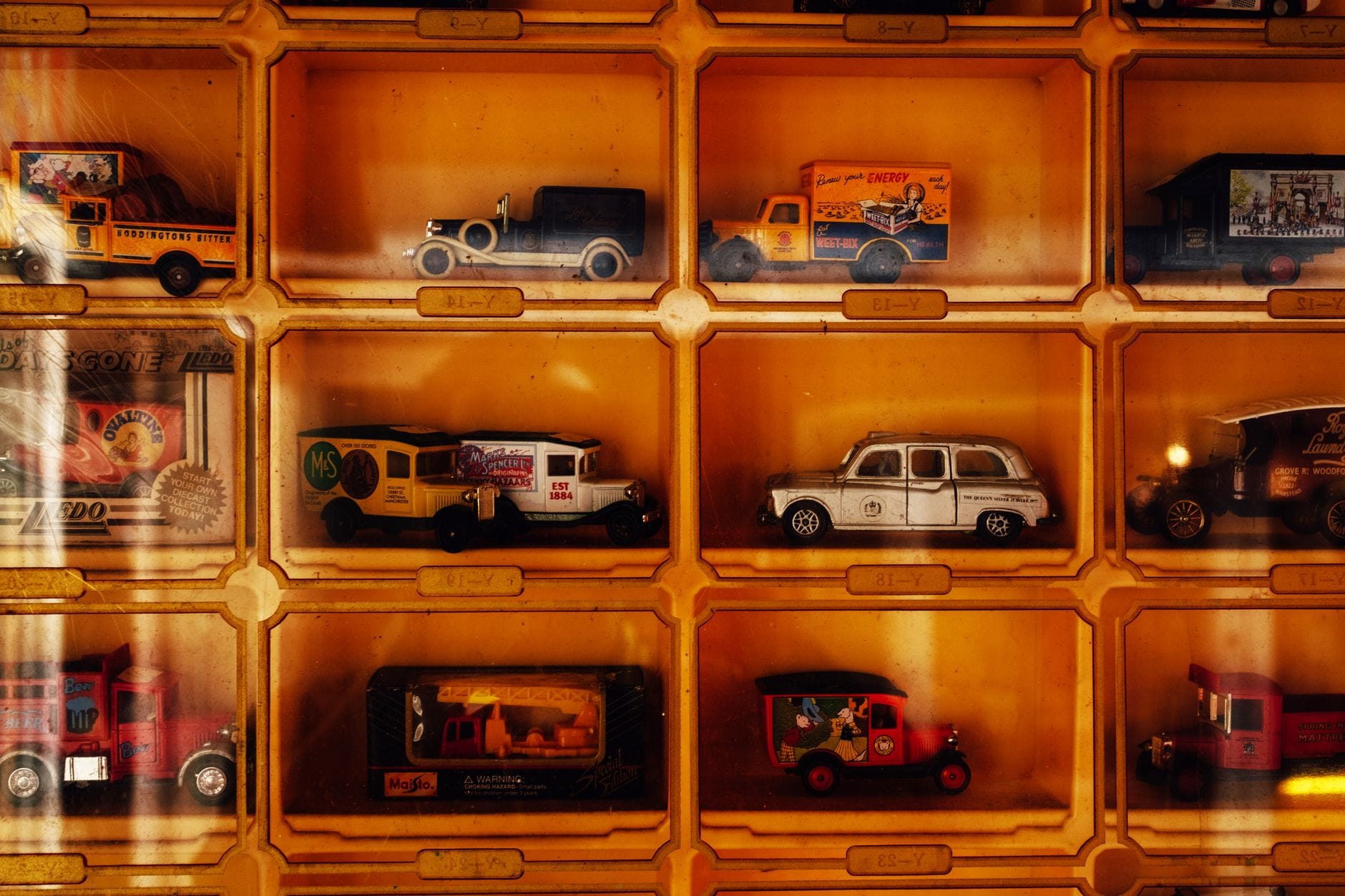
Beyond the railways, the collection spans teddy bears, Dinky and Corgi die-cast vehicles, Meccano sets, tin toys, dolls, puppet theatres, board games, and action figures. The oldest items take you back to the mid-Victorian era. The newest exhibits approach the late 20th century. The breadth is such that most adult visitors will find objects from their own childhoods alongside things they have never encountered before.
The labelling throughout is detailed and informative without being academic. Many items carry notes on their manufacturer, country of origin, and approximate date, which helps orient visitors who want context rather than just spectacle. The density of display means first-time visitors almost always notice something new on a second look.
Visiting With Children vs. Visiting as an Adult
This is one of the few attractions in Brighton that works genuinely differently depending on the age of the visitor. Younger children tend to respond to the interactive elements, the scale of the railway layouts, and the visual density of the space, but their attention span here is likely shorter than an adult's. The dim lighting and enclosed arches can feel overwhelming to very young or sensitive children, and the tightly packed cases are not always at eye level for toddlers.
Adults, particularly those with any interest in industrial history, design, or toy manufacturing, often find the museum more absorbing than they expected. The progression from Victorian-era tin toys through the golden age of British die-casting in the 1950s and 1960s tells a surprisingly coherent story about manufacturing, childhood culture, and design aesthetics. This is not a children's museum that tolerates adults. It is an object-history museum that welcomes children.
For families planning a full day in the area, the museum pairs naturally with a walk through North Laine, the surrounding neighbourhood of independent shops, cafes, and street life that begins immediately outside the station arches. You could easily spend a morning at the museum and an afternoon exploring the streets.
Practical Walkthrough: Getting There and Getting the Most From Your Visit
Access could not be more straightforward for anyone arriving by train. Brighton Station is served by Southern and Thameslink services from London Victoria, London Bridge, and Gatwick Airport. From the station concourse, follow signs or simply walk down to Trafalgar Street, where the museum entrance sits in the arches below. The journey from the ticket barriers to the museum door takes under five minutes on foot.
If arriving by bus, numerous Brighton and Hove Buses routes serve the station area. For those driving, street parking and pay-and-display bays are available in the surrounding streets, though North Laine is not the most car-friendly part of the city and public transport is the easier option.
💡 Local tip
Arrive when it opens on a Tuesday or Wednesday morning if you want the arches largely to yourself. Saturday afternoons, particularly during school holidays, are the busiest periods, with queues possible at the entrance.
Photography within the museum is generally welcomed for personal use, though the combination of dim lighting and glass-fronted display cases makes it technically challenging. A phone with a good low-light mode will perform better than a flash, which creates heavy reflections on the cases. The most photogenic subjects are the large railway layouts and the overhead hanging displays of tin toys near the entrance arches.
If the museum visit puts you in the mood for more Brighton history, the Brighton Museum and Art Gallery is about ten minutes on foot and offers a broader survey of local social and cultural history. For something architecturally spectacular and historically layered, the Royal Pavilion is within easy walking distance as well.
Honest Appraisal: Who This Museum Is For, and Who Should Look Elsewhere
The Brighton Toy and Model Museum is not the slickest museum experience in the city. It does not have the modern interactive technology of larger heritage attractions or the production-level presentation of national institutions. The lighting is modest, the space is compact, and the density of objects requires patience to appreciate fully. Visitors expecting a polished, audioguided multimedia experience will likely find it underwhelming.
For the right visitor, however, that density is precisely the appeal. The museum feels curated by people who are genuinely passionate about the objects rather than commissioned to fill a brief. It has the texture of a serious collection, not a commercial entertainment product. At £10 for an adult ticket, it represents fair value for the time it occupies, particularly given the uniqueness of the setting and the depth of the collection.
Visitors specifically looking for outdoor or seafront experiences should note that the museum is entirely underground and makes no concession to the weather outside. On a perfect summer day when the seafront is calling, it may not be the natural first choice. On a grey November afternoon, it is considerably easier to justify. For broader Brighton planning, the Brighton in winter guide covers exactly this kind of rainy-day calculus.
Insider Tips
- Weekday mornings are significantly quieter than weekends. If you are visiting without children and want space to study the displays properly, Tuesday or Wednesday shortly after 10:00 gives you the arches almost entirely to yourself.
- Ask the staff about the running schedule for the model railway layouts. On certain days, sections of the layout are operated, which transforms the experience. The museum's social media accounts typically indicate when operating sessions are planned.
- The museum shop near the entrance stocks vintage and reproduction tin toys, model railway accessories, and collectables at reasonable prices. Even if you are not buying, it is worth a look.
- The arches can feel cool even in summer, because they are underground and the Victorian brickwork retains a low ambient temperature. A light layer is worth bringing regardless of what it is doing above ground.
- The family ticket (two adults and two children at £20) represents the best per-head value. If you are visiting as a couple with one or two children, it is almost always cheaper than buying individual tickets.
Who Is Brighton Toy and Model Museum For?
- Families with children aged 4 to 12 looking for an indoor activity that holds adult attention equally
- Model railway enthusiasts and collectors, particularly those interested in pre-war British and German manufacturers
- Adults with an interest in industrial design history, toy manufacturing, or 20th-century material culture
- Rainy-day visits when outdoor Brighton attractions lose their appeal
- Visitors arriving by train who want to use the two hours before a return service without venturing far from the station
Nearby Attractions
Other things to see while in North Laine:
- Brighton Open Market
Tucked between London Road and Ditchling Road, Brighton Open Market is a covered community market with over a century of history and more than 40 independent traders. Free to enter and open most days, it offers a grounded, local counterpoint to the more curated shopping streets nearby.
- St Bartholomew's Church
St Bartholomew's Church on Ann Street is one of the most architecturally remarkable buildings in Brighton, a soaring brick nave that rises higher than Westminster Abbey's interior. Free to enter during opening hours and quietly tucked into the North Laine grid, it rewards anyone willing to look up from the vintage shops for five minutes.
- The Level
The Level is Brighton's most historically loaded patch of open ground. Free to enter, flat underfoot, and sitting at the northern edge of North Laine, it has served as a cricket ground, a fairground, a protest space, and a festival site across three centuries. Here's what the park actually looks and feels like today.
Planning a trip? Discover personalized activities with the Nomado app.