Kemp Town
Kemp Town is Brighton's eastern seafront neighbourhood, stretching from the Old Steine to Black Rock along Madeira Drive. It combines some of the city's most ambitious Regency architecture with a closely-knit, proudly diverse community centred on St James's Street.
Located in Brighton
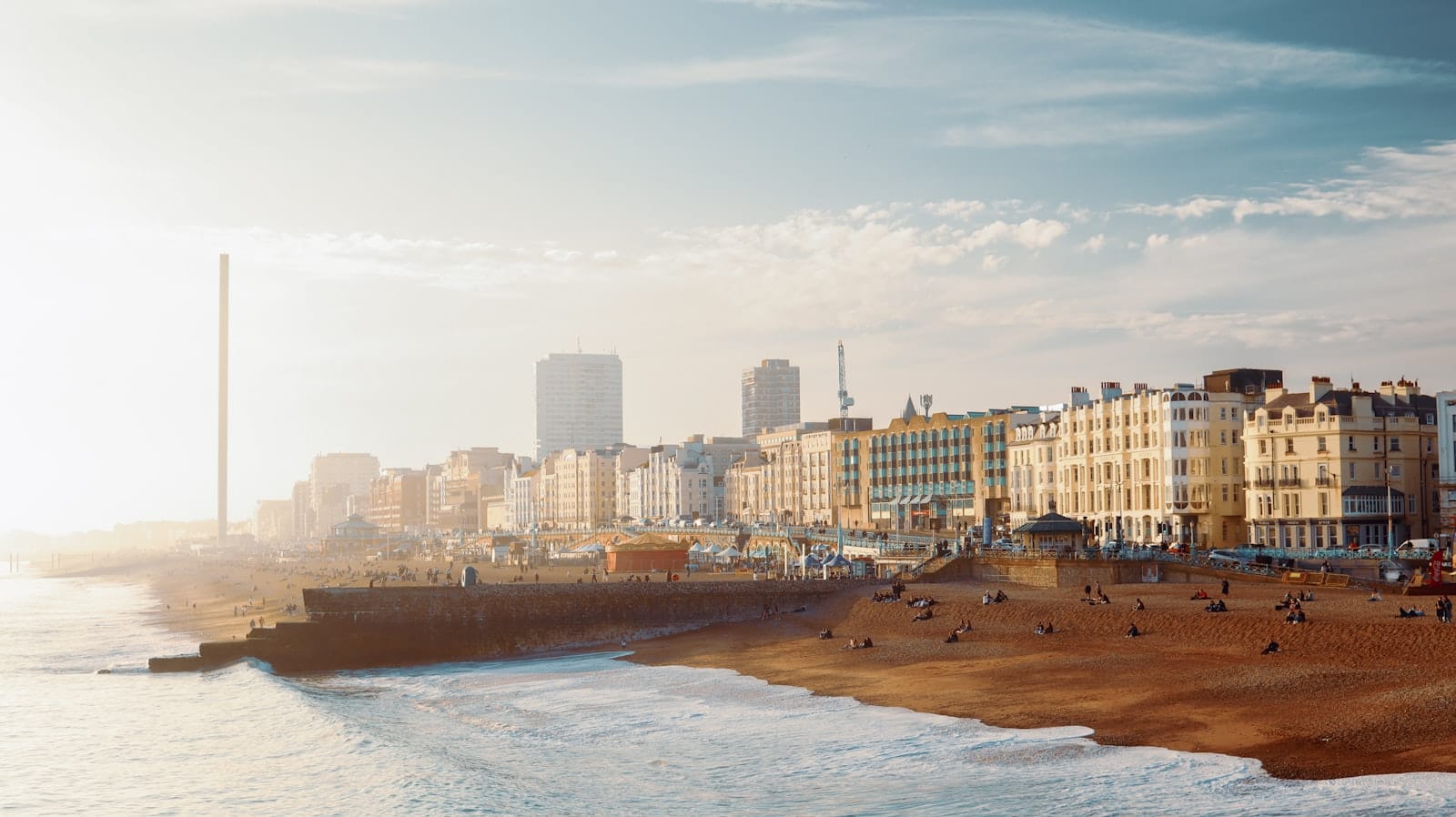
Overview
Kemp Town sits east of Brighton's centre along the seafront, trading the tourist crowds of the pier for something quieter and considerably more local. Its streets hold grand Regency terraces, a thriving LGBTQ+ community, independent businesses on St James's Street, and direct access to the seafront without the shoulder-to-shoulder congestion of the central beach.
Orientation: Where Kemp Town Sits
Kemp Town occupies the eastern flank of Brighton's seafront, beginning where the Old Steine meets the coast and extending east along Madeira Drive toward Black Rock and Brighton Marina. Administratively, the Kemptown ward covers the area south of Edward Street and Eastern Road, running all the way to the seafront. In practical terms, most visitors think of Kemp Town as the stretch of St James's Street and the surrounding residential grid between the seafront and Eastern Road.
At its eastern end, the neighbourhood transitions into the Kemp Town estate proper: Sussex Square and Lewes Crescent, a sweeping arc of white Regency stucco that faces private gardens and opens onto the undercliff below. This section of the neighbourhood is a designated conservation area covering around 19.3 hectares, and it represents one of the most architecturally ambitious seafront developments built anywhere in Regency-era England.
To the west, Kemp Town blurs into the edge of Brighton's centre at the Old Steine, which is where Brighton's seafront promenade curves away toward the Palace Pier and the West Pier ruins. To the north, Eastern Road and Edward Street form a loose boundary separating the neighbourhood from the city's commercial centre. Hove lies to the west, while the South Downs rise on the northern horizon, visible from almost any high point in the area.
Character and Atmosphere
Walking east along the seafront from Brighton Palace Pier, the atmosphere changes gradually but unmistakably. The amusement arcades and candy floss stalls give way to the arched Victorian brick of the Madeira Drive terracing, and the crowds thin considerably. By the time you reach the lower road below Kemp Town proper, you are in a different city. The noise drops. The seafront feels like it belongs to people who actually live here.
St James's Street is the commercial and social backbone of the neighbourhood. It runs roughly east-west, and on a weekday morning it has the pace of a high street that serves its own community rather than performing for visitors. Bakeries and coffee shops open early. Dog walkers pass the charity shops and independent boutiques. By midday, the pavement cafés fill up, and the street takes on the unhurried, sociable quality that defines the neighbourhood at its best.
Kemp Town has one of the highest recorded proportions of LGBTQ+ residents of any neighbourhood in the UK, with around 20 percent of residents identifying as LGB+ at the 2021 Census. That figure shapes the character of the area in concrete ways: the pub offer skews toward queer venues, the local businesses tend to have a political and artistic sensibility, and the neighbourhood plays a central role during Brighton Pride, when the eastern seafront becomes the main party zone for one of the UK's largest Pride events.
After dark, St James's Street and the surrounding streets come alive with a bar-and-pub scene that is inclusive by culture rather than by marketing. The energy is genuine and social rather than purely commercial. That said, the area around the bottom of St James's Street and the seafront can get loud and crowded on Friday and Saturday nights, and during Pride weekend the whole neighbourhood is essentially one enormous street party. Travellers looking for quiet should factor this in.
ℹ️ Good to know
Brighton Pride is typically held in early August and centres heavily on Kemp Town and the seafront east of the Palace Pier. The neighbourhood is extremely busy for the full weekend. Book accommodation well in advance if you plan to visit during this period, and expect road closures and noise late into the night.
What to See and Do
The most impressive single sight in Kemp Town requires nothing more than a walk east along the seafront. Lewes Crescent and Sussex Square, built from 1823 onward, are among the finest examples of Regency town planning in England. The crescent faces private communal gardens on one side and drops away to the undercliff and sea on the other. The Undercliff Walk begins near here, a paved promenade cut into the chalk cliffs that stretches eastward toward Saltdean. It is flat, exposed to the sea breeze, and offers a completely different perspective on the coastline from the main beach road above.
At the western boundary of the neighbourhood, where Kemp Town meets the central seafront, the Volks Electric Railway runs east along Madeira Drive from near the Palace Pier toward Black Rock. It is the oldest surviving operating electric railway in the world, having opened in 1883, and while the journey is short it is a genuinely charming way to move between the central seafront and the eastern end of the neighbourhood. The railway operates seasonally, so check before planning your visit.
The Brighton Bandstand sits on Kings Road between the piers, near the West Pier ruins and the i360 — well west of Kemp Town — and hosts concerts and events through the summer season. Madeira Drive itself hosts various motoring and cycling events across the year, including the Veteran Car Run finish and various seafront festivals.
- Walk Lewes Crescent and Sussex Square to appreciate the Regency estate architecture
- Take the Volks Electric Railway along Madeira Drive (seasonal)
- Walk the Undercliff Walk east toward Saltdean for cliff-base sea views
- Explore the independent shops and galleries along St James's Street
- Check the programme at local arts and community venues in the area
For a broader sense of what Brighton has to offer beyond the neighbourhood, the Brighton things to do guide covers the city's major attractions, many of which are within walking distance of Kemp Town's western edge.
Eating and Drinking
Kemp Town's food scene is primarily independent and community-oriented. St James's Street and St George's Road have a concentration of cafés, restaurants, and pubs that serve the local population rather than a tourist crowd. That distinction matters in practice: prices are generally more reasonable than in the central Lanes or seafront strip, and the places that do well here tend to survive on repeat custom rather than passing trade.
Brighton has a strong vegan and vegetarian culture, and Kemp Town is no exception. The area has a good selection of plant-forward cafés and restaurants alongside more conventional options. The broader vegan and vegetarian Brighton guide covers the best options across the city, but several of the most popular spots are either in or easily reachable from Kemp Town.
The pub scene along St James's Street is notable. Several of the area's bars and pubs have been LGBTQ+ institutions for decades, and the atmosphere is relaxed and genuinely welcoming. They range from lively cocktail bars to traditional community pubs with regular events, drag nights, and live music. On weekend evenings the lower end of St James's Street gets busy, with people spilling onto the pavement outside. It is a sociable scene rather than a purely tourist one.
For a wider picture of Brighton's food culture, the what to eat in Brighton guide covers the city's specialities and best food areas. If you are watching your budget, many of Kemp Town's cafés offer good value compared to the more visitor-heavy central areas.
💡 Local tip
St George's Road, running parallel to and just north of St James's Street, has a quieter selection of cafés and local restaurants that are often overlooked by visitors. Worth exploring if St James's Street feels too busy.
Getting There and Around
Kemp Town does not have its own railway station. Brighton station, the city's main rail hub, is the nearest point of arrival by train and sits roughly a mile to the northwest. From the station, the most direct walking route into Kemp Town takes around 20 to 25 minutes on foot, heading south and then east through the city centre, past the Old Steine and along the seafront or up onto St James's Street.
Brighton and Hove Buses operate frequent services along the St James's Street and Old Steine corridor, connecting Kemp Town directly to the city centre and onward bus routes. Eastern Road, which runs along the northern edge of the neighbourhood, is another key bus corridor. Services along these routes run regularly throughout the day and into the evening, making it easy to move between Kemp Town and central Brighton without needing a car. Check current timetables with Brighton and Hove Buses before travelling, as schedules are subject to change.
Within the neighbourhood, the most practical way to get around is on foot. The grid of streets between Eastern Road and the seafront is compact enough to walk end-to-end in under fifteen minutes. For the seafront itself, the Volks Electric Railway provides a pleasant seasonal link between the neighbourhood and the central beach. Uber and Bolt both operate in Brighton and Hove for those who prefer ride-hailing.
For full city-wide transport guidance, including how to arrive from London or Gatwick, see the getting around Brighton guide.
⚠️ What to skip
Parking in Kemp Town is limited and largely resident-permit controlled. If you are arriving by car, check current parking restrictions before driving into the area, and expect to pay for any available meter spaces during the day.
Where to Stay
Kemp Town has a reasonable range of accommodation, including small hotels, guesthouses, and self-catering options spread across the residential streets between the seafront and Eastern Road. The neighbourhood is a particularly good base for travellers who want proximity to the sea without being in the thick of the tourist centre, and for those who want to be close to the LGBTQ+ venues and events around St James's Street.
The streets nearest the seafront, particularly those below and adjacent to Lewes Crescent, offer a quieter setting within walking distance of the neighbourhood's commercial core. The area around the lower end of St James's Street is more convenient for bars and restaurants but can be noisy on weekend nights. For families or travellers who are light sleepers, choosing accommodation a few streets back from the main strip is worth considering.
Kemp Town sits at a middle distance from Brighton's main sights: close enough to the seafront attractions to walk, but far enough from the central crowds to feel distinctly residential. For a full overview of where to stay across Brighton, the Brighton accommodation guide covers all the major neighbourhoods and their respective trade-offs.
Practical Notes
Kemp Town is easily combined with a walk along Brighton's seafront, particularly the section of Brighton Beach east of the Palace Pier, which is noticeably less crowded than the central beach and has a more local character. The beach here is the same pebble shore as elsewhere in Brighton, with deck chair hire and seasonal beach cafés.
Brighton Pride, one of the UK's largest Pride events, is centred substantially on Kemp Town and the eastern seafront. If this is your reason for visiting, the Brighton Pride guide has full details on timing, events, and logistics. The rest of the year, the neighbourhood maintains a strong LGBTQ+ presence without the festival atmosphere.
Kemp Town is also a reasonable starting point for exploring Brighton's wider offer. The Royal Pavilion and Brighton's main museums are a 20-minute walk to the west, while the South Downs and day trips beyond the city are accessible from Brighton station. The day trips from Brighton guide covers the best options.
TL;DR
- Kemp Town is Brighton's easternmost seafront neighbourhood, stretching from the Old Steine to Black Rock along Madeira Drive, with a commercial heart on St James's Street.
- It holds the UK's highest concentration of LGBTQ+ residents and is central to Brighton Pride, making it the natural base for travellers visiting for that community or event.
- The Kemp Town estate — Lewes Crescent and Sussex Square — is some of the finest Regency architecture in southern England and worth seeking out even on a short visit.
- The food, café, and bar scene is predominantly independent and community-facing, with more reasonable prices than the central tourist strips and a genuinely local atmosphere.
- Best suited to: LGBTQ+ travellers, those who want seafront access without central crowds, architecture enthusiasts, and anyone looking for a more residential, neighbourhood feel to their Brighton stay.
Related Travel Guides
- Best Beaches in Brighton & Nearby: Your Complete Guide
Brighton's coastline is one of England's most famous, but there's far more to it than the main pebble beach by the pier. This guide covers the best beach spots in Brighton and Hove, plus the coastal walks and waterfront attractions that make the most of the seafront.
- The Best Museums in Brighton: A Complete Guide
Brighton has a strong museum culture for a coastal city. From a royal palace to a Victorian toy trove and a natural history collection currently closed for essential works, here are the finest museums the city has to offer, covering art, history, heritage, and the sea.
- Best Time to Visit Brighton: A Complete Seasonal Guide
Brighton rewards visitors differently depending on the season. This guide breaks down the weather, crowds, events, and costs month by month so you can pick the right time for your trip — whether you want sunshine on the beach, festival energy, or a quiet winter escape.
- Brighton Day Trip from London: The Complete Guide
At roughly 47 miles and one hour by train, Brighton is London's most accessible seaside escape. This guide covers every transport option, the best things to do in a single day, and the practical details that make the difference between a good trip and a great one.
- Brighton Festival & Fringe: The Complete Visitor Guide
Brighton Festival and Brighton Fringe run simultaneously across three weeks each May, turning the city into one of England's most concentrated arts events. This guide covers the key differences between the two, how tickets work, where events happen, and how to plan your visit without the usual confusion.
- Brighton Hidden Gems: Off the Beaten Path
Brighton rewards those who look beyond the pier and Pavilion. From Victorian curiosities under railway arches to dramatic chalk cliff walks, these lesser-known attractions reveal a city of real depth and character.
- Brighton in Summer: What to Expect (Weather, Crowds, and What to Do)
Brighton in summer draws hundreds of thousands of visitors to its shingle beach, Regency architecture, and independent neighbourhoods. This guide covers what the weather actually delivers, when crowds peak, what to book ahead, and how to get the most from the city between June and August.
- Brighton in Winter: Is It Worth Visiting? (Honest Guide)
Brighton in winter is quieter, cheaper, and surprisingly rewarding. This guide covers what stays open, what closes, what the weather actually feels like, and how to make the most of a visit between November and February.
- Brighton on a Budget: How to Enjoy the City Without Overspending
Brighton has a reputation for being pricey, but the reality is more nuanced. From free beaches and seasonal pier admission (often free for residents) to paid museums with resident discounts and a walkable city centre, this guide covers every practical angle for stretching your pounds further on the Sussex coast.
- Brighton Pride: Complete Visitor Guide
Brighton Pride is the UK's largest Pride festival, drawing hundreds of thousands of people over the first weekend of August. This guide covers the 2026 dates and headline acts, how to get tickets before they sell out, travel logistics, road closures, and the honest breakdown of what costs money and what doesn't.
- Brighton's Regency Architecture: A Self-Guided Tour
Brighton holds one of the most complete collections of Regency architecture in Britain, from John Nash's exotic Royal Pavilion to Charles Busby's sweeping Brunswick Town terraces. This self-guided tour walks you through the key buildings, explains what makes each significant, and gives you the practical information to plan your visit.
- Best Day Trips from Brighton: Where to Go and How to Get There
Brighton sits at the centre of one of England's most varied day-trip networks. Within two hours you can reach chalk cliffs, medieval towns, Roman ruins, and island ferries, most of it without a car. This guide covers the best options by transport type, season, and budget.
- Getting Around Brighton: The Complete Transport Guide
Brighton is one of the easiest UK cities to navigate without a car. This guide covers every transport option — from the city's excellent bus network to bike share, taxis, and rail connections — with clear guidance on what works, what to skip, and how to keep costs down.
- Shopping in Brighton: Best Areas, Independent Shops & What to Buy
Brighton is a strong shopping city for independents. The Lanes and North Laine together offer hundreds of independent boutiques, vintage dealers, and artisan makers within walking distance of the seafront. This guide covers the best spots to browse, buy, and discover across every corner of the city.
- Things to Do in Brighton: The Complete Guide to England's Favourite Seaside City
Brighton packs more into 82 square kilometres than almost any seaside city in England. This guide covers the iconic attractions, the best neighbourhoods for exploring, seasonal considerations, and clear guidance on what to skip — everything you need to plan a trip that actually delivers.
- Vegan & Vegetarian Brighton: The Best Plant-Based Restaurants in the City
Brighton has a very high concentration of vegan and vegetarian restaurants in the UK, with well over 150 plant-based listings. This guide covers the best spots across every neighbourhood, budget, and food style, from fine dining to vegan junk food.
- Vintage Shopping in Brighton: The Definitive Guide to Best Shops & Markets
Brighton is one of the UK's best cities for vintage shopping, with dozens of shops, indoor markets, and antique dealers concentrated around North Laine, Kemptown, and Hove. This guide covers where to go, what to expect to pay, and how to plan your visit season by season.
- Weekend in Brighton: The Perfect 2-Day Itinerary
Brighton packs a remarkable amount into a small area: a historic pier, a Regency palace, independent shopping streets, serious restaurants, and one of England's most distinctive seafronts. This two-day itinerary cuts through the noise and tells you exactly how to spend 48 hours in the city, season by season.
- What to Eat in Brighton: A Local Food Guide
Brighton's food scene is unusually strong for a coastal city of its size. This guide covers the essential dishes, best neighbourhoods for eating, market options, plant-based dining, and practical tips for every budget — from a quick seafront chippy to a full evening meal in Kemp Town.
- Where to Stay in Brighton: The Complete Neighbourhood Guide
Choosing where to stay in Brighton shapes your entire trip. This guide breaks down every major neighbourhood by character, price range, and who it suits best, so you can book with confidence rather than luck.