Prinsenhof is one of Ghent's most historically layered neighborhoods, stretching from the Rabot city gate to the shadow of Gravensteen castle. Once the seat of Flemish counts and Burgundian dukes, it is where Emperor Charles V was born in 1500, and today it functions as a calm, largely residential quarter that rewards slow exploration.
Prinsenhof sits in the northwestern edge of Ghent's medieval core, where a vanished imperial palace once dominated a bend in the Lieve canal. Today it is a quiet residential district that carries centuries of Burgundian and Habsburg history in its street names and stonework, offering a striking contrast to the tourist-dense quaysides just a few minutes' walk away.
Orientation
Prinsenhof occupies the northwestern pocket of Ghent's historic center, bordered roughly by the Lieve canal to the east, the Burgstraat and Rabotstraat to the south and west, and the area around the Rabot water tower to the northwest. It is not a large neighborhood in footprint, but its position places it at the junction of two very different urban energies: the heavily visited medieval core near Gravensteen to the south, and the quieter, more working-class residential streets extending toward the canal ring.
The neighborhood's southern gateway is effectively Gravensteen castle, Ghent's imposing 12th-century fortress. Walk north from Gravensteen along Sint-Veerleplein and you leave the tourist clusters behind quickly. Within a few hundred meters, the scale of the city shifts: the streets narrow, the building heights drop, and you begin to find yourself in a neighborhood that feels genuinely lived in rather than curated for visitors.
Administratively, Prinsenhof forms part of the broader Elisabethbegijnhof – Prinsenhof – Papegaai – Sint-Michiels district recognized by the city of Ghent. This means it shares its administrative identity with the Old St. Elizabeth Beguinage to the south, and the Sint-Michiels quarter near the waterfront. For visitors, the practical takeaway is that Prinsenhof bleeds naturally into these neighboring areas, making it easy to combine in a half-day of walking.
Character & Atmosphere
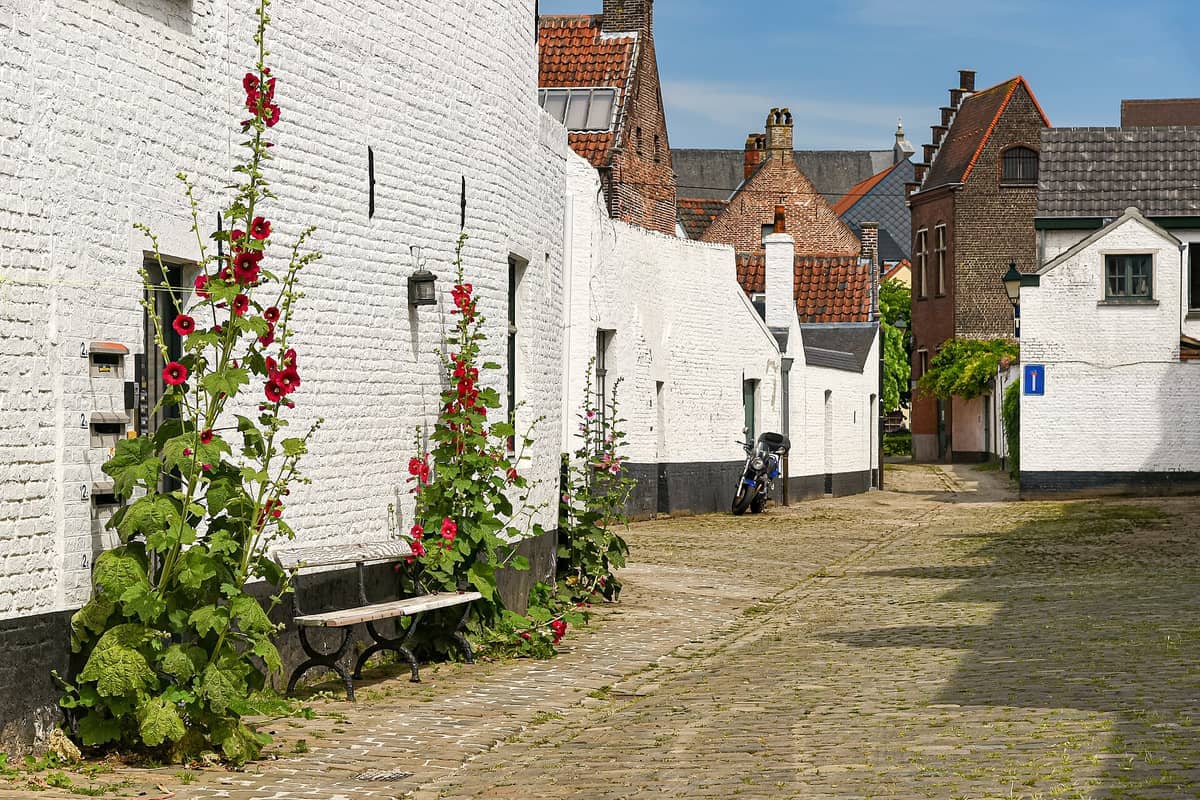
The defining quality of Prinsenhof is its quietness. This is not a neighborhood that performs for visitors. On a weekday morning, you are more likely to encounter residents cycling to work or a delivery van idling outside a corner shop than a tour group consulting a map. The streets have the unhurried feel of a place that has long since made peace with no longer being at the center of power, which is precisely what makes it interesting to walk through.
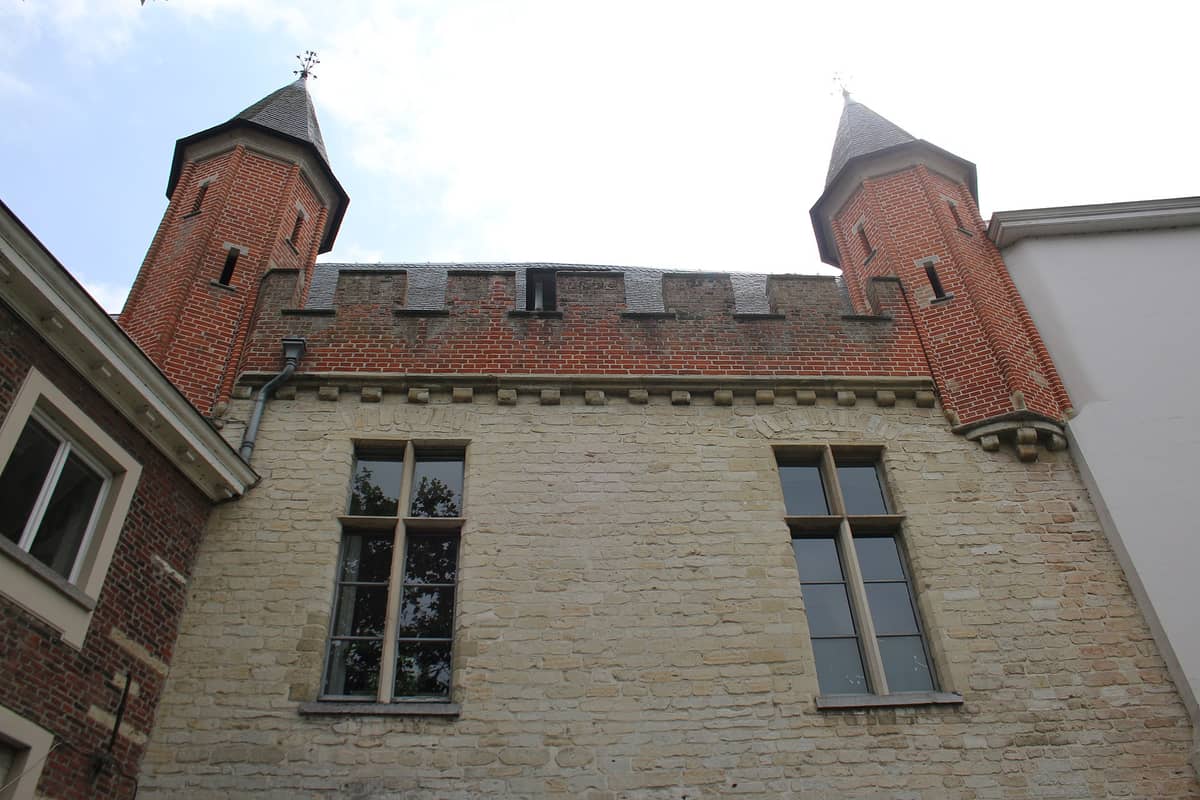
At the heart of the neighborhood sits Prinsenhofplein, a modest square that bears almost no visual resemblance to the vast walled palace complex that once occupied the same ground. The courtyard where Burgundian dukes entertained visiting royalty is now a small, residential square of Flemish townhouses. A bronze statue of the young Charles V, installed in 1966, stands in the square as a quiet reminder of what happened here in February 1500. The original Donkerpoort gatehouse survives nearby, one of the very few physical remnants of the palace, and a small scale model of the historic complex helps visitors grasp the scale of what was lost.
In the afternoon, when the light falls at a low angle across the Lieve canal, the neighborhood takes on a particular quality that is hard to find in Ghent's busier quarters. The reflections in the water, the weathered brick facades, and the near-absence of commercial signage create a cityscape that reads more like an architectural drawing than a tourist destination. Photographers who have exhausted the familiar angles of the Graslei waterfront often find more interesting material here.
After dark, Prinsenhof is genuinely calm. There are no bars or clubs in the neighborhood itself drawing late-night foot traffic, which makes it pleasant for residents and for anyone staying nearby who values quiet evenings. The streets are well enough lit and there are no particular safety concerns, but this is not a neighborhood with nightlife to offer.
ℹ️ Good to know
Prinsenhof is part of Ghent's Low Emission Zone (LEZ). Visitors arriving by car should check their vehicle's eligibility before driving into this area. The neighborhood is far better approached on foot or by tram anyway.
What to See & Do
The main reason to come to Prinsenhof is to understand a piece of European history that most travelers walk past without realizing. The Prinsenhof palace, properly known as Hof ten Walle in its earliest form, was the residence of the Counts of Flanders before it became the favored court of the Burgundian dukes. Philip the Bold, Philip the Good, and Charles the Bold all held court here. When Charles V was born in the palace on 24 February 1500, Ghent was one of the largest and wealthiest cities in northern Europe, and this neighborhood was its administrative heart.
The palace was progressively demolished from the 17th century onward, and what stands today is fragmentary. But the Donkerpoort, the dark covered gatehouse that once formed one of the main entrances to the complex, still spans a narrow lane and gives a tangible sense of the palace's former scale. It is not a formal attraction with entry fees or guided tours, but simply a piece of medieval architecture surviving in a residential street, which is somehow more affecting than a museum recreation.
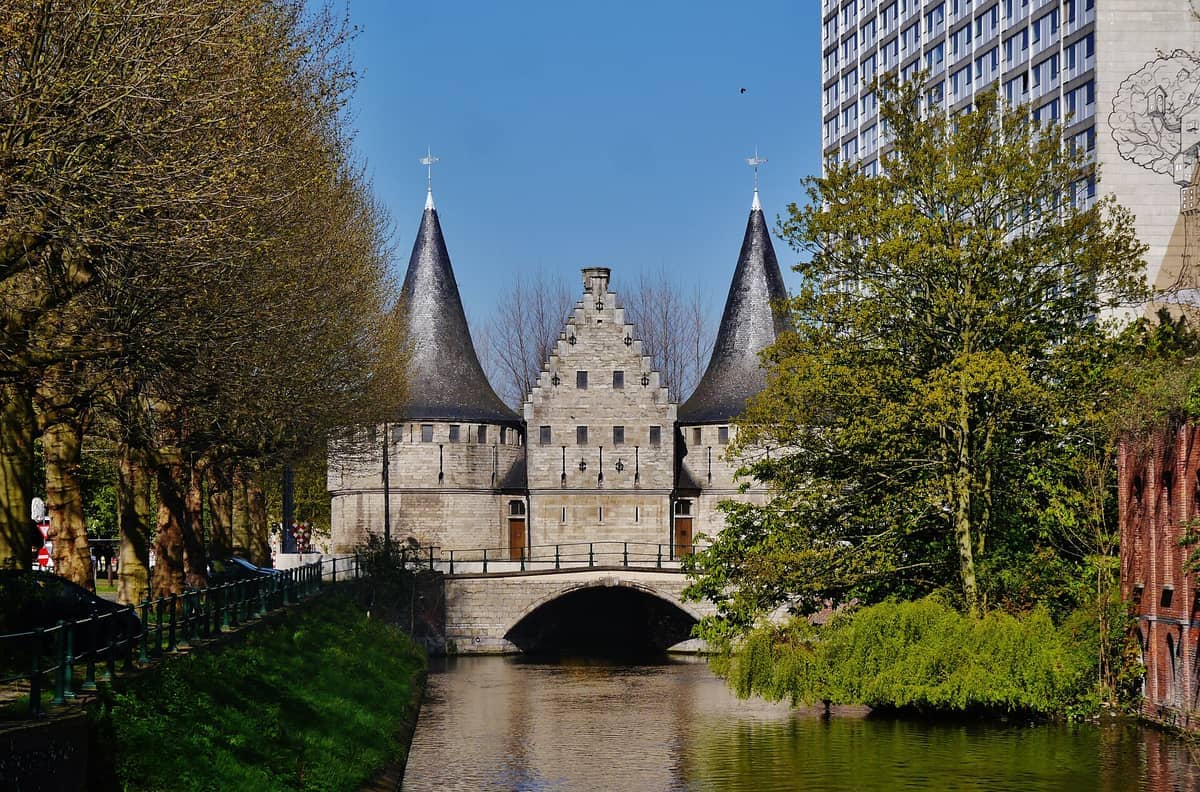
The walk between Prinsenhof and the Rabot city gate to the northwest takes around ten minutes and follows the Lieve canal. The Rabot is one of the best-preserved medieval sluice gates in Belgium, built in 1489, and it marks the outer edge of the neighborhood. Together with the Donkerpoort, it brackets Prinsenhof as a genuine medieval streetscape rather than a reconstructed one.
Prinsenhofplein: the square where the palace courtyard once stood, with the bronze statue of Charles V and the interpretive scale model of the original complex
Donkerpoort: the surviving palace gatehouse, a rare physical remnant of the Burgundian court
The Lieve canal walk between Prinsenhof and the Rabot city gate
Rabot city gate: the 1489 medieval sluice gate at the neighborhood's northwestern edge
Street-level architectural details: Flemish Renaissance gables and stepped rooflines throughout the residential streets
From Prinsenhofplein, it is a short walk south to Gravensteen, which anchors the southern edge of this part of the city. Visitors with a serious interest in Ghent's medieval layers can logically combine Prinsenhof, Gravensteen, and the Vrijdagmarkt square into a single half-day itinerary that covers roughly a thousand years of urban history.
💡 Local tip
The scale model of the original Prinsenhof palace complex on Prinsenhofplein is easy to overlook. Take a few minutes to study it before walking the neighborhood: it reframes the surrounding streets entirely and helps you read the traces of the original layout in the modern urban grain.
Eating & Drinking
Prinsenhof itself is not a food destination. The neighborhood is primarily residential, and the concentration of restaurants and cafés that defines other parts of Ghent's center is largely absent here. What you will find are the kinds of local businesses that serve residents: a corner bakery, a neighborhood café where regulars nurse a coffee or a Belgian beer at noon, the occasional small grocery. If you are looking for a proper meal, the surrounding neighborhoods deliver far more options.
The nearest concentration of eating and drinking options is just south, around the streets approaching Gravensteen and along the Graslei and Korenlei waterfront. This area has everything from traditional Belgian brasseries to contemporary Flemish cuisine. For a wider overview of where to eat across the city, the Ghent food guide covers the full range of options by neighborhood and cuisine type.
The residential character of Prinsenhof does mean that any café or local spot you encounter is likely to be genuinely local rather than tourist-oriented in its pricing or atmosphere. Belgian café culture at this level is worth experiencing: a small brown café with a few tables, a rotating draft beer selection, and an owner who knows every regular by name. These spaces exist in Prinsenhof precisely because the neighborhood has not been reshaped around visitor footfall.
Getting There & Around
Prinsenhof is most naturally reached on foot from Ghent's medieval center. From Gravensteen, the entrance to the neighborhood is essentially immediate: walk north from Sint-Veerleplein and you are in Prinsenhof within two minutes. From the Korenmarkt, the main tram hub in the city center, the walk takes around ten to fifteen minutes through the historic streets.
Public transport in Ghent is operated by De Lijn, which runs the city's tram and bus network. The nearest tram stops to Prinsenhof are along the routes that pass through the broader historic center. From Gent-Sint-Pieters, Ghent's main railway station, trams connect to Korenmarkt in around five to ten minutes, from which Prinsenhof is an easy walk. For full route planning, check the current De Lijn network map directly, as line numbers and stop names are subject to change. For a broader overview of moving around the city, the guide to getting around Ghent covers all transport options in detail.
Cycling is a natural way to move through this part of Ghent. The streets around Prinsenhof carry relatively little motor traffic, and the Lieve canal path toward the Rabot is pleasant by bike. Ghent has a well-developed cycling infrastructure, and the city's Blue-bike rental scheme and various other rental options are available near the main stations and in the center.
Drivers should be aware that Prinsenhof falls within Ghent's Low Emission Zone and is also subject to the city's extensive traffic circulation plan, which restricts through-traffic in the historic center. Parking near the neighborhood is limited and best approached via the city's designated parking garages at the edges of the pedestrian and restricted zones.
💡 Local tip
The most rewarding approach to Prinsenhof is to walk north from Gravensteen along Sint-Veerleplein, cross over the Lieve canal, and let the neighborhood unfold gradually. This route transitions naturally from the tourist-heavy castle area to the quieter residential streets in the space of a single block.
Where to Stay
Prinsenhof is not a major accommodation hub. The neighborhood's residential character and the absence of large hotel properties mean that most visitors staying in this part of Ghent will be in small boutique hotels, guesthouses, or self-catering apartments rather than international chains. For those who want to wake up in a genuinely quiet, historic part of the city and walk to the major sights in under fifteen minutes, this area has real appeal. The where to stay in Ghent guide provides a full breakdown of accommodation options across the city's neighborhoods.
Staying in or immediately around Prinsenhof suits travelers who prioritize atmosphere and proximity to the historic center over on-site amenities and a busy social scene. Couples, solo travelers with a particular interest in history or architecture, and anyone who finds the hotel-dense zones around Korenmarkt too commercial will find this corner of the city more to their taste. Families with young children may prefer a neighborhood with more immediate access to restaurants and services.
Prinsenhof in Context: How It Fits Into Ghent
Understanding Prinsenhof requires understanding a little of Ghent's longer arc. In the 14th and 15th centuries, Ghent was one of the most powerful cities in northern Europe, a cloth-trading metropolis that rivaled Paris in population and regularly challenged the authority of its own rulers. The Prinsenhof palace was both a symbol and an instrument of that authority. When the Habsburg dynasty inherited the Low Countries and Charles V was born here in 1500, it was a moment of genuine historical significance: the future ruler of the largest empire in the world took his first breath in this neighborhood. His later relationship with Ghent was complicated, culminating in the brutal suppression of a civic revolt in 1540, after which the city's power was decisively broken.
The palace's gradual disappearance mirrors the city's declining fortunes. As Antwerp rose to commercial dominance and Ghent lost its cloth-trading supremacy, the Prinsenhof complex lost its political function and was eventually demolished piecemeal. What the neighborhood offers today is not a monument to power but a meditation on its absence, which makes it one of the more intellectually interesting corners of a city already dense with history. Visitors who want the complete picture of Ghent's medieval and early modern story should also visit STAM, the Ghent city museum, which traces the city's development from its origins to the present and provides essential context for everything you see in Prinsenhof.
Prinsenhof also sits at the edge of the Ghent waterways network. The Lieve canal, which forms the neighborhood's eastern boundary, was once a crucial commercial artery connecting Ghent to Damme and the North Sea. Today it is a quiet urban waterway, but tracing its course through the neighborhood gives a physical sense of how medieval Ghent was organized around water as infrastructure rather than simply as scenery.
⚠️ What to skip
Prinsenhof is not the right neighborhood for visitors who want maximum convenience to restaurants, nightlife, or major museums. If your priority is access to Ghent's cultural institutions, consider staying closer to the Korenmarkt or the Citadelpark museum quarter instead.
Summary
TL;DR
Prinsenhof is a quiet, residential neighborhood in the northwestern historic core of Ghent, best known as the birthplace of Emperor Charles V in 1500 and the site of the long-demolished Burgundian palace complex.
The neighborhood rewards visitors interested in medieval and early modern history, architecture, and the texture of a lived-in historic city, rather than those seeking active dining, nightlife, or major museum access.
Key physical remains are modest: the Donkerpoort gatehouse, the bronze statue of Charles V on Prinsenhofplein, a scale model of the original palace, and the nearby Rabot city gate make for a compelling but low-key itinerary.
The area is most naturally combined with a visit to Gravensteen and a walk along the Lieve canal, and can be covered thoroughly in two to three hours on foot.
Best suited to history-focused travelers, architecture enthusiasts, couples seeking a calm base in the historic center, and anyone who prefers streets that function for residents rather than tourists.
Ghent rewards visitors who stay longer than a day trip. This two-day itinerary covers the medieval core, the best museums, canal-side eating, and the practical logistics to make every hour count — with clear notes on what's worth your time and what isn't.
Ghent's medieval skyline is defined by its three great towers, two of which belong to churches that rank among the finest in Northern Europe. This guide covers every major church and religious building worth seeking out, from the cathedral housing Jan van Eyck's masterpiece to a quiet beguinage that has barely changed in centuries.
Ghent stands out for museum-going. This guide covers the city's finest collections, from medieval altarpieces and Flemish old masters to contemporary art and decorative design, with practical advice on what to prioritise and when to visit.
Ghent rewards visitors in every season, but the best time to visit Ghent depends on your priorities. This guide breaks down weather patterns, major events, crowd peaks, and price fluctuations so you can choose the right window for your trip.
Ghent is one of Belgium's most rewarding cities and sits just 35 minutes from Brussels by train. This guide covers every transport option, the smartest itinerary for a single day, what to skip, and what not to miss — including the city's medieval waterfront, world-famous altarpiece, and canal boat tours.
Ghent sits at the centre of one of Europe's most connected rail networks, putting Bruges, Brussels, Antwerp, and the WWI battlefields of Flanders Fields within easy reach. This guide covers journey times, fares, what to do once you arrive, and how to avoid the most common planning mistakes.
Ghent holds one of Europe's greatest concentrations of Flemish master art, anchored by Jan van Eyck's Ghent Altarpiece and a self-guided cycle route connecting cathedral treasures, medieval streetscapes, and riverside nature reserves. This guide covers every key stop, practical logistics, and what to skip.
Ghent stands out for free attractions. From sweeping canal views and medieval architecture to botanical gardens and contemporary street art, this guide covers the best no-cost experiences the city has to offer.
The Gentse Feesten is one of Europe's largest free city festivals, transforming Ghent's medieval centre into 10 days of concerts, street theatre, and late-night revelry every July. This guide covers everything from how to navigate the festival's spread-out layout to booking accommodation before it sells out.
Ghent is one of Belgium's most walkable historic cities, but knowing how its tram network, train connections, and visitor passes work saves real time and money. This guide covers every transport option in detail, from Brussels Airport transfers to De Lijn ticketing, cycling routes, and the CityCard Gent.
The Ghent Christmas Market, officially known as Gentse Winterfeesten, transforms the city's medieval squares into one of Belgium's most atmospheric winter events each December. This guide covers exact dates, opening hours, what to expect at each location, practical transport tips, and practical advice on making the most of your visit.
Ghent takes its food seriously. This guide covers every dish worth ordering in the city, from the iconic creamy waterzooi stew to cone-shaped cuberdon candies, with clear context on prices, seasonality, and where locals actually eat.
Ghent stands out after dark. With a student population of tens of thousands, a dense historic centre, and multiple distinct nightlife zones, the city offers everything from cheap weeknight pints on Overpoortstraat to late-night jazz and craft beer in medieval surroundings. This guide covers every major area, what to expect on different nights of the week, and how to avoid the rookie mistakes.
Ghent is one of Belgium's most impressive medieval cities, and it doesn't have to be expensive. From free canal walks and no-cost museum entry for under-18s to the CityCard Gent pass and multi-trip tram tickets, this guide covers every angle of visiting Ghent without breaking the bank.
Ghent is one of Belgium's most photogenic cities, with medieval towers, guild-lined canals, and hidden courtyards at every turn. This guide covers the 20 best photo spots in Ghent, from classic panoramas to atmospheric backstreets, with practical advice on when to go and what to expect.
Ghent has one of Belgium's most seriously developed street art scenes, backed by city policy, a free downloadable map, and over 330 catalogued works. This guide covers every self-guided route, the best guided tours, the legendary Werregarenstraatje, and how to explore beyond the tourist center.
Both cities are medieval, canal-laced, and packed with Flemish history — but they feel completely different on the ground. This guide breaks down the real differences between Ghent and Bruges so you can choose wisely, or plan both.
Ghent rewards walkers more than almost any city in Belgium. This guide covers the best self-guided walking routes through the historic centre, practical logistics, CityCard value, seasonal tips, and the landmarks you genuinely should not skip.
Ghent's medieval canals are among the most atmospheric in Belgium, threading past Gothic towers, guild houses, and centuries-old quaysides. This guide covers every boat trip option, the best spots to explore on foot, what things cost, and the practical details that make the difference between a great experience and a wasted afternoon.
Ghent stands out as a family destination. This guide covers the best activities for kids in Ghent, from castle adventures and canal tours to parks, pools, and seasonal events, with practical advice on what to skip and how to save money with the CityCard.
Ghent packs medieval architecture, world-class art, and one of Belgium's best food scenes into a compact, walkable historic centre. This 24-hour itinerary tells you exactly where to go, what to skip, and how to move between it all without wasting a minute.
Ghent stands out as a romantic destination. This guide covers the best experiences for couples, from evening walks along illuminated waterways to medieval castles, Flemish food, and the quieter corners that most visitors miss. Practical and seasonal.
Ghent is Belgium's most underestimated city. With a medieval core, world-class museums, a thriving food scene, and fewer tourist crowds than Bruges, it rewards visitors who take their time. This guide covers the best things to do in Ghent — from the unmissable to the genuinely off the beaten track — with real prices, practical logistics, and practical advice.
Choosing where to stay in Ghent shapes your entire trip. This guide breaks down every key neighbourhood by atmosphere, price, and convenience, then matches each to the right type of traveller, from first-timers to budget backpackers to couples after a romantic canal-view room.