Best Day Trips from Ghent: Bruges, Brussels, Antwerp & Beyond
Ghent sits at the centre of one of Europe's most connected rail networks, putting Bruges, Brussels, Antwerp, and the WWI battlefields of Flanders Fields within easy reach. This guide covers journey times, fares, what to do once you arrive, and how to avoid the most common planning mistakes.
Plan and book this trip
Tools from our partner Travelpayouts help you compare flights and hotels. If you book through them, we may earn a commission at no extra cost to you.
Flights
Hotels map
TL;DR
- Bruges is the easiest day trip from Ghent: direct trains run every 10-20 minutes and take about 25 minutes, making it feasible even as a half-day. See our Ghent vs Bruges comparison for help deciding where to base yourself.
- Brussels is about 30 minutes away by direct train from Gent-Sint-Pieters, with fares around €9-10 one way on SNCB.
- Antwerp takes under an hour (56-62 minutes) and is the best choice for fashion, contemporary art, and the diamond quarter.
- The WWI Flanders Fields sites around Ypres (Ieper) and Diksmuide are much easier with a car or organised tour — while there is a direct hourly train from Ghent to Ypres and to Diksmuide, public transport is slower and less flexible for reaching scattered battlefield sites.
- Belgian intercity trains do not require advance seat reservations. You can buy tickets at the station on the day, though booking via SNCB online often gives slightly lower fares than third-party platforms.
Why Ghent Is One of Belgium's Best Day-Trip Bases
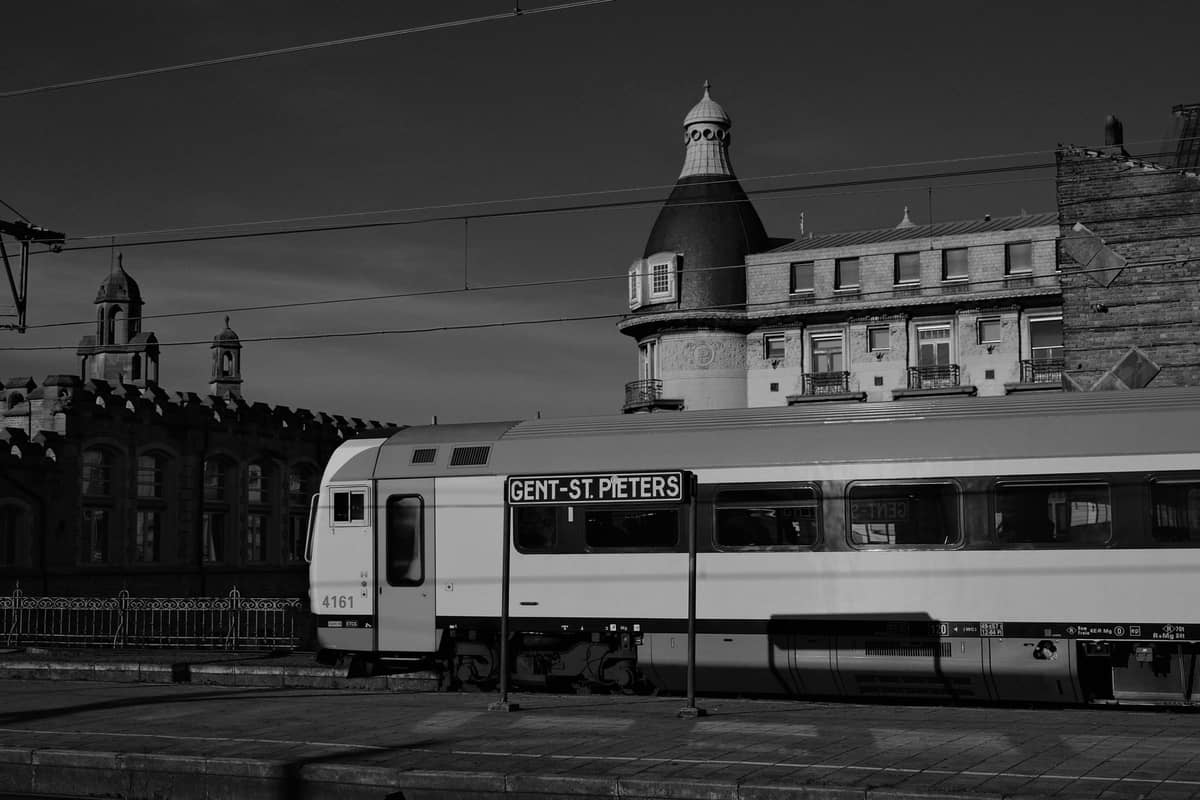
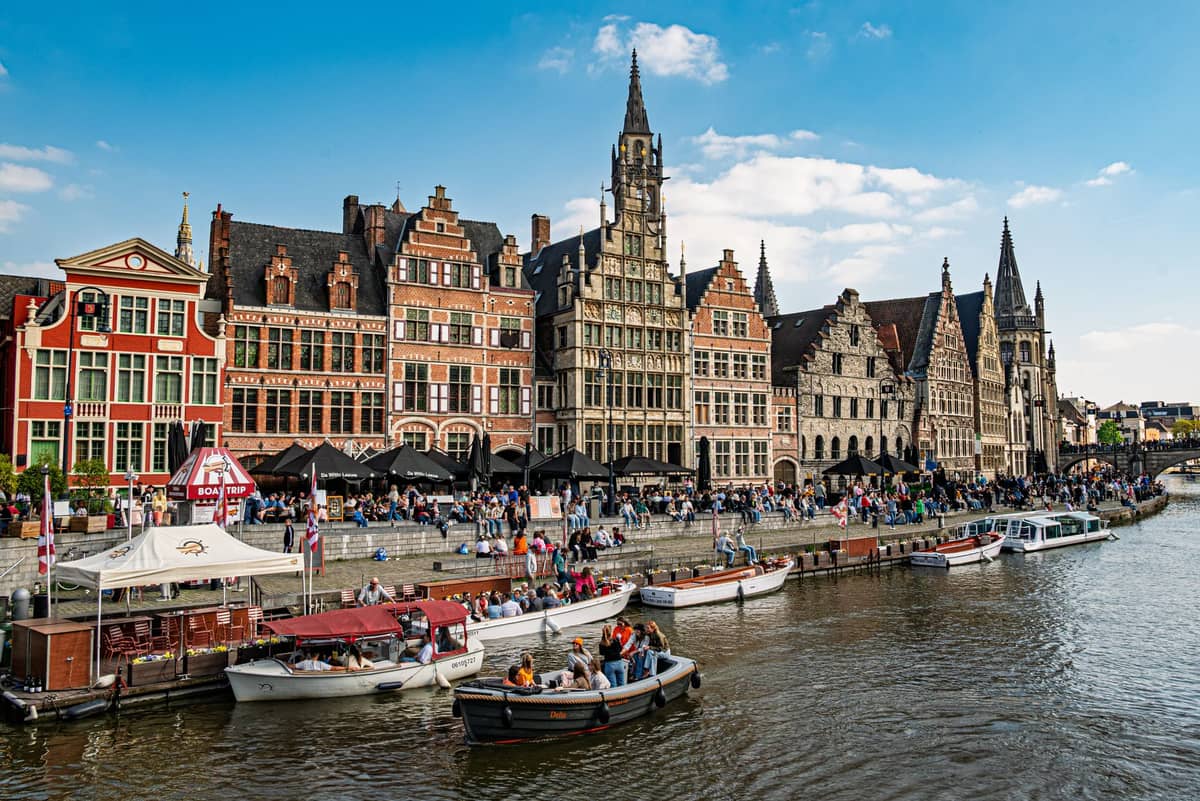
Ghent occupies an almost perfect geographic position in the Flemish Region: roughly 50 km from Brussels, 50 km from Bruges, and 80 km from Antwerp. All three cities are served by frequent, direct trains from Gent-Sint-Pieters station, the city's main rail hub, which is itself just a 5-10 minute tram ride from the historic centre. This means you can spend a full morning exploring Graslei and Korenlei and still be in Brussels for lunch.
Belgium's national rail operator, SNCB (also called NMBS in Dutch), runs a dense intercity network with no seat reservation required on domestic routes. This is genuinely useful: unlike high-speed services elsewhere in Europe, you can walk up to a platform 10 minutes before departure, buy a ticket, and board. That said, buying online via the SNCB website or app is usually the smartest move — prices are in euros and you avoid the service fees that third-party booking platforms add.
💡 Local tip
If you are under 26, ask about the Go Pass 1 / Youth single ticket when buying at the station. It offers a significantly reduced single-journey fare compared to the standard adult ticket and is available on Belgian domestic routes.
Bruges: The Classic Choice (25 Minutes by Train)
Bruges is the single most popular day trip from Ghent, and for straightforward reasons: it is extraordinarily well-preserved, the journey is just under 30 minutes, and trains run roughly every 15–20 minutes at peak times — around 30–35 direct services per day in total. One-way tickets are usually around €8-12 through SNCB in 2nd class, with similar or slightly higher prices on third-party platforms depending on timing. The station is about a 15-minute walk from the historic centre, or you can take a local bus.
Where Bruges earns its reputation: the canal network, the Markt square, the Groeningemuseum with its collection of Flemish Primitives, and the Begijnhof. What the reputation skips: the city centre is genuinely crowded between 10am and 4pm in summer and during weekends year-round. If you are doing this as a day trip from Ghent, take one of the first trains of the morning (departures from around 6-7am), spend the morning in relative quiet, and aim to be at the main sights before the tour groups arrive. Come back in the late afternoon — trains run until late evening.
⚠️ What to skip
Bruges on a Saturday in July or August is extremely crowded. If your dates are flexible, a Tuesday or Wednesday visit gives you a noticeably calmer experience at the same price.
Brussels: Culture, Food, and Architecture (36 Minutes by Train)
The Belgian capital is about 30 minutes from Ghent by direct intercity train, with standard one-way fares around €9-10 on SNCB. Services run frequently throughout the day from Gent-Sint-Pieters, and you arrive at Brussels-Midi (Bruxelles-Midi / Brussel-Zuid), which is well connected to the metro and other central stations. A single day gives you enough time for the Grand-Place, the Magritte Museum, the comic strip art trail, and a proper sit-down meal. Consider making this your day trip if you are already planning a Brussels-Ghent connection as part of a wider Belgium trip.
One practical note: Brussels has three main stations — Midi, Central, and Nord. Most intercity trains from Ghent stop at all three, so you can alight at Central if you are heading straight for the historic core. The journey time adds only 3-4 minutes versus Midi. The metro system is functional but not always the most intuitive; walking between Central and the Grand-Place takes about 5 minutes and is the simpler option for first-time visitors.
Antwerp: Diamonds, Design, and the Best Cathedral in Belgium (Under 1 Hour)
Antwerp is the furthest of the three major train day trips from Ghent, but 56-62 minutes on a direct intercity service is still well within day-trip range. Adult one-way fares are typically around €12-14 on SNCB; under-26 Go Pass fares bring this closer to €6.40-6.60 depending on the product used. Trains arrive at Antwerp-Central, which is itself worth seeing: the station is a monumental piece of railway architecture from 1905, with a cathedral-like central hall and four levels of tracks.
Antwerp rewards a full day more than Bruges does. The Cathedral of Our Lady holds two Rubens altarpieces that most visitors find more affecting in person than any photograph suggests. The MAS museum (Museum aan de Stroom) offers free rooftop access with panoramic views over the port. The fashion district around the Nationalestraat and the Meir has a genuine identity — Antwerp trained most of the designers who shaped Belgian fashion from the 1980s onward, and the independent boutiques here reflect that. The diamond quarter, a short walk from Central Station, is a functioning commercial district rather than a tourist performance.
- Cathedral of Our Lady Holds Rubens' 'Descent from the Cross' and 'Raising of the Cross'. Entry fee applies; plan at least 45-60 minutes inside.
- MAS Museum rooftop Free access to the rooftop terrace with views over the Scheldt river and port. Museum entry is paid but the view alone justifies a visit.
- Rubenshuis Rubens' former home and studio. Smaller than expected but genuinely atmospheric; book tickets in advance, especially on weekends.
- Nationalestraat fashion district Independent concept stores, the MoMu Fashion Museum, and the legendary Dries Van Noten flagship. A half-day on its own.
Flanders Fields: Ypres and Diksmuide (WWI Sites)
The WWI battlefields around Ypres (Ieper in Dutch) and Diksmuide sit about 75-85 km west of Ghent. There are direct hourly trains from Ghent to both Ypres and Diksmuide, but reaching the scattered cemeteries and memorials still requires either local transport or a car, so a rental car, private transfer, or organised tour remains the most practical option for covering multiple sites in one day. Full-day private transfers from Ghent typically include around 2.5 hours in Ypres and 1.5 hours in Diksmuide, with admission fees not included in the transfer price. Organised coach and small-group tours are bookable through major aggregators like GetYourGuide; most are full-day trips that sometimes end in Brussels rather than Ghent, so read the return logistics carefully before booking.
Ypres itself is a fully reconstructed medieval city — the Cloth Hall (Lakenhalle) and St Martin's Cathedral were rebuilt brick by brick after being levelled in the war. The In Flanders Fields Museum inside the Cloth Hall is one of the most thoughtfully curated WWI museums in Belgium and takes 2-3 hours to do properly. The Menin Gate, where the Last Post is sounded every evening at 8pm, has hosted the ceremony since 1928, with only a hiatus during the Second World War occupation. If you time your day trip to end with the Last Post ceremony before driving or transferring back to Ghent, the total logistics work cleanly.
ℹ️ Good to know
WWI battlefield tours operate most frequently from March through November. In winter, some private operators reduce their schedules and certain smaller memorial sites have reduced opening hours. Always confirm your specific tour or transfer dates directly with the operator.
- By rental car Most flexible option. Ghent has several car rental offices near Gent-Sint-Pieters. The drive to Ypres takes about 55-65 minutes on the E17/A19.
- Private transfer Bookable through Daytrip.com and similar platforms. Typically includes a driver and a fixed itinerary covering Ypres and Diksmuide in a single day.
- Organised small-group tour Available via GetYourGuide and Viator. Check whether the tour returns to Ghent or Brussels — many end in Brussels, which means an extra train journey back.
Practical Planning: Tickets, Timing, and Common Mistakes
For all three train-based day trips, the SNCB website and app (available in English) is the most reliable source for current fares and timetables. Third-party platforms like Trainline, Omio, and Rail Europe can display prices in different currencies and sometimes add booking fees, so always cross-check with SNCB directly before purchasing. Belgian intercity trains do not require seat reservations, which removes the pressure of booking weeks in advance — but note that summer weekends and holiday periods do fill trains, and standing in a corridor for 36 minutes to Brussels is less pleasant than it sounds. See our broader guide to the best time to visit Ghent for context on how seasonal crowds affect the whole region.
One decision worth thinking through before you plan your days: Ghent itself rewards at least two full days to explore properly. If you are only in Belgium for 48 hours, spending one entire day on a day trip means you may not see the Ghent Altarpiece, the Gravensteen castle, or the Patershol neighbourhood. If that is your situation, our two days in Ghent itinerary structures things so you see the city's core before committing a day to travel.
✨ Pro tip
Gent-Sint-Pieters to Brussels-Central takes about 32-39 minutes and deposits you within walking distance of the Grand-Place. If your Brussels plan centres on the historic core rather than the EU quarter or Midi neighbourhood, alight at Central rather than Midi — it saves you a metro ride and is just 3-4 minutes longer on the train.
If you are staying in Ghent for several days and want a structured approach to using it as a base for exploring Flanders, our main Ghent activities guide covers how to balance city sightseeing with day trips without losing the coherence of either. The city's canal and waterway network also makes Ghent worth spending an extra morning on before heading out — a boat trip through the historic centre gives you a perspective on the city that most day-trippers from Brussels or Bruges never get.
FAQ
What is the easiest day trip from Ghent?
Bruges. Direct trains take about 28-32 minutes and run every 15-20 minutes, making it the most straightforward excursion from Ghent. The distance is only around 50 km, and you can realistically leave Ghent after breakfast and be back for dinner.
Do I need to book train tickets in advance for day trips from Ghent?
No. Belgian intercity trains (Ghent to Bruges, Brussels, and Antwerp) do not require advance seat reservations. You can buy tickets at the station on the day of travel. That said, booking via the SNCB website or app often gives you the standard fare without third-party booking fees, even though the base price is usually the same as at SNCB ticket machines.
Can I do Ypres (Ieper) as a day trip from Ghent without a car?
It is possible but requires planning. There is a direct hourly train from Ghent to Ypres, but no direct bus. Your best options are this train combined with local transport, an organised tour (bookable through GetYourGuide or similar platforms), or a private transfer service. Be aware that some guided tours depart from Brussels rather than Ghent, and many return to Brussels in the evening — check the pickup and drop-off logistics carefully before booking.
How long does the train from Ghent to Brussels take?
Direct intercity trains from Gent-Sint-Pieters take approximately 28 minutes to Brussels-Midi and about 32 minutes to Brussels-Central respectively. Standard one-way fares are around €9-10 through SNCB. Trains run frequently throughout the day and no reservation is required.
Is Ghent or Bruges a better base for day trips in Belgium?
Ghent is generally the stronger base. It is larger, has better rail connections in multiple directions, and is less tourist-saturated than Bruges, meaning you get a more authentic city experience when you are not on a day trip. Bruges is exceptional to visit but can feel like a stage set in peak season. From Ghent you can reach Bruges, Brussels, and Antwerp all in under an hour by direct train.