Best Things to Do in Ghent: The Definitive Guide
Ghent is Belgium's most underestimated city. With a medieval core, world-class museums, a thriving food scene, and fewer tourist crowds than Bruges, it rewards visitors who take their time. This guide covers the best things to do in Ghent — from the unmissable to the genuinely off the beaten track — with real prices, practical logistics, and practical advice.
Plan and book this trip
Tools from our partner Travelpayouts help you compare flights and hotels. If you book through them, we may earn a commission at no extra cost to you.
Flights
Hotels map
TL;DR
- Ghent's three medieval towers (St Bavo's Cathedral, the Belfry, and St Nicholas Church) form one of Europe's great skylines — start your visit at St Michael's Bridge for the classic view.
- The Ghent Altarpiece at St Bavo's Cathedral is the single most important artwork in the city — book timed entry in advance, especially in peak season.
- Gravensteen (Castle of the Counts) charges €15 standard admission and closes ticket sales at 16:40; don't arrive late.
- The CityCard Ghent covers free entry to Gravensteen, MSK, SMAK, STAM, and unlimited public transport — good value if you plan to hit multiple museums.
- Ghent is far more than a day trip. Two days is the minimum to do it justice; the city's event calendar, canal-side dining, and nightlife make it worth staying longer.
Why Ghent Deserves More Than a Day Trip
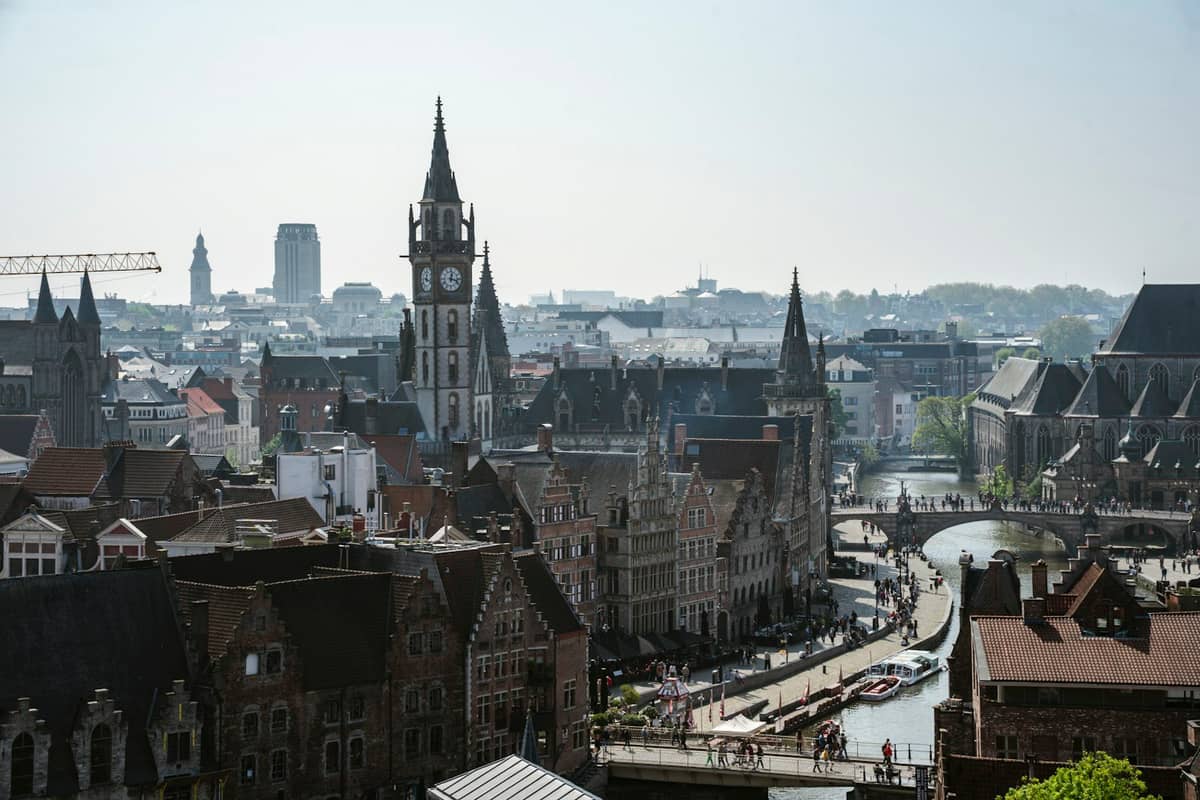
Ghent (Dutch: Gent) is the capital of East Flanders and Belgium's second-largest municipality, with over 270,000 residents. It sits at the confluence of the Scheldt and Lys rivers, roughly midway between Brussels and the North Sea coast. What makes it distinct from Bruges — the obvious comparison — is that it functions as a real city rather than a preserved museum piece. Ghent has a major university, a serious arts scene, a dense concentration of medieval architecture, and a food culture that locals take genuine pride in. For things to do in Ghent Belgium that go beyond the surface, you need at minimum two full days. Most visitors who allow for that leave wishing they had booked a third night. If you're planning your itinerary, our Ghent vs Bruges comparison breaks down exactly what each city does better.
The city's historic centre is compact enough to walk, but the De Lijn tram and bus network covers the wider city well. Tram lines 1, 2, 3, and 4 cut across the city and pass through the centre. A single ride costs around €3 and is valid for 60 minutes, with contactless payment accepted directly on board. Gent-Sint-Pieters is the main railway station, about a five-to-ten minute tram ride from Korenmarkt in the heart of the old town.
💡 Local tip
Ghent has no airport of its own. The standard route is Brussels Airport (BRU) to Brussels-Midi by train, then a direct 30-minute intercity train to Gent-Sint-Pieters. Direct trains from the airport also run hourly. Check current Belgian Railways (NMBS/SNCB) timetables before travel, as frequencies vary by time of day.
The Unmissable: Ghent's Historic Core
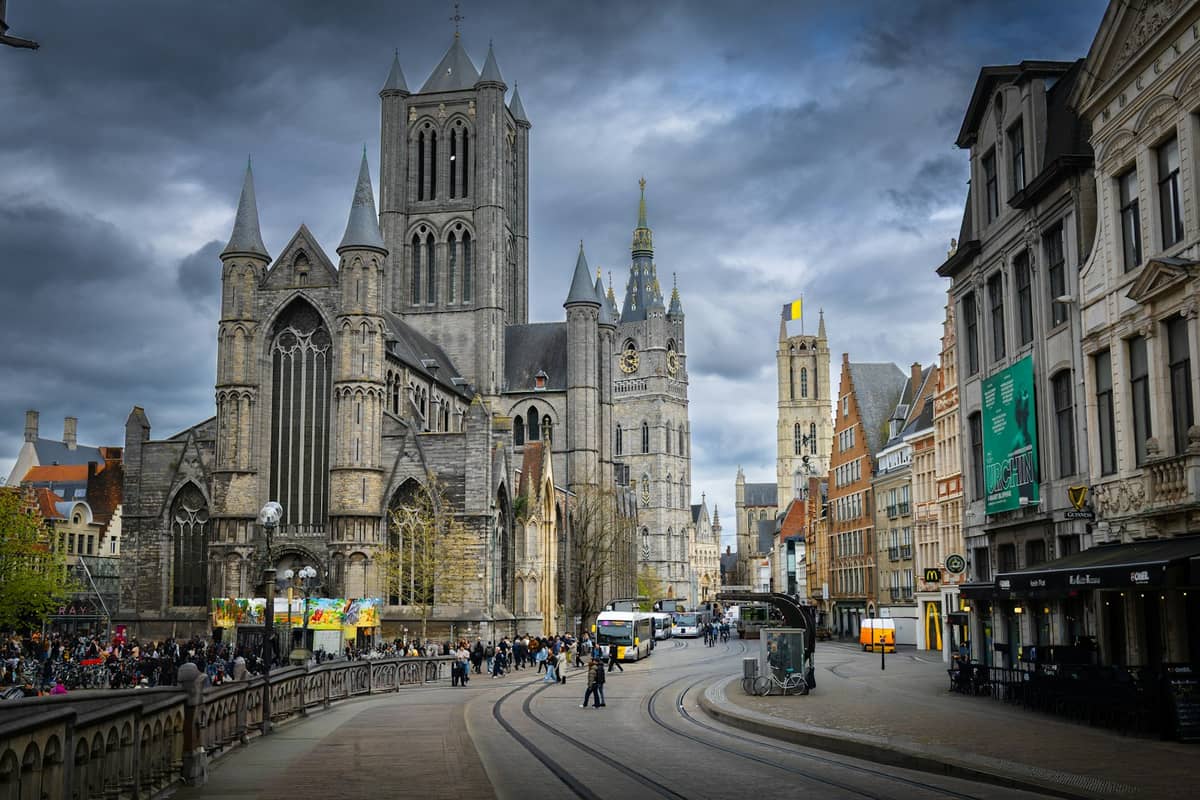
Every visit starts at the same place: the trio of medieval towers visible from St Michael's Bridge. Looking north from this bridge you see St Nicholas Church, the Belfry, and St Bavo's Cathedral in a single line — one of the most photographed views in Belgium. The bridge itself is free, always accessible, and best in the early morning before tour groups arrive.
St Bavo's Cathedral houses the Ghent Altarpiece (also known as the Adoration of the Mystic Lamb), painted by the van Eyck brothers and completed in 1432. It is, without exaggeration, one of the most significant paintings in Western art history — and it's here in Ghent, not in a national capital. A separate ticketed area within the cathedral gives access to the altarpiece; the cathedral itself is free to enter. Book the altarpiece ticket online to avoid waiting in line, particularly from April through October when visitor numbers peak.
The Ghent Belfry is a UNESCO World Heritage Site and one of three belfries in the region recognised for their symbolic importance as towers of civic power rather than religious authority. The climb to the top rewards with a clear view across the medieval roofline. Immediately adjacent, Ghent Town Hall displays a fascinating mix of Gothic and Renaissance architecture on its facade — the construction spanned so many decades that you can see the architectural styles shift visibly from one end of the building to the other.
Gravensteen, the 12th-century Castle of the Counts, is the city's most recognisable landmark after the altarpiece. It opens daily from 10:00 to 18:00, but ticket sales close at 16:40 — a detail that catches many visitors off guard. Standard admission is €15; visitors under 26 pay €7.50, under 19 pay €3, and under 12 enter free. The CityCard Ghent covers entry. The castle's self-guided audio tour is genuinely good and includes some wry commentary that acknowledges the building's violent history honestly rather than sanitising it. For more on the city's medieval sights, see our guide to the Ghent historic centre.
⚠️ What to skip
Gravensteen is not free with general city admission. It has its own ticketed entry. The CityCard Ghent grants free access, but standard visitors pay €15. Don't confuse it with the free churches and public squares nearby.
Museums Worth Your Time (and One to Skip)
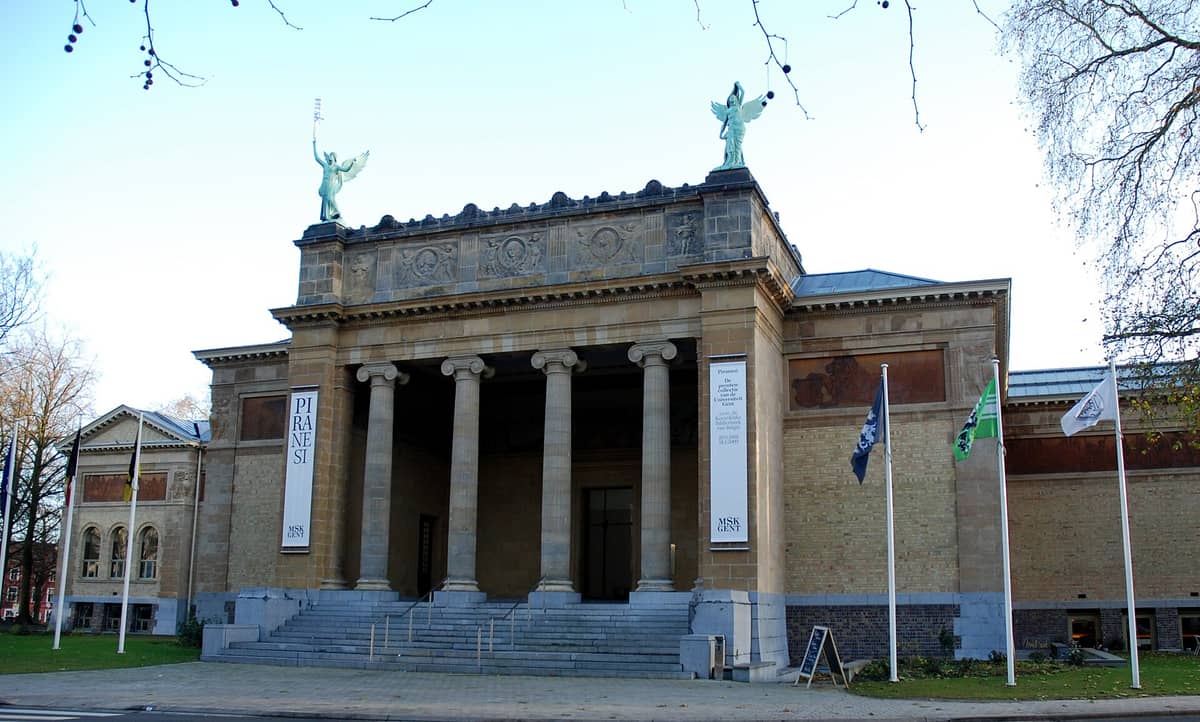
Ghent stands out for museums. The Museum of Fine Arts (MSK Gent) holds one of Belgium's strongest collections of Flemish and Dutch masters — Hieronymus Bosch, Pieter Paul Rubens, Anthony van Dyck — alongside 19th and 20th century Belgian work. Standard admission is €15 (€13 for groups, €7.50 for under-26s, free for under-18s). It opens Tuesday to Friday 09:30 to 17:30 and Saturday to Sunday 10:00 to 18:00. It is closed on Mondays. During school holidays it opens daily from 10:00. On selected first Thursdays of the month, it stays open until 22:00. It closes on 25 and 26 December and 1 and 2 January, and closes early on Christmas Eve and New Year's Eve. If you're interested in Flemish art more broadly, our guide to Flemish Masters in Ghent gives the deeper context.
Across the park from MSK sits SMAK (Stedelijk Museum voor Actuele Kunst), one of the leading contemporary art museums in the Benelux. Its permanent collection is strong and the temporary exhibitions regularly draw international attention. Both MSK and SMAK are located in Citadelpark, which is itself worth an hour of wandering, particularly in spring when it flowers.
For city history, STAM (Ghent City Museum) is housed in a former abbey and tells Ghent's story from prehistoric settlement to the present. The building alone is worth visiting. If you are working through multiple museums, the best museums in Ghent guide ranks them honestly and flags which ones are genuinely skippable for short-stay visitors.
- MSK Gent (Fine Arts) Flemish masters and 19th-century Belgian art; €15 standard, closed Mondays. One of Belgium's top collections.
- SMAK (Contemporary Art) Strong permanent collection and ambitious temporary shows. Free entry on first Sunday of the month.
- STAM (City Museum) Housed in a historic abbey complex; best for understanding Ghent's medieval and industrial past.
- Design Museum Gent European decorative arts and design from the 17th century onwards. Compact and underrated.
- Groot Vleeshuis The 15th-century butchers' hall is now a promotion centre for East Flemish regional products. Free to enter and worth a look for the architecture alone.
Canals, Neighbourhoods, and Walking Routes
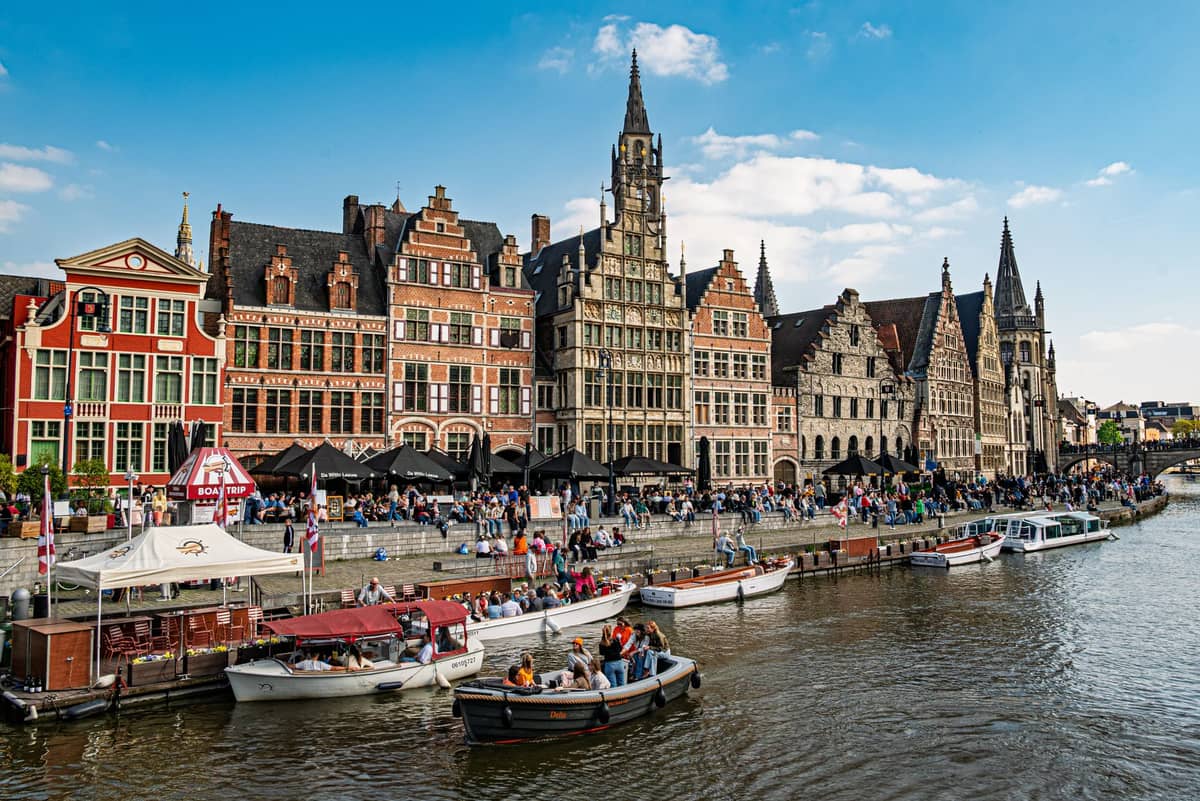
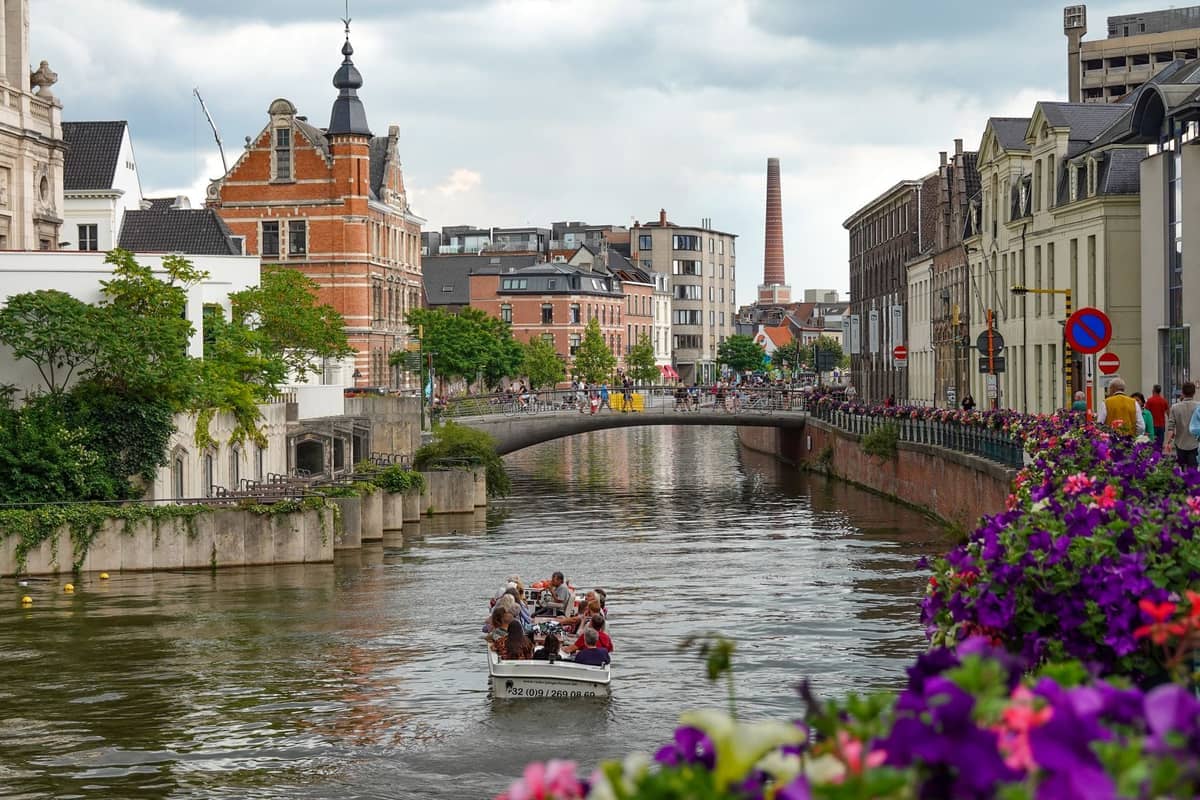
The Graslei and Korenlei are the two quaysides that flank Ghent's medieval harbour. The guild houses along the Graslei date from the 12th to 17th centuries and represent some of the best-preserved medieval commercial architecture in northern Europe. In summer, the steps down to the water fill up with locals drinking wine and watching the boat traffic. It is, in good weather, one of the finest places to sit in Belgium. Canal boat tours depart from this area and give a useful low-level perspective on the city's medieval core — around 30 to 40 minutes and worth doing once.
The Patershol district, just northwest of Gravensteen, is a tight grid of cobbled streets that was a working-class neighbourhood until the 1980s and is now Ghent's best restaurant quarter. The streets are narrow, the buildings are low, and there are no major tourist attractions here — which is precisely why it works. Dinner reservations are genuinely necessary at the better addresses on weekend evenings. Our full Ghent food guide covers the best spots in Patershol and beyond.
Vrijdagmarkt (Friday Market Square) has been a site of political assembly and commerce since the Middle Ages. Jacob van Artevelde, who led Ghent in an alliance with England during the Hundred Years' War, is commemorated here with a statue. The square still hosts a regular market. Nearby, the Vrijdagmarkt area connects naturally into the broader Ghent walking tour route, which takes in most of the major sights in a logical sequence.
✨ Pro tip
The Rabot city gate, constructed between 1489 and 1491, is one of the few remaining medieval city gates in Belgium and sits a short walk north of Gravensteen. Most visitors never make it there. The walk along the canal from Gravensteen to Rabot takes about 15 minutes and passes through a genuine working neighbourhood rather than the tourist circuit.
Seasonal Events and When to Visit
Ghent's climate is temperate maritime: mild, grey, and wet for much of the year. Summers are warm rather than hot, with average highs in the low 20s °C. Rain is possible in any month. The practical window for comfortable outdoor sightseeing runs from late April through early October, with May, June, and September offering the best combination of weather, daylight, and manageable crowd levels. For a fuller breakdown, the best time to visit Ghent guide covers each month in detail.
The Gentse Feesten (Ghent Festival) runs for ten days in July, usually starting on the Friday before the third Sunday of the month. It is one of the largest cultural street festivals in Europe, filling the historic centre with free outdoor concerts, theatre, and street performance. Accommodation books out months in advance. If you plan to visit during this period, read our Gentse Feesten guide before booking — the city transforms completely, and not every visitor style suits the format.
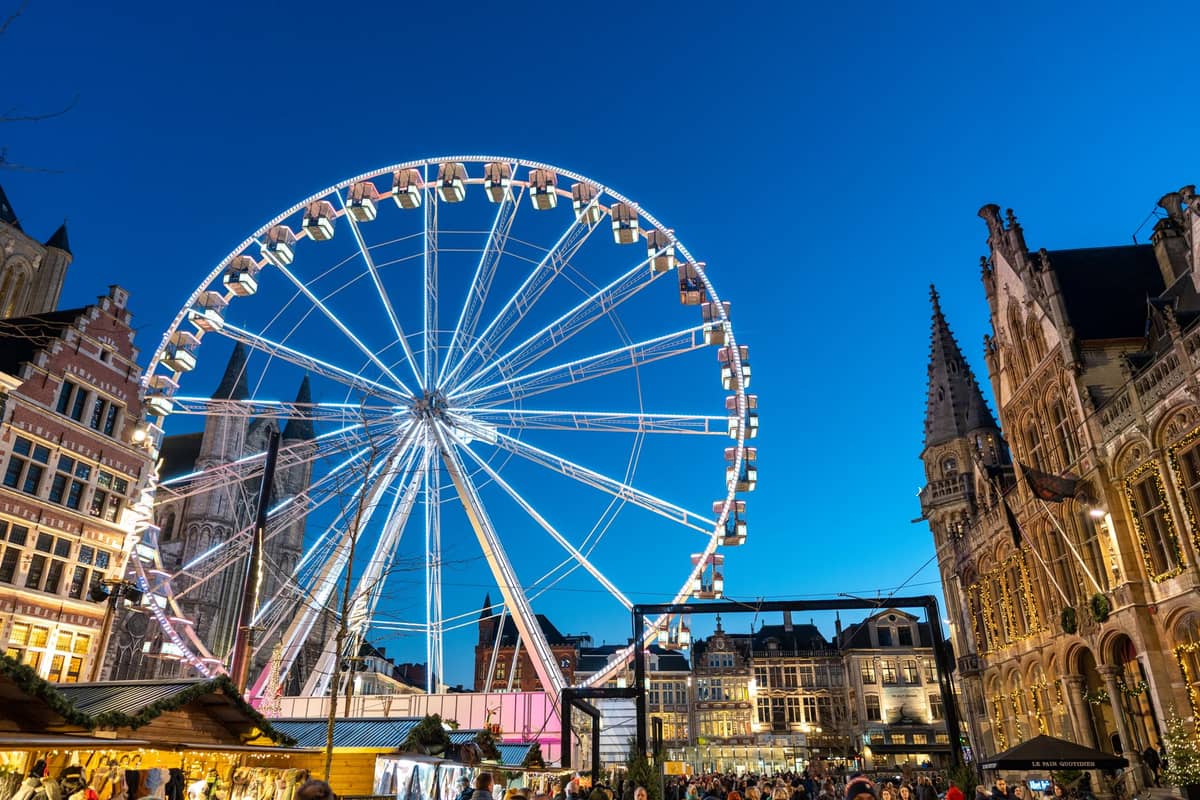
In winter, Ghent hosts one of Belgium's better Christmas markets, centred around the historic squares. Fewer crowds than summer, competitive hotel rates, and the medieval architecture looks particularly atmospheric under winter light. The Ghent Christmas market guide covers dates, locations, and what to prioritise.
- May to June: Long daylight hours, mild weather, manageable crowds. Good for photography and outdoor dining.
- July (Gentse Feesten): Maximum atmosphere but maximum crowds. Book accommodation 3-4 months ahead.
- August: Peak tourist season. Warmer and busier. Prices at their highest.
- September: Often underrated. Crowds thin out after school holidays start but weather stays reasonable.
- December: Christmas market atmosphere, lower prices, fewer queues at attractions. Pack a waterproof coat.
Practical Tips for Getting the Most Out of Ghent
The CityCard Ghent is worth calculating before purchase. It covers free entry to Gravensteen (€15), MSK (€15), SMAK, STAM, the Design Museum, and unlimited use of De Lijn public transport within Ghent. If you plan to visit three or more paid attractions, it typically pays for itself. It is available for 48 or 72 hours. For visitors on a tighter budget, there are meaningful options — including free museum days and free outdoor attractions — covered in the Ghent on a budget guide.
Getting around the historic centre is primarily done on foot — the main sights are within comfortable walking distance of each other. For the wider city, De Lijn trams and buses cover the network well. A single ride costs around €3 and is valid for 60 minutes; contactless payment by card or phone works on board. Tickets are also available via the De Lijn app. For a full breakdown of transport logistics, the getting around Ghent guide covers trams, bikes, and walking routes in detail.
A note on Mondays: several of Ghent's major museums, including MSK, are closed on Mondays. If you are visiting for a single day and Monday is your only option, weight your time toward outdoor sights — the Graslei, Gravensteen, the Belfry, the cathedral — rather than planning a museum-heavy day. Gravensteen is open daily. St Bavo's Cathedral is generally open daily, though hours vary and the altarpiece ticket area has its own schedule.
ℹ️ Good to know
Emergency services in Belgium: dial 112 for police, fire, or ambulance. The country code is +32. Belgium uses Type C and E plugs at 230V/50Hz — standard continental European sockets. Tap water in Belgian cities is treated and safe to drink.
FAQ
How many days do you need in Ghent?
Two full days is the practical minimum to cover the main historic sights, visit one or two museums, and spend time in the Patershol neighbourhood. Three days allows you to explore more at a relaxed pace and include day trips or the wider canal network. Ghent is consistently underestimated as a short-stay destination — the official Visit Gent tourism platform describes it as 'more than a one night stay' for good reason.
Is the Ghent Altarpiece worth seeing?
Yes, without qualification. The Adoration of the Mystic Lamb by the van Eyck brothers (completed 1432) is one of the most significant paintings in European art history. It is housed in St Bavo's Cathedral in its own ticketed display space. The altarpiece was recently restored and is displayed with excellent explanatory materials. Book tickets online in advance during April to October.
Is Ghent worth visiting if you've already been to Bruges?
Ghent and Bruges are quite different experiences. Bruges is smaller, better preserved, and more overtly picturesque but feels more like a tourist site than a living city. Ghent has more going on culturally, a stronger food and nightlife scene, more serious museums, and far fewer day-trippers per square metre. Most visitors who do both say Ghent surprised them more.
What is the best free thing to do in Ghent?
Standing on St Michael's Bridge to look at the three towers costs nothing and is one of the great city views in Belgium. The Graslei and Korenlei quaysides are free to walk and genuinely spectacular. St Bavo's Cathedral is free to enter (the Ghent Altarpiece viewing area has a separate ticket). The Citadelpark is free, and a walk through the Patershol neighbourhood costs nothing but delivers real neighbourhood atmosphere.
How do I get from Brussels to Ghent?
The most straightforward route is by train from Brussels-Midi (Bruxelles-Midi) to Gent-Sint-Pieters, which takes about 30 minutes and runs frequently throughout the day. From Brussels Airport, you can take a direct hourly train to Gent-Sint-Pieters, or connect via Brussels-Noord or Brussels-Midi. Check current NMBS/SNCB timetables for exact frequencies and fares, as these change seasonally.