STAM – Ghent City Museum: History, Tickets, and What to Expect
STAM – Stadsmuseum Gent tells the complete story of Ghent's growth from medieval trading powerhouse to modern Flemish city, spread across a beautifully converted medieval abbey complex on the Bijloke site. It rewards curious visitors who want more than pretty facades, offering context that makes the rest of the city suddenly legible.
Quick Facts
- Location
- Bijlokesite, Godshuizenlaan 2, B-9000 Ghent, Belgium
- Getting There
- De Lijn tram and bus to Bijloke/Leie area; short walk from Ghent city centre
- Time Needed
- 2 to 3 hours
- Cost
- €9 standard; €7 Ghent residents; €3 ages 19–25; free under 19 and CityCard Gent holders
- Best for
- History lovers, architecture enthusiasts, first-time visitors wanting city context
- Official website
- stamgent.be
What Is STAM?
STAM – Stadsmuseum Gent is the official city museum of Ghent, Belgium's second-largest municipality with around 274,000 residents. Its purpose is specific and ambitious: to trace how Ghent evolved from its origins at the confluence of the Scheldt and Leie rivers into one of medieval Europe's wealthiest cities, and then follow that arc all the way to the present. Few city museums manage this kind of sweep without becoming dry. STAM largely avoids that trap.. Its purpose is specific and ambitious: to trace how Ghent evolved from its origins at the confluence of the Scheldt and Leie rivers into one of medieval Europe's wealthiest cities, and then follow that arc all the way to the present. Few city museums manage this kind of sweep without becoming dry. STAM largely avoids that trap.
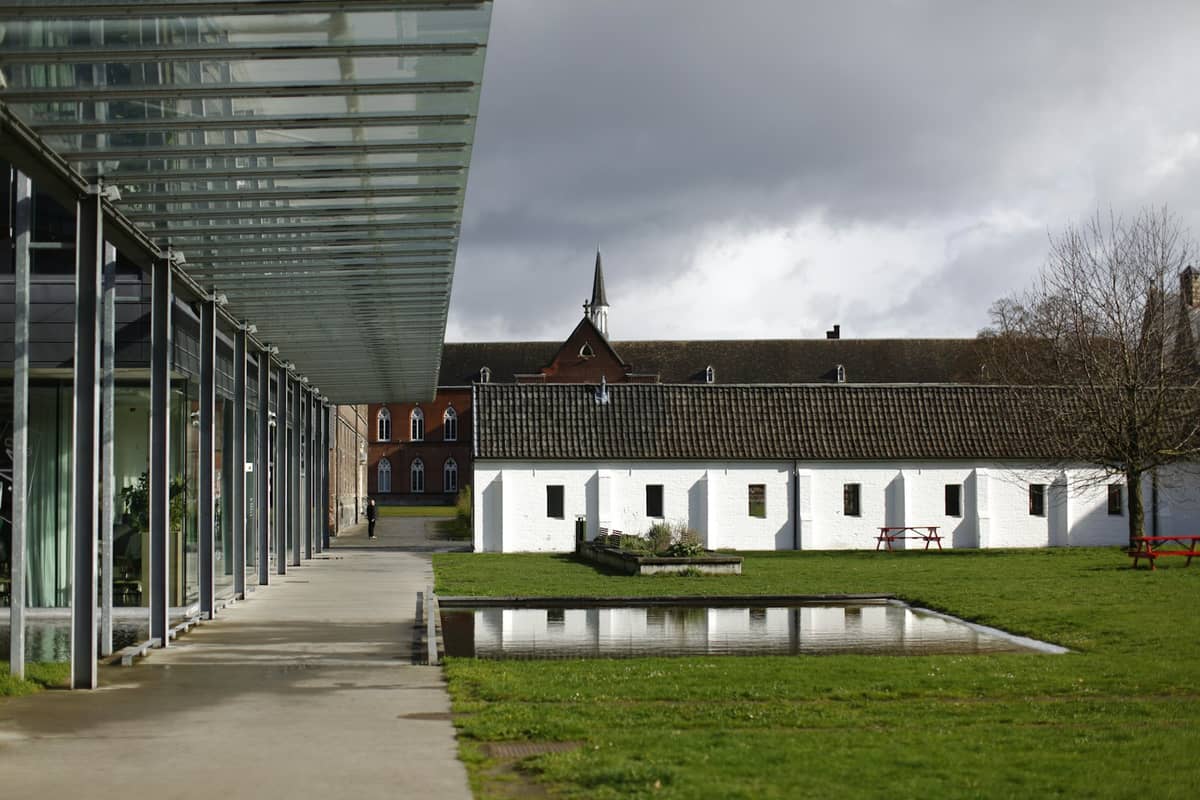
The museum sits on the historic Bijloke site, a former medieval hospital and abbey complex just outside the old city walls. The juxtaposition of medieval stonework and contemporary display design is deliberate. Visitors move through 14th-century vaulted rooms that now hold interactive timelines, scale models, and archival projections. The building is part of the experience in a way that a purpose-built museum could never replicate.
💡 Local tip
Visit STAM early in your Ghent trip, not at the end. The aerial maps, scale models, and historical overviews give you a framework that makes walking through the Graslei, Gravensteen, and the Patershol quarter far more meaningful.
The Setting: Bijloke Abbey and Its Architecture
The Bijloke site dates back to the 13th century, originally as a Cistercian hospital and abbey complex. The buildings accumulated over centuries rather than being designed as a single statement, and that layered quality is still visible. Romanesque foundations sit alongside Gothic vaulting and later Baroque additions. Walking from the entrance toward the main exhibition halls, you pass under stone archways worn smooth at shoulder height, through courtyards where the proportions feel slightly removed from modern scale.
The contemporary intervention, the glass and steel connecting elements added during the conversion into a museum, is handled with restraint. Rather than overwhelming the medieval fabric, the modern elements provide legibility: clear sight lines, accessible ramps, and well-lit circulation corridors that let the old walls speak. This is architecture worth paying attention to as you move through it, not just as background.
The Bijloke site also includes the adjacent Muziekcentrum De Bijloke, a concert venue in the abbey's refectory. If you are planning a broader visit to Ghent's museum quarter, the Citadelpark museum quarter nearby brings together several of the city's major collections within easy walking distance.
Tickets & tours
Hand-picked options from our booking partner. Prices are indicative; availability and final rates are confirmed when you complete your booking.
Historic Ghent city exploration game
From 10 €Instant confirmationFree cancellationBelgian waffle making workshop and beer tasting in Ghent
From 45 €Instant confirmationFree cancellationTaste of Ghent private chocolate walking tour
From 256 €Instant confirmationFree cancellationSips and stories, a private beer tour in Ghent
From 373 €Instant confirmationFree cancellation
What You Will See Inside
The permanent collection is organized chronologically and thematically, beginning with the pre-urban landscape of the Scheldt-Leie confluence and moving through Ghent's medieval peak as a center of cloth production and trade, its role in the Habsburg Empire, the industrial revolution, and the social tensions of the 19th and 20th centuries. Each section is dense with objects: guild seals, painted maps, domestic tools, civic documents, and photographs. The density is a strength, not a flaw. This is a museum that trusts its visitors to engage with detail.
The scale model of medieval Ghent is one of the highlights. It sits in a darkened room and is large enough to walk around slowly, identifying the street patterns that still exist today. The city's three towers (St. Bavo's Cathedral, St. Nicholas Church, and the Belfry) are immediately recognizable, and seeing them in their medieval context gives a sense of how deliberately they were positioned as statements of civic and ecclesiastical power.
For visitors who plan to see the Altarpiece of the Mystic Lamb at St. Bavo's Cathedral after STAM, the museum's section on Ghent's Golden Age offers useful context. You can read more about the altarpiece in our guide to the Ghent Altarpiece.
Temporary exhibitions rotate through additional gallery spaces and tend to focus on specific episodes in the city's social history: labor movements, urban planning decisions, immigration waves, the port's industrial legacy. These are often more provocative than the permanent collection and worth checking on the STAM website before your visit.
Visiting by Time of Day
STAM opens at 09:00 on Monday, Tuesday, Thursday, and Friday (Wednesday it is closed) and at 10:00 on weekends and public holidays. The first hour after opening on weekday mornings is reliably quiet. The vaulted rooms are cool and the ambient sound is almost nothing, which makes a real difference in a space where the acoustics amplify every footstep. Weekend mornings between 10:00 and 11:30 are the next best option before family and tour groups arrive.
Early afternoons on weekends tend to be the busiest period. If you arrive then, the medieval hall sections can feel congested around the scale model. The outer courtyard areas and the sections covering the 19th and 20th centuries remain relatively uncrowded even during busy periods, partly because many visitors slow down in the medieval rooms and do not make it through to the later galleries.
ℹ️ Good to know
On the first Thursday of every month (except July and August), STAM opens until 22:00. Verify this directly on stamgent.be before planning an evening visit, as special hours can change.
Tickets, Prices, and Getting There
Standard admission is €9. Ghent residents pay €7. Visitors aged 19 to 25 pay €3, which makes this one of the more affordable quality museum experiences in the city for younger travelers. Under-19s enter free, as do holders of the Museumpassmusées, ICOM cards, and the CityCard Gent. The CityCard Gent itself costs €49 for 48 hours or €55 for 72 hours and covers entry to most of Ghent's major museums and unlimited use of De Lijn public transport, making it worth calculating against your itinerary., making it worth calculating against your itinerary.
De Lijn trams and buses serve the Bijloke area from multiple points in the city centre. From Gent-Sint-Pieters station, tram line 1 reaches the centre in about 10 to 15 minutes; from there, STAM is around a 10-minute walk along the Leie. Check the current De Lijn route map for the most direct stop. For a broader overview of moving around the city, the guide to covers trams, buses, cycling, and walking routes. Check the current De Lijn route map for the most direct stop. For a broader overview of moving around the city, the guide to getting around Ghent covers trams, buses, cycling, and walking routes.
⚠️ What to skip
STAM is closed every Wednesday, as well as on 24 December, 25 December, 31 December, and 1 January. During school holidays, hours shift to 10:00–18:00. Check stamgent.be for current holiday schedules before visiting.
Photography and Practical Notes
Photography for personal use is generally permitted in the permanent collection. The medieval vaulted ceilings are the most photogenic element, particularly when late-morning light comes through the high windows and cuts across the stonework at an angle. The courtyard is worth photographing in its own right, especially if you position yourself near the original Romanesque stonework. Avoid using flash around the older textile and document displays.
The museum is accessible to visitors with reduced mobility. Ramps and step-free routes connect the main exhibition areas. If you have specific accessibility requirements, the museum recommends contacting them in advance by phone at +32 (0)9 267 14 00 or by email at info@stamgent.be.
Budget roughly two to three hours for a thorough visit, though committed history enthusiasts could spend considerably longer.
Who This Museum Is Not For
STAM is a text-heavy, detail-oriented museum. Visitors who prefer sensory spectacle over archival depth may find the pacing slow. Young children who are not engaged by maps, guild records, and architectural models will likely struggle after the first thirty minutes, even though the building itself holds some visual interest for them. If you are looking for the city's major medieval treasures, those are found at St. Bavo's Cathedral, the Gravensteen castle, and the Belfry rather than here. STAM contextualizes those monuments; it does not compete with them as visual spectacles.
Travelers with only a few hours in the city are often better served by walking the Graslei and Korenlei waterfront and visiting one landmark attraction first. STAM rewards visitors who have already fallen for Ghent and want to understand what they are looking at.
Insider Tips
- Check the STAM website for temporary exhibitions before your visit. They rotate regularly and are often more conceptually adventurous than the permanent galleries, focusing on specific social histories of the city that rarely appear in general guidebooks.
- The inner courtyard is sheltered and quiet even on busy days. It is a good place to pause between gallery sections.
- If you are visiting with the CityCard Gent, plan STAM alongside the MSK and SMAK in the Citadelpark museum quarter on the same day. All three are within the city and the card covers entry to all of them.
- The museum shop stocks serious academic titles on Ghent's urban and architectural history that are not stocked in general bookshops or airport stores. Worth browsing even if you do not buy.
- The refectory section, part of the original Bijloke Abbey, has exceptional acoustics that many visitors walk past too quickly. Slow down in this room.
Who Is STAM – Ghent City Museum For?
- First-time visitors to Ghent who want historical context before exploring the city
- Architecture enthusiasts interested in medieval abbeys and sensitive adaptive reuse
- History travelers covering Flemish urban and economic history
- Young adults (19–25) looking for a quality museum at reduced cost (€3 entry)
- Repeat visitors who know the skyline and want to understand the story behind it
Nearby Attractions
Combine your visit with:
- Blaarmeersen Recreational Area
Blaarmeersen Sports and Recreation Park is Ghent's answer to a day at the beach, without leaving the city. A large freshwater lake, sandy shore, watersports rentals, sports fields, and walking paths make it the go-to outdoor destination for locals on warm days, and a genuinely pleasant green retreat in the shoulder seasons.