Museum of Fine Arts Ghent (MSK Gent): What to Expect Before You Visit
The Museum of Fine Arts Ghent, known locally as MSK Gent, is Flanders' oldest public art museum and home to a sweeping collection spanning medieval altarpieces to 20th-century Belgian modernism. Set inside a grand neoclassical building in Citadelpark, it rewards visitors who take their time and rewards them again on a second visit.
Quick Facts
- Location
- Fernand Scribedreef 1, 9000 Ghent — Citadelpark museum quarter
- Getting There
- Bus to Heuvelpoort stop (5-min walk); tram to Gent-Sint-Pieters then 15-min walk or bus
- Time Needed
- 2–3 hours for a focused visit; half a day if exploring the full collection
- Cost
- Adults €15 | Ages 18–25: €3 | Under 18: free | CityCard Gent accepted
- Best for
- Flemish Masters, 19th-century Belgian painting, symbolism, and visitors who want depth over spectacle
- Official website
- www.mskgent.be/en
What MSK Gent Actually Is
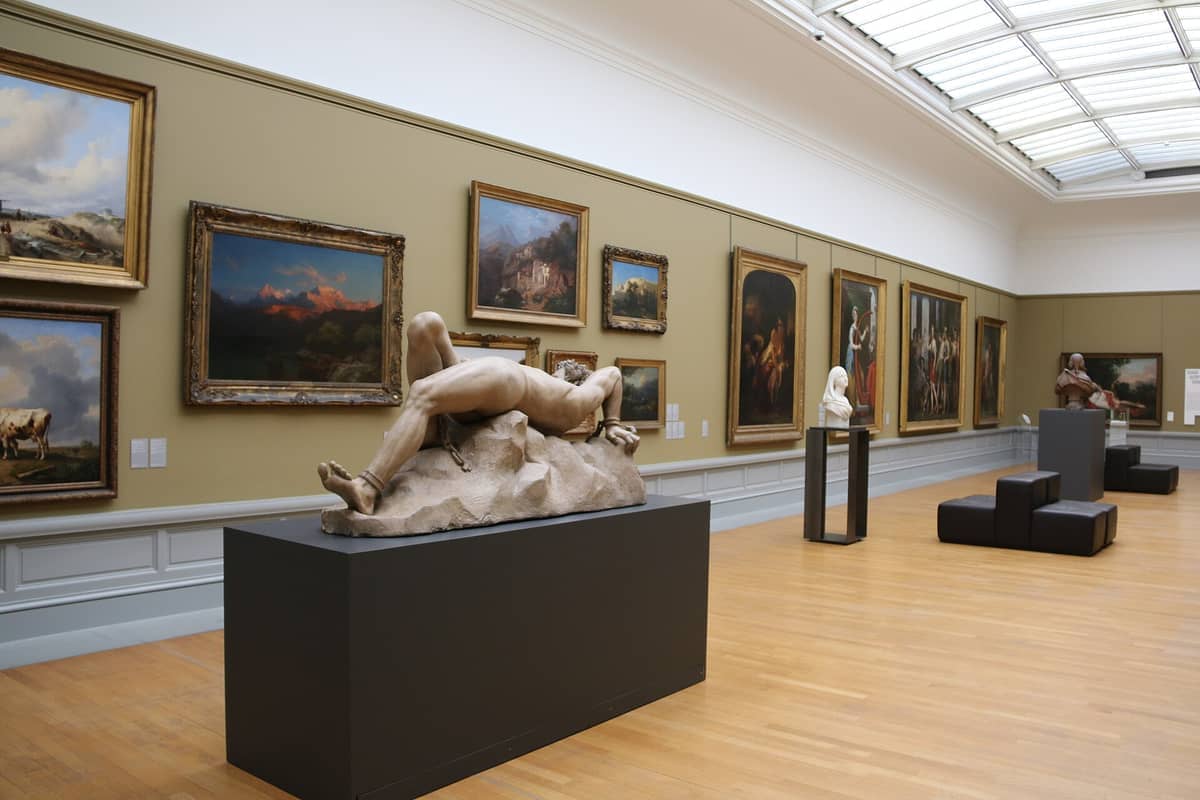
The Museum of Fine Arts Ghent, or MSK Gent (Museum voor Schone Kunsten Gent), is the city's oldest public art museum and one of the most significant fine arts collections in Belgium. The building itself is a statement: a monumental neoclassical structure completed in 1902, designed by architect Charles Van Rysselberghe. It sits on the southern edge of Citadelpark, Ghent's main urban park, a short distance from the cluster of cultural institutions that define this part of the city.
The collection spans roughly 700 years of Western art, with particular depth in Flemish and Netherlandish painting from the medieval period through to the early 20th century. You will find Hieronymus Bosch alongside James Ensor, Roger de la Pasture alongside Gustave van de Woestijne. The permanent collection is intelligently organized, moving chronologically through rooms that feel proportionate to what they contain rather than overwhelming.
💡 Local tip
MSK Gent opens at 9:30 Tuesday to Friday and at 10:00 on weekends, so it’s a good option if you want to be in the galleries soon after opening and enjoy a quieter first couple of hours.
The Collection: What You Will Actually See
The museum's medieval and early Flemish holdings are genuinely strong. Rogier van der Weyden, Hugo van der Goes, and their contemporaries are represented not as isolated curiosities but as part of a coherent tradition you can trace across rooms. The connection to the wider Flemish Masters context becomes clear here, and visitors who have already seen the Ghent Altarpiece at St Bavo's Cathedral will find MSK provides important visual context for how that tradition developed.
If there is one gallery that draws serious art visitors, it is the room containing Hieronymus Bosch's work. Bosch in Ghent feels less crowded and more contemplative than encountering his paintings in large international museums. You can stand close, take time, and think. For more on the wider Flemish Masters tradition across Ghent's institutions, the Flemish Masters in Ghent guide provides useful context across multiple venues.
The 19th-century Belgian galleries are frequently underestimated. The collection of Belgian Romanticism, Realism, and especially Symbolism is substantive, featuring painters like Fernand Khnopff and Jan Toorop whose work is rarely seen in depth outside Belgium. The symbolist rooms, with their atmosphere of deliberate strangeness, are a genuine reason to visit MSK over other Belgian art museums.
James Ensor occupies a notable place in the 20th-century section. His masks and carnival paintings are given enough wall space to breathe, which is not always the case elsewhere. The expressionist works nearby, particularly those connected to the Flemish Expressionist school, complete a picture of Belgian modernism that is easy to miss if you only visit major European capitals.
Tickets & tours
Hand-picked options from our booking partner. Prices are indicative; availability and final rates are confirmed when you complete your booking.
Guided boat trip in the historic center of Gent
From 10 €Instant confirmationFree cancellationGuided cruise with 1 local Gent Beer included
From 15 €Instant confirmationFree cancellationHistoric Ghent city exploration game
From 10 €Instant confirmationFree cancellationBelgian waffle making workshop and beer tasting in Ghent
From 45 €Instant confirmationFree cancellation
The Building and Its Atmosphere
The physical experience of MSK Gent deserves attention. The entrance hall is high and cool, with marble floors that echo underfoot. Natural light enters through glass ceilings in some of the central galleries, giving paintings a quality of illumination that shifts subtly depending on the time of day and the weather outside. Morning visits in overcast conditions produce a different quality of light than afternoon visits when sun reaches the upper windows — neither is wrong, just different.
The building is large enough that it never feels cramped, even on moderately busy weekend afternoons. On weekday mornings, particularly outside school holidays, the galleries can feel almost private. The exception is the temporary exhibition spaces, which attract larger crowds when high-profile loans are on show. Check the museum's website before visiting to see what is currently installed, as temporary exhibitions occasionally require separately priced tickets.
ℹ️ Good to know
On selected first Thursdays of the month, MSK stays open until 22:00. Evening visits offer a noticeably different atmosphere, with smaller crowds and a more contemplative pace — worth checking the museum's schedule before your trip.
Getting There and Finding Your Bearings
MSK Gent is located at Fernand Scribedreef 1 in the Citadelpark museum quarter, south of Ghent's historic centre. The most practical approach from the city centre is to take a De Lijn bus heading between Gent-Sint-Pieters station and Gent-Dampoort station, alighting at the Heuvelpoort stop. From there, the museum entrance is roughly a 5-minute walk through the edge of the park.
From Gent-Sint-Pieters station itself, the museum is also walkable in around 15 minutes through Citadelpark, which is pleasant in good weather. The park approach is worth taking if you have time: the Citadelpark itself is calm and green, and arriving via the park rather than the street side gives you a better sense of the building's scale and classical proportions.
Cyclists will find the area straightforward to reach. Ghent has good cycling infrastructure connecting the historic centre to the museum quarter, and there are bike racks outside. For visitors without their own bike, shared bikes are available across the city.
⚠️ What to skip
MSK Gent is closed on Mondays, and also closes on 25–26 December and 1–2 January. On 24 and 31 December, closing time is brought forward to 16:00. Plan accordingly.
Tickets, Opening Hours, and Practical Logistics
Standard adult admission is €15. Visitors aged 18 to 25 pay €3, and children under 18 enter free. Escorts accompanying visitors with disabilities receive a reduced rate. The museum is included in the CityCard Gent, which also covers admission to other major Ghent museums and includes unlimited use of De Lijn public transport within Ghent during its validity — worth calculating if you plan to visit more than two or three paid attractions during your stay.
Regular opening hours are Tuesday to Friday 9:30 to 17:30, and Saturday to Sunday 10:00 to 18:00. During school holidays, the museum opens daily from 10:00 to 18:00. The museum is closed on Mondays. If your Ghent visit is built around multiple museums, the best museums in Ghent guide will help you plan an efficient route across the city's cultural institutions.
The museum has ramps and lifts, and folding chairs are available on request, making it accessible for visitors with mobility considerations. Audio guides and exhibition catalogues are available in several languages. The cloakroom handles bags and coats, and there is a museum shop near the exit with a decent selection of art books and prints.
How the Experience Changes by Time and Season
Weekday mornings between 9:30 and 11:00 are the quietest windows. The galleries are largely empty, staff are present but unobtrusive, and the only sounds are footsteps and the occasional murmur between couples or small groups. The medieval rooms in particular benefit from this stillness — Bosch's panels and the early altarpieces are the kind of work that demands sustained looking rather than a quick walk-through.
Weekend afternoons draw larger crowds, particularly during temporary exhibitions. The permanent collection galleries remain manageable even then, but the entrance area and main atrium become noticeably more active after 14:00. If you are visiting on a Saturday or Sunday, arrive at opening time or plan to stay later into the afternoon when day-tripper crowds thin out.
Ghent's weather affects the experience more than you might expect. On grey, rainy days — common in autumn and winter in this part of Belgium — MSK Gent is an excellent choice precisely because it is fully indoors and genuinely absorbing. Summer weekends bring more visitors overall, partly driven by the city's peak tourism season. If you are planning your timing around the best overall conditions, the best time to visit Ghent guide covers seasonal considerations in detail.
Pairing MSK with the Rest of the Museum Quarter
MSK Gent sits within a cluster of cultural venues that makes the Citadelpark area the most museum-dense part of the city. Directly adjacent is SMAK, the Stedelijk Museum voor Actuele Kunst, Ghent's contemporary art museum, which occupies a building that also dates to the 1913 World Exhibition era. The two museums share a physical proximity and make natural companions on the same visit: MSK for the historical arc from medieval to early modern, SMAK for contemporary and conceptual work.
The Design Museum Gent and the Ghent University Museum (GUM) are also within reach of this quarter, although GUM is closer to the historic centre. A full day in the museum quarter — MSK in the morning, SMAK in the afternoon, with a walk through Citadelpark between them — is a coherent and unhurried way to spend a day in Ghent without covering great distances.
Insider Tips
- The symbolist galleries on the upper floor are consistently undervisited. Visitors gravitating toward the medieval and Flemish Masters rooms often miss Fernand Khnopff and the Belgian Symbolists entirely — which means you will often have those rooms to yourself.
- If you are visiting with children, the museum offers activity sheets at the front desk designed for different age groups. These are free and genuinely well-designed — they turn the visit into a structured exploration rather than a passive walk.
- The museum café and seating areas near the entrance are useful for regrouping mid-visit. The building is large enough that a break makes sense before tackling the second half of the permanent collection.
- On first-Thursday late openings until 22:00, the lighting in certain galleries shifts to supplement the natural light that has faded — the effect on the 19th-century Belgian paintings, particularly the darker Symbolist works, is worth experiencing specifically at this time.
- Ticket receipts can sometimes be used to access partial concessions at SMAK on the same day — verify this at the MSK ticket desk when you arrive, as arrangements between neighbouring institutions can change.
Who Is Museum of Fine Arts Ghent (MSK Gent) For?
- Travelers with a specific interest in Flemish and Netherlandish art who want depth rather than highlights
- Anyone who has seen the Ghent Altarpiece at St Bavo's and wants to understand the broader artistic tradition it belongs to
- Rainy-day visitors looking for a full half-day of indoor engagement in a genuinely world-class collection
- Young adults and students traveling on a budget — the €3 under-25 ticket makes this one of the best-value cultural experiences in the city
- Museum-focused itineraries that combine MSK with SMAK on the same day in the Citadelpark quarter
Nearby Attractions
Other things to see while in Citadelpark & Museum Quarter:
- Citadelpark
Citadelpark is Ghent's largest urban park, covering roughly 15-16 hectares of public green space between the historic centre and Gent-Sint-Pieters railway station. Free to enter at any hour, it serves as both a neighbourhood garden and a cultural anchor, flanked by two of Belgium's most significant contemporary and fine art museums.
- Ghent University Botanic Garden
The Ghent University Botanic Garden at Ledeganckstraat 35 is one of the city's most accessible green spaces, free to enter and open most days of the week. Part of the Ghent University Museum (GUM) and located near Citadel Park, it combines outdoor beds with a series of historic greenhouses spanning tropical, subtropical, and succulent collections.
- GUM – Ghent University Museum
GUM, Ghent University's science museum at Ledeganckstraat 35, brings together natural history collections, scientific instruments, and a living botanical garden in the Citadelpark museum quarter. It rewards curious visitors of almost any age, from school groups to adults who want to understand the science behind the city.
- S.M.A.K. – Municipal Museum of Contemporary Art
S.M.A.K., the Stedelijk Museum voor Actuele Kunst, is Ghent's flagship institution for contemporary art. Set in Citadelpark alongside the Museum of Fine Arts, it holds a permanent collection of international scope and rotating exhibitions that regularly reshape how Belgian audiences encounter living art.