GUM – Ghent University Museum: Science, Curiosity, and a Garden Worth Staying For
GUM, Ghent University's science museum at Ledeganckstraat 35, brings together natural history collections, scientific instruments, and a living botanical garden in the Citadelpark museum quarter. It rewards curious visitors of almost any age, from school groups to adults who want to understand the science behind the city.
Quick Facts
- Location
- Karel Lodewijk Ledeganckstraat 35, 9000 Gent (Citadelpark museum quarter)
- Getting There
- De Lijn tram or bus toward Gent-Sint-Pieters, then a short walk through Citadelpark. Single ride approx. €3, valid for one hour with transfers (verify current fares with De Lijn).
- Time Needed
- 1.5 to 2.5 hours for the museum; add 30–60 minutes if you plan to explore the Botanical Garden
- Cost
- €12 standard | €10 reduced (65+, groups 10+, teachers, persons with a disability, UGent alumni, SodiGent members) | €2.50 for ages 19–26 and non-UGent students | Free under 18, MuseumPassMusées, CityCard Gent, press cards, ICOM, Friends of the Botanical Garden, UGent and UZ Gent staff and students, and companions of persons with a disability
- Best for
- Families with curious children, science and natural history enthusiasts, rainy-day visits, students on a budget
- Official website
- www.gum.gent
What GUM Actually Is
GUM – Ghent University Museum is the science museum of Ghent University, one of Belgium's largest and most research-intensive universities. It sits on the southern edge of the city, directly adjacent to Citadelpark and the university's botanical garden, in a cluster of academic buildings that have housed scientific collections for well over a century. The museum draws on the university's own research heritage: specimens, instruments, anatomical models, and natural history objects that were originally gathered for teaching and research, not for display, and which carry a different weight because of it.
This is not a children's science centre with flashing buttons, nor a conventional natural history museum in the grand Victorian mould. It occupies a middle ground that suits thoughtful visitors: enough hands-on engagement to keep younger audiences interested, enough depth and original material to satisfy adults with a genuine interest in how knowledge is produced. The combination of indoor collections and a living botanical garden makes it unusually good value for a half-day in this part of the city.
ℹ️ Good to know
GUM does not accept cash. Bring a bank card or contactless payment device, as payments at the ticket desk are by card only.
Opening Hours and When to Go
On Monday, Tuesday, Thursday and Friday the museum opens at 09:30 and closes at 17:30. On weekends, public holidays, and during school holidays the hours shift to 10:00 to 18:00. The museum is closed on Wednesdays, including public holidays that fall on Wednesdays, and is also closed on 24 December, 25 December, 31 December, and 1 January.
Every first Thursday of the month, GUM and the Botanical Garden stay open until 22:00 as part of the city-wide Late Thursday at Ghent Museums initiative. This is particularly worthwhile in spring and autumn, when the park paths are atmospheric after dark. Note that the Late Thursday extension does not run in January, July, August, or September. On the first Sunday of each month and on Late Thursdays, Ghent residents have free entry.
Weekday mornings before 11:00 are the quietest window. School groups tend to arrive late morning and fill the ground floor corridors with noise and movement. If you prefer to move through the collections at your own pace and read the labels without competition, aim for opening time on a Thursday or Friday, or save the visit for a weekend afternoon when school groups are absent. Summer weekends attract more general tourists, but the museum rarely feels overwhelmed in the way that Ghent's medieval core attractions can.
💡 Local tip
First Thursday of the month (except July, August, September, January): the museum opens until 22:00 and Ghent residents enter free. For non-residents it is still a good moment to visit, with a calmer atmosphere than peak daytime hours.
Tickets & tours
Hand-picked options from our booking partner. Prices are indicative; availability and final rates are confirmed when you complete your booking.
Historic Ghent city exploration game
From 10 €Instant confirmationFree cancellationBelgian waffle making workshop and beer tasting in Ghent
From 45 €Instant confirmationFree cancellationTaste of Ghent private chocolate walking tour
From 256 €Instant confirmationFree cancellationSips and stories, a private beer tour in Ghent
From 373 €Instant confirmationFree cancellation
The Collections: What You Will Actually See
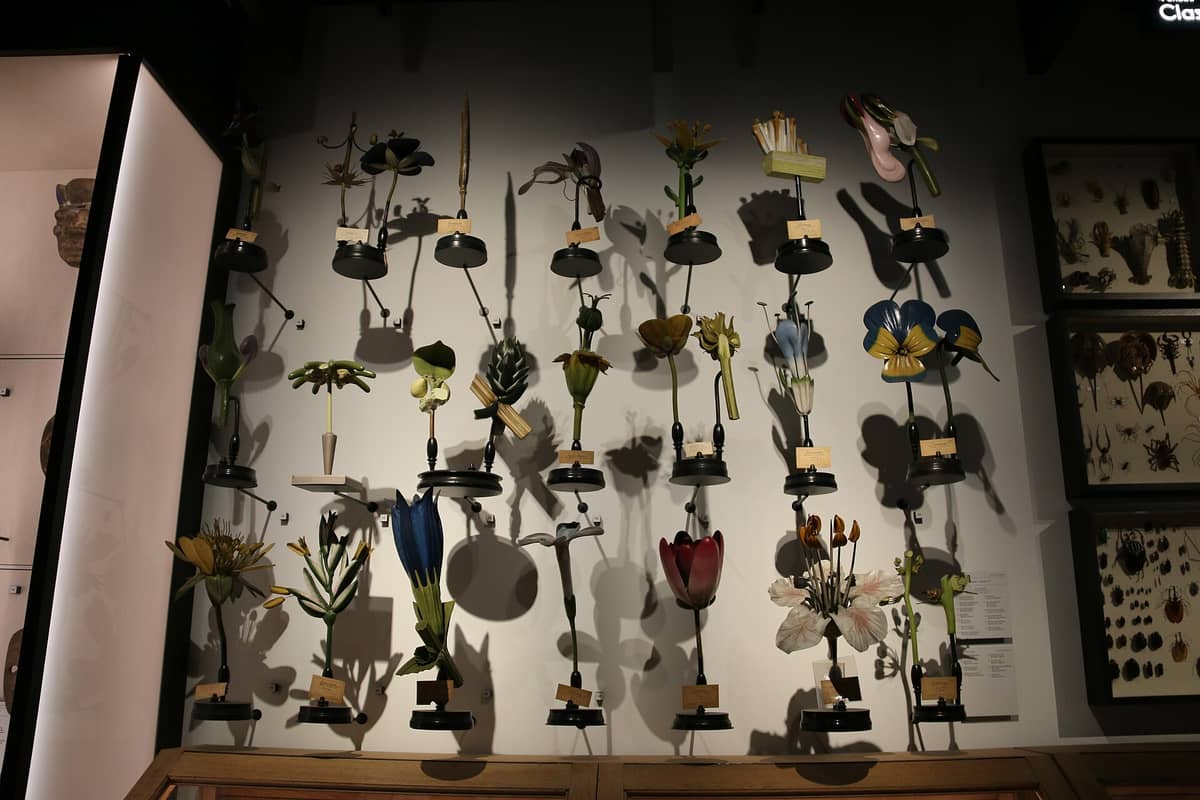
GUM's collections are rooted in the scientific disciplines taught at Ghent University: natural history, geology, anatomy, and the history of scientific instruments. Expect specimen cases with mineralogical and palaeontological material, anatomical preparations that reflect the history of medical education, and objects that trace how scientific ideas developed in a university context from the 19th century onward. The framing is not just 'look at this object' but 'here is why this object existed and what it was used to understand', which gives the displays more narrative coherence than a simple catalogue approach.
The natural history rooms carry the particular quality of old academic collections: specimens that were gathered with specific research questions in mind, labelled with the precision of scientific record-keeping rather than the broad brushstrokes of public interpretation. Some of the zoological and botanical material has real age and provenance behind it. If you slow down and read the context panels, you find stories about Belgian scientific expeditions, about the development of taxonomy, and about the university's role in building Flemish-language scientific education.
The museum connects physically to the Ghent University Botanical Garden, which can be visited free of charge during opening hours and is often combined with a visit to GUM. The garden is a working scientific garden, not a purely ornamental one, which means it is organised by plant family and geography rather than by aesthetic effect. It rewards visitors who take time to read the species labels and understand the layout, though it is also simply a pleasant green space to walk through after spending time indoors.
For context on the broader museum landscape around this part of Ghent, the S.M.A.K. contemporary art museum and the MSK Gent fine arts museum are both within easy walking distance in the same Citadelpark museum quarter. A combined day covering GUM in the morning and one of these in the afternoon is a reasonable and satisfying itinerary for visitors with a full day to spare.
How to Get There
The museum is at Karel Lodewijk Ledeganckstraat 35, on the southern edge of the Citadelpark museum quarter. From Gent-Sint-Pieters station, the main rail hub for the city, the walk through the park takes roughly 15 to 20 minutes and is pleasant in good weather. Alternatively, De Lijn trams and buses serve the area; check the current De Lijn network map for the stop closest to the museum, as line numbers and routes are subject to change. A single De Lijn ride costs approximately €3, valid for one hour with transfers (verify current fares before travel).
Ghent is reached from Brussels Airport by train: direct services and trains with one connection run roughly once or twice per hour, and the total journey typically takes around 55 to 75 minutes depending on the route and transfer time. For a broader overview of moving around the city, the getting around Ghent guide covers tram lines, cycling, and walking routes in detail.
💡 Local tip
If you are visiting from central Ghent and the weather is good, cycling to the museum is practical. The route from Korenmarkt through Citadelpark avoids most traffic and takes about 15 minutes by bike.
Tickets, Discounts, and the CityCard
Standard adult admission is €12. Reduced admission of €10 applies to visitors aged 65 and over, groups of ten or more people (per person), teachers presenting a teacher card, persons with a disability, UGent alumni, and SodiGent members. Visitors aged 19 to 26, non-UGent students, and adult education groups pay €2.50 per person, which makes this one of the more affordable museum options in Ghent for younger visitors.
Free admission applies to children and young people aged 0 to 18, companions of persons with a disability, holders of MuseumPassMusées, CityCard Gent, press cards, ICOM cards, and Friends of the Botanical Garden. UGent and UZ Gent students and staff also enter free. If you hold a CityCard Gent, which covers public transport and multiple city attractions, GUM is included. The UiTPAS social rate (kansentarief) sets admission at €2.40, equivalent to 20% of the basic rate.
⚠️ What to skip
The museum accepts card payments only. No cash is taken at the ticket desk, so be sure to bring a bank card or contactless payment method.
The Botanical Garden: Worth Staying For
The Ghent University Botanical Garden is one of the less-visited green spaces in the city, partly because it sits behind the museum building rather than on a main street. It is a working scientific garden, used for teaching and research by the university's biology and plant science departments, which means the organisation is systematic rather than decorative. Plants are grouped by taxonomy and geographic origin, and the labelling is detailed enough to be genuinely informative.
In late spring, the garden has real visual appeal: flowering specimens across multiple families, the greenhouses showing tropical and subtropical plants, and the overall sense of a place that is maintained for knowledge rather than spectacle. It is quieter than Citadelpark proper and worth thirty minutes even if botany is not your particular interest. For a dedicated look at the garden, the Ghent University Botanic Garden attraction page has more detail on what to see and the best visiting season.
Practical Details for Your Visit
The museum building is inside a university complex, and signage from the street is clear enough that you will not miss the entrance, but the building does not announce itself with the grandeur of a civic museum. Wear comfortable shoes: the floor surfaces vary between rooms, and combining the museum with a garden walk and a stroll through Citadelpark adds up to a meaningful amount of walking. Layers are worth bringing in spring and autumn, when the park can be cool even when the city centre feels mild.
Accessibility: persons with a disability receive reduced admission at €10, and their escorts enter free of charge. Physical accessibility within the building should be verified directly with the museum before visiting if specific mobility needs are a concern, as the building is part of a university complex with varying levels of adaptation.
GUM sits in the Citadelpark museum quarter alongside S.M.A.K. and MSK Gent. If you are spending a full day in this part of the city, the Citadelpark museum quarter neighbourhood guide gives an overview of the area's layout, food options, and how to sequence the attractions. For visitors with limited time in Ghent, the one day in Ghent itinerary can help you decide whether GUM fits your priorities over the medieval centre attractions.
Who Might Not Enjoy This
GUM is not the right choice for visitors whose primary interest is medieval architecture, Flemish painting, or the canal-side streetscapes that define the city's historic centre. Those priorities are better served by the Gravensteen, Sint-Baafskathedraal, or the Graslei waterfront. GUM is also a quiet, text-heavy museum in parts: visitors who prefer immersive or interactive experiences over reading labels and examining objects may find the pacing slow. Young children under six will have limited engagement unless the school holiday programming happens to coincide with their visit.
If the combination of natural history, science, and a green space appeals but you are also curious about the broader context of Ghent's collections, the best museums in Ghent guide places GUM alongside the city's other options and helps you allocate your time across the full range.
Insider Tips
- The first Thursday of each month (excluding January, July, August, September) extends opening until 22:00. The Botanical Garden is included in the extended hours, and walking through it in the early evening is a very different experience from a midday visit.
- If you are aged 19 to 26, admission is €2.50: one of the lowest museum prices in Ghent. Bring a student card or valid ID to confirm your age at the desk.
- School groups dominate the ground floor between roughly 10:00 and 12:30 on weekdays during term time. If noise and crowds affect your enjoyment, start on the upper floors and work down, or arrive at opening time.
- The Botanical Garden is a separate space but is best visited immediately after the museum rather than as a standalone destination: the scientific framing from the indoor collections makes the garden layout more legible.
- CityCard Gent holders enter GUM free and can also use the card on De Lijn trams and buses within the city. If you are visiting multiple Ghent museums across two or three days, the card often pays for itself quickly.
Who Is GUM – Ghent University Museum For?
- Families with children aged 7 to 14 who have an interest in natural history or science
- Students and budget travellers aged 19 to 26 (€2.50 admission)
- Visitors on a rainy day who want a substantial indoor experience away from the more crowded historic centre
- Natural history and science enthusiasts who want to engage with a working university collection rather than a purely public-facing institution
- Anyone combining a half-day in the Citadelpark museum quarter with visits to S.M.A.K. or MSK Gent
Nearby Attractions
Other things to see while in Citadelpark & Museum Quarter:
- Citadelpark
Citadelpark is Ghent's largest urban park, covering roughly 15-16 hectares of public green space between the historic centre and Gent-Sint-Pieters railway station. Free to enter at any hour, it serves as both a neighbourhood garden and a cultural anchor, flanked by two of Belgium's most significant contemporary and fine art museums.
- Ghent University Botanic Garden
The Ghent University Botanic Garden at Ledeganckstraat 35 is one of the city's most accessible green spaces, free to enter and open most days of the week. Part of the Ghent University Museum (GUM) and located near Citadel Park, it combines outdoor beds with a series of historic greenhouses spanning tropical, subtropical, and succulent collections.
- Museum of Fine Arts Ghent (MSK Gent)
The Museum of Fine Arts Ghent, known locally as MSK Gent, is Flanders' oldest public art museum and home to a sweeping collection spanning medieval altarpieces to 20th-century Belgian modernism. Set inside a grand neoclassical building in Citadelpark, it rewards visitors who take their time and rewards them again on a second visit.
- S.M.A.K. – Municipal Museum of Contemporary Art
S.M.A.K., the Stedelijk Museum voor Actuele Kunst, is Ghent's flagship institution for contemporary art. Set in Citadelpark alongside the Museum of Fine Arts, it holds a permanent collection of international scope and rotating exhibitions that regularly reshape how Belgian audiences encounter living art.