Design Museum Gent: Over a Century of Applied Arts in the Historic Centre
Design Museum Gent, founded in 1903 and located in Ghent's historic centre, holds a collection of approximately 22,500 objects tracing applied arts and design from the 18th century to the present day. The museum is currently closed for a major expansion and renovation, but its permanent collection and architectural setting make it one of Ghent's most distinctive cultural institutions., holds a collection of approximately 22,500 objects tracing applied arts and design from the 18th century to the present day. The museum is currently closed for a major expansion and renovation, but its permanent collection and architectural setting make it one of Ghent's most distinctive cultural institutions.
Quick Facts
- Location
- Jan Breydelstraat 5, 9000 Gent (Historic Centre)
- Getting There
- Tram to Korenmarkt, then a short walk south. De Lijn trams serve the city centre from Gent-Sint-Pieters station.
- Time Needed
- Time needed varies by interest and current programming
- Cost
- €15 standard / €7.50 under 26 / Free under 19 / €13 for groups of 15+. Verify on official site before visiting.
- Best for
- Design enthusiasts, art history followers, architecture lovers, and rainy-day culture seekers
- Official website
- www.designmuseumgent.be/en
What Is Design Museum Gent?
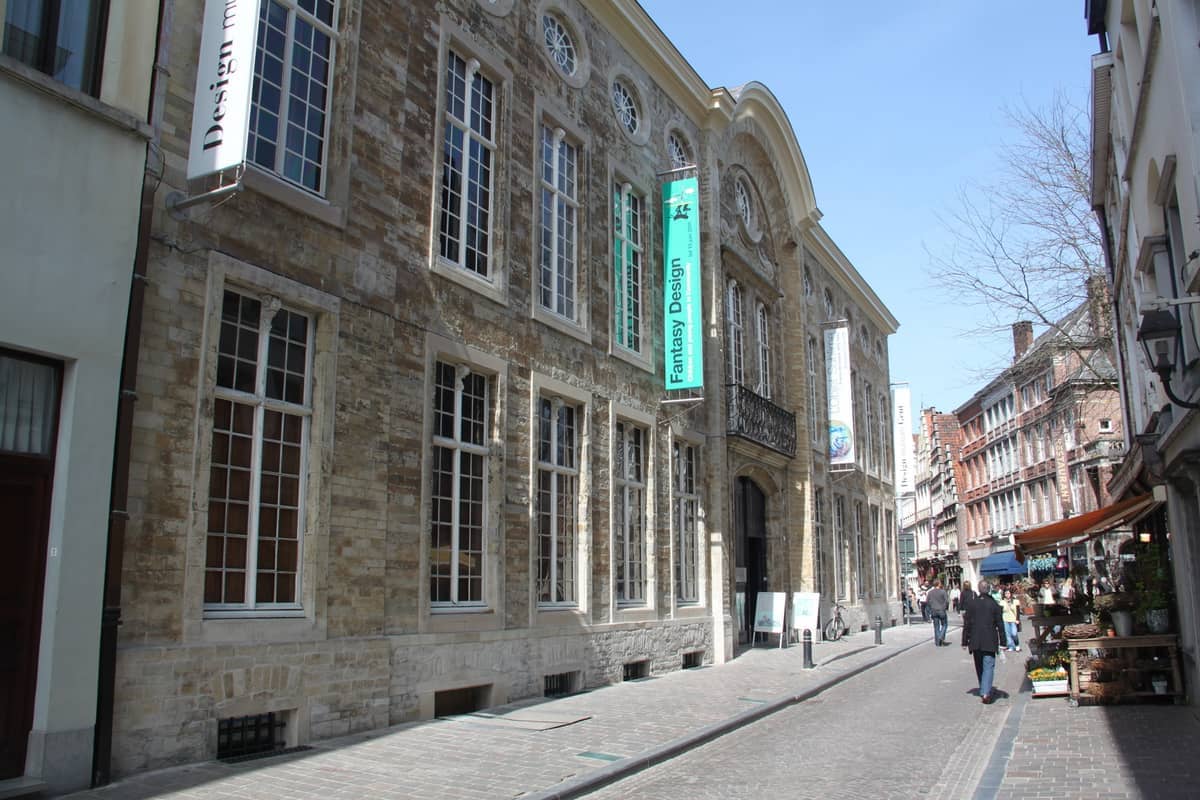
Design Museum Gent is Ghent's dedicated museum for applied arts and design, housed in a building that combines an 18th-century baroque mansion with later extensions in the city's historic centre. Founded in 1903 and renamed Design Museum Gent in 2002, the institution holds around 22,500 objects ranging from Flemish baroque furniture and Art Nouveau decorative arts to 20th and 21st-century industrial and graphic design. It is one of the few museums in Belgium that treats design not as a subcategory of fine art but as a discipline in its own right, with social and industrial history threaded through the objects on display.
The museum sits just south of the main medieval axis of Ghent, close to the Ghent Town Hall and within easy walking distance of St Bavo's Cathedral. Its location in the historic centre means most visitors encounter it while moving between the city's major sights, though the museum warrants a dedicated visit rather than a quick stop.
⚠️ What to skip
Design Museum Gent is currently closed for a major expansion and renovation. Check the official website at designmuseumgent.be/en/visit before making plans, as reopening dates and interim programming can change.
The Collection: What You Actually See
The permanent collection is organized broadly chronologically and by theme, moving from the decorative arts of the 17th and 18th centuries through the industrialization of design in the 19th century and into the modernist and contemporary periods. The baroque and rococo furniture rooms, which occupy the original 18th-century mansion, are particularly striking: the scale of the carved woodwork, the gilded surfaces, and the period room arrangements give these galleries a density you do not find in many applied arts collections.
The Art Nouveau section is one of the museum's strengths, reflecting the movement's deep roots in Belgium. Pieces by Belgian designers sit alongside work by French and German contemporaries, giving enough comparative context to understand Art Nouveau not as a decorative quirk but as a coherent design philosophy. Labels are generally bilingual in Dutch and English, though the depth of interpretation varies between galleries.
The 20th-century and contemporary design galleries move through functionalism, postwar industrial design, and into current practice. The collection includes everyday objects alongside prestige pieces, which is one of the museum's more interesting editorial choices: a mass-produced chair from a Flemish factory sits near a one-off design prototype, and the curatorial framing asks visitors to think about both.
Tickets & tours
Hand-picked options from our booking partner. Prices are indicative; availability and final rates are confirmed when you complete your booking.
Guided boat trip in the historic center of Gent
From 10 €Instant confirmationFree cancellationGuided cruise with 1 local Gent Beer included
From 15 €Instant confirmationFree cancellationHistoric Ghent city exploration game
From 10 €Instant confirmationFree cancellationBelgian waffle making workshop and beer tasting in Ghent
From 45 €Instant confirmationFree cancellation
The Building Itself
The museum occupies a former noble mansion, the Huis De Coninck, on Jan Breydelstraat. The interior progression from the ornate period rooms of the 18th-century wing into the cleaner gallery spaces of later additions creates a mild architectural tension that actually reinforces the collection's narrative. You move through time architecturally as well as through the objects on display.
The ongoing renovation and expansion project is intended to significantly increase the museum's exhibition space and modernize visitor facilities. The historic facade and core rooms are expected to be preserved as part of the expanded complex. Until reopening, visitors should not expect to access the full permanent collection or the building's period interiors.
Planning a Visit: Timing and Access
When the museum is open, weekday mornings offer the quietest experience. Weekend afternoons, particularly in spring and summer when Ghent's tourism peaks, can bring enough visitors to make the smaller gallery rooms feel crowded. Ghent's tourism season runs roughly from May through September, with a secondary peak around the Christmas market period in December. If you are visiting during the Gentse Feesten in July, the city is extremely busy and the museum tends to attract overflow visitors seeking a quieter indoor option.
Getting to the museum by public transport is straightforward. From Gent-Sint-Pieters station, take a De Lijn tram to Korenmarkt, then walk south along the historic streets for around five minutes. A single De Lijn ride is currently priced at €3, valid for one hour, and contactless payment is accepted on board. For a fuller picture of navigating the city, the covers tram routes, ticketing, and walking distances between the main sights. For a fuller picture of navigating the city, the getting around Ghent guide covers tram routes, ticketing, and walking distances between the main sights.
The museum has accessible entrances and reduced admission rates for escorts accompanying visitors with disabilities. The CityCard Gent, which covers entry to multiple Ghent museums, includes Design Museum Gent when the museum is open. Accessibility information is available on the museum's FAQ page.
💡 Local tip
Ghent's historic centre is compact enough to combine a museum visit with the Belfry, the Town Hall, and St Bavo's Cathedral in a single half-day circuit. The streets between these landmarks are all close together, even at a slow pace.
Photography and Practical Details
Photography policies in the permanent collection galleries have generally permitted non-flash personal photography, though this may change after the renovation. Temporary exhibitions often have separate photography rules depending on licensing agreements with lenders. The baroque interiors, when open, are among the more photogenic rooms in any Ghent museum, with natural light from courtyard-facing windows creating workable conditions without artificial light. The 18th-century furniture and carved details photograph well in the mid-morning light that reaches the main rooms.
For visitors building a photography itinerary across Ghent, the Ghent photography guide covers the best angles and timing for the city's major architectural and cultural sites.
Context: Where Design Museum Gent Fits in Ghent's Cultural Landscape
Ghent supports an unusually dense concentration of museums for a city of 270,000 people, ranging from the medieval-focused STAM Ghent City Museum to the contemporary art institution S.M.A.K. and the fine arts collection at MSK Gent. Design Museum Gent occupies a distinct position in this landscape: it is neither a fine arts museum nor a history museum, but sits deliberately at the intersection of both.
The museum's founding in 1903 places it in the same era as comparable applied arts institutions elsewhere in Europe, institutions that emerged from a late 19th-century recognition that industrial production had fundamentally changed what design meant. Ghent's role as an industrial city in the 19th century gives the collection a specific regional grounding: the objects here are not abstract design history but are connected to the city and region that made and used them.
Visitors building a broader cultural itinerary might consult the best museums in Ghent guide for an overview of how to sequence visits across the city's collections.
Who Should Probably Skip This
If your primary interest in Ghent is medieval history, street life, or the canals, Design Museum Gent is unlikely to be a priority. The collection rewards visitors who are already curious about applied arts and design history; it does not try to convert the indifferent. Children under about ten are likely to find the slower pace and object-focused galleries less engaging than the Gravensteen castle or a boat trip on the waterways. Budget travelers should also note that at €15 for a standard adult ticket, this is a museum with a relatively high standard admission price. During the current closure, of course, the question of skipping it is moot until reopening.
Insider Tips
- Check the museum's official website for any pop-up exhibitions or events during the renovation period. Design Museum Gent has previously programmed off-site activities and temporary shows while undergoing works.
- If you arrive to find the museum closed or at capacity, the streets immediately around Jan Breydelstraat connect directly to the Ghent Town Hall's intricate facade, which takes ten minutes to read properly and costs nothing.
- The CityCard Gent includes entry to Design Museum Gent and several other major museums. If you plan to visit three or more paid attractions, the card usually pays for itself. Verify current card pricing and included venues before purchasing.
- Afternoon light in the baroque wing of the original mansion hits the gilded furniture from a lower angle, creating more contrast and depth than the flat morning light. If photography of the period rooms matters to you, plan accordingly.
- The museum's shop, when open, stocks design books and objects that are harder to find elsewhere in Ghent and can be worth a browse even if you spend less time in the galleries than anticipated.
Who Is Design Museum Gent For?
- Design and applied arts enthusiasts who want institutional depth beyond trend-focused design stores
- Architecture tourists interested in the baroque-to-contemporary building sequence
- Art history visitors filling out a broader Flemish cultural itinerary
- Rainy-day visitors looking for a substantial indoor experience in the historic centre
- Researchers and students of decorative arts, particularly Art Nouveau and Belgian industrial design
Nearby Attractions
Other things to see while in Ghent Historic Centre:
- City Pavilion (Stadshal)
Completed in 2012 by Ghent architects Robbrecht & Daem and Marie-José Van Hee, the Stadshal is a free, open public structure spanning roughly 40 metres at Emile Braunplein, surrounded by the Belfry, Town Hall, and St Nicholas' Church. Whether you pass through at noon or after dark, this latticed wooden canopy changes character with the light and the crowd beneath it.
- Castle of Gerald the Devil (Geeraard de Duivelsteen)
Built in the 13th century in Scheldt Gothic style, Geeraard de Duivelsteen is one of the most architecturally striking medieval structures in Ghent. From knight's residence to madhouse to event venue, its layered history is as dramatic as its stone facade. The building is not open for regular walk-in visits, but its exterior and occasional scheduled openings make it essential context for understanding Ghent's medieval character.
- Ghent Altarpiece (Adoration of the Mystic Lamb)
Completed in 1432 by Hubert and Jan van Eyck, the Ghent Altarpiece is a 12-panel polyptych (with paintings on both sides of most wings) housed in St Bavo's Cathedral in Ghent's historic centre. It is one of the most technically advanced and historically significant paintings ever made, and seeing it in person requires a ticket, a timed slot, and some preparation.
- Ghent Belfry (Belfort van Gent)
Standing 91 metres above Sint-Baafsplein, the Belfort van Gent is the tallest belfry in Belgium and a UNESCO-listed symbol of Flemish civic power. This guide covers everything you need to know before you climb: tickets, crowds, views, and what the tower reveals about Ghent's medieval ambitions.