Ghent's Waterways: The Complete Guide to Canal Boat Trips and the City's Canals
Ghent's medieval canals are among the most atmospheric in Belgium, threading past Gothic towers, guild houses, and centuries-old quaysides. This guide covers every boat trip option, the best spots to explore on foot, what things cost, and the practical details that make the difference between a great experience and a wasted afternoon.
Plan and book this trip
Tools from our partner Travelpayouts help you compare flights and hotels. If you book through them, we may earn a commission at no extra cost to you.
Flights
Hotels map
TL;DR
- Guided canal boat trips depart from Graslei roughly every 15–20 minutes; no reservation needed for individual tickets.
- Standard 40–50 minute tours cost around €10–11 for adults; children under 3 are free. CityCard Gent holders often get free or discounted entry.
- The two main operators are Gent-Watertoerist and Rederij De Gentenaer. Both run tours through most of the year, with covered boats in winter.
- Private boats are not permitted on the narrow Lieve canal. The city's Rabot city gate and the Geeraard de Duivelsteen are highlights visible from the water.
- Summer weekends get crowded by mid-morning. Arrive before 10:30 or aim for a late afternoon departure for a calmer experience.
Why Ghent's Waterways Are Worth Your Time
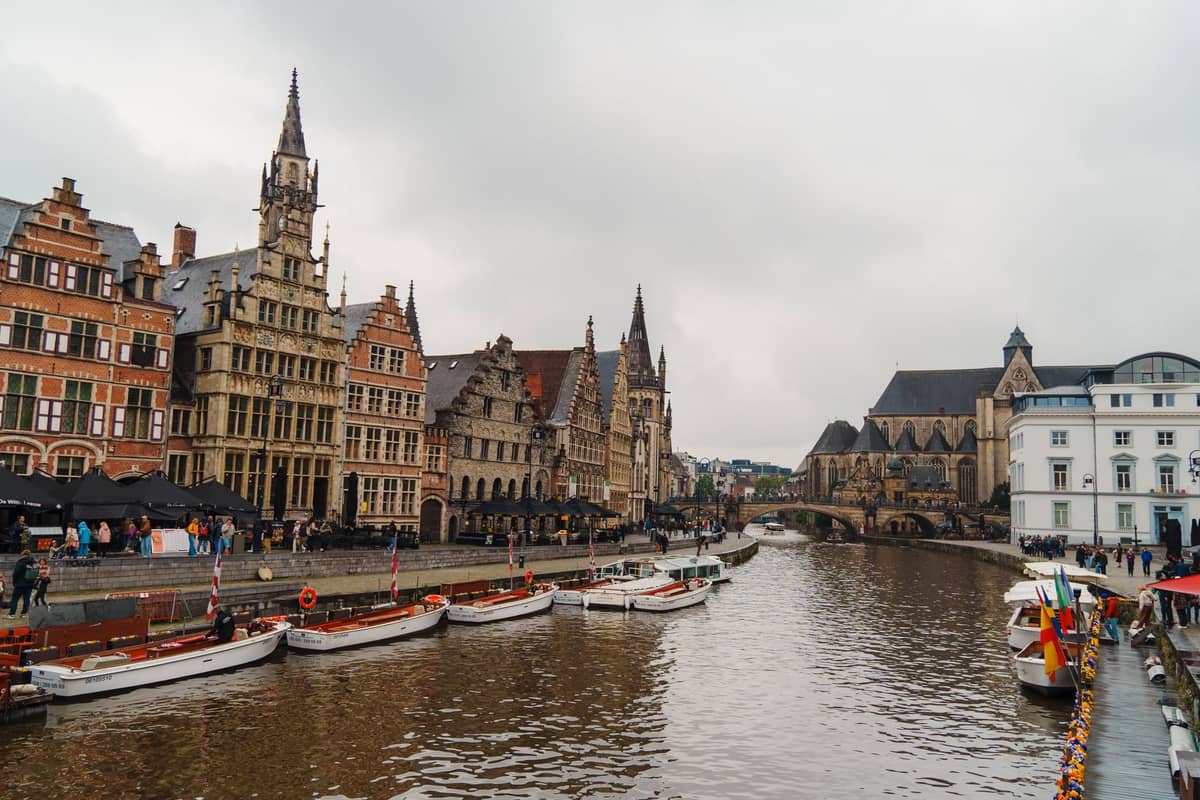
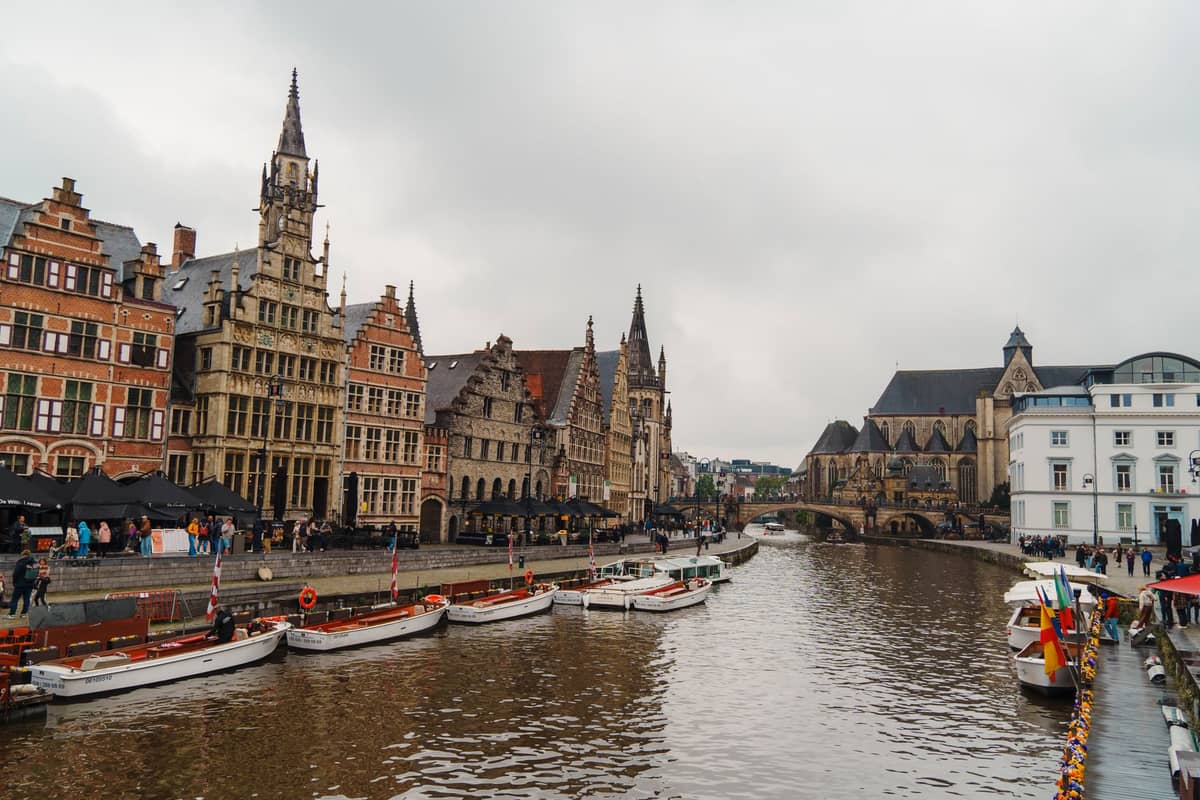
Ghent sits at the confluence of the Leie (Lys) and Scheldt rivers, and its canal network has shaped the city for over 800 years. Unlike Bruges, where canals are the dominant tourist frame, Ghent wears its waterways more quietly. They flow between the medieval quaysides of Graslei and Korenlei through narrow passages lined with Romanesque and Gothic facades, past working bridges, and out toward industrial-era lock gates that still function today. From the water, you see Ghent at its most legible: the city's layers of history sit stacked along the banks in a way that no street-level walk quite replicates.
The two primary canals for tourist boat trips are the Leie, which curves broadly through the historic centre, and the Lieve, a narrower medieval canal that branches off toward the Rabot city gate and the old city walls. Together, they give canal tours their distinctive character: one section feels open and monumental, the other intimate and slightly secretive.
ℹ️ Good to know
Ghent's canals are not just decorative. The Leie was a working trade artery well into the twentieth century, and several of the guild houses along Graslei date to the twelfth and thirteenth centuries. Commentary on guided tours typically covers this mercantile history, which adds depth to what you're seeing.
Boat Trip Options: What's Actually Available
Two operators dominate the historic centre boat trip market: Gent-Watertoerist and Rederij De Gentenaer. Both run guided tours departing from jetties near Graslei, and both offer multilingual commentary, typically in Dutch, French, and English. For most visitors, the choice between them comes down to timing and availability on the day rather than any significant difference in experience or route.
- Gent-Watertoerist – 40-minute tour Covers the Leie and Lieve canals through the historic core, passing landmarks including Gravensteen and the Rabot Towers. Departs roughly every 15–20 minutes in peak season. Adults around €11, concessions around €10, children (3–11) around €7.50, under 3 free. No reservation needed for individuals.
- Gent-Watertoerist – 50-minute tour A longer variant with a slightly extended route. Adult fare around €10, with discounts for students, disabled visitors, Ghent residents, and children aged 3–11 from around €6.50. Check the operator website for current pricing as rates differ from the 40-minute tour.
- Rederij De Gentenaer The other main historic-centre operator, also departing from near Graslei. Runs daily tours with comparable routes and pricing. Schedules may reduce in winter; verify current departure times on the Visit Gent website before heading down.
- Evening and countryside cruises Longer Leie (Lys) countryside cruises depart from quays outside the busiest part of the centre. These give a completely different perspective, moving away from medieval facades and into the green belt west of the city. Evening cruises are also available seasonally. These require more planning and are typically bookable in advance.
- Group charters For 2026, Gent-Watertoerist group charter pricing starts around €200 for 40 minutes for up to 20 people, with higher rates for 60- and 90-minute tours. Groups wanting specific departure times or custom routes should contact operators directly well in advance.
💡 Local tip
If you're carrying a CityCard Gent, check the current inclusions before buying a boat ticket separately. Canal tours are frequently included or heavily discounted with the card, which can make the card worthwhile even if you've only planned a short stay.
The Route: What You'll See From the Water
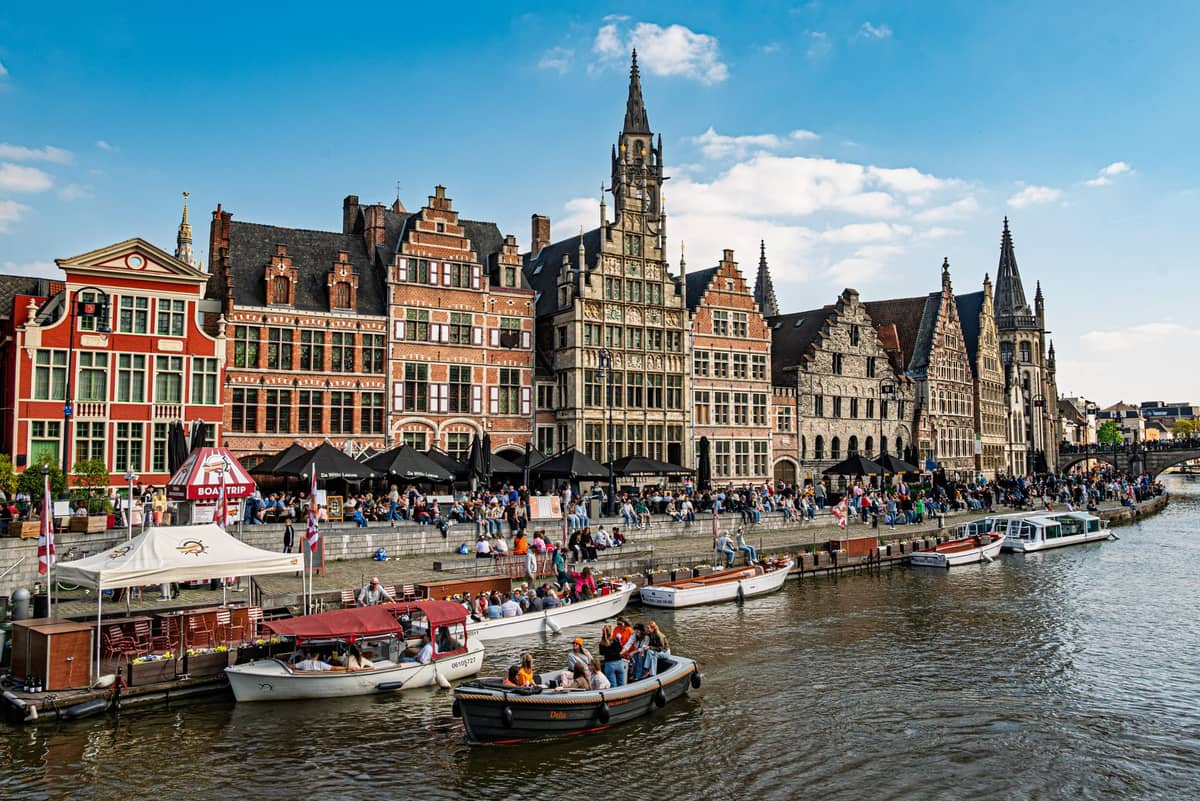
Most standard tours begin at the Graslei jetty and move outward from there. The opening minutes offer the iconic view back toward the Graslei and Korenlei quaysides, best photographed from the boat as it pulls away from the dock. Within the first few minutes you're also passing close to Gravensteen castle, the twelfth-century stone fortress whose silhouette rises directly from the water's edge. Very few cities anywhere have a structure like this visible from a canal tour.
As the route moves onto the Lieve, the character changes. This canal is noticeably narrower, and the bridges are lower and older. You'll pass close to the Geeraard de Duivelsteen, a severe Romanesque fortress-palace from the thirteenth century that sits directly on the water. Further along, the route approaches the Rabot city gate, a pair of round towers built in 1489 that once formed part of the city's outer defences. It's one of the best-preserved medieval city gates in Belgium, and seeing it from the canal rather than the street is genuinely more impressive.
Commentary on most tours covers the historical background of each landmark in rotation between languages. The pace is relaxed, and the boats are quiet. This is not a high-speed sightseeing experience. If you want to orient yourself in Ghent's geography and understand why the city is laid out as it is, a canal tour does this efficiently in under an hour.
Practical Details: Timing, Crowds, and Seasons
Canal tours operate year-round, which is one of their underrated strengths. In winter, operators switch to covered or partially enclosed boats, and departure frequency may reduce. Schedules between November and March are shorter, with Gent-Watertoerist shifting some winter departures to the Graslei jetty. If you're visiting outside peak season, check the operator's website for current hours rather than assuming the same schedule applies.
Summer weekends between late June and early September are the busiest period. By mid-morning on a Saturday or Sunday in July, queues at the Graslei jetty can stretch back noticeably, and the boats fill quickly. The Gentse Feesten festival in mid-July brings massive crowds to the entire historic centre, and canal tour queues reflect this. On Gentse Feesten weekends, arriving before 10:00 is genuinely necessary if you want a short wait.
- Best time for a quiet tour: weekday mornings in spring (April–May) or early autumn (September–October)
- Summer peak: mid-July during Gentse Feesten, and most of August on weekends
- Winter tours: fewer departures but atmospheric, especially in crisp weather when the medieval facades are sharply reflected in the water
- Late afternoon light in summer (around 17:00–18:30) is excellent for photography from the boat
- No reservation needed for standard individual tours; just turn up and buy on the day
⚠️ What to skip
Private boats and kayaks are strongly discouraged on the Lieve canal. It is too narrow and the current infrastructure does not safely accommodate private craft alongside commercial tour boats. The city explicitly discourages this. If you want to kayak in Ghent, enquire about designated waterways that allow private craft — the Lieve is not one of the recommended routes.
Exploring the Waterways on Foot
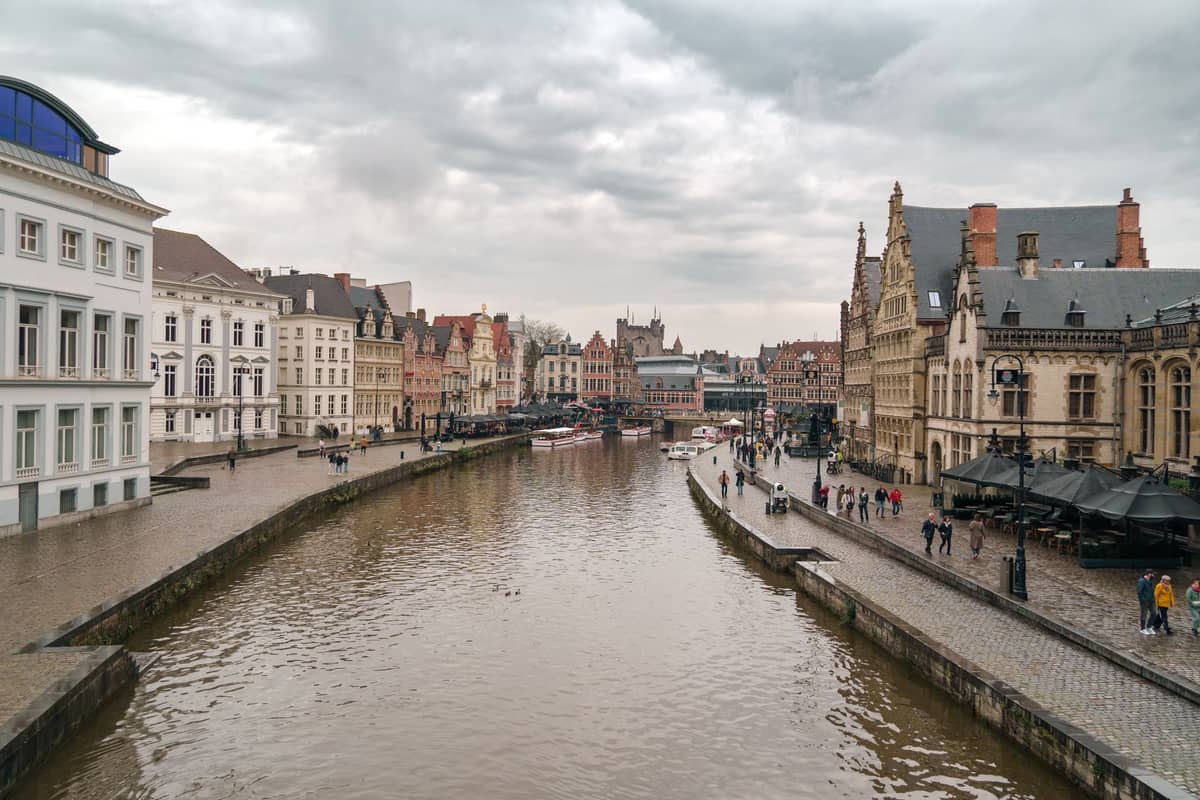
A boat trip gives you the view from the water, but Ghent's canalsides are equally worth exploring on foot. The Graslei and Korenlei quaysides are where most visitors spend time, and they deserve it. The guild houses along Graslei represent an almost unbroken sequence of Flemish medieval and Renaissance commercial architecture. The Korenlei side is slightly less elaborate but offers the better photographic angle back toward Graslei across the water, especially in morning light.
For a longer waterside walk, follow the Leie south from Graslei toward the Sint-Michielsbrug (St. Michael's Bridge). This bridge is the single best viewpoint in Ghent, offering a sightline that takes in three medieval towers simultaneously: the belfry, Sint-Niklaaskerk, and Sint-Baafskathedral. No boat trip includes this vantage point. It's a 3-minute walk from the Graslei jetties and should not be skipped.
North of Gravensteen, the canal path continues through the Patershol quarter, Ghent's oldest surviving residential district. The streets here are narrow cobbled lanes dating to the medieval period, and the neighbourhood has become home to some of the city's better restaurants. Walking from Graslei to Patershol along the canal takes about 10 minutes and gives a strong sense of how the water has historically defined the neighbourhood boundaries.
Combining a Canal Trip with the Rest of Your Visit
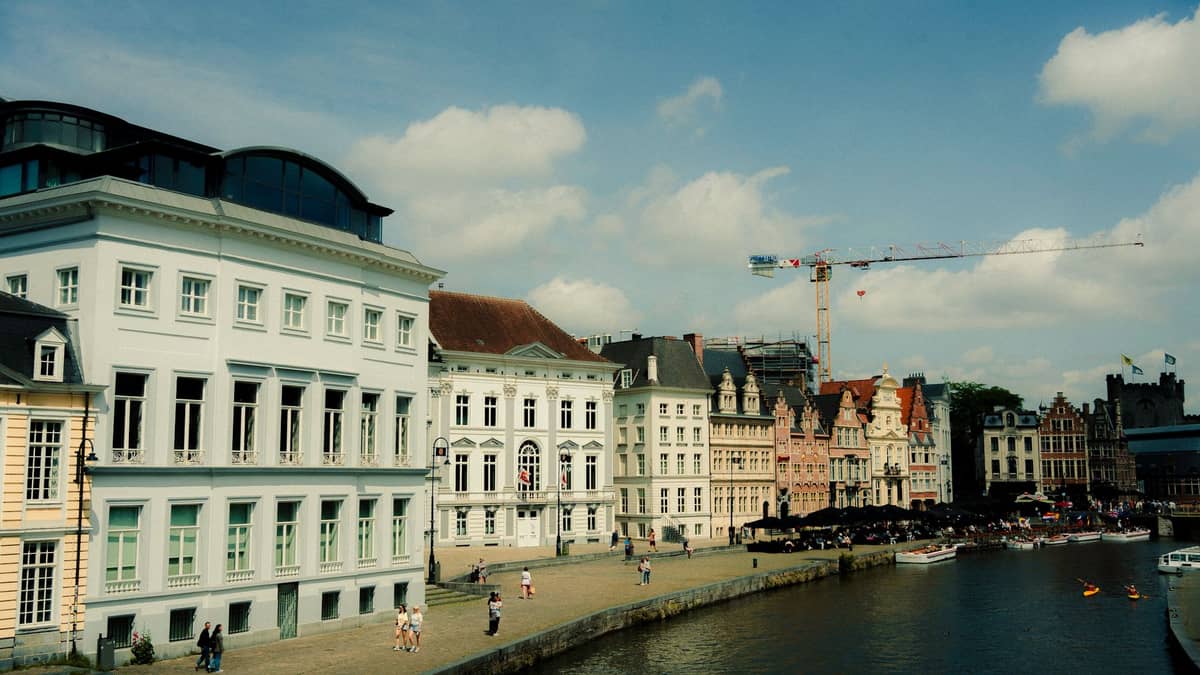
A 40–50 minute boat tour pairs naturally with the major historic-centre attractions. After the tour, you're already at Graslei, which puts you within 5 minutes on foot of Gravensteen, the Vrijdagmarkt square, and Ghent's compact medieval core. If you have a full day, combining a morning canal tour with an afternoon at Sint-Baafskathedral (home to the Van Eyck Ghent Altarpiece) covers the two most historically significant experiences the city offers.
First-time visitors often underestimate how walkable Ghent's historic centre is. Everything within the canal loop, from Gravensteen to the Vrijdagmarkt to Sint-Michielsbrug, is contained within roughly a 1km radius. A self-guided walking tour of Ghent can be done in half a day and covers most of the same landmarks you'll see from the water, but from ground level. The two approaches complement each other rather than overlap.
If you're working with limited time, the one day in Ghent itinerary builds a canal boat trip into a logical sequence that avoids backtracking. For those arriving from Brussels, the Brussels to Ghent day trip guide covers transport logistics and how to structure the day trip efficiently, including where the canal tours fit in a compressed schedule.
FAQ
How long is a typical canal boat trip in Ghent?
Standard individual tours run either 40 or 50 minutes, depending on the operator and the specific route. Both cover the main highlights including the Leie and Lieve canals, Gravensteen, and the Rabot city gate. Longer countryside cruises along the Leie are available but require separate booking and depart from different quays.
Do I need to book a canal boat trip in Ghent in advance?
No reservation is required for standard individual tours. You simply turn up at the Graslei jetty and buy a ticket on the day. That said, on busy summer weekends and especially during the Gentse Feesten festival in mid-July, queues can be significant. Arriving early in the morning (before 10:30) reduces waiting time considerably.
Are canal tours in Ghent suitable for children?
Yes. Children under 3 travel free, and reduced fares apply for children aged 3–11. The tours are calm and the boats are stable, making them suitable for families with young children. Covered boats are available in colder months. Multilingual commentary (Dutch, French, English) keeps adults engaged without the tour being pitched exclusively at one audience.
Can I take a canal boat trip in Ghent in winter?
Yes. Both main operators run year-round services, using covered boats in cold or wet weather. Departure frequency reduces between November and March, and some schedule shifts apply, so checking the operator website before visiting is recommended. Winter tours can be atmospheric, particularly on clear cold days when the historic facades are sharply reflected in still water.
What is the best viewpoint in Ghent for seeing the canals?
Sint-Michielsbrug (St. Michael's Bridge) is the standout vantage point. From here you can see the three medieval towers of Ghent simultaneously, with the Leie in the foreground. It's a 3-minute walk from the Graslei boat jetties. For a water-level perspective, the boat tour itself is unmatched, particularly as it moves onto the narrower Lieve canal near Gravensteen.