Romantic Ghent: The Complete Couples' City Break Guide
Ghent stands out as a romantic destination. This guide covers the best experiences for couples, from evening walks along illuminated waterways to medieval castles, Flemish food, and the quieter corners that most visitors miss. Practical and seasonal.
Plan and book this trip
Tools from our partner Travelpayouts help you compare flights and hotels. If you book through them, we may earn a commission at no extra cost to you.
Flights
Hotels map
TL;DR
- Ghent's most romantic experiences centre on the Graslei and Korenlei waterfront, especially after dark when the city's Light Plan illuminates the medieval skyline.
- Book Gravensteen tickets in advance, particularly for weekend visits — it is not the uncrowded escape some guides suggest.
- Canal boat tours (40-50 minutes, around €9-€10 per person) are among the best-value couple activities in the city.
- Late spring to early autumn (May to September) offers the best combination of long evenings, outdoor terraces, and boat tour availability. See our best time to visit Ghent guide for a full seasonal breakdown.
- Ghent has no airport of its own — fly into Brussels Airport (BRU) and take the train to Gent-Sint-Pieters, roughly 60-80 minutes in total.
Why Ghent Works So Well for Couples
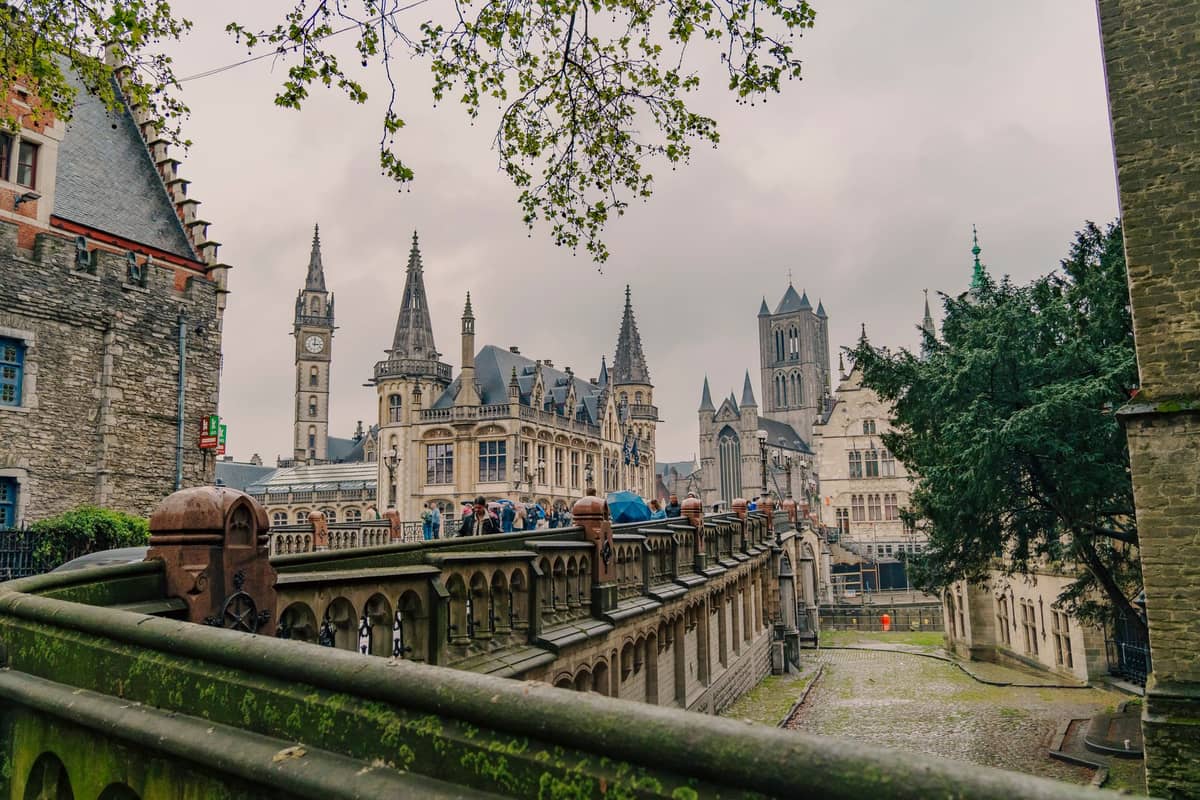
Ghent (Dutch: Gent) is the capital of East Flanders, Belgium, with a population of over 270,000. It is the country's second-largest municipality and has one of the most intact medieval city centres in Northern Europe. Unlike Bruges, which can feel theme-park polished, Ghent is a living, working city — home to a major university, a strong arts scene, and a food culture that has earned serious international attention. For couples, that combination of beauty and authenticity is hard to beat. The historic centre is compact enough to explore on foot over a weekend, yet layered enough to reward a slower pace.
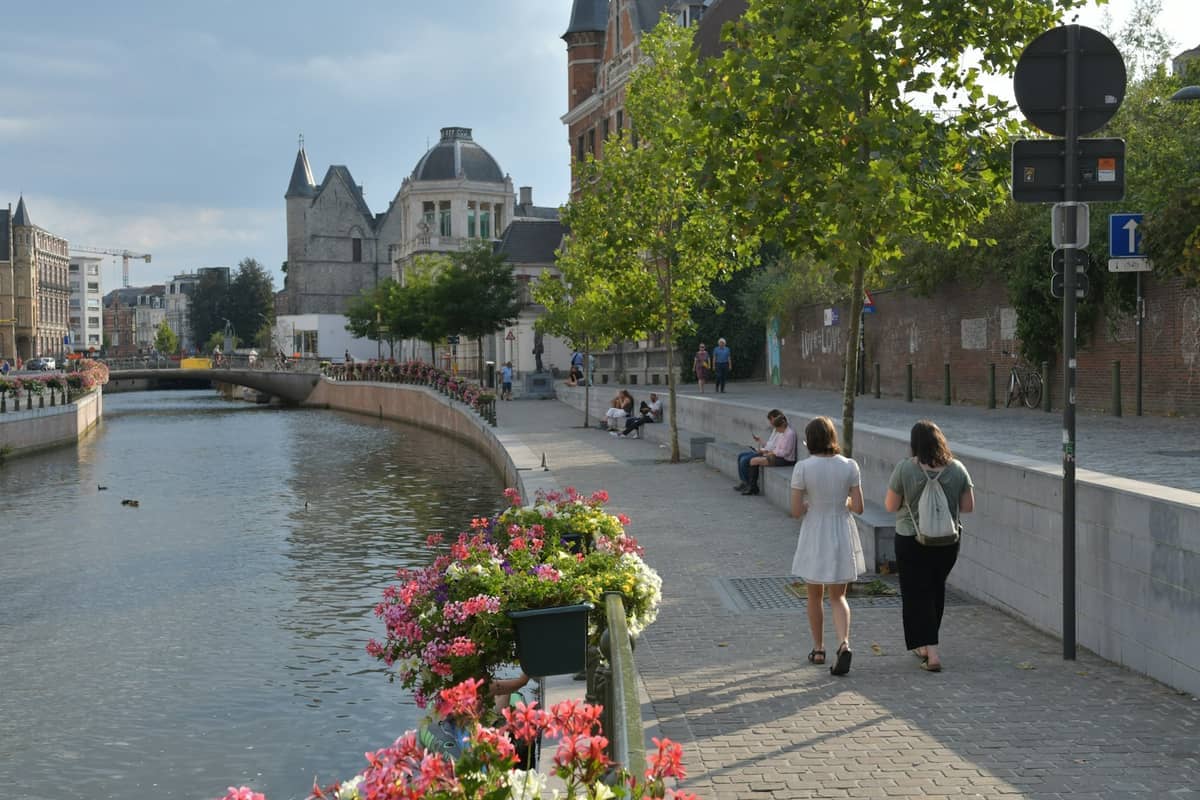
The city sits at the confluence of the Scheldt and Leie (Lys) rivers, which means waterways thread through the centre in every direction. At street level that translates to stone quaysides, arched bridges, and a skyline dominated by three medieval towers. After dark, the city's award-winning Light Plan illuminates the towers, the castle, and the waterways without flooding everything in harsh light — the effect is genuinely atmospheric in a way that photographs cannot fully capture.
ℹ️ Good to know
Ghent operates on Central European Time (CET, UTC+1), switching to CEST (UTC+2) in summer. The currency is the Euro. Dutch is the official language, but English is widely spoken across hotels, restaurants, and tourist sites. Country dialling code: +32. Emergency services: 112.
The Romantic Icons: What to Prioritise
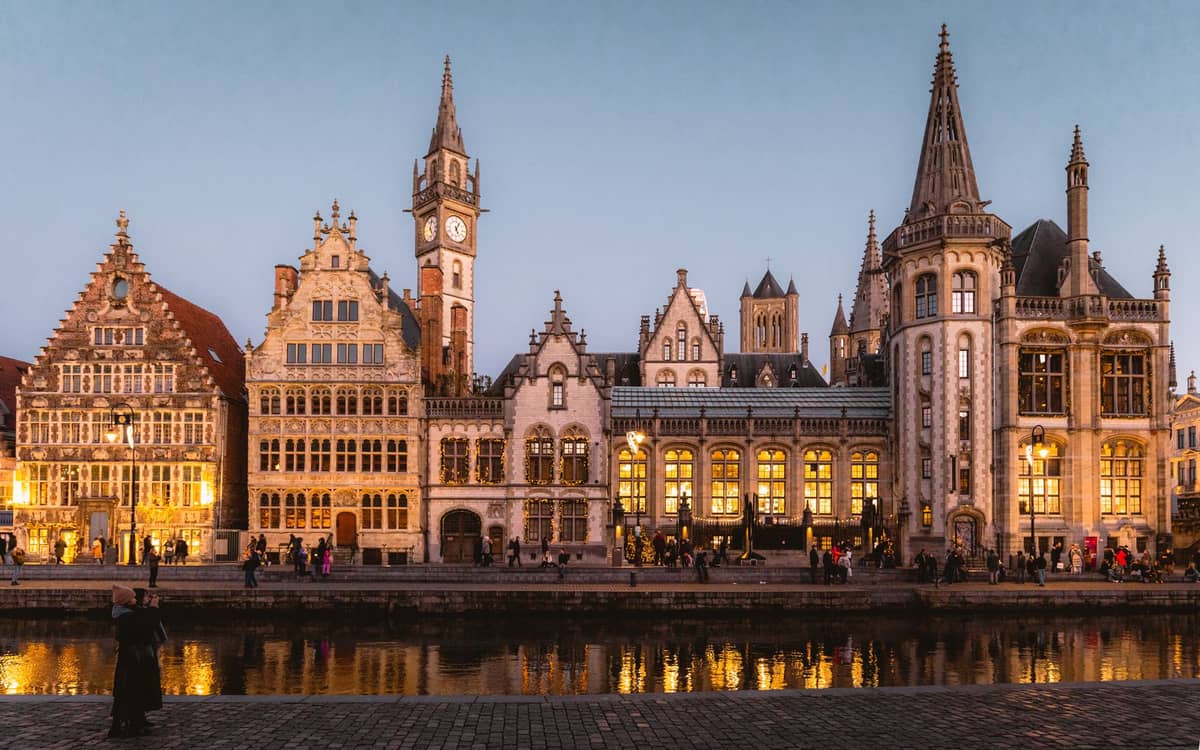
Start with the waterfront. The Graslei and Korenlei embankments face each other across a narrow stretch of the Leie and are lined with guild houses dating back to the 12th century. During the day they draw crowds; in the early evening, especially on a weekday, they thin out considerably. Walk the full length of both quays, cross at St. Michael's Bridge, and you get a view that takes in three towers simultaneously — the Belfry, St. Nicholas' Church, and St. Bavo's Cathedral. This is the city's signature panorama and one of the finest urban views in Belgium.
For an elevated perspective, Gravensteen — the Castle of the Counts — is the obvious choice. It is open daily from 10:00 to 18:00 (last admission 16:40), and is closed on 24, 25, and 31 December and 1 January. Adult admission is €15, which includes an audio guide. The rampart walk gives an unusual bird's-eye view over the rooftops of the Patershol neighbourhood and the canal network beyond. One honest note: Gravensteen is not a quiet retreat. It draws serious visitor numbers, particularly on weekends and during school holidays. Book timed-entry e-tickets in advance through the official Historische Huizen Gent site — walk-up entry is not guaranteed on busy days.
Do not overlook St. Bavo's Cathedral, which houses the Ghent Altarpiece by the Van Eyck brothers — considered one of the most important paintings in Western art. Entry to the cathedral is free; viewing the altarpiece in the dedicated chapel requires a separate €12.50–€16 ticket. The scale and quality of the work is genuinely arresting, and visiting on a weekday morning means shorter queues and a more contemplative atmosphere.
⚠️ What to skip
Gravensteen is frequently described as a 'hidden' or uncrowded experience. It is neither. The official city guidance explicitly recommends advance ticket booking, and weekend queues without a reservation can result in turned-away visitors. Book online at the Historische Huizen Gent website before you travel.
Exploring by Water: Canal Boat Tours
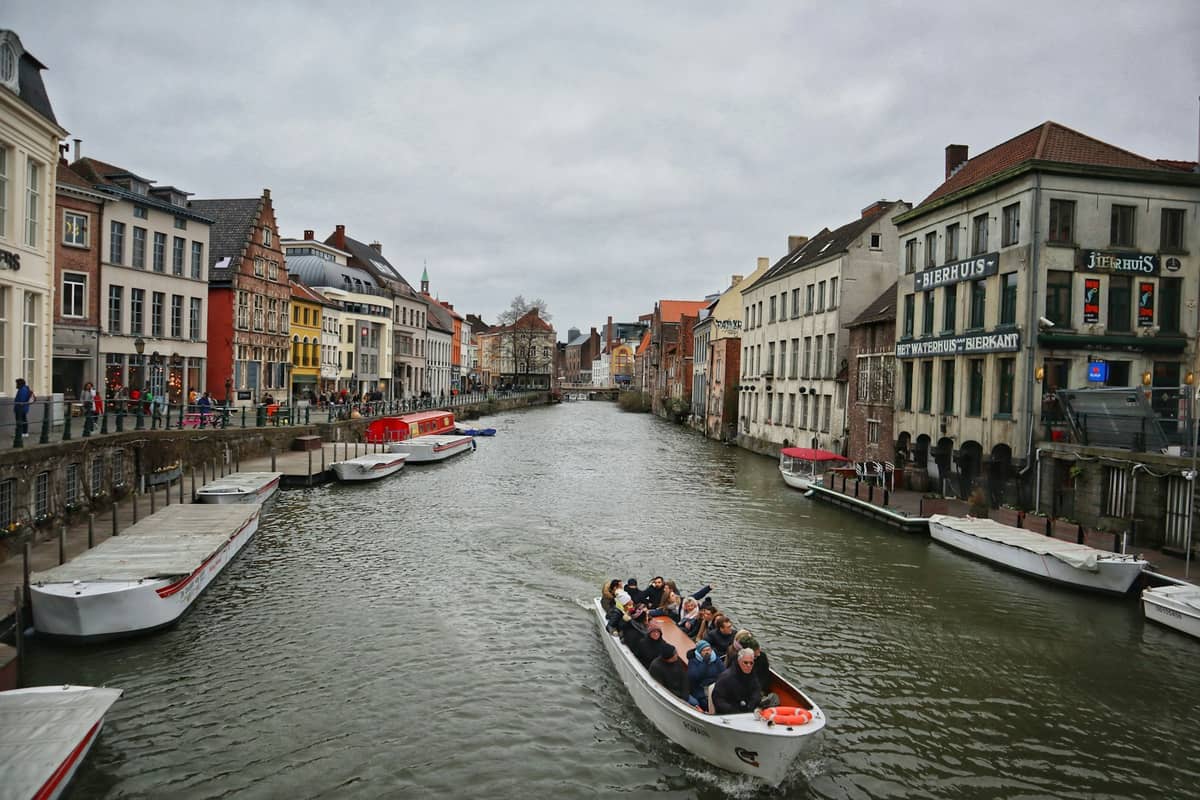
A canal boat tour is one of the most straightforwardly enjoyable things a couple can do in Ghent, and it delivers a perspective on the medieval core that walking simply cannot replicate. Several operators run 40-50 minute open-boat tours through the canals, departing from the Korenlei and Graslei area. Standard pricing runs around €9-€10 per person depending on the operator and group configuration. Some operators offer private hire at a premium, which is worth considering for a special occasion.
Evening tours, where available, carry a slightly different atmosphere as the Light Plan comes into effect and the crowds on the quaysides thin out. Note that boat tour availability is seasonal: services typically run from spring through early autumn, with reduced or suspended schedules in winter. Check operator websites directly for current timetables and to confirm whether card payment is accepted on board. For more context on navigating the city's waterways, the Ghent waterways and canal guide covers routes, operators, and what to look for along the way.
Food, Wine, and Evening Atmosphere
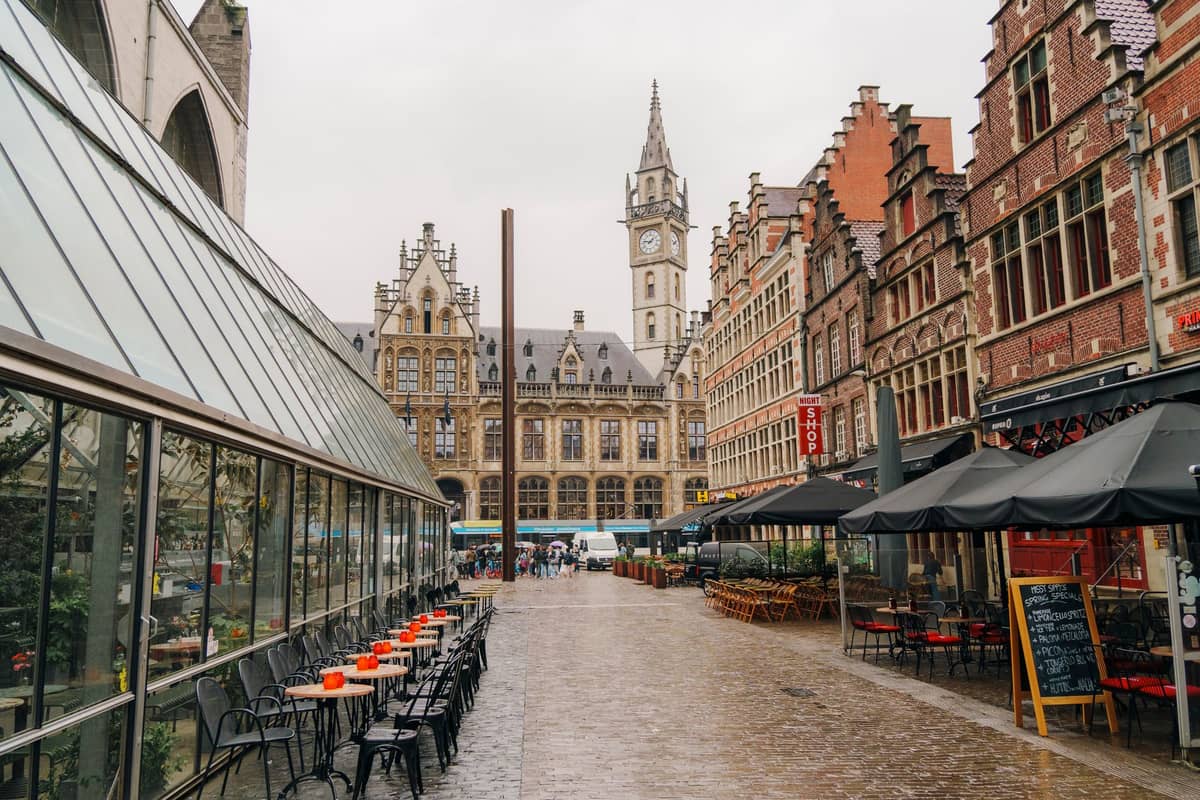
Ghent's food scene punches well above the city's size. The Patershol neighbourhood, a tangle of narrow medieval streets just north of Gravensteen, is the best area for a romantic dinner. The streets are quiet in the evening, the restaurants are genuinely good (Flemish classics, French-influenced bistros, and a few strong independents), and the setting — cobblestones, low facades, the glow from restaurant windows — does most of the atmosphere work for you. Book ahead on Friday and Saturday evenings, when tables fill early.
For drinks before or after dinner, the area around the Graslei waterfront and the streets just off Korenmarkt has plenty of options. Ghent's beer culture is serious: the city has strong ties to Belgian brewing tradition, and any bar worth its reputation will carry a well-curated selection of local and regional ales. If you want a structured tasting experience, look for chocolate and beer pairing workshops, which several operators offer as bookable experiences. The Ghent food guide covers the best areas, dish types, and what to spend across different budgets.
- Patershol The most atmospheric neighbourhood for dinner. Medieval street plan, low-key restaurants, best on a weekday evening when it is quieter.
- Graslei and Korenlei terraces Outdoor cafe seating along the waterfront is ideal in warm weather for an aperitif or late coffee. Expect higher prices at the prime waterfront spots.
- Vrijdagmarkt The large historic square is ringed with traditional Flemish cafes. Less tourist-polished than the waterfront but genuinely good for local atmosphere.
- Korenmarkt and surrounds The commercial heart of the centre. Convenient, but the most touristy stretch — better for a quick drink than a long evening.
Seasonal Timing: When Romance Peaks (and When It Doesn't)
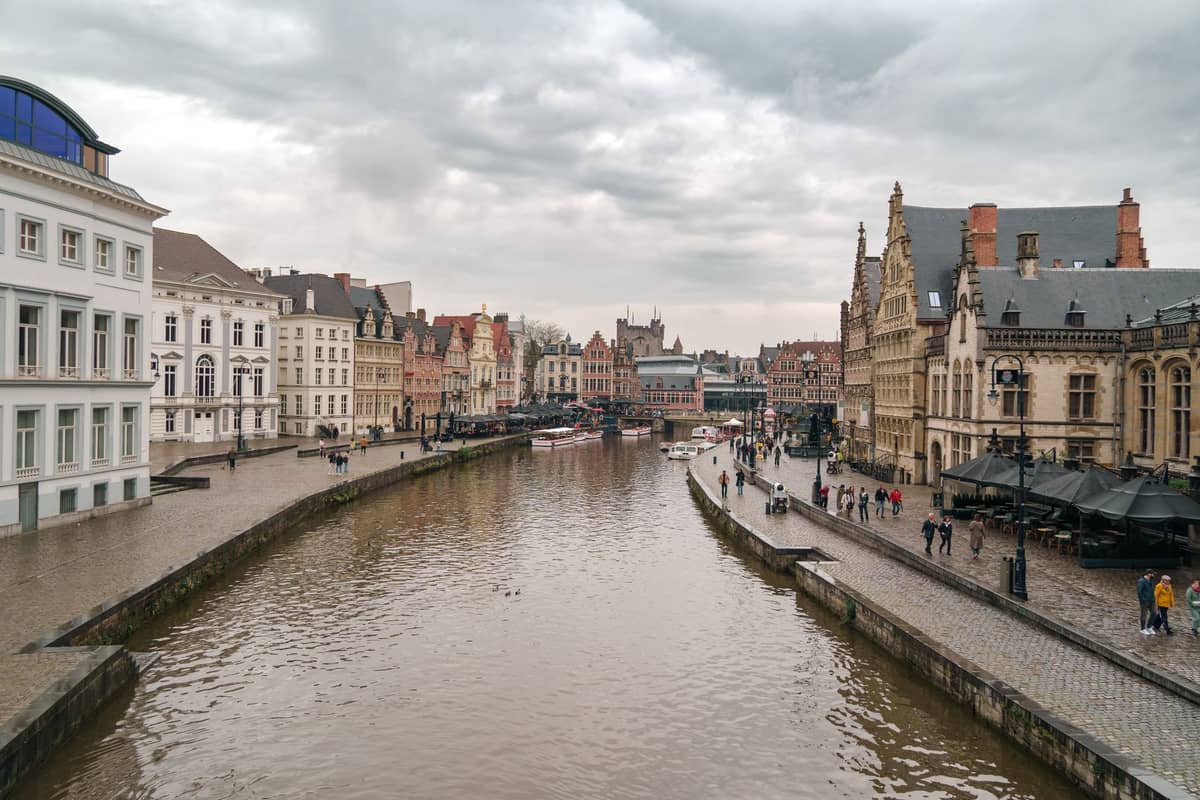
Ghent has a temperate maritime climate, which means mild but changeable weather year-round. Rain is a genuine consideration in every month, and summers are warm rather than hot (average highs around 22-23 °C in July). That said, the season you visit shapes the experience substantially.
- May to September Best for outdoor dining, canal boat tours, long evenings, and the full Light Plan experience after 22:00. The Gentse Feesten festival in late July brings an exceptional street atmosphere but also peak crowds and higher hotel prices.
- October to November Shoulder season with fewer tourists, cooler temperatures, and a more local feel. Some boat operators reduce services. Good value on accommodation.
- December The Christmas market on Korenmarkt and Sint-Baafsplein creates a genuinely cosy winter atmosphere, with mulled wine, ice skating, and the illuminated medieval backdrop. Gravensteen closes on 24, 25, and 31 December.
- January to March The quietest period. Boat tours are largely suspended, outdoor terraces closed, but accommodation is at its cheapest and the Light Plan runs throughout the year.
✨ Pro tip
The Gentse Feesten (Ghent Festival), held over ten days in late July, transforms the entire city centre into an open-air celebration with free concerts and street performances. The atmosphere is extraordinary, but hotel prices spike and booking accommodation 3-4 months ahead is not an overreaction. If your priority is a quiet, intimate break, choose May, June, or September instead.
Getting There, Getting Around, and Where to Stay
Ghent has no airport. The standard arrival route is Brussels Airport (BRU), from which you can take a train directly to Gent-Sint-Pieters (roughly once per hour, direct) or connect via Brussels-Noord or Brussels-Midi (up to three or four trains per hour to Ghent from Brussels stations, with a journey time of around 30 minutes from Brussels). Total door-to-door travel time from Brussels Airport to central Ghent is typically 60-80 minutes. Verify current train times and fares with NMBS/SNCB before travelling.
Within the city, the historic centre is compact and walkable, which is exactly what you want for a couples' break. De Lijn operates the tram and bus network; a single ride costs around €3 and includes free transfers within one hour. Tram lines run from Gent-Sint-Pieters through the centre to Korenmarkt, taking roughly 5-10 minutes. For most couples staying centrally, the tram is only needed for the journey between the station and the city centre. Once there, walking covers everything. For more detail, see the getting around Ghent guide.
For accommodation, staying within or immediately adjacent to the historic centre puts everything within ten minutes on foot, including the waterfront, Gravensteen, and Patershol. The area around Graslei, Patershol, and the streets between Korenmarkt and Vrijdagmarkt offer the most atmospheric options. The where to stay in Ghent guide breaks down the best neighbourhoods by price point and type of experience.
FAQ
Is Ghent worth visiting for a romantic weekend?
Yes, and it is arguably better suited to a romantic break than Bruges for couples who want atmosphere without the feeling of being in a living museum. Ghent has a real city energy, a strong food scene, a compact medieval centre, and waterways that genuinely impress after dark. A two-night stay is sufficient to cover the main sights and still leave time to slow down.
What is the most romantic thing to do in Ghent?
An evening walk along the Graslei and Korenlei after the Light Plan activates (roughly 45 minutes after sunset) is consistently cited by the city's own tourism body as the most romantic experience Ghent offers. The canal boat tour through the medieval centre is a close second and adds a different perspective on the same waterways. Both are low-cost and need no advance planning, unlike Gravensteen which requires booked tickets.
How do I get from Brussels Airport to Ghent?
Take the train from Brussels Airport (level -1) toward Gent-Sint-Pieters. There is a direct connection roughly once per hour, or you can connect via Brussels-Noord or Brussels-Midi for more frequent departures. The total journey is around 60-80 minutes. From Gent-Sint-Pieters station, trams or buses reach the city centre in approximately 10-15 minutes. Verify current timetables and fares with NMBS/SNCB before travelling, as schedules change.
Is Ghent expensive for a couples' trip?
Ghent is moderately priced by Western European standards and noticeably cheaper than Brussels or Amsterdam. Canal boat tours cost around €7.50-€9 per person. Gravensteen admission is €15 per adult including an audio guide. A sit-down dinner for two in Patershol typically runs €50-€90 depending on wine. Accommodation ranges from budget hostels to boutique hotels; central options in the €100-€180 per night range are widely available outside peak season.
What is Ghent like in winter for couples?
Winter is quieter, cheaper, and has its own appeal. The Christmas market in December, held on Korenmarkt and Sint-Baafsplein, is genuinely atmospheric. The city's Light Plan operates year-round, so the evening waterfront is always worth walking. The main downsides: canal boat tours largely stop, outdoor terraces close, and the short days mean less time for sightseeing. January and February are the quietest months but also the best value for accommodation.