Where to Stay in Ghent: Best Areas & Hotels (2026 Guide)
Choosing where to stay in Ghent shapes your entire trip. This guide breaks down every key neighbourhood by atmosphere, price, and convenience, then matches each to the right type of traveller, from first-timers to budget backpackers to couples after a romantic canal-view room.
Plan and book this trip
Tools from our partner Travelpayouts help you compare flights and hotels. If you book through them, we may earn a commission at no extra cost to you.
Flights
Hotels map
TL;DR
- Stay in the historic centre (Graslei/Korenmarkt) if it's your first visit, all major sights are within a 10-minute walk.
- Patershol, directly behind Gravensteen, is the best neighbourhood for atmosphere and dining, and it is far closer to the centre than most maps suggest.
- The Sint-Pieters station area offers lower prices and fast train connections, but expect a 20-30 minute tram ride or walk to the old town.
- Ghent has no airport: you arrive via Brussels Airport (BRU), then take the train to Gent-Sint-Pieters, the city's main station.
- Book canal-view rooms early for spring and summer; prices and availability shift significantly during the Gentse Feesten festival in July.
Getting Your Bearings: How Ghent Is Laid Out
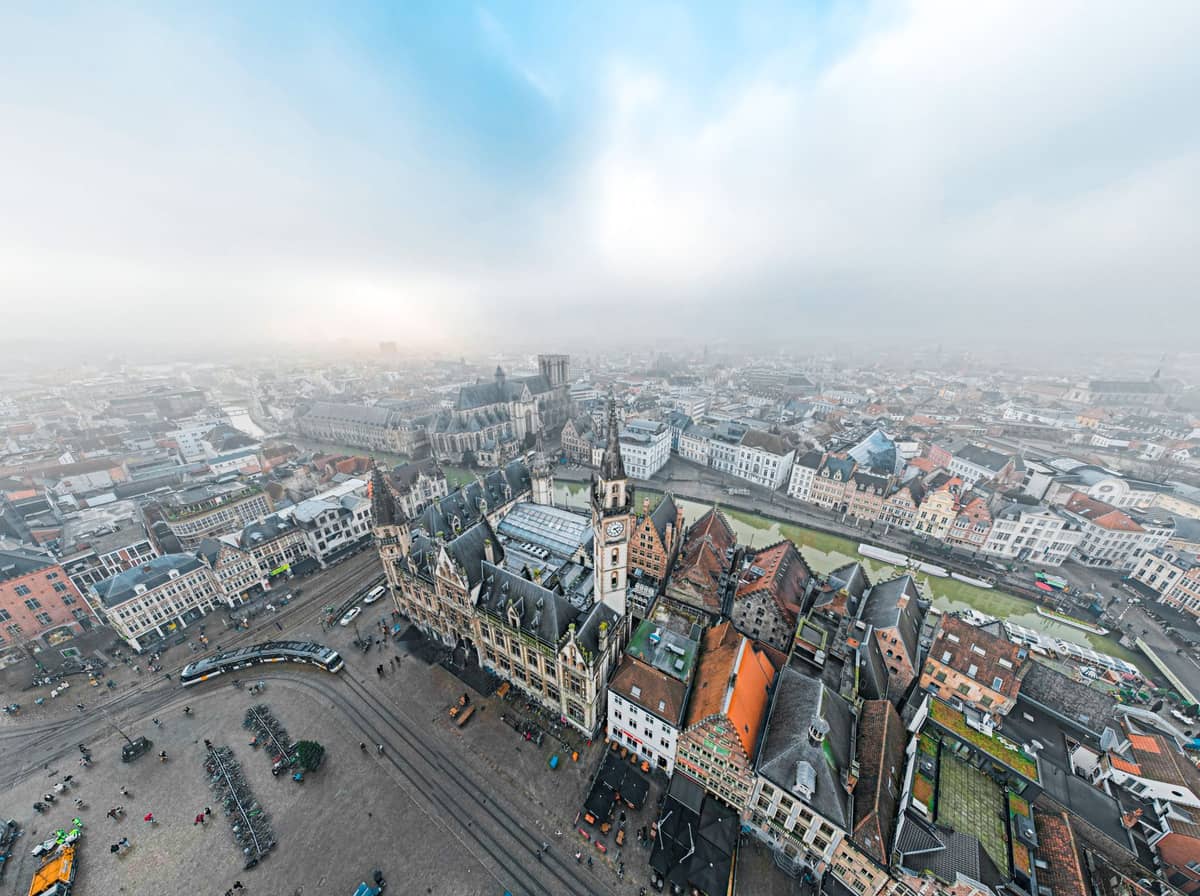
Ghent is Belgium's second-largest municipality by population, with around 270,000 residents within a compact but layered city. The historic core sits at the confluence of the Scheldt and Leie rivers, and nearly every landmark worth seeing, from Gravensteen castle to St Bavo's Cathedral, is packed into a walkable medieval quarter. Beyond that core, the city fans out into distinct neighbourhoods that each have their own character, price point, and practical tradeoffs for visitors.
The main train station, Gent-Sint-Pieters, sits about 2 km south of the historic centre and is the arrival point for almost every visitor. From there, tram lines operated by De Lijn connect you to the centre in roughly 5-10 minutes. This geography matters for your hotel choice: a canal-side room in Patershol or Graslei feels entirely different from a modern hotel near the station, even though both can work depending on your priorities.
ℹ️ Good to know
Ghent has no airport of its own. The standard route is Brussels Airport (BRU) to Brussels-Noord or Brussels-Midi by train, then a direct train to Gent-Sint-Pieters. Journey time from Brussels Airport to Ghent is typically 50-70 minutes depending on connections. Always check current NMBS/SNCB timetables before travel.
The Best Areas to Stay in Ghent
Ghent's neighbourhoods divide roughly into three zones: the medieval historic core, the inner residential quarters just outside it, and the station area to the south. Each suits a different kind of trip.
- Graslei & Korenmarkt (Binnenstad) The historic waterfront strip and the central squares immediately behind it. Best for: first-time visitors, sightseers, anyone who wants to step outside and already be at the main attractions. Highest prices, most tourist foot traffic, but genuinely convenient.
- Patershol & Kraanlei The medieval quarter directly north of Gravensteen, known for cobblestone lanes and a dense concentration of restaurants. Best for: couples, food-focused travellers, anyone after atmosphere over convenience of a chain hotel. Often mistakenly described as 'far from the centre', it is a 5-minute walk from Korenmarkt.
- Vrijdagmarkt Area The historic market square one block east of the main canal strip. Terrace bars, a slightly more local feel, and generally better hotel value than Graslei-facing properties while remaining central. Good middle-ground choice.
- Sint-Pieters Station & Citadel Park The area around Gent-Sint-Pieters station and the adjacent Citadelpark. Lower prices, modern hotels, and ideal if you are doing day trips by train. The tradeoff: you need a tram or a 20-30 minute walk to reach the old town. Not atmospheric, but practical.
- Sint-Amandsberg & Brugse Poort-Rooigem Quieter residential neighbourhoods on the outer edge of the city. Genuinely affordable, calm, and family-friendly. Suited to longer stays or travellers with a car, but requires public transport to reach most sights.
Graslei, Korenmarkt & the Historic Core: Best for First-Timers
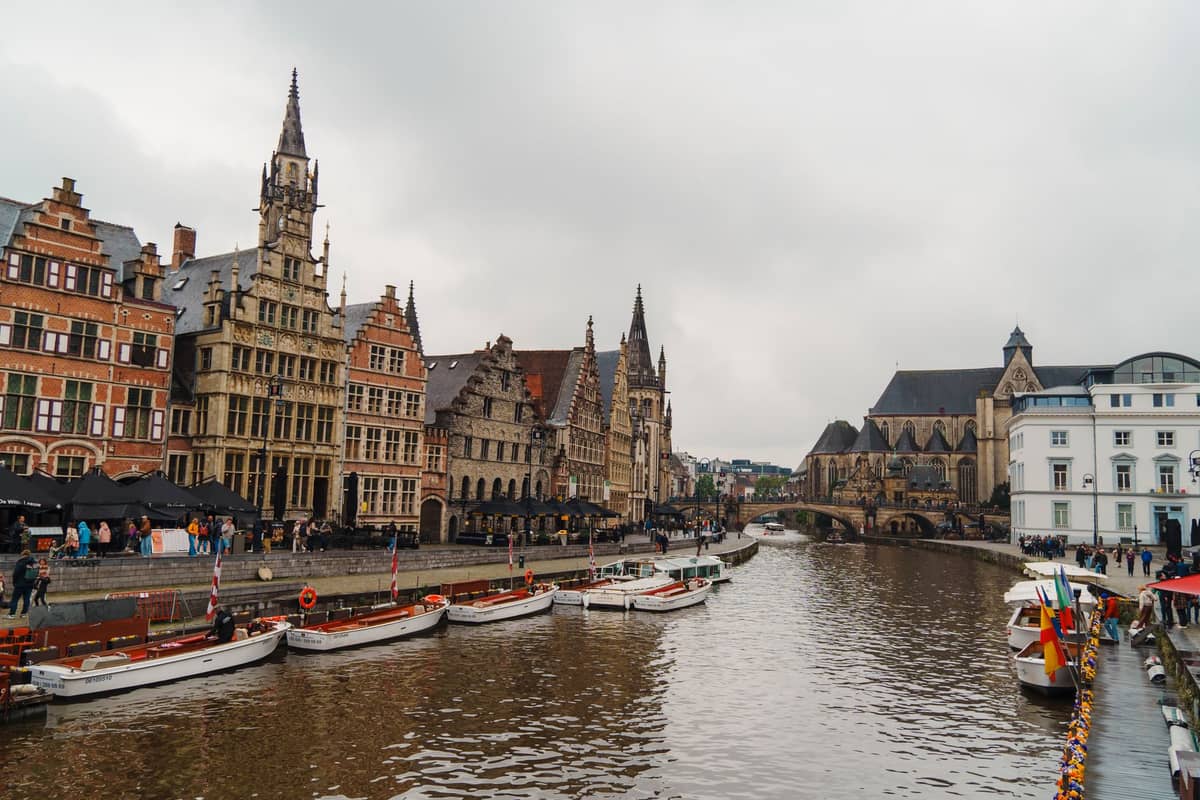
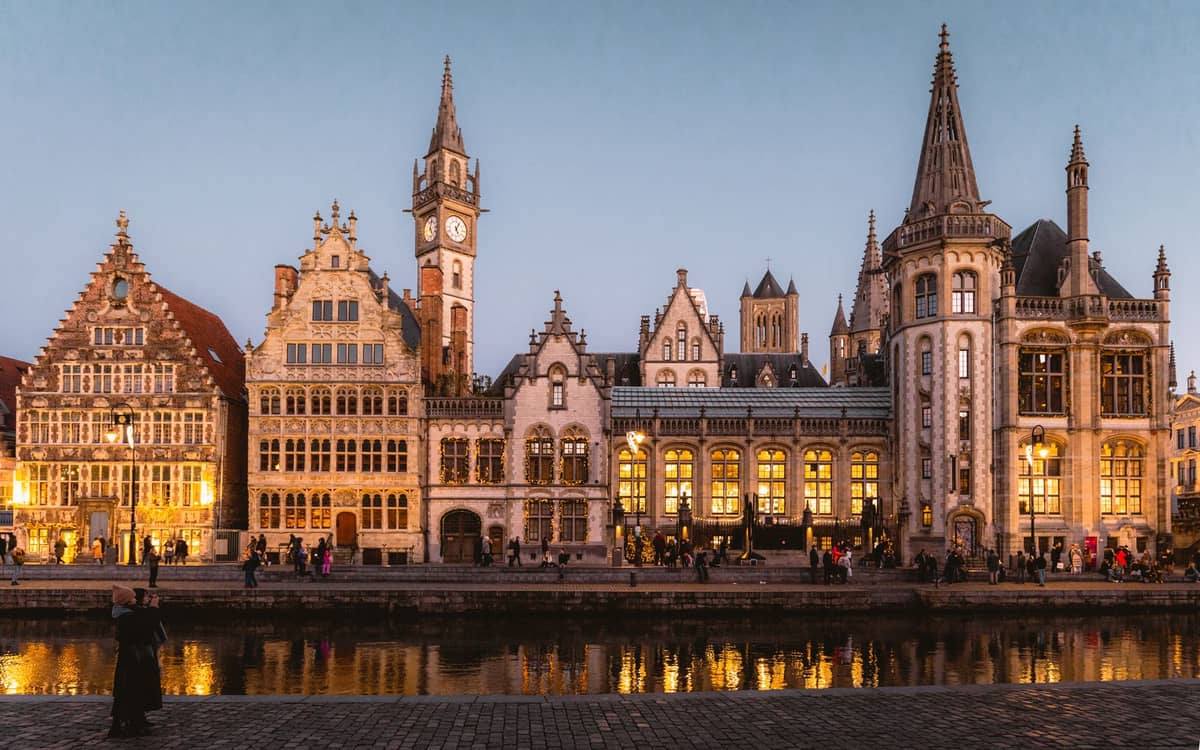
Staying in Ghent's historic centre means waking up a short walk from Graslei and Korenlei, the medieval guild-house waterfront that is effectively the postcard image of the city. The Belfry, St Bavo's Cathedral, and Gravensteen castle are all within a 10-minute walk of each other. For a short visit of one or two nights, this density of sights is genuinely useful.
The tradeoff is price and noise. Canal-view rooms at boutique hotels here command a premium, and the main squares get loud on weekend evenings, particularly in summer. If you are a light sleeper or travelling on a tighter budget, consider whether the address is worth the uplift. The area also attracts the most tourist-facing restaurants, which are not always the best value for money. Push two blocks back from the water and the quality-to-price ratio improves noticeably.
Representative hotels in this zone include 1898 The Post, a design hotel in a converted post office near Korenmarkt, and the NH Collection Gent, which suits travellers who want a reliable full-service property with a central address. Boutique options like Hotel Onderbergen offer a quieter street position while staying within the historic core.
⚠️ What to skip
Ghent's historic centre is partly car-restricted. If you are driving, check your hotel's parking policy before booking. Many central properties either have no parking or charge separately for it. Arriving by train and using trams is almost always easier.
Patershol & Kraanlei: The Neighbourhood with the Most Character
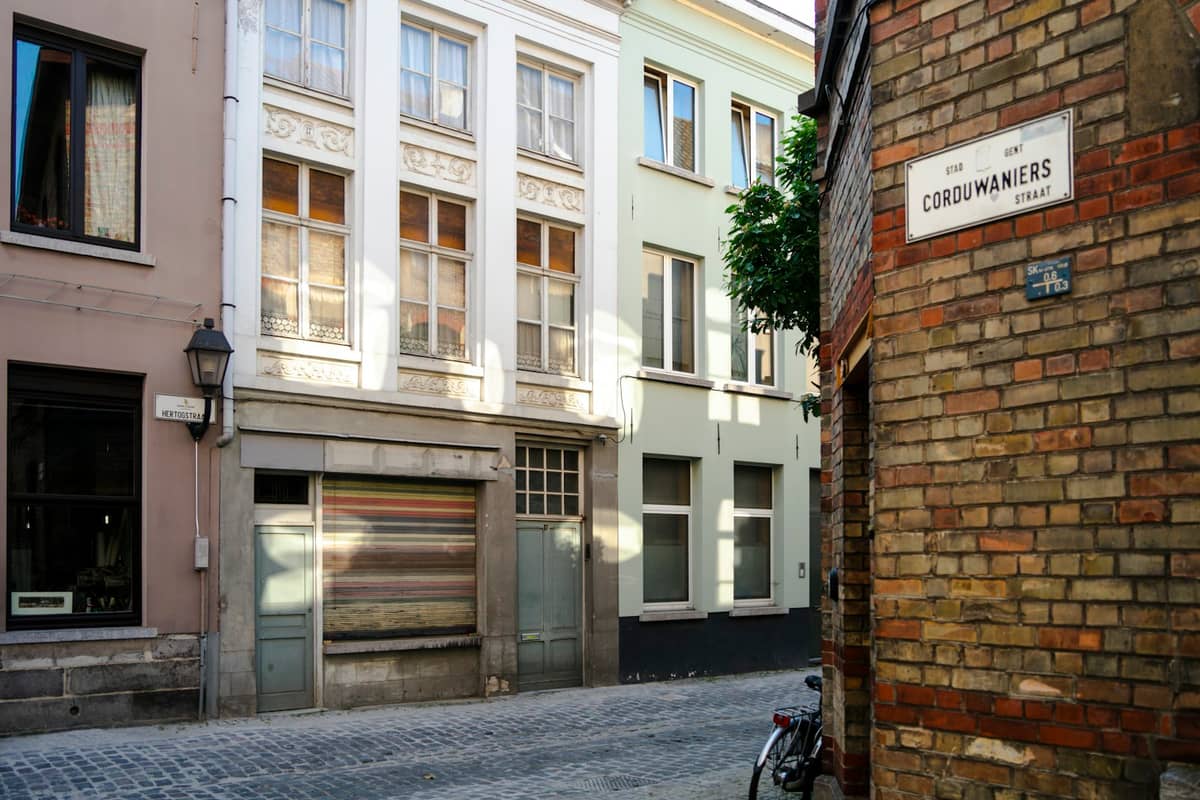
Patershol is one of the best-preserved medieval quarters in Flanders, and staying here puts you in a neighbourhood that functions as a real part of the city rather than a tourist zone. The quarter occupies the land directly behind Gravensteen, and its narrow cobbled lanes are lined with independent restaurants, wine bars, and the occasional small hotel or B&B. The Ghent food scene is particularly concentrated here, with some of the city's most respected Flemish restaurants on streets like Kraanlei and Stoofstraat.
Hotel Harmony on Kraanlei is the most frequently cited property in this zone, with rooms facing the canal offering views that few hotels in Belgium can match. Book the canal-view rooms specifically at the time of booking, not as a request: they sell out well in advance for spring and summer weekends. The hotel is well-reviewed for breakfast quality and staff knowledge of the city.
One persistent myth worth correcting: Patershol is not a remote or inconvenient neighbourhood. It takes about 5 minutes on foot to reach Korenmarkt from the heart of Patershol. The area feels tucked away because its lanes are narrow and traffic-free, not because it is distant. For most visitors, it is the strongest combination of location, atmosphere, and access to good restaurants.
Sint-Pieters Station Area: Best for Train Travellers and Budget Stays
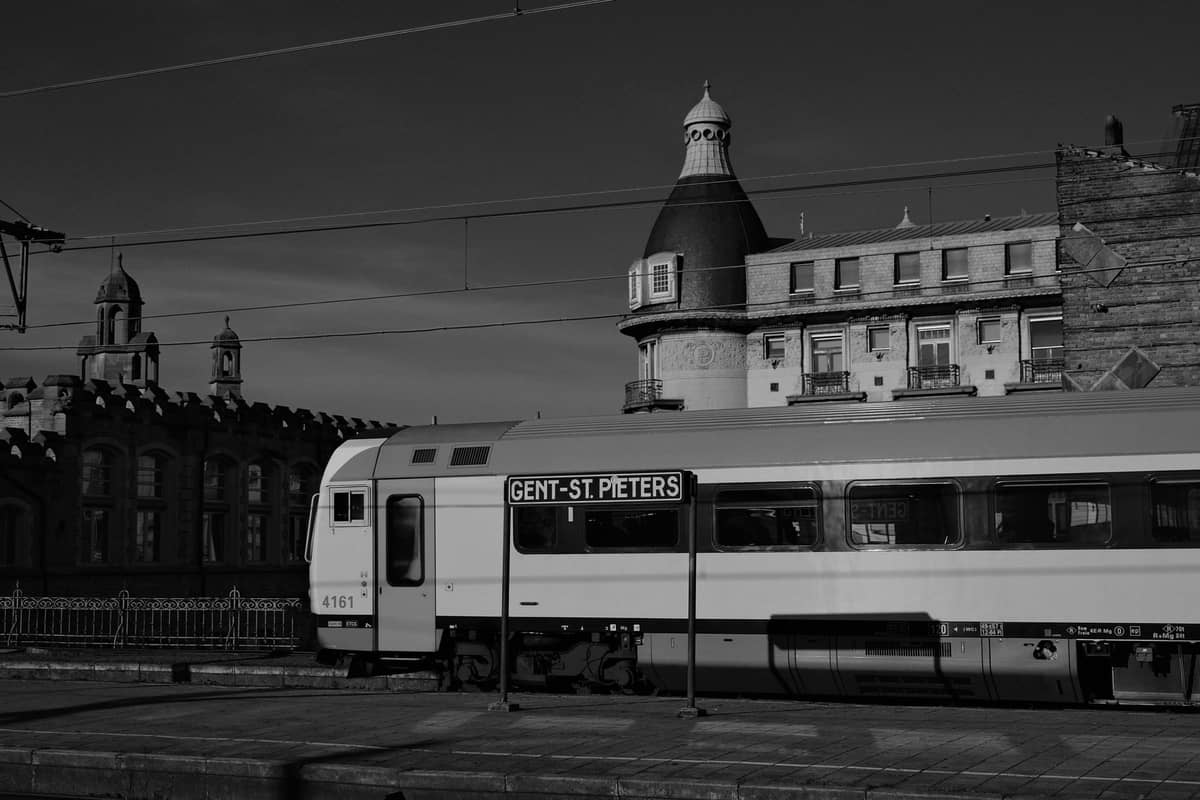
The neighbourhood around Gent-Sint-Pieters station has a different character entirely. It is more modern, more functional, and considerably cheaper than the historic core. Hotels here include chain properties and larger business-oriented hotels that offer reliable standards without the premium of a canal address. If you are using Ghent as a base for day trips to Bruges, Brussels, or Antwerp, the station area's direct rail access is a genuine practical advantage.
The Citadelpark is adjacent to the station area, giving this part of the city more green space than the densely built historic core. The park also houses the museum quarter, with SMAK (the contemporary art museum) and MSK (the fine arts museum) both within a short walk. Travellers interested in Ghent's museum offer rather than its medieval architecture may find this a more logical base.
💡 Local tip
Tram line 1 connects Gent-Sint-Pieters station to Korenmarkt in the historic centre in approximately 10-15 minutes. A single De Lijn ticket currently costs €3; check the De Lijn website for exact validity conditions and current fares before your trip, as prices and ticket types are subject to change.
Seasonal Considerations and When to Book
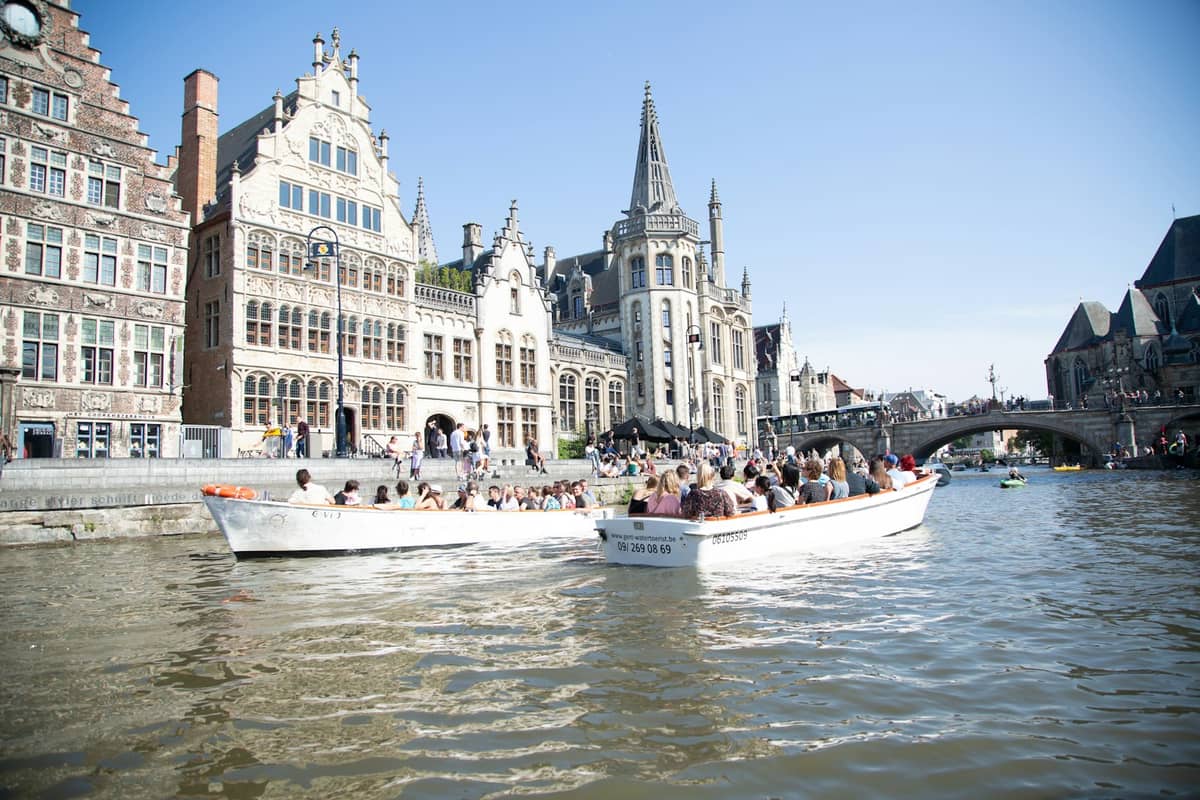
Ghent's accommodation market has two distinct peaks. The first is the general spring and summer season from roughly April to September, when canal-side terraces open, daylight is long, and the city sees its highest visitor numbers. The second, more intense peak is the Gentse Feesten in July, a 10-day street festival that fills the city and drives hotel prices significantly higher. If your travel dates overlap with the festival, book several months in advance and expect central hotel rates to roughly double.
Outside these peaks, Ghent has year-round appeal. The Christmas market draws significant winter visitors from late November through December, and the historic centre looks particularly good in winter light. Prices drop meaningfully from October through early December and again in January and February, making these months worth considering for budget-conscious travellers. The city's climate is temperate maritime: expect mild but frequently grey and damp conditions outside summer, and pack accordingly.
- Spring (April-May): Good weather, moderate crowds, competitive prices. Best overall balance for most visitors.
- Summer (June-August): Peak season. Book canal-view and boutique rooms 2-3 months ahead. Gentse Feesten (July) requires very early booking.
- Autumn (September-October): Fewer crowds, comfortable temperatures, good value. Often the best season for a relaxed visit.
- Winter (November-February): Lowest prices except December. Christmas market period (late November to late December) sees a partial price spike in the centre. January and February are the quietest and cheapest months.
For a broader perspective on timing, the best time to visit Ghent guide goes deeper into seasonal tradeoffs beyond just accommodation pricing.
Practical Tips Before You Book
A few points that regularly trip up visitors booking Ghent accommodation for the first time.
Canal-view rooms are genuinely worth the premium for a short, special trip, but confirm the specific room category at the time of booking rather than leaving it as a preference. Hotels like Hotel Harmony list canal-facing and courtyard-facing rooms as distinct categories at different price points. Booking a standard room and hoping for a canal view rarely works out. On a related note, check whether your hotel is within Ghent's car-restricted historic zone if you are driving, as drop-off and parking logistics can complicate arrival.
Rooftop terraces and outdoor amenities at some boutique hotels (including several cited in travel roundups) operate seasonally and depend on weather. Do not book based on a rooftop feature if you are travelling outside May-September without confirming it will be open. Similarly, some smaller B&Bs in Patershol operate with self-check-in or limited front-desk hours: check arrival time requirements carefully if you have a late train from Brussels Airport.
If you are travelling as a couple and want guidance on the most romantic options in each zone, the romantic Ghent guide covers canal-side dining, evening walks, and hotel picks specifically for that kind of trip. For families, the calculus shifts toward space, proximity to parks, and easy tram access, all covered in the Ghent with kids guide.
FAQ
What is the best area to stay in Ghent for first-time visitors?
The historic centre around Graslei and Korenmarkt is the most practical base for a first visit. Every major sight is within a 10-minute walk, public transport links are easy, and the hotel density is high. It is not the cheapest option, but the convenience is hard to argue with for a short trip.
Is Patershol a good place to stay in Ghent?
Yes, and it is frequently underrated. Patershol sits directly behind Gravensteen castle, roughly a 5-minute walk from Korenmarkt. It has more character than the main tourist strip, Ghent's best concentration of restaurants, and cobblestone lanes that feel genuinely medieval. Hotel Harmony on Kraanlei is the standout property here, particularly for rooms with canal views.
How far is the Sint-Pieters station area from the Ghent historic centre?
About 2–2.5 km, which is roughly a 25-30 minute walk or a 10-15 minute ride on De Lijn tram line 1. It is not remote, but it is a different experience from waking up in the old town. The station area suits travellers who prioritise train access, lower prices, or proximity to the museum quarter over immediate access to medieval Ghent.
When should I book hotels in Ghent to get the best prices?
For summer visits (June-August), book at least 2-3 months ahead, especially for canal-view rooms and boutique properties. For the Gentse Feesten festival in July, book as early as possible, ideally 4-6 months out. Outside summer, availability is generally better and last-minute deals are more common, particularly in January, February, and November.
Is it easy to get from Brussels Airport to Ghent hotels?
Yes, reasonably straightforward. Take the train from Brussels Airport to either Brussels-Noord or Brussels-Midi, then connect to a direct train to Gent-Sint-Pieters, or use a direct airport train when available. Total journey time is typically 50-60 minutes. From Gent-Sint-Pieters, tram line 1 reaches the historic centre in about 10-15 minutes. Most central hotels are either walking distance from a tram stop or offer luggage storage if you arrive before check-in time.