Ghent Street Art: The Complete Guide to the City's Urban Art Scene
Ghent has one of Belgium's most seriously developed street art scenes, backed by city policy, a free downloadable map, and over 330 catalogued works. This guide covers every self-guided route, the best guided tours, the legendary Werregarenstraatje, and how to explore beyond the tourist center.
Plan and book this trip
Tools from our partner Travelpayouts help you compare flights and hotels. If you book through them, we may earn a commission at no extra cost to you.
Flights
Hotels map
TL;DR
- The city's official free street art map (Sorry, Not Sorry) covers 330+ works and is downloadable or available at the Visit Gent tourist office.
- Werregarenstraatje (Graffiti Street) is the most concentrated spot, but the real scene spans the docks, Brugse Poort, Ledeberg, and beyond.
- Guided tours run from around €115 per group (Gentse Gidsen) and 1.5-hour small-group options are available via Viator and Wallin' Tours.
- All outdoor murals are free and accessible year-round. Rain is the main obstacle, not opening hours.
- Street art hot spots overlap naturally with walkable areas of the city center, making it easy to combine with other sightseeing.
Why Ghent Takes Street Art Seriously
Most cities tolerate street art. Ghent actually plans for it. The city runs an official cultural program called Sorry, Not Sorry, which maps tolerance zones where graffiti is permitted, commissions murals from established artists, and maintains a public database of over 330 works through CultuurGent, the city's cultural arm. That database includes not just large-format murals but graffiti jams, poetry installations, and other public art forms. It is one of the most systematically documented urban art programs in Belgium.
The result is a city where street art exists in coherent clusters rather than scattered across random walls. Dock neighborhoods like the Oude Dokken and Koopvaardijlaan corridor contain significant large-scale works. Brugse Poort and Ledeberg, both historically working-class neighborhoods on the western and southern edges of the center, have high concentrations of neighborhood-level pieces. The historic center has Werregarenstraatje. Knowing this geography before you go saves a lot of aimless wandering.
ℹ️ Good to know
The Sorry, Not Sorry street art map is free. Download the PDF from CultuurGent's website or pick up a physical copy at the Visit Gent tourist office near Korenmarkt. It marks numbered works, tolerance zones, and self-guided route options across the city.
Werregarenstraatje: Graffiti Street Explained
Werregarenstraatje is a narrow alley connecting Hoogpoort and Onderstraat in the historic center, roughly 100 meters from the Stadhuis (town hall). Every square centimeter of its walls is covered in spray paint, and new layers appear constantly. This is Ghent's designated legal graffiti space in the medieval core, which means the work here is temporary by nature. Something photographed in January will likely be painted over by March. That constant turnover is part of its appeal, but it also means you cannot plan around seeing a specific piece.
Werregarenstraatje is genuinely impressive up close, especially during daylight when the layering of styles and tags becomes visible. It draws comparisons to similar alleys in other European cities, but the Ghent version benefits from being tucked inside a medieval streetscape, with Gothic architecture visible at both ends. The alley is open at all hours and costs nothing. For first-time visitors doing a one-day itinerary in Ghent, this is a quick, worthwhile detour of about 15-20 minutes.
⚠️ What to skip
Werregarenstraatje is not the whole story. Treating it as Ghent's street art scene in its entirety misses the point. The alley accounts for a tiny fraction of the city's 330+ catalogued works. The dock neighborhoods and outer districts contain some of the largest, most technically accomplished murals in the city.
Self-Guided Routes: The Sorry, Not Sorry Map
The Sorry, Not Sorry street art plan is the backbone of any self-guided exploration. One popular route often referred to as Concrete Canvas forms a circuit of approximately 7.5 km on foot or 14.5 km by bike. It connects major works across multiple neighborhoods and is designed to be completed in a half-day on foot or 2–3 hours by bike. Shorter themed routes also exist within the same plan, including a Van Eyck-themed trail and a youth-focused route.
- Concrete Canvas (Full Route) 7.5 km on foot or 14.5 km by bike. Covers works across the docks, outer neighborhoods, and center. Best done by bike if you want to see the full circuit in a morning.
- Werregarenstraatje Focus Walk A short loop through the historic center taking in the graffiti alley and surrounding murals. Suitable as a standalone 1-2 hour walk for visitors with limited time.
- Van Eyck Themed Route Connects works with references to Flemish visual art heritage. Shorter than the main circuit and works well combined with a visit to St Bavo's Cathedral.
- Dock Neighborhoods (Oude Dokken / Koopvaardijlaan) The former port area around Koopvaardijlaan and Houtdok contains some of the city's largest murals. Not on every tourist itinerary, but worth the tram ride.
For visitors combining street art with broader sightseeing, the Ghent photography guide covers the best light conditions and angles for capturing murals. Morning light, particularly in the dock areas where walls face east, produces cleaner shots than afternoon. Overcast days actually work well for photographing street art, since flat light eliminates shadows that can obscure detail on complex pieces.
✨ Pro tip
Download the CultuurGent PDF map before your trip. The file includes numbered works, GPS-friendly layout, and tolerance zone markings. The physical copy from the tourist office is laminated and easier to use in rain, which is a real consideration in Ghent from October through March.
Guided Street Art Tours: Options and Prices
Three main operators run street art tours in Ghent, each with a different format and price structure. Which one makes sense depends on your group size, budget, and how much depth you want.
- Gentse Gidsen – Graffiti & Street Art Tour The most established option. Roughly 2 hours, available in Dutch, French, English, Spanish, and Ghent dialect. Priced from €115 per group (not per person), meeting at Vlaanderenstraat near Woodrow Wilson Square. Best for private groups who want historical and cultural context alongside the art.
- Wallin' Street Art Tours Led by local graffiti artists and guides. Multiple tour formats including custom group options. Booking is via their website request form. Pricing not listed publicly; request a quote directly. Best for visitors who want insider access and direct conversation with practitioners.
- Small-Group Walking Tour (Viator listing) Around 1.5-1.75 hours. Meets at Gent Zuid shopping center. Reach it via tram line 4 from Gent-Sint-Pieters station. Good for solo travelers or pairs who want a guided introduction without committing to a full private tour price. Check the listing for current pricing before booking.
Guided tours are optional. The self-guided Sorry, Not Sorry map covers the same ground at no cost, and most of the works are self-explanatory visually. Tours add context: artist backgrounds, the politics of tolerance zones, how the city's art policy evolved, and access to works that are harder to find independently. If you are already planning to visit S.M.A.K., Ghent's contemporary art museum, a street art tour pairs well as a half-day complement, since many of the same artists and movements show up in both contexts.
Beyond the Center: Dock Neighborhoods and Outer Districts
The most common mistake visitors make is limiting their street art exploration to the historic center and Werregarenstraatje. The dock area around Koopvaardijlaan, Houtdok, and the Oude Dokken contains some of the largest-scale works in the city. These are former industrial port buildings with vast wall surfaces, which means murals here reach 10-15 meters in height and employ techniques not possible on narrow city-center streets.
Brugse Poort, west of the center, and Ledeberg to the south both have high concentrations of neighborhood-scale pieces commissioned through the Sorry, Not Sorry program. These areas are residential and not heavily touristed, which means the art exists in the context of everyday Ghent life rather than as a backdrop for selfies. Getting there from the center takes 20-30 minutes by tram or bike. If you are already exploring Ghent's historic center in the morning, the dock neighborhoods make a logical afternoon extension.
The Sorry, Not Sorry festival, which has historically taken place in late September around the dock area, features live graffiti jams, performances, and temporary installations. Dates and formats change annually, so check CultuurGent's events calendar before planning a trip around it. When it does run, it is one of the best opportunities to watch artists work at scale in real time.
Practical Information for Visiting
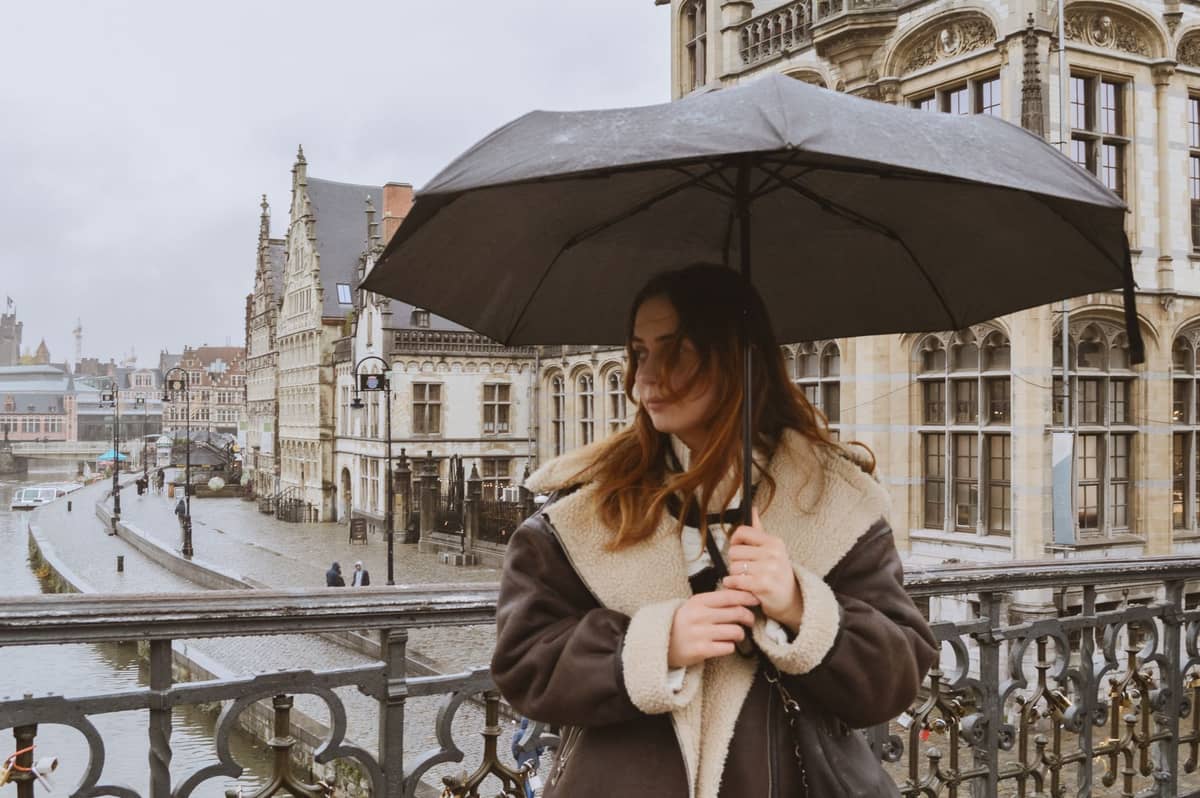
All outdoor street art in Ghent is free to view and accessible at any hour. There are no ticket gates, queues, or opening times to worry about. The main practical variable is weather. Ghent's oceanic climate means rain is possible in any month, and wet cobblestones in the dock area or narrow alleys can make extended walking uncomfortable. Layered clothing and waterproof footwear are worth packing. For a full overview of when conditions are most favorable, the best time to visit Ghent guide covers seasonal trade-offs in detail.
Getting around between street art clusters is easiest by bike. Ghent has a well-developed cycling infrastructure, and bike rentals are available near Gent-Sint-Pieters station. The guide to getting around Ghent covers bike rental options and De Lijn tram routes. Tram line 4 from Gent-Sint-Pieters to Gent Zuid covers the southern cluster; reaching the dock area requires either a bike or a longer walk from the center.
- Pick up the physical Sorry, Not Sorry map at the Visit Gent tourist office near Korenmarkt, or download the PDF from CultuurGent before you arrive.
- Werregarenstraatje is 5 minutes on foot from the Stadhuis. Visit it as part of a broader center walk rather than making a special trip.
- The dock area (Koopvaardijlaan, Houtdok) is 3-4 km from the center. A bike makes the most sense; budget 2-3 hours for this cluster alone.
- For guided tours, book Gentse Gidsen in advance, especially in summer. The small-group Viator tour is easier to book last-minute.
- Photography is unrestricted on public streets. Avoid trespassing onto private property to get closer to dock-area murals.
- The CultuurGent database at cultuur.stad.gent/en/street-art is searchable by neighborhood and allows you to pre-plan a route based on specific artists or styles.
Street art in Ghent sits comfortably alongside the city's established cultural offer. The best museums in Ghent include S.M.A.K. and the Design Museum, both of which engage with contemporary visual culture in ways that complement what you see on the streets. A day that combines the Concrete Canvas route in the morning with an afternoon at S.M.A.K. gives a coherent picture of Ghent's contemporary art ecosystem.
FAQ
Is the street art in Ghent free to see?
Yes. All outdoor murals and graffiti areas, including Werregarenstraatje and the dock neighborhoods, are on public streets and free to visit at any time. The Sorry, Not Sorry self-guided map is also free, available as a download from CultuurGent or as a physical copy from the Visit Gent tourist office. Guided tours are optional and cost extra.
Where is Graffiti Street in Ghent?
Graffiti Street is Werregarenstraatje, a narrow alley connecting Hoogpoort and Onderstraat in the historic center. It is about 100 meters from the Stadhuis (town hall) and the Botermarkt. The easiest way to find it is to navigate to Hoogpoort and look for the narrow entrance between the buildings.
How do I get the Ghent street art map?
The Sorry, Not Sorry street art map is available as a free PDF download from CultuurGent (cultuur.stad.gent/en/street-art). A physical copy can be picked up at no charge from the Visit Gent tourist office near Korenmarkt in the city center.
Are guided street art tours in Ghent worth it?
It depends on what you want. The self-guided map covers the same geography for free. Guided tours add context, including artist histories, the city's policy on tolerance zones, and background on individual pieces. Gentse Gidsen charges from €115 per group for a 2-hour tour, which is good value for a group of 4-6 people but less so for a solo traveler. Wallin' Tours are led by practicing graffiti artists, which gives a different, more inside perspective.
What is the best area in Ghent for street art beyond Graffiti Street?
The dock area around Koopvaardijlaan, Houtdok, and the Oude Dokken contains the largest-scale murals in the city. The outer neighborhoods of Brugse Poort (west) and Ledeberg (south) have significant concentrations of commissioned works from the Sorry, Not Sorry program. Both areas are 20-30 minutes from the historic center by bike or tram.