Portobello and Ranelagh are two adjoining southside Dublin neighborhoods that offer a genuine slice of local life just minutes from the city center. Portobello lines the Grand Canal with Victorian terraces and a rich Jewish heritage, while Ranelagh's red-brick streets and village-style strip make it one of Dublin's most sought-after addresses. Together they form one of the best bases for travelers who want proximity to the action without the noise of the tourist center.
Portobello and Ranelagh sit just south of Dublin's city center, separated from the tourist trail by the Grand Canal and connected to it by a pleasant 15-minute walk. These are neighborhoods where Dubliners actually live: red-brick terraces, strong café culture, independent restaurants, and the kind of slow weekend-morning energy that never quite makes it into the guidebooks.
Orientation
Portobello sits in Dublin 8, on the southern edge of the inner city. Its northern boundary bleeds into the streets around Camden Street and Wexford Street, while the Grand Canal forms a clear southern edge, running from Clanbrassil Street in the west toward Ranelagh in the east. South Richmond Street is the neighborhood's spine, running straight and commercial from the city toward the canal bridges.
Cross the canal at Portobello Bridge and you move into Rathmines territory, though Ranelagh is reached by heading east along the canal or cutting through the residential grid toward Ranelagh Road. Ranelagh itself is loosely triangular: its main drag, Ranelagh Road, runs south from the Luas tram stop at the top of the village toward the suburb of Rathgar. The streets feeding off it, lined with Victorian and Edwardian red-brick townhouses, form the residential core.
Taken together, the two neighborhoods form a continuous southside corridor that connects naturally to St. Stephen's Green and Grafton Street to the north and to the suburb of Rathgar further south. The canal path links Portobello westward toward the Liberties and Smithfield and eastward toward Grand Canal Dock and the Docklands, making the area surprisingly central for walkers and cyclists.
Character & Atmosphere
Portobello works on a slow rhythm. Early mornings on South Richmond Street, the cafés fill up with people who live nearby rather than tourists passing through. The light at that hour comes low over the canal, catching the brick facades and the water in a way that makes the whole stretch feel calm in a distinctly Irish way, grey-green and unhurried. By mid-morning on a weekend, the outdoor tables are full and the canal path is busy with joggers and dog walkers moving along the towpath.
Portobello once carried the nickname 'Little Jerusalem,' a legacy of the largely Lithuanian Jewish community from Eastern Europe that settled here in the late nineteenth and early twentieth centuries, drawn by affordable housing and proximity to the city center. That community has largely dispersed, but the Irish Jewish Museum on Walworth Road preserves the connection. The neighborhood's character today is layered: bohemian in the loosest sense, with a mix of long-term residents, young professionals, artists, and a growing number of families who have traded the suburbs for the canal-side terraces.
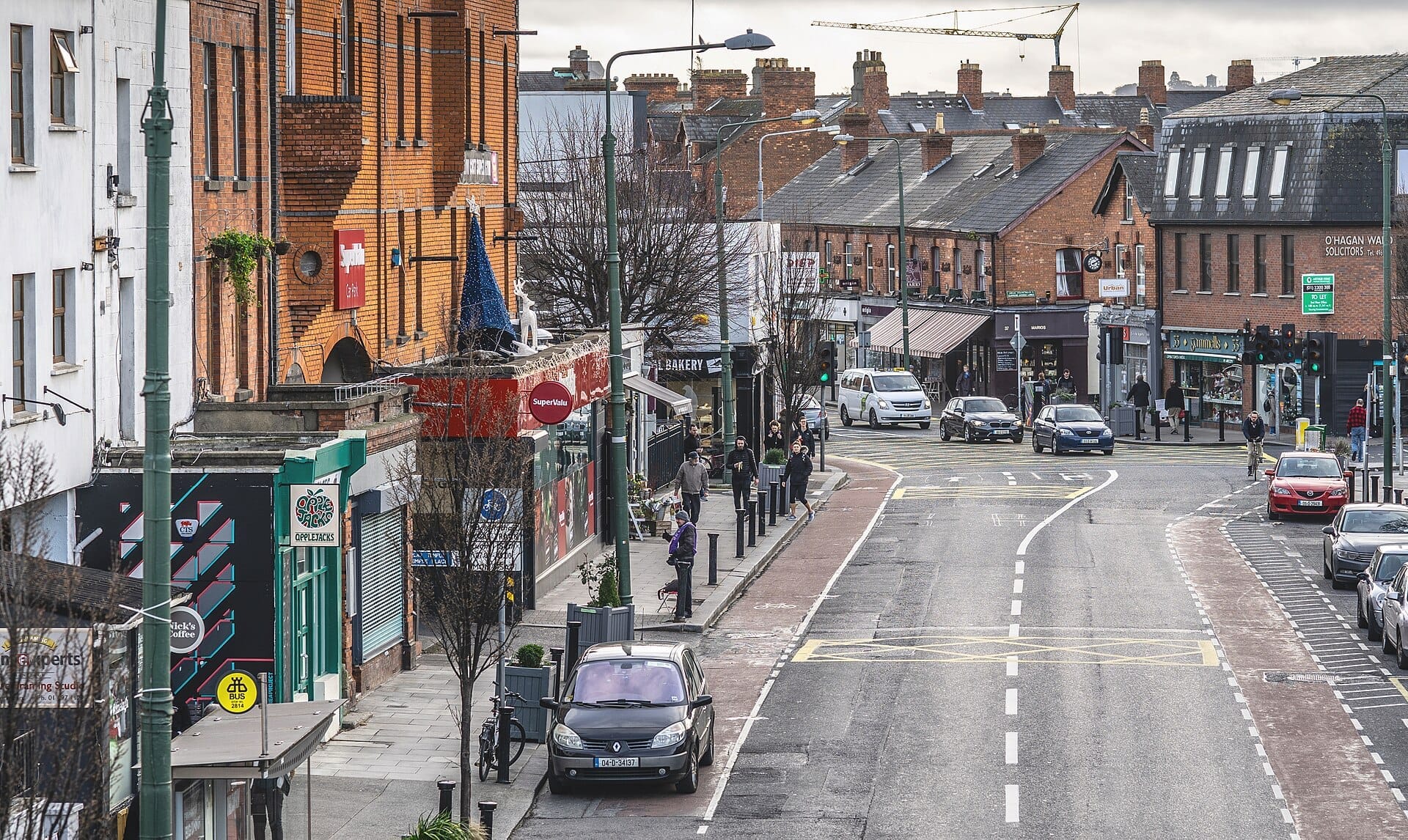
Ranelagh has a slightly different register. The village strip along Ranelagh Road has a confident, well-established feel, with bookshops, coffee bars, and restaurant facades that have clearly been polished over many years rather than assembled last season. The side streets are quiet enough that you can hear the sound of your own footsteps. It is a neighborhood that attracts families, professionals, and anyone who wants good food and amenities without having to compete for space with coach tours.
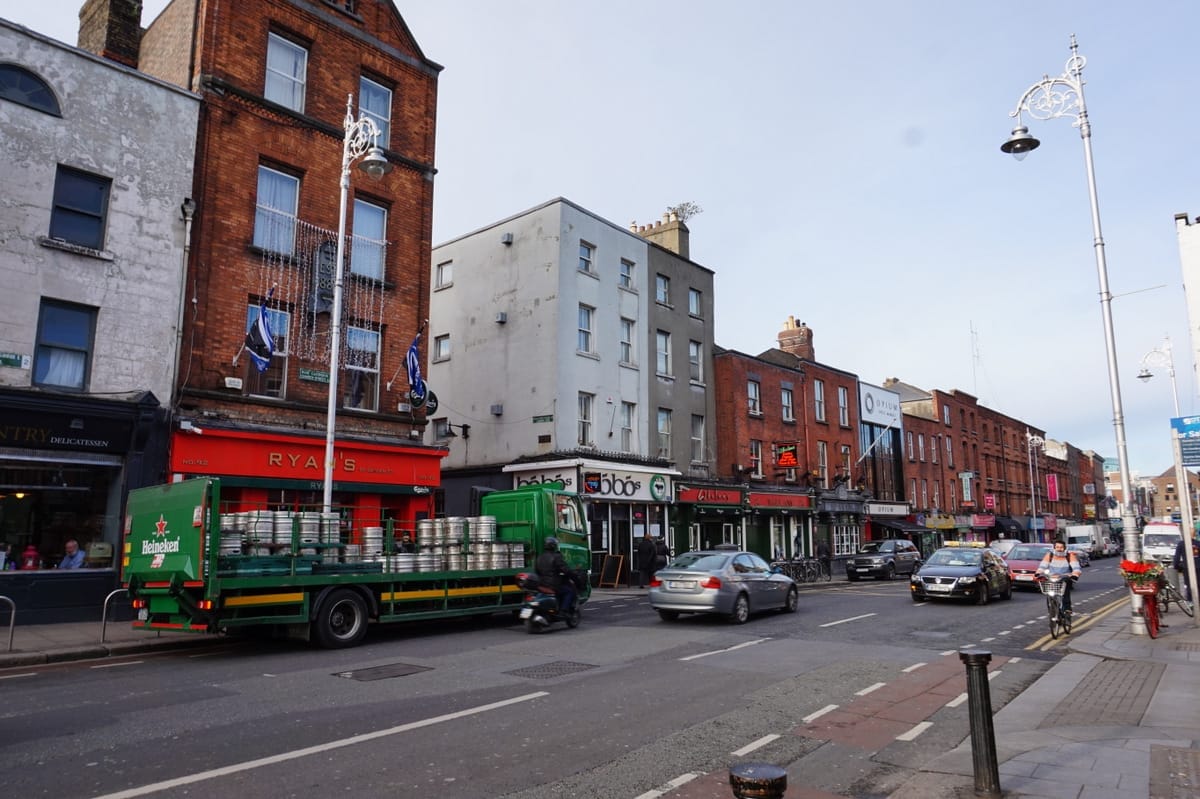
After dark, both neighborhoods shift gears but don't transform entirely. Portobello's bar scene on South Richmond Street and the surrounding streets gets louder on Thursday through Saturday nights, with younger crowds spilling between venues. It is lively but manageable, nothing like the concentrated noise of Temple Bar. Ranelagh at night is quieter, oriented toward dinner rather than nightlife, with restaurants filling tables well into the evening and the streets staying relatively calm.
ℹ️ Good to know
Portobello and Ranelagh are genuine residential neighborhoods. You will not find souvenir shops or hop-on-hop-off bus stops here. That is precisely the point for many visitors who want to experience how Dublin actually functions day to day.
What to See & Do
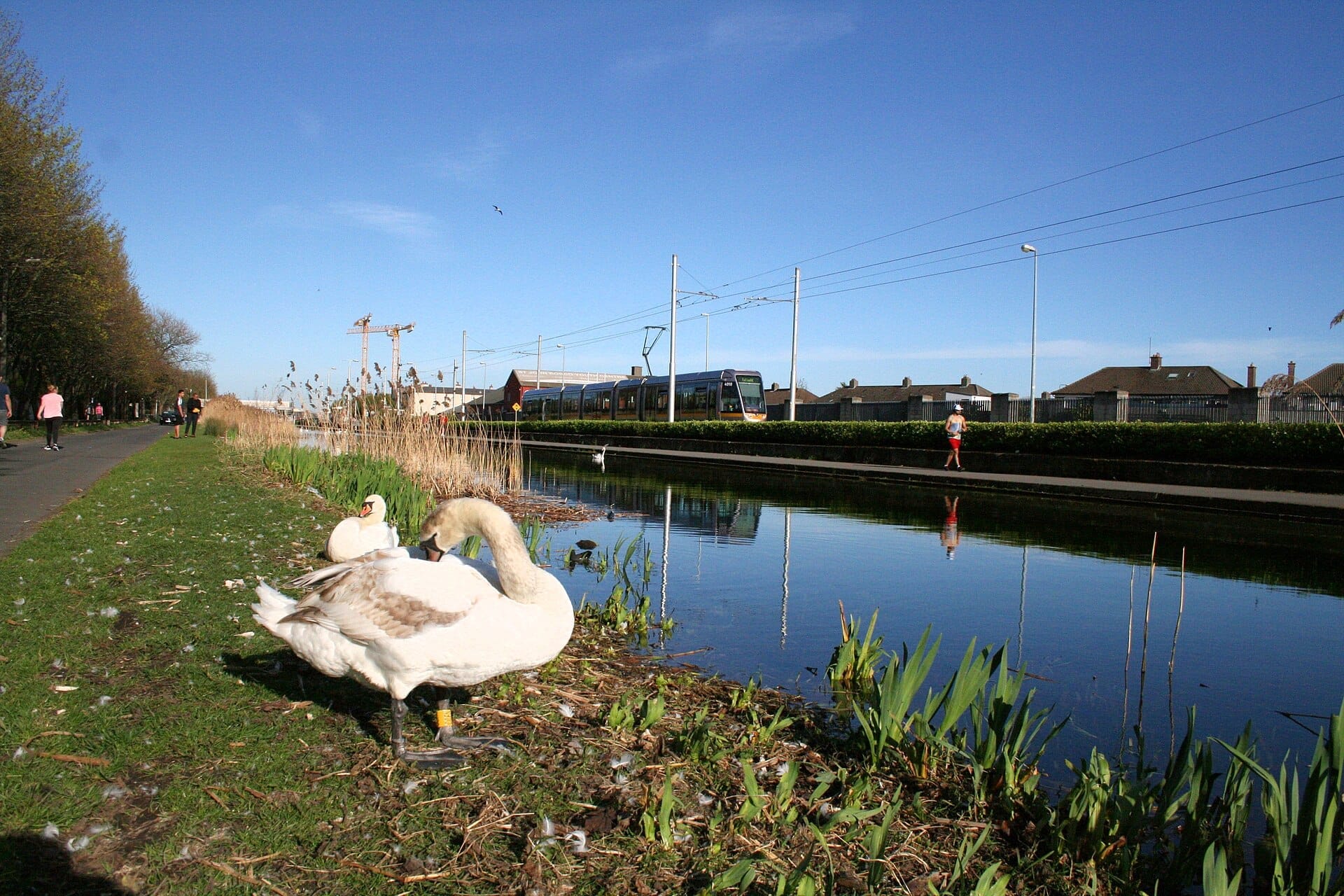
The Grand Canal towpath is the defining outdoor experience in this part of Dublin. Walking east from Portobello Bridge along the canal toward Grand Canal Dock covers some of the most photogenic stretches of inner-city Dublin, with Georgian and Victorian canal-side architecture reflected in the still water. The path is flat, well-maintained, and accessible to cyclists as well as walkers.
The Irish Jewish Museum, housed in a former synagogue at 3 Walworth Road in Portobello, is a small but carefully curated institution. Its collection documents the Jewish community that shaped this neighborhood for over a century, including domestic artifacts, photographs, and records of community life. It is the kind of place that larger museums cannot replicate: specific, personal, and rooted in a very particular place.
George Bernard Shaw was born at 33 Synge Street, a short walk from South Richmond Street. The house is maintained as a museum and offers a detailed portrait of Victorian Dublin domestic life as much as a literary biography. Shaw lived here for the first decade of his life before his family moved, and the house has been restored to reflect the period.
From Portobello, it is a straightforward walk north to reach Camden Street, one of Dublin's most interesting commercial strips, with independent shops, music venues, and a strong street-food scene. The walk takes around ten minutes and covers the transition between the calmer residential zone and the more active city edge.
Walk the Grand Canal towpath between Portobello Bridge and Grand Canal Dock
Visit the Irish Jewish Museum on Walworth Road
Explore the Shaw Birthplace Museum on Synge Street
Browse the independent bookshops along Ranelagh Road
Walk north to Camden Street for street food and music venues
Cycle the canal path westward toward the Royal Canal or eastward to the Docklands
💡 Local tip
The canal path between Portobello and Grand Canal Dock is one of the best walks in central Dublin for understanding the city's scale. Allow 45 minutes at a relaxed pace and you will arrive at the Samuel Beckett Bridge and the Grand Canal Dock basin, where the architecture shifts dramatically toward the contemporary.
Eating & Drinking
The food scene across Portobello and Ranelagh is one of the strongest in Dublin outside the city center, and arguably more consistent than much of what you find in more tourist-facing areas. Both neighborhoods have developed serious café cultures, and the restaurant strips reward exploration rather than advance booking at a single headline name.
South Richmond Street in Portobello is anchored by a cluster of cafés and casual restaurants that draw early-morning crowds for specialty coffee and all-day brunch menus. The proximity to the canal means many venues have attempted to lean into outdoor seating in a way that would not have been possible in older versions of Dublin planning. Expect Italian-influenced coffee culture alongside Irish breakfast menus and a growing number of independently owned spots focused on seasonal produce.
Ranelagh Road and its immediate surroundings offer a broader range: casual Italian, modern Irish, Japanese, and Middle Eastern restaurants sit alongside wine bars and traditional pubs. Price points here lean toward mid-range and above, reflecting the neighborhood's demographic. This is not where you come for the cheapest meal in Dublin, but the quality-to-price ratio is generally more reliable than the tourist-facing restaurants around Grafton Street.
For context on the wider Dublin food scene and what to prioritize, the what to eat in Dublin guide covers Irish specialties and neighborhood food culture across the city. For budget-conscious travelers, it is worth noting that Portobello's daytime café scene offers better value than the dinner restaurants, with strong brunch options at accessible prices.
Traditional pubs in both neighborhoods tend toward the locals-first variety: not themed for tourists, not stocked with tourist merchandise, and genuinely indifferent to whether you are from the area or not. That is a compliment. The pub culture here is relaxed and conversational, more suited to a long afternoon pint than a crawl through seven venues.
💡 Local tip
Weekend brunch in Portobello can draw queues at the most popular spots by 10am. Arriving before 9:30am or after 1pm avoids the worst waits. On weekdays, the same cafés are noticeably quieter and often better staffed.
Getting There & Around
Both neighborhoods are well connected by the Luas Green Line. The Charlemont and Harcourt stops serve the northern edge of Portobello, within a ten-minute walk of South Richmond Street. Ranelagh has its own dedicated Luas stop on Ranelagh Road, right at the heart of the village. The Green Line connects directly to St. Stephen's Green in the city center, making the tram the simplest option for getting between these neighborhoods and central Dublin.
Multiple Dublin Bus routes serve both areas, running along South Richmond Street, Rathmines Road, and Ranelagh Road. The bus network here is frequent during the day and connects to the wider city bus system. The Leap Card, Dublin's reusable travel card, works across bus and Luas services and offers significantly cheaper fares than cash payments.
Walking from the city center is entirely practical. From St. Stephen's Green, Portobello is a 15-minute walk south through Camden Street and then along South Richmond Street. Ranelagh from the same starting point takes 20 to 25 minutes. Cyclists will find the route along the canal towpath between Portobello and the city center particularly direct and away from main road traffic.
For a full overview of transport options across Dublin, including the Luas, DART, and Dublin Bus networks, the getting around Dublin guide covers everything you need to know before arriving.
ℹ️ Good to know
Portobello and Ranelagh are flat by Dublin standards, making cycling a genuinely comfortable option. Dublinbikes docking stations operate in the surrounding streets, and the network extends into the city center for one-way journeys.
Where to Stay
Dedicated hotel accommodation in Portobello and Ranelagh is limited. These are primarily residential neighborhoods, and the accommodation options are skewed toward guesthouses, self-catering apartments, and short-term rental properties rather than large hotel blocks. That suits certain travelers very well: staying here means a more authentic neighborhood experience, with grocery shops, independent cafés, and local parks rather than hotel lobbies and concierge desks.
The best-placed accommodation in Portobello sits close to South Richmond Street or within a short walk of the canal, where the neighborhood's character is strongest. In Ranelagh, properties off the main road and into the Victorian terraces offer quiet sleep with easy access to the tram and the village strip. Both neighborhoods are genuinely walkable to the city center, which means that slightly longer check-in journeys on arrival are offset by lower travel costs throughout the rest of the stay.
Travelers weighing up options across the city should consult the where to stay in Dublin guide for a full comparison of neighborhoods and accommodation types. Those who want to stay closer to major attractions such as Trinity College Dublin or the national museums will find the city center a shorter commute, but at the cost of neighborhood character and, often, price.
Honest Assessment: Who This Neighborhood Is For
Portobello and Ranelagh are not for every visitor. If your priority is walking distance to the Book of Kells, the Guinness Storehouse, and Temple Bar, staying here adds 15 to 25 minutes of transit or walking each way. That is a real consideration over a short trip.
For travelers who want to understand Dublin beyond its tourist infrastructure, these neighborhoods are among the most rewarding options in the city. The food is better than average, the streets are quieter at night, and the canal provides a genuinely pleasant outdoor corridor that makes the daily rhythm of the stay feel more comfortable. First-time visitors on a two-night trip may find it peripheral; repeat visitors or anyone staying four or more nights will likely find it one of the best decisions they make.
For inspiration on how to structure time across the city from this base, the 3 days in Dublin itinerary and the things to do in Dublin guide both offer practical frameworks that work well from a southside base like Portobello or Ranelagh.
TL;DR
Portobello and Ranelagh are adjoining southside neighborhoods that offer residential Dublin character, strong café and restaurant scenes, and easy Luas access to the city center.
Portobello is defined by the Grand Canal, Victorian terraces, and a layered history including its Jewish heritage and the Shaw Birthplace Museum; Ranelagh is quieter and more polished, centered on its red-brick village strip.
Both neighborhoods are safe, well-connected, and 15 to 25 minutes from major city-center attractions on foot or by tram.
Accommodation is mostly guesthouses and self-catering rather than hotels, which suits independent travelers and those staying for more than a few nights.
Best suited to repeat Dublin visitors, food-focused travelers, and anyone who wants a base that feels like a real Dublin neighborhood rather than an extension of the tourist district.
Three days is the sweet spot for Dublin. Long enough to cover the iconic historic sites, dig into the food and pub culture, and fit in a coastal or countryside excursion. This itinerary is built around real logistics, honest crowd warnings, and the kind of sequencing that makes a short trip feel unhurried.
Dublin punches well above its weight as a museum city. Several of its finest institutions are completely free, and the range spans Celtic gold, Viking archaeology, Irish revolutionary history, world literature, and contemporary art. This guide covers the best museums in Dublin, grouped by theme, with practical advice on when to go and what to expect.
Dublin rewards visitors year-round, but the timing of your trip shapes everything from hotel prices to what you can actually do outdoors. This guide breaks down every month, season, and key trade-off so you can plan with confidence.
Dublin sits at the centre of an exceptional day trip network. Within two hours you can reach glacial mountain valleys, medieval castles, dramatic coastal headlands, and one of Europe's great prehistoric monuments. This guide covers the best escapes, how to get there, and what to expect.
Dublin Bay is a UNESCO Biosphere Reserve with more beaches than most visitors expect. This guide covers the best strands, swimming spots, and coastal walks within easy reach of the city, from the vast sands of Dollymount to the dramatic cliffs of Howth and the sheltered coves of Dún Laoghaire.
Bloomsday is Dublin's most distinctive literary celebration, held every 16 June to honour the date James Joyce set Ulysses. This guide covers the key locations, walking routes, festival events, food traditions, and everything you need to join the festivities — whether you've read the book or not.
Dublin rewards couples who look beyond the obvious. This guide covers scenic walks, intimate cultural experiences, evening entertainment, and coastal day trips — with honest advice on what's worth it and what to skip.
Attending a Gaelic Games match at Croke Park is one of the most authentic experiences Dublin offers. This guide covers everything from buying tickets and navigating the stadium to understanding the sport, the season, and what separates a regular league game from an All-Ireland final.
Dublin rewards the curious traveller who ventures beyond the Guinness Storehouse and Temple Bar. From a mummified Crusader beneath a Northside church to a Victorian reservoir turned secret garden, these are the places Dubliners love and visitors rarely find.
Dublin transforms in winter, with Christmas markets running from late November through early January, citywide light trails, cathedral concerts, and festive fairgrounds. This guide covers every major event, what things actually cost, and what to watch out for before you visit.
Dublin is one of the few cities in the world to have produced three Nobel Prize-winning writers of literature. This guide maps the key sites connected to George Bernard Shaw, W.B. Yeats, and Samuel Beckett, plus James Joyce, Oscar Wilde, and others, covers the best guided tours with practical pricing, and gives you the detail to do it properly.
Dublin has around 772 pubs, dozens of late-night bars, and several distinct club districts. This guide breaks down where to drink, when to go, what it costs, and which neighbourhoods to skip if you want to avoid tourist pricing.
Dublin has a reputation for being expensive, but that reputation is only half true. The city's best museums are free, the centre is walkable, public transport is cheap with the right pass, and the finest pub sessions cost nothing beyond the price of a pint. This guide breaks down every major cost category so you can plan a genuinely great trip without watching every euro.
Seven days is enough to see Dublin's best and reach the wild west coast of Ireland, but only if you plan smart. This itinerary balances city time with coastal scenery, covers realistic driving and transit times, and flags the planning mistakes that turn a great trip into an exhausting one.
Dublin, Ireland offers a surprisingly varied shopping scene, from the flagship stores lining Grafton Street to independent boutiques on South William Street, weekend food markets in Temple Bar, and Ireland's largest mall in Dundrum. This guide covers where to go, what to expect, and how to avoid wasting time.
Dublin rewards walkers like few cities in Europe. Compact enough to cover on foot, layered enough to take weeks to unpack, the city reveals itself best at street level. This guide covers the stops, routes, and landmarks that make Dublin's walking tours so compelling.
Dublin punches well above its weight as a family destination. Between a world-class zoo, free city parks, Viking history museums, coastal castles, and indoor waterparks, there is genuinely enough to fill a week without repeating yourself. This guide covers the best things to do in Dublin with kids, organised by type, age range, and weather — so you can plan around Irish reality rather than tourist brochure optimism.
Dublin punches well above its weight for free attractions. National museums, modern art galleries, coastal walks, and grand public parks all cost nothing to enter. This guide covers 22 of the best free things to do across the city, organised by type so you can plan your days without watching your budget.
Dublin's Georgian streets and squares represent one of Europe's most intact examples of 18th-century urban planning. This guide covers the key buildings, the best self-guided walking route, what's actually open to visitors, and how to avoid the common traps that waste your time.
Dublin's public transport network covers the city and coast through buses, DART rail, Luas trams, and airport coaches. This guide breaks down fares, Leap Card options, airport transfer routes, and the practical details that save you time and money when navigating Ireland's capital.
Dublin sits at the doorstep of some of Ireland's finest walking country. Whether you want cliff-top sea views, ancient monastic valleys, or proper mountain terrain, these are the best hikes and trails within easy reach of the city.
Dublin's St Patrick's Festival is a multi-day national celebration centred on 17 March, with a free city-centre parade, ticketed concerts, street theatre, and events across the city. This guide covers the full programme, booking essentials, crowd logistics, and what to realistically expect from Ireland's biggest annual celebration.
Dublin packs centuries of history, world-class museums, legendary pubs, and coastal scenery into a compact, walkable city. This guide covers the best things to do in Dublin across every interest and budget, with honest advice on what's worth your time and what to skip.
Dublin's food scene has transformed well beyond stew and soda bread. This guide covers the essential Irish dishes, where to find them, what to pay, and which areas give you the best value — including a frank look at where not to waste your money.
Choosing where to stay in Dublin, Ireland shapes your entire trip. This guide breaks down every major neighbourhood by location, vibe, price range, and transport links, so you can book with confidence rather than guesswork.