Palm Jumeirah
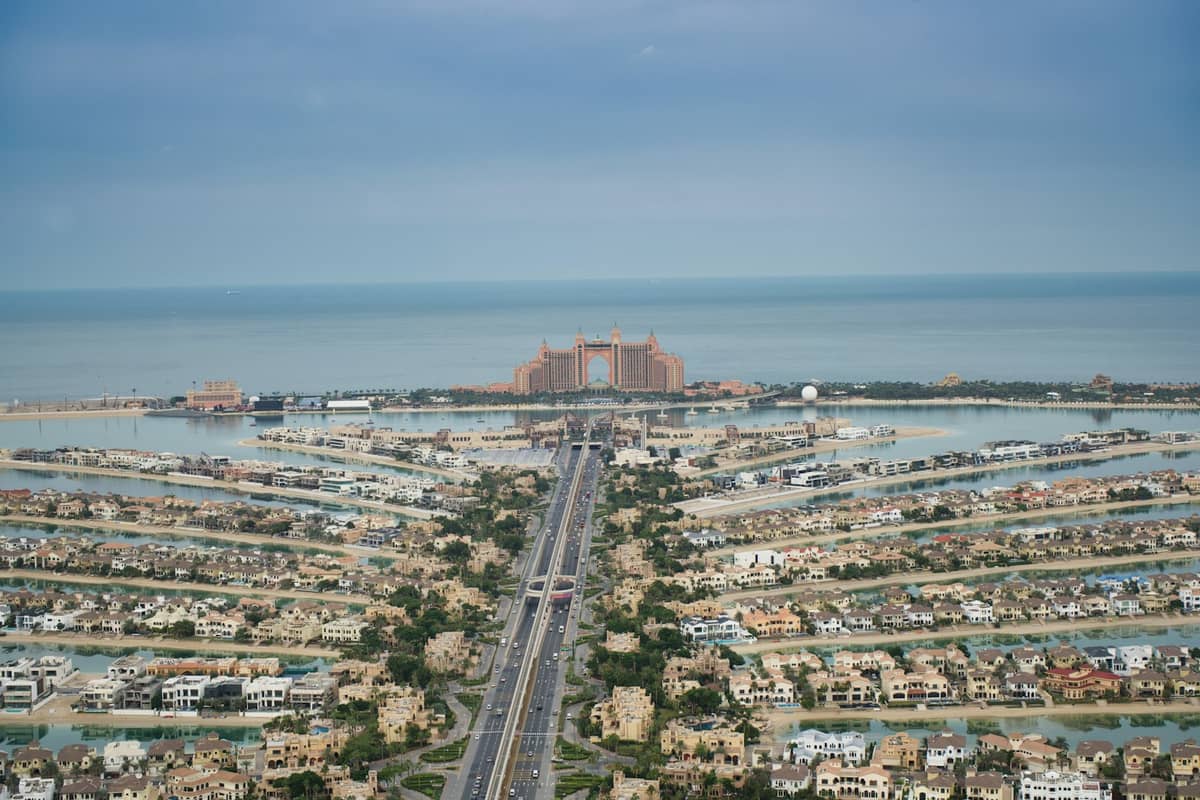
Palm Jumeirah is Dubai's most recognizable man-made island, shaped like a palm tree and stretching into the Arabian Gulf. Home to landmark resorts, private beaches, and some of the city's most dramatic skyline views, it offers a concentrated dose of Dubai's ambition in one self-contained address.
Located in Dubai
Overview
Palm Jumeirah is where Dubai's engineering ambition became a postcard. Built on reclaimed land in the shape of a stylized palm tree, this man-made island in the United Arab Emirates packs luxury hotels, beach clubs, waterfront dining, and major attractions onto a single address that is unlike anything else in the city. It is not the real Dubai, but it is absolutely a Dubai experience worth understanding before you decide whether to stay, visit, or simply admire it from the mainland.
Orientation: How Palm Jumeirah Fits Into Dubai
Palm Jumeirah sits off the coast of western Dubai, positioned between Jumeirah to the east and Dubai Marina to the west. The island extends roughly 5 kilometers into the Arabian Gulf and is organized into three distinct zones: the trunk, the fronds, and the crescent. The trunk is the main connecting road from the mainland, lined with retail and residential towers. The 16 fronds branch off the trunk and are primarily residential, home to private villas. The crescent is a curved outer barrier island that wraps around the entire structure.
The crescent is where the most famous hotels sit, including Atlantis. It connects to the rest of the island via road links, which means that driving from the trunk to the crescent is not a short trip on foot. This layout matters for visitors because it affects journey times: getting from the Gateway entrance on the trunk to Atlantis on the crescent is not a short trip on foot, and the distances inside the island are longer than they appear on a map.
The Palm sits roughly 30 to 35 kilometers from Deira and Old Dubai in the northeast, and about 15 kilometers from Downtown Dubai. Visitors using it as a base should factor in the time it takes to reach other parts of the city, particularly during rush hour when Sheikh Zayed Road and the surrounding arterials slow considerably.
ℹ️ Good to know
Palm Jumeirah uses UAE dirhams (AED). English is widely spoken throughout the island's hotels, restaurants, and attractions. The island operates on Gulf Standard Time (UTC+4) with no daylight saving adjustments.
Character and Atmosphere: What It Actually Feels Like
Palm Jumeirah is not a neighborhood in any organic sense. It was designed as a real estate project and built to a master plan, which means it lacks the street-level spontaneity you find in Deira or the creative energy of Alserkal Avenue. What it has instead is a particular kind of polished calm, the atmosphere of a self-contained resort destination that happens to be inside a city.
In the mornings, the trunk road carries residents heading to work, delivery trucks servicing the hotels, and joggers doing laps along the waterfront promenade near Al Ittihad Park. The light at this hour is genuinely beautiful: low and golden, bouncing off the Gulf on both sides of the fronds. Hotel pools and beach clubs are quiet. Coffee spots in Nakheel Mall fill up with a mix of expat residents and early-rising tourists.
By midday in the cooler months (November through March), the beach clubs are at capacity and the outdoor spaces around Palm West Beach are active with swimmers, volleyball players, and people photographing the view of the Dubai Marina skyline. In summer, the same spaces are largely deserted during daylight hours. Temperatures regularly exceed 40 degrees Celsius between June and September, and the humidity off the water makes outdoor activity genuinely uncomfortable before late evening.
After dark, the crescent comes alive. The stretch around Atlantis is brightly lit, loud, and deliberately theatrical. The Pointe, a waterfront dining and retail destination on the southern tip of the crescent, offers a more relaxed evening atmosphere with direct views across to the Atlantis hotel. Families, couples, and groups all share the space comfortably. The island is heavily monitored by security cameras, especially around resort areas, and feels safe at any hour.
What to See and Do
The most visited attraction on the island is Aquaventure Waterpark at Atlantis, The Palm. It is a large-scale waterpark with slides, a lazy river, and a private beach. Expect long queues on weekends and during school holidays. The adjacent The Lost Chambers Aquarium is a quieter alternative set within the Atlantis hotel, built around a Atlantean mythology theme and housing thousands of marine animals in a series of ambassador suites and exhibit halls.
For views, The View at the Palm is the clearest reason to ascend. Located on the 52nd floor of the Palm Tower on the trunk, it provides a 360-degree perspective that shows exactly how the frond structure was designed from above. On a clear winter morning, you can see from Downtown Dubai's skyline all the way to the Dubai Marina towers. This is one of the more underrated observation decks in the city.
Along the western side of the crescent, Palm West Beach is a public beach and waterfront strip with dining outlets, beach bars, and unobstructed views of Ain Dubai, the world's largest observation wheel on nearby Bluewaters Island. At sunset the view along this stretch is genuinely striking: the giant wheel lights up and the Marina skyline turns orange and pink behind it.
Atlantis itself offers the Atlantis, The Palm resort experience. Even if you are not staying there, the hotel lobby, restaurants, and waterpark are accessible to day visitors. The Pointe, on the crescent's southern tip, is a waterfront promenade with restaurants facing directly toward the Atlantis hotel across a narrow channel, making it one of the more scenic dinner locations on the island.
- The View at the Palm (52nd floor observation deck, Palm Tower)
- Aquaventure Waterpark at Atlantis
- The Lost Chambers Aquarium
- Palm West Beach and sunset promenade
- Al Ittihad Park, for walking and cycling along the spine
- The Pointe waterfront dining and leisure strip
- Nakheel Mall, the main retail hub on the trunk
Eating and Drinking
Dining on Palm Jumeirah skews expensive, and that is not going to change based on where you sit. The island was built for a premium market and the restaurant offering reflects that. What has improved noticeably in recent years is the range: there are now enough options across different price points and cuisines that a visitor can eat well without spending resort prices at every meal.
The crescent has the highest concentration of high-end dining, mostly inside the major hotels. Japanese, Mediterranean, and steakhouse formats dominate. These restaurants are often booked well in advance on weekends. Service levels are generally high and the waterfront settings justify some of the premium. Dress codes at the more formal venues typically require smart casual attire.
Nakheel Mall on the trunk offers a more accessible food court and casual dining floor, where you can find international fast food chains alongside regional options at everyday prices. The Golden Mile Galleria, a smaller retail and dining strip along the frond access road, has a few neighbourhood-style cafes that cater primarily to residents rather than tourists. These spots are noticeably quieter and cheaper than anything near the crescent.
Palm West Beach has a good run of beach restaurants and bars at medium-to-high price points. Al fresco dining here works well from October through April. The Pointe similarly has a waterfront row of restaurants, a mix of cuisines with Atlantis Hotel directly across the water as the backdrop. Brunches at several of the island's hotels on Fridays are a popular local ritual and worth booking ahead if that style of extended dining appeals.
💡 Local tip
Alcohol is available at licensed hotel restaurants and beach clubs across Palm Jumeirah. Public areas and non-licensed venues do not serve alcohol. If you are planning an evening around drinks, stick to confirmed licensed venues and check in advance, particularly during Ramadan when service may be restricted.
Getting There and Around
The Palm Monorail is the most straightforward way to move along the main spine. It runs from Gateway Station at the Palm entrance on the trunk through Al Ittihad Park and Nakheel Mall stations before terminating at Atlantis Aquaventure on the crescent. Journey time from Gateway to Atlantis is around 5 to 7 minutes. The monorail runs frequently, is air-conditioned, and gives an elevated view across the island.
The nearest Dubai Metro stations are Sobha Realty and Al Khail on the Red Line. From either station, you can take a taxi or tram connection to the Palm Gateway entrance. The Dubai Tram, which runs along Al Sufouh Road parallel to the coast, has a stop at Palm Jumeirah Tram Station that connects directly to the monorail. Bus routes 8 and N55 serve the area near the Royal Mirage Hotel close to the monorail approach, though bus journey times from central Dubai will be considerably longer than the metro-plus-monorail combination.
Taxis and ride-hailing apps (Careem and Uber both operate throughout Dubai) are readily available and are the most flexible option for reaching specific addresses on the fronds or crescent. Fares from Dubai Marina to the Palm Gateway run approximately 15 to 25 AED. Fares from the crescent to Downtown Dubai in light traffic are typically 60 to 90 AED, though peak-hour pricing and demand surcharges can push this higher. Verify current fare estimates through the apps before travel, as pricing can change.
Driving on the island is generally straightforward, though the crescent can get congested near Atlantis during peak visitor times and on weekend evenings. Parking is available at Nakheel Mall, The Pointe, and within hotel compounds. The fronds are residential and navigation can feel repetitive without a clear destination. For most visitors arriving without a rental car, the tram-monorail combination is the most efficient approach.
💡 Local tip
If you are arriving from Dubai International Airport (DXB), take the Metro Red Line to Sobha Realty station, then either the Dubai Tram or a short taxi to Palm Gateway. Total journey is typically 45 to 60 minutes depending on connections. The tram-to-monorail route avoids road traffic entirely.
Where to Stay
Accommodation on Palm Jumeirah is almost entirely in the luxury and upper-midscale categories. The island has no backpacker hostels, no budget hotels, and very few mid-range options in the traditional sense. What you are choosing between is which kind of premium experience fits your priorities.
The crescent is where the biggest resort names concentrate. Atlantis, The Palm is the most recognizable, with direct access to Aquaventure and The Lost Chambers. It suits families and those who want maximum on-site activities. Other five-star resorts along the crescent offer private beach access and the kind of insular resort experience where you might not leave the property for days. If waterfront seclusion and a full-service resort is the goal, the crescent is where to look. For a broader overview of where to stay across the city, see the ., with direct access to Aquaventure and The Lost Chambers. It suits families and those who want maximum on-site activities. Other five-star resorts along the crescent offer private beach access and the kind of insular resort experience where you might not leave the property for days. If waterfront seclusion and a full-service resort is the goal, the crescent is where to look. For a broader overview of where to stay across the city, see the Dubai neighborhood accommodation guide.
The trunk offers a different proposition. The Palm Tower includes a hotel (with the observation deck above it) and is better connected to the mainland via the monorail. Staying on the trunk makes day trips to Dubai Marina, JBR, and further afield easier and faster. Apartment-style hotels and serviced residences are more common here, catering to longer-stay visitors and business travelers.
Families will find Palm Jumeirah well suited to their needs, with safe beach access, the waterpark, and the aquarium all within reach. Couples on a Dubai honeymoon often choose the crescent resorts specifically for the sense of seclusion and the dramatic arrival experience. Solo travelers and those focused on exploring the wider city may find the distance from central Dubai adds friction to daily plans.
⚠️ What to skip
Staying on the crescent means you are relying on hotel transport, taxis, or the tunnel to reach the trunk and monorail. If you plan to explore other neighborhoods daily, factor this into your time. The island distances are real and can add 20 to 30 minutes to any journey that a map suggests should be short.
Honest Drawbacks: Who Palm Jumeirah Is Not For
Palm Jumeirah rewards visitors who either stay on the island or have a specific attraction to visit. As a browsing or wandering destination it falls flat. The residential fronds have nothing to explore on foot. The trunk road is wide, trafficked, and not pedestrian-friendly in the way that a town center or market street would be. If you are looking for street life, unexpected encounters, or local authenticity, the Palm offers none of those things.
Budget travelers will find the island expensive across every category: food, drink, transport within the island, and accommodation. If managing costs is a priority, the Dubai on a budget guide will point you toward neighborhoods and experiences that offer better value. Similarly, visitors primarily interested in history, culture, and the older layers of Dubai will find the Palm has nothing to say on those subjects. For that, Al Fahidi and the Creek districts are where to spend the time.
Summer visits require honest expectations. From June through September, outdoor activity before 7pm is uncomfortable and in some cases inadvisable. The waterpark and aquarium are fully air-conditioned, as are the malls and hotel interiors, but the open beach areas and promenades that make the Palm appealing in winter are largely unusable in peak heat. The best months to visit are November through March, when daytime temperatures sit between 24 and 31 degrees Celsius and evenings outdoors are genuinely pleasant.
Quick Verdict
TL;DR
- Palm Jumeirah is Dubai's most concentrated luxury destination: a self-contained island with major hotels, private beaches, and flagship attractions including Aquaventure Waterpark, The Lost Chambers Aquarium, and The View at the Palm.
- Best visited between November and March, when outdoor spaces and beach clubs are fully usable. Summer heat makes most outdoor activity impractical during daylight hours.
- Getting there is easiest via the Dubai Tram to Palm Gateway, then the Palm Monorail. Taxis and ride-hailing apps work well for specific destinations on the fronds and crescent.
- Not the right base for travelers focused on budget travel, cultural exploration, or easy access to Old Dubai. The island's distances add real time to any journey.
- Ideal for families using Aquaventure, couples seeking a resort-style stay, and anyone who wants to experience Dubai's architectural ambition from the inside.
Related Travel Guides
Related Travel Guides Palm Jumeirah are coming soon.