Best Time to Visit Dubai: A Month-by-Month Guide
Dubai's climate shapes every aspect of your trip, from hotel prices to what activities are actually enjoyable. This guide breaks down every month of the year, what to expect from the weather, which events matter, and when to avoid the crowds and heat.
TL;DR
- November to March is the best time to visit Dubai: daytime highs of 24–31°C, low humidity, and walkable outdoor conditions.
- December and January are peak season: expect higher hotel prices and larger crowds, but the weather is genuinely excellent.
- Summer (June–September) is brutal outdoors, with daytime highs above 40°C, but Dubai's world-class indoor attractions like Ski Dubai and Dubai Mall keep the city functional year-round.
- November is the single strongest all-round month: ideal temperatures, lower prices than December, and major events like Dubai Design Week.
- Dubai runs on Gulf Standard Time (GST, UTC+4) with no daylight saving adjustments, so flight and event times never shift.
Dubai's Climate at a Glance
Dubai sits at roughly 25°N latitude on the Persian Gulf coast, giving it a hot desert climate (Köppen BWh) with two very distinct phases: a mild, pleasant winter and a punishing summer. There is almost no transitional spring or autumn in the European sense. Temperatures move fairly quickly from comfortable to extreme. Rainfall is scarce year-round, concentrated mostly in February and December, with April through September recording close to zero precipitation. Annual totals rarely exceed 100mm.
- Coolest month January, with average temperatures around 19°C and overnight lows dropping to 14–16°C.
- Hottest month August, with average highs of 43–44°C and oppressive humidity from the Gulf.
- Wettest months February and December, though 'wet' is relative: even in peak rain months, totals are low.
- Driest months April through September, when rainfall is effectively zero.
- Dubai time zone Gulf Standard Time (GST), UTC+4, with no daylight saving time observed year-round.
ℹ️ Good to know
Dubai time does not change with daylight saving. When Europe or North America shifts clocks in spring and autumn, Dubai stays fixed at UTC+4. This matters for booking flights, scheduling calls, and checking event start times — always verify using the current offset, not a seasonal assumption.
Month-by-Month Breakdown: What to Expect
January and February are the coolest, most comfortable months. Average daytime temperatures hover around 23–25°C, evenings can drop to 14–16°C, and the air is dry. These are excellent months for outdoor activities: desert safaris, beach walks, and exploring Old Dubai on foot. February occasionally brings light rain, which is more of a novelty than a disruption. The main downside is price: hotels and flights cost significantly more than during shoulder months because this is genuine peak season.
March and April see temperatures rising steadily, reaching highs of 27–32°C by April. It is still pleasant early in March, particularly for outdoor adventures and beach days. By late April, the heat starts to feel more insistent, humidity ticks up, and midday sun becomes uncomfortable. These months sit in a sweet spot of lower hotel prices and acceptable weather, making them a reasonable choice for budget-conscious travelers who can handle some heat.
May and June are transition months where the city shifts into full summer mode. Highs climb past 38°C in May and regularly hit 40°C in June. Outdoor sightseeing becomes genuinely uncomfortable between roughly 10am and 6pm. The upside is that this is Dubai's discount season: hotels cut rates substantially, and flights are cheaper. If your trip is built around indoor experiences, shopping, and evening outings, May and June are viable.
July, August, and September are the hardest months. Average highs sit above 40°C, the Gulf adds significant humidity, and stepping outside feels like entering a fan oven. Most long-term residents and wealthier expats leave for the summer. Tourism drops, which means lower prices, shorter queues at indoor attractions, and a city that is noticeably less crowded. August is statistically the hottest month on record, with highs reaching 43–44°C. Swimming is still possible — the sea water itself gets warm enough to feel like a bath — but beach activity is essentially a morning-only affair.
October is underrated. By mid-October, daytime highs start dropping from their summer peak toward the low-to-mid 30s°C, and evenings become tolerable. Prices are still in shoulder-season territory, having not yet spiked for the winter rush. It is one of the best months to visit for value. Early October still feels very hot; later in the month is noticeably better. The Global Village outdoor attraction typically opens in October, and the city begins preparing for the main event season.
November is the strongest single month for visiting Dubai. Temperatures fall into the ideal 25–30°C range, humidity is low, and the city calendar fills with events including Dubai Design Week and the Abu Dhabi Grand Prix (a short drive away). Hotel prices are starting to rise but have not yet hit the December peak. For those visiting Miracle Garden or wanting full access to outdoor attractions alongside indoor highlights, November delivers the best balance.
December is high season. The Dubai Shopping Festival typically begins in late December, the city fills with international visitors for the holidays, and New Year's Eve around the Burj Khalifa draws enormous crowds. Temperatures are genuinely comfortable at 22–27°C, with cool evenings. The trade-off is price and volume: expect premium hotel rates, booked-out restaurants, and queues at every major attraction. Book well in advance if visiting over Christmas or New Year.
Peak Season vs. Shoulder Season vs. Summer: Honest Comparison
- Peak season (December–February) Best weather, highest prices, most tourists. Ideal if budget is not a constraint. Book hotels and key attractions months ahead.
- Shoulder season (October–November, March) Good weather, more reasonable prices, manageable crowds. The smartest time to visit for most travelers.
- Warm shoulder (April–May) Getting hot but discounted. Good for indoor-focused trips, with occasional beach mornings still possible early in April.
- Summer (June–September) Extreme heat, deep discounts, thin crowds. Only recommended for heat-tolerant travelers or those with a specific indoor-focused itinerary.
⚠️ What to skip
If your trip falls during Ramadan (dates shift each year based on the Islamic lunar calendar), expect reduced restaurant hours during daylight, quieter public spaces, and some entertainment restrictions. Ramadan can actually be a fascinating cultural experience, but go in informed. Check our guide to visiting Dubai during Ramadan before booking.
Key Events and Festivals by Season
Dubai's event calendar is packed from October through March. The Dubai Shopping Festival typically runs from late December into January or February, drawing massive retail-focused crowds and offering genuine discounts across the city's malls and souks. It is worth planning around if shopping is a priority, but it does coincide with the most expensive accommodation window.
Dubai Design Week in November brings the creative and architecture community out in force, with installations across the city including the Dubai Design District and Alserkal Avenue. If contemporary art and design interest you, November offers both ideal weather and a genuine cultural program. The Dubai International Film Festival has historically run in December, though its traditional format has been discontinued and its future schedule is uncertain. For motorsport, the Abu Dhabi Grand Prix at Yas Marina Circuit typically takes place in late November, and Dubai is an easy base given the 90-minute drive.
For families, the school holiday windows of late December and mid-July see the highest demand at theme parks like IMG Worlds of Adventure and Aquaventure Waterpark. If you are traveling with kids and want shorter queues, aim for early November or early March, avoiding school holiday peaks. Our guide to Dubai with kids covers the best family-friendly timing in more detail.
What the Heat Actually Means for Your Itinerary
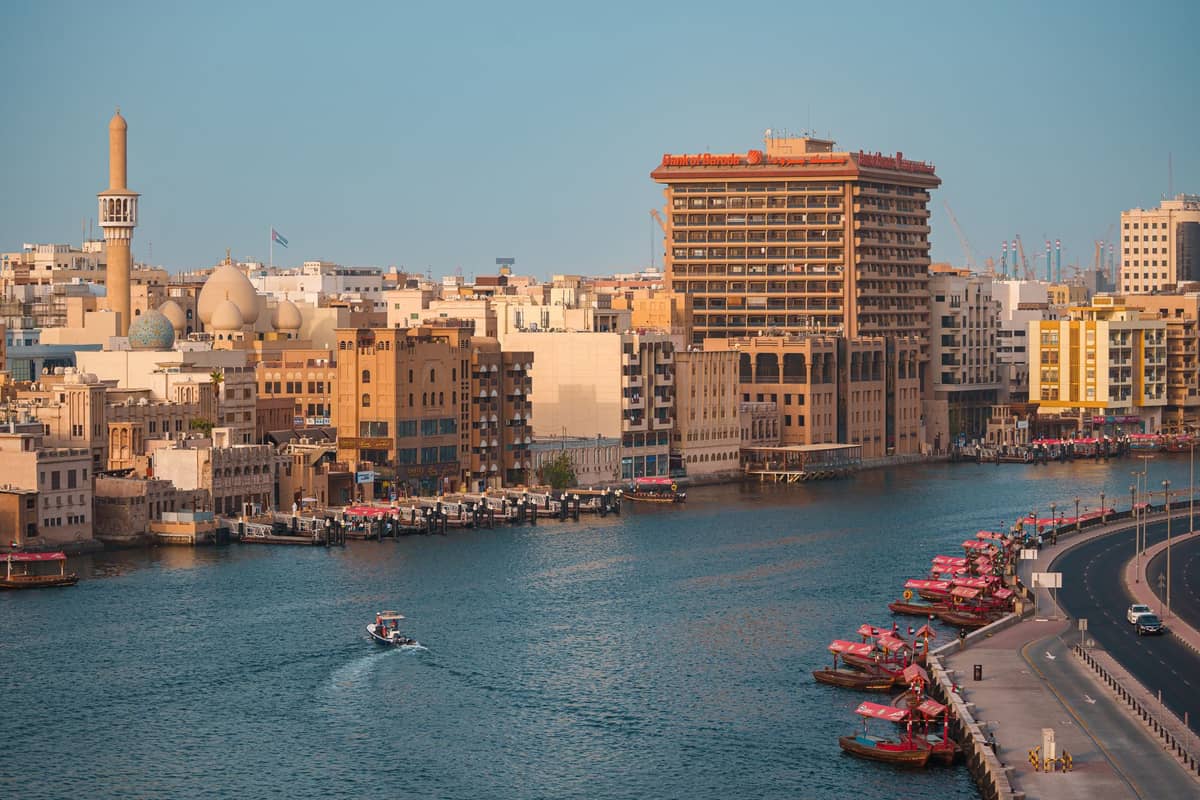
This is where the best time to visit Dubai question gets practical. In winter, you can spend a full day outdoors without difficulty: morning at Jumeirah Beach, afternoon exploring Al Fahidi and the historic Creek area on foot, evening at a rooftop bar. Every part of the day is accessible. In summer, this structure collapses entirely. You adapt to a nocturnal or heavily air-conditioned rhythm: late morning at a mall, afternoon in an indoor attraction, evening outdoors once the temperature drops slightly (though 'slight' is relative at 35°C at 9pm).
Desert safaris are a concrete example. A morning desert safari in December is genuinely pleasant: cool sand, clear visibility, comfortable temperatures at sunrise. That same experience in August starts before dawn to beat the heat, and even then the desert can be oppressive by 8am. Dune bashing, camel riding, and sandboarding are far more enjoyable in winter. The same logic applies to walking tours of the souks, dhow cruises, and any outdoor dining or terrace experience.
✨ Pro tip
If you must visit in summer, structure your days as follows: exercise or beach swim by 7–8am, move indoors by 10am, rest during peak heat (1–4pm), then head out again after 6pm. Many of Dubai's best outdoor dining spots, waterfront walks, and rooftop venues become genuinely enjoyable in the evening even in summer, when temperatures drop into the low-to-mid 30s.
Practical Planning: Budgeting, Bookings, and Common Mistakes
Getting your timing right also affects your budget significantly. A hotel room in Downtown Dubai that costs AED 600–800 per night in November can easily double to AED 1,200–1,800 per night in the last two weeks of December. Flight prices follow the same curve. If the cost of visiting Dubai is a concern, traveling in October, November before the festival push, or March after the main high season ends gives you most of the weather benefits at lower prices.
For getting around the city, the Dubai Metro is the most cost-effective option. Standard Silver Nol card fares run approximately AED 3 for one zone, AED 5 for two zones, and AED 7.50 for three or more zones. The Metro connects Dubai International Airport (DXB) directly to central areas including Downtown and Dubai Marina, with journey times of roughly 25–35 minutes to central stations. Taxis from DXB to Downtown typically run AED 50–90 depending on traffic and time of day. See our full guide to getting around Dubai for route-by-route details. Note: all fares should be verified against current RTA pricing before travel, as they are subject to change.
First-time visitors often underestimate how spread out Dubai is. The city stretches roughly 35km from the old Creek area in Deira down to Dubai Marina and beyond. Attractions are clustered in distinct zones, so where you stay matters as much as when you visit. If your plan revolves around the Burj Khalifa and the Dubai Mall, staying in Downtown Dubai makes sense. If beaches and the marina lifestyle are the priority, Dubai Marina or JBR is the better base. Our where to stay in Dubai guide maps out the key neighborhoods by travel style.
FAQ
What is the best time to visit Dubai for good weather?
November to March offers the most reliable weather, with daytime temperatures of 24–31°C and low humidity. November is the strongest single month: comfortable temperatures, lower hotel prices than December, and a full events calendar. January and February are also excellent but more expensive.
Is Dubai worth visiting in summer?
It depends entirely on your itinerary. Daytime highs regularly exceed 40°C from June through September, making outdoor activities impractical between roughly 10am and 7pm. However, Dubai's indoor infrastructure is world-class: major malls, indoor theme parks, museums, aquariums, and even an indoor ski slope keep the city functioning. Hotel prices also drop substantially in summer, sometimes by 40–50% compared to peak season.
What time zone is Dubai in, and does it change seasonally?
Dubai operates on Gulf Standard Time (GST), which is UTC+4. The UAE does not observe daylight saving time, so Dubai's offset from other countries shifts when those countries adjust their clocks in spring and autumn. When planning international calls, flight connections, or event bookings, always verify the current offset rather than assuming it stays consistent.
How does Ramadan affect a trip to Dubai?
Ramadan brings genuine cultural changes: restaurants close or operate with limited service during daylight hours, public eating and drinking are restricted in certain spaces, and the city takes on a different atmosphere. Evening Iftar celebrations can be a genuine highlight. The key is going in informed. Ramadan shifts roughly 10–11 days earlier each year on the Gregorian calendar, so check the expected dates for your travel year. The city remains open for tourism throughout.
When is Dubai the cheapest to visit?
June through August offers the lowest hotel and flight prices of the year, with discounts of 40–50% off peak-season rates in some categories. October and early November also offer good value: the weather is improving and the main high-season price surge has not yet hit. April and May are cheap but the heat is already significant. Avoid the last two weeks of December if budget is a priority: this is the most expensive window of the year.